

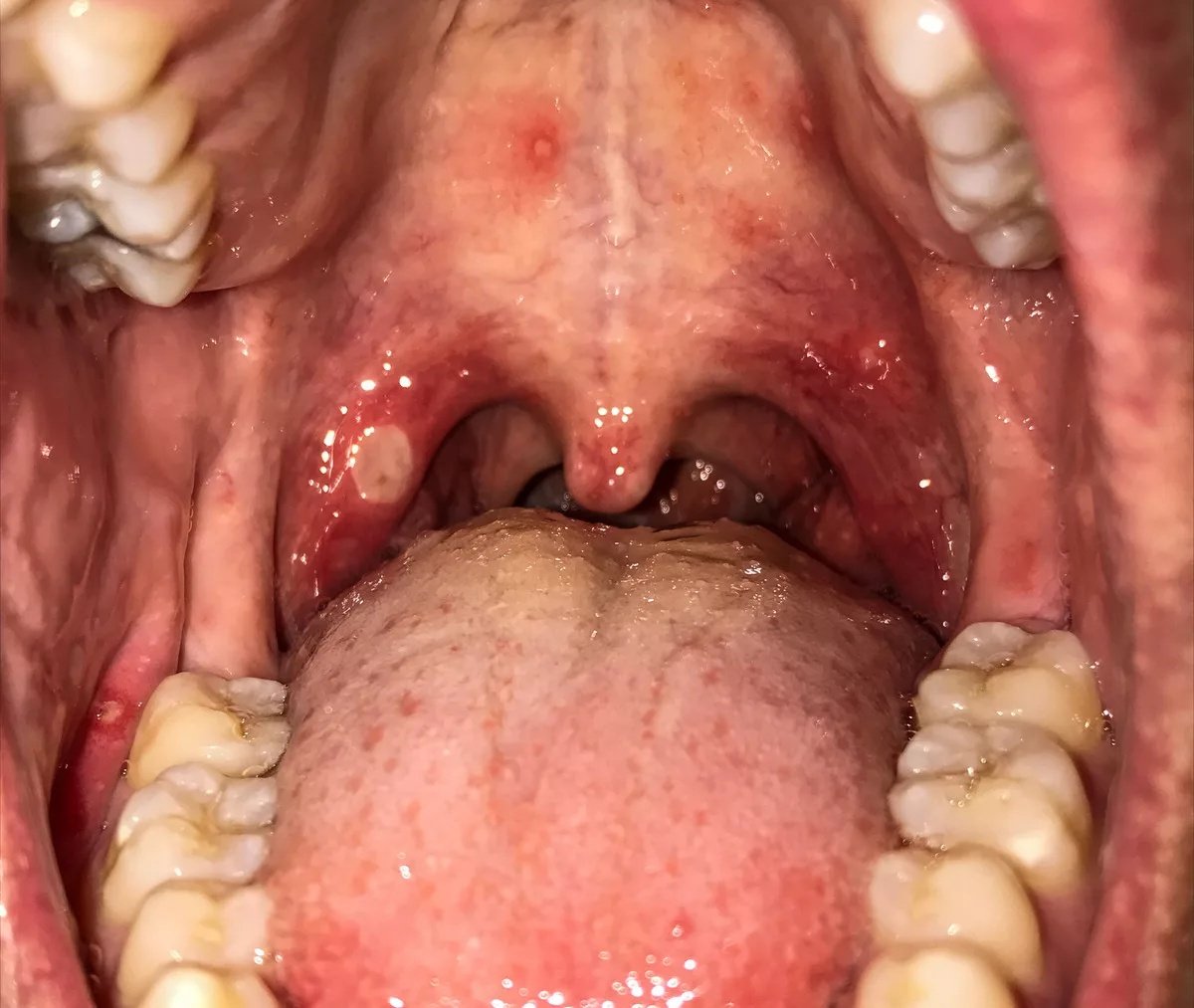
Herpangina Symptoms Treatment Herpangina is a contagious viral infection characterized by small vesicular or ulcerative lesions in the posterior oropharynx. The disease is caused by 22 enterovirus serotypes and is most commonly associated with the Coxsackie B virus serotype. It most frequently occurs in the pediatric population younger than 10 years of age.[1] Adults and adolescents are less frequently affected. It quickly spreads in schools and daycare centers due to children being in close contact with each other. Newborns, immunocompromised individuals, and pregnant women are at a higher risk of getting a severe form of this condition that can be dangerous or even life-threatening. Herpangina is most common in the summer and fall months.
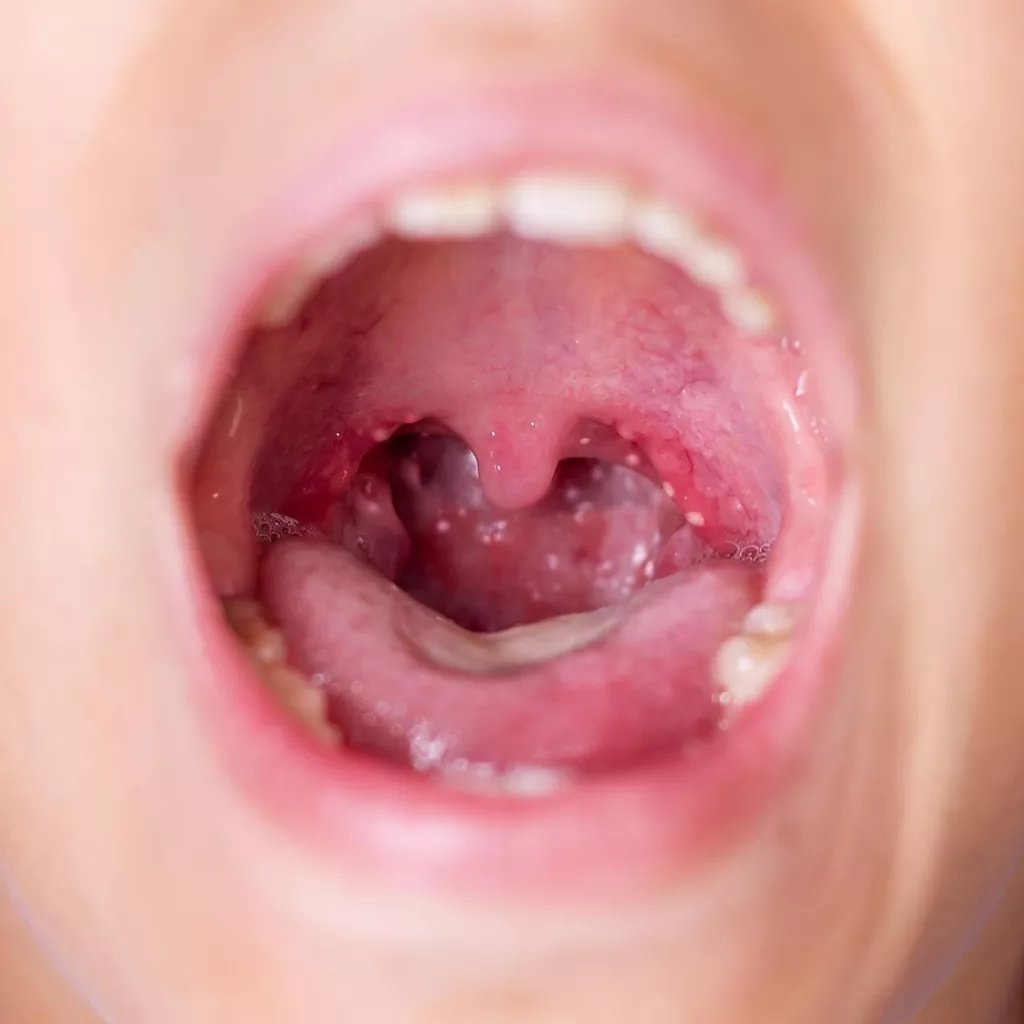
Herpangina:Close-up view of the mouth showing multiple small ulcers on the soft palate and tonsillar area, consistent with herpangina.
Stages of Herpangina: Herpangina Symptoms Treatment
The stages of herpangina progression are:
- Incubation period: It is the initial period after exposure to the virus, and is asymptomatic.
- Prodromal stage: Sudden onset of fever and other symptoms.
- Acute stage: Oral lesion development.
- Resolution stage: Symptoms gradually improve, fever subsides, and appetite returns.
Causes of Herpangina
Multiple enteroviruses cause this condition. Enteroviruses are non-enveloped, small, single-stranded RNA viruses. These viruses can survive a wide pH range and retain infectivity at high temperatures. These characteristics make them capable of surviving in the environment for a relatively long time. Humans are the only natural host of these viruses.[2]They typically spread via the fecal-oral route.
Additionally, transmission can result from the ingestion of infected saliva, respiratory droplets, and direct contact with fluid from vesicles. The respiratory viral shedding can persist for about three weeks. Viruses can persist in the stool for about eight weeks. Hence, patients are more contagious in the first two weeks of infection. Among all the enteroviruses that cause herpangina, enterovirus 71 is emerging as a significant public health concern. It is causing severe illness, encephalomyelitis, encephalitis, and potentially death in newborns and young adults.[3]
The most commonly implicated etiological agents of herpangina include:
- Coxsackie A16 virus
- Coxsackie B virus
Some other known causative agents are:
- Adenovirus
- Echovirus
- Parechovirus
- Herpes simplex virus
Symptoms of Herpangina
Symptomatic patients present:
- High-grade fever
- Sore throats
- Enanthem (rash or eruption on the mucous membrane, such as the mouth or throat)
- Small, greyish-white lesions or ulcers in the mouth
- Malaise
- Febrile seizures
Young children may also present:
- Poor feeding
- Fussiness
Older children can present the symptoms of:
- Back pain
- Headache
Some patients can also develop:
- Abdominal pain
- Dehydration
- Anorexia
Depending on the severity and organ system, patients can also report
- Difficulty in breathing
- Confusion
- Neck stiffness
- Muscle weakness
Diagnosis of Herpangina
The diagnosis of herpangina is primarily clinical. Confirmatory laboratory tests are reserved only for complicated cases.
History and Physical Examination
A complete and thorough history and physical examination are necessary to make the diagnosis. They aid in excluding various other childhood conditions that have a similar presentation.
- Herpangina patients present with a sudden onset of sore throat and headache. Symptoms often precede the appearance of mouth lesions.
- Characteristics of physical findings include tiny, painful lesions on the soft palate, tonsils, and posterior pharynx. The lesions are usually smaller than 5 mm. They may occasionally appear on the buccal wall and posterior tongue and persist for more than a week.
- Some additional physical findings include cervical lymphadenopathy and pharyngitis.
- A subset of patients can also develop a rash on the body. The rashes can appear with lesions that can be macular, vesicular, papulovesicular, maculopapular, papulopustular, petechial, or morbilliform. However, the rates of occurrence of rashes and their specific characteristics vary according to causative virus subtype. These lesions differentiate herpangina from diseases like hand-foot and mouth disease.
- Dehydration is also a common complication of herpangina. Hence, signs of dry mouth and decreased skin turgor can be present.
- Neurological physical examination findings, including paralysis or neck stiffness, may be present.
Other Diagnostic Options
Some other techniques to confirm the diagnosis of herpangina are:
Cell Culture
Viral isolation by cell culture is the gold standard diagnostic method. However, it is a slow process that can take longer than a week to obtain the results. This makes it impractical for diagnostic tests for clinical use.
Laboratory Tests
The healthcare providers obtain additional information about complications like dehydration to rule out alternative diagnoses. Laboratory tests may indicate lymphocytosis in some cases, while the white blood cell count is usually within the normal range.
PCR and ELISA
Polymerase chain reaction (PCR) is a fast and highly sensitive detection method for enteroviruses. The provider takes a sample from stool, vesicular fluid, mucocutaneous ulcers, or cerebrospinal fluid.
Enzyme-linked immunosorbent assays (ELISA) are generally less sensitive than PCR for detecting enteroviruses. It is usually used when PCR is not available.
Management and Treatment of Herpangina
Treatment of herpangina is primarily supportive, as it is a self-limited illness. Management and treatment vary depending on the severity of the condition.
Management and Treatment for General Patients
The first step of managing herpangina is isolating the patients in a well-ventilated and clean room. It prevents cross-infection. The next step is manifesting a healthy diet and adequate hydration. The patient’s diet must comprise light, liquid, and semi-liquid foods with adequate calories. Hot, spicy, and irritating foods must be avoided.
Oral care and oral hydration are a must. Patients need to rinse their mouths with normal saline after meals. Younger patients can wipe their mouth with normal saline or saltwater. Doctors recommend proper rehydration with electrolyte solutions for children with high-grade fever and feeding difficulties. They monitor the patients closely when they are on treatment.
Management and Treatment of Symptomatic Patients
- Doctors consider antipyretics such as acetaminophen and ibuprofen for patients in whom the fever exceeds 101.3oF. The dosage, duration, and timing of these antipyretics depend on the age and symptoms of the patients.
- Other management options include physical cooling methods such as cool compresses of the forehead, sleeping with an ice pack under the head, or fever cooling patches.
- Doctors do not consider topical therapies like diphenhydramine or lidocaine for symptomatic treatment of oral lesions in herpangina due to the risks of toxicity associated with these medications.[4]
- Young children with high-grade fever can develop febrile seizures during this condition. Immediate control and treatment are necessary using intravenous midazolam (0.1 to 0.3 mg/kg per dose).[5]
Antiviral Treatments
Currently, no specific antiviral drugs are available for the treatment of this condition. Interferon-alpha spray can have some promising effects. Topical use of the spray has the benefits of being safe, and convenient in children. Local administration of this antiviral drug can have some local immunomodulatory and anti-viral effects.[6]
Differential Diagnosis
The clinical presentation of herpangina is similar to various other childhood disorders. These include
- Measles (A highly contagious viral disease characterized by rash, high fever, and red eyes)
- Eczema herpeticum (severe skin infection caused by herpes simplex virus)
- Varicella (chickenpox)
- Toxic shock syndrome (severe, life-threatening bacterial infection)
- Kawasaki disease (acute febrile illness of early childhood)
- Rocky Mountain spotted fever (bacterial disease characterized by fever, rash, and headache)
- Insect bites
- Drug eruption
- Erythema multiforme major (severe, life-threatening viral infection of the skin and mucous membrane)
Prognosis
The prognosis of herapangina is generally good. If patient isolation, appropriate care measures, adequate food intake, and hydration are maintained, the disease can resolve within days. The prognosis of the condition is poor only in patients who develop neurological complications. The healthcare must monitor the patients closely for the development of complications such as myocarditis, meningitis, encephalitis, or flaccid paralysis, etc.
Complications of Herpangina
Herpangina is generally a mild condition. However, some causative agents, such as enterovirus 71, can cause severe complications. These complications include:
- Myocarditis (Inflammation of the heart muscles)
- Aseptic meningitis (inflammation of the meninges)
- Acute flaccid paralysis (sudden onset of muscle weakness, reduced muscle tone, and loss of reflexes, primarily in children)
- Brain stem encephalitis (severe inflammation of the brainstem)
These kinds of patients necessitate hospitalization. Doctors can also advise the intensive care unit in more severe cases.
Prevention
You can follow some precautionary measures to prevent the spread of the causative agents. These measures include:
- Practice good hygiene.
- Wash your hands regularly with soap.
- Sanitize and disinfect the highly touched surfaces and objects.
- Always cover your nose and mouth while coughing or sneezing.
- Immediately wash your hands after coughing or sneezing.
- Keep your children at home if they are ill.
Herpangina Versus Hand, Foot, and Mouth Disease
Herpangina and hand, foot, and mouth disease are both viral infections. They commonly affect children. The causative agents of both these conditions are enteroviruses, including coxsackieviruses.[7] They only differ in their clinical presentation and distribution of lesions. Table 1 summarizes these two conditions.
Table 1: Herpangina and Hand, Foot and Mouth Disease
| Features | Harpangina | Small blister-like ulcers in the throat. |
|---|---|---|
| Distribution of Lesions | Painful sores in the mouth, characteristic rash, with red spots or blisters on the palms of the hands, soles of feet, legs, or groin. | Painful sores in the mouth, characteristic rash, with red spots or blisters on the palms of the hands, soles of feet, legs or groin. |
| Clinical Presentation | Sudden onset of high-grade fever and sore throat. | Painful skin rash and blisters.8Zhu, P., Ji, W., Li, D., Li, Z., Chen, Y., Dai, B., … & Duan, G. (2023). Current status of hand-foot-and-mouth disease.Journal of biomedical science,30(1), 15. |
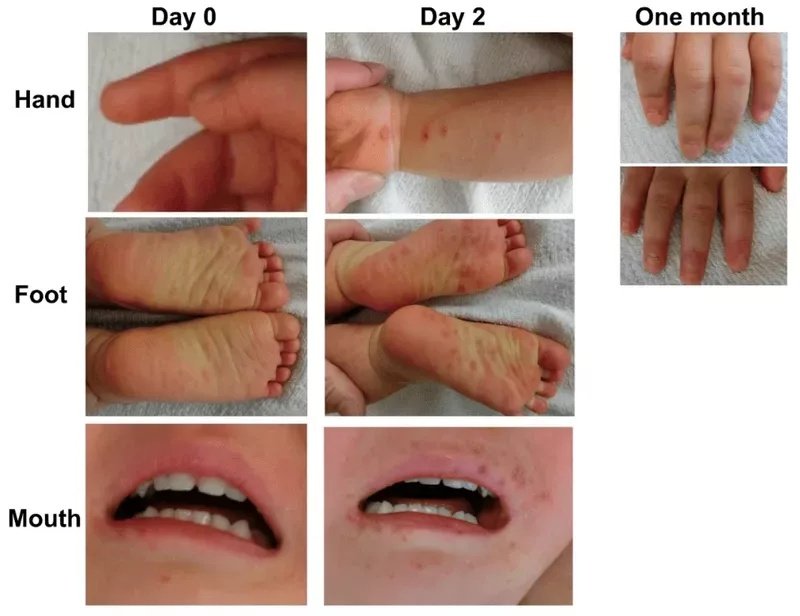
Photographs of a patient with the HFMD caused by CV-A6. Day 0 and 2 after the onset of the disease in hands, feet, and mouth. After one month, onycholysis was observed for both hands (foot and mouth lesions healed after one month). Pictures were taken with the informed consent of patients. image courtesy: Enterovirus-Associated Hand-Foot and Mouth Disease and Neurological Complications in Japan and the Rest of the World by Gonzalez et al, 2019, doi.org/10.3390/ijms20205201, available via:https://www.mdpi.com/1422-0067/20/20/5201, CC BY 4.0.
Final Remarks
Herpangina is generally self-limited but can lead to severe complications. Its diagnosis is primarily clinical. Healthcare providers must be well-versed to differentiate this condition from pediatric disorders that have a similar presentation. Providers emphasize adequate diet, hydration, and close monitoring of the patients.
References
[1] Corsino, C. B., Ali, R., & Linklater, D. R. (2018). Herpangina
[2] Abedi, G. R., Watson, J. T., Pham, H., Nix, W. A., Oberste, M. S., & Gerber, S. I. (2015). Enterovirus and human parechovirus surveillance—United States, 2009–2013. MMWR Morb Mortal Wkly Rep, 64(34), 940-943.
[3] Choi, C. S., Choi, Y. J., Choi, U. Y., Han, J. W., Jeong, D. C., Kim, H. H., … & Kang, J. H. (2011). Clinical manifestations of CNS infections caused by enterovirus type 71.Korean journal of pediatrics,54(1), 11
[4] Yan, X., Zhang, Z. Z., Yang, Z. H., Zhu, C. M., Hu, Y. G., & Liu, Q. B. (2015). Clinical and Etiological Characteristics of Atypical Hand‐Foot‐and‐Mouth Disease in Children from Chongqing, China: A Retrospective Study.BioMed research international,2015(1), 802046.
[5] Yu, H., Li, X. W., Liu, Q. B., Deng, H. L., Liu, G., Jiang, R. M., … & Liu, X. D. (2020). Diagnosis and treatment of herpangina: Chinese expert consensus.World Journal of Pediatrics,16(2), 129-134.
[6] Mangan, N. E., & Fung, K. Y. (2012). Type I interferons in regulation of mucosal immunity.Immunology and cell biology,90(5), 510-519.
[7] Ruan, F., Yang, T., Ma, H., Jin, Y., Song, S., Fontaine, R. E., & Zhu, B. P. (2011). Risk factors for hand, foot, and mouth disease and herpangina and the preventive effect of hand-washing.Pediatrics,127(4), e898-e904.
[8] Zhu, P., Ji, W., Li, D., Li, Z., Chen, Y., Dai, B., … & Duan, G. (2023). Current status of hand-foot-and-mouth disease.Journal of biomedical science,30(1), 15.