
, also called mandible thrust, is a basic airway management technique performed on unconscious patients suspected of...)
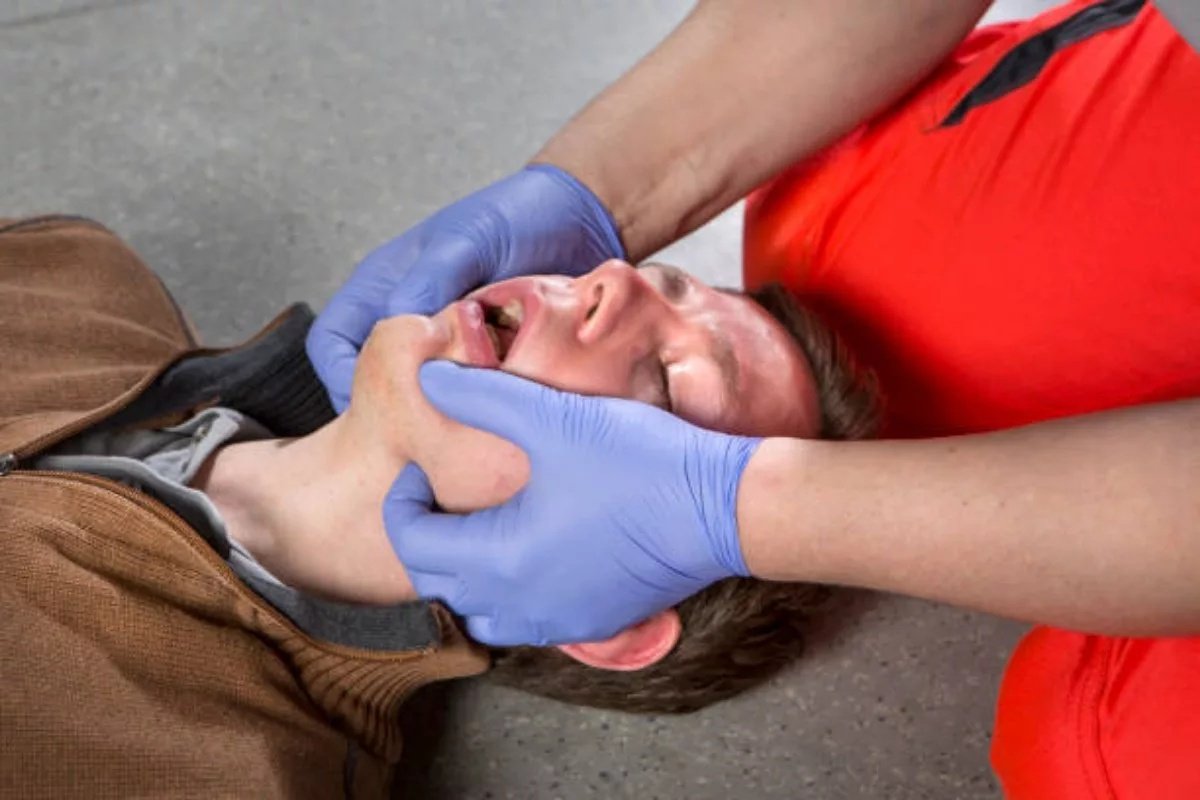
Jaw thrust maneuver (JTM), also called mandible thrust, is a basic airway management technique performed on unconscious patients suspected of having an airway blockage. The main aim of this maneuver is to clear the airway passages by lifting the jaw forward. This step moves the tongue away from the posterior pharyngeal wall without the need to bend the head. This technique helps maintain airway patency while minimizing cervical spine movement.
Healthcare providers choose from techniques like head-tilt chin lift methods or jaw thrust to ensure an uninterrupted flow of air. However, the jaw-thrust is particularly preferred when there is a suspected cervical spine injury or trauma, as it avoids neck extension. In routine non-trauma cases, the head-tilt–chin-lift remains the first-line approach.
Medical professionals also perform the jaw thrust maneuver before endotracheal intubation for breathing support because it improves upper airway patency and can ease tube insertion.
Jaw Thrust Maneuver Indications
This maneuver is indicated in cases of airway obstruction or in unconscious individuals at risk of tongue-induced airway blockage.
Unconscious Person:
In unconscious persons, the muscles of the oral region relax. This results in the tongue falling backward and obstructing the upper airway. This phenomenon, sometimes referred to colloquially as “swallowing one’s tongue,” can result in airway obstruction and asphyxiation. i.e., death by suffocation. Thus, to prevent this from happening, emergency management workers perform the jaw thrust maneuver.
In emergency management, the cause of unconsciousness is investigated after stabilizing the patient. Therefore, basic life support experts and ER staff perform JTM as a routine procedure to prevent any mishaps in the management of an unconscious patient.
Airway Obstruction:
JTM is not only used as a preventive measure but also proves to be useful in correcting issues such as airway obstructions. The use of jaw thrust techniques has been shown to have a positive impact on the tidal volume of the patient, which indicates that this maneuver can be used in the management of airway obstructions (especially involuntary tongue swallowing).[1]
It ensures there are no obstructions hindering the flow of air through the breathing apparatus. According to one study, JTM alone significantly relieves obstruction at the epiglottis and tongue base levels. It also helps increase the retroglottic airway.[2]
Preparation for Ventilation
Jaw-thrust maneuver can also aid in endotracheal intubation and bag-mask ventilation in apneic patients. Doctors advise using a two-handed jaw-thrust technique to improve upper airway patency in unconscious apneic individuals.[3] This allows for easier and smoother tube insertion.
This simple step also aids in minimizing the complications of endotracheal intubation. With quicker and easier intubation following jaw trust, you can expect to see less damage to the laryngopharyngeal structures. Sore throat is a common complication of endotracheal intubation. Studies show that the adoption of the jaw thrust maneuver lowers laryngoscopy time and also reduces the incidence of sore throat.[4]
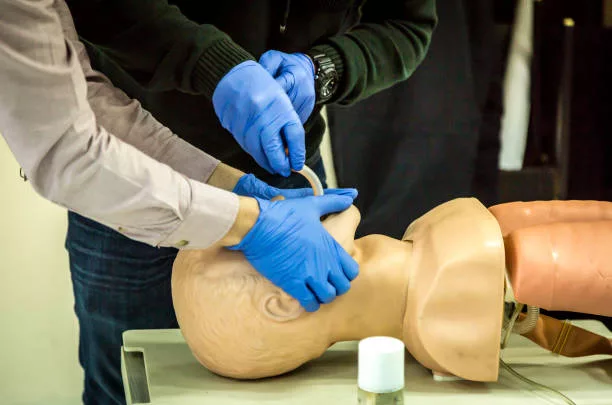
A paramedic is demonstrating how to perform the jaw thrust maneuver for endotracheal intubation
Furthermore, the two-handed jaw thrust technique can improve the success rate of flexible laryngeal mask airway placement. It allows better positioning of the mask and, hence, there is a reduced incidence of tissue injury to the oropharyngeal soft tissues and minimal postoperative pain. Moreover, this step effectively increases the sealing pressure of the laryngeal mask.[5]
Jaw Thrust Maneuver Contraindications
Absolute contraindications to JTM are rare, but it should be avoided or modified in certain conditions.
Suspected Spinal Injury:
In cases of confirmed or unstable cervical spine injury, JTM should be performed with extreme caution. However, if airway obstruction is life-threatening, airway patency takes precedence over potential spinal injury, and a modified jaw thrust can be performed to reduce neck motion. The standard JTM should be modified to reduce cervical motion further.
In trauma cases, it is essential to stabilize the neck using manual in-line stabilization while performing the maneuver. If jaw fractures or severe facial trauma are present, jaw thrust may not be possible, and alternative airway management techniques should be considered.[6] You can not perform the standard JTM in suspected cervical injury patients; however, you may opt for the modified jaw thrust maneuver (if necessary) to improve airway patency.
Severe Head/Neck Trauma:
In patients with mandibular or maxillofacial fractures, the jaw cannot be safely manipulated, and attempting a jaw thrust may worsen the injury. In such cases, alternate airway methods (e.g., oropharyngeal or nasopharyngeal airways) should be used..
Muscular Disorders:
Several neuromuscular disorders, like oromandibular dystonia (OMD) and temporomandibular disorders, affect the range of motion of the jaw. Performing JTM in these individuals can cause pain or injury to oral structures, so it should be avoided or done with caution.
Do Not Resuscitate (DNR) Cases:
A DNR order does not universally prohibit airway maneuvers. These directives primarily restrict CPR and advanced cardiac life support. However, airway support may still be appropriate depending on the patient’s wishes and local policy. Always confirm the patient’s code status and institutional protocols before performing airway interventions, as in some cases, a DNR order prohibits resuscitative procedures.
Other Conditions may include:
- Recent maxillofacial surgery where sutures or implants are present.
- Tracheostomy patients, as they already have a secured airway.
Jaw Thrust Maneuver Procedure
The main aim of the jaw thrust maneuver is to clear the airway while preventing the tongue from falling back. Jaw thrust maneuver steps are discussed in detail in the successive paragraphs:
Place the Patient in a Supine Position:
You need to make sure that the individual with airway obstruction lies on his/her back, i.e., in a supine position, on a firm surface. After placing the person supine, make sure that his/her head is in a neutral position. This means that the head is balanced directly above the shoulders. Studies show that the neutral position of the person’s head provides adequate tidal volume, which is a beneficial maneuver for airway maintenance.[7]
Be gentle and conscious while laying the person down in case of trauma, as they may be suffering from an injury that you are unaware of!
Place your Hands under the Patient’s Jaw:
First, you need to position yourself properly. Kneel next to the victim’s head. Place your hands on the side of the person’s face. Place your palms on the sides of the patient’s cheeks. Try to stay close to the corner of the mouth. Place your thumbs on the chin to ensure support and position the index and middle fingers of both hands behind the patient’s mandible. While maintaining the head in a neutral position, gently press upward to lift the individual’s jaw. Make sure that your thumbs are on the chin for maximum support to the jaw. While keeping the head in a neutral position, slightly extend it forward.
Lift the Jaw Consciously:
The most important step in JTM is the lifting of the jaw. It is crucial to understand that you need to move the jaw upwards and forwards (slightly). A mere upward movement will not work. So, you will need to gently press on the mandible (jaw) to raise it. With the help of your fingers (under the jaw), gently lift the chin simultaneously. Pull the mandible up by lifting the chin.
Ensure a Clear Air Flow:
By moving the jaw upward and forward, you move the tongue and other potential obstructions out of the way. The victim’s back of the throat becomes clear and allows for unobstructed, effective breathing. To be certain of airway clearance, you should maintain a straight head and keep the chin upturned.
Monitor Breathing:
After you have performed the jaw thrust, you need to monitor breathing. Once after thrusting the jaw, your position should be such that you can easily observe the person’s chest. To be sure about the victim’s breathing, you should observe chest movements as the person exhales. Moreover, you can also listen to breathing noises.
Give Rescue Breaths if the Person is not Breathing:
If you can not detect any rise and fall in the victim’s chest, then this means that they are not breathing. You can confirm this finding by paying attention to the breathing sounds. Absent breathing sounds confirm this finding.
In such a case, if the person is not breathing even after JTM, you must act quickly. Start giving mouth-to-mouth rescue breaths. To do this, you tightly squeeze the person’s nose to prevent any air from escaping through the nose. Then, completely cover the person’s mouth with your mouth to ensure no escape of air. After ensuring a good seal, blow into the mouth for one second. Observe the chest as it should rise visibly when you blow air and fall back when you move away. Repeat the steps until the person starts breathing or help arrives.
Start CPR if needed:
Emergency management is all about quick evaluation and timely intervention. You can start cardiopulmonary resuscitation (CPR) and call for medical help if the person is not responding even after performing JTR and rescue mouth-to-mouth breathing.
Modified Jaw Thrust Maneuver: A Solution for Cervical Injury Patients
The modified jaw thrust maneuver is a modification to the conventional JTM to cater to people with suspected cervical spine injuries. In this procedure, extra care is given to stabilize the head/neck and minimize neck movement. Unlike the standard jaw thrust maneuver, where you use both hands for lifting the jaw, in the modified jaw thrust maneuver, you use only one hand to thrust the jaw while the other hand holds the head in a neutral position. This minimizes neck movement and reduces the chances of further damage/injury. This is done in unconscious individuals suspected of cervical spine injury.
Jaw Thrust Maneuver Vs Head Tilt-Chin Lift
Both maneuvers are aimed at opening the airways, but there are notable differences between them. The head tilt-chin lift maneuver involves more body movement as compared to JTM, as it involves lifting the victim’s head and pulling the chin forward.
On the other hand, JTM involves gently moving only the lower jaw (mandible) without putting forces on the head and neck structures. Modified jaw thrust maneuver (keeping the head in neutral position) not only ensures cervical spine safety but also leads to adequate tidal volumes as compared to the head tilt-chin lift procedure. This is why most professionals prefer the modified JTM over the head tilt maneuver.[8]
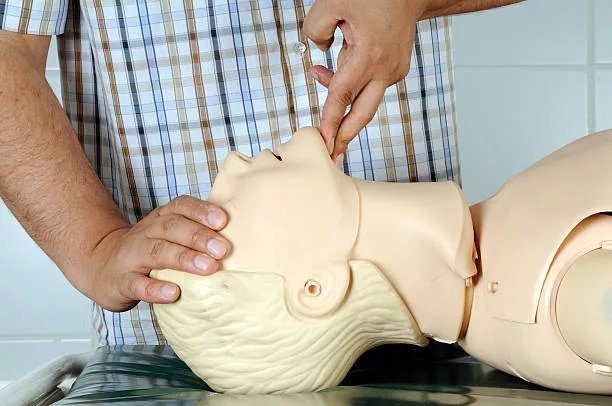
A healthcare worker is performing a head tilt-chin lift on a model.
Jaw Thrust Maneuver Complications
The fundamental airway management maneuver effectively prevents the tongue from obscuring the airways, but it can cause some complications. The most evident issue that it can cause is aggravation of cervical spine injury; therefore, the conventional technique is contraindicated in such cases.
In rare instances, there have been some serious consequences of the jaw thrust maneuver. Experts believe that the jaw thrust maneuver induces pain, which can cause a parasympathetic response. A 38-year-old female developed severe bradycardia and asystole (no contraction of the heart) following a jaw thrust maneuver. These adverse effects were attributed to the body’s vagal response to pain induced by JTM.[9]
Wrapping Up
Jaw thrust maneuver is a fundamental airway management protocol that ensures patent airways for breathing. In unconscious individuals, there is a high chance of the tongue falling back and blocking the breathing pathways. Thus, to prevent the tongue from obstructing the pathways and to ensure unimpeded flow of air, caregivers perform the jaw thrust maneuver.
This maneuver is primarily indicated in unconscious patients with a suspected airway obstruction, especially when cervical spine injury is possible, as it allows airway opening without significant neck movement. Doctors and paramedics frequently perform JTM before endotracheal intubation and laryngoscopy. The standard jaw thrust maneuver is contraindicated in individuals with suspected cervical spine injury, as neck movements can add to spinal damage. In such cases, health professionals perform the modified jaw thrust maneuver if needed.
To perform the JTM, you need to lie the person down on a flat surface, place your index and middle fingers (of both hands) behind the patient’s mandible, and thumbs on the chin. While keeping the head in a neutral position, gently move the lower jaw upwards and forwards. Health professionals prefer JTM over head tilt-chin lift maneuvers due to its limited movement and safer profile.
References
[1] Madhav, A., Parate, L. H., & Govindswamy, S. (2022). Comparison of effectiveness of CE technique and jaw thrust technique for mask ventilation on apneic anesthetized adults: a randomized controlled trial.Anesthesia Essays and Researches,16(3), 386-391.
[2] https://karger.com/orl/article-abstract/67/1/39/261047/Effectiveness-of-the-Jaw-Thrust-Maneuver-in
[3] Joffe, A. M., Hetzel, S., & Liew, E. C. (2010). A two-handed jaw-thrust technique is superior to the one-handed “EC-clamp” technique for mask ventilation in the apneic unconscious person. Anesthesiology, 113(4), 873-879.
[4] Saxena, D., Rathore, A., Jain, P., Jain, A., & Barasker, S. K. (2025). Evaluating the Role of the Jaw Thrust Maneuver During Tracheal Intubation in Reducing the Incidence of Postoperative Sore Throat: A Prospective Randomized Study.Ochsner Journal,25(1), 17-23.
[5] Wan, Y., Liu, Y., Xi, C., Cui, X., & Wang, G. (2023). A Prospective Randomized Study for the Placement of Flexible Laryngeal Airway Mask with Two-Step of Jaw-Thrust Technique by Both Hands for Adults.Indian Journal of Otolaryngology and Head & Neck Surgery,75(1), 32-38.
[6] Prasarn, M. L., Horodyski, M., Scott, N. E., Konopka, G., Conrad, B., & Rechtine, G. R. (2014). Motion generated in the unstable upper cervical spine during head tilt–chin lift and jaw thrust maneuvers.The Spine Journal,14(4), 609-614.
[7] Ramakkannu, K., Theagrajan, A., Prabhu, M., Ramkumar, V., Prabhu, M., & Venkateswaran, R. (2024). Comparison of three airway maneuvers of jaw thrust, two-handed EC technique with head in neutral position, and two-handed EC technique with head fully extended: A prospective, randomized, double-blind crossover study.Cureus,16(2).
[8] Ramakkannu, K., Theagrajan, A., Prabhu, M., Ramkumar, V., Prabhu, M., & Venkateswaran, R. (2024). Comparison of three airway maneuvers of jaw thrust, two-handed EC technique with head in neutral position, and two-handed EC technique with head fully extended: A prospective, randomized, double-blind crossover study.Cureus,16(2).
[9] Meng, J., Wang, Y., Kehar, M., & Popilevsky, L. (2024). Asystole Following Jaw Thrust Maneuver: A Case Report.Cureus,16(10).
For more information about Jaw Thrust Maneuver, refer to the latest medical literature.