

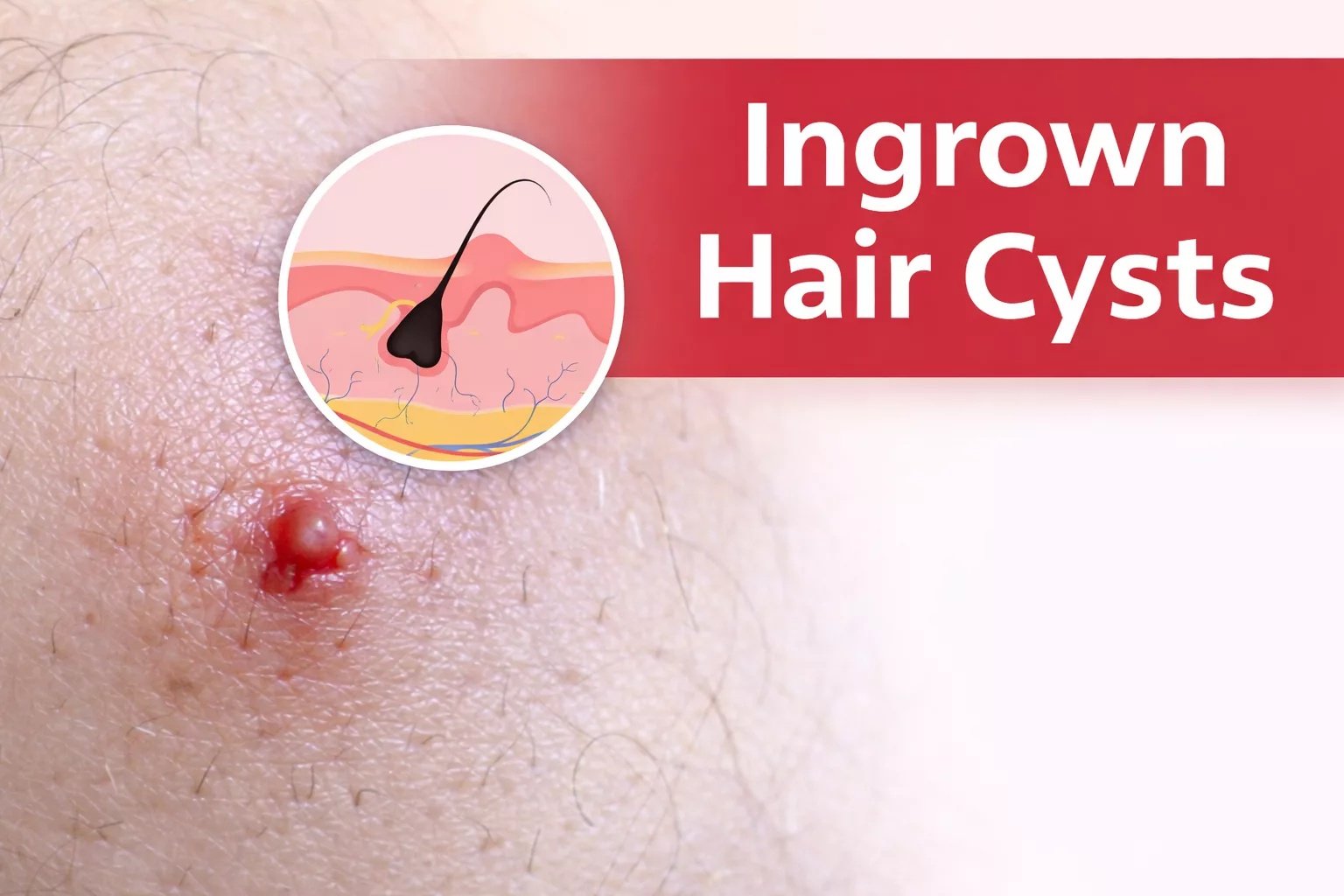
Ingrown hair cysts are a very common skin condition that afflicts millions of individuals all over the world, which can make life uncomfortable and sometimes painful. No matter whether you are the person who shaves regularly, waxes, or or have naturally curly hair, being aware of these painful nuisances will help you prevent them and treat them properly.
What Exactly Is an Ingrown Hair Cyst?
An ingrown hair cyst is described as a localized inflammatory swelling that develops when a hair grows back into the skin instead of emerging outward normally. In many cases, what people call a “cyst” is actually an inflamed hair follicle (folliculitis) or a small abscess rather than a true cyst with an epithelial lining. When hair removal techniques such as shaving, waxing, or tweezing cut hair, the left follicle occasionally makes the new hair curl back or sideways under the skin surface. The presence of this trapped hair triggers a localized inflammatory response, which may lead to redness, swelling, and sometimes pus formation.
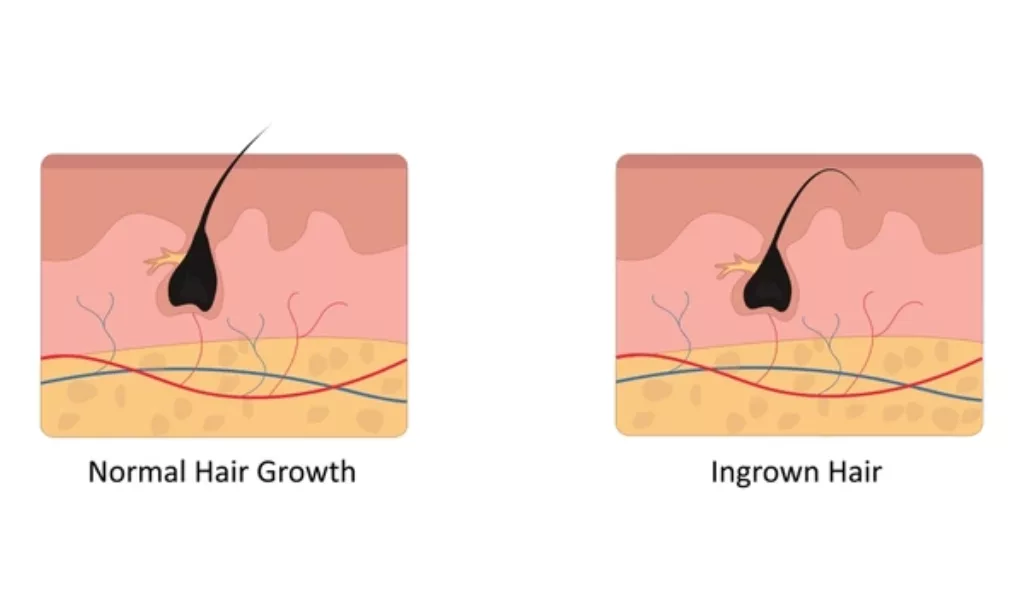
Illustration showing the difference between normal hair growth and an ingrown hair trapped beneath the skin.
These cysts are not similar to ordinary ingrown hairs in size and complexity. Whereas a simple ingrown hair may be presented by a red bump, a cyst is often bigger, harder, and may even present itself as a hard lump beneath your skin. Depending on the presence of infection, the cyst can have clear fluid, pus, or a mixture of both.
Who Gets Ingrown Hair Cysts?
Any person may acquire an ingrown hair cyst, but there are factors that predispose you more. Individuals with rough, thick, and curly hair are especially vulnerable since their hair naturally curls inwards back into the skin during the growing process. That is why these cysts are rather common among people of African, Hispanic, or Middle Eastern origin.
Hair removal habits are also considered important. When you remove hair regularly, such as shaving, waxing, or tweezing, chances are that you will develop cysts. The shorter cut hair forms a sharper edge that pierces through your skin more easily.
Although ingrown hairs are commonly seen in men who shave the beard area, they are also very frequent in women, particularly on the legs, underarms, and bikini line.
Common Locations for Ingrown Hair Cysts
These cysts may occur in any place where hair grows. But some areas are more vulnerable:
- Face and neck (men in particular)
- Legs
- Underarms
- Pubic area and bikini line
- Back and chest (particularly in men)
Pubic Area Ingrown Hair Cyst:
When dealing with ingrown hair cysts, the pubic region is to be given particular consideration. This is a very delicate zone, especially because of the coarse nature of pubic hair and the frequent hair removal procedures. Growing pubic hair may also be particularly uncomfortable due to the friction of clothes and the sensitivity of the area.
Once an ingrown pubic hair grows into a cyst, it may be very painful, particularly during walking and sitting. Warm and wet conditions of the pubic region may also be a risk factor for infection unless the cyst has been well managed.
Recognizing the Signs and Symptoms
It is essential to know the appearance of an ingrown hair cyst so that you can identify it at the earliest stage. These features should be sought:
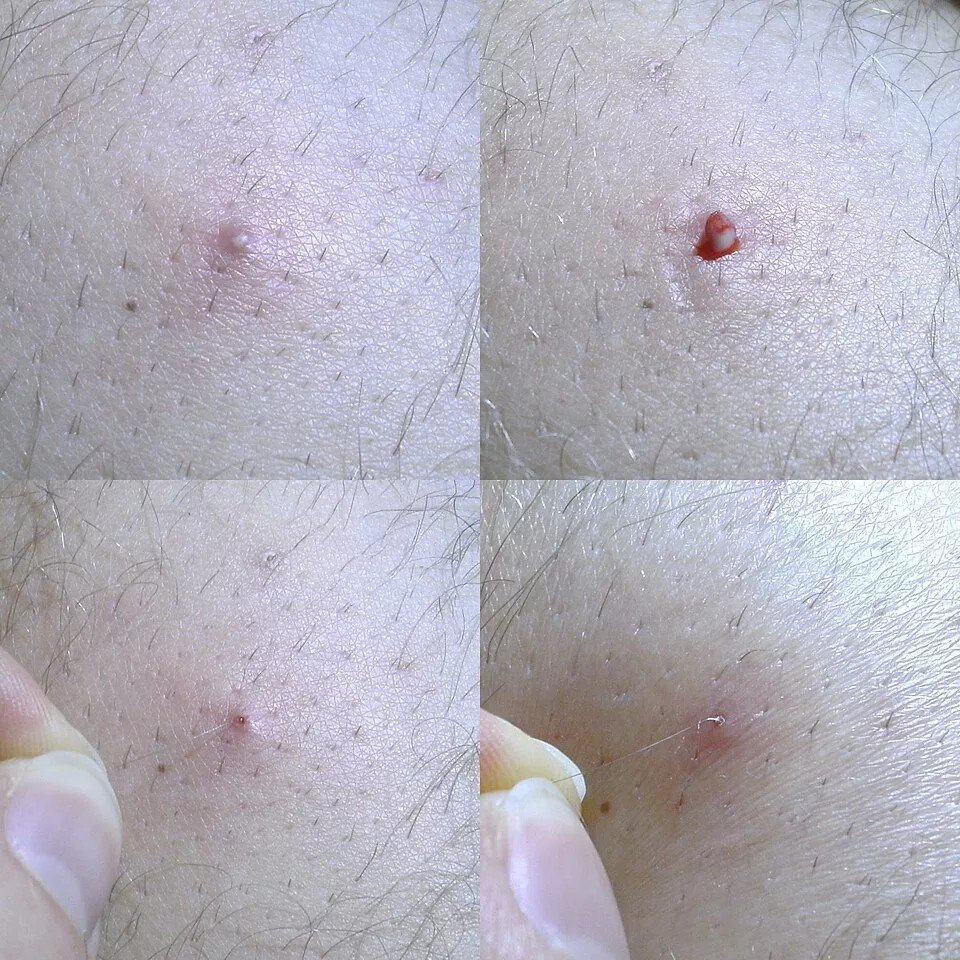
Ingrown hair cyst with redness and small pustule formation.Credit: LBPics — Own work,CC BY-SA 3.0.File: Eingewachsenes Haar 2010
- A raised, erythematous, or skin-colored swelling.
- A hard mass which can either be painful or tender.
- An observable hair that is under the skin (however, not always).
- White or yellow head in case the cyst is near the body and skin.
- The redness and swelling of the surroundings of the affected area.
- Itching or burning sensations.
When Infection Develops
A cyst that is an ingrowth, infected, has other warning signs, which one should not overlook:
- Redness spreading beyond the bump
- Warmth around the affected area
- Pus or foul-smelling discharge
- Fever or chills
- Rapidly growing size
- Severe pain that worsens over time
When you observe such symptoms, consult the doctor immediately. Unattended infections may progress to severe complications, such as abscesses or cellulitis.
Ingrown Hair Treatment: What Works?
Treatment depends on whether the lesion is a simple ingrown hair, an inflamed follicle, or a true cyst or abscess formation. Distinguishing between these is important because management differs.
Management of a Simple Ingrown Hair
In case of smaller ingrown hairs that do not show any indication of infection, conservative care is usually sufficient. A simple ingrown hair often presents as a small red or skin-colored bump and may resolve on its own once the hair emerges naturally from the skin.
- Warm Compresses: Application of a warm (not hot) compress may help reduce mild inflammation and encourage the hair to surface.
- Gentle Exfoliation: Mild exfoliation may assist in removing excess dead skin cells that trap the hair. However, excessive scrubbing can worsen irritation and should be avoided.
- Keep It Clean: Maintaining proper hygiene helps reduce bacterial colonization and lowers the risk of secondary infection.
- No Pop: Squeezing or attempting to extract the hair with non-sterile tools is not recommended. This may introduce bacteria, increase inflammation, cause scarring, and lead to abscess formation.
If the lesion persists, enlarges, or becomes increasingly painful, medical evaluation is advised rather than continued self-management.
Managing Inflamed Ingrown Hair (Secondary Folliculitis)
When redness, swelling, tenderness, or pus formation becomes more pronounced, the lesion may represent secondary infection of the hair follicle rather than a simple ingrown hair.
In such cases, management may require:
- Topical antibiotic medications
- Short courses of anti-inflammatory topical agents
- Adjustment of shaving or hair removal techniques
These treatments should be guided by a healthcare professional to ensure appropriate diagnosis and medication selection.
Management of Ingrown Hair Cyst or Abscess
When a deeper, firm, and painful lump develops beneath the skin, especially if it increases in size or becomes fluctuant, this may indicate cyst formation or abscess development rather than a superficial ingrown hair.
Medical management may include:
- Antibiotic creams or oral antibiotics for infected cysts.
- Retinoid gels to eliminate the dead cells on the skin and hyperpigmentation.
- To reduce severe inflammation, steroids are prescribed either in the form of creams or pills.
Surgical Procedures For persistent or large cysts, your doctor may:
- Use a sterile scalpel to make a small cut to drain the cyst
- Wipe off the hair trapped using sterile tweezers.
- Perform a complete cyst removal in severe cases
Advanced Treatments for Recurrent Cases
- Laser hair removal – This is a long-term therapy that permanently removes hair growth, thus removing future ingrown hair.
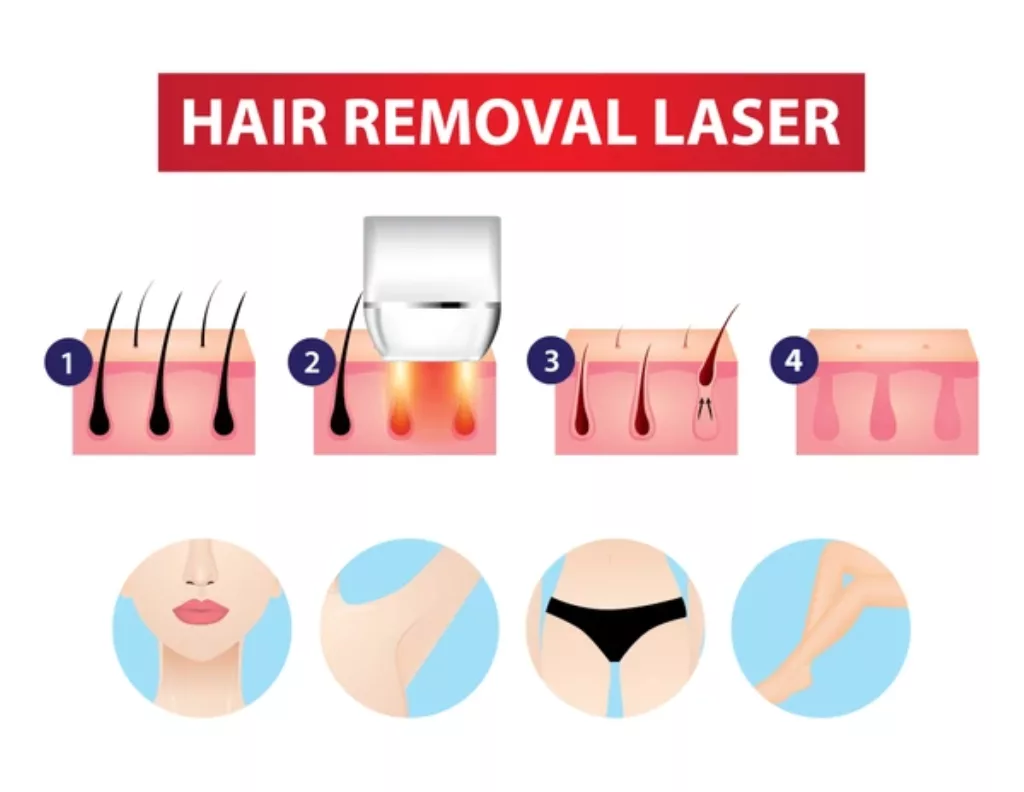
Laser hair removal treatment reduces hair growth and helps prevent ingrown hair cysts.
- Electrolysis – This involves using electric currents to eliminate single hair follicles.
- Blue light therapy – Cures inflammation and infections. However, this is primarily used in acne management and is not considered a standard treatment for ingrown hair cysts.
How Do You Prevent Ingrown Hair?
It is much better to prevent than cure in regard to ingrown hair cysts. Here’s a comprehensive strategy:
Proper Shaving Techniques
| Do This | Avoid This |
|---|---|
| Take warm water and wet the skin before shaving. | Shaving dry skin |
| Apply shaving gel or cream | Using soap alone |
| Use a sharp, single-blade razor | Using dull or multi-blade razors |
| Shave in the direction of hair growth | Shaving against the grain |
| Rinse the blade after each stroke | Using dirty razors |
| Change disposable razors after each 5- 7 shaves. | Keeping razors too long |
Regular Exfoliation Strategy
Application of an Exfoliating Brush to Ingrown Hair: There is now a trend where specialized exfoliating brushes are used in the prevention of ingrown hairs. These brushes feature:
- Thick and soft bristles that raise isolated hairs
- Design for use on wet or dry skin
- Access to sensitive parts such as the bikini line and face
- Mechanical exfoliation that is chemical-free
Apply exfoliator brushes either in straight lines up and down the growth of the hair, with soft strokes, usually 5-10 strokes per area. Its results are best done daily in the morning and at night, although sensitive skin might only need to be applied every few days.
Chemical Exfoliation: The dead cells of the skin are dissolved by products which have alpha-hydroxy acids (as glycolic or lactic acid) or beta-hydroxy acids (as salicylic acid). Use these products once or 1-3 times a week as recommended by the manufacturers so as to prevent excessive exfoliation.
Additional Prevention Tips
- Keep skin moist – Wet skin has the property of letting the hair grow out with ease.
- Dress loosely – It is very necessary to dress loosely after hair removal to minimize friction.
- Let hair grow between waxings – Hair must be at least a grain of rice long to be rewaxed.
- Use other forms of hair removal – Permanent removal or depilatory creams may be a good alternative to cysts that occur most of the time.
- Wash your hair removal instruments – Wash razors, tweezers, and scissors with sterilized solutions.
Knowing the Healing Timeline
The period during which an ingrown hair cyst heals will be dependent on the following factors:
- Simple superficial ingrown hairs may improve within a few days to one week.
- Larger cystic lesions may require several weeks.
- Infected cysts typically require medical treatment and may take 2–3 weeks to resolve.
- Surgically treated cysts usually heal within 1–2 weeks, depending on the extent of the procedure.
It is best to adhere to your treatment plan regularly and not to irritate yourself further to achieve faster recovery.
Special Considerations
Pregnancy and Ingrown Hair Cysts
The ingrown hair cysts are more common among men, but may occur in pregnant women. The hair growth and the sensitivity of the skin may be influenced by the hormonal changes experienced during pregnancy. Any medicated treatment should be taken in consultation with the healthcare provider in pregnant people.
Chronic Conditions
There are also those individuals who develop frequent ingrown hair cysts despite good preventive measures. This might indicate:
- Pseudofolliculitis barbae – This is a chronic disease that affects individuals with curly hair.
- Folliculitis – Persistent inflammation of hair follicles
- Hidradenitis suppurativa – This is a chronic skin disorder that may resemble serious ingrowth of hair.
In case of frequent cysts, consult a dermatologist on whether there is a possible underlying condition that could be adding to the problem.
Comparing Ingrown Hair Cysts to Similar Conditions
The ingrown hair cysts are to be distinguished from other skin-related diseases that may have a similar appearance:
Ingrown Hair Cyst vs. Acne
Although they may both look like red painful bumps, it is the clogged pores that are stuffed with oil and bacteria, rather than the trapped hair, that causes acne. Ingrown hair cysts typically have a visible hair shaft underneath or a darker appearance where the trapped hair resides.
Sebaceous Cyst vs. Ingrown Hair Cyst
Sebaceous cysts are caused by blocked oil glands that do not necessarily have any relation with hair. They are likely to be deeper beneath the skin and might contain a small puncture on the surface. They also develop at a slower rate than ingrown hair cysts.
Folliculitis vs. Ingrown Hair Cyst
Folliculitis is the infection or inflammation of the hair follicle, most of the time, it is caused by bacteria such as Staphylococcus aureus. Although ingrown hairs may cause folliculitis, they may also result in the absence of an ingrown hair.
Genital Herpes vs. Ingrown Hair Cyst
With the pubic area, particularly, one should distinguish between ingrowths of hair cysts and sexually transmitted diseases as genital herpes. Herpes is associated with painful blisters that are usually in clusters and may have flu-like symptoms during the initial infection. In case of doubt, refer to a medical practitioner to make an accurate diagnosis.
The Skin Care Products Role
In addition to the general exfoliation, some skin care products can aid you in your fight against and control of ingrown hair cysts:
Important Ingredients to check in Moisturizers should contain products that have:
- Hyaluronic acid
- Ceramides increase skin strength
- Formulas that will not block the pores (non-comedogenic)
Post-Hair Removal Care and Aftershave
- The nonalcoholic formulas do not over-dry out.
- Aloe vera products relax the skin after shaving.
- The tea tree oil has antimicrobial properties.
Targeted Treatments
Specialty products are specifically created to prevent ingrown hair and are commonly a combination of several ingredients that are beneficial, such as glycolic acid and salicylic acid. These may be specifically beneficial with chronic sufferers.
The Bottom Line
Ingrown hair cysts are widespread, mostly treatable diseases that are common to all individuals. They might be painful and irritating, but knowing their reasons, the symptoms, and losing them, you can considerably decrease their prevalence and consequences on your life.
The mixture of skin treatment, correct hair removal methods, frequent exfoliation (which may include using an exfoliating brush to remove ingrown pubic hair), and understanding when to seek expert assistance will be good whether you have an occasional ingrown pubic hair or recurrent razor bumps.
The process of achieving bump-free skin is a long and gradual process. It may not show immediate outcomes, but through continuous implementation of these preventive measures and proper treatment once cysts do occur, the majority of people can record substantial improvement. The modern solutions, such as laser hair removal, give hope to individuals who have had problems with chronic ingrown hairs by providing them with a more permanent solution.
References
[1] Ogunbiyi A. Pseudofolliculitis barbae; current treatment options. Clin Cosmet Investig Dermatol. 2019;12:241–247. doi:10.2147/CCID.S149250
[2] Nussbaum D, Friedman A. Pseudofolliculitis Barbae: A review of current treatment options. J Drugs Dermatol. 2019;18(3):246–50.
[3] Quarles FN, Brody H, Johnson BA, et al. Pseudofolliculitis barbae. Dermatol Ther. 2007 May-Jun;20(3):133-6.
[4] Alexis A, Heath CR, Halder RM. Pseudofolliculitis barbae and acne keloidalis nuchae. Dermatol Clin. 2014;32(2):155-161.
[5] Coley MK, Alexis AF. Pseudofolliculitis barbae and acne keloidalis nuchae. In: Alexis AF, Barbosa VH, editors. Skin of Color: a practical guide to dermatologic diagnosis and treatment. 1st edition. New York: Springer; 2013:127.
[6] Schuler A, Veenstra J, Tisack A. Folliculitis Induced by Laser Hair Removal: Proposed Mechanism and Treatment. J Clin Aesthet Dermatol. 2020;13(5):34–36.
[7] Ribera M, Fernández-Chico N, Casals M. Hidradenitis suppurativa and pseudofolliculitis barbae. Dermatol Clin. 2016;34(1):37-43.
[8] Pasternack FR, Fox LP, Enk AH. Facial bacterial infections: Folliculitis. Clin Dermatol. 2014 Mar-Apr;32(2):711-4. doi: 10.1016/j.clindermatol.2013.11.013.