
 is a non-cancerous (benign) skin condition characterized by the growth of small...)
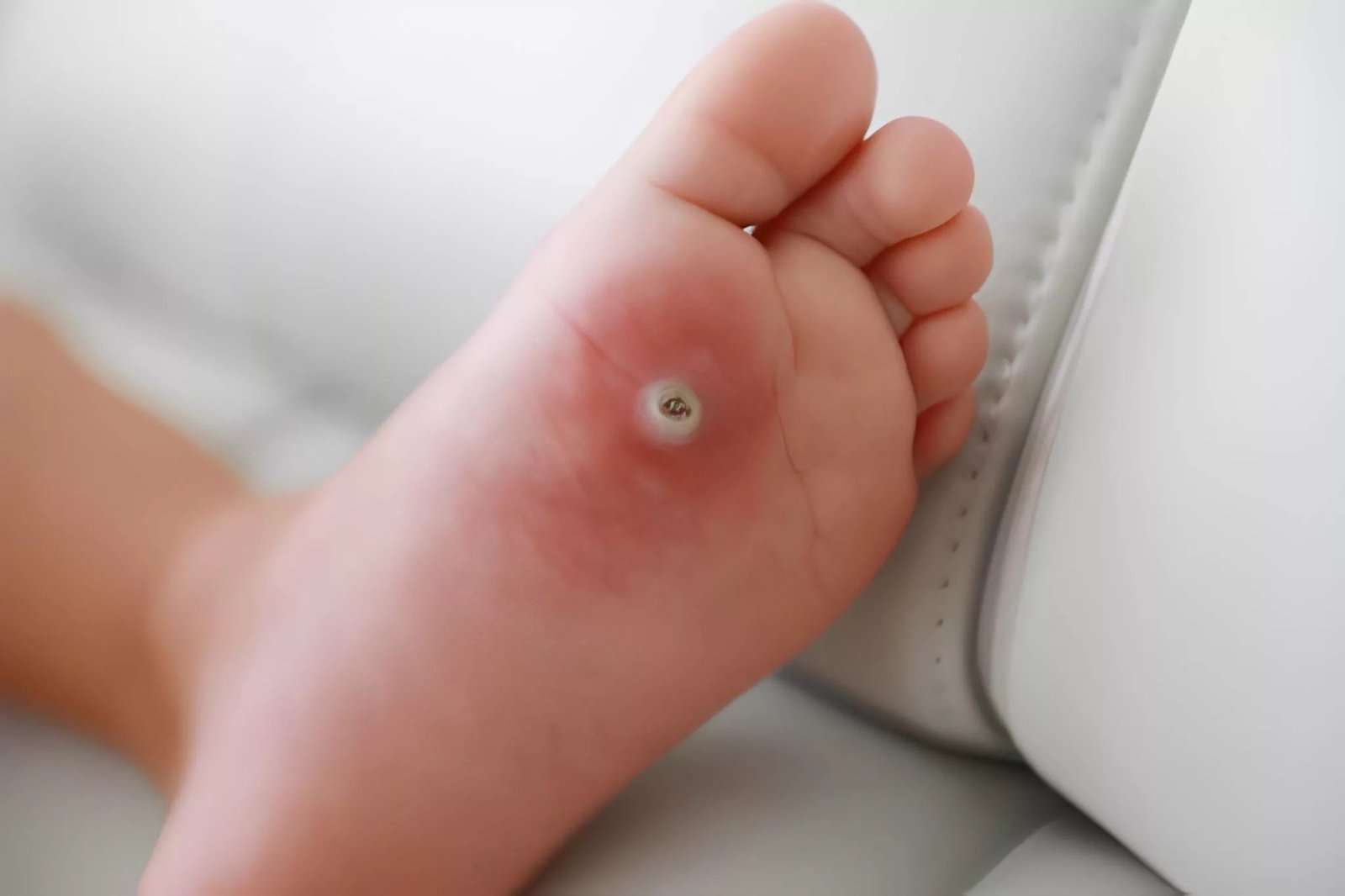
Verruca Vulgaris Identify A common wart (or verruca vulgaris) is a non-cancerous (benign) skin condition characterized by the growth of small, firm bumps. These bumps are generally painless and do not cause any harm apart from being unsightly. A common wart is a type of viral wart that mostly develops on the skin of the hands and feet. Members of the Human Papillomavirus (HPV) family are responsible for causing warts in humans.HPV types 2, 4, 27, and 57 are the most common causative agents of the skin disorder. However, other types may also contribute to verruca vulgaris.
As per estimates, approximately 10–20% of school-aged children and adolescents have some form of cutaneous warts. One study concluded that verruca vulgaris is the most common type of wart (47.4%), followed by genital warts (17.4%) and palmoplantar warts (14.28%). These warts can be contagious. The disease usually affects those with a weak immune system. Mostly, common warts go away on their own, but may take some time to disappear (several months to even years). For non-resolving warts, doctors prescribe topical medications (like salicylic acid, etc.) or may adopt minimally invasive procedures like freezing the wart (cryotherapy), destroying it with high-frequency controlled electric current (electrocautery), or laser therapy, etc. Surgical excision is rarely adopted.
Common Warts Presentation : Verruca Vulgaris Identify
It is a benign condition that does not cause any significant symptoms. Patients notice rough and hard bumps on the skin of their hands and feet. Plantar involvement typically presents as plantar warts (verruca plantaris), which are a distinct clinical subtype. Generally, these bumps are painless but can cause discomfort if they grow very large.
Skin Bumps
The different features of a wart are discussed below. Some individuals are concerned about the unsightly plaques, while raised bumps cause uneasiness to others.
Number of Common Wart Lesions:
In the vast majority of patients, only 1-2 warts are seen. However, an increased number of warts is usually seen in immunocompromised individuals.
Size of Common Wart Lesions:
The warts can range in size from smaller than 1 millimeter to several millimeters, and occasionally larger than 1 cm. There is no strong evidence that wart size reliably predicts duration, although spontaneous regression may occur within months, and some lesions can persist for years.
Location of Common Warts:
The most common sites for verruca vulgaris include:
- Back of the hands
- Fingers
- Around your nails
- On the feet
They may also develop on the elbows, knees, and even on the face. Common warts typically do not primarily involve the soles of the feet (these are usually plantar warts).
Appearance of Common Warts:
Most of the time, patients note small black dots on the raised bump (wart). In reality, these are thrombosed (clotted) capillaries present inside the rough bump.
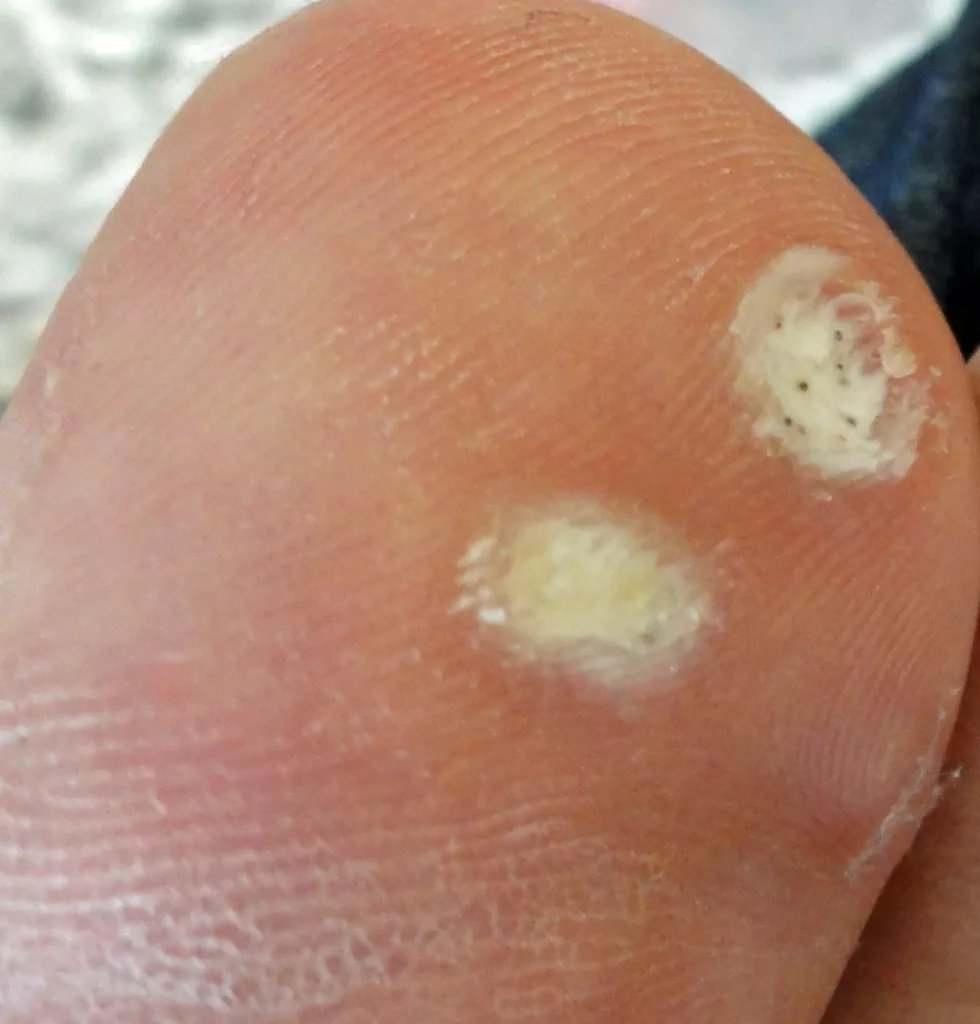
The image shows two verruca vulgaris (common wart) lesions on the big toe of a patient. The characteristic black dots of common warts can be seen.
The excessive keratin (hard protein that protects skin and mucosa), i.e., hyperkeratosis in the warts, makes them rough. In some cases, you will see outward growths (exophytes), while at other times, they may present as plaques. When present as firm papules, they have a characteristic dome-shaped appearance.
Usually, the warts are of skin color, but they may be pigmented, leading to a black appearance. Dermoscopic analysis typically reveals punctate hemorrhages, red or black dots, and looped or hairpin-like vessels in a papillomatous background.
Pain
For most patients, a wart is non-painful. However, for a small percentage (16%) of study participants, wart pain was an issue. Pain can occur, especially in periungual and plantar lesions. As verruca vulgaris develops on frequently used/exposed areas like hands and feet, experts attribute the pain to repeated trauma.
Itching and Bleeding
Pururitis or itching is also rare and was seen in only about 9% of patients. Some studies have also reported bleeding from the warts in a small fraction of patients.
Skin Disorders Associated With Verruca Vulgaris
Individuals suffering from painless common warts have a higher chance of other dermatological disorders, like acne. Individuals with plantar verruca vulgaris (common warts on the soles of the feet) have a higher incidence of acne vulgaris.
Verruca Vulgaris Causes
The causative agent for verruca vulgaris is the Human Papillomavirus (HPV). Researchers have identified more than 200 HPV types that are responsible for different types of infections in humans. In samples from patients with a healthy immune system, the most prevalent pathogen was HPV 57, followed by HPV 27.
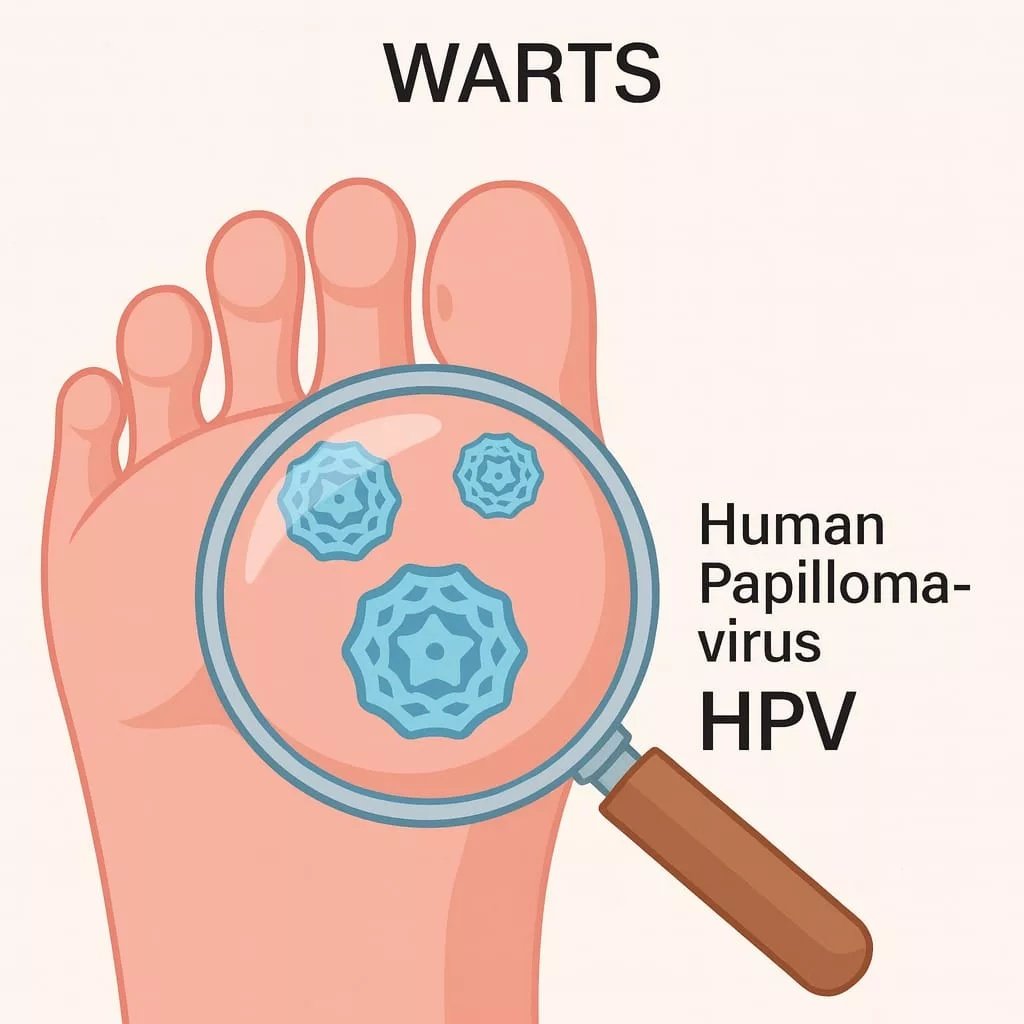
Human Papillomavirus is the cause of verruca vulgaris.
In immunocompetent individuals, the least common bacterial strains were HPV 2 and HPV 1. HPV 1 is more commonly associated with plantar warts rather than common warts. However, studies of samples from across the world have concluded that the following microbes are the most common causative agents of verruca vulgaris:
- HPV 4
- HPV 27
- HPV 57
- HPV 2
- HPV 1
Verruca Vulgaris Pathology
The HPV virus gains entry into your body through breaks in your skin (wounds, etc.). Once inside, the virus infects the keratin-producing cells of your body. The keratinocytes, then, respond to the virus’s commands as the pathogen multiplies rapidly. The virus triggers the proliferation of the infected cells, and eventually, there is a pile-up of infected cells, which appear as skin bumps.
Risk Factors for Common Warts
You won’t develop a wart immediately after acquiring HPV. It can take two to six months for a wart to develop after HPV entry. Several habits and conditions increase your risk of acquiring verruca vulgaris. Risk factors for common warts include:
Compromised Immune System:
Infants and children have underdeveloped immune systems that are not yet ready to fight invading viruses. This is why warts are common skin lesions of the young. Therefore, adolescents are at a higher risk of verruca.
Diseases like HIV/AIDS, cancer, and hepatitis are known to cause weakening of the immune system. Numerous patients with HIV get infected with HPV and develop warts. Organ transplant patients are prescribed immunosuppressant drugs. This lowering of the immune potential increases the patient’s likelihood of common warts.
Chronic systemic illnesses and long-term corticosteroid use are also recognized risk factors. Chronic alcohol abusers also have compromised immunity and, therefore, should be cautious about HPV infection.
Exposure To Virus:
People who are at an increased risk of virus exposure also have a greater propensity for warts. Youngsters who visit public places like pools and communal showers may end up with an HPV infection and, as a consequence, develop a wart on their skin. There are more chances of the virus entering your body if you walk barefoot in these locations.
Individuals habitual of nail-biting can transfer the HPV pathogens from outside to inside the body. Sharing personal items (or making direct skin contact) like towels and razors with an infected person can transmit the virus and make you sick.
Is Verruca Vulgaris Contagious?
Yes, common warts are contagious skin lesions. The microbe responsible for the disease spreads through direct skin contact. You can acquire the virus by sharing personal items with a contagious person. The pathogen can survive on inanimate objects, so you can get the virus by touching surfaces contaminated with HPV. Thus, it is better to practice good hygiene habits.
Verruca Vulgaris Diagnosis
Healthcare providers diagnose the skin condition by performing a physical examination of the expophytes. The vast majority of cases present with raised, skin-colored bumps that have tiny black dots. Your doctor may order further tests for a better diagnosis:
Dermoscopy:
In dermoscopy, doctors visualize the skin lesions under a specialized hand-held device called a dermatoscope. It is a magnifying instrument, equipped with a light source. The magnified view of the lesion helps identify features and structures that are invisible to the naked eye.
Skin biopsy:
It involves removing a small skin sample to observe under the microscope. A microscopic analysis aids in the diagnosis of verruca and also helps rule out skin cancers.
Differential Diagnosis
Several dermatological conditions have presentations similar to common warts. Dermatologists need to accurately differentiate between the disorders in order to provide the best-suited treatment to the patients. Benign conditions like water warts (molluscum contagiosum),lichen planus, and senile wart (seborrheic keratosis) fall under the DDs for verruca vulgaris. Life-threatening pathologies like squamous cell carcinoma (SCC) can also mimic common warts.
Verruca Vulgaris (Common Wart) Vs Verruca Plana (Flat Wart)
Both flat wart and common wart affect the same regions (hands, feet, and face). However, an evident difference lies in the thickness of the skin lesions. As the name indicates, flat warts are not raised and are smooth flat plaques or papules. On the other hand, common warts are raised bumps with black dots. Moreover, Verruca Plana often appear in linear arrangements due to the Koebner phenomenon, especially in shaved areas of the face or extremities.
Verruca Vulgaris Treatment
Medical professionals don’t usually treat warts and adopt a “wait and watch” strategy, as most skin lesions resolve without intervention in people with healthy immune systems. Sufferers have to trust the process and stay patient, as these unusual growths usually take several months to even years to go away completely.
It is only when the wart starts to cause discomfort, aesthetic issues, or spreads to other parts of the body that doctors decide to treat it. Healthcare professionals adopt any of the following strategies, depending on the size and location of your wart:
Topical Medications
Salicylic acid:
Doctors prescribe over-the-counter, topical medications to dissolve the wart. The main component of these preparations is salicylic acid. Many clinicians consider this a first-line therapy in the management of cutaneous (skin) warts. These topical products have proven to be safe and effective (cure rates of 50-70%) in the management of skin warts. However, you will need to apply the gels/creams every day for long periods (several months). Salicylic acid works by removing the keratotic skin layer (keratolytic effect).
Cantharidin:
Another chemical that is available in liquid form is cantharidin. It is a medical product that is applied topically. It offers appreciable clearance of warts and maintains a good safety and tolerability profile. Cantharidin application leads to the formation of a controlled blister under the wart. This effect lifts the tissue of the skin, consequently, blocking its blood supply. The raised skin bump then eventually detaches and falls off.
Trichloroacetic acid:
Trichloroacetic acid is a caustic agent used to treat various skin lesions. Doctors use different concentrations of trichloroacetic acid (TCA) to treat warts. Studies show that 80% concentration of topical TCA shows better results than a 35% concentration of TCA.
Cryotherapy
A frequently adopted, minimally invasive procedure for the management of common warts is cryotherapy. In this, doctors medically freeze the wart by applying liquid nitrogen to it. The frozen wart then eventually peels off. Both salicylic acid application and cryotherapy have proven to be safe and effective treatment strategies for verruca vulgaris.
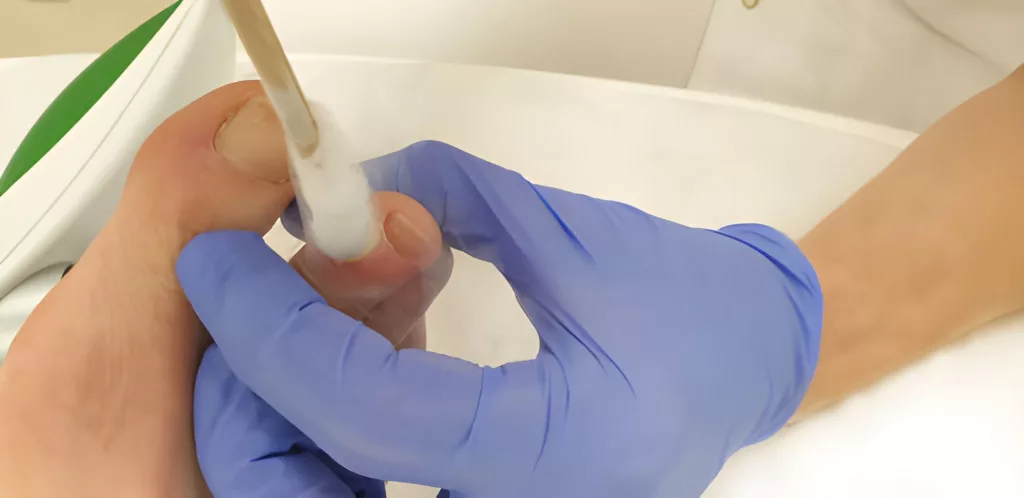
A doctor performs cryotherapy for verruca vulgaris on the foot. Liquid nitrogen can be seen directed onto the common wart.
If conservative treatments don’t work, doctors shift to invasive modalities for wart management. Common treatment types include:
Laser Therapy
Warts are removed via laser light. The heat generated from the laser destroys the wart’s blood supply, leading to its death. Lasers work best along with keratolytic agents in treating verruca vulgaris.
Electrosurgery
Electrocauterization or electrosurgery is a treatment modality that uses electric current to heat up tissue. This generated heat destroys the wart tissue. It is not universally superior to cryotherapy; outcomes depend on operator skill and lesion characteristics.
Immunotherapy
Another type of treatment that is gaining popularity in cancer treatment is immunotherapy. This treatment type strengthens your immune system to fight against HPV, which is responsible for the warts. Topical sensitizers like Diphencyprone (DCP) are known to have a high efficacy to treat warts and can be used as an adjunctive modality.
Surgical Excision
A surgeon can use conventional surgical methods to safely excise the unsightly growth on your face or hands/feet. However, with the availability of high-quality minimally invasive techniques, surgery is rarely adopted.
Verruca Vulgaris Prevention
You can lower your risk of verruca vulgaris by adopting the following steps:
- Minimize contact with a person having warts. Don’t touch or share personal items like towels, razors, etc.
- Avoid biting nails.
- Keep your feet covered when visiting places like public pools, etc.
- Kids can get an HPV vaccine.
- HPV vaccines primarily target oncogenic and genital HPV types and are not routinely used specifically for the prevention of common cutaneous warts.
Final Word
Verruca vulgaris (aka common wart) is a benign skin condition in which painless, skin-colored growths appear on the hands, feet, and face. The hyperkeratotic (rough) outgrowths usually have black pin dots in them. Human Papillomavirus (HPV) infection causes this disorder. Namely, HPV types 2,4, 57, and 27 are responsible for this type of wart.
This virus family affects people with low immunity (HIV patients, infants, organ transplant patients, etc.) and is contagious. So, avoiding contact and abstaining from sharing personal items with an infected person can keep the disease at bay. The skin lesions usually resolve on their own at a slow pace (several months to years).
In non-resolving cases, doctors first use topical medications (like salicylic acid, trichloroacetic acid, cantharidin) and cryotherapy. If conservative treatment doesn’t work, minimally invasive strategies like laser therapy, electrosurgery, and immunotherapy are employed to peel off the wart. Surgery is less frequently used in modern times.
References
[1] Karki, S., Pradhan, M., & Rai, A. (2022). Warts among patients visiting the outpatient department of dermatology in a tertiary care centre: a descriptive cross-sectional study.JNMA: Journal of the Nepal Medical Association,60(253), 770.
[2] Al Rudaisat, M. A., & Cheng, H. (2021). Dermoscopy features of cutaneous warts.International Journal of General Medicine, 9903-9912.
[3] Abeck, D., Tetsch, L., Lüftl, M., & Biedermann, T. (2019). Extragenital cutaneous warts–clinical presentation, diagnosis and treatment.JDDG: Journal der Deutschen Dermatologischen Gesellschaft,17(6), 613-634.
[4] Gopal, V., Shenoy, M. M., & Pinto, M. (2017). Common warts revisited: a clinical study.International Journal of Research in Dermatology,3(2), 261-6.
[5] Kirsten, N., Mohr, N., & Augustin, M. (2021). Prevalence and cutaneous comorbidity of acne vulgaris in the working population.Clinical, Cosmetic and Investigational Dermatology, 1393-1400.
[6] Skubic, L., Breznik, V., & Poljak, M. (2023). Different skin wart types, different human papillomavirus types? A narrative review.Acta Dermatovenerologica Alpina, Pannonica et Adriatica,32(4), 165-171.
[7] Bristow, I. (2022). Paediatric cutaneous warts and verrucae: an update.International Journal of Environmental Research and Public Health,19(24), 16400.
[8] Mohseni Afshar, Z., Goodarzi, A., Emadi, S. N., Miladi, R., Shakoei, S., Janbakhsh, A., … & Hatami, P. (2023). A comprehensive review on HIV‐associated dermatologic manifestations: from epidemiology to clinical management.International Journal of Microbiology,2023(1), 6203193.
[9] Dall’Oglio, F., D’Amico, V., Nasca, M. R., & Micali, G. (2012). Treatment of cutaneous warts: an evidence-based review.American journal of clinical dermatology,13(2), 73-96.
[10] Vakharia, P. P., Chopra, R., Silverberg, N. B., & Silverberg, J. I. (2018). Efficacy and safety of topical cantharidin treatment for molluscum contagiosum and warts: a systematic review.American journal of clinical dermatology,19(6), 791-803.
[11] Pezeshkpoor, F., Banihashemi, M., Yazdanpanah, M. J., Yousefzadeh, H., Sharghi, M., & Hoseinzadeh, H. (2012). Comparative study of topical 80% trichloroacetic acid with 35% trichloroacetic acid in the treatment of the common wart.Journal of drugs in dermatology: JDD,11(11), e66-9.
[12] Vakharia, P. P., Chopra, R., Silverberg, N. B., & Silverberg, J. I. (2018). Efficacy and safety of topical cantharidin treatment for molluscum contagiosum and warts: a systematic review.American journal of clinical dermatology,19(6), 791-803.
[13] Iranmanesh, B., Khalili, M., Zartab, H., Amiri, R., & Aflatoonian, M. (2021). Laser therapy in cutaneous and genital warts: A review article.Dermatologic Therapy,34(1), e14671.
[14] Anwar, A., Rafiq, Z., & us Salam, S. (2021). Comparison of efficacy of electrocautery vs. cryotherapy in the treatment viral warts.Journal of Fatima Jinnah Medical University,15(4), 177-180.
[15] Leeyaphan, C., Tantrapornpong, P., & Ungprasert, P. (2021). The efficacy of diphencyprone immunotherapy for the treatment of cutaneous warts: a systematic review and meta-analysis.Journal of Dermatological Treatment,32(6), 658-662.