

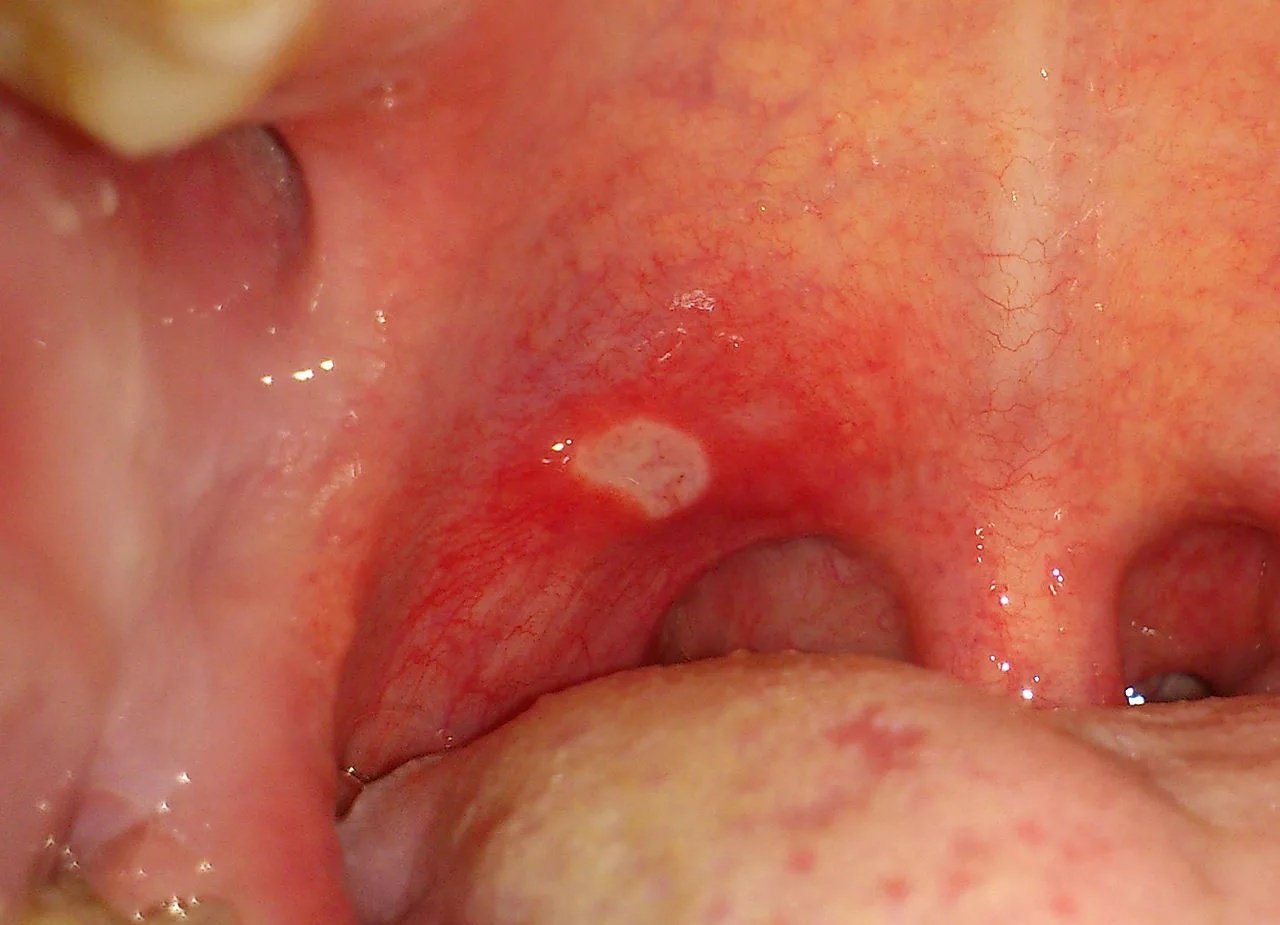
Aphthous Stomatitis Triggers Canker sores, aphthous ulcers, or aphthous stomatitis are common conditions characterized by the formation of small lesions (sores) in the mouth. These lesions have a white-yellowish appearance with a red border surrounding them. The painful ulcers are mostly present on the inside of your lips and cheeks, under your tongue, and at the base of your gums. Most patients have recurrent episodes of mouth ulcers; therefore, the disease is also called recurrent aphthous stomatitis (RAS). According to clinical studies, RAS is one of the most common diseases of the oral mucosa (soft tissue lining), affecting approximately 5–25% of the global population.[1]
The exact cause of mouth sores is not known; however, experts have identified etiological factors like genetics, stress, immune dysfunction, and nutritional deficiencies as contributing factors to the disease. In most cases, ulcers heal without intervention within a couple of weeks. However, when needed, doctors treat the condition with over-the-counter mouthwash rinses and ointments.
Types Of Aphthous Stomatitis: Aphthous Stomatitis Triggers
Based on the size and number of ulcers, clinicians divide recurrent aphthous stomatitis into three categories. Another feature differentiating the different types is the duration of ulcers.
Minor Aphthous Ulcers
The most common type encountered worldwide is the minor type. It affects approximately 75-85% of patients with aphthous stomatitis. Minor aphthous ulcers appear in the form of a group (1-6 ulcers at a time). Usually, the lesions are less than 5 mm in diameter and have a round appearance.
Common sites are non-keratinized mucosa, including:
- Buccal mucosa (cheeks)
- Labial mucosa (inner lining of the lips)
- Floor of the mouth
These types of mouth sores heal within 2 weeks and tend to recur at 1-4 month intervals. An important distinguishing feature between major and minor types is that minor aphthous ulcers heal without scarring.[2]
Major Aphthous Ulcers
It is seen in around 10% of RAS cases. Individuals suffering from major aphthous ulcers notice large lesions (usually greater than 10 mm in diameter) in groups of 1-3. The painful ulcers last longer than minor ulcers, i.e., 5-10 weeks on average. This type can affect any site of the mouth, including the middle part of your throat (oropharynx). The three-month recurrence rate of major ulcers is as high as 50%.
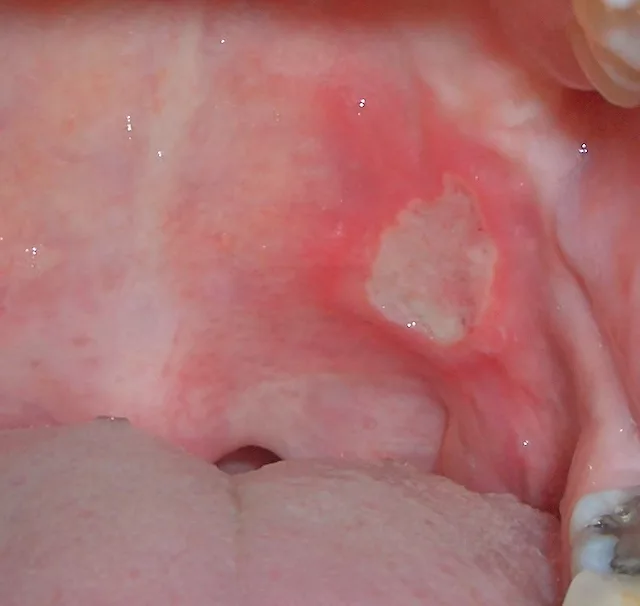
Close-up of a soft palate showing a major aphthous stomatitis lesion that continues to grow even after 7 days. Image source: Ryanfransen, “Aphthous ulcer in the back of the mouth,”Wikimedia Commons(Public Domain).
A more severe form of RAS is periadenitis mucosa necrotica or Sutton’s disease. It is a less common yet more severe form of RAS. The name is given because these ulcers (greater than 10 mm in diameter) cause deep inflammation of the mucosa (periadenitis) that leads to death of cells (necrosis). Due to the necrosis, major ulcers heal by scarring.[3]
Herpetiform Aphthous Ulcers
The least common type of RAS is the herpetiform, which is seen in approximately 1-10% of patients only. The ulcers are called herpetiform because they resemble herpes simplex lesions in clinical appearance. However, there is no connection between the two conditions.
Onset of mouth sores is seen in the 20-30-year-old age group.[4] In Herpetiform aphthous stomatitis, you will notice numerous small (2-3 mm in diameter) and painful ulcers. These mouth sores generally have a predisposition for older women. You may experience a large number of ulcers (up to 100) at the same time. On average, herpetiform ulcers last for 1 to 4 weeks, and the most preferred sites are the floor of the mouth and the margins of the tongue. Sometimes, multiple small ulcers can coalesce to form one irregular and large ulcer that heals by scarring.
Symptoms Of Aphthous Stomatitis
While the mucosal lesions go away on their own, they can cause significant discomfort while they last. They can make eating and talking uncomfortable.
Pain
Canker sores are usually painful. Numerous patients report intense, localized pain that worsens on consuming foods/drinks and movement of the mucosal site. Thus, aphthous ulcers have a direct impact on your oral health-related quality of life. Studies have found an association between the two.[5] A study even concluded that recurrent aphthous stomatitis has negative effects on the oral and general quality of life of patients.[6]
Burning And Stinging
The vast majority of patients notice burning or tingling sensations before an ulcer pops up in the oral cavity. Some explain their sensations as a combination of burning and stinging. Characteristically, a burning sensation is felt 2-48 hours prior to the development of an ulcer.[7]
Presentation Of An Aphthous Ulcer: What Does It Look Like?
All the ulcers have similar presentations, and differences lie in the size of the lesions. A mouth sore appears as a round or oval lesion with a white or yellowish-gray base. The central, lightly colored region is surrounded by a border (halo) of bright red color. Aphthous ulcers have a “punched-out” appearance, i.e., shallow lesions that appear like tissue has been removed from them. However, an ulcer may begin as an elevated spot with a red halo.
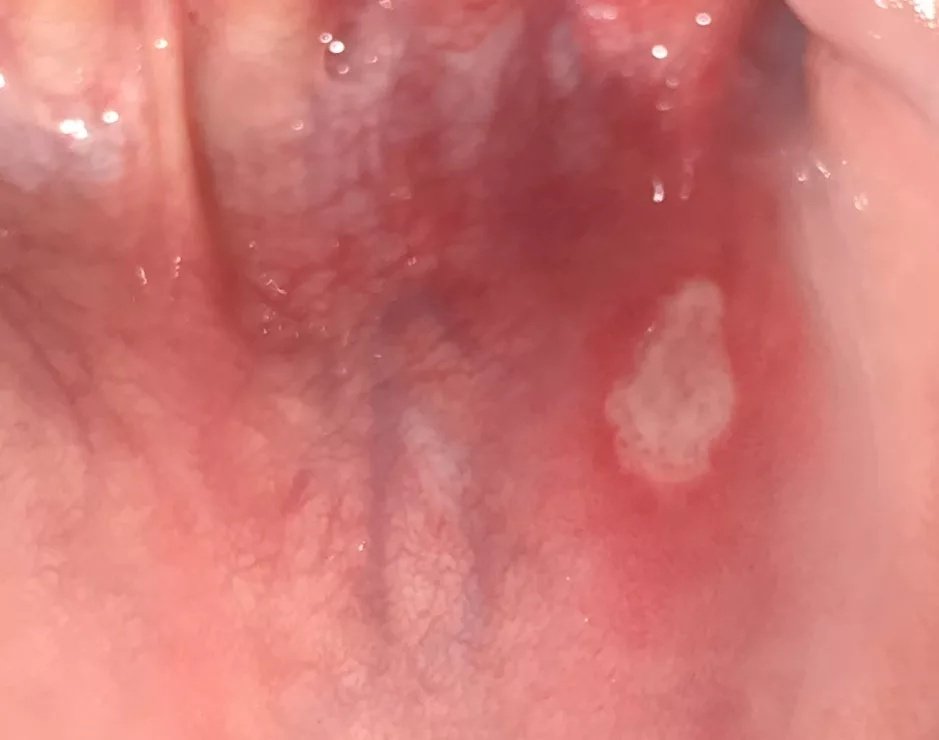
A close-up of the lower lip shows a typical lesion of aphthous stomatitis. You can appreciate the shallow white-yellow lesion surrounded by a red (erythematous) halo/ring. Image source: Sir Beluga,“Mouth ulcer on the lower lip,”Wikimedia Commons(CC0 Public Domain).
Aphthous Stomatitis Causes
Experts don’t know the exact cause of aphthous stomatitis. However, several predisposing factors have been identified that can trigger the onset of the painful mucosal lesions.
Risk Factors
Researchers have identified the following risk factors in aphthous ulcers.
Genetics:
Most people who suffer from recurrent aphthous stomatitis have a family history of the disease. Detailed genetic studies have recognized certain groups of hereditary markers associated with the development of ulcerations.[8] The possession of a distinct, specific DNA sequence (genetic polymorphism) puts you at a higher risk of RAS. Moreover, these genetic polymorphisms can potentially act as predictors of the disease.[9]
Trauma:
Local trauma to the oral mucosa can lay the foundation for an aphthous ulcer in an individual with a genetic predisposition for the disorder. Direct trauma (from biting, sharp teeth, or dental instruments) is known to cause chronic traumatic ulcers.[10] The majority of studies exploring the potential causes of aphthous stomatitis have concluded trauma as an evident factor.[11]
Nutritional Deficiencies:
Many people across the globe suffer from frequent oral ulcerations due to underlying nutritional deficiencies. Vitamin B12, iron, and folic acid deficiencies are linked to multiple problems in the body. In a study, low ferritin (iron) levels were reported in 64%, while low vitamin B12 levels were seen in 54% of patients with recurrent aphthous ulcers.[12]
Systemic Disorders:
Numerous underlying health conditions can contribute to the development of mouth sores. Behcet’s disease is characterized by orogenital ulcers, vascular inflammation, eye disturbances, and skin problems. People with gastrointestinal diseases like inflammatory bowel disease (IBS), Crohn’s disease, ulcerative colitis, gluten-sensitive enteropathy, and Celiac disease can present with aphthous ulcers.
Moreover, diseases that weaken the immune system (HIV/AIDS and hepatitis) act as contributing factors for oral ulcers, which can take a severe form.[13]
Stress:
Another factor that can induce the development of aphthous mouth ulcers is stress. Psychological stress has numerous adverse effects on the human body, one of which is aphthous ulcers. Studies show that stress plays an important role in recurrent aphthous stomatitis.[14] Thus, the disease is more prevalent in students across the globe. It was revealed in a study that stress and depression can act as triggers for aphthous stomatitis.[15]
Hormonal Changes:
Undulations in your hormonal levels can also trigger RAS. Women experiencing fluctuations in the female sex hormones can notice the development of ulcers in their mouth. Estrogen and progesterone level changes can cause RAS in women. Decreased salivary cortisol levels have also been linked to recurrent ulcers.[16]
Sodium Lauryl Sulphate (SLS):
It is believed that chemical compounds in the toothpaste, like sodium lauryl sulphate, can act as allergens and cause canker sores. There is no clear proven link between the chemical, but SLS in dentrifices is linked to recurrent ulcers in some cases.[17]
Medications:
People using angina medications (especially beta-blockers) for a long period may develop this oral malady. Moreover, immunosuppressant drugs can also play a role in the occurrence of the disease. Prolonged usage of NSAIDs (non-steroidal pain killers) can also cause RAS.
Drugs/Tobacco Use:
Abuse of drugs and persistent use of tobacco-containing products like cigarettes and vapes are linked to repeated formation of mouth sores. According to a study, tobacco smoking (cigarettes, vapes) damages the oral tissues and tends to make recurrent aphthous ulcers (RAUs) more common.[18]
In rare instances, infections by pathogens such as Helicobacter pylori can trigger outbreaks of aphthous ulcers.
Aphthous Stomatitis Diagnosis
Your dentist will take a history of your symptoms and physically examine the yellow-white lesions with a red halo. A family history of ulcers can also help in diagnosis. The size and number of ulcers help healthcare workers identify the type of stomatitis. Diagnosing it is easy. However, your doctor may order a blood test to rule out any underlying condition (anemia due to nutritional deficiency, etc.) that could be causing the ulcer.
Differential Diagnosis
Some mouth conditions present similarly to canker sores. However, certain differences help distinguish between the disorders.
Aphthous Stomatitis Vs Herpes Simplex Virus (Cold Sores):
Aphthous ulcers develop mostly on the inside of the lips, while herpes infection prefers the outside of the lips. HSV is a highly contagious disease, but ulcers are non-contagious. Canker sores are shallow lesions, but cold sores are fluid-filled blisters that burst and crust.
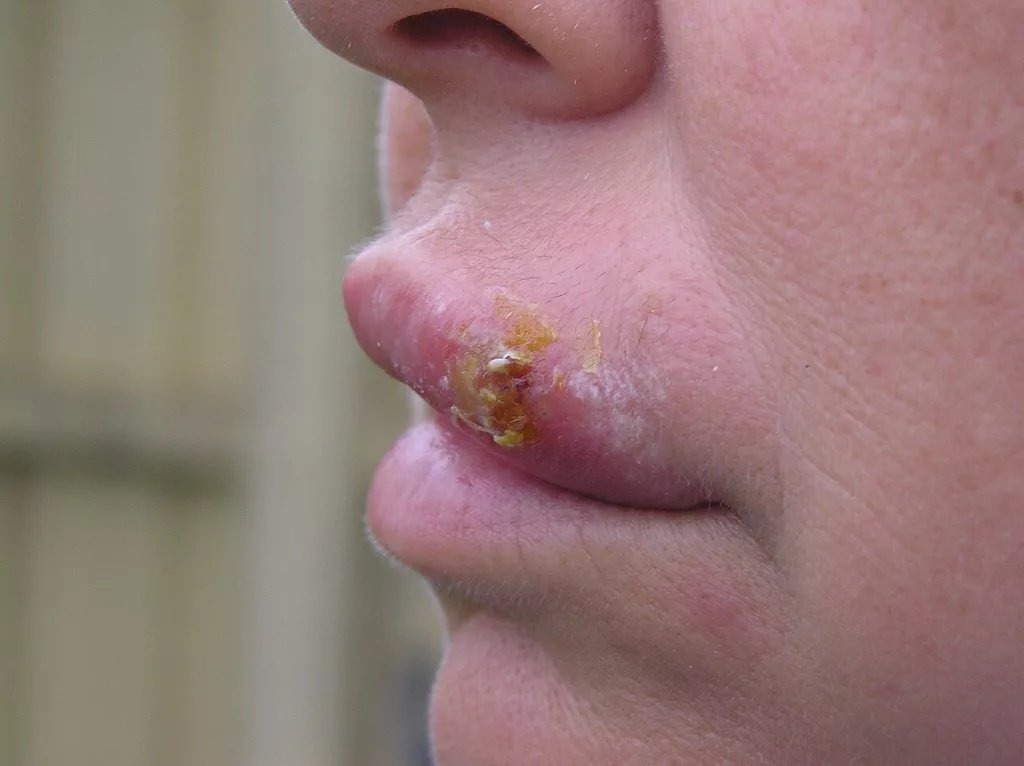
A crusted cold sore on the outside of the lips is different from a canker sore. Image source: Ben Tillman,“Cold sore,”Wikimedia Commons(Public Domain).
Aphthous Stomatitis Treatment
There is no definitive treatment for the disorder. This is because canker sores go away after some time without any treatment/intervention. However, they can pose a significant problem in chewing, eating, and speaking. Thus, management aims at alleviating symptoms and decreasing the severity of ulcers while prolonging disease-free periods.
Topical Therapy
Mild to moderate cases of RAS can be managed well with over-the-counter (OTC) medications. Topical corticosteroids help reduce the size, and prescription mouthwashes prevent added bacterial infections. Common steroid preparations (ointments) contain beclomethasone, hydrocortisone, or fluocinonide, etc. Rinses of mouthwashes containing chlorhexidine or benzdyamine has proven to be beneficial in many cases. Mouthwash rinses prevent added bacterial infections, which allows quicker healing.
Many people use a custom-made mouthwash, i.e., magic mouthwash, for this purpose. A magic mouthwash generally contains an antibiotic, an anesthetic (numbing agent), a corticosteroid, and an antacid (to coat your mouth for better relief). The combination of chlorhexidine gluconate mouthwash and topical steroids is effective in decreasing the severity of the ulcers and shortening the duration.
Patients report pain relief with the use of topical anesthetics (containing benzocaine). According to a clinical study, 0.5% Minocycline (tetracycline antibiotic) mouthwash with vitamin supplementation and topical anesthetic evidently alleviates symptoms of RAS.[19]
Another safe alternative to topical chlorhexidine+steroid therapy is topical hyaluronic acid therapy. It offers good pain control and faster healing.[20]
Systemic Therapy
If the sores don’t respond to topical therapy, your doctor will advise systemic corticosteroids (taking prednisolone by mouth). Vitamin supplementation helps improve underlying nutritional deficiencies, which can help relieve sore symptoms.
Laser Therapy
Clinical studies advocate the use of laser therapy in the management of aphthous stomatitis.[21] Modern research found that exposure of stomatitis lesions to low-level laser therapy effectively reduces pain scores and improves healing time in RAS patients.[22] Thus, it can prove to be an effective tool in the management of canker sores.
Electrocauterization (destroying tissue with electricity-induced intense heat) is another way of managing severe cases of stomatitis.
How Can I Prevent Aphthous Stomatitis?
You can prevent oral ulcers by maintaining good oral hygiene and managing your nutritional deficiencies. In prone patients, certain foods can trigger ulcers. Thus, avoiding them can keep you safe from sores. Avoid toothpastes containing sodium lauryl sulfate and adopt stress reduction techniques to minimize the chances of aphthous stomatitis.
FAQs
How Long Does Aphthous Stomatitis Last?
The duration varies between different types of RAS. However, the mouth ulcers generally last for 2-4 weeks.
Can Saltwater Gargles Help?
Yes, warm saltwater gargles can offer some pain relief from ulcer symptoms. You can try them multiple times a day.
Can A Canker Sore Change Into Cancer?
No, an aphthous ulcer can not turn into oral cancer. However, conditions like actinic cheilitis have a high conversion rate (to SCC).
Is Aphthous Stomatitis Contagious?
No, aphthous ulcers are not contagious and can not spread to others by close contact. You can not acquire them from an affected individual through activities like kissing, sharing edibles (food, drinks), etc.
Final Word
Aphthous stomatitis is an oral condition that causes recurrent ulcers in the mouth. Recurrent aphthous stomatitis (RAS) is divided into minor, major, and herpetiform types. Minor is the most common type that exists in groups of 5-6 ulcers on the inside of cheeks, lips, and the floor of the mouth. Major RAS is less common but a more severe type. Herpetiform ulcers resemble Herpes simplex virus (HSV) lesions, which are not seen frequently.
RAS causes pain, burning, and stinging in most cases. It appears as a white-yellow, shallow lesion surrounded by a red halo. There is no known cause, but genetics, physical trauma, nutritional deficiencies, and stress potentially contribute to stomatitis. Hormonal changes, chronic use of medicines (NSAIDs), and tobacco smoking are also identified as risk factors. Individuals suffering from systemic disorders like Behcet’s disease, Crohn’s disease, Celiac disease, and HIV/AIDS may also present with RAS.
The mouth ulcers go away on their own (in 2-4 weeks) without treatment. For mild to moderate cases, doctors advise topical corticosteroids and prescription mouthwashes (containing antibiotics like chlorhexidine, an anesthetic agent, a steroid, and an antacid). Minocycline mouthwashes and topical hyaluronic acid therapy have also proven to be safe and effective. Oral corticosteroids are reserved for severe cases. Vitamin supplementation helps improve nutritional deficiencies. Laser therapy and electrocauterization are modern ways of treating the condition effectively.
References
[1] Manoj, M. A., Jain, A., Madtha, S. A., & Cherian, T. M. (2023). Prevalence and risk factors of recurrent aphthous stomatitis among college students at Mangalore, India.PeerJ,11, e14998.
[2] Sekar, K. (2023). Painful recurrent ulcers in the mouth: Aphthous ulcers. InClinicopathological Correlation of Oral Diseases(pp. 399-407). Cham: Springer International Publishing.
[3] Lau, C. B., & Smith, G. P. (2022). Recurrent aphthous stomatitis: A comprehensive review and recommendations on therapeutic options.Dermatologic therapy,35(6), e15500.
[4] Elias, M. L., Fatahzadeh, M., & Schwartz, R. A. (2022). Recurrent aphthous stomatitis: an enigmatic entity and sign of systemic disease.Indian journal of dermatology,67(6), 834.
[5] Ziaei, S., Shahraki, H. R., & Dehkordi, S. D. (2022). The association of recurrent aphthous stomatitis with general health and oral health related quality of life among dental students.International journal of physiology, pathophysiology and pharmacology,14(4), 254.
[6] Rivera, C., Muñoz-Pastén, M., Núñez-Muñoz, E., & Hernández-Olivos, R. (2022). Recurrent aphthous stomatitis affects quality of life. A case-control study.Clinical, cosmetic and investigational dentistry, 217-223.
[7] Saikaly, S. K., Saikaly, T. S., & Saikaly, L. E. (2018). Recurrent aphthous ulceration: a review of potential causes and novel treatments.Journal of Dermatological Treatment,29(6), 542-552.
[8] Rivera, C., Muñoz, A., Puentes, C., & Aguayo, E. (2021). Risk factors for recurrent aphthous stomatitis: a systematic review.
[9] Yousefi, H., Gholami, M., Zoughi, M., Rezaei, N., Chuppani, A., Nikfar, S., & Amoli, M. M. (2022). Role of genetic polymorphisms in recurrent aphthous stomatitis: A systematic review and meta-analysis.Cytokine,153, 155864.
[10] Sonar, P. R., Panchbhai, A., Kaur, G., Jain, M., Singh, A., Thomas, T., & Kaur Sr, G. (2024). Chronic traumatic ulcer: a case report.Cureus,16(5).
[11] Saikaly, S. K., Saikaly, T. S., & Saikaly, L. E. (2018). Recurrent aphthous ulceration: a review of potential causes and novel treatments.Journal of Dermatological Treatment,29(6), 542-552.
[12] Tidgundi, M. S., Moinuddin, K., & Baig, M. S. A. (2017). Ferritin and vitamin B12 levels in patients with recurrent aphthous ulcers.Age,39(7.56), 37-7.
[13] Rzepecki, V., Reynes, J., Le Moing, V., Braquet, P., Faucherre, V., Lohan, L., … & Makinson, A. (2019). Severe HIV-associated aphthous stomatitis treated with etanercept.Médecine et Maladies Infectieuses,49(3), 219-220.
[14] Nurdiana, N., Ritonga, P. W. U., & Wulandari, P. (2023). The role of stress in recurrent aphthous stomatitis.European Journal of General Dentistry,12(01), 042-047.
[15] Priambodo, N. T., Hendarti, H. T., & Kharimah, A. (2021). Multidisciplinary management of recurrent aphthous stomatitis triggered by severe depression.Denta,15(1), 39-44.
[16] Susanto, H., Kendarwati, P., Imanusti, K., Widyanigsih, L., & Budiarti, S. (2019). Decreased salivary cortisol in recurrent aphthous stomatitis treated with topical steroids.
[17] Inda, V. S., & Emmanuel, B. J. (2020). Sodium lauryl sulfate in relation with aphthous ulcer.Journal of Advanced Clinical and Research Insights,7(5), 73-74.
[18] Ali, Z. M., & Alsaeed, M. A. (2025). Incidence of Recurrent Aphthous Ulcer among Vape and Cigarette Smokers.European Journal of Dental and Oral Health,6(6), 30-38.
[19] Chugh, A., Patnana, A. K., Kumar, P., Chugh, V. K., & Singh, S. (2022). The Clinical Efficacy of Minocycline Mouth Rinse on Recurrent Aphthous Stomatitis—A Randomized Controlled Trial.Indian journal of dental research,33(1), 24-29.
[20] Zakaria, M., Abdelwhab, A., & Hassan, S. (2020). Effectiveness of topical hyaluronic acid versus chlorhexidine mouthwashes in the treatment of recurrent aphthous stomatitis: a randomized clinical trial.Egypt Dent J,66(3), 1537-43.
[21] Amorim dos Santos, J., Normando, A. G. C., de Toledo, I. P., Melo, G., De Luca Canto, G., Santos-Silva, A. R., & Guerra, E. N. S. (2020). Laser therapy for recurrent aphthous stomatitis: an overview.Clinical oral investigations,24(1), 37-45.
[22] Radithia, D., Mahdani, F. Y., Bakti, R. K., Parmadiati, A. E., Subarnbhesaj, A., Pramitha, S. R., & Pradnyani, I. G. A. S. (2024). Effectiveness of low-level laser therapy in reducing pain score and healing time of recurrent aphthous stomatitis: a systematic review and meta-analysis.Systematic Reviews,13(1), 192.