

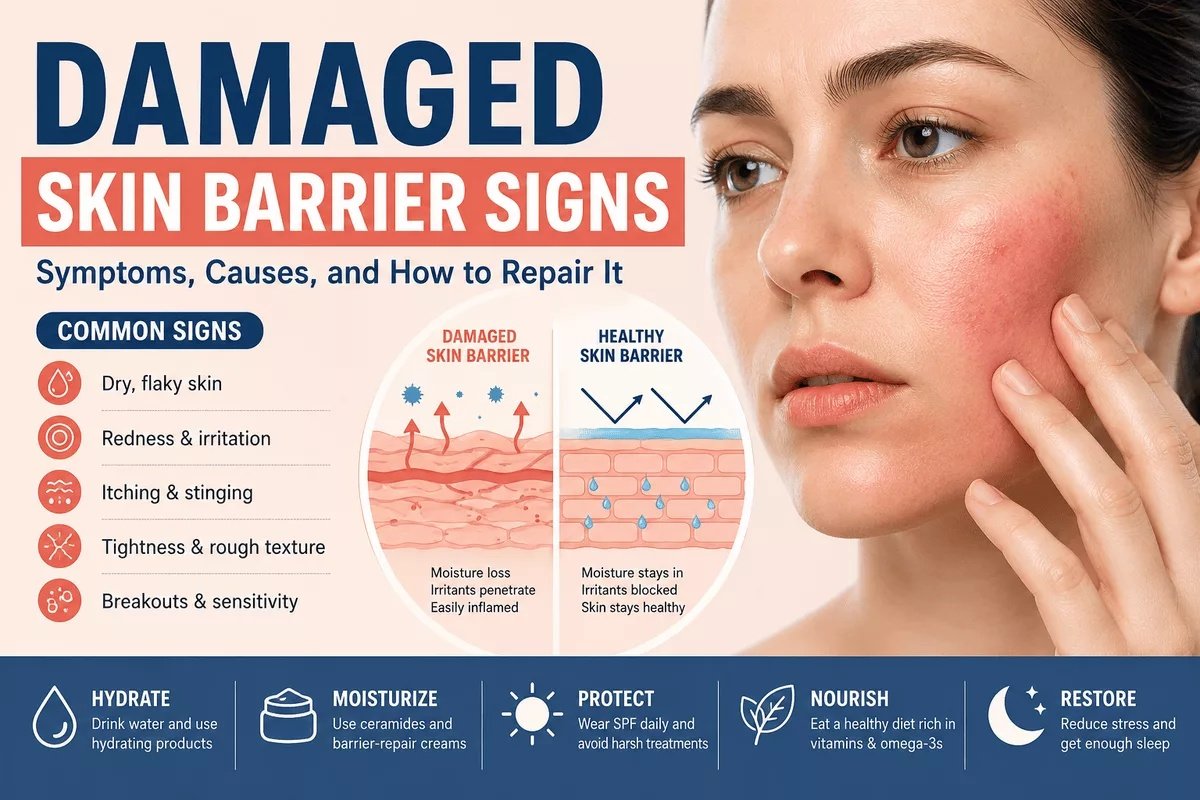
The skin barrier is a term commonly used to describe the protective function of the stratum corneum, the outermost layer of the epidermis. It is closely associated with the acid mantle and moisture barrier. The skin is the largest organ of the human body. It is widely considered the body’s first line of defense. It provides essential protection against mechanical, physical, and chemical damage. The skin barrier regulates the movement of water, irritants, allergens, and microorganisms into and out of the skin. A damaged skin barrier disrupts your skin’s natural protective layer. It may lead to moisture loss and increased vulnerability to irritants. Recognition of its signs early helps prevent worsening issues like chronic irritation, inflammation, or infections.[1]
Components of the Skin
The epidermis, dermis, and subcutaneous layer make up the skin. The epidermis is a thin layer of stratified squamous epithelium composed of multiple layers of keratinocytes at different stages of differentiation. In thick skin, the epidermis contains five distinct layers. It provides a waterproof barrier to the external environment and prevents excessive water loss from the body. The dermis, located below the epidermis, is composed of extracellular matrix, connective tissue, blood vessels, nerves, and skin appendages such as hair follicles and sweat glands. The subcutaneous layer is the deepest layer of the skin. It is composed of subcutaneous fat and connective tissues.[2]
What is a Skin Barrier?
The external layer of the skin, primarily the stratum corneum, protects the body from constant environmental challenges such as pathogens, irritants, allergens, and pollutants. Acting as a protective layer, the anatomy of the stratum corneum, or skin barrier, is similar to a brick wall and consists of two key components. These are skin cells known as ‘corneocytes‘ and a lipid layer (a combination of ceramides, cholesterol, and fatty acids) that binds these skin cells together.[3]
Why Is the Skin Barrier Important?
The skin barrier is the body’s external filtration system, which helps prevent excessive transepidermal water loss (TEWL), keeps the skin hydrated, and supports normal skin elasticity and function. Hydration and skin elasticity are the two main factors essential to maintain a strong skin barrier. The skin barrier can dry out without ample hydration and become cracked. A dry and cracked skin texture leaves your cells vulnerable to becoming infiltrated with impurities such as dirt, fungus, bacteria, and sun damage from UV rays. All of these things can alter your skin’s tone and texture. It can cause skin irritation, infection, or inflammation on your skin.[4]

Image comparing healthy skin and a damaged skin barrier
Signs of a Damaged Skin Barrier
Skin concerns that cause general discomfort or irritation may indicate damage to the skin barrier. If you are experiencing symptoms such as clogged pores, dry or itchy skin, inflammation, burning, stinging, or increased skin sensitivity, these may be signs of impaired skin barrier function. Adequate moisture levels are essential for healthy skin barrier function and epidermal renewal. Hence, when the skin barrier is damaged or depleted of hydration, the skin may become more sensitive and less effective at repairing itself.
A damaged skin barrier can worsen inflammatory skin conditions such as eczema, rosacea, and psoriasis.[5]
Signs and conditions associated with a damaged skin barrier are the following:
- Acne breakouts
- Extra dry skin and cracked skin
- Itchiness
- Redness
- Skin inflammation
- Bumpy skin
- Delayed wound healing
- Wrinkles and fine lines
- Textured Skin
- Uneven skin tone
- Skin Infection
- Rosacea
- Flare-ups
- Eczema
- Scaly patches
- Psoriasis
Causes of a Damaged Skin Barrier
There are several environmental conditions and lifestyle factors that can damage the lipid barrier and strip moisture from the stratum corneum, increasing transepidermal water loss (TEWL). These low levels of water retention dehydrate skin cells and impair the function of the skin barrier.[6] Common causes of a damaged skin barrier are:
- Air quality
- Wind
- Unprotected or too much sun exposure
- Excessive exfoliation or skin washing
- Harsh soaps and cleansers
- Excessive use of skincare products
- Allergens, irritants, and pollutants
- Overuse of active ingredients such as retinoids, alpha hydroxy acids (AHAs), beta hydroxy acids (BHAs), and benzoyl peroxide
- Psychological conditions such as stress, depression, anxiety, etc.
- Nutrient-deficient diet
- Lack of sleep
- Smoking
- Steroids
- Autoimmune or genetic disorders
Extreme weather conditions can make your skin more susceptible to dryness, irritation, and environmental damage. Dry weather pulls moisture from the skin, while the sun’s UV rays strip the skin of its natural oils and damage collagen and elastin, weakening the moisture barrier. Excessive hand washing, exfoliating, and exposure to cleaning products can also strip the lipid barrier and increase TEWL, leading to dryness and irritation.
A diet lacking in vitamin C or omega-3-rich foods can negatively impact the function of the skin barrier. Vitamin C has high levels of antioxidants that offer several benefits to support skin barrier health. It stimulates collagen production, which promotes cellular turnover and supports the skin’s wound healing process. The nutrients’ anti-inflammatory benefits fight free radicals and help prevent or repair dry skin.[7]
The benefits of Omega 3 include the reduction of acne and inflammation, as well as calming red, dry, and itchy skin. It hydrates the skin and prevents TEWL to keep moisture in and potential irritants out.[8]
How to Repair a Damaged Skin Barrier?
Mild skin barrier damage often improves with consistent skincare and avoidance of irritants. Follow these simple tips:
- Moisturize and hydrate your skin consistently.
- Simplify your skincare routine and avoid overusing active ingredients.
- Restore your skin with antioxidants and barrier-supporting ingredients such as ceramides.
- Focus on reducing inflammation and irritation.
- Use sun protection and avoid excessive sun exposure.
- Build healthy lifestyle and self-care habits.
Healing of the Damaged Skin Barrier
The damaged skin barrier does not repair itself overnight. The duration of the healing depends on your age and the severity of the damage. Our skin collagen and elastin decrease naturally as we age, which loosens these fibres and leaves us with a thinner skin texture that takes longer to self-repair. If the damage is mild, expect to see the initial positive results around two weeks after starting your new skin barrier regimen. In more severe cases, where your skin barrier has been compromised for months, it may take several weeks or even months to restore normal skin barrier function.
Factors that Affect the Healing Process
The cause of your damaged skin barrier will also influence the length of the healing process and how you plan to maintain a strong barrier in the long run. If the impaired skin barrier function was caused by using harsh products or lifestyle factors like smoking, diet, sun exposure, or sleep, it will likely be a simpler process to repair your skin barrier. On the other hand, if a genetic condition like eczema orpsoriasis is the root cause of your damaged skin barrier, it will take more diligent effort to maintain a healthy skin barrier function over the long term.
How to Maintain a Healthy Skin Barrier?
You need to follow these steps to maintain a healthy skin barrier:
- Keep your skin hydrated.
- Eat a nutritious diet.
- Always use SPF while going outside.
- Use a humidifier in dry air spaces.
- Drink at least 8 cups of water on a daily basis.
- Manage stress through healthy coping strategies.
- Sleep for 7 to 8 hours.
The stratum corneum requires constant attention and care if you want to maintain a healthy skin barrier. Consider and evaluate your daily habits and go-to skincare products to see if any of them played a role in impairing your skin barrier function in the first place.
Final Remarks
Prevention will always be the best protection to ensure you do not end up in an endless cycle of breaking down and rebuilding this outermost layer of the skin. Set yourself up to win by following some best practices for a strong moisture barrier. Be mindful of your consumption habits to fuel your day and keep your stress in check. Make getting a full night’s rest a daily priority.
References
[1] Harding, C. R. (2004). The stratum corneum: structure and function in health and disease.Dermatologic therapy,17, 6-15.
[2] McGrath, J. A., & Uitto, J. (2023). Structure and Function of the Skin.Rook’s textbook of dermatology, 1-50.
[3] Menon, G. K., Cleary, G. W., & Lane, M. E. (2012). The structure and function of the stratum corneum.International journal of pharmaceutics,435(1), 3-9.
[4] Elias, P. M. (2005). Stratum corneum defensive functions: an integrated view.Journal of Investigative Dermatology,125(2), 183-200.
[5] Stevens, N. E., Cowin, A. J., & Kopecki, Z. (2019). Skin barrier and autoimmunity—mechanisms and novel therapeutic approaches for autoimmune blistering diseases of the skin.Frontiers in immunology,10, 1089.
[6] Proksch, E., Brandner, J. M., & Jensen, J. M. (2008). The skin: an indispensable barrier.Experimental dermatology,17(12), 1063-1072.
[7] Ahmad, S., Ali, M. D., Khardali, A., Ali, M. S., Khan, G., Alam, N., … & Alam, M. S. (2024). Incredible use of omega-3 fatty acids: A review on current use and future prospective.Journal of Young Pharmacists,16(2), 177.
[8] Tagami, H., Kobayashi, H., Zhen, X. S., & Kikuchi, K. (2001, November). Environmental effects on the functions of the stratum corneum. InJournal of Investigative Dermatology Symposium Proceedings(Vol. 6, No. 1, pp. 87-94). Elsevier.