
 and tirzepatide (Mounjaro) have become rather popular options...)
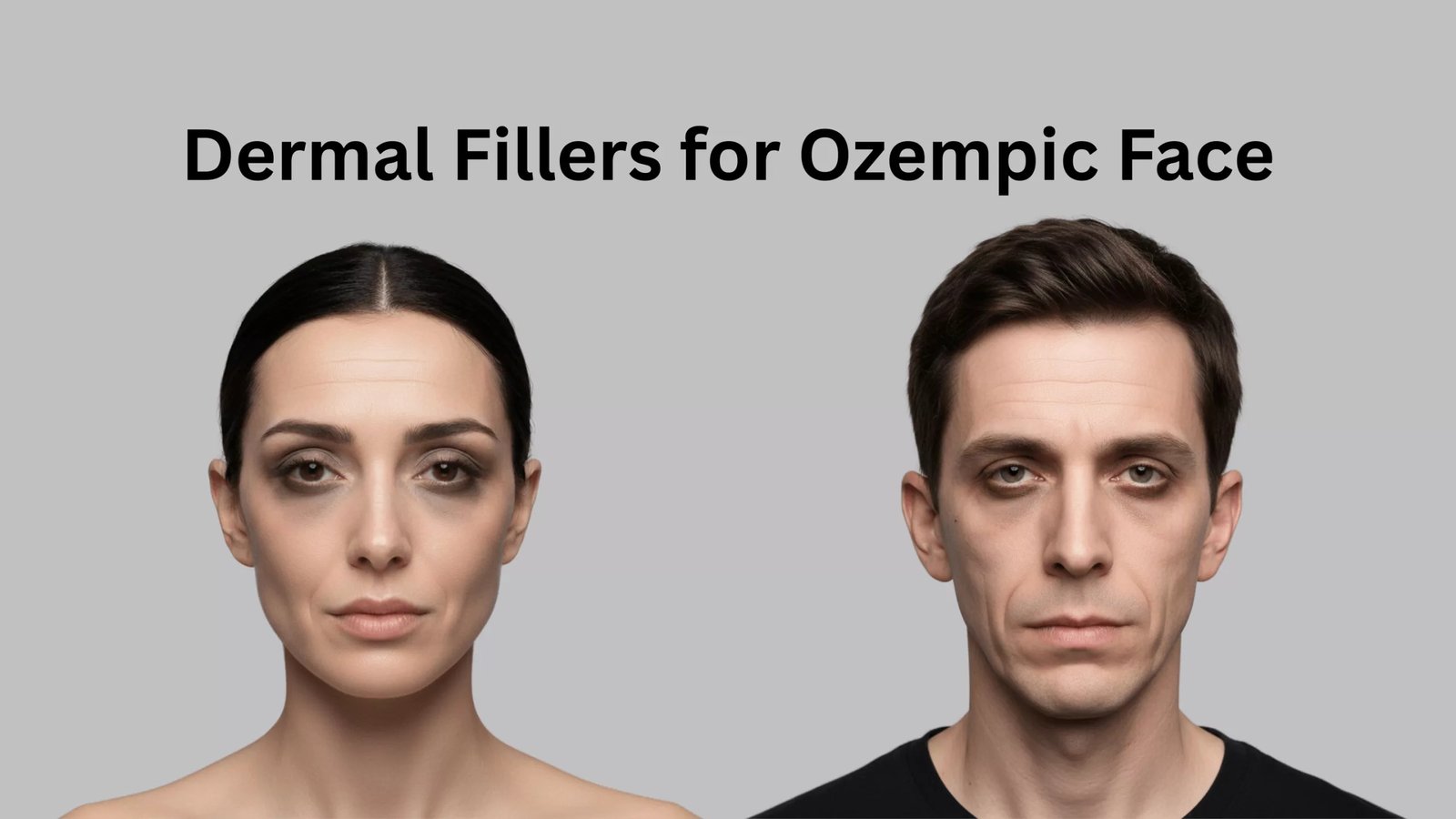
Dermal Fillers Ozempic GLP-1 receptor agonists like semaglutide (Ozempic, Wegovy) and tirzepatide (Mounjaro) have become rather popular options for medical weight loss. But as more people use these medications, the impressive results come with an unexpected aesthetic side effect, Ozempic Face.
Ozempic face refers to the characteristic premature facial aging that can accompany rapid weight loss from using these medications. The phenomenon isn’t limited to Ozempic either; it is seen with other methods of rapid weight loss as well (other medications or bariatric surgery). However, the speed and magnitude of weight loss seen with GLP-1 drugs are such that the facial shift is quite drastic and noticeable.
To counter this, many patients explore restorative options for facial volume, such as dermal fillers.
What Is Ozempic Face?: Dermal Fillers Ozempic
Ozempic face is a non-medical term for the facial changes seen in individuals who lose weight quickly, especially those taking GLP-1 receptor agonists.
These changes occur specifically due to the loss of facial volume that normally provides a youthful, plump appearance. As fat pads shrink, the face begins to show:
- Hollow or sunken cheeks and under-eyes
- Sharper, gaunter facial angles
- Drooping of the mid-face
- Overall sagging and an aged appearance
- Deep nasolabial folds and more pronounced wrinkles
Unlike gradual aging, where skin has time to adapt to volume changes, GLP-1 weight loss is too rapid. Some patients lose over 14% of body weight in just 68 weeks, and it doesn’t give the skin sufficient time to retract.
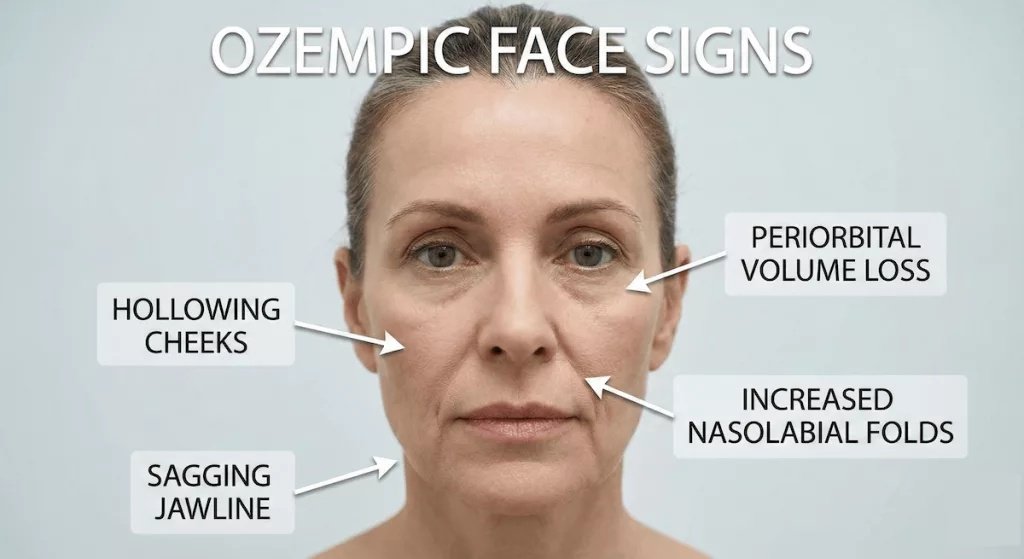
The most common facial changes associated with rapid weight loss include hollow cheeks, deep smile lines, under-eye shadows, and jawline sagging.
Why Does Ozempic Face Develop?
The drastic changes in the Ozempic face are because of several interconnected physiological processes.
1. Loss of Facial Fat Pads
The face is supported by superficial and deep fat pads that maintain the facial contours, cushion muscles, and provide youthful fullness. Rapid weight loss deflates these, creating hollowness, shadows, deeper folds, and more noticeable bone structure.
2. Loss of Lean Muscle Mass
Research suggests that approximately 25% to 40% of weight loss associated with GLP-1 therapy may include lean muscle mass, and facial muscles are no different from the others on your body. This loss contributes to overall drooping and a tired appearance.

Biological pathways involved in GLP-1–related muscle loss and the mechanisms targeted to maintain muscle strength during treatment. (Image courtesy: Rossi, G., Bucciarelli, L., Mananguite, CL. et al. Muscle loss and GLP-1R agonists use. Acta Diabetol (2025). Available fromSpringerand licensed under CC by 4.0)
3. Drop in Collagen and Elastin
At the same time, rapid weight loss reduces levels of collagen and elastin, the proteins responsible for the skin’s flexibility and support. This is why Ozempic face often looks like someone aged 5-10 years overnight.
4. Reduced Soft-Tissue Support
When fat, protein, and collagen decrease at once, the whole facial framework weakens, the lower face in particular, causing jowls and deepening creases.
Common Characteristics of Ozempic Face
| Facial Feature | How It Appears6Catalfamo, L., De Ponte, F. S., & De Rinaldis, D. (2024). “Ozempic Face”: An Emerging Drug-Related Aesthetic Concern and Its Treatment with Endotissutal Bipolar Radiofrequency (RF)—Our Experience. Journal of Clinical Medicine, 14(15), 5269. | Why It Happens |
|---|---|---|
| Cheeks | Hollowed, sunken appearance, sharp cheekbones | Loss of buccal and mid-face fat pads |
| Eyes | Sunken with dark circles, visible tear troughs | Loss of periorbital fat |
| Skin | More wrinkles and fine lines | Reduced collagen and elastin |
| Jawline | Jowls, sagging skin | Loss of lower-face structural support |
| Temples | Hollowed, sunken, brow descent | Fat loss in temporal region |
| Lips | Thinner, less plump | Reduced vermilion border volume |
Dermal Fillers as Treatment for Ozempic Face
Dermal fillers are the most effective non-surgical option to reverse Ozempic Face. These gel-like substances are injected under the skin to replenish the volume loss and, hence, restore fullness and a youthful look.
Rather than simply adding volume, expert aesthetic practitioners understand the three-dimensional anatomy of the face, and focus on replacing support structures that have been lost during weight loss.
Complementary treatments may include RF microneedling, Ultrasound lifting (HIFU/Ultherapy), or Laser resurfacing. In more severe cases, surgical procedures may be recommended.
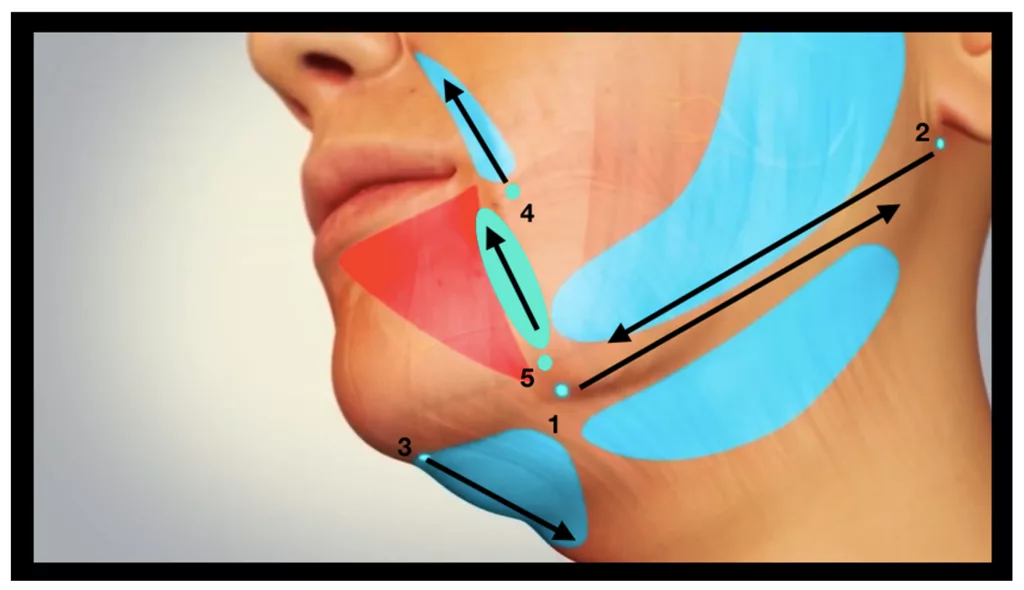
The main areas treated for Ozempic Face are the smile lines (melolabial folds), jawline (submandibular area), under-chin region (submental area), and the crease between the lower lip and chin (labiomental sulcus). (Image courtesy: Catalfamo, L., De Ponte, F. S., & De Rinaldis, D. (2024). “Ozempic Face”: An Emerging Drug-Related Aesthetic Concern and Its Treatment with Endotissutal Bipolar Radiofrequency (RF)—Our Experience. Journal of Clinical Medicine, 14(15), 5269. Available fromMDPIand licensed under CC by 4.0)
Mechanism of Action of Face Fillers
Depending on the type, fillers work by
- Replacing lost soft tissue
- Stimulating natural collagen production
- Restoring the structural support
- Improving hydration and skin quality
Areas That Benefit Most From Face Fillers
1. Cheeks and Mid-Face
The cheeks and mid-face often lose the highest volume after GLP-1 therapy. Fillers can restore the apple of the cheeks and lift sagging skin, providing support that can reduce the appearance of wrinkles.
2. Temples
Hollow temples, because of weight loss, create an unnatural skeletal appearance that can age the face by a decade. Fillers into the temples reestablish the graceful contour between the forehead and cheek, provide support to the eyebrow, and improve the overall facial symmetry.
3. Under-Eye Area
Loss of periorbital (under the eye) fat leads to dark, hollow tear troughs. Carefully placed fillers can smooth the lower lid-cheek junction, restoring a refreshed appearance.
4. Jawline and Chin
Jowling and loss of jawline definition are common complaints with Ozempic Face. Fillers along the jawline can restore structural support and recreate the sharp angle between face and neck.
5. Lips and Perioral Region
Thinning lips and vertical lip lines become more pronounced with volume loss. Fillers can restore lip volume while addressing the fine lines around the mouth.
Types of Fillers Used for Ozempic Face
Different dermal filler materials offer different properties, advantages, and durations of effect. The most common categories include:
1. Hyaluronic Acid (HA) Fillers
HA fillers are considered the first-line option for many practitioners. They provide natural-looking results, are reversible with an enzyme called hyaluronidase if necessary, and typically last 6 to 18 months. They are also super versatile and can be used for everything from a subtle lip enhancement to significant cheek restoration.
Examples: Juvederm®, Restylane®
2. Calcium Hydroxylapatite (CaHA) Fillers
These are made up of microscopic calcium-based spheres suspended in a gel. CaHA fillers give immediate volume while also stimulating the body’s collagen production over time. They last up to 12-18 months, and are often used for deeper volume restoration, jawline, cheeks, and skin quality improvement.
Example: Radiesse®
3. Poly-L-Lactic Acid (PLLA)
PLLA is a biodegradable, synthetic material that does not correct volume right away, but stimulates collagen production in your skin over time. The results are gradual, taking a few weeks to months to appreciate, and last typically 1 to 2 years. It creates a more natural, diverse effect.
Example: Sculptra®
4. Polymethylmethacrylate (PMMA)
PMMA fillers contain tiny plastic beads suspended in a collagen solution and are considered permanent fillers. Because they are ‘permanent’, have higher complications, and cannot be easily dissolved, they are only very rarely used when other options have failed.
Example: Bellafill®
How Much Do Fillers for Ozempic Face Cost?
In Pakistan, the approximate cost of a dermal filler treatment falls between 20,000 to 60,000 PKR per syringe (1 ml), while internationally, dermal fillers typically cost between USD 300 to 800 per syringe, depending on the product and treatment area. Most patients need 2 to 6 syringes, depending on the degree of volume loss.
For the typical Ozempic face correction, e.g., mid-face, cheeks, under-eyes, many patients end up paying 35,000 to 70,000 PKR per ml, whereas globally, similar treatments often range from USD 500 to 1,200 per syringe, sometimes even more when deeper contouring or multiple areas are involved.
Many clinics offer custom pricing, so the “per-ml” cost is only a baseline; the total bill may increase with bigger volume or multiple areas. Touch-ups and maintenance sessions may be needed every 6-18 months (depending on filler type), which should factor into long-term cost.
Safety Profile and Risks of Dermal Fillers
Dermal fillers are generally safe when administered by qualified professionals, but some potential risks exist, as with any procedure. Common side effects include:
- Swelling and bruising
- Redness or tenderness at the injection site
- Inflammation or allergic reaction
- Infection
- Raised bumps under the skin (nodules or granulomas)
These typically resolve within a few days to weeks, though. The most serious risk is accidental injection into a blood vessel, which can potentially lead to skin necrosis, stroke, or blindness.
Do Fillers Ruin Your Face?
This is a question asked by most patients, and the short answer is no. Fillers do not ruin your face; poor technique does. While complications may arise, a licensed, highly trained professional will know that something as small as using a blunt cannula instead of a sharp needle in certain areas can reduce the risks.
At the same time, while technical skill in administering a face filler is important, so is having a sophisticated knowledge of facial anatomy, aesthetics, and post-weight-loss facial restructuring. Patients should be aware and seek licensed healthcare providers who are trained in filler injection and complication management.
How to Prevent Ozempic Face?
It’s important to keep in mind that not every patient on Ozempic or some other GLP-1 agonist will develop facial hollowness. With the right preventive steps, it is possible to account for facial changes while maintaining weight loss.
- Aim for gradual weight loss, up to 1 to 2 pounds per week. Slower fat loss allows the skin to adapt.
- Consume 1-1.5 g/kg/day of protein to preserve lean muscle mass.
- At least 2-3 sessions of strength training weekly, focused on major muscle groups.
- Adequate hydration improves skin elasticity.
- Use collagen-supportive skincare (retinoids, vitamin C, peptides).
- Wear sunscreen daily to prevent extra aging. UV accelerates collagen breakdown.
- Early, conservative filler support can prevent more dramatic changes later on.
Fillers for Ozempic Face Before and After
When performed well, the results of dermal fillers look like a refreshed version of the patient, never distorted or fake.
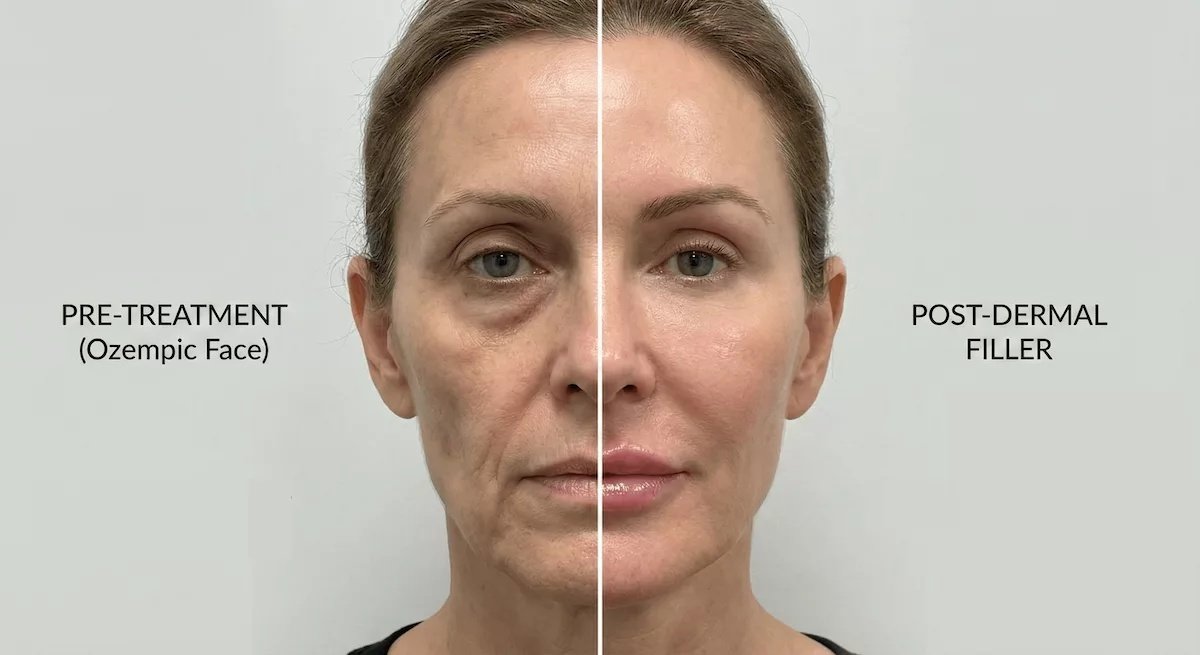
Before and after image of a woman showing Ozempic Face–related volume loss and the restored contours achievable with dermal fillers.
Final Words
Ozempic Face is not a medication failure; it’s just an unexpected side-effect of rapid assisted weight loss. With more and more people on GLP-1, the demand for quick, effective solutions for the Ozempic face will grow even more. Dermal fillers are one such option, and research continues to focus on improving them.
At this point, there’s no question that dermal fillers are the most effective, and as long as injected by an experienced practitioner, they can indeed reverse signs of facial aging gracefully, that too without compromising facial symmetry. When paired with smart habits like protein-heavy nutrition, strength training, hydration, and skincare, patients can protect their weight-loss results and maintain a healthier appearance throughout their weight-loss journey.
References
[1] Collins, L., & Costello, R. A. (2024). Glucagon-Like Peptide-1 Receptor Agonists. In StatPearls. StatPearls Publishing.
[2] Daneshgaran, G., Shauly, O., & Gould, D. J. (2025). “Ozempic Face” in Plastic Surgery: A Systematic Review of the Literature on GLP-1 Receptor Agonist Mediated Weight Loss and Analysis of Public Perceptions. Aesthetic surgery journal. Open forum, 7, ojaf056.
[3] Wilding, J. P. H., Batterham, R. L., Calanna, S., Davies, M., Van Gaal, L. F., Lingvay, I., McGowan, B. M., Rosenstock, J., Tran, M. T. D., Wadden, T. A., Wharton, S., Yokote, K., Zeuthen, N., Kushner, R. F., & STEP 1 Study Group (2021). Once-Weekly Semaglutide in Adults with Overweight or Obesity. The New England journal of medicine, 384(11), 989–1002.
[4] Neeland, I. J., Linge, J., & Birkenfeld, A. L. (2024). Changes in lean body mass with glucagon-like peptide-1-based therapies and mitigation strategies. Diabetes, obesity & metabolism, 26 Suppl 4, 16–27.
[5] Humphrey, C. D., & Lawrence, A. C. (2023). Implications of Ozempic and Other Semaglutide Medications for Facial Plastic Surgeons. Facial plastic surgery : FPS, 39(6), 719–721.
[6] Catalfamo, L., De Ponte, F. S., & De Rinaldis, D. (2024). “Ozempic Face”: An Emerging Drug-Related Aesthetic Concern and Its Treatment with Endotissutal Bipolar Radiofrequency (RF)—Our Experience. Journal of Clinical Medicine, 14(15), 5269.
[7] Daneshgaran, G., Shauly, O., & Gould, D. J. (2025). “Ozempic Face” in Plastic Surgery: A Systematic Review of the Literature on GLP-1 Receptor Agonist Mediated Weight Loss and Analysis of Public Perceptions. Aesthetic Surgery Journal. Open Forum, 7, ojaf056.
[8] Haykal D. (2022). Pilot prospective study evaluating the anti-aging efficacy, tolerability, and improvement of skin quality by hyaluronic acid injections for mid and lower face. Journal of cosmetic dermatology, 21(10), 5259–5260.
[9] Tay J. Q. (2023). Ozempic face: A new challenge for facial plastic surgeons. Journal of plastic, reconstructive & aesthetic surgery : JPRAS, 81, 97–98.
[10] Hong, G. W., Hu, H., Chang, K., Park, Y., Lee, K. W. A., Chan, L. K. W., & Yi, K. H. (2024). Review of the Adverse Effects Associated with Dermal Filler Treatments: Part I Nodules, Granuloma, and Migration. Diagnostics (Basel, Switzerland), 14(15), 1640.
[11] Stein, W., Sauer, H. J., Oberänder, N., Weimann, A., & Fischer, M. (2023). Effects of Additional Protein Intake on Lean Body Mass in Patients Undergoing Multimodal Treatment for Morbid Obesity. Nutrients, 16(6), 864.