
 to improve facial...)
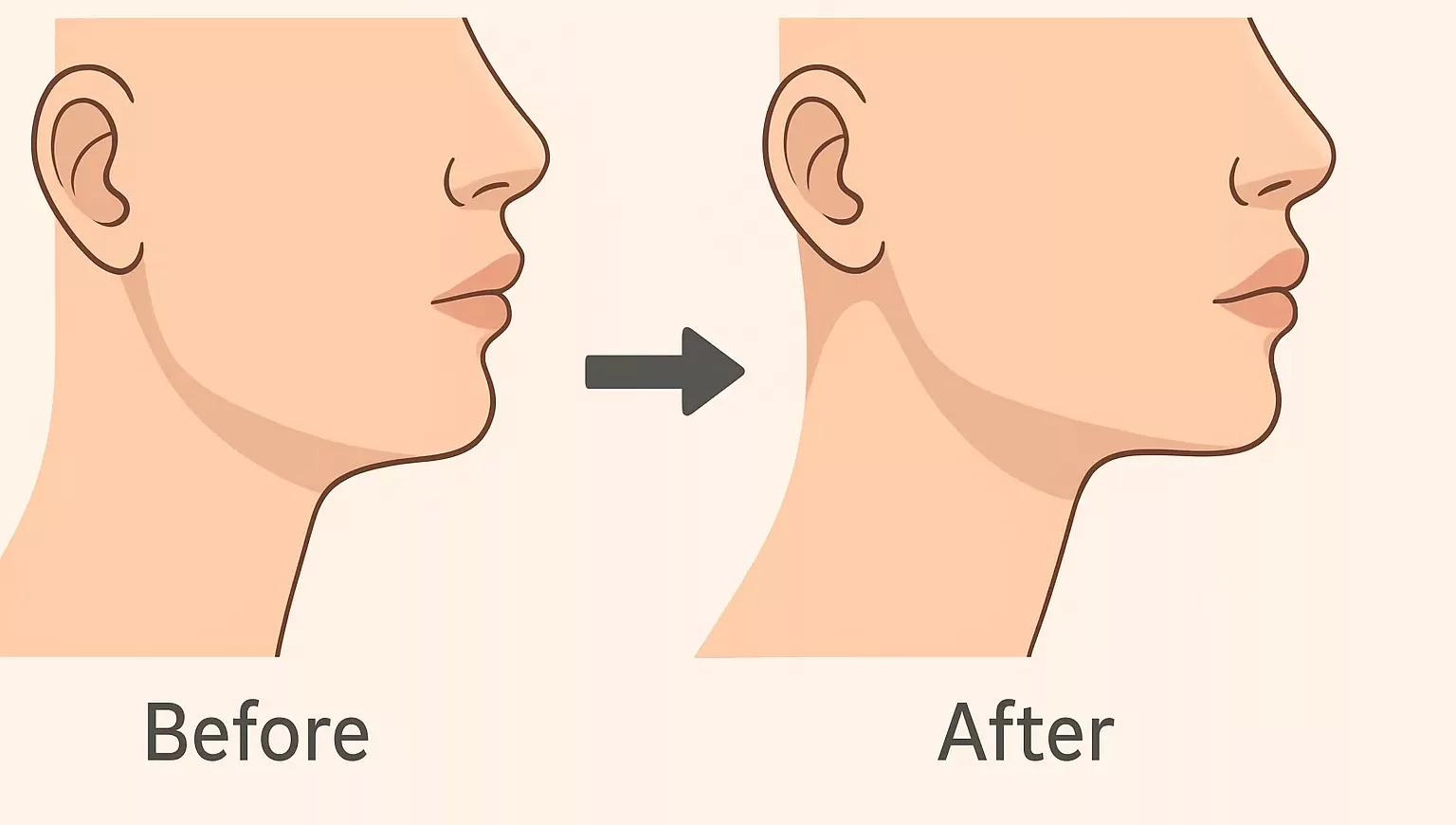
Genioplasty Indications Procedure Genioplasty is a surgical procedure that reshapes or repositions the bony chin (mentum) to improve facial balance, profile harmony, and lower facial aesthetics. In clinical practice, chin-related procedures are often broadly referred to as chin augmentation or mentoplasty. These terms describe any aesthetic or reconstructive enhancement of the chin.
However, it is important to note that genioplasty specifically involves modification of the chin bone, most commonly through a sliding (osseous) genioplasty, where the bony segment of the chin is repositioned. Chin augmentation, on the other hand, is a broader term that includes both bony surgery and non-bony methods, such as chin implants and injectable fillers, which enhance chin projection without cutting or moving bone. Chin surgery can be done alone or in combination with other jaw surgeries that can be for medical or aesthetic/cosmetic purposes.
Skeletal surgery that involves the chin has been done since the middle of the 1940s,[1] and the technology used in performing such surgery has advanced in recent years. Genioplasty helps patients improve the symmetry of their face and overall profile.
What is Genioplasty?: Genioplasty Indications Procedure
A genioplasty is a surgical procedure that aims to increase the size or change the shape of an individual’s chin. This way, the chin looks balanced with the rest of the person’s facial features. The procedure can also correct a retruded or receding chin (retrogenia), excessively prominent or protruding chin (prognathic chin), an off midline chin (chin asymmetry), or vertical chin excess or deficiency. It is important to distinguish genioplasty from chin augmentation using implants or fillers, which enhance projection without altering the underlying bone.
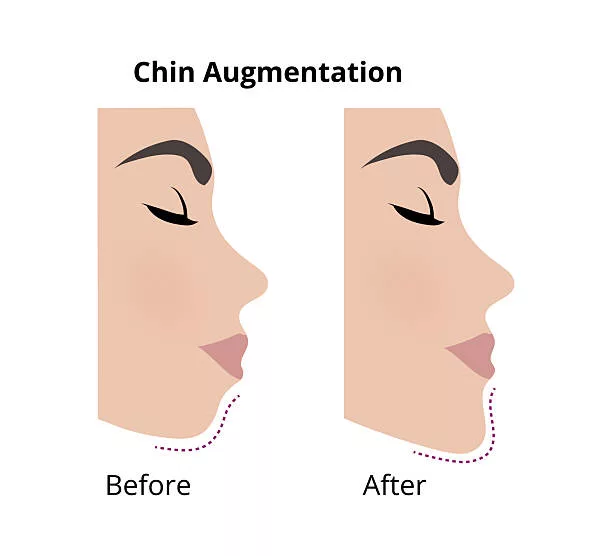
Chin augmentation surgery reshapes and enhances the projection of the chin, creating a more defined and balanced facial profile, improving overall facial harmony
Most cosmetic genioplasty procedures are not covered by insurance, while reconstructive or functional genioplasty, such as those performed for congenital anomalies, trauma, tumor resection, or significant functional impairment, may be eligible for coverage, depending on the indication.
Genioplasty surgery procedures can be done by oral-maxillofacial surgeons (OMFS). These surgeons have specific training and experience in treating the face or mouth, head, or jaw. Chin surgery can also be performed by plastic surgeons if they have the necessary training and experience.[2]
What are the Types of Genioplasty Surgery?
Genioplasty has two main types. These are
- Sliding genioplasty
- Implant augmentation (chin implants)
Sliding (Osseous) Genioplasty
A sliding genioplasty is a type of chin surgery to reshape or realign your chin. It is also called an osseous genioplasty. It involves a horizontal osteotomy of the anterior mandible, allowing the chin segment to be repositioned forward, backward, vertically, or laterally, depending on the patient’s anatomical and aesthetic requirements.
After surgeons realign the chin bone, they attach it securely to the jaw using titanium plates and screws while making necessary adjustments to correct asymmetrical chins.
As this technique uses the patient’s own bone, it avoids implant-related complications and offers permanent results. Sliding genioplasty is particularly indicated for patients with significant chin retrusion, protrusion, vertical chin excess or deficiency, or facial asymmetry.
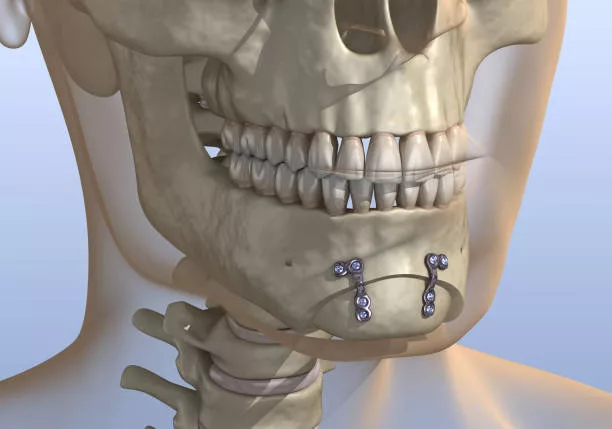
Osseous Genioplasty (Chin Reduction) surgery.
Alloplastic Genioplasty (Chin implants)
Alloplastic genioplasty refers to surgical chin augmentation using a biocompatible implant rather than bone repositioning. Although it does not involve cutting the mandible, it is still classified as a form of surgical genioplasty because it permanently alters chin projection through an operative approach. It is used to enlarge, reshape, push forward the chin, or make a small chin bigger to give it more definition. During this surgery, a surgeon implanted a silicone or porous polyethylene implant into the chin for reshaping, lengthening, or enhancement purposes. They are inserted via a submental or intraoral incision into a subperiosteal pocket and may be fixed with screws if needed.[3]
Chin implants are best suited for patients with mild to moderate chin deficiency and normal vertical chin height, but they carry specific risks, including implant migration, extrusion, infection, and long-term bone resorption.
Non-Surgical Chin Contouring
Non-surgical mentoplasty refers to minimally invasive chin contouring using injectable agents rather than surgery. This approach is temporary and best suited for patients seeking subtle enhancement or those not ready for surgery.

Performing non-surgical mentoplasty using hyaluronic acid injection to enhance the chin contour
Neuromodulators such as botulinum toxin are not volumizing agents but may be used selectively to relax the mentalis muscle, improving chin dimpling or soft-tissue contour. These dermal fillers include Hyaluronic acid (HA), Calcium hydroxylapatite (CaHA), Poly-L-lactic acid (PLLA), Polycaprolactone (PCL)
and Polymethylmethacrylate (PMMA). For patients with mild submental fullness rather than structural chin deficiency, non-surgical deoxycholic acid injections (Kybella) may be used to reduce fat beneath the chin, although it does not replace surgical genioplasty or alter chin bone position.
Common Types of Fillers
| Filler Type | Characteristics | Longevity | Reversibility |
|---|---|---|---|
| Hyaluronic acid (HA) | Most commonly used fillerProvides soft, natural chin enhancementIdeal for first-time patients. | 9–18 months | Reversible with hyaluronidase. |
| Calcium hydroxylapatite (CaHA) | Thicker, more structural fillerStimulates collagenSuitable for stronger chin definition. | 2–24 months | Not reversibleSafe when injected deeply. |
| Polycaprolactone (PCL) | Bio-stimulatory filler that induces collagen formationProvides firm, durable augmentation. | 2–4 years | Not reversibleRequires advanced injection skill. |
| Poly-L-lactic acid (PLLA) | Collagen-stimulating filler with gradual, progressive enhancementSubtle and natural-looking. | 2–3+ years | Not reversibleRequires precise technique. |
| Polymethylmethacrylate (PMMA) | Semi-permanent microsphere fillerProduces long-term collagen deposition and strong structural support. | 5+ years | Not reversibleShould only be used by expert injectors4Bertossi, D., Giampaoli, G., Dell’Acqua, I., Verner, I., Pirayesh, A., Nocini, R., & Nocini, P. F. (2019). Nonsurgical genioplasty. Dermatologic Therapy, 32(3). https://doi.org/10.1111/dth.12874. |
Indications of Genioplasty Surgery
Genioplasty is performed to correct aesthetic and functional abnormalities of the chin that affect facial harmony, profile balance, and lower facial proportions. It may be carried out as a standalone cosmetic procedure or as an adjunct to orthognathic or reconstructive facial surgery.
The most common indications for genioplasty include:
- A retruded chin that can disrupt facial balance and side-profile aesthetics.
- A prominent or protruding chin, leading to facial disharmony.
- Vertical chin excess or deficiency, contributing to disproportionate lower anterior facial height.
- Chin asymmetry or deviation, whether congenital, developmental, or post-traumatic.
- Incompetent lip closure caused by abnormal chin position or excessive mentalis muscle activity.
- Adjunctive correction during maxillary or mandibular osteotomiesto optimize facial proportions and stabilize orthodontic outcomes.
- Congenital or acquired deformities, including cleft lip and palate–related chin abnormalities, where chin repositioning can improve lip competence and lower facial support.[4]
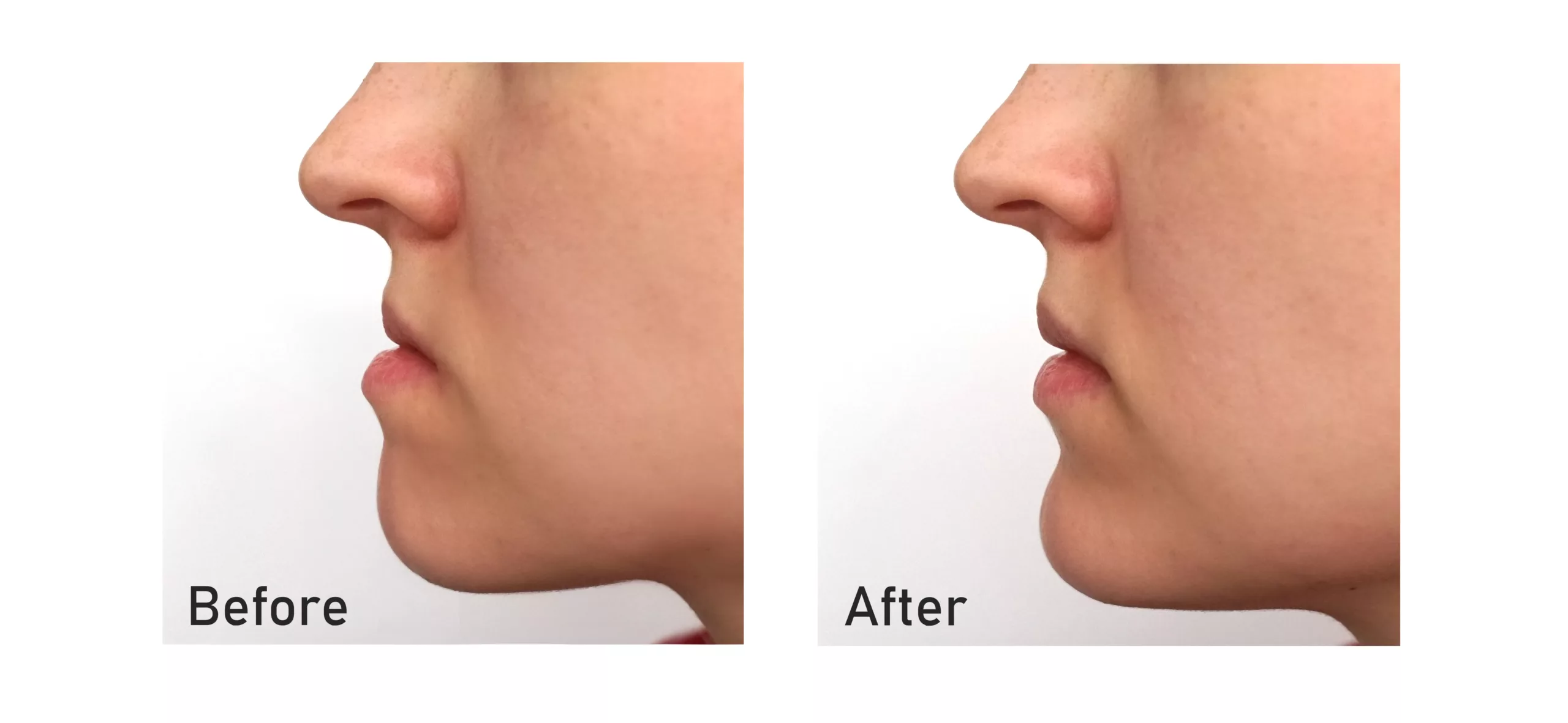
Genioplasty Procedure
How to Prepare Yourself for Genioplasty?
With the help of healthcare, you receive instructions before genioplasty that guide you on how to prepare. You may need blood work or tests to ensure safe surgery, along with imaging, such as X-rays or cone-beam CT scans of your chin bone. The healthcare team also needs photographs of your jawline to help you differentiate between before and after surgery performance.
If you take any medication, please discuss with your surgeon before surgery because you may need to stop certain medicines before surgery. In case of taking aspirin, anti-inflammatory drugs, herbal supplements, or anticoagulants (blood thinners), please disclose all about the medicine. And if you smoke, you need to quit smoking at least several weeks before you undergo genioplasty.[5]
What Happens During the Procedure?
For your surgery, you may be going for a chin implant or a sliding genioplasty. Both procedures need anesthesia, depending on the recommendation of a healthcare professional. Most patients prefer general anesthesia. A transoral or submental approach is utilized to access the anterior mandibular region. In alloplastic augmentation, a subperiosteal pocket is created, and a preformed silicone implant is placed and adjusted for optimal contour.
Osseous genioplasty involves a horizontal mandibular osteotomy, with multidirectional repositioning of the chin segment based on the patient’s cephalometric and aesthetic needs. Titanium miniplates and screws provide stabilization.
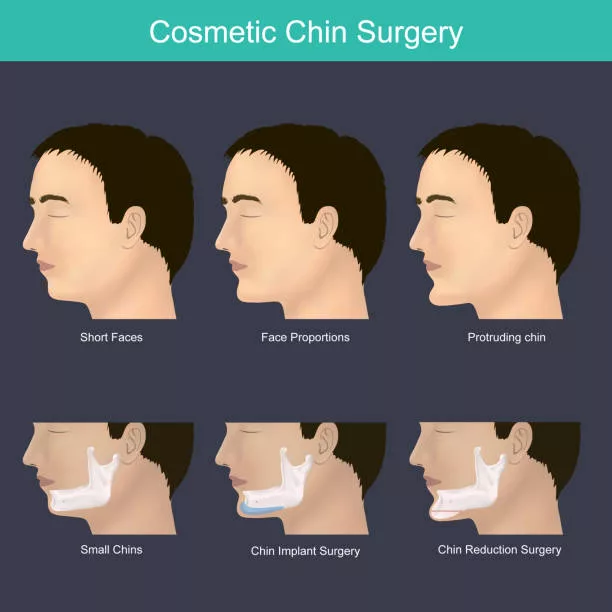
Cosmetic Chin Implant Surgery.
Incision closure is typically achieved using resorbable sutures, followed by application of a compressive dressing. Perioperative intravenous antibiotic prophylaxis is commonly administered to mitigate postoperative infectious complications.[6]
Benefits of Genioplasty
Genioplasty surgery (including chin augmentation procedures) can offer significant benefits to those individuals who are not happy with their chins. Some of the benefits are
- It makes your lower face look more defined or contoured.
- Chin augmentation increases the size of a tiny chin.
- Improve self-confidence.
- It can alter or realign a protruding, misaligned, recessed, and crooked chin.
- Reduce double chin appearance.
- Enhance the symmetry of your jawline, face, and side profile.
- Recover the lost volume of the chin.
- It may improve lip competence, but it does not directly correct dental malocclusion.[7]
Possible Risks of Chin Augmentation Surgery
A chin surgery also carries potential risks and complications. Apart from the normal pain or swelling after the surgery procedure, people may also experience some painful side effects, some of which may need further treatment or additional surgery. These side effects are
- Bleeding
- Complications from anesthesia or allergic reaction to anaesthesia
- Tingling or numbness in the lower lip or chin (usually temporary and related to mental nerve irritation or neuropraxia)
- Infection
- Bruising
- Pain
- Nerve injury
- Poor wound healing
- Issues with the chin implant or fixation hardware
- Scarring
- Asymmetry
- Bone resorption
- Implant extrusion and migration
- Unpleasant aesthetic results
- Irritation due to the screws and plates used[8]
Recovery After Genioplasty
The healing process after genioplasty varies, and the first few days are usually the most challenging. After surgery, the medical team will closely monitor you as you wake up from anesthesia. It is normal to have a little swelling, bruising, and even slight discomfort right after surgery. Since genioplasty is less critical than other surgeries, some patients go home the same day. Others leave after a few hours once they feel well, receiving instructions on how to care for their incision at home.
Swelling and Bruising
The swelling (postoperative edema) reaches its maximum in the first 72 hours, making the chin and the lower face tight and puffy. The swelling is constantly improving during the first week, and by the second week, more than half of it is healed. The deeper tissues require more time to settle, hence the final result of the chin contour is often seen after 3-6 months.
Bruising (ecchymosis) is also frequent around the chin and lower lip and tends to be mild to moderate. It normally subsides after 1-2 weeks when the tissues recover. The initial few days are normally treatable via NSAIDs or analgesics administered by a doctor. Postoperative inflammation may also be minimized by keeping your head raised and applying cold compresses in intervals.
Stitches and Dressings
It is important to take care of a surgical incision. If the surgeon uses non-dissolvable stitches, they will remove them after about one week. They will also remove any dressings or splints applied to your chin during surgery at that time. Do not touch or stretch the area, and in case the incision is intraoral. Keep the area in excellent oral hygiene by rinsing the mouth gently with saltwater or alcohol-free mouthwash to avoid irritation. External sutures are usually removed after 5-7 days, and intraoral sutures are normally dissolvable.[9]
Dietary Recommendations After Surgery
After an operation, patients should have a liquid/pureed diet immediately after the operation in order to avoid strain on the chin. In the initial week, one can introduce soft, non-chewy foods. In the second week, gradually introduce normal food. But avoid hard, crunchy, or chewy foods for at least 2-3 weeks to prevent damaging the surgical site.
Resuming Normal Activities
The majority of patients are able to resume light ambulation in a day and resume school or desk work in around a week, depending upon comfort. However, they should avoid strenuous activities such as gym workouts and heavy lifting for 3–4 weeks, and contact sports for 8–12 weeks to prevent trauma to the chin.
Post-Discharge Follow-up Visits
The initial visit after surgery is necessary during the first week, the second visit after 2-3 weeks, and further monitoring during the following months. During such visits, the surgeon is able to observe the progress of healing, assess the position of the bones, and ensure that any implants or fixation devices are well seated.
Final Words
Genioplasty is a versatile surgical technique that can improve both the appearance and functionality of the chin. Reshaping or relocating the mandible can improve facial harmony, fix jaw abnormalities, and increase self-confidence. Genioplasty is an effective and secure treatment for patients with specific chin issues, achieving desired cosmetic and functional goals. Other procedures that people use to get a chin implant include a rhinoplasty or a facelift.
References
[1] Şimşek, B., Efeoglu, C., Özden Yüce, M., Akay, M. C., & Çelen, S. (2021). Biomechanical validation of a modified genioplasty distractor. Journal of Stomatology, Oral and Maxillofacial Surgery, 122(4), e33–e37. https://doi.org/10.1016/j.jormas.2021.03.001
[2] Sebastiaan W. R. Dalmeijer, Tom, Ho, F., & Eddy. (2025). Evaluating Genioplasty Procedures: A Systematic Review and Roadmap for Future Investigations. Craniomaxillofacial Trauma & Reconstruction, 18(1), 5–5. https://doi.org/10.3390/cmtr18010005.
[3] Khan, M., Sattar, N., & Erkin, M. (2021). Postoperative Complications in Genioplasty and Their Association with Age, Gender, and Type of Genioplasty. International Journal of Dentistry, 2021, 1–5. https://doi.org/10.1155/2021/8134680.
[4] Bertossi, D., Giampaoli, G., Dell’Acqua, I., Verner, I., Pirayesh, A., Nocini, R., & Nocini, P. F. (2019). Nonsurgical genioplasty. Dermatologic Therapy, 32(3). https://doi.org/10.1111/dth.12874.
[5] Lee, S., & Kim, B.-K. (2025). Current concepts in genioplasty: surgical techniques, indications, and future perspectives. Archives of Craniofacial Surgery, 26(1), 1–4. https://doi.org/10.7181/acfs.2025.00045.
[6] Birbe, J. (2025). Orthofacial Surgery, the Esthetic Surgery of the Facial Skeleton: Techniques, Approaches, and Outcomes. IntechOpen EBooks. https://doi.org/10.5772/intechopen.1008760.
[7] Harris, W. C., & Raggio, B. S. (2021). Facial Chin Augmentation. PubMed; StatPearls Publishing. https://www.ncbi.nlm.nih.gov/books/NBK554506/.
[8] Kauke-Navarro, M., Knoedler, L., Stucki, L., Klimitz, F. J., Allam, O., Knoedler, S., Navarro, M. C., Flores-Pérez, P., Rancu, A. L., Heiland, M., Alperovich, M., & Safi, A.-F. (2025). Osseous Genioplasty and Its Impact on Airway Volume—What is the Evidence? Aesthetic Surgery Journal Open Forum, 7. https://doi.org/10.1093/asjof/ojaf059.
[9] Khan, M., Sattar, N., & Erkin, M. (2021b). Postoperative Complications in Genioplasty and Their Association with Age, Gender, and Type of Genioplasty. International Journal of Dentistry, 2021, 1–5. https://doi.org/10.1155/2021/8134680
[10] Abadi, M., & Pour, O. B. (2015). Genioplasty. Facial Plastic Surgery: FPS, 31(5), 513–522. https://doi.org/10.1055/s-0035-1567882