

Maffucci Syndrome This Maffucci Syndrome is a rare, non-hereditary congenital disorder that develops in your bones and skin. It causes multiple benign cartilage tumors (enchondromas) to grow in your bones, leading to skeletal deformities and physical disabilities. It also causes vascular malformations (abnormal clusters of blood vessels) on your skin.[1]
What Is Maffucci Syndrome?: Maffucci Syndrome This
Maffucci syndrome is a rare disease that involves the formation of multiple benign cartilage tumors referred to as enchondromas in your bones, especially in your hands and feet. These tumors develop together with venous malformations (previously called hemangiomas) on your skin. Maffucci Angelo was an Italian pathologist who first described the condition in 1881.[2]
Unlike many genetic disorders, Maffucci syndrome is not present at birth. The symptoms are common in early childhood when a child is between the ages of one to five years old. The enchondromas lead to bone deformities as they grow, the shortening of limbs, and a high possibility of fractures.
Prevalence Of Maffucci Syndrome
In medical literature, the number of reported cases is less than 200 worldwide since it was originally discovered in 1881. The condition has no ethnic discrimination, and it occurs in both males and females equally.[3]
As the syndrome is very rare, this complicates the process of early diagnosis and usually calls on the services of specialists who have knowledge of rare bone disorders.
Causes & Risk Factors Of Maffucci Syndrome
Genetic Mutations:
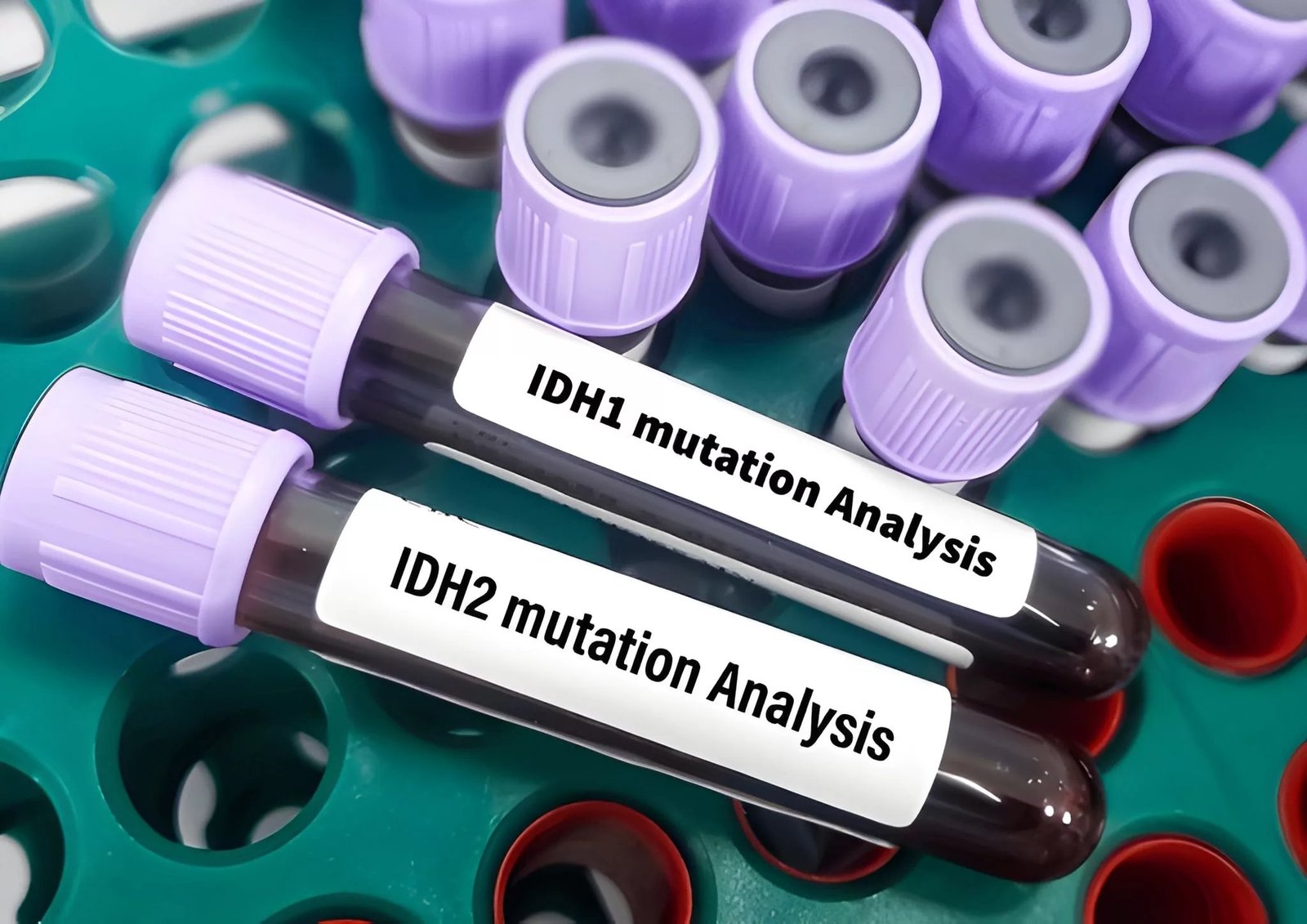
The most common reason for Maffucci syndrome is a somatic mutation (non-inherited genetic change) in the IDH1 or IDH2 genes during the early stages of fetal development.
The IDH1 gene is more commonly mutated. This gene produces an enzyme known as isocitrate dehydrogenase 1, which works in cellular metabolism. When this gene mutates, the enzyme functions abnormally, leading to the symptoms of Maffucci syndrome.[4]
The IDH2 Gene is less commonly affected. As in the case of the IDH1, this gene produces an enzyme that converts isocitrate into a different substance that is necessary to keep the cells active.
These are somatic mutations, i.e., these mutations take place during early embryonic development. The mutation appears in one cell, and as that cell divides, the resulting cells carry the same mutation. This results in mosaicism, where some cells in the body have the mutation while others do not.[5]
Associated Risk Factors:
Although the Maffucci syndrome is a random disease, there are risk factors associated with the predisposition to complications:
- Cancer development: The benign enchondromas can sometimes undergo malignant transformation into chondrosarcoma (a type of bone cancer).
- Number of Enchondromas: the higher the number of enchondromas, the greater the risk of malignant transformation.
- Age: The risk of cancer development is dependent on age, and it is crucial to monitor it regularly throughout life.
Symptoms Of Maffucci Syndrome
Maffucci syndrome has a typical skeletal and skin-related symptomatic combination.
Initial Symptoms:
At the beginning, you or your child can have the following symptoms:[6]
- Bone Deformities: The initial abnormality observed is the finding of an enchondroma in a long bone. These cartilage tumors lead to bulging of the bones, especially the hands and feet. The distorted and weakened bones produce deformities.

Maffucci syndrome of the toes with tumors of bone and soft tissue. The deformity causes foot pain and cosmetic concern.
- Shortened Limbs: With the development and growth of the enchondromas, they interfere with the normal bone growth. This leads to the shortening of arms or legs, where there is an unequal growth of a limb, with one arm or leg being shorter than the other. In about 40% of patients, the condition affects only one side of the body.
- Pathological Fractures: Minor injuries can cause bone fractures due to weakened bone structure.
- Short Stature: Maffucci syndrome often causes short stature in patients in adulthood because of its effect on the growth of bones in childhood.
Skin-Related Symptoms:
A characteristic of Maffucci syndrome compared to related disorders, such as Ollier disease, is the vascular lesions on your skin.[7]
- Early Vascular Lesions (Previously Called Hemangiomas) normally occur during early childhood (between four and five years old). These start as bluish spots on the skin that are compressible and round.
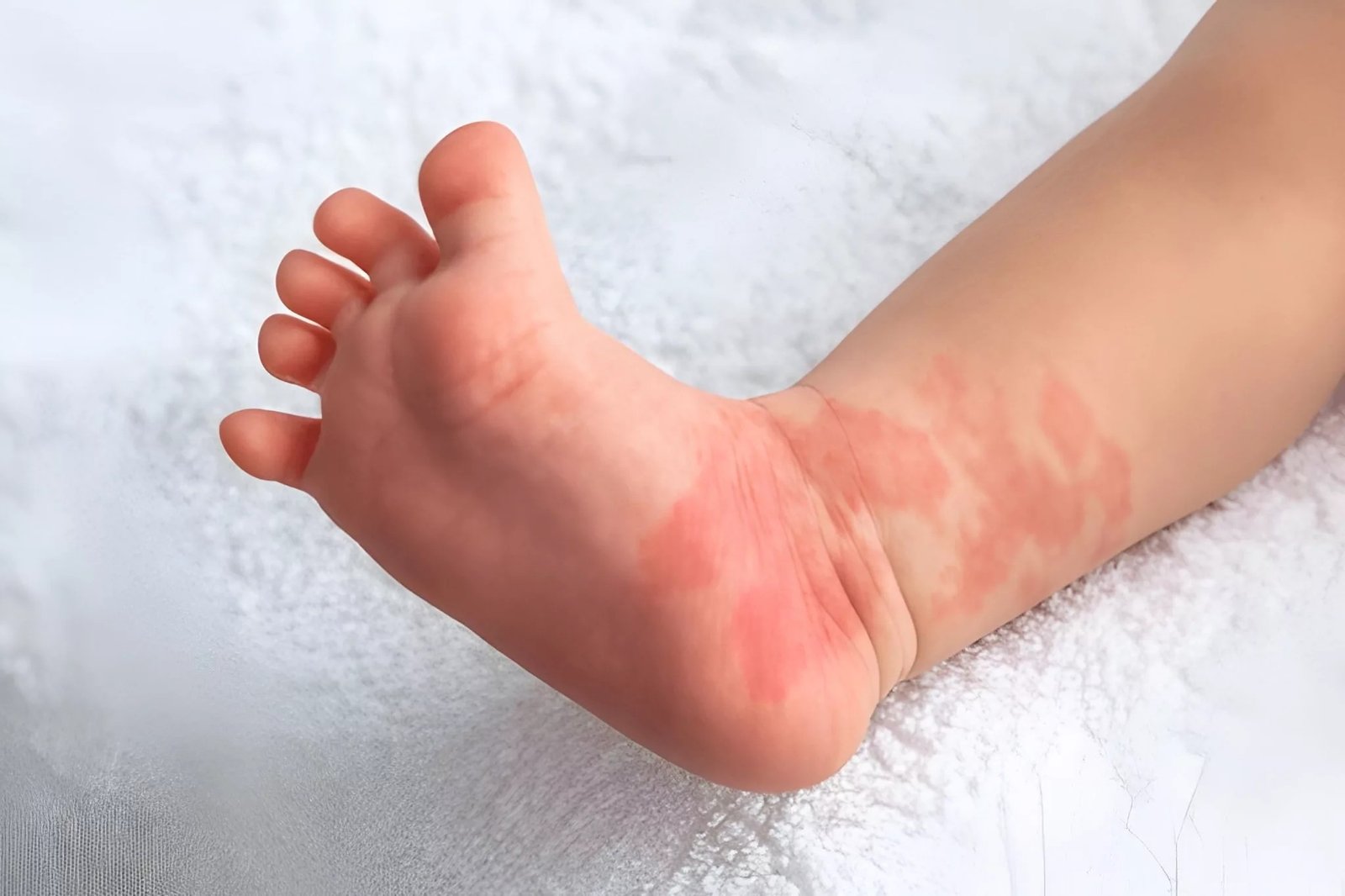
A hemangioma – red birthmark on the leg of a newborn baby
In the course of time, the nature of such vascular lesions transforms. They grow hard, knotty, and warty. A lot of them have calcified deposits inside the body, known as phleboliths, and can be felt under the skin.
- Lymphangiomas: In addition to the venous malformations, lymphangiomas grow in a few patients. These are the masses consisting of abnormal lymphatic vessels, which are the silvery thin tubes that transport the lymph fluid throughout your body.
Is Maffucci Syndrome Inherited?
Maffucci syndrome is a genetic disorder, but not hereditary. You don’t inherit from your parents, and you cannot pass it down to your children. The genetic mutation occurs sporadically and randomly during development, and no familial cases have been identified.
Maffucci Syndrome Diagnosis
Maffucci syndrome can be properly managed and monitored only through early and accurate diagnosis. The process of diagnosis consists of a series of steps and special examinations.[8]
Medical History:
The physician will start by taking a medical history, inquiring about the initial observation of bone issues or skin defects, and bone fractures. So also regarding your family history and the age at which the symptoms occur.
Physical Examination:
Once you have given your history, your doctor then carries out a comprehensive physical examination, and he looks at:
Skeletal Assessment
- Looking at all the bones, especially hands, feet, and limbs.
- Any visible deformities, swelling, or asymmetry.
- Measuring limb lengths
Skin Examination
- Recognition and description of all vascular lesions.
- Examination of lesions, phleboliths (calcium deposition).
- Evaluating lesion compressibility.
Investigations:
Imaging Studies:
- X-rays: Typically reveal multiple enchondromas as radiolucent, lobulated lesions containing characteristic “rings and arcs” calcifications. These cartilaginous growths within the bones may cause cortical thinning, bone deformities, and pathologic fractures, most commonly involving the hands, feet, and long bones.
- MRI (Magnetic Resonance Imaging): It helps determine:
– The exact number and location of enchondromas
– In case the tumors are benign or malignant change is present.
– The degree of vascular malformations - CT Scan (Computed Tomography): A CT scan helps in diagnosing malignant transformation.
Genetic Testing:
Genetic testing on affected tissue (enchondroma or vascular lesion) can confirm the presence of IDH1 or IDH2 mutations. Because of mosaicism, blood tests may not always detect the mutation, making tissue testing more reliable.
Biopsy:
Your doctor may perform a biopsy of an enchondroma or vascular lesion. In this process, a specimen is taken, which is viewed under a microscope. This helps:
- Assure that the tumor is an enchondroma
- Rule out malignant transformation
- Differentiate Maffucci syndrome and other related disorders
Laboratory Tests:
- Complete Blood Count (CBC)
- Serum Calcium and Phosphate
- Alkaline Phosphatase
Differential Diagnosis
- Ollier’s Disease: Characterized by enchondromas without vascular malformations.[9] [10]
- Metachondromatosis: Contrary to Maffucci syndrome, metachondromatosis is autosomal dominant and may be transmitted between parents and offspring.
Maffucci Syndrome Vs. Ollier Disease
| Feature | Maffucci Syndrome | Ollier Disease |
|---|---|---|
| Definition | Multiple enchondromas with vascular malformations | Multiple enchondromas without vascular involvement |
| Vascular Lesions | Present (venous malformations, hemangiomas) | Absent |
| Skin Changes | Bluish, warty lesions with phleboliths | No skin changes |
| Distribution | Often asymmetric, hands and feet | Often unilateral, any bones |
| Cancer Risk | 15-50% risk of chondrosarcoma | 25-50% risk of chondrosarcoma |
| Genetic Cause | IDH1 or IDH2 mutations | IDH1 or IDH2 mutations |
| Inheritance | Not hereditary (somatic mutation) | Not hereditary (somatic mutation) |
| Rarity | Extremely rare (fewer than 200 cases) | Rare (more common than Maffucci) |
Treatment Of Maffucci Syndrome
Maffucci syndrome has no cure. The treatment is aimed at symptom management, complications prevention, and enhancement of the quality of life. The most effective results are achieved by a multidisciplinary team approach.[11]
Monitoring & Surveillance:
Routine Examinations:
Regular monitoring is critical due to the high risk of malignant transformation. The healthcare team will develop a screening schedule, which in most cases will involve:
- Periodic imaging studies (X-rays, MRI, or CT scans) to monitor existing enchondromas
- Full-body examinations are annually or twice a year
- Assessment of any new symptoms, especially pain or rapid growth, immediately.
Cancer Screening:
- Frequent screening of common cancer sites.
- Ovarian, liver, and pancreatic cancer screening.
- Imaging of the brain in case of symptoms of possible CNS involvement.
Surgical Management:
- Removal of an Enchondroma: Surgery may be needed if there are signs of malignant transformation, chronic pain, or functional impairment. Surgeons may also perform bone grafting to restore strength.
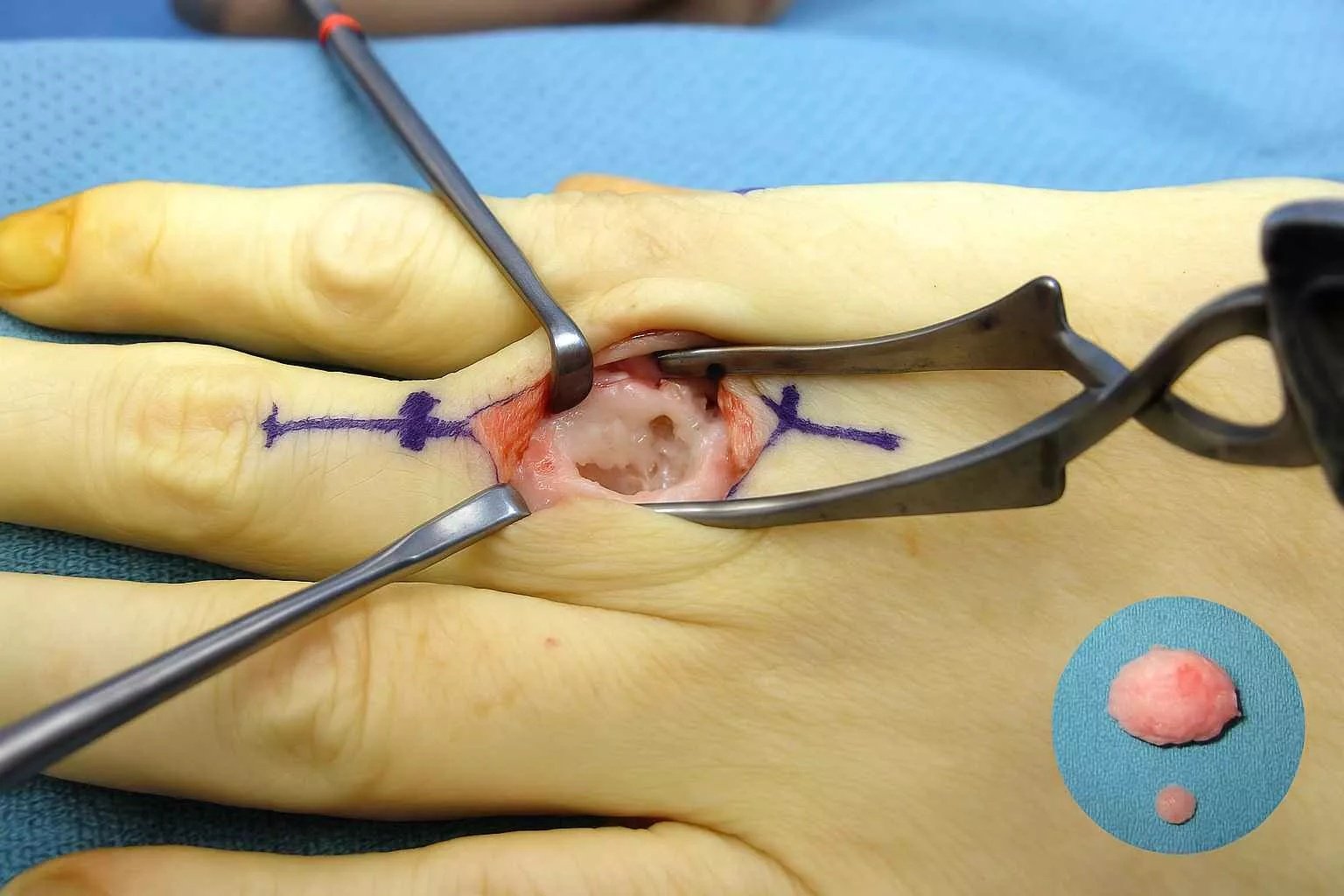
Surgical excision of an enchondroma in the finger of a patient with Maffucci syndrome. The exposed cavity indicates the tumor site, and the excised cartilaginous mass is shown on the lower right.
- Hand Surgery: Specialists can correct deformities, restore grip strength, and reduce fracture risk.
Treatment of Vascular Lesions:
- Sclerotherapy: In case of painful vascular malformations, the doctor can suggest sclerotherapy. It is performed by inserting a solution into the abnormal blood vessels, which causes them to contract and harden.[12]
- Surgical excision: Some cases need surgical excision, especially when the lesions are large, painful, or aesthetically disgraceful. Nonetheless, surgery has its adverse side effects, such as scarring and recurrence.
Medical Management:
Pain Management: Your doctor may prescribe:
- Over-the-counter pain relievers are NSAIDs (ibuprofen, acetaminophen).
- Medications for moderate to severe pain.
- Take supplements as advised by the doctor, which have enough vitamin D and calcium.
- Physical therapy to augment the functioning and alleviate pain.
Lifestyle Modifications:
Patients with Maffucci syndrome are advised to avoid high-impact sports that expose them to the risk of fractures. Do low-intensity physical workouts such as swimming. Wear protective gear during physical exercises.
Complications Of Maffucci Syndrome
Maffucci syndrome may result in some complications:
Chondrosarcoma:
The worst complication is the development of benign enchondromas into chondrosarcoma, which is a malignant bone cancer. This is observed in 15 to 50 percent of patients with Maffucci syndrome. Symptoms of cancerous change are:[13]
- The pain appears in a previously stable area.
- Quick enlargement of a previously existing tumor.
- The changes observed in imaging studies.
Other Malignancies:
Patients are at increased risk of:[14]
- Central nervous system tumors (brain tumors)
- Ovarian cancer
- Liver cancer
- Pancreatic cancer
- Other soft tissue sarcomas
Skeletal Complications:
The skeletal problems in the long term include:
- Chronic pain and disability
- Progressive deformities
- Recurrent fractures
- Arthritis and joint degeneration.
- Serious functional impairments.
Psychological Impact:
The deformities and chronicity of the condition can cause:
- Depression and anxiety
- Social isolation
- Body image concerns
- Reduced quality of life
- Problem in relationships
Can I Prevent Maffucci Syndrome?
No, the Maffucci syndrome is incurable since genetic mutations that lead to this syndrome have already taken place during development. As no parent knows before it’s going to happen, they can’t prevent their child from this disease.[15]
Conclusion
Maffucci syndrome is a very rare genetic disorder that presents with many bone enchondromas and skin vascular malformations. Even though the condition cannot be treated at the time, it is possible to live a better life when it is well managed, with periodic check-ups and communication with the healthcare team.
Regular monitoring of malignant transformation is the most important part of life with Maffucci syndrome because the risk of chondrosarcoma and other forms of cancer development is high. Early cancer diagnosis makes a huge difference in the treatment and prognosis.
In case you or your child is diagnosed with the Maffucci syndrome, collaborate closely with a group of experts who have specialized in rare bone disorders. The most favorable results require regular follow-ups and appointments, follow-up screening recommendations, and early response to emerging symptoms. With proper medical care and expertise, a large number of patients with Maffucci syndrome can lead productive lives.
References
[1] Amary MF, Damato S, Halai D, Eskandarpour M, Berisha F, Bonar F, Flanagan AM.Nature Genetics.2011;43(12):1262–1265.
[2] Silve C, Jüppner H.Orphanet Journal of Rare Diseases.2006;1(1):37.
[3] Verdegaal SH, Bovée JV, Pansuriya TC, Grimer RJ, Ozger H, Jutte PC, Hogendoorn PC.Oncologist.2011;16(12):1771–1779.
[4] Pansuriya TC, van Eijk R, d’Adamo P, van Ruler MA, Kuijjer ML, Oosting J, Bovée JV.Nature Genetics.2011;43(12):1256–1261.
[5] Sakamoto A, Matsuda S.Current Oncology Reports.2018;20(8):60.
[6] Ishida T, Dorfman HD, Unni KK.Human Pathology.1995;26(5):474–483.
[7] Tsuchiya H, Tomita K.International Orthopaedics.1997;21(2):127–131.
[8] Giannini C, Scheithauer BW, Unni KK.American Journal of Surgical Pathology.1996;20(3):308–315.Pansuriya TC, Bovée JV.Modern Pathology.2012;25(3):454–462.
[9] Silve C, Jüppner H.Orphanet Journal of Rare Diseases.2006;1(1):37.
[10] Amary MF, Damato S, Halai D, Eskandarpour M, Berisha F, Bonar F, Flanagan AM.Nature Genetics.2011;43(12):1262–1265.
[11] Shapiro F, Simon S.Journal of Pediatric Orthopaedics.2018;38(5):e296–e303.
[12] Sakamoto A, Matsuda S.Current Oncology Reports.2018;20(8):60.
[13] Giannini C, Scheithauer BW, Unni KK.American Journal of Surgical Pathology.1996;20(3):308–315.
[14] Verdegaal SH, Bovée JV, Pansuriya TC, Grimer RJ, Ozger H, Jutte PC, Hogendoorn PC.Oncologist.2011;16(12):1771–1779.
[15] Sakamoto A, Matsuda S.Current Oncology Reports.2018;20(8):60.
For more information about Maffucci Syndrome This, refer to the latest medical literature.