
, also known as idiopathic atrophic rhinitis, rhinitis atrophicans, atrophic rhinosinusitis...)
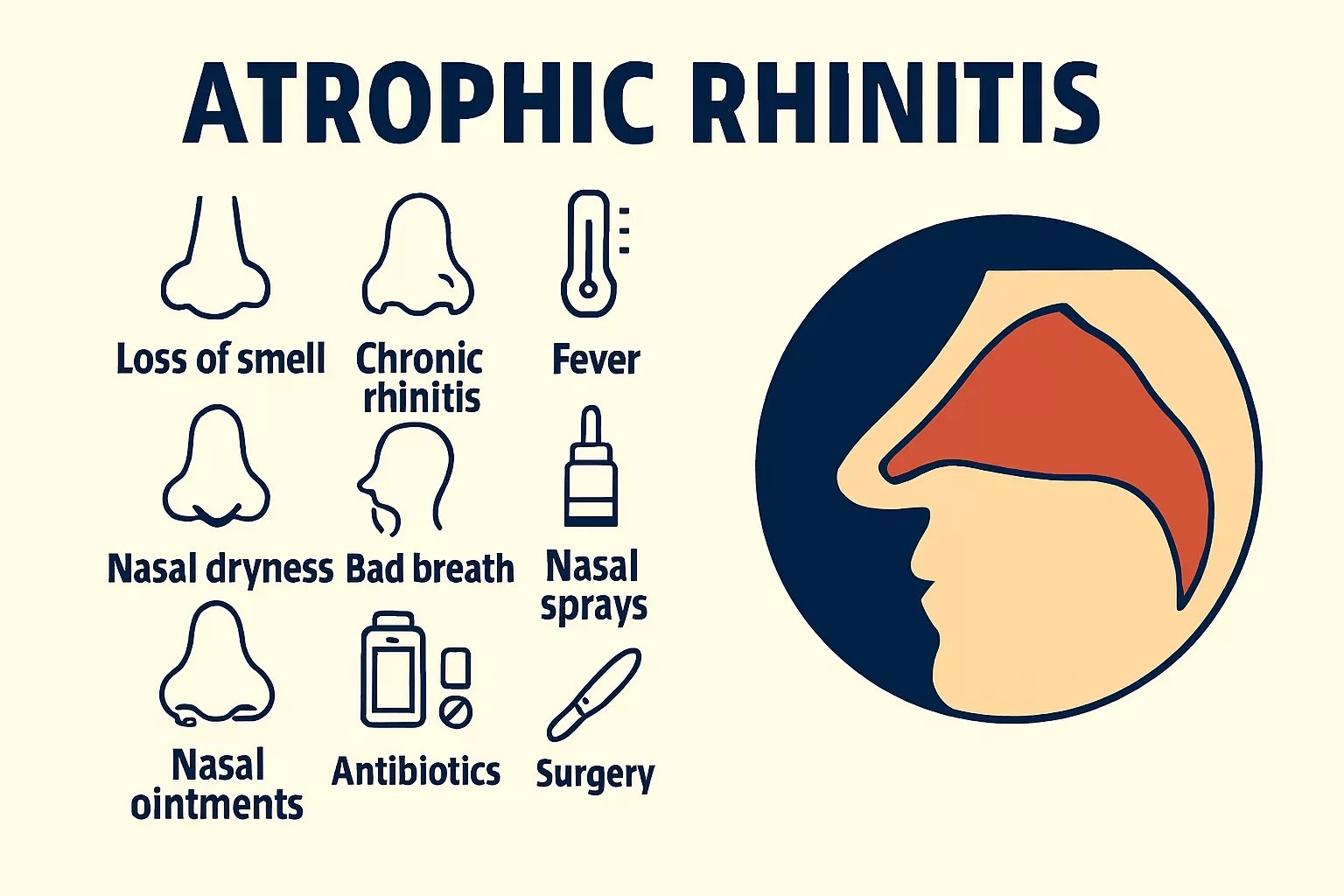
Atrophic Rhinitis Explained Atrophic rhinitis (ARh), also known as idiopathic atrophic rhinitis, rhinitis atrophicans, atrophic rhinosinusitis, or ozaena/ozena, is a rare condition characterized by chronic nasal dryness and consequent crustation. Rhinitis refers to inflammation of the nasal lining, and atrophic means a reduction in size or wasting away. Clinically, atrophic rhinitis is characterized by progressive thinning and degeneration of the nasal mucosa and underlying structures, often accompanied by secondary infection. You can also see the shrinking of the nasal bones in advanced or long-standing cases. The condition affects females more often than men and is historically reportedto be more prevalent in regions of South Asia and the Middle East. In tropical countries of Asia, like India, atrophic rhinitis can have a prevalence of 0.3-1.0%.Primary atrophic rhinitis: a clinical profile, microbiological and radiological study.International Scholarly Research Notices,2012(1), 404075.” style=”position:relative;color:#309b65;cursor:help;border-bottom:1px dotted #309b65;font-weight:bold”>[1]
This type of non-allergic rhinitis usually affects both of your nostrils simultaneously. The disease can cause some discomfort, but it isn’t a life-threatening infirmity. There is no specific cure for atrophic rhinitis, but there are several potent ways of managing it.
Types Of Atrophic Rhinitis: Atrophic Rhinitis Explained
Clinicians categorize diseases for ease of understanding and better treatment planning. This malady is commonly divided into two types:
Primary Atrophic Rhinitis
This type arises on its own and is not the outcome of some other underlying medical condition. The exact cause of the primary type is not known. However, clinicians have noted that the bacterium Klebsiella ozaenae is frequently found in the lab cultures of the nose. Therefore, many healthcare providers refer to the condition as ozena/ozaena. Current evidence suggests that Klebsiella ozaenae is strongly associated with the disease and may contribute to disease progression, rather than being a universally established primary cause. A 2020 study found Klebsiella ozeana in 40% of the patients and concluded that bacterial infection of the nasal mucosa is the main trigger for the disease.[2]
Some clinicians use the term atrophic rhinitis ozena for a more severe form of ARh, characterized by extreme dryness, malodor, and nasal discharge, etc. Risk factors for the primary disease are autoimmune disorders, hormonal imbalances, and nutritional deficiencies, etc.
Secondary Atrophic Rhinitis
As the name indicates, this form of the nasal deformity develops secondary to some underlying pathology or previous procedure. In many cases, secondary ARH occurs after sinus surgeries (like turbinectomy). Thus, individuals undergoing medical procedures like sinus surgery or radiation therapy are at a higher risk. Older reports suggest that a subset of patients undergoing extensive nasal surgery, particularly inferior turbinectomy, may develop features of atrophic rhinitis, though this is uncommon with modern surgical techniques.[3] Infections (like tuberculosis and syphilis) can also contribute to secondary ARh.
Atrophic Rhinitis Symptoms
Shrinking and inflammation of the nasal lining lead to multiple symptoms. Breathing is an essential process, so a hindrance to it can cause significant discomfort.
Dryness And Crusting
The most salient feature of the nasal disorder is dryness. A dry nose irritates patients and lays the foundation for nasal crustation. In the vast majority of cases, the crust is dry, thick, and has a foul smell. Therefore, numerous patients complain of having a dry inner nose and fetor (foul smell) from the crust.
Obstruction
The presence of a thick crust can physically obstruct the nasal passages. However, many patients with secondary ARh (following a sinus surgery) present with paradoxical nasal obstruction. In this, the patient believes they have nasal obstruction and congestion, but there is no clinical evidence for this.[4]
Nosebleeds
Patients with atrophic rhinitis encounter nosebleeds (epistaxis) very often. Clinicians have found enlarged convoluted vessels in addition to dryness and crustation in the nose of atrophic rhinitis patients. Investigations found atrophic rhinitis to be the cause of recurrent nasal bleeding.[5] Therefore, clinicians must rule out the condition when dealing with patients having repeated episodes of epistaxis.
Discharge
There is an increased volume of nasal secretions. Many patients notice sticky and viscous discharge containing dry crusts, which give the secretions a foul smell. You may also experience dripping of mucus from your nose into the back of your throat. This condition is called post-nasal drip (PND). This dripping can cause a chronic cough and a sore throat.
Recurrent Infections
Patients suffering from this nasal pathology often have to deal with repeated sinus infections, which lead to inflammation of the sinuses (sinusitis). As crusting causes nasal obstruction, the entrapment of mucus increases the risk of infections. Inflammation of the nasal passages (and associated sinusitis) can also give you a headache.

Atrophic rhinosinusitis can cause discomfort.
Rhinitis atrophicans is associated with a parasitic infection of the nose (nasal myiasis). A significant number of old, female patients have reported maggot infestation induced by underlying atrophic rhinitis. In a study, the prevalence of maggot infestation was found to be 17.4%.[6]
Foul Smell
A symptom that really disgusts most of the patients is foul smell from the nose and mouth. Many individuals report emanation of foul smell from the nose and sometimes, from the mouth. Halitosis (foul breath) may accompany foul, decaying smell (of the crust) from the nose, i.e., fetor.
Smell Alterations
In addition to the crusting, foul smell, and epsitaxis many people complain of alterations in their ability to smell. Anosmia (loss of smell) is seen in severe cases. However, several individuals report having distorted sensations of smell (parosmia). Cacosmia is a type of parosmia seen in people with ARh. In this smell distortion, patients can smell offensive odors which they explain to be like feces, chemical, burning, or rotten smell, but in fact, no such source of smell is present.[7]
Atrophic Rhinitis Causes And Risk Factors
The nose disorder has two distinct types, i.e., primary and secondary. The causes and risk factors of both these types include:
Primary ARh
The exact cause of the disease is not known, but clinicians have identified multiple factors that directly contribute to the development of primary ARh.
Infection:
Chronic infection can cause atrophic rhinosinusitis. As already mentioned, Klebsiella ozaenae infection increases your likelihood of rhinitis. Clinical evidence for infection leading to atrophy is limited. However, one study concluded that Klebsiella infection was the cause of ozena in a 25-year-old Nigerian migrant living in the UK.[8]
Genetics:
Genetics are known to play a role in the occurrence of allergic rhinitis.[9] However, there is no clear evidence of it in non-allergic rhinitis, but many experts believe there is a familial predisposition for the disorder. Moreover, congenital malformations of the nose increase the chances of atrophy of nasal structures.
Malnutrition:
Poor nutrition and deficiencies can also contribute to weakening of the nasal mucosa (and associated structures). The majority of cases of chronic atrophic rhinitis belong to the lower socioeconomic class and have a poor nutritional status. Nutritional deficiency of vitamin D and iron is a contributing factor to the disease, along with other factors like hormonal imbalance and autoimmune disorders.
Hormonal Imbalance:
The disorder is more frequently seen in women than in men. This may be because estrogen hormone imbalance is linked to an increased incidence of rhinitis atrophicans. A 2025 study found an evident connection between low estrogen levels and ARh. It also concluded that poor nutrition was a contributing factor to the nasal deformity.[10]
Secondary ARh
Trauma, injury to the nose, can trigger atrophy of the nasal structures, which can be accompanied by symptoms of rhinitis. Several health conditions are linked to secondary ARh.
Surgery:
As already mentioned, people undergoing nasal or sinus surgery have a higher risk of developing rhinosinusitis. Several patients develop this as a complication of sinus surgery. In a clinical study, 75% of patients who underwent turbinate surgery (a type of nasal/sinus surgery) suffered from ARh.[11]
Trauma And Injury:
Injury or trauma to the nose can also trigger atrophy of the nasal septum and other structures. Some people report experiencing symptoms of nose dryness and foul smell after chronic use of nasal decongestants. This result is attributed to structural damage to the nasal mucosa induced by nasal medications. Prolonged usage of nasal decongestants causes rhinitis.[12]
Autoimmune Disease:
Some autoimmune and granulomatous disorders are known to cause the disease. While these disorders represent only a small percentage of the etiologies, they still can be notable causes. Autoimmune and granulomatous conditions, such as granulomatosis with polyangitis (previously known as Wegener’s), mucous membrane pemphigoid, andsarcoidosis, are frequently associated with secondary ARh.[13]
Radiotherapy:
Radiation therapy for cancer is also a contributing factor. Exposure to strong radiation doses frequently results in chronic rhinosinusitis. Per a clinical study, 70% patients receiving treatment for head/neck cancer reported suffering from radiation-induced rhinitis.[14] Therefore, there are greater chances of ARh as well.
Infections:
Some infections can be the underlying cause of secondary rhinosinusitis. Syphilis is a sexually transmitted disease caused by the Treponema pallidum bacterium. It has oronasal presentations and can contribute to ARh. Tuberculosis infection can also be a cause of secondary ARh.
Even an uncommon bacterial infection of Sphingomonas paucimobilis has been known to cause secondary disease.[15]
Atrophic Rhinitis Diagnosis
Typically, an otolaryngologist/ENT specialist (ear, nose, throat specialist) diagnoses atrophic rhinitis. Your healthcare provider will perform a physical examination to diagnose the condition. He may also order some tests for a better understanding of your condition.
Nasal Endoscopy
In this, the doctor inserts an endoscope (a camera attached to a flexible tube) into your nose to get a view of your mucosa. This diagnostic test also helps rule out other similar nasal pathologies like polyps.
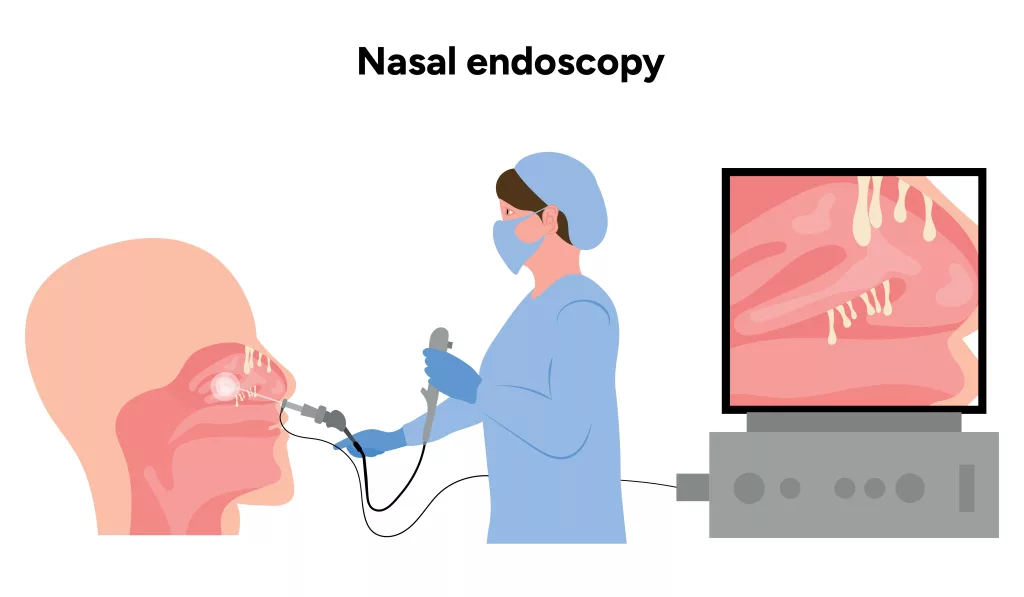
The illustration shows how a nasal endoscopy is performed in patients with atrophic rhinitis. The inside of your nose (captured with a camera) is displayed on screen.
Imaging Scans
While conventional X-rays do not offer much help, newer techniques like CT and MRI scans can aid in diagnosis. Different types of CT scans (CBCT and MSCT) provide high anatomical differentiation and nice tissue differentiation. Similarly, MRI gives detailed images of the nasal/paranasal cavities. However, the long acquisition time and high costs make these techniques less feasible.[16]
Nasal Inspiratory Flow Test
Your doctor may also order an Inspiratory Peak Nasal Flow (IPNF) test to assess your nasal patency. This fast and simple test provides information about the extent of your nose obstruction.[17]
Differential Diagnosis
Some nose disorders have presentations similar to ARh. Allergic rhinitis and non-allergic rhinitis have some similar features.
Allergic Rhinitis Vs Atrophic Rhinitis
Atrophic rhinitis (ARh) is a chronic condition characterized by dryness, crusting, and fetor that arises due to the destruction of nasal tissues. On the other hand, allergic rhinitis (AR) is an immune-mediated response of the body to allergens (like pollen, etc.) that causes sneezing and watery discharge from the nose. Unlike AR, which is temporary and manageable, ARh is a more serious condition and can have severe consequences (like permanent loss of smell).
Complications Of Atrophic Rhinitis
The following complications are seen in patients suffering from ARh:
Empty Nose Syndrome (ENS)
The most common complication of ARh is empty nose syndrome. It is a type of secondary atrophic rhinitis characterized by severe nasal dryness, paradoxical nasal obstruction, and air hunger. ENS is mostly triggered by a turbinate surgery.
Anosmia
Loss of smell (partial or complete), i.e., anosmia, is another complication of the disorder. According to one study, anosmia is seen in about 40-91% cases of ARh, which can be attributed to atrophy and nerve inflammation in the nose.[18]
Atrophic Rhinitis Treatment
Sadly, there is no definitive cure for the disease. However, different treatment strategies aim to rehydrate your inner nose and reduce the internal crusting. With ARh it’s hit and try! Patients report noticeable improvements in symptoms until the treatment continues, but symptoms recur as soon as therapy stops.
At-Home Care
Nasal irrigation is a first-line treatment in which you rinse your nasal passages with a saline or saltwater solution. Adopting this multiple times a day improves hydration and reduces crusting. Studies show that nasal saline irrigation improves symptoms of allergic rhinitis.[19] Using an air humidifier and nasal lubrication drops (saline drops) can also improve symptoms.

An air humidifier helps alleviate symptoms of rhinitis.
Non-Surgical Management
Some non-interventional options can alleviate symptoms and reduce the foul-smelling crust. You can use moisturizing nasal ointments to keep the inside of your nose safe from dryness. With a doctor’s guidance, you can also use an antibiotic ointment to control infection. Vitamin supplementation and estrogen therapy can result in betterment of symptoms by fixing underlying issues of nutrient deficiency and hormonal imbalance, respectively.
Platelet-rich plasma (PRP) therapy is reshaping the world of medicine by enhancing your internal ability to heal. Intranasal PRP injections have been shown to improve symptoms in ARh patients.[20]
Your healthcare provider may advise you to wear a nasal obturator to reduce nasal dryness. It is a custom-made device (made of silicone), worn on the nose to reduce airflow to the nasal passages, which eventually minimizes dryness, crusting, and bleeding.[21]
Surgical Management
Surgery is reserved for severe cases of atrophic rhinitis. Young’s operation is a commonly adopted procedure in which the surgeon closes the nasal cavity. The surgeon makes incisions and raises flaps of nasal mucosa in the nasal vestibule and sutures them together to seal the nostril. However, in the modified Young’s operation, surgeons leave a small aperture for airflow. The nose/nostril is kept closed for 6 months to 1 year. This operation prevents nasal air flow and allows the dry/inflamed nasal lining to heal (and regenerate).[22]
Modern professionals are working to find better solutions. A newer way of managing the disease that showed promising results was the implantation of bioactive glass in the nasal vestibule.[23]
Final Word
Atrophic rhinitis is a rare, nasal disorder characterized by dryness, frequent bleeding, and foul-smelling crust formation, which is attributed to progressive thinning (atrophy) of the nasal mucosa (and other structures). Patients complain of nasal discharge, smell alterations, and frequent sinus infections. Primary rhinitis atrophicans develops due to Klebsiella ozeana infection, nutritional deficiency, and hormonal (estrogen) imbalances, while secondary disease arises due to sinus surgery, trauma to the nose, autoimmune disorders, infections, and radiotherapy.
Doctors diagnose the condition with physical examination, nasal endoscopy, and imaging tests like CT/MRI. Common complications of the condition include empty nose syndrome and anosmia (loss of smell). No treatment exists, but the main goal of therapies is to hydrate the nasal mucosa and minimize symptoms. Hence, an air humidifier and nasal irrigation (with saltwater or saline) are effective home remedies. Estrogen therapy and vitamin supplementation can fix the underlying causes of the disease. Recently, intranasal PRP injections have also shown promising results. Surgery is reserved for severe cases. The surgeon closes the nostril in Young’s procedure for a year and allows the nasal mucosa to heal itself.
References
[1] Bist, S. S., Bisht, M., & Purohit, J. P. (2012). Primary atrophic rhinitis: a clinical profile, microbiological and radiological study.International Scholarly Research Notices,2012(1), 404075.
[2] Ghallab, A. F., Hashim, H. F., & Mostafa, M. S. (2020). The role of the bacterial infections of the nose in etiology of primary atrophic rhinitis.Egyptian Journal of Medical Microbiology,29(2), 117-121.
[3] Jardin, P. M. B., de Linera-Alperi, M. Á., & Quan, P. L. (2020). Iatrogenic Atrophic Rhinitis: Post-Nasal Surgery or Empty Nose Syndrome (ENS). In Atrophic Rhinitis: From the Voluptuary Nasal Pathology to the Empty Nose Syndrome (pp. 31-42). Cham: Springer International Publishing
[4] Sumaily, I. A., Hakami, N. A., Almutairi, A. D., Alsudays, A. A., Abulqusim, E. M., Abualgasem, M. M., … & Alserhani, A. A. (2023). An updated review on atrophic rhinitis and empty nose syndrome.Ear, Nose & Throat Journal, 01455613231185022.
[5] Boiko, N. V., Bykova, V. V., & Kiselev, V. V. (2018). ATROPHIC RHINITIS AS A CAUSE OF NASAL BLEEDING.КЛИНИЧЕСКАЯ, 9.
[6] Kanjikar, S., Malige, R., Udgir, R., Nagraj, V. V., Tugave, J., & Sawalgi, V. (2017). Atrophic Rhinitis with Maggot Infestation-A Demographic Study.Journal of clinical & diagnostic research,11(11).
[7] Mishra, A., Kawatra, R., & Gola, M. (2012). Interventions for atrophic rhinitis.Cochrane Database of Systematic Reviews, (2).
[8] Lee, Y. J., Moore, L. S. P., & Almeyda, J. (2011). A report on a rare case of Klebsiella ozaenae causing atrophic rhinitis in the UK.Case Reports,2011, bcr0920114812.
[9] Choi, B. Y., Han, M., Kwak, J. W., & Kim, T. H. (2021). Genetics and epigenetics in allergic rhinitis.Genes,12(12), 2004.
[10] Sanghamitra, B., Sujata, P., Pranati, P., Madhusmita, A., Sumitra, B., Mamata, P., … & Panda, B. K. (2025). Serum Hormone Levels in Female Patients With Atrophic Rhinitis.Cureus,17(3).
[11] Gelardi, M., Giancaspro, R., Bocciolini, C., Salerni, L., & Cassano, M. (2022). Turbinate surgery: Which rhinitis are most at risk.Acta Bio Medica: Atenei Parmensis,93(4), e2022249.
[12] Wahid, N. W. B., & Shermetaro, C. (2023). Rhinitis medicamentosa.
[13] Gigante, L., Zoli, A., Giacomini, P. G., & Zoli, A. (2020). Secondary Atrophic Rhinitis: Autoimmune and Granulomatous Forms. InAtrophic Rhinitis: From the Voluptuary Nasal Pathology to the Empty Nose Syndrome(pp. 13-30). Cham: Springer International Publishing.
[14] Riva, G., Franco, P., Provenzano, E., Arcadipane, F., Bartoli, C., Lava, P., … & Pecorari, G. (2019). Radiation-induced rhinitis: cytological and olfactory changes.American Journal of Rhinology & Allergy,33(2), 153-161.
[15] Alyousef, M., Alroqi, A., & AlAmari, N. (2025). Atrophic Rhinitis Secondary to an Infection of Unusual Bacteria: A Case Report and Literature Review.Ear, Nose & Throat Journal,104(1_suppl), 162S-164S.
[16] Manenti, G., Calcagni, A., Vidali, S., & Ryan, C. P. (2020). Imaging: The Role of CT Scan, Cone-Beam and MRI in the Diagnosis of Atrophic Rhinitis. InAtrophic Rhinitis: From the Voluptuary Nasal Pathology to the Empty Nose Syndrome(pp. 99-106). Cham: Springer International Publishing.
[17] Teixeira, R. U. F., Zappelini, C. E. M., Alves, F. S., & da Costa, E. A. (2011). Peak nasal inspiratory flow evaluation as an objective method of measuring nasal airflow.Brazilian journal of otorhinolaryngology,77(4), 473-480.
[18] Mishra, A., Mishra Shukla, N., Verma, V., & Mishra, S. C. (2020). Olfaction in primary atrophic rhinitis and effect of treatment.OTO open,4(3), 2473974X20949503.
[19] Jung, M., Lee, J. Y., Ryu, G., Lee, K. E., Hong, S. D., Choi, J., … & Kim, H. Y. (2020). Beneficial effect of nasal saline irrigation in children with allergic rhinitis and asthma: a randomized clinical trial.Asian Pacific journal of allergy and immunology,38(4), 251-257.
[20] Kim, D. H., Lee, M. H., Lee, J., Song, E. A., Kim, S. W., & Kim, S. W. (2021). Platelet-rich plasma injection in patients with atrophic rhinitis.ORL,83(2), 104-111.
[21] Iqbal, I. Z. (2023). Primary Atrophic Rhinitis. InContemporary Rhinology: Science and Practice(pp. 321-325). Cham: Springer International Publishing.
[22] Bakshi, S. S. (2019). Atrophic rhinitis.The Journal of Allergy and Clinical Immunology: In Practice,7(8), 2850.
[23] Hassan, C. H., Malheiro, E., Béquignon, E., Coste, A., & Bartier, S. (2022). Sublabial bioactive glass implantation for the management of primary atrophic rhinitis and empty nose syndrome: Operative technique.Laryngoscope Investigative Otolaryngology,7(1), 6-11.