

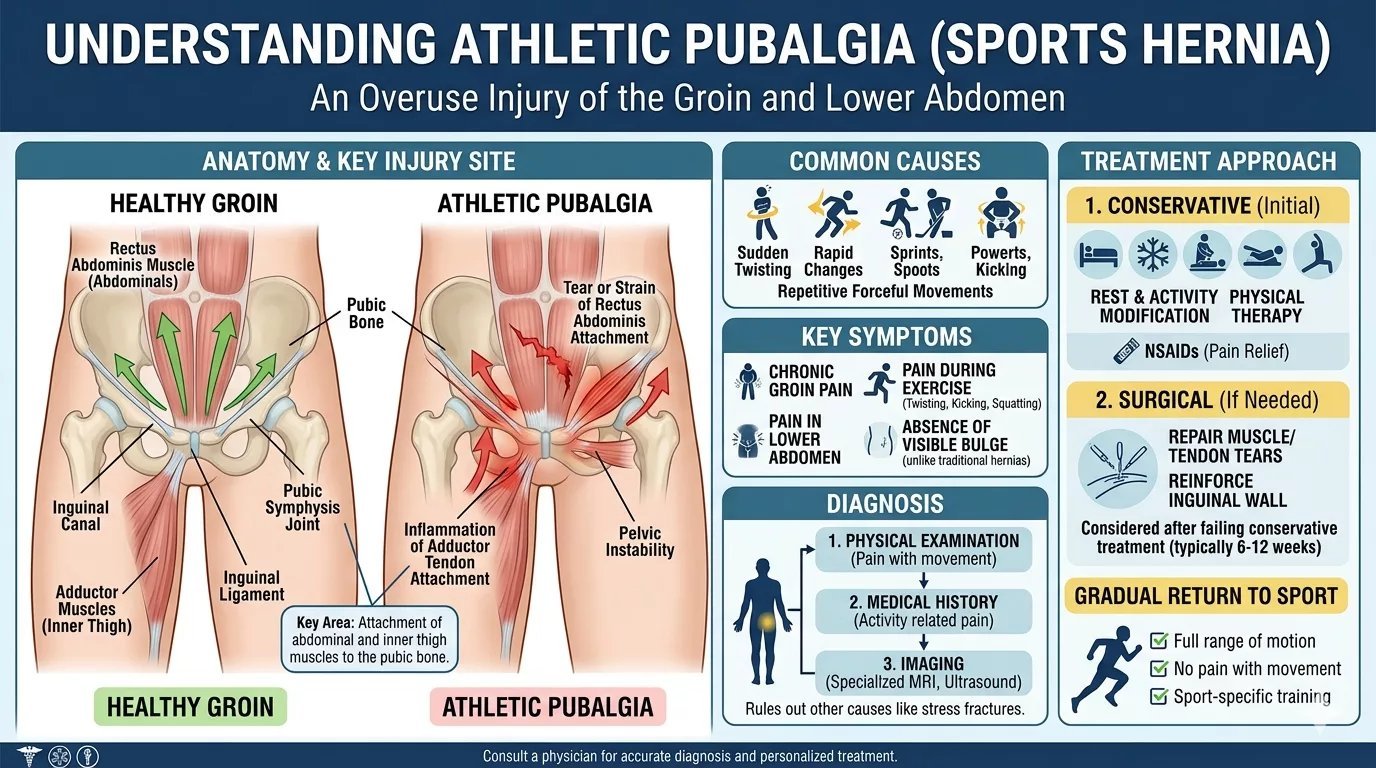
Athletic Pubalgia Athletes Gilmore’s groin, athletic pubalgia, or sports hernia, is a condition that causes pain in the groin region, which is attributed to injury (or tearing) to the soft tissues (muscles, ligaments, and tendons, etc.) in the groin region. Due to its high prevalence in players/sportspersons, the condition is commonly known as a sports hernia. However, sports hernia is a misnomer; unlike a true inguinal hernia, it does not involve a bulge of soft tissue in the groin.
Groin pain accounts for approximately 2–5% of all sports-related injuries, with athletic pubalgia representing a subset of these cases, particularly in high-intensity sports.[1] The condition causes significant pain that exacerbates with activity. Doctors treat it with conservative therapies like rest, steroid injections, and supportive care. However, surgical intervention may be required in cases that do not respond to conservative treatment.
What is Athletic Pubalgia?: Athletic Pubalgia Athletes
“Pub-” means groin, and “algia-” means pain. So athletic pubalgia translates to athletic groin pain. It is a condition affecting young individuals involved in high-impact sports that require rapid, repetitive twisting of the body. The painful disorder is more prevalent in males than females (with more than 90% of the cases being males). Sports medicine experts believe this is due to the difference in pelvic anatomy and muscle strength between the two genders. A study by de Goes and colleagues (2023) shows that sports hernia is most common in soccer players (58%) and runners (30%).[2] However, you can see cases arising in the following sports as well:
- Ice hockey
- Wrestling
- Baseball
- Rugby
- Football
- Skiing
- Hurdling
- Tennis
- Wrestling
The term “core muscle injury” is increasingly used in modern sports medicine literature to describe this condition.
Structures Involved In Sports Hernia
As there are multiple soft tissues (muscles, tendons, ligaments) present in the pelvic/groin region. Athletic pubalgia can be the outcome of injury to any one (or more) of the following soft tissues:
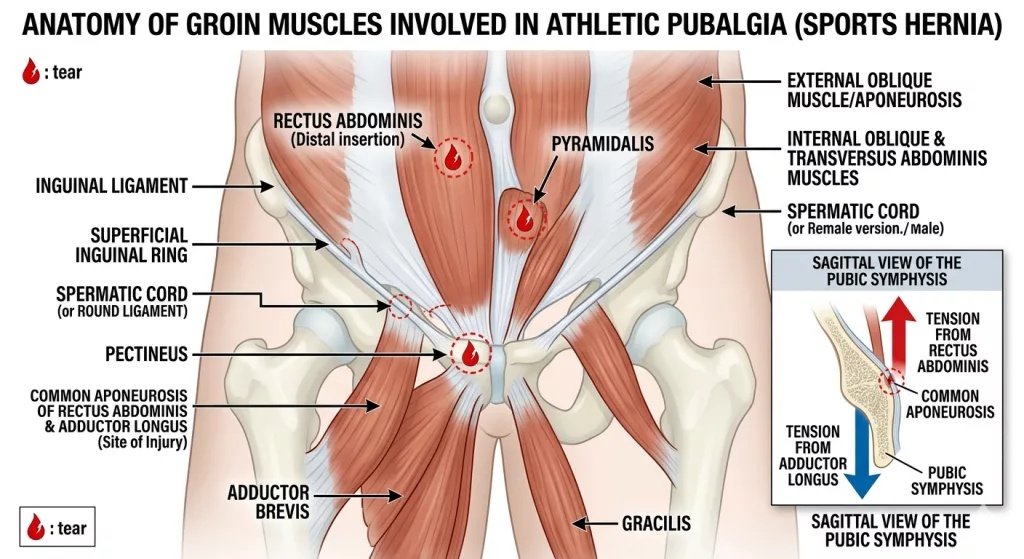
The illustration shows the anatomical positions of different soft tissues in the lower abdomen and the groin region. The external oblique attachment, the rectus abdominis muscle, and the inguinal ligament are commonly affected in sports hernia.
- Distal rectus abdominis: It is a part of your abdominal muscles.
- Conjoint tendon: This soft tissue structure connects two of your abdominal muscles, i.e., the internal oblique and transversus abdominis muscles, to the pubic bone.
- External oblique aponeurosis: This is a broad tendon that connects the external oblique muscle (abdominal muscle) to the pubis.
- Inguinal ligament: This ligament forms the base of the inguinal canal, which is a tube-like passage serving as a conduit between the abdominal cavity and the genitals. A deficient posterior wall of the inguinal canal is seen in 85% of sports hernia cases.[3]
- Adductor longus muscle/tendon: This hip adductor muscle (pulls the thigh inward) can be injured due to excessive playing forces. Hip adductor tendinopathy is also a significant cause of groin discomfort.
Athletic Pubalgia Symptoms
Injury to the tendons and muscles often results in discomfort and evident debilitation. Pain is the chief complaint of all sufferers. This pain disorder affects athletes, so time off the training field is very crucial. Fit young athletes report having the following troubles due to a sports hernia.
Pain
Most people experience a sudden, intense pain at the time of injury. However, some report having a gradual onset of the pain, which gets better with rest. After the acute incident (sports injury), the pain stays chronic as a dull ache or burning sensation. This makes the patients uneasy. In the vast majority of cases, pain is unilateral (only on one side of the body).
A salient feature of athletic pubalgia is pain that exacerbates with activity and reduces with rest. Sudden movements like sprinting, kicking, running, and even non-hectic activities like coughing, sneezing, and sitting up can trigger a great deal of groin pain. However, most patients are unable to pinpoint the pain region. Recent studies conclude that straining, coughing, and sneezing can provoke symptoms in athletic pubalgia patients.[4]
Therefore, players/athletes have to halt their sports activities due to the pain induced during activity. Rest makes the pain go away. So, most athletes are forced to rest. According to patients, the pain is most severe at the start of the activity.
Experts believe that groin and abdominal soft-tissue injury and inflammation also contribute to nerve irritation. The involvement of the ilioinguinal and iliohypogastric nerves can present with pain radiating down from the groin to the inner thigh/scrotum region. Cadaveric analysis has revealed ilioinguinal nerve compression in hockey players with chronic groin and inner thigh pain.[5]
Catching Of The Hip Joint
In cases with catching or clicking sensations in the hip joint, there is an underlying hip issue (like femoroacetabular impingement) along with athletic pubalgia. Femoroacetabular impingement is frequently associated with athletic pubalgia and may need to be addressed to prevent persistent or recurrent symptoms.
Athletic Pubalgia Causes
A sports hernia arises when the soft tissues in your lower abdominal and groin region are exposed to repetitive stress.
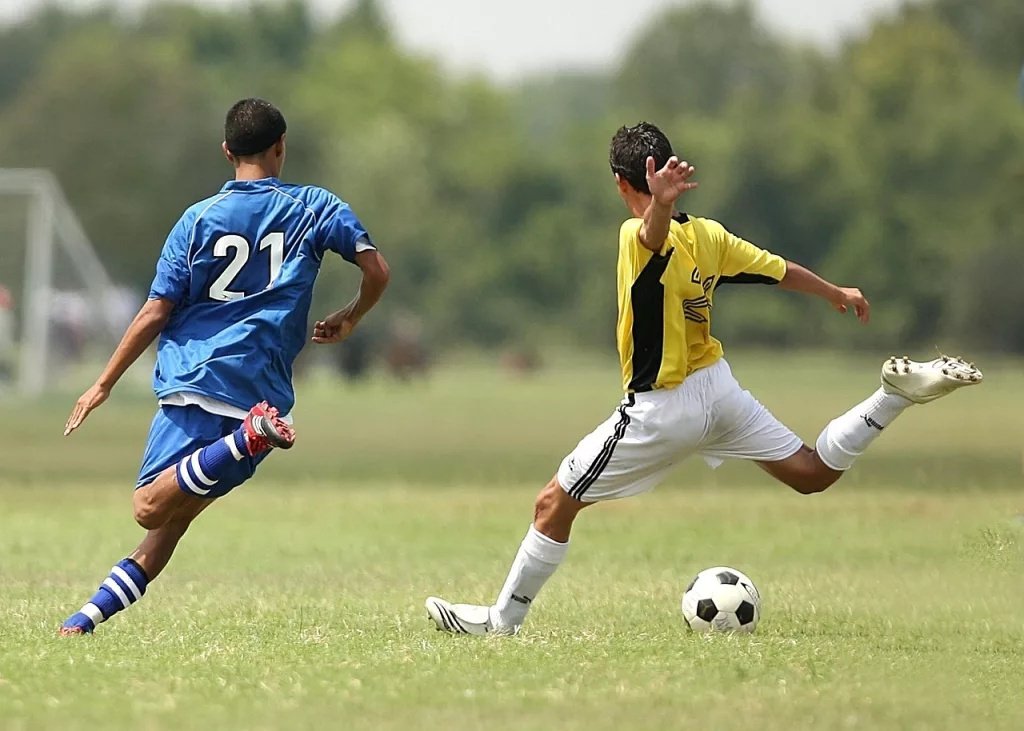
Athletic Pubalgia is a common athletes
This stress causes inflammation and tearing of the tissues, which leads to pubalgia. Various underlying factors are responsible for the outcomes, including:
Repeated Forceful Hip Movements
Players exposing their bodies to repetitive forceful movements can fall prey to hip and groin pain. Rapid twisting, jumping, and kicking increase the tension of the lower abdomen/groin muscles. The excessive forces eventually lead to injury. Moreover, bodybuilders and players performing vigorous and unsafe abdominal/hip exercises can be affected by athletic pubalgia.
Muscle Imbalance
Unequal muscle strength (imbalance) contributes to sports injuries and pain. Weak abdominal muscles and strong hip adductors put extra stress on the inguinal structures. Therefore, young athletes with weaker posterior abdominal muscles are at a higher risk of sports hernia and groin pain.[6]
Other risk factors include previous groin injury, reduced hip range of motion, and poor biomechanics.
Elevated Levels Of Matrix Metalloproteinases (MMPs)
MMPs are enzymes that play an important role in remodelling different components of tissues that are involved in healing and repair (including proteins like collagen, elastin, and gelatin). Individuals with higher activity/dysregulation of MMPs are prone to injuries and consequently develop issues like inguinal hernia and athletic pubalgia.
Some researchers believe that genetics also has a role to play in the disease, but scientific evidence for this is scarce.
How To Diagnose Athletic Pubalgia?
Doctors diagnose the condition with history taking and the help of imaging scans.
History And Examination
Your healthcare provider will start by taking a history of your symptoms. As this disease is almost always seen in young athletes, doctors suspect the disorder in active youngsters. After taking a complete history, he will perform a physical examination. Palpation of the inguinal canal in the lower abdominal/groin region (and scrotal skin) reveals signs of inflammation. Tenderness over the deep inguinal ring points towards a hernia.
Your doctor may ask you to perform activities like doing a sit-up or flexing the abdomen against resistance to see if these activities trigger pain. These movements will be painful if you have a sports hernia.
Imaging Tests
MRI is the preferred imaging modality for evaluating athletic pubalgia, while radiographs may help rule out bony causes such as osteitis pubis. Athletic pubalgia radiography can reveal crucial information about the extent and cause of the disease.
MRI scans provide high-quality pictures of the groin and pubic region, which help doctors rule out any other causes of chronic groin pain.
Dynamic ultrasound is another imaging study that helps diagnose the disorder. This type is increasingly being used to evaluate the insufficiency of the posterior inguinal wall, which is a common finding in sports hernias. It is an effective tool in assessing the transversus and rectus muscles of the abdomen.[7]
CT Scan
Computed tomography (CT) scans provide detailed information about the bony structures and surrounding tissues. Hence, this type of advanced scan helps identify factors like pubic instability.
Herniography is an invasive test to differentiate between a true inguinal hernia and a sports hernia. However, it is no longer routinely used in modern clinical practice.
Diagnostic Criteria
Doctors diagnose the condition as athletic pubalgia if at least three of the five signs are present. However, the criterion is not universally acceptable.
- Dull, diffuse pain radiating from the groin to the inner thigh (or across the midline).
- Pinpoint tenderness to the pubic tubercle (at the conjoint tendon insertion).
- Tenderness over the deep inguinal ring.
- Pain at the origin of the adductor longus tendon.
- Pain or dilation of the external ring without any palpable hernia.
Differential Diagnosis
A sports hernia usually has presentations similar to other conditions of the groin region. Therefore, it is important to differentiate between these maladies:
Athletic Pubalgia Vs Inguinal Hernia
An inguinal hernia is a true hernia in which a palpable mass of abdominal tissue (mostly intestine) herniates (pushes out) of the groin skin. The bulge created by the protruding organ causes pain and symptoms. On the other hand, athletic pubalgia is caused by damage or a tear in a muscle/tendon. While a sports hernia can heal with conservative therapies, an inguinal hernia requires inguinal hernia surgery. Despite the differences, both these issues can co-exist in an individual.
Athletic Pubalgia Vs Osteitis Pubis
Osteitis pubis is characterized by inflammation of the pubic symphysis joint, while athletic pubalgia is the outcome of a soft tissue tear in the lower abdomen region. Both cause chronic groin pain, but the former is a hard tissue disorder, and the latter is a soft tissue injury. The diseases can be differentiated with the help of radiographs.
Athletic Pubalgia Treatment
The main aim of sports hernia treatment and rehabilitation is alleviation of pain and restoration of normal muscular strength, function, and range of motion. The best treatment plan depends on factors like the severity of the injury and patient factors like age, overall health, and level of activity. Most of the time, sports hernias are managed with non-surgical therapies, but surgery is indicated for severe, non-resolving cases. Remember, early treatment can save you from surgery! Many cases improve with conservative management, although some patients require surgery for persistent symptoms. The most commonly adopted therapies for athletic pubalgia include:
Conservative Management
Typical non-surgical management for soft tissue injuries includes:
Medications And RICE:
Non-steroidal anti-inflammatory drugs like ibuprofen and naproxen, etc. provide symptomatic relief to patients. Medicinal therapy is paired with RICE and supportive care to achieve the best results. Ultrasound-guided localized steroid injections in the muscles may also be administered for quick relief.
Rest: Ample rest is crucial for athletes with pubalgia, as activity in the injury can delay healing. It is advised that you rest for about 6 to 8 weeks. Rest during the first seven to ten days provides great help.[8]
Ice application: It lowers inflammation, which helps ease the sore tissues. Therefore, it can help alleviate symptoms. Patients have noticed relief in acute symptoms after rest and ice application during the first 48-72 hours.
Compression: Applying slight compression to the groin region can speed up the process of healing by removing the inflammatory cells.
Elevation: Keeping the groin elevated is difficult. You can place pillows under your hip (while lying down) to reduce swelling and inflammation.
Hip and groin support braces are designed to support the groin and associated structures. The breathable neoprene material reduces the tension on your hips, thighs, and hamstrings. Thereby, it allows better healing of the muscles, tendons, etc.
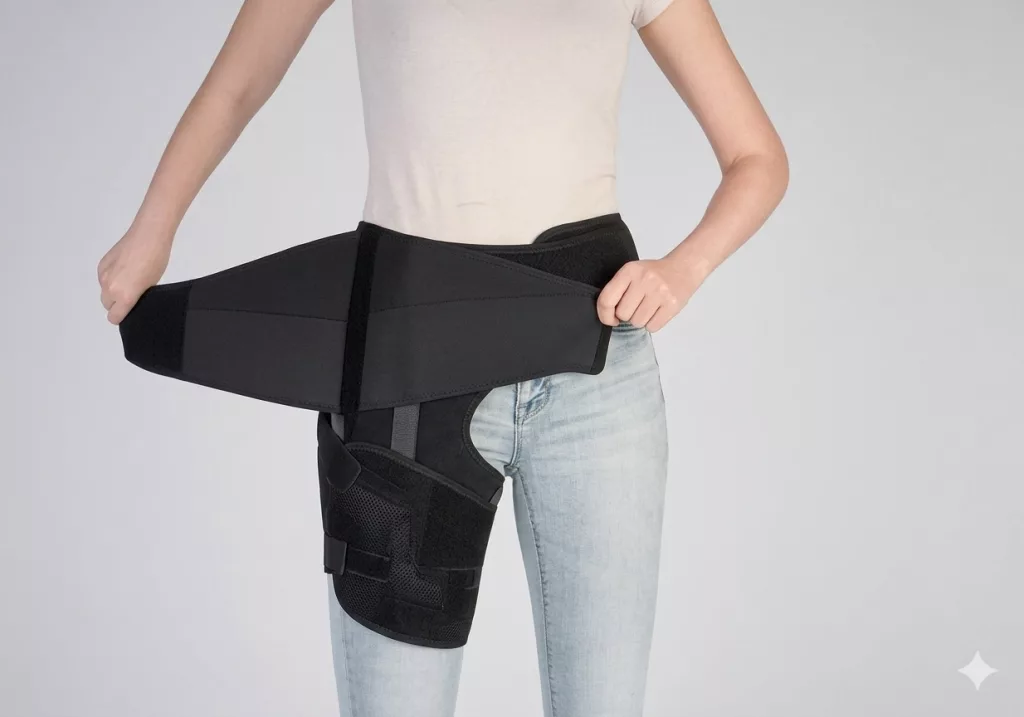
A patient is tightening his groin support brace to allow better healing of athletic pubalgia.
Rehabilitation:
After the acute painful phase is over, you should focus on strengthening the core muscles. Hip adductor stretches and core stabilization exercises are crucial in preventing recurrence of the disorder. One effective hip adductor exercise is the isometric ball squeeze exercise. You lie straight on your back and bend your knees. You place a ball (or a thick pillow) between your knees. With the knees, you squeeze the ball and hold this position for about 30 seconds, and then release. Do 5 repetitions to relieve pain.
You should gradually return to sports activities only after a rehabilitation period of 6 weeks.
Physical Therapy
Different strategies of physiotherapy have proven to be beneficial in numerous cases. Literature shows that strategies like joint mobilization, trigger point therapy, and instrument-assisted soft tissue mobilization are effective therapies.[9]
Surgery
Doctors choose surgical intervention if conservative treatment fails after 3 (or more) months of therapy. Surgical approaches typically involve repair of the posterior inguinal wall, release of abnormal tension, and sometimes adductor tendon procedures.
Herniorrhaphy is a surgical procedure done to release the abnormal tension of the inguinal canal. It can be done in a conventional (open) way or laparoscopic surgery. In open surgery, surgeons cut open the skin to access the affected muscles/soft tissues. On the other hand, laparoscopic surgery is done via small cuts (incisions) through which the doctor carries a camera and small cutting tools.
Athletic pubalgia surgeries release tension and reinforce the posterior wall of the inguinal canal. According to the latest studies, endoscopic surgery is the most effective treatment option for sports hernia.[10]
Athletic Pubalgia Recovery
The rate of recovery depends on factors like the extent of disorder, therapy type, and individual factors. The time to fully return to sports ranges from 4 to 12 weeks. Complete recovery is possible. The rate of return to the prior level of activity after surgery is reported to be 80-95%.
Prevention of Sports Injury
As an athlete, you can prevent recurrence of the disorder by:
- Strengthening muscles to get flexibility and core strength (especially the abdominal muscles).
- Adopt better exercise techniques and do a proper warm-up before starting.
- Wear properly fitted and supportive footwear.
Wrapping Up
Athletic pubalgia or sports hernia is a painful condition of the groin arising from injury and/or tearing of the lower abdominal and groin soft tissues. Unlike a true inguinal hernia, this is caused by injury to groin muscles/ligaments/tendons sustained during athletic activity. It is most frequently seen in young, male soccer players.
Repeated twisting of the body can injure any of the structures, including the inguinal ligament, abdominal muscles (distal rectus abdominis), and hip muscles (adductor longus), leading to a sports hernia. Individuals involved in hectic sports and men with weak abdominal muscles have a greater propensity to develop chronic groin pain.
Patients suffering from the disease report groin pain that exacerbates with activity and reduces with rest. It may radiate down to the inner thigh and can be triggered even with sitting up, coughing, and sneezing. Doctors advise rest, ice application, compression, elevation, and a supportive brace to enhance healing. NSAIDs and steroid injections provide symptomatic relief. Physical therapy effectively alleviates symptoms. Surgery is reserved for cases that do not respond to conservative therapies for 3 months or more. Surgical interventions (laparoscopic or open) release muscle tension and reinforce structures. You should carry out core stabilization and groin strengthening exercises to prevent recurrence.
References
[1] de Oliveira, A. L., Andreoli, C. V., Ejnisman, B., Queiroz, R. D., Pires, O. G. N., & Falótico, G. G. (2016). Epidemiological profile of patients diagnosed with athletic pubalgia.Revista Brasileira de Ortopedia (English Edition),51(6), 692-696.
[2] Goes, R. A., Teles, F. D. C., Figueiredo, F., Noronha, D. R., Coelho, O. N., & Peixoto, L. P. (2023). Epidemiological Analysis of 245 Patients with Athletic Pubalgia.Revista Brasileira de Ortopedia,58, 563-570.
[3] Kopscik, M., Crisman, J. L., Lomasney, L., Smith, S., & Jadidi, S. (2023). Sports hernias: a comprehensive review for clinicians.Cureus,15(8), e43283.
[4] Ząbek, A. J., Kuźniar, J. P., Chrzanowska, E. G., Zagalska, M., Turek, M., Tamborski, T., … & Mitręga, K. M. (2025). Athletic Pubalgia–A Significant Diagnostic and Therapeutic Challenge in Athletes?.Journal of Education, Health and Sport,81, 59780-59780.
[5] O’Donnell, R., DeFroda, S., Bokshan, S. L., Levins, J. G., Hulstyn, M. J., & Tabaddor, R. R. (2023). Cadaveric analysis of key anatomic structures of athletic pubalgia.JAAOS Global Research & Reviews,7(6), e23.
[6] Malik, G. R., Avila, J., & Rho, M. E. (2022). Pubalgia and Groin Pain in Athletes. InClinical Guide to Musculoskeletal Medicine: A Multidisciplinary Approach(pp. 167-175). Cham: Springer International Publishing.
[7] Peacock, M., & Jacob, B. P. (2023). Athletic Pubalgia. InFundamentals of Hernia Radiology(pp. 315-324). Cham: Springer International Publishing.
[8] Hendrick, S. F., Fraley, A. L., Kefferstan, M. V., & Winkelmann, Z. K. (2025). Conservative Management of Athletic Pubalgia in a Collegiate Beach Volleyball Athlete: A Case Study.Clinical Practice in Athletic Training,8(2), 1.
[9] Moose, L. (2024). Successful Nonoperative Treatment Methods for Athletic Pubalgia: A Systematic Review.
[10] Dudai, M., & Paajanen, H. (2025). Narrative Review and Clinical Recommendations for Sportsman’s Hernia and Athletic Pubalgia Based on 30 Years of Expert Experience.Journal of Abdominal Wall Surgery,4, 15394.