
, also historically known as ichthyosis fetalis, harlequin fetus, and ichthyosis...)
Harlequin Ichthyosis Symptoms Harlequin ichthyosis (HI), also historically known as ichthyosis fetalis, harlequin fetus, and ichthyosis congenita, is a rare and severe genetic dermatological condition that affects newborns. It is the most severe type of skin condition, i.e., ichthyosis. The overall incidence of harlequin ichthyosis is 1 in every 300,000 births.[1]
The condition is characterized by the presence of very dry, hard, and thick skin covering the entire body of the newborn. It may occur in full-term or preterm babies, though many affected infants are born prematurely. The cracks open and split apart, leading to grave consequences. The skin abnormality restricts organ movement and poses problems in feeding and breathing.
This type of skin is inefficient in performing its role as a barrier and protector, which leads to a myriad of issues like water loss, lack of body temperature maintenance, and recurrent infections. Therefore, most of the children succumb to the complications within the first few weeks. However, with modern NICU care and early systemic retinoid therapy, survival rates have significantly improved.[2]
Note: Harlequin syndrome is a different condition from harlequin ichthyosis. The syndrome is a rare autonomic disorder characterized by flushed/sweaty appearance of one side of the body (face, neck, and chest).
Harlequin Ichthyosis Symptoms
In harlequin baby syndrome, you will find plates of hard skin instead of a smooth one. The thick skin cracks/splits, forming diamond-shaped armour-like plates that resemble fish skin in appearance. Therefore, this disease is called ichthyosis (ichytus means fish in Greek). Moreover, the infant’s skin appears like a harlequin’s costume. After some time, the plates shed, which is followed by the formation of red scales.
The most prevalent symptoms of the disease include:
Tightening/Scaling of Skin:
As mentioned, infants suffer from skin tightness, which changes to deep cracks known as fissures. This tightness can pull the structures of the face, neck, chest, and abdomen, leading to feeding and breathing difficulties. Over time, widespread scales and redness develop.
Other symptoms that accompany dermatological presentations include:
Facial Disfiguration
HI patients usually have typical facial features that are discussed below:[3]
Eye Abnormalities:
Ectropion is a condition in which one of the eyelids (mostly the lower eyelid) turns outwards, exposing the eyeball. In most cases, there is severe bilateral ectropion of all four eyelids, which potentially leads to drying of the eyes and other associated complications. In addition to ectropion, there is also conjunctival edema (fluid accumulation in the conjunctival layer of the eye). Other ophthalmological problems associated with the condition include exposure keratitis, nystagmus (involuntary movement of the eyes), and squint.
Lip Abnormality:
Eclabium is a condition seen in severe skin disorders like harlequin ichthyosis. It is characterized by the outward turning (eversion) of your lip. In HI, the pulling back of the lips and the dry skin give a fish mouth appearance.[4]
Nose and Ear Issues:
Infants have flat and broadened noses. The ears are not fully developed and are fused to the head. This imparts a typical harlequin ichthyosis look.
Hypothermia:
A lower-than-normal body temperature is the most common symptom in premature infants with the skin disorder. Most individuals are sub-febrile and need body warming after birth.[5] [6]
Hearing Problems:
Almost all patients experience hearing issues due to malformed ears. Studies reveal that hearing problems are present in all types of ichthyosis, including harelquin type. Moreover, individuals with this skin disorder have a higher chance of developing outer ear malformations and ear infections. Sensorineural hearing loss is commonly observed.[7]
Reduced Joint Mobility:
The stiff skin hinders the infant from moving the body. Hence, you will find most babies locked in position. Families with harlequin babies have reported a significantly reduced range of joint motion.[8]
To make things worse, ichthyosis congenita often co-exists with juvenile idiopathic arthritis. This joint inflammatory condition causes the joints to become painful during movement. Chronic pain and swelling with skin stiffness lead to further restriction of motion.[9]
Hand/Feet Anomalies:
Pediatricians often observe a lot of swelling and erythema in most patients. As seen in the image, the fingers of the hands are evidently swollen. Moreover, you can also see similar presentations in the feet. Physical examination reveals tissue ischemia at the fingertips.[10]
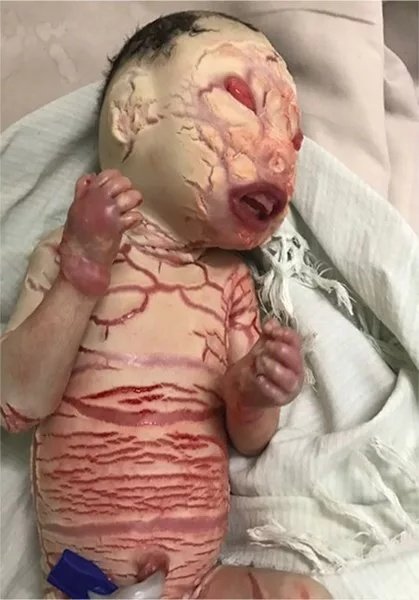
The image shows an infant suffering from harlequin ichthyosis. The infant’s scaly skin patches, typical facial features, and finger abnormalities can be appreciated. Image courtesy of Belide Shruthi,1,* B.R. Nilgar,1 Anita Dalal,1 and Nehaben Limbani1, CC BY 4.0https://creativecommons.org/licenses/by/4.0, via Wikimedia Commons
Breathing Difficulties:
The stiffness of the skin can prevent normal expansion of the chest, which can interfere with the breathing capabilities of the neonate. Respiratory difficulties can become severe and eventually result in respiratory failure, which contributes to the high mortality rate of the disease. According to one study, respiratory problems are most common during early infancy. Patients have intermittent episodes of oxygen desaturation and may require mechanical ventilation.[11]
Feeding Difficulties:
The stiff and tight skin also restricts the newborn’s ability to suck and swallow. Thus, many infants have feeding issues. The inability to latch onto a bottle or the breast warrants nutritional support via a nasogastric (NG) tube.
Harlequin Ichthyosis Causes
Experts identify mutations in the mutations in ABCA12 gene to be the cause of harlequin ichthyosis. This particular gene plays a vital role in healthy skin cells’ development by instructing the body to produce proteins. In reality, it is a keratinocyte lipid transporter. This means that the gene moves lipids (fats) within the skin cells to the epidermis (outermost layer of the skin) to form a barrier. Mutations of the ABCA12 gene lead to impaired lipid transport and poor epidermal barrier formation.[12]
A genetic variant in the ABCA12 gene leads to HI. Mutations lead to absent or severely reduced ABCA12 protein, resulting in impaired skin barrier function, thickened scales, and severe symptoms.[13]
What is the Inheritance Pattern of Harlequin Ichthyosis?
Ichthyosis fetalis is an inherited disorder that is transmitted in an autosomal recessive manner. Therefore, clinicians also refer to it as autosomal recessive congenital ichthyosis. This means that you need to receive copies of the recessive (affected) gene from both parents (one from each) to be affected. In several cases, both parents are carriers of the mutated gene and do not have the disease themselves.
Harlequin Ichthyosis Diagnosis
Doctors identify the condition based on the unique physical appearance of the infant. In expecting parents with a family history of harlequin ichthyosis, health providers advise a prenatal genetic test. This test looks for mutations in the offspring and is usually conducted during the first trimester (11-14 weeks). For HI, the main focus of the test is to identify any anomalies in the ABCA12 gene. It is effective in identifying problems with the genes.[14]
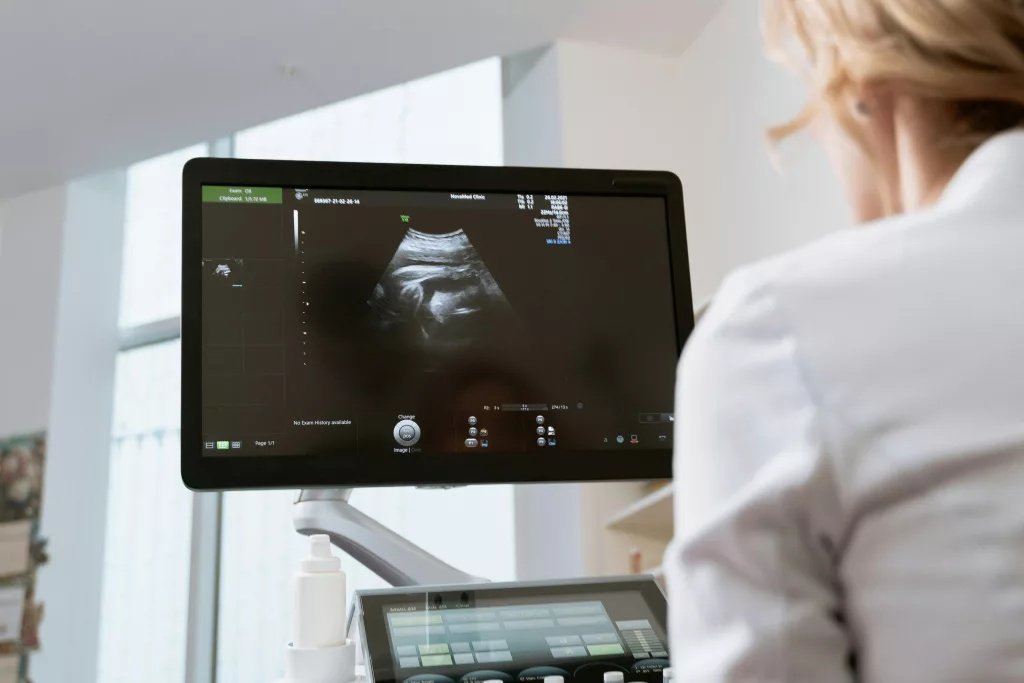
Ultrasound scan during the 2nd or 3rd trimester helps identify harlequin ichthyosis in unborn infants.
Harlequin ichthyosis is very accurately diagnosed with an ultrasound. Doctors can diagnose the condition with an ultrasound scan within the 2nd or 3rd trimester. However, most professionals recognize the disorder in a sonogram during the third trimester.[15] Clinicians now prefer combining 2D ultrasound with 3D ultrasound to get a better picture. It helps parents to decide whether to continue or cease the pregnancy.[16]
Differential Diagnosis
Lamellar ichthyosis (LI) Vs Harlequin ichthyosis (HI)
The lamellar condition is characterized by the formation of large scales of skin, while the harlequin type has amor plates. Clinical presentations of HI and LI are similar, but harlequin ichthyosis is more severe. Lamellar is a lifelong condition and has a normal life expectancy. On the other hand, HI proves to be fatal due to serious complications like sepsis and respiratory failure. HI arises due to a mutation in the ABCA12 gene, while LI is the result of the TGM1 gene mutation.
Harlequin Ichthyosis Treatment
Management of newborns requires the collaborative effort of multiple experts. Typically, a team of neonatologists, dermatologists, plastic surgeons, ophthalmologists, otolaryngologists, nutritionists, physical therapists, and geneticists is involved.
NICU Management:
Immediately after birth, the child is placed in the Neonatal intensive care unit (NICU). At the care center, the nurses place the baby inside a high-humidity incubator. This helps counter the hypothermia. Moreover, paramedical staff at the facility bathe the child frequently to soften the skin and rub the skin gently with an abrasive like pumice stone or rough sponge. This aids in loosening the scales. Moisturizer application reduces skin dryness and makes it more flexible.
Nanobubble Therapy:
It is an advanced therapy that uses tiny gas bubbles (nanometer-sized) to deliver drugs and oxygen to the body. This system of drug delivery is being adopted for various medical conditions. Recently, dermatologists tested nanobubble hydrotherapy on HI patients resistant to conventional treatments. The therapy not only addressed the issue of excessive skin production but also improved the biofilm. Thus, this therapy proves to be a holistic solution to the challenges posed by harlequin ichthyosis.[17] However, Nanobubble hydrotherapy is investigational and not yet standard care. Early studies suggest it may help with resistant hyperkeratosis, but evidence is limited.
Medicinal Management:
Oral retinoid (etretinate) is prescribed in cases of severe HI. This medicine removes the thick, armor-like plates and scales covering the skin. It has also been shown to reverse issues with fingers and breathing issues. Decreasing the skin stiffness alleviates finger constriction, enhances blood flow, and allows chest expansion. Retinoid therapy is reserved only for severe cases due to its serious side effects when used for long-term. Studies show that early systemic retinoid therapy substantially improves survival rates and makes survival beyond infancy possible.[18]
Retinoid therapy (with drugs like acitretin and isotretinoin) under the supervision of a multidisciplinary team showed positive results with softening (desquamation) of the hyperkeratotic skin plates.[19]
In a clinical case, a 5-year-old body survived with early isotretinoin therapy (since 5 days of life).[20] On the other hand, the unavailability of systemic retinoids is linked to poor prognosis of patients.[21]
Harlequin Ichthyosis Mortality Rate
Historically, harlequin ichthyosis has a high mortality rate, i.e., around 50%. However, with advanced treatments (retinoid therapy), the survival rates have improved in the recent past.
At-Home Support for Harlequin Ichthyosis
Caring for a child with harlequin ichthyosis needs close medical supervision. At home, parents can offer simple supportive care while following their doctor’s treatment plan:
- Give gentle, supervised skin-to-skin contact if approved by your doctor.
- Use only skincare products recommended by the dermatologist.
- Ensure proper nutrition.
- Attend regular medical checkups.
- Keep the room temperature and humidity comfortable for the child.
Harlequin Ichthyosis Complications
The disease is linked to multiple complications that make treatment challenging:
- Electrolyte imbalance: The improperly formed skin is unable to preserve skin moisture, and the constant loss of transdermal water leads to electrolyte imbalance (mainly high blood sodium levels or hypernatremia).[22]
- Recurrent infections: Individuals are repeatedly exposed to multiple infections due to a poor first line of defense (i.e., skin).
- Respiratory failure: The armor-like skin encases the chest and prevents the lungs from expanding. In severe cases, the lungs can not contract and expand, which eventually leads to compromised breathing and consequent death.
- Sepsis: The recurring infections, electrolyte imbalance, and compromised skin barrier potentially put the body in a life-threatening condition where the body starts damaging its own tissues (instead of the bacteria), i.e., sepsis. Fulminant sepsis and respiratory failure are the major contributors to infant mortality due to HI.
- Poor hair growth: If the infant survives infancy, hair growth issues plague him throughout his life.
While most discussion focuses on infants, it is important to note that Harlequin Ichthyosis adult survivors continue to require lifelong dermatological care, skin hydration, and regular monitoring to prevent complications
Final Word
Harelquin ichthyosis is a rare, inherited disorder that causes hard/scaly, armor-like skin in infants, which arises due to a mutation in the ABCA12 gene. The premature babies have thick plates of skin that neither provide a barrier from external pathogens nor preserve moisture (transdermal water). Infants with the HI have tight skin, outward-turned eyelids, everted lips, and fused ears, which makes them resemble a fish’s mouth. Moreover, the patients are hypothermic, have swollen hands/feet, and reduced joint mobility. The stiff skin prevents expansion/contraction of the chest; thus, patients present with feeding and breathing difficulties.
The ABCA12 gene is inherited in an autosomal recessive manner, so you need to inherit the recessive gene from both parents for the disease to develop. Ultrasound scans during the 2nd or 3rd trimester help diagnose, but parental testing is preferred for parents with a family history.
Immediately after birth, the infant is placed in the NICU under the supervision of a multidisciplinary team. The hypothermic infant is warmed, bathed frequently, and rubbed with rough sponges (loofahs) to remove the hard skin. Oral retinoid therapy has proven to be effective in reducing the infant mortality rate, but is reserved for severe cases only due to associated side effects. Nanonbubble hydrotherapy is a new method of treatment that has proven to be effective. Most infants (with severe disease) lose their lives soon after birth due to respiratory failure and sepsis.
References
[1] Rathore, S., David, L. S., Beck, M. M., Bindra, M. S., & Arunachal, G. (2015). Harlequin ichthyosis: prenatal diagnosis of a rare yet severe genetic dermatosis.Journal of Clinical and Diagnostic Research: JCDR,9(11), QD04.
[2] Bahashwan, E., Alfaifi, J., Mohamed Moursi, S. E., & Soliman, Y. E. (2024). Retinoid Therapy in a Case of Harlequin Ichthyosis with a Short Literature Review.Case Reports in Dermatological Medicine,2024, 8729318. https://doi.org/10.1155/2024/8729318
[3] Kün-Darbois, J. D., Molin, A., Jeanne-Pasquier, C., Paré, A., Bénateau, H., & Veyssière, A. (2016). Facial features in Harlequin ichthyosis: Clinical findings about 4 cases.Revue de Stomatologie, de Chirurgie Maxillo-faciale et de Chirurgie Orale,117(1), 51-53.
[4] Oliván-Gonzalvo, G. (2024). Harlequin ichthyosis.Iberoamerican Journal of Medicine,6(1), 39-41.
[5] Torun, S., & Demiroğlu, H. (2018). Newborn with harlequin ichthyosis and the nursing care.Journal of Pediatric Emergency and Intensive Care Medicine.
[6] Turyasiima, M., Mohamed, D. M., Yusuf, H. M., Nakalema, G., Akot, B. G., Kyoshabire, J., … & Makongwa, I. (2025). Clinical Diagnosis and Management Challenges of Harlequin Ichthyosis in a Preterm Neonate: A Case Report From Uganda.Case reports in dermatological medicine,2025(1), 7982066.
[7] Van Oosterwyck, R., Loos, E., & Willaert, A. (2023). Otological problems in ichthyosis: A literature review.International Journal of Pediatric Otorhinolaryngology,173, 111714.
[8] Tekin, M., Konca, Ç., Kahramaner, Z., & Erdemir, A. (2014). Harlequin ichthyosis: The third babies with harlequin ichthyosis in a family.Turkish Archives of Pediatrics/Türk Pediatri Arşivi,49(3), 269.
[9] Auriti, C., Rotunno, R., Diociaiuti, A., Manzoni, S. M., Uva, A., Bersani, I., … & El Hachem, M. (2020). Juvenile idiopathic arthritis in infants with Harlequin Ichthyosis: two cases report and literature review.Italian Journal of Pediatrics,46(1), 44.
[10] Tsivilika, M., Kavvadas, D., Karachrysafi, S., Sioga, A., & Papamitsou, T. (2022). Management of harlequin ichthyosis: A brief review of the recent literature.Children,9(6), 893.
[11] Rajpopat, S., Moss, C., Mellerio, J., Vahlquist, A., Gånemo, A., Hellstrom-Pigg, M., … & O’Toole, E. (2011). Harlequin ichthyosis: a review of clinical and molecular findings in 45 cases.Archives of dermatology,147(6), 681-686.
[12] Akiyama, M. (2014). The roles of ABCA12 in epidermal lipid barrier formation and keratinocyte differentiation.Biochimica et Biophysica Acta (BBA)-Molecular and Cell Biology of Lipids,1841(3), 435-440.
[13] Niu, X., Li, X., Han, Q., Hou, R., & Zhang, K. (2023). Long‐term survival of harlequin ichthyosis in two siblings with novel ABCA12 mutations.International Journal of Dermatology,62(12).
[14] Chang, T. Y., Lim, Z. W., Chu, Y. T., Wu, W. J., Lee, M. H., Chang, S. P., … & Chen, M. (2025). Genetic investigations of autosomal recessive inherited ichthyosis impressed by fetal ultrasound: Exome sequencing and haplotype linkage analysis.Taiwanese Journal of Obstetrics and Gynecology,64(1), 53-60.
[15] Zhou, Y., Li, L., Wang, L., & Zhang, C. (2021). Prenatal diagnosis of a rare variant of harlequin ichthyosis with literature review.BMC Medical Imaging,21(1), 56.
[16] Liu, Z., & Jing, C. (2023). Two-and three-dimensional sonographic findings of harlequin ichthyosis: case report and literature review.Anais brasileiros de dermatologia,98(6), 806-813.
[17] Stark, P., Radigan, H., Aziz, Y., & Stark Sr, P. (2024). Harlequin Ichthyosis Nanobubble Hydrotherapy: A Breakthrough in Treatment.Cureus,16(9).
[18] Warnakulasooriya, T., Athulgama, P., Abeyek, M., Dius, S., Ranwala, R., Bandar, S., … & Wijepala, J. Harlequin Ichthyosis: A Comprehensive Clinical, Pathological, and Therapeutic Overview.
[19] Bahashwan, E., Alfaifi, J., Mohamed Moursi, S. E., & Soliman, Y. E. (2024). Retinoid Therapy in a Case of Harlequin Ichthyosis with a Short Literature Review.Case Reports in Dermatological Medicine,2024(1), 8729318.
[20] Tanasal, H., Michaela, I., & Danarti, R. (2025). A Case of Harlequin Ichthyosis: Improvement Survival Rate with Early Isotretinoin Therapy.OBM Genetics,9(1), 1-12.
[21] Sikopong, Y. S., & Widyasari, M. (2025). Case Report: Harlequin Ichthyosis.Journal of Education and Technology Development,2(2), 112-117.
[22] Sangsari, R., Saeedi, M., & Mirnia, K. (2023). Management of hypernatremia dehydration in three neonates with ichthyosis.Iran J Pediatr,33(2), e129542.