

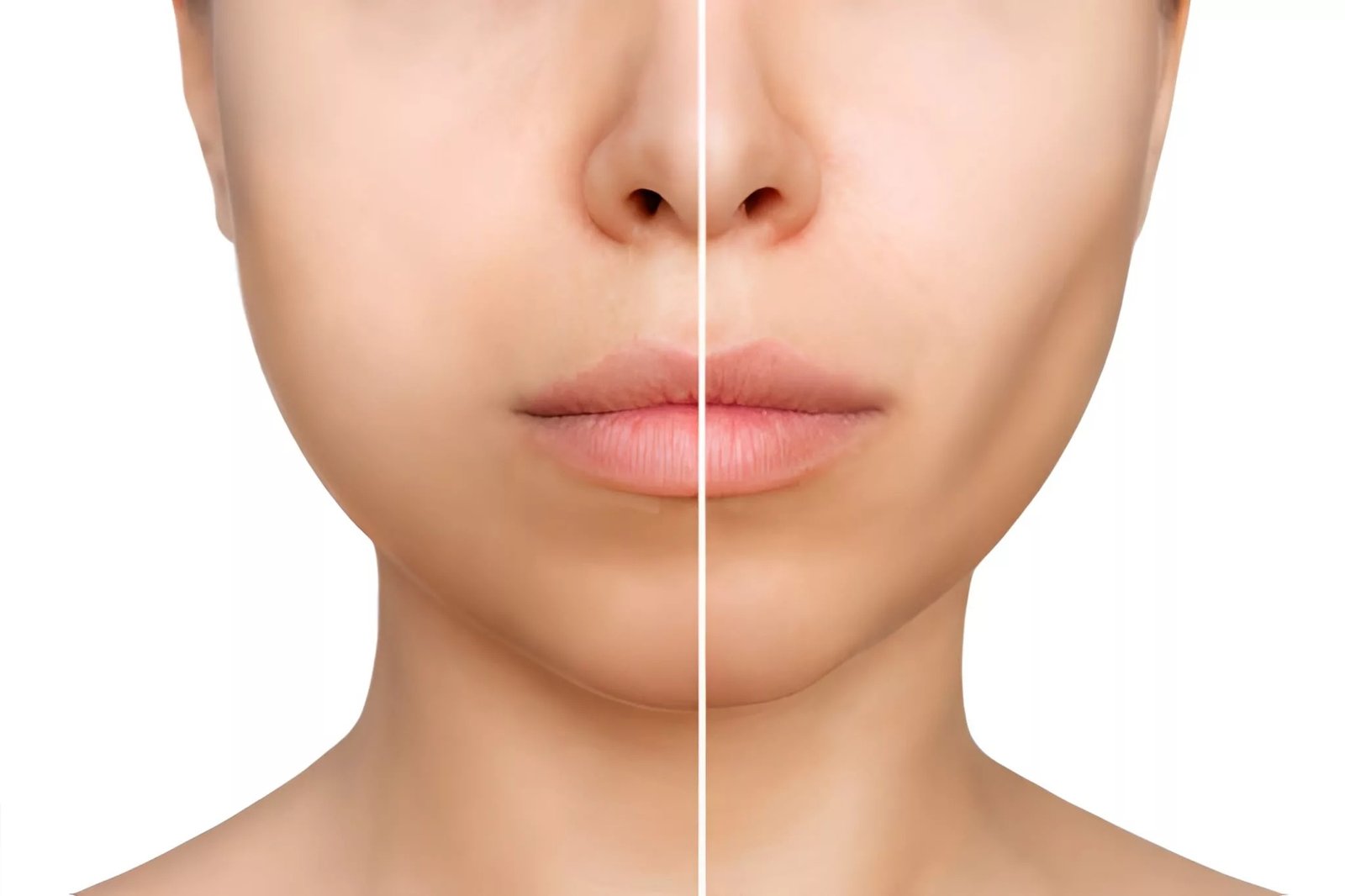
Sunken Cheeks they “Sunken Cheeks” refers to hollowed-out cheeks due to loss of facial fat and tissue between the cheekbone and the lower jaw. This mid-facial volume loss can occur due to aging, significant weight loss, dehydration, and malnutrition, giving the face a ‘gaunt’ and tired appearance. You are more likely to have sunken cheeks if you are above 40 years of age, suffer from chronic malnutrition, or struggle with eating disorders. Management depends on the underlying cause and may include medical, nutritional, or cosmetic approaches. Your physician may treat it with non-invasive lifestyle changes or cosmetic procedures, such as dermal fillers.
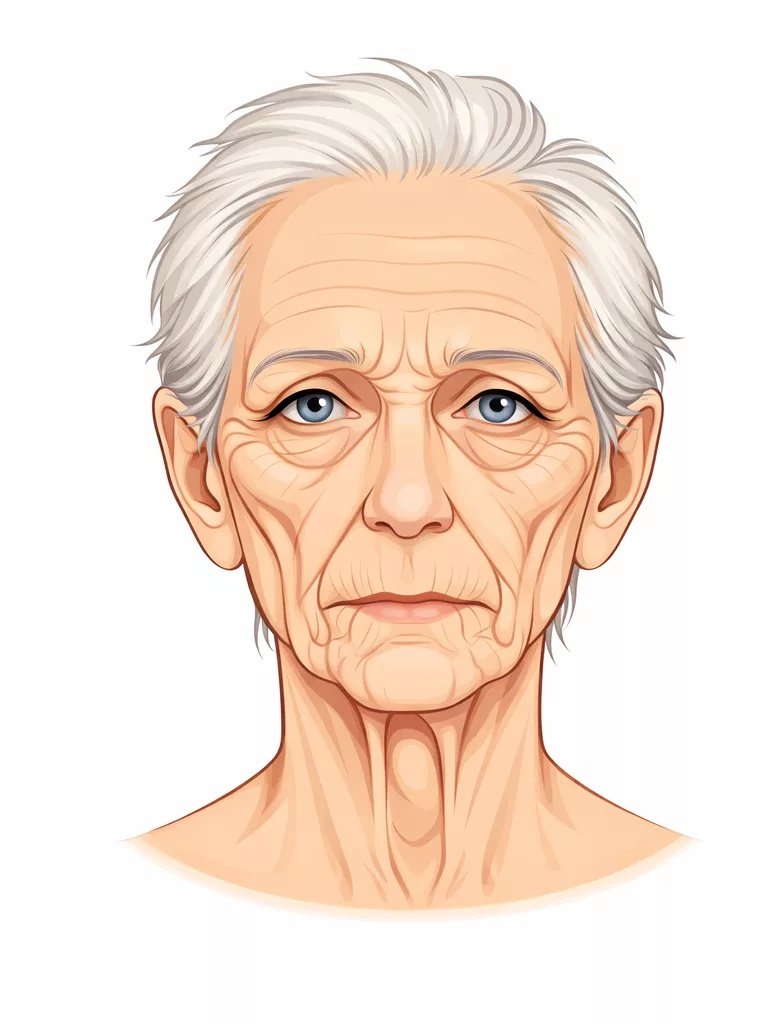
Vector illustration of an aging female face showing sunken cheeks and mid-face volume loss. This is a common sign of facial aging due to fat and collagen depletion.
Understanding Mid-Facial Anatomy: Sunken Cheeks they
The eyes form the upper boundary of our cheeks, and the jawline forms the lower boundary. Our cheeks extend from the corners of the nose and lips to the ears. The zygomatic bone, commonly called the “cheekbone,” creates the prominent bulge of the cheeks.
Many different structures help to make our cheeks. Starting from the superficial layer of the cheek, we have the skin, followed by fat pads. These buccal fat pads add fullness to our cheeks and play an important role in providing contour to them. Below the fat pads lie our facial muscles, the masseter contributing the most to the fullness of our cheeks. The levator labii superioris, zygomaticus major, and minor muscles make up the middle of the cheek. Deep to all these muscles lies the buccinator muscle.[1]
The zygomatic, maxillary, and mandibular bones support the cheek beneath all these soft tissues. The zygomatic bone, our cheekbone, as highlighted in the image, provides the bulge to our cheeks. The maxilla (upper jaw) gives support to the middle part, and the mandible (lower jaw) forms the lower region.[2]
Depletion and recession of all the structures that make up our cheeks cause sunken cheeks. From sagging skin and resorbed superficial fat pads to reduced bony support, these structural factors play an important role in providing beauty to the cheeks.

Anatomical view of the cheekbone, highlighting the zygomatic bone (cheekbone) in the skull. Image Credits: Illustration by Berichard, licensed underGNU Free Documentation LicenseviaWikimedia Commons.
What causes Sunken Cheeks?
A loss of mid-facial volume primarily causes sunken cheeks. The loss of facial fat pads, collagen, elastin, and bone density all contribute to a hollow appearance in the cheeks. You may experience a reduction in facial volume due to either of the following factors:
Aging
As we age, the production of collagen and elastin proteins declines. Our skin loses its firmness and elasticity. There is significant subcutaneous fat loss; the malar and buccal fat pads shrink and resorb over time. Alongside depletion of collagen, elastin, and fat pads, facial bones (around the cheek area) also regress and lose their density, diminishing their support for overlying tissues. Altogether, this results in our face and mid-face losing volume, and producing depressions and “hollowed-out” cheeks.
Rapid Weight Loss3Clinic C. “Ozempic Face”: What It Is and How To Avoid It [Internet]. Cleveland Clinic. 2025.
Accelerated weight loss also has an impact on the facial fat tissue, as well as the facial muscles. Losing weight and calorie deficits target subcutaneous fat, and in extreme cases, muscle wasting is also seen. Aggressive treatments, such as GLP-1 medications (Ozempic), hasten the rate of fat loss, resulting in volume loss in the face as well. Correspondingly, the skin does not have enough time to retract and adapt to the rapid loss. The sudden loss of support causes the skin to collapse inward and sag.
Eating Disorder4National Institute of Mental Health. Eating Disorders: What You Need to Know [Internet]. National Institute of Mental Health. 2024.
Eating disorders, primarily Anorexia Nervosa, are conditions where people restrict dietary intake due to a distorted self-image and fear of gaining weight. Consequently, even when underweight, they starve themselves out of fear of being overweight. The extreme calorie deficit and starvation lead to mid-face volume loss in the same manner as rapid weight loss. The face gives a gaunt appearance.
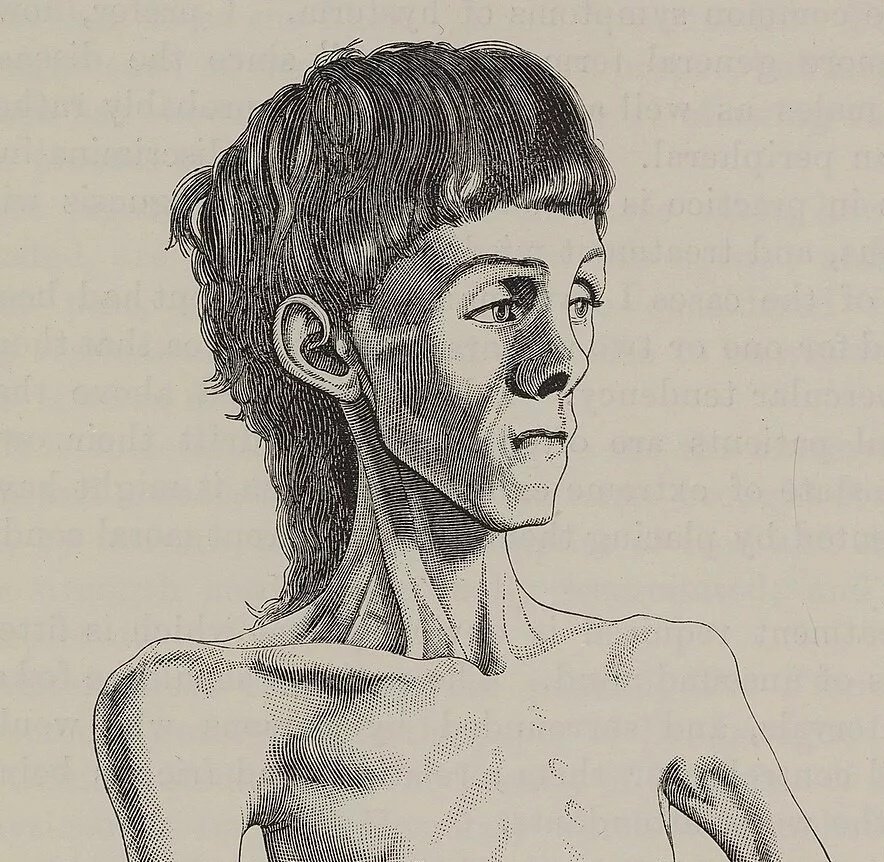
Adolescent girl (14), exhibiting marked facial wasting and sunken cheeks prior to treatment for anorexia nervosa. This picture illustrates the characteristic soft-tissue loss seen in severe malnutrition. Image Credits: “Miss K.R., aged 14, before treatment for anorexia nervosa”, Wellcome Images, CC BY 4.0, viaWikimedia Commons.
Medical Conditions
Chronic illnesses, cancer, HIV, and autoimmune diseases can all lead to Cachexia, a severe wasting syndrome. Cachexia is a metabolic condition that is characterized by severe, involuntary loss of weight, fat, and muscle.[3] Chronic heart failure, pulmonary diseases, and kidney diseases all lead to muscle wasting and severe weight loss. The skin of affected patients has loose folds and is atrophic. The cheeks are sunken, along with the temples and other facial features. Malnutrition not only affects morbidity and mortality but also can lead to a lower quality of life.
Dental Factors6Dental Center of Lakewood [Internet]. Dental Center of Lakewood Blog. 2024 [cited 2026 Feb 9].
Our cheeks are supported by our jaws and teeth on the inside. The presence of teeth stimulates the jawbone (alveolar bone) to stay healthy and intact. In case of loss of teeth, the alveolar bone shrinks and decreases in volume. Conditions like periodontitis (gum disease) can also lead to damaged supporting tissues, including the alveolar bone. This results in reduced structural support for the soft tissues of the face. Accordingly, this results in a hollow, aged appearance often referred to as “facial collapse.” Lack of facial support from the dental structures gives rise to sunken and hollow cheeks.
Genetics
Genetic conditions, such as craniofacial growth abnormalities (Crouzon syndrome), collagen disorders (Ehlers-Danlos Syndrome), or inherited traits, can cause sunken cheeks by altering the structural, metabolic, and connective tissue development of the face. Consequently, this leads to reduced subcutaneous fat, altered collagen production, or abnormal bone growth. Syndromes like Crouzon syndrome or Pfeiffer syndrome involve the premature fusion of the skull bones, leading to underdeveloped midface. This gives rise to a sunken and concave profile.
Lifestyle Habits
- Smoking: Tobacco use introduces our body to toxins that damage collagen and elastin, leading to sagging skin. The repetitive physical act of sucking on a cigarette can lead to structural changes around the mouth.[4]
- Dehydration: Inadequate water intake results in depletion of skin elasticity and volume.
- Sun Exposure: Constant UV exposure leads to faster aging and sagging of the skin.
- Poor Sleep: Sleep helps repair and regulate our cells. Lack of sleep disrupts the body’s ability to repair skin cells.
Are Sunken Cheeks A Beauty Concern?
You might wonder that most models have high cheekbones, less facial fat, and a carved out look, so shouldn’t hollow cheeks enhance our cheekbones? Celebrities and aesthetically conscious people undergo buccal fat removal surgeries to get a more defined appearance. So why do we need to be worried about having hollow cheeks? The truth is, a well-defined and chiseled face appears to be healthy and youthful. They are also associated with low body fat and a better perceived value of the individual.
On the other hand, sunken and hollow cheeks that occur due to aging, volume loss, and skin sagging give a ‘gaunt‘ and tired appearance. They make the person look tired, have wrinkly skin, fine lines, and an overall aged appearance. So yes, it is a beauty concern. Essentially, we all aim to achieve a toned and youthful look, but that can not be achieved while having sunken cheeks.
Psychological and Social Impact
Having hollowed out cheeks can be a cause of reduced self-esteem and confidence. It can have a negative social impact because it is generally perceived as a sign of exhaustion or aging. People may treat you as elderly or unwell, and this type of treatment can affect your mental well-being. Social withdrawal and avoiding meeting people can lead to depression and loneliness.
Preventive and Lifestyle Measures
- Nutrition: Consuming a balanced, healthy diet is key to boosting your skin elasticity and collagen. Nutritious foods containing proteins and healthy fats can help restore the subcutaneous fat that was lost in your face. Vitamin C, Vitamin E, and antioxidants stimulate collagen and elastin in our skin.
- Hydration: Drinking 6-8 glasses of water daily helps maintain skin volume and keeps it rejuvenated and plump.
- Weight Stabilization: Stable weight reduction, prevents the rapid loss of facial fat pads, and reduces the risk of hollow cheeks.
- Facial Exercises: Regular facial exercises can help tone our muscles and improve the appearance of sunken cheeks.
- Skin care: Hydrating agents (Hyluronic acid), Collagen boosters (Retinoids, Peptides), topical Vitamin C and E, sunscreen, can reduce the appearance of sunken cheeks temporarily. These agents can also be used for prevention.
How to fix Sunken Cheeks?
Non-Invasive Treatment Options
- Ultherapy: It is an ultrasound treatment that works by tightening the skin and boosting collagen. This lifts your sagging skin and improves the contours of the face. It is a skin-tightening procedure and is used for mild sagging or hollow cheeks.
- Laser: Laser skin resurfacing, such as CO2 lasers, can improve the appearance of sunken cheeks by tightening sagging skin and stimulating collagen production.
- Radiofrequency: a popular non-surgical method that uses energy waves (radiofrequency) to heat the deep layers of the skin, stimulating collagen and elastin production.
- Dentures/ Cheek plumpers[5]: Sunken cheeks due to missing teeth can be restored effectively by adding “cheek plumpers” to an existing denture in the area. They are detachable acrylic pieces that can be attached via magnets to the sides of the denture. They play the role of providing support to our cheeks and improving aesthetics.
Minimally Invasive Cosmetic Procedures
- Dermal Fillers: Your physician may inject hyaluronic-based fillers (brand names: Juvéderm, Restylane) into your mid-cheek to restore age-related volume loss and reduce the appearance of hollow cheeks. Results from cheek fillers can last up to two years, based on the type of filler used. You may experience slight bruising or tenderness after the procedure, which will subside within a few days.Dermal fillersfor the cheeks are an excellent option for achieving a youthful, plump appearance without undergoing surgery.
- Collagen Stimulators: Often referred to as “liquid face lifts,” collagen stimulators, such as Sculptra (PLLA), are a go-to treatment option for restoring deep structure in the cheeks and providing long-lasting volume for up to three years.
- Fat Grafting: Fat is taken from a donor site, such as the abdomen or the thighs, via liposuction. It is purified and injected into the cheek area. This provides a natural and permanent solution, giving a more lasting result than fillers.
- Mid-face lift: Your surgeon will make small incisions in the hairline and mouth. Then, he repositions the underlying muscles and fat pads into a higher position and secures them with sutures. Recovery takes about one to two weeks, and full results are visible after two to three months, but it provides a more durable result compared to fillers.
- Cheek Implant: A surgeon may place a medical-grade silicone implant to replace the lost facial tissue permanently. It is a permanent procedure, with no need for touch-ups, and can be reversed by taking out the implant whenever needed. It restores the youthful appearance of fuller cheeks, but it is the most invasive procedure of all.
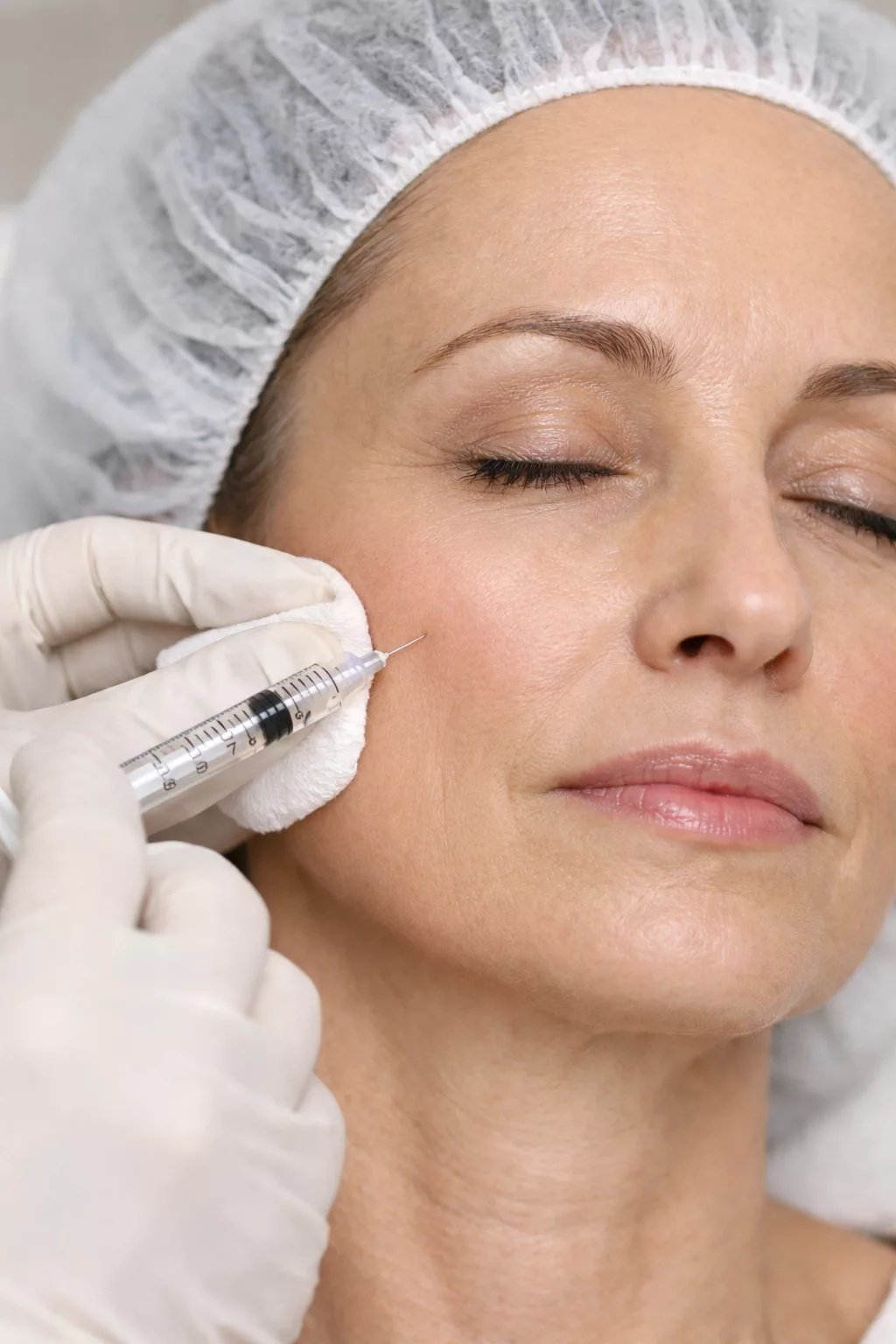
Dermal filler injection is placed beneath the cheekbone to correct mid-cheek hollowing. The treatment restores facial volume and improves natural contouring of the cheeks.
Conclusion
Aging, accelerated loss of subcutaneous cheek fat, and sagging skin can cause our cheeks to be hollow and give a sunken appearance. This can have a negative social impact by diminshed self esteem and confidence. Healthy lifestyle habits play an important role in the prevention of sunken cheeks. Your physician may treat them via non-invasive methods (lasers, ultherapy, etc.) or via minimally invasive procedures (dermal fillers, collagen boosters, etc.). Treatment options are selected based on your health status, age, and the severity of the condition.
References
[1] Yousuf S, Tubbs RS, Wartmann CT, Kapos T, Cohen-Gadol AA, Loukas M.A review of the gross anatomy, functions, pathology, and clinical uses of the buccal fat pad. Surg Radiol Anat. 2010 Jun;32(5):427–36. DOI:10.1007/s00276-009-0596-6.
[2] Nguyen JD, Duong H. Anatomy, Head and Neck, Cheeks [Internet]. PubMed. Treasure Island (FL): StatPearls Publishing; 2021.
[3] Clinic C. “Ozempic Face”: What It Is and How To Avoid It [Internet]. Cleveland Clinic. 2025.
[4] National Institute of Mental Health. Eating Disorders: What You Need to Know [Internet]. National Institute of Mental Health. 2024.
[5] Daley SF, Ali MA, Ohnuma T, Adigun R.Anorexia and Cachexia. In: StatPearls [Internet]. Treasure Island (FL): StatPearls Publishing; 2025 Jan 19. PMID: 28613696.
[6] Dental Center of Lakewood [Internet]. Dental Center of Lakewood Blog. 2024 [cited 2026 Feb 9].
[7] Morita A. Tobacco smoke causes premature skin aging.J Dermatol Sci.2007;48(3):169–75. doi:10.1016/j.jdermsci.2007.06.015
[8] Kunusoth R, Swayampakula H, Colvenkar S, D R, Alwala AM. Management of Sunken Cheeks With Magnet-Retained Cheek Plumpers. Cureus. 2023 Mar 14