
...)
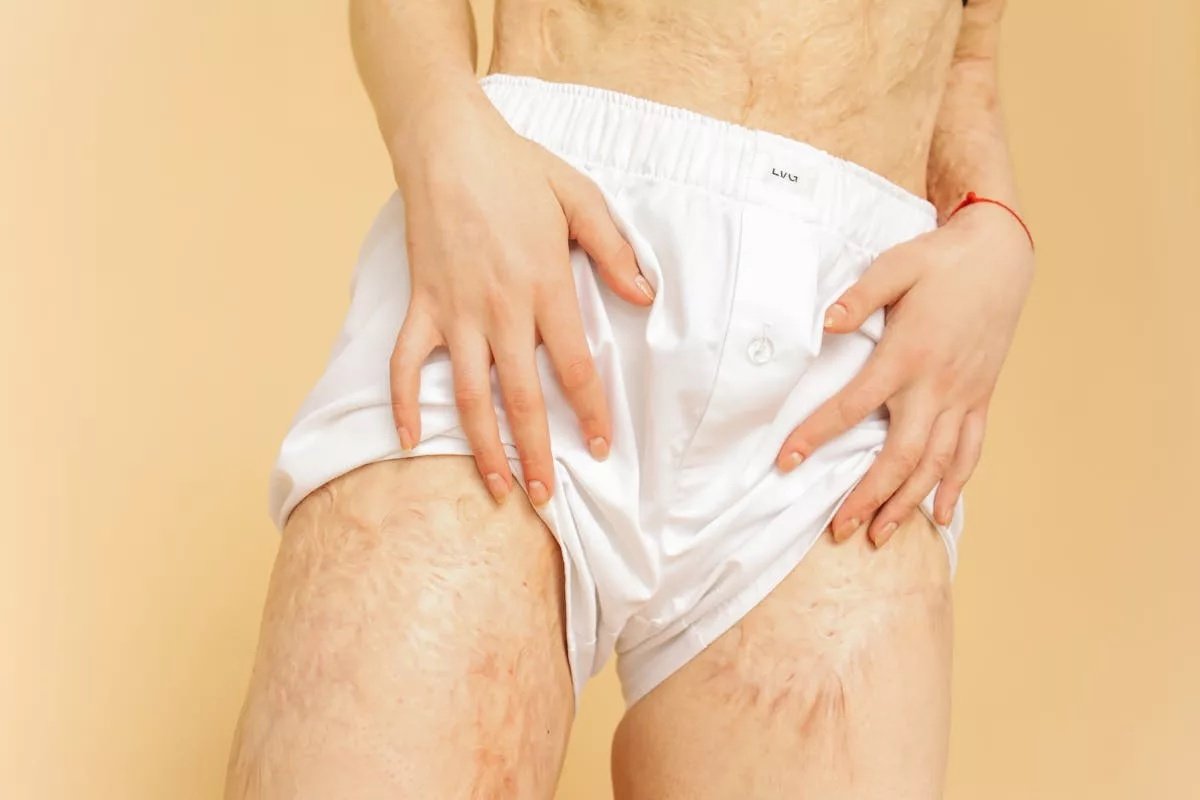
Burn Scars Effective A burn scar is an unwanted and unsightly outcome of burn injuries. Burn scars can have different sizes (small or large) depending on the extent of skin damage by burns. In mild cases, these scars can fade with time, but in moderate-to-severe burns, the scars remain visible permanently. The prevalence of hypertrophic scarring after burn injuries lies between 8 and 67%. Many patients are concerned about the burn scars on the face and receive treatment for aesthetic reasons. Doctors advise topical medications and conservative therapies for burn patients to prevent scar formation. However, the mainstay of burn scar treatment is conservative and non-invasive management, while surgery is reserved for severe or functionally limiting scars.
How Can You Get A Burn Scar?: Burn Scars Effective
Different types of burn injuries can induce the formation of a scar. You can get a scar in the following cases:
- Getting scalded by hot, boiling water
- Skin touches a hot surface (hot metal, etc.)
- Exposure to chemicals like strong acids (sulphuric acid, hydrochloric acid, etc.), bases (ammonia, sodium hydroxide, etc.), and bleaching agents (hydrogen peroxide and sodium hypochlorite, etc.)
- Electric shock
- Overexposure to the sun
Contracture scars can form in patients who have endured high-voltage electric shocks.
Why Does A Scar Form In A Burn Site?
Scar formation is a natural part of your body’s healing process, which forms when the deeper skin layer known as the dermis is damaged/affected. After sustaining damage to the dermal layers, the body heals itself. The damaged cells die, and your body replaces them with a healing protein called collagen. The deposition of collagen in the burn injury site leads to the formation of a scar. In some cases, dysregulated collagen remodeling and prolonged inflammation contribute to hypertrophic andkeloid scar formation. The higher amounts of collagen protein in the burn scars indicate that it has a role in hypertrophic scarring.
Classification Of Burns
Not all burns end up in scarring. Mild burn injuries heal without scarring, and there are cases where the scar goes away after some time. Thus, to better understand the formation of burn scars, we must know the classification of burn injuries.
First-Degree Burns
The injury is categorized as a first-degree burn when the outer layer of the skin (epidermis) is affected only. Burning of the epidermis causes pain and can turn your skin red. These wounds heal without scarring. They usually take a week to heal.
Second-Degree Burns
In second-degree burns, the epidermis and the underlying layer (dermis) of skin are affected. The deeper impact can cause a great deal of pain and redness. Many people notice the formation of a blister. Such wounds take longer to heal than first-degree burns. On average, the burn injuries heal within two to three weeks. Superficial second-degree burns usually heal without scarring, while deeper partial-thickness burns carry a higher risk of scar formation. It was noted in a study that in burns involving less remaining normal dermis, the risk of hypertrophic scarring is 70-80%.
Therefore, healthcare workers strive to minimize the adverse effects. According to one study, wound debridement (cleaning) with dermabrasion in the early post-burn phase leads to shortened healing time and less scarring.
Dermabrasion is a surgical procedure in which a high-speed rotating tool is used to remove the outer layer of the skin.
Third-Degree Burns
The most severe type of lesions is seen in third-degree burns. In addition to the destruction of skin layers, these lesions impact the underlying soft tissues and bones as well. Destruction of nerve endings may make these burns painless initially. Third-degree burns not only result in scars but can also lead to color changes in the skin. The scars and contractures caused by this severity of burns are mostly debilitating.
Types of Burn Scars
Based on their appearance, burn scars are divided into the following types:
Hypertrophic Scars
This is the most common type of burn scar seen worldwide. It is reported in about 30-90% of cases. It is a serious complication of a burn injury that can greatly impact the patient’s quality of life.
Hypertrophic scars are characterized by raised lesions that vary in color from red to purple. Some patients report itchiness and warmth on the scars.
Contracture Scars
Another type of scarring arising from an underlying burn injury is a contracture scar. It is a severe scar resulting from deep burns. Contracture scars are characterized by the formation of fibrous tissue in the affected area. This fibrous tissue shrinks and tightens, leading to restriction in movement. Patients are unable to move their muscles and joints.
The prevalence of burn scar contractures is high in low-income countries. The development of these scars is linked to significantly higher disability rates and low quality of life (QoL).
Keloid Scars
A keloid burn scar is a raised lesion that is thick and lumpy. Several patients with a firm keloid scar complain of itchiness and pain in the area. Unlike hypertrophic scars, keloids extend beyond the original boundaries of the wound. Its occurrence is attributed to the excessive production of collagen. The scar can be red, purple, pink, or brown in color and vary in size (according to the burn injury).

A keloid burn scar with contracture
Impact Of Burn Scars On Daily Life
In addition to the unsightly appearance, burn scars cause physical and psychological problems. The most common aspects of burn scars that impact one’s quality of life include:
Contractures
Contractures mostly accompany burn scars. The healed collagen in the burn site pulls surrounding tissues, which leads to multiple negative effects. Common areas of contractures are joints of the hands, neck, and shoulders. This leads to an array of problems, including a reduced range of motion. Individuals suffer from pain, a reduction in mobility, and, in severe cases, joint deformities.
Psychological Effect
Living with scars following a burn injury is not easy because of the psychological toll it takes on your body. Many burn patients suffer from Post-traumatic stress disorder (PTSD), and the scars over their skin are constant reminders of the tragedy they have been through. Most burn patients (including pediatric patients) are concerned and worried about the full recovery of their scars.
Due to the high prevalence of psychological problems associated with burn scars, experts emphasize identifying and treating mood and anxiety disorders in the post-burn phase.
Burn Scar Treatment
Healthcare professionals employ differentstrategies to manage burn scars. The ideal modality for a specific case depends on the size and the degree (severity) of the burn. Dermatologists (skin specialists) have achieved significant success with conservative treatments, which form the first-line approach, while surgery is reserved for severe cases.
Conservative Management
Minimally invasive therapies effective in the management of burn scars include:
Pressure Therapy:
It involves using pressure (via compression garments) to reduce hypertrophic burn scars. Clinical evidence shows that pressure therapy improves the color of the scar while reducing scar thickness and pain.
Another strategy used frequently with pressure therapy is silicone therapy. In this modality, patients use silicone gels to improve burn scars. It has been noted that silicone application makes the scars flatter and softer.
Phototherapy:
Light therapy has shown good effects on dermal disorders. There is limited evidence for its advantage in reducing burn scars. However, one study conducted in 2018 found that orange-filtered polarized light evidently reduces post-burn scars in pediatric patients. Thus, it can prove to be an effective adjunctive treatment.
Laser Therapy:
The widely used laser therapy can lighten your post-burn scars. Dermatologists use different types of lasers to lighten scars. Fractional carbon dioxide lasers reduce scar thickness and treat contractures. On the other hand, a pulsed dye laser counters redness of the lesions and prevents subsequent hypertrophy seen in most burn scars. Another type of laser, i.e., pigment laser, can potentially improve hyperpigmentation.
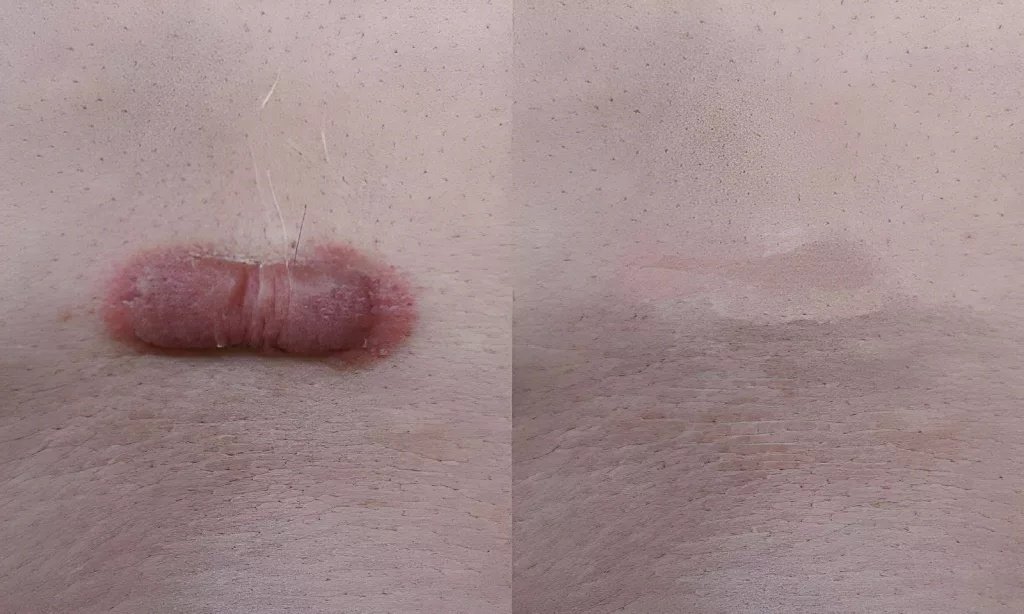
Before and after picture of a patient with a keloid burn scar treated with laser therapy
A study conducted in 2024 concluded that laser and light-based therapies are safe, effective, and well-tolerated by pediatric patients. Therefore, these options should be advocated for children with burn scars.
Massage Therapy:
As scars are known to cause contractures, functional disability is a major consequence of the lesion. Scar massage is a non-invasive intervention that provides multiple benefits. Specially tailored massage to burn patients improves scar formation and reduces anxiety.
Different massage techniques like effleurage and petrissage, when used in longer sessions, improve scar visibility and alleviate pain.
Topical Medications And Steroids:
Burn scar creams can lighten the scars. These preparations contain compounds like silicone and allantoin that help hydrate the scar skin and reduce erythema (redness). Steroid injections are administered in keloid scar patients to reduce scar size and alleviate pain.
PRP Therapy:
Regenerative medicine is highly regarded by doctors and patients worldwide. Platelet-rich plasma (PRP) helps rejuvenate the skin. This innate healing boost can also help you recover from your facial burn scars. There is contrasting evidence to support the use of PRP in burn scars because of different aspects at play. But with the right preparation and administration, PRP can improve scars.
Autologous platelet-rich plasma rapidly improved symptoms in a second-degree burn patient. Early administration helps minimize the chances of scar development and thickening.
Surgery
Surgeons perform reconstructive surgery (scar revision) for scars that cause functional impairment or aesthetic troubles. Different types of surgical procedures are adopted depending on the severity and location of the scar.
Z-plasty/W-plasty is a technique in which the doctor surgically rearranges the scar tissue into a “W” or a “Z” shape to release the tension and reduce contracture. For most patients, Z-plasty is a successful procedure with satisfactory outcomes.
Skin grafting is primarily used to manage severe burn wounds and reconstruct defects. In this procedure, a surgeon removes the scarred skin and replaces it with a skin graft taken from a healthy site. Different thicknesses of skin grafts are used. Your doctor will take a full-thickness (FTSG) or split-thickness graft (STGS) to cover the defective skin.
A skin flap surgery is similar to graft surgery, but in this particular procedure, the surgeon takes a thicker layer of skin to cover the burn site. A skin flap differs from a graft in that it retains its own blood supply. Research shows that surgical grafts and flap surgeries (free flaps, regional flaps, etc.), when done at the appropriate timing, can significantly improve even mature burn scars.
How Can I Prevent Burn Scars?
Quick management after a burn can reduce the risk and severity of scars. First-degree burns generally heal without scarring. So, such patients can prevent scar formation by cooling the burn under running water for at least 20 minutes (avoiding ice).
Second-degree burns heal by scarring and have serious consequences. Thus, you should seek medical help immediately. If you have a small burn, the doctor will advise you to apply a topical antibiotic (in the form of ointment) to reduce the risk of infection. A sterile gauze bandage also protects your skin and acts as a barrier against infection.
Compression garments are tight clothes that are applied to the burn wound. Pressure induced by these clothes allows your skin to heal with minimal scarring.
Final Word
Burn scars are frequently seen in patients with serious burn injuries. After a burn, your body heals by producing and depositing collagen, which leads to scar formation. The severity of the scar depends on the degree of the burn. First-degree burns don’t cause scarring, while hypertrophic scarring is seen with second-degree and third-degree burns. Severe cases of burn scars are accompanied by contractures of the region, which lead to debilitation and functional impairment.
Hypertrophic scars are itchy, raised, red/purple lesions that are most commonly seen in burn patients. Contracture scars limit motion and skin flexibility and are almost always seen in deep burns. Keloid scars are red, pink, or brown colored raised lesions that don’t go away on their own. Moreover, patients with scars in the facial region experience anxiety and post-traumatic stress disorder.
Patients report symptoms of pain, itchiness, and reduced range of motion with scars. Mild scars resolve themselves, but not serious burn scars (especially keloid scars). Conservative management involves wearing compression clothing and applying silicone gel after getting a 2nd or 3rd degree burn. Non-invasive strategies like phototherapy and laser therapy are safe, effective, and well-tolerated by patients. Massage therapy improves contractures in burn scars. Burn scar creams and steroid injections can reduce scar thickness and alleviate pain. PRP therapy has also shown promising results in the management of post-burn scars.
For severe cases, doctors opt for a variety of surgical options. Z-plasty/W-plasty surgical techniques reduce the visible part of the scar while minimizing contracture/tension. For better results, surgeons replace the scarred skin with healthy skin (skin graft) harvested from another site. Skin flap surgeries involve thicker skin grafts (from the donor site). This type of surgery works even for mature (old) burn scars.
References
[1] van Baar, M. E. (2020). Epidemiology of scars and their consequences: burn scars.Textbook on Scar Management: State of the Art Management and Emerging Technologies, 37-43.
[2] Xiao, H., Liu, R., Liu, X., Wang, H., Cen, Y., & Xu, X. (2022). Reconstruction of severe neck scar contracture after electrical injury.Journal of Craniofacial Surgery,33(1), 203-205.
[3] Pradhan, M., & Pethe, P. (2023). The molecular mechanisms involved in the hypertrophic scars post-burn injury.The Yale Journal of Biology and Medicine,96(4), 549.
[4] Gangemi, E. N., Gregori, D., Berchialla, P., Zingarelli, E., Cairo, M., Bollero, D., … & Stella, M. (2008). Epidemiology and risk factors for pathologic scarring after burn wounds.Archives of facial plastic surgery,10(2), 93-102.
[5] Zhang, C., Li, Z., Zhang, Q., Jiang, M., Zhu, Z., Wang, B., … & Zhang, Y. (2025). Application of minimally invasive debridement for deep second-degree facial burns in the early postburn phase.BMC surgery,25(1), 17.
[6] Chiang, R. S., Borovikova, A. A., King, K., Banyard, D. A., Lalezari, S., Toranto, J. D., … & Widgerow, A. D. (2016). Current concepts related to hypertrophic scarring in burn injuries.Wound Repair and Regeneration,24(3), 466-477.
[7] Hendriks, T. C. C., Botman, M., Binnerts, J. J., Mtui, G. S., Nuwass, E. Q., Niemeijer, A. S., … & van Zuijlen, P. P. M. (2022). The development of burn scar contractures and impact on joint function, disability and quality of life in low-and middle-income countries: a prospective cohort study with one-year follow-up.Burns,48(1), 215-227.
[8] Nguyen, T. J., & Thaller, S. (2008). Psychological rehabilitation of pediatric burn patients.Journal of Craniofacial Surgery,19(4), 882-887.
[9] Van Loey, N. E., & Van Son, M. J. (2003). Psychopathology and psychological problems in patients with burn scars: epidemiology and management.American journal of clinical dermatology,4(4), 245-272.
[10] De Decker, I., Beeckman, A., Hoeksema, H., De Mey, K., Verbelen, J., De Coninck, P., … & Claes, K. E. (2023). Pressure therapy for scars: Myth or reality? A systematic review.Burns,49(4), 741-756.
[11] Bleasdale, B., Finnegan, S., Murray, K., Kelly, S., & Percival, S. L. (2015). The use of silicone adhesives for scar reduction.Advances in wound care,4(7), 422-430.
[12] Abd Elrashid, N. A., Sanad, D. A., Mahmoud, N. F., Hamada, H. A., Abdelmoety, A. M., & Kenawy, A. M. (2018). Effect of orange polarized light on post burn pediatric scar: a single blind randomized clinical trial.Journal of physical therapy science,30(10), 1227-1231.
[13] Altemir, A., & Boixeda, P. (2022). [Translated article] Laser Treatment of Burn Scars.Actas dermo-sifiliograficas,113(10), T938-T944.
[14] Roohaninasab, M., Najar Nobari, N., Ghassemi, M., Behrangi, E., Jafarzadeh, A., Sadeghzadeh‐Bazargan, A., & Goodarzi, A. (2024). A systematic review of procedural treatments for burn scars in children: evaluating efficacy, safety, standard protocols, average sessions and tolerability based on clinical studies.International wound journal,21(10), e70091.
[15] Lin, T. R., Chou, F. H., Wang, H. H., & Wang, R. H. (2023). Effects of scar massage on burn scars: a systematic review and meta‐analysis.Journal of Clinical Nursing,32(13-14), 3144-3154.
[16] Barnes, S. P., Ma, Y., Patel, B., & Muthayya, P. (2024). Efficacy of Massage Techniques for Hypertrophic Burn Scars–A Systematic Review of Literature.Journal of burn care & research,45(2), 356-365.
[17] Hosseini, M. S., Nouri, M., Zarrabi, M., Fatemi, M. J., Shpichka, A., Timashev, P., … & Vosough, M. (2023). Platelet-rich plasma in regenerative medicine: possible applications in management of burns and post-burn scars: a review.Cell Journal (Yakhteh),25(5), 281.
[18] Ruiz, A., Cuestas, D., Garcıa, P., Quintero, J., Forero, Y., Galvis, I., & Velasquez, O. (2018). Early intervention in scar management and cutaneous burns with autologous platelet‐rich plasma.Journal of cosmetic dermatology,17(6), 1194-1199.
[19] Anastasova, V., Kiskinov, P., Georgiev, A., Ivanova, K., Krasteva, E., Atliev, K., & Zanzov, E. (2025). Z-plasty–Basic Surgical Technique for Post-Burn Patients.Acta Medica Bulgarica,52(1), 21-28.
[20] Ogawa, R. (2019). Surgery for scar revision and reduction: from primary closure to flap surgery.Burns & Trauma,7, s41038-019.