
 in the genital and anal region...)

Condyloma Link Between Condyloma is a medical term normally applicable to describe warts (growths in the skin) in the genital and anal region. Millions of individuals all over the world suffer from these lesions and transmit them via sexual or skin contact.
What is Condyloma?: Condyloma Link Between
Condyloma refers to two different conditions that are entirely different in their causes and features. Most people use this term for the first type.
Condyloma Acuminatum (Genital Warts)
Condyloma acuminatum is a type of genital wart, which is the result of an infection by human papillomavirus (HPV), most often 6 and 11. Warts are skin growths that may be found anywhere on the body. The warts in the anogenital area are referred to as condyloma. They manifest as soft, skin-colored swellings in the genitals and the anal regions.
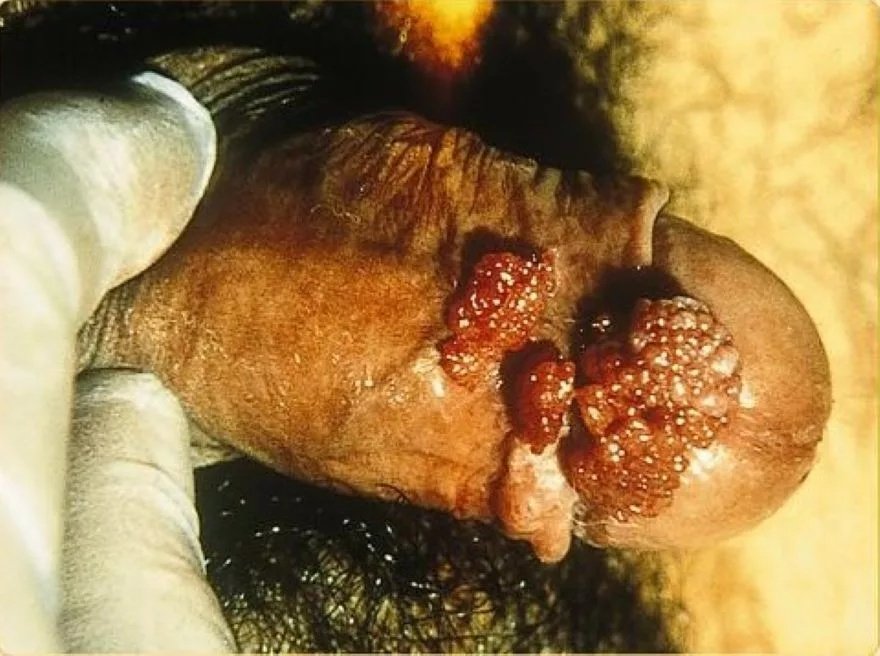
Severe presentation of genital warts (condyloma acuminata) on the penis. Image by SOA-AIDS Amsterdam, CC BY-SA 3.0, viaWikimedia Commons.
Condyloma Lata
Condyloma lata (also referred to as condyloma latum) is a manifestation of secondary syphilis caused by the spirochete Treponema pallidum and requires antibiotic treatment; it is not harmless. These are flat, damp, whitish or grayish plaques that are clinically distinct from condyloma acuminatum.
What are the Causes of Condyloma?
The main cause of infection of condyloma is HPV, a double-stranded DNA. This virus infects epithelial cells, particularly in the anogenital region. Although there are more than 100 types of HPV, types 6 and 11 are responsible for causing condyloma in approximately 90 percent of cases.
The virus gets into your body by penetrating the microscopic skin tears during sexual intercourse. Then, being inside, it infects the basal epithelium cells and starts replication. The incubation period is typically 1–6 months, although warts can appear as early as weeks or as late as several years after the first infection.

An anatomical illustration of human skin, highlighting the difference between healthy tissue and skin with a wart.
Is Condyloma Contagious?
Yes, Condyloma is very contagious. The virus is most frequently passed on during sexual intercourse; it occurs through skin-to-skin contact during vaginal, anal, and oral intercourse. Even the absence of visible warts does not mean that the virus cannot be spread because HPV might be in a subclinical or latent state.
Approximately three out of four sexual partners of patients with visible warts develop warts within eight months. This transmission rate is remarkable, which is why it is necessary to talk about the condition with the sexual partners and adopt safe sex.
Although condoms reduce transmission risk, they do not fully prevent it because HPV can infect skin not covered by condoms.
Types and Appearance of Condyloma
Condyloma acuminata can present in various types depending on its site and severity:
- Standard Condyloma Acuminata: These are small, cauliflower-like bumps with a rough surface, of flesh color. They don’t show a fixed number; sometimes they occur singly, or in others appear as clusters. Size also varies, ranging from barely visible to several centimeters in diameter.
- Anal Condyloma: These occur in the area of the anus, are painful and itchy. Anal condyloma has a bleeding tendency and has the feeling that something is in the anal region.
- Giant Condyloma Acuminatum (Buschke-Löwenstein Tumor): A rare, aggressive form with locally destructive behavior. It may lead to infection or fistulation and has a low but real potential for malignant transformation into squamous cell carcinoma.
Condyloma vs. Verruca: The Discoveries of the Differences
Many people confuse condyloma acuminatum with verruca(common warts). With the help of the following table, you can recognise them as two different diseases:
| Feature | Condyloma Acuminatum | Verruca Vulgaris |
|---|---|---|
| HPV Types | Primarily types 6 and 11 | Primarily types 1, 2, and 4 |
| Location | Anogenital area, sometimes oral. | Other parts of the body, including the face, hands, and feet, etc. |
| Transmission | Sexual contact, skin-to-skin contact | Direct contact with the contaminated surfaces/skin. |
| Appearance | Fleshy papules with broad base, papillomatous surface | Bumps which are hard and raised, rough on the surface. |
| Microscopic Features | Hyperkeratosis, papillomatosis, and elongated rete ridges | Hyperkeratosis, papillomatosis, elongated rete ridges |
Though both conditions are caused by HPV, they are associated with various viral strains and occur in different body areas. This difference is significant as treatment strategies and consequences vary greatly.
Condyloma Symptoms: Signs to Look For
Many people with condyloma may not even realize its presence in their body because of no symptoms. Or mild symptoms may appear, like bleeding, itching, and pain. Warts are found by them during a normal self-examination or check-up by doctors.
In cases where symptoms appear, they may include:
- Small bumps in the genital region look like they are made of flesh
- Growths in the form of cauliflower clusters
- Itching and pain in the condyloma
- Blood during or after intercourse
- Moisture in the affected area
- Psychological distress is associated with the appearance of lesions
Typically, about two-thirds of sexual partners of someone with condyloma develop lesions within three months, though symptoms may take months or years to appear.
Diagnosis of Condyloma
In most cases of condyloma acuminata, patients come to the doctor with the worry of feeling a growth in the anal area. So the best diagnosis is made on clinical examination.
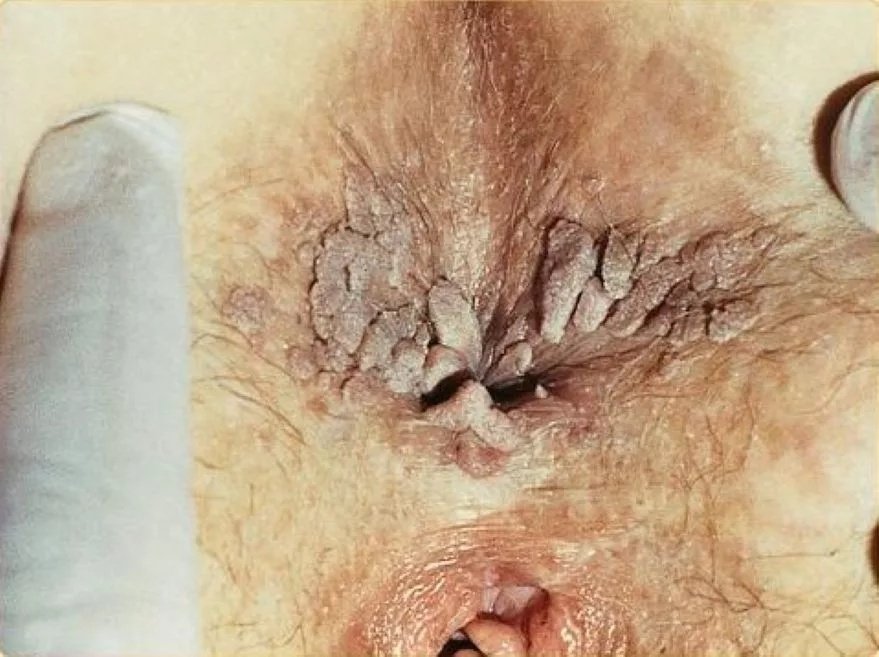
Genital warts (condylomata acuminata) around the anus are caused by human papillomavirus (HPV). Image by SOA-AIDS Amsterdam, CC BY-SA 3.0, viaWikimedia Commons.
Such a lesion can be diagnosed by your doctor on naked eye inspection. You can be asked about how long you have had it. Also, your doctor will take a sexual history and the sexual partners. Usually, histopathologic examination of the lesions is unnecessary, but some approaches are helpful, like;
- Acetic Acid Test: In this test, the warts are smeared with diluted acetic acid (vinegar). This makes them white, and this confirms the diagnosis.
- Biopsy: It should only be performed in case of atypical lesions or in case of a possible malignancy.
- HPV Testing: This may be done to detect viral strains, especially when there are lesions of the cervix.
What is the best treatment for condyloma?
Treatment options include topical therapies, cryotherapy, and surgical excision, with selection depending on lesion location, morphology, and patient preference.
Topical Treatments:
- Podophyllotoxin (0.5% solution/0.15% cream): Applied twice daily for 3 consecutive days, followed by 4 days of rest, up to 4 cycles.
- Imiquimod cream (5%): Applied to the bedtime thrice weekly (a maximum of 16 weeks). This immunomodulator stimulates the protective mechanisms of the body.
- Sinecatechins ointment: It is a botanical extract to be used three times a day.
Provider-Administered Treatments:
- Cryotherapy: Cryotherapyis the best initial treatment, especially of perianal lesions, and is associated with liquid nitrogen freezing in 10-15 seconds. The response rates are excellent with no serious side effects. It usually takes one week to heal, and the blisters appear within a day after the surgery.
- Trichloroacetic Acid (TCA): A chemical treatment that burns away wart tissue.
- Electrocautery: This involves the use of electric current to kill the tissue of the warts.
- Laser Therapy: The treatment with CO2 laser therapy resulted in total clearance of lesions in 95 percent of the cases (as compared to 46.2 percent with cryotherapy), and only one treatment was usually necessary.
Condyloma Surgery and Recovery
Surgery is required in case of extensive lesions or those that are resistant to other interventions.
Surgical Options:13 Safi F, Bekdache O, Al-Salam S, et al. Management of peri-anal giant condyloma acuminatum–a case report and literature review. Asian J Surg. 2013 Jan;36(1):43-52. doi:10.1016/j.asjsur.2012.08.010
- Simple Excision: This is the removal of warts with surgical equipment.
- Loop Electrosurgical Excision Procedure (LEEP): This is a procedure whereby your doctor will use an electrically charged piece of wire to excise tissue.
- Laser Vaporization: CO2 Laser use in cases of extensive cases.
For Giant condyloma acuminatum, complete surgical excision is the best option, and to minimize recovery time, surgeons use skin grafts or flaps to cover giant lesions.
Condyloma Surgery Recovery:
The recovery is generally time-dependent, which is determined by the extent of the surgical operation and the lesion sites:
- Minor outpatient cases: 1-2 weeks.
- Wide excision 2-4 weeks or more.
- Giant condyloma removal: Several weeks to months with wound care
During recovery:
- Keep the area clean and dry
- Avoid sexual activity as directed by your healthcare provider
- Take pain drugs when necessary
- Watch for signs of infection (increased redness, swelling, discharge, or fever)
- Go to all follow-up appointments
Local anesthesia is often sufficient; referral to a specialist may be needed for extensive disease.
Prognosis and Recurrence
Condyloma Acuminatum Prognosis
Though treatments are capable of removing warts, but can’t eliminate the HPV, and thus the warts may reemerge in approximately 50-73 percent of cases. Warts may, however, also regress spontaneously. Sensitive DNA methods have demonstrated that the virus may be cleared or suppressed by immunological response to levels that are not detectable by PCR methods.
The prognosis depends on several factors:
- Immune system status
- Size and location of warts
- Treatment compliance
- Sex and marital status of the partners
Long-term Considerations
Although condyloma acuminata, caused by HPV types 6 and 11, has no relation to cancer, the patients are also prone to having high-risk HPV types. Periodic screening of the cervical, anal, or any other form of cancer is significant to those at risk.
Condyloma lata requires prompt antibiotic treatment for syphilis to prevent tertiary complications.
Prevention Strategies
Preventing Condyloma Acuminatum
HPV Vaccination:
HPV vaccination is the best prevention intervention. The vaccines (nonavalent and quadrivalent) are against HPV type 6/11 ( indicating genital warts) and the high-risk types 16 and 18 (causing cancer). Vaccination is best in:
- Every child between the ages of 11-12 years (may begin as early as 9 years).
- Catch-up immunization of people to age 26.
- After consultation with the healthcare provider, some adults aged between 27-45.
Safe Sexual Practices:
- Always use condoms (but they are not 100 percent effective)
- Reduce the number of sex partners
- Avoid sexual contact when warts are visible
- Talk to the partners about sexual health
- Get regular STI screenings
When to See a Healthcare Provider?
Seek medical attention if you notice:
- Any new growths or bumps in the genital or anal area
- Bleeding lesions and itchy/painful lesions.
- Changes in existing lesions
- Abnormal discharge or symptoms.
- Changes in existing lesions
- Any unusual discharge or symptoms
- Exposure to a partner with genital warts or syphilis
Early treatment and diagnosis results in improved outcomes and prevents the transmission to the partners.
Special Considerations
Condyloma During Pregnancy
During pregnancy, warts may grow and increase in size, and they may complicate the delivery of the baby by vaginal birth, and may pass the HPV to the infant. Management options include:
- Observation of whether the warts are small or growing larger
- Cryotherapy
- In case of necessity, surgical excision.
- Cesarean section in case of extensive warts that block the birth canal
- HPV transmission to an infant is rare but possible (laryngeal papillomatosis)
Immunocompromised Patients
The patients with a weakened immune system are at risk:
- Larger and more severe warts
- Higher recurrence rates after treatment
- Greater exposure to cancerous change
- May need more aggressive treatment
Conclusion
Condyloma acuminatum is a common sexually transmitted infection caused by HPV, presenting as genital warts. Learning about the causes, identifying the symptoms, and obtaining immediate treatment are critical steps in managing this condition. Most patients with condyloma will be able to succeed with the help of their treatment with the use of topical medications or medical surgery as the most effective methods of prevention and treatment.
In case you suspect having condyloma or have had contact with a partner who had the condition, seek medical attention from a medical professional to assess and treat you appropriately. It is essential to remember that the medical condition affects millions of people, and help could be highly effective.
References
[1] Patel H, Wagner M, Singhal P, Kothari S. Condyloma Acuminata. Treasure Island (FL): StatPearls Publishing; 2023 Jun 21. Available from: https://www.ncbi.nlm.nih.gov/books/NBK547667/
[2] Diţescu D, Istrate-Ofiţeru AM, et al. Clinical and pathological aspects of condyloma acuminatum – review of literature and case presentation. Rom J Morphol Embryol. 2020;61(4):1087-1097.
[3] Forrestel AK, Kovarik CL, Katz KA. Sexually acquired syphilis: historical aspects, microbiology, epidemiology, and clinical manifestations. J Am Acad Dermatol. 2020;82:1–14. doi:10.1016/j.jaad.2019.02.073
[4] Bernard HU, Burk RD, Chen Z, van Doorslaer K, zur Hausen H, de Villiers EM. Classification of papillomaviruses (PVs) based on 189 PV types and proposal of taxonomic amendments. Virology. 2010;401(1):70-79.
[5] Winer RL, Hughes JP, Feng Q, et al. Condom use and the risk of genital human papillomavirus infection in young women. N Engl J Med. 2006;354(25):2645-2654.
[6] Purzycka-Bohdan D, Nowicki RJ, Herms F, Casanova JL, Fouéré S, Béziat V. The Pathogenesis of Giant Condyloma Acuminatum (Buschke-Lowenstein Tumor): An Overview. Int J Mol Sci. 2022;23:4547. doi:10.3390/ijms23094547
[7] Mindel A, Tovey SJ, Timmins DJ, Williams P. Primary and secondary syphilis, 20 years’ experience. 2. Clinical features. Genitourin Med. 1989;65:1–3. doi:10.1136/sti.65.1.1
[8] U.S. Preventive Services Task Force. Screening for Human Papillomavirus Infection: US Preventive Services Task Force Recommendation Statement. JAMA. 2018;320(7):674-686.
[9] Komericki P, Akkilic-Materna M, Strimitzer T, Aberer W. Efficacy and safety of imiquimod versus podophyllotoxin in the treatment of anogenital warts. Sex Transm Dis. 2011;38(3):216-218.
[10] Lacey CJ, Goodall RL, Tennvall GR, et al. Randomised controlled trial and economic evaluation of podophyllotoxin solution, podophyllotoxin cream, and podophyllin in the treatment of genital warts. Sex Transm Infect. 2003;79(4):270-275.
[11] Edwards L, Ferenczy A, Eron L, et al. Self-administered topical 5% imiquimod cream for external anogenital warts. HPV Study Group. Arch Dermatol. 1998;134(1):25-30.
[12] Stone KM, Becker TM, Hadgu A, Kraus SJ. Treatment of external genital warts: a randomised clinical trial comparing podophyllin, cryotherapy, and electrodesiccation. Genitourin Med. 1990;66:16-19. doi:10.1136/sti.66.1.16
[13] Safi F, Bekdache O, Al-Salam S, et al. Management of peri-anal giant condyloma acuminatum–a case report and literature review. Asian J Surg. 2013 Jan;36(1):43-52. doi:10.1016/j.asjsur.2012.08.010
[14] Mihailov R, Tatu AL, Niculet E, et al. Surgical Management of Perianal Giant Condyloma Acuminatum of Buschke and Löwenstein: Case Presentation. Life (Basel). 2023;13(9):1916. doi:10.3390/life13091916
[15] Zhan M, Tong Z, Chen S, Miao Y, Yang Y. Establishing a prediction model for recurrence of condyloma acuminatum. Eur J Med Res. 2022 Sep 22;27(1):183. doi:10.1186/s40001-022-00816-7
[16] Hoory T, Monie A, Gravitt P, Wu TC. Molecular epidemiology of human papillomavirus. J Formos Med Assoc. 2008 Mar;107(3):198-217. doi:10.1016/S0929-6646(08)60138-2
[17] Meites E, Szilagyi PG, Chesson HW, Unger ER, Romero JR, Markowitz LE. Human Papillomavirus Vaccination for Adults: Updated Recommendations of the Advisory Committee on Immunization Practices. MMWR Morb Mortal Wkly Rep. 2019;68(32):698-702. doi:10.15585/mmwr.mm6832a3
[18] Winer RL, Lee SK, Hughes JP, Adam DE, Kiviat NB, Koutsky LA. Genital human papillomavirus infection: incidence and risk factors in a cohort of female university students. Am J Epidemiol. 2003;157(3):218-226.
[19] Sugai S, Nishijima K, Enomoto T. Management of Condyloma Acuminata in Pregnancy: A Review. Sex Transm Dis. 2021;48:403-409. doi:10.1097/OLQ.0000000000001330
[20] Silverberg MJ, Lau B, Justice AC, et al. Risk of anal cancer in HIV-infected and HIV-uninfected individuals in North America. Clin Infect Dis. 2012;54(7):1026-1034.