

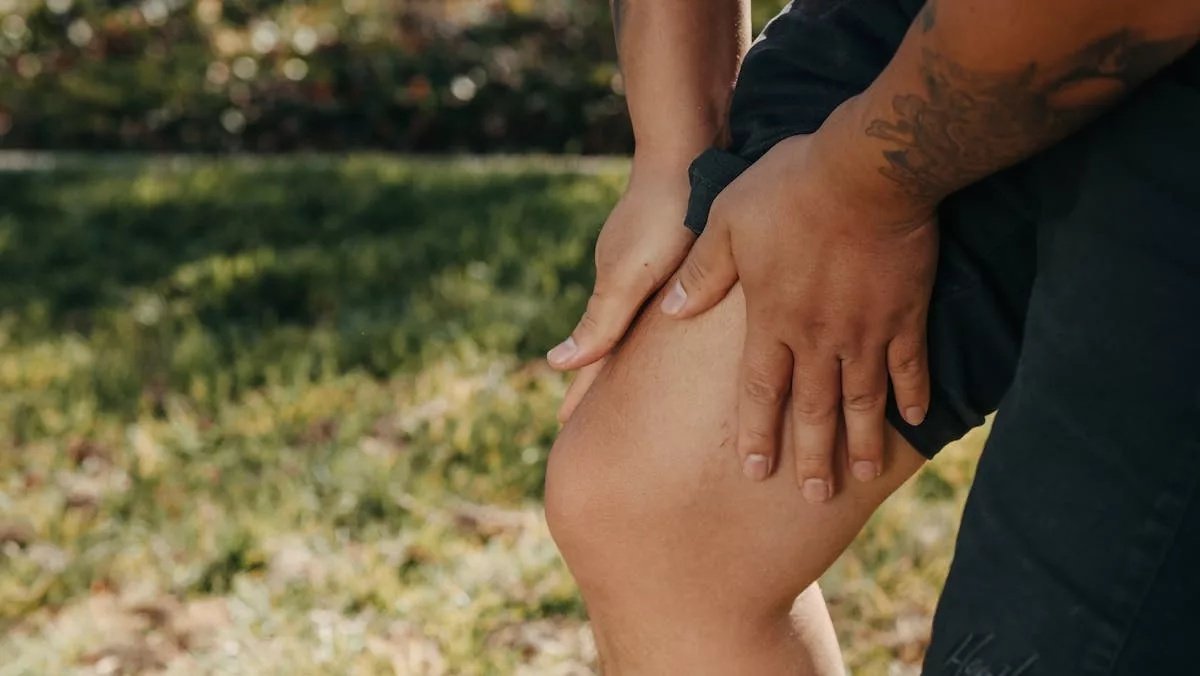
Adductor Tendinopathy Symptoms Adductor tendinopathy is a condition characterized by groin pain attributed to a load-related disorder of the adductor tendons, leading to pain and functional limitation. This type of chronic groin pain is frequently seen in athletes/sports players, especially those involved in activities that require quick change of direction. Reports suggest that the prevalence of groin injuries and consequent pain is higher in athletes than in non-athletes.[1] Patients report different types of pain presentations, ranging from a dull ache in the thigh to sharp pain radiating down the leg. The disorder is attributed to repetitive stress on the soft tissues from overuse. Doctors symptomatically manage the condition with medications (NSAIDs and occasionally corticosteroids), RICE, physical therapy, and advise muscle-strengthening exercises to prevent recurrence.
What Is Adductor Tendinopathy?: Adductor Tendinopathy Symptoms
Adductors are a group of muscles present in your inner thigh that allow you to move your legs. The group contains the following muscles:
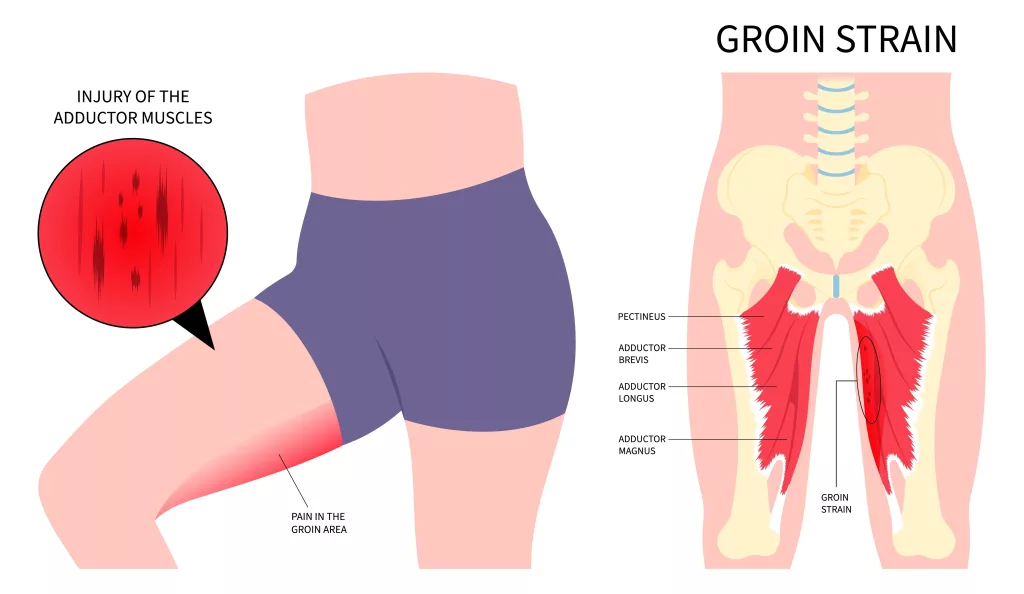
The image on the left shows the region of pain for adductor tendinopathy and strain. The image on the right shows the position of the adductor muscles connecting the legs and the pelvis.
Special soft tissues called tendons connect these muscles to the bone. The adductors (muscles and tendons) attach your thigh bones to your pelvis. Therefore, they allow you to move your leg towards the middle and provide support/stability to the pelvis when you stand.
Repeated overuse of the tendons makes them prone to injury. Tendinopathy is a condition comprising two different pathologies, i.e., tendonitis and tendinosis. Acute injury to a tendon triggers micro-tearing and inflammation of the tendon, i.e., tendonitis. However, most chronic cases involve tendinosis, which is characterized by the breakdown of collagen protein within the tendon without significant inflammatory cell infiltration. This breakdown ultimately leads to degeneration of the soft tissue and further complications. Therefore, inflammation may not always be present in adductor tendinopathy.
Symptoms Of Adductor Tendinopathy
Adductor tendinopathy typically develops gradually due to repetitive loading, with or without a preceding acute muscle strain. Patients experience the following symptoms in association with the thigh pathology:
Pain
The most evident presentation of adductor tendinopathy is groin pain. Clinical studies show that abdominal groin pain (pubalgia) is strongly associated with tendinopathy.[2]
Some patients report a dull ache in the leg, while a sharp, radiating pain debilitates others. It is seen that, unlike most muscle strains that have an acute onset of symptoms, groin (adductor) strains and tendinopathies have a gradual yet long-lasting onset. Groin pain is attributed to adductor longus tendinopathy.[3]
In most cases, the ache has specific patterns. You will notice worsening of pain when you stretch the groin area. Moreover, squeezing the legs together can also induce pain. Many players/athletes notice that pain worsens when initiating a workout/activity/exercise and gets better during the training. The pain returns after cooling down and may be felt on the following day. Some individuals also notice stiffness along with pain.
Weakness
Tendon injuries are often linked to muscle weakness. When weakness affects the leg, groin, and hip region, athletes are often unable to run.[4] Tendinopathies of the adductor muscles make it difficult to squeeze your legs together. Doctors use this feature to diagnose this condition.
Tenderness
Impaired function, tendon pain, and tenderness on palpation are notable manifestations of tendinopathies.[5] In the case of adductor tendon involvement, you will notice tenderness when palpating/pressing along your underwear line.
Due to pain, stiffness, and weakness, several sufferers also report having a reduced range of hip and leg motion.
Adductor Tendinopathy Causes
It is a multifactorial disorder that can develop due to different factors. The most common causes of the tendon injury include:
Overuse
The main underlying cause of the disorder is repetitive stress on the adductor muscles/tendons. Thus, adductor tendinopathy is considered an overuse injury.[6] Athletes involved in games/activities that require constant change of direction put their groins under excess pressure. The resultant overstretching of the adductor tendons leads to micro tears and degenerative tendon changes over time. Many sportspersons notice debilitating groin pain after undergoing a sudden increase in training. Plus, an increase in intensity also puts you at a greater risk.
Muscle Imbalance
An imbalance between the muscles on the inner (adductor) and outer thighs (abductors) can lead to irritation of the adductor tendons, which can eventually lead to tendinopathy. Your adductors try to work hard to compensate for the poor pelvic stability that takes a toll on the muscles and tendons. Tendinopathy of the adductors can also be the outcome of tight adductors. People with hypertonic adductors can not handle much load and fall prey to tendon injuries.[7]
Leg Length Discrepancy
Another factor that contributes to groin tendon irritation is leg length discrepancy (LLD). It is a condition in which one leg is functionally shorter than the other. Studies show that LLD can lead to multiple serious complications, such as neuromuscular problems and tendon issues.[8]
Risk Factors
Experts have identified the following risk factors associated with tendinopathy:
- Being inactive
- Lack of warm-up before hectic activity
- Being obese
- Old age (having age-related muscle weakness)
- Having a poor workout/training technique
How To Diagnose Adductor Tendinopathy?
This is predominantly a disorder of athletes/players. The high prevalence of hip adductor tendinopathy in players prompts doctors to investigate adductor tendinopathy in patients reporting groin pain. Your healthcare provider will start by taking a history of your symptoms. He may ask you questions about the severity of pain and changes in intensity with activity. He will then perform a physical examination of the groin region to check for inflammation and rule out any other pathologies.
Your clinician may also perform different tests, including:
Squeeze Test
In the adductor squeeze test, the doctor assesses groin pain induced by underlying tendinopathy. You will have to lie straight on your back (in supine position) with your knees bent. Then, you will squeeze your legs inwards while the healthcare worker resists this motion. If you have pain in the groin/inner thigh on doing so, the test is positive. A positive squeeze test indicates an adductor strain or adductor tendinopathy.
Imaging Tests
To examine the state of your adductor muscles and tendons, your doctor may order a variety of imaging tests.
A magnetic resonance imaging (MRI) scan provides detailed pictures of the groin and pelvic tissues (hard and soft tissues). This type of imaging scan reveals microtears in tendons and helps diagnosticians rule out other injuries, such as hernias or stress fractures. MRI is considered highly useful when the diagnosis is unclear or symptoms persist despite treatment, but it is not routinely required in all cases.[9]
Another test is the ultrasound scan. A diagnostic ultrasound scan gives good-quality, real-time images of the soft tissues while keeping you safe from the harmful radiowaves. Your doctor may also take help from a computerized tomography (CT) scan.
Differential Diagnosis
Several groin conditions present similarly to adductor tendinopathy. Management strategies vary for these conditions; therefore, it is essential to differentiate between the disorders.
Adductor Tendinopathy Vs Osteitis Pubis:
Both conditions cause groin pain, but tendinopathy is characterized by chronic damage to the tendons, and osteitis pubis is an inflammatory disorder of the joint (pubic symphysis). Adductor tendinopathy causes localized pain, but joint pain from osteitis pubis is deep and more centralized. Moreover, tendinopathies may respond faster to rehabilitation compared to osteitis pubis, which often has a prolonged course.
Adductor Tendinopathy Vs Sports Hernia:
Sports hernia (athletic pubalgia) is a closely related condition that can co-exist with tendinopathy. While tendinopathy is the outcome of chronic injury to the tendons, sports hernia is characterized by tearing of the abdominal wall or adductor attachment at the pubic bone. Sports hernias cause sharper pain and lead to more muscle weakness.
Adductor Tendinopathy Treatment
The main aim of treatment is to reduce pain and restore function. As most patients are athletes who need to get back on training asap, most clinicians try to adopt strategies that give quick outcomes. In addition to the symptomatic management of the disease, doctors emphasize the need to strengthen the muscles (groin and core muscles) to ensure better performance and the prevention of recurrence.
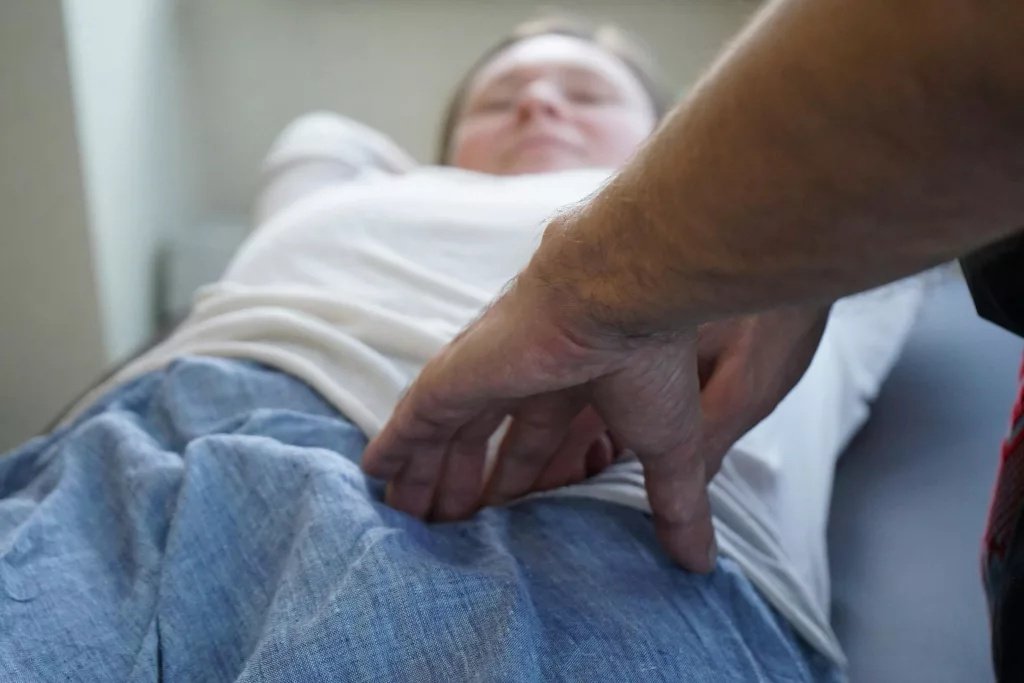
A therapist performs physical therapy on a patient with adductor tendinopathy
Symptomatic Management
For relief of symptoms and healing of the soft tissues, you will need to follow the RICE protocol, which is discussed below:
Rest (R):
Sports experts advise players to rest when experiencing groin pain due to tendinopathy. All patients note that the pain worsens with activity. Thus, it is important to rest and allow the body to heal. However, complete rest for prolonged periods is not recommended; instead, relative rest and gradual return to activity are preferred.[10]
Ice Application (I):
Cold (ice) application is an effective way of easing tendinopathy-induced pain. The latest studies advocate the use of cryotherapy (cold) as an adjunctive strategy in the treatment of tendinopathy. Thus, you can notice some relief with the application of cold.[11]
Compression (C):
Another step proven to be beneficial in the rehabilitation of groin soft tissues is light compression. Ice and compression, immediately after a hip, thigh, and groin injury, prevent aggravation of symptoms.[12]
Elevation (E):
Keeping the affected tissues elevated helps drain out the inflammation faster. This step offers more therapeutic advantage in cases of tendonitis. Tendon inflammation is not always present in cases of tendinopathies; hence, elevation might not be as effective.
Medications:
Over-the-counter pain killers (like ibuprofen, naproxen, diclofenac, etc.) can be helpful in tendon pain. For quick relief, you can opt for steroid injections. However, corticosteroid injections should be used cautiously, as repeated use may weaken the tendon and increase the risk of further degeneration.
Physical Therapy:
Physiotherapy is a non-invasive treatment modality that works great for soft tissue injuries and pathologies. Most athletes prefer passive physical therapy (PPT) and exercise therapy (ET) to manage their groin pain. Clinical studies show that PPT plus ET have positive effects on pain intensity and hip range of motion. The modality works well for adductor strains and tendinopathies.[13]
Physical therapy approaches like joint mobilization (paired with exercises) effectively improve function and patients’ range of motion while alleviating groin pain.[14] Rehabilitation programs should also include progressive strengthening, particularly eccentric and functional loading exercises, to restore tendon capacity.
Joint Support:
Groin braces provide support to your groin structures and take the tension from your thighs and groin. This spares the repetitive stress on the muscles and allows them to heal quickly.
Adductor Tendinopathy Exercises
Your physiotherapist can best guide you about the exercises that will provide relief from groin pain. The following is a list of stretches/exercises that can help alleviate symptoms. However, you must only perform the stretches if the pain is tolerable!
Ball Squeeze:
Isometric ball squeeze is an exercise in which you lie straight on your back and bend your knees. You place a ball (or a thick pillow) between your knees. With the knees, you squeeze the ball and hold this position for about 30 seconds, and then release. Do 5 repetitions to relieve pain.
Straight Leg Squeeze:
You can perform the same squeeze exercise by keeping your legs straight instead of bent (in the supine position).
Banded Adduction:
Another effective exercise is the banded adduction. In this exercise, you stand straight and tie a resistance band to a fixed, secure point. Then, you attach the band to your affected ankle and pull your leg inwards. Remember to do it slowly across the body. This stretches the adductor soft tissues and provides pain relief.
How To Prevent Adductor Tendinopathy?
To prevent adductor tendinopathy, you need to consider proper rehabilitation tips.
Load management is an important step that involves limiting high-intensity exercises (that induce pain) but continuing light exercises. Light exercises help you maintain tendon health while avoiding discomfort.
Always perform a warm-up before training and hectic exercises. This activates the muscles and prevents unwanted consequences like muscle strains and sprains.
Be gentle on yourself. Don’t push yourself too hard and allow the muscles/tendons to rest and recover.
Adductor Tendinopathy Recovery
Adductor tendinopathy recovery depends on different factors, such as the age of the patient and the severity of tendon degeneration. However, you can typically see 4-12 weeks of recovery time for mild-to-moderate cases. On the other hand, in chronic and severe cases, complete recovery can take more than six months.
Final Word
Adductor tendinopathy is a painful disorder characterized by damage to tendons in your groin region. Adductors are a group of muscles (attached to the bones via tendons) present in your inner thigh region. Tendinopathy is a condition in which there is tissue damage (tendon micro-tearing), i.e., tendinosis, which may or may not be accompanied by tendon inflammation, i.e., tendonitis. This disorder is mostly seen in athletes/players (soccer players, etc.).
Some patients report dull ache while others complain of sharp, radiating pain. Other common symptoms include pain on moving legs towards the center of the body, stiffness, tenderness, and muscle weakness. Overuse of the muscles, muscle imbalance, and leg length discrepancies contribute to groin pain. Doctors diagnose it with the adductor squeeze test and radiographic imaging (MRI, ultrasound, etc.).
Treatment involves rest, ice application, compression, and elevation. OTC painkiller medications and localized steroid injections provide symptomatic relief. Physical therapy and adductor strengthening exercises not only relieve pain but also help strengthen your muscles to prevent recurrence.
References
[1] Harøy, J., Clarsen, B., Thorborg, K., Hölmich, P., Bahr, R., & Andersen, T. E. (2017). Groin problems in male soccer players are more common than previously reported. The American journal of sports medicine, 45(6), 1304-1308.
[2] Ferret, J. M., Barthélémy, Y., & Lechauve, M. (2016). Adductor Tendinopathy. InThe Lower Limb Tendinopathies: Etiology, Biology and Treatment(pp. 41-65). Cham: Springer International Publishing.
[3] McHugh, M. P., Nicholas, S. J., & Tyler, T. F. (2023). Adductor strains in athletes.International journal of sports physical therapy,18(2), 288.
[4] Campos-Villegas, C., de Villar, L. O. P., Gámez-Payá, J., Alarcón-Jiménez, J., & de Bernardo, N. (2024). Clinical Progression and Load Management For Proximal Hamstring Tendinopathy In A Long-Distance Runner: A Case Report.International Journal of Sports Physical Therapy,19(5), 609.
[5] Previtali, D., Mameli, A., Zaffagnini, S., Marchettini, P., Candrian, C., & Filardo, G. (2022). Tendinopathies and pain sensitisation: a meta-analysis with meta-regression.Biomedicines,10(7), 1749.
[6] Rio, E., Mayes, S., Ferrar, K., Purdam, C., Freeman, M., & Cook, J. (2022). Clinical reasoning for hip and knee tendinopathies.Hip and Knee Pain Disorders: An evidence-informed and clinical-based approach integrating manual therapy and exercise, 35.
[7] Valent, A., Frizziero, A., Bressan, S., Zanella, E., Giannotti, E., & Masiero, S. (2012). Insertional tendinopathy of the adductors and rectus abdominis in athletes: a review.Muscles, ligaments and tendons journal,2(2), 142.
[8] Agustian, B., Prabowo, T., & Sari, D. M. (2022). Leg Length Discrepancy.Indonesian Journal of Physical Medicine and Rehabilitation,11(01), 1-11.
[9] Bisciotti, G. N., Di Pietto, F., Rusconi, G., Bisciotti, A., Auci, A., Zappia, M., & Romano, S. (2024). The role of MRI in groin pain syndrome in athletes.Diagnostics,14(8), 814.
[10] Kern, T., Manfredi, J., & Tomlinson, J. (2023). Ultrasonographic appearance of supraspinatus and biceps tendinopathy improves in dogs treated with low-intensity extracorporeal shock wave therapy: a retrospective study.Frontiers in Veterinary Science,10, 1238513.
[11] Lima, T. A., Rocha, T. S., Bezerra, M. A., & de Oliveira, R. R. (2025). Is cryotherapy effective for tendon health? A systematic review of evidence and methodological limitations.Journal of Bodywork and Movement Therapies.
[12] Halverson, D., & DePalma, B. (2024). Rehabilitation of Groin, Hip, and Thigh Injuries. InRehabilitation Techniques for Sports Medicine and Athletic Training(pp. 577-626). Routledge.
[13] Lahuerta-Martin, S., Robles-Perez, R., Hernando-Garijo, I., Jimenez-del-Barrio, S., Hernandez-Lazaro, H., Mingo-Gomez, M. T., & Ceballos-Laita, L. (2023). The effectiveness of non-surgical interventions in athletes with groin pain: a systematic review and meta-analysis.BMC Sports Science, Medicine and Rehabilitation,15(1), 81.
[14] Peterson, S. (2022). Physical therapy management of a patient with persistent groin pain after total hip arthroplasty and iliopsoas tenotomy: a case report.Physiotherapy Theory and Practice,38(3), 481-491.