
, historically known as Ki-1 lymphoma, is a rare and aggressive form of cancer that affects the T...)
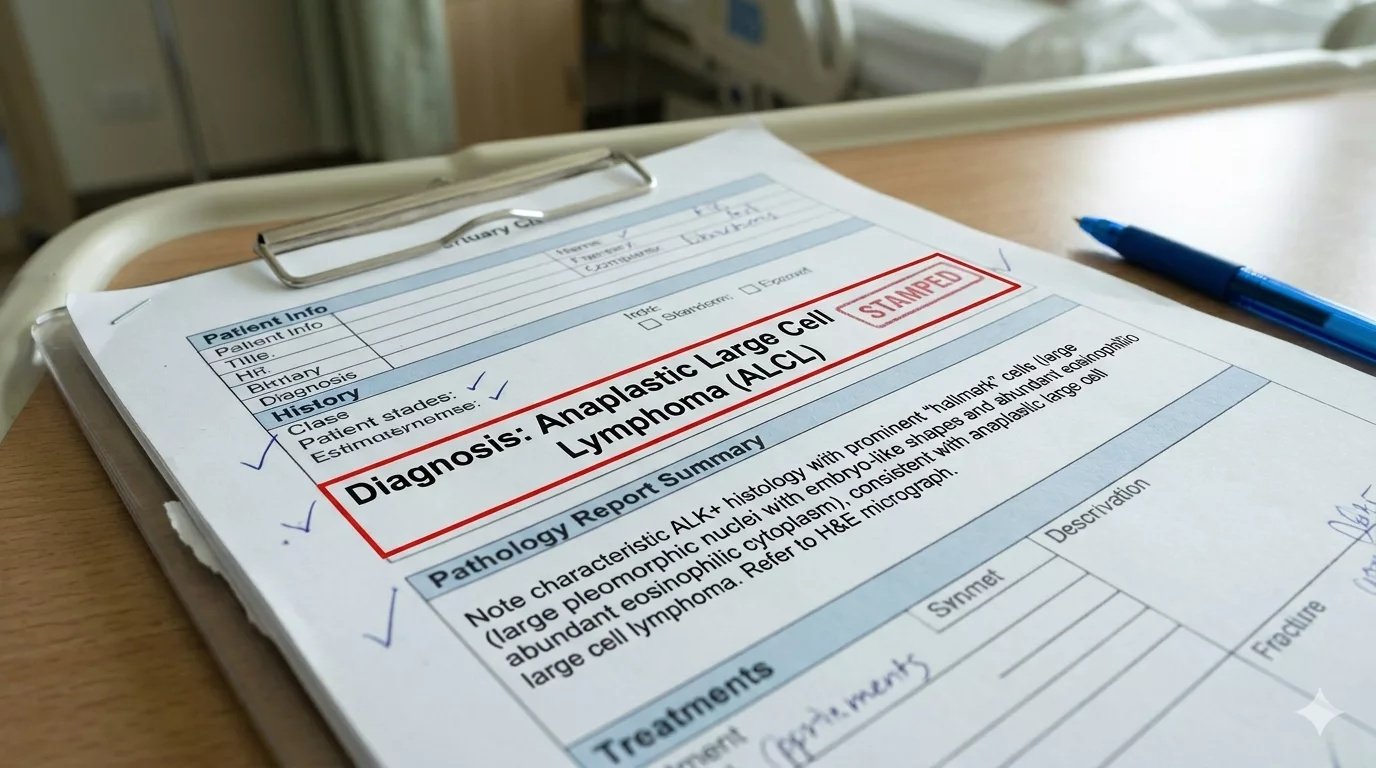
Anaplastic large cell lymphoma (ALCL), historically known as Ki-1 lymphoma, is a rare and aggressive form of cancer that affects the T lymphocytes (white blood cells) with manifestations in the skin, lymphatic structures, and breasts. The rapidly spreading cancer is a type of non-Hodgkin’s lymphoma. ALCL accounts for 1-3% of non-Hodgkin lymphomas and has an incidence of 0.25/100,000 people in the United States. Symptoms vary according to the subtype of the cancer, but fever, fatigue, and weight loss are common to all types. The cancer develops due to genetic abnormalities affecting T-lymphocyte growth and signaling pathways. Some cases involve rearrangements in the anaplastic lymphoma kinase (ALK) gene, while others are associated with mutations in genes such as JAK1, STAT3, and TP53. Oncologists treat the condition with chemo, radiotherapy, and surgery.
What Is Anaplastic Large Cell Lymphoma (ALCL)?
ALCL falls under the category of non-Hodgkin lymphoma (NHL). A non-Hodgkin lymphoma is a type of cancer that affects B-cell or T-cell lymphocytes. “Anaplastic” means cells that do not resemble normal cells. As abnormal/cancerous T lymphocytes appear larger (than healthy cells) under a microscope, the term “large cell” is added to the name. “Lymphoma” refers to cancer that involves the lymphocytes (white blood cells). ALCL belongs to the mature T-cell non-Hodgkin lymphomas in the World Health Organization (WHO) classification system. The cancer cells characteristically express CD30, an important diagnostic marker and therapeutic target.
For a better diagnosis and best-suited treatment planning, clinical bodies categorize anaplastic large cell carcinoma into different types.
Types Of Anaplastic Large Cell Lymphomas
Anaplastic large cell lymphoma is divided into the following types:
Systemic ALCL
The vast majority of ALCL cases are systemic ALCL. In a study, out of the 93 patients reporting with anaplastic large cell lymphoma, 86.1% had the systemic type. As the name indicates, systemic type tends to affect the entire body. Common sites of impact include the skin, lymph nodes, and other organs.
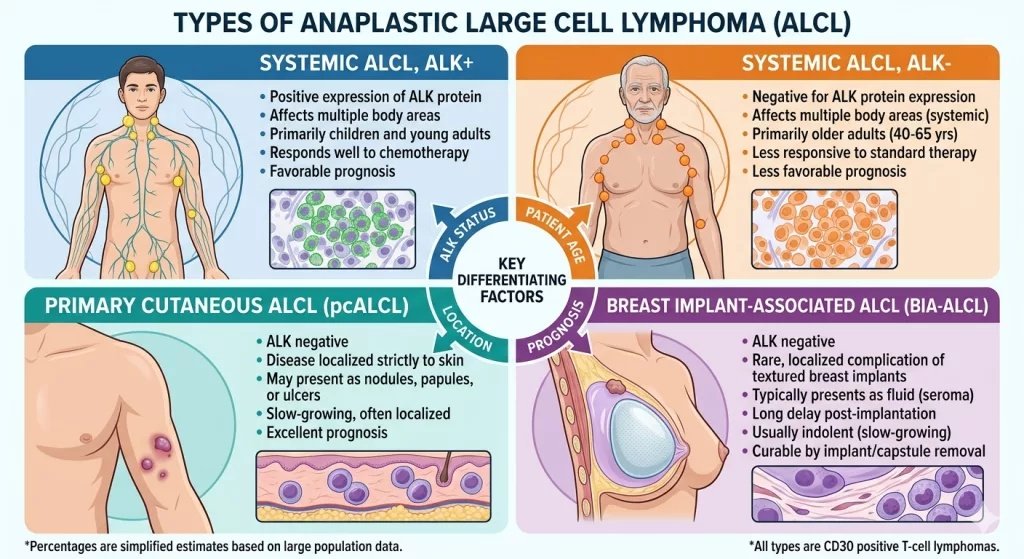
The different types of anaplastic large cell lymphoma.
Like most cancers, most anaplastic large cell lymphoma types are also the outcome of genetic mutations. Based on the presence (or absence) of mutation in the anaplastic lymphoma kinase (ALK) gene, systemic ALCL is further classified into ALK-positive ALCL (having the gene mutation) and ALK-negative ALCL (not having the ALK gene mutation).
Primary Systemic ALCL (ALK-Positive)
This type of systemic cancer is most frequent in children and young adults (pre-teens, teens) and adults in their 20s/30s. Most pediatric patients present with advanced disease, which is attributed to the aggressive growth of the cancer. However, the cancer responds well to chemotherapeutic strategies. Therapies like polychemotherapy can help achieve a high overall survival rate. Children and young adults with ALK-positive ALCL generally have better outcomes than adults. There is a slight male predominance.
Primary Systemic ALCL (ALK-Negative)
This type is also aggressive but is prevalent in adults (above 60). Apparently, it responds to chemotherapy but recurs after a short period. Studies show that ALK-negative ALCL patients have poor treatment outcomes and a 5-year overall survival of less than 50%. Thus, oncologists find it hard to treat the negative type.
Primary Cutaneous ALCL
This variant generally has localized presentations, i.e., mostly dermatological. This cancer generally doesn’t spread to other parts of the body. It is primarily seen in adults over the age of 40 and is found to be common in white men. Individuals experience changes in the skin, such as the formation of a rash or bumps. Clinical examination of patients has revealed that this cutaneous (skin) type mostly presents with isolated or clustered ulcerations in the following regions:
- Face
- Trunk
- Extremities
The lesions grow rapidly. It has a favorable treatment prognosis with a 10-year survival of 90%.
Breast Implant-Associated ALCL (BIA-ALCL)
As the name indicates, this type of anaplastic large cell lymphoma forms around breast implants. In the majority of cases, diagnosis is made in women in their 50s who have had implants for about 10 years (or more). According to the literature, the US prevalence of BIA-ALCL ranges from 1:300 to 1:500,000 cases. Researchers believe that factors like mechanical friction (from silicone implants), chronic inflammation, and chronic bacterial infection associated with the foreign body (breast implant) contribute to the implant-induced cancer. BIA-ALCL is more strongly associated with textured breast implants than smooth implants.
Anaplastic Large Cell Lymphoma Symptoms
Different types of cancer present differently. Hence, we will explain the symptoms of each type individually:
Systemic ALCL
Both types (ALK-positive and negative) have similar presentations. It is initially limited to the skin. However, in the advanced stage, you can see the spread of cancerous cells to the lungs, liver, and even bone. If it has spread to other organs, symptoms vary according to the organ involved.
Youngsters and oldies can present with the following symptoms:
Fever
Clinicians notice elevated inflammatory markers and fever. In a case study of a 10-year-old, the child presenting with fever, swelling, and pain in the left inguinal (groin) lymph node was diagnosed with ALCL.
Fatigue
Adults suffering from the systemic type of cancer often complain of fatigue. Cancer specialists have found fatigue to be a salient feature of non-Hodgkin lymphoma. As per a study, chronic fatigue syndrome is linked to ALK-positive ALCL.
Weight Loss
Non-Hodgkin lymphoma, like ALCL, can cause an unwanted drop in weight. A 63-year-old male cancer patient with subcutaneous nodules suffered from an unintentional weight loss of around 10 kg in three months. He also complained of persistent night sweats and fever.
Night Sweats
A rather unique feature of cancers is persistent night sweats. Individuals experience severe episodes of perspiration (sweat), drenching different parts of the body. At times, the sweating is so severe that the patient has to change clothes. This also impacts their sleep quality. Night sweats are usually an early sign of cancer.
Swollen Lymph Nodes
Lymph node swelling (lymphadenopathy) is a feature common to all types of this cancer. Enlarged lymph nodes are seen in systemic and cutaneous ALCL. Lymph nodes present in the neck, underarms, and groin region are affected most of the time. Lymphadenopathy and soft tissue swellings are observed in young cancer patients.
Primary Cutaneous ALCL
In this type, skin manifestations/lesions are seen on the arms, legs, buttocks, abdomen, and face. The skin lesions can appear as a single growth or take the form of multiple growths. Generally, the skin lesions develop in a specific, localized area. However, in about 20% of cases, lesions appear in multiple places simultaneously. Different types of dermatological presentations associated with cutaneous ALCL include:
Rash
Patients notice a reddish-brown rash that grows over time. The skin presentations may be accompanied by symptoms of fever and fatigue. The ALCL-associated skin rash can resemble skin conditions like lupus erythematosus.
Bumps
Some patients complain of having itchy, raised skin bumps. Clinical literature shows that most patients suffer from localized reddish-brown nodules or bumps. Sometimes, these bumps/nodules can be accompanied by ulcerations.
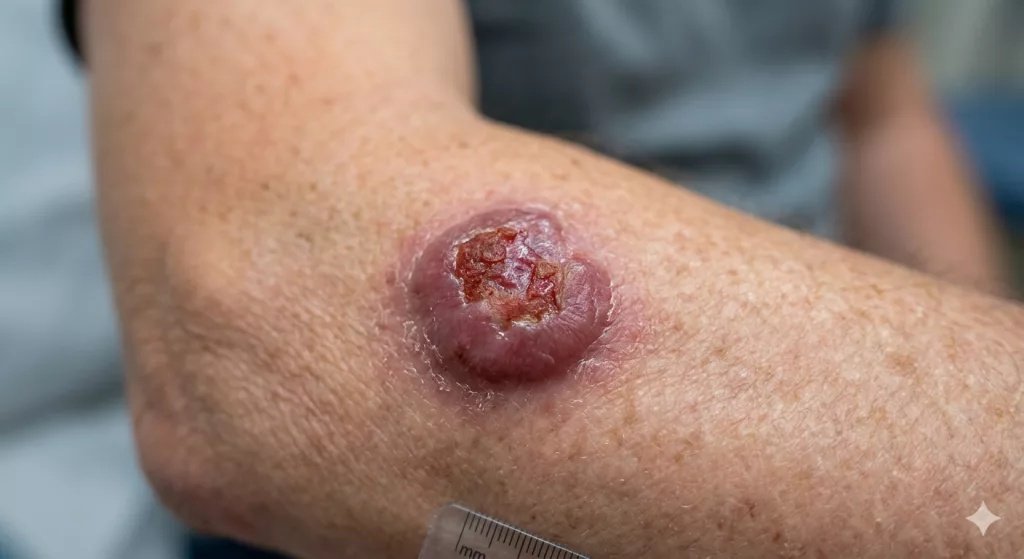
The lesion of cutaneous ALCL can be in the form of a red, raised bump with ulceration.
Ulcers
The skin lesions can become ulcerations, which turn into scabs. A 74-year old woman presenting with an ulcerated nodule in the thigh region was diagnosed with primary cutaneous ALCL. The ulcers show rapid growth and are typically located on the face, trunk, and extremities.
Lymphadenopathy is more common in cases of primary cutaneous ALCL than in other forms.
Breast Implant-Associated ALCL
In this variant, patients notice significant changes in the breasts. The most commonly encountered issues include:
Pain
Breast pain is present in the majority of implant-associated lymphomas. Detailed studies on breast implant-related lymphomas found pain to be a common symptom along with contractures.
Pain and breast swelling are reported in approximately half of the reported cases. Patients also complain of systemic issues like recurrent fevers and swollen lymph nodes.
Swelling
Uncontrolled growth of a tumor in close vicinity to the breast implant can cause discomfort. Latest studies show that delayed swelling after a breast implant can point towards underlying squamous cell carcinoma or lymphoma. You may also notice a collection of fluid near your implant.
Mass/Lump
An unusual, asymptomatic lump is a frequent finding in breast cancer. Patients notice firm lumps in the upper quadrants (of the breasts). Peri-implant fluid collections and lymphadenopathy can accompany a palpable breast mass.
Anaplastic Large Cell Lymphoma Causes
In this cancer, your white blood cells (T lymphocytes) divide uncontrollably and accumulate in organs. The exact cause of ALCL is unknown. However, genetic experts have identified mutations in several genes associated with the lymphoma. ALK-positive cancers result from mutations in the ALK gene.
In ALK-negative lymphomas, other types of gene mutations are observed. Mutations can be seen in any of the genes, including JAK1, STAT3, or TP53.
Anaplastic Large Cell Lymphoma Diagnosis
The disorder is a rare finding. Doctors use several tests to diagnose the abnormal growth/division of T lymphocytes. In most cases, history taking is followed by physical examination of the skin lesions and lymph nodes. Lymphadenopathy is common to all forms. For a clearer picture and better diagnosis, doctors order different types of studies.
Imaging Studies
Oncologists take imaging scans according to the location and type of lymphoma. Chest X-rays have been used conventionally. Now, advanced scans like CT scans and MRI scans aid in diagnosing the cancer. As the cancer has the potential to spread, a Positron emission tomography (PET) scan plays an important role in identifying the spread of the cancer. PET/CT scans are accurate in determining the extent of the disease.
A special type of imaging test, i.e., Fluorine-18 Fluorodeoxyglucose positron emission tomography/CT scan, has been shown to be very accurate and a reliable aid in early detection and accurate staging of Breast-Implant associated anaplastic large cell lymphoma.
Breast ultrasound can also be used to check for masses/lumps around the implants.
Blood Studies
Abnormalities in the blood can be seen in lymphoma cases. Your doctor can order a complete blood count (CBC) to check for signs of ALCL. An abnormal number of white blood cells and red blood cells can be indicative of ALCL. Your oncologist can also check cancer markers and enzymes like lactate dehydrogenase (LDH) in the blood.
Biopsy
The ultimate and most reliable test for ALCL is a biopsy. In this procedure, the doctor removes a small part of the skin lesion via surgical excision and observes it under the microscope (to detect abnormal lymphocytes).
Differential Diagnosis
The non-Hodgkin lymphoma can resemble other lymphomas.
ALCL Vs Diffuse Large B-Cell Lymphoma (DLBCL):
These conditions have similar presentations, but ALCL mostly affects youngsters (children and young adults), and DLBCL is common in adults (above 60).
Anaplastic Large Cell Lymphoma Treatment
The main aim of treatment is to reduce the size of the lesions, prevent the spread of the cancer, and improve the patient’s quality of life. Chemical therapy (chemotherapy) is the standard treatment for most ALCL types. The exact treatment plans for different cancer types include:
Systemic ALCL
Different therapies for systemic anaplastic large cell carcinoma include:
Chemotherapy:
Both ALK-positive and negative types respond well to systemic chemotherapy. In this modality, chemical agents destroy the cancerous cells, and results can be seen within a short period. Commonly used drug types employed in chemotherapy include:
Combined Targeted Therapy With Conventional Therapy (BV-CHP):
The BV-CHP approach involves targeted therapy with Brentuximab vedotin (BV) and conventional therapy (CHP) to destroy cancer cells. The conventional therapy includes drugs like cyclophosphamide, doxorubicin, and prednisone. The use of Brentuximab vedotin is safe, efficacious, and well-tolerated by lymphoma patients.
CHOP:
In this therapy, doctors use the drugs cyclophosphamide (C), Hydroxydaunomycin (H)/doxorubicin, oncovin (O)/vincristine, and prednisone (P).
CHEOP:
In this type, oncologists give etoposide in addition to the CHOP drugs. This modality has yielded good outcomes in patients with systemic ALK-positive ALCL.
Your healthcare provider may choose from different chemotherapeutic modalities suited for your case.
Stem Cell Transplant:
Your team of doctors may opt for a stem cell transplant if there is a high chance of cancer recurrence. Your bone marrow is responsible for the production of lymphocytes. Thus, replacing the faulty bone marrow with a healthy one can cure conditions like lymphomas and leukemias. According to experts, this is an advisable option for refractory lymphomas.
Primary Cutaneous ALCL
The go-to treatment for the cutaneous type is surgical excision of the skin lesion. However, oncologists manage the spread of cancer to lymph nodes with the help of radiation therapy. In this procedure, doctors direct radiation energy towards the cancer cells, which leads to their destruction. Latest clinical studies show that radiation therapy provides excellent local control of tumors, especially in the early stage of the disease.
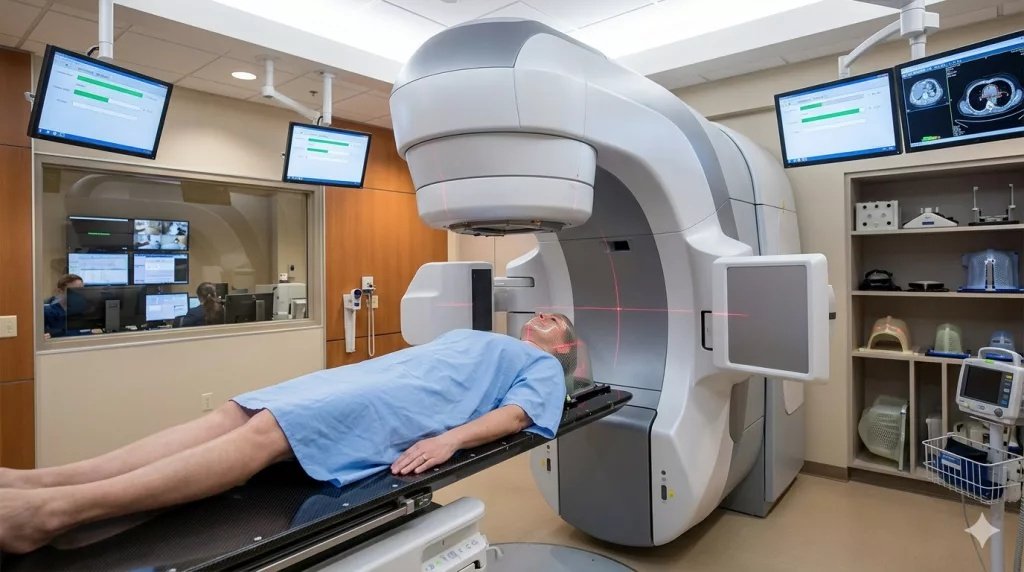
A patient is receiving radiation dose for the treatment of ALCL.
The sad part about cutaneous ALCL treatment is that it returns some time (almost 5 years) after treatment. Relapse occurs in approximately 40% of cases. Therefore, patients have to undergo additional radiation and surgical therapies.
In cases where radiotherapy doesn’t work, and surgery isn’t feasible, doctors manage the condition with chemotherapy. Your doctor may prescribe you methotrexate (oral) as it is effective in non-Hodgkin lymphomas. Moreover, BV and beraxotene drugs can work well in providing relief from skin lesions.
Sometimes, doctors use signalling proteins present in your body to fight cancer cells. Different types of interferons (especially PEG-IFNα), when employed with light therapy (Ultraviolet therapy), result in appreciable alleviation of symptoms.
BIA-ALCL
For breast implants induced cancer, doctors remove the implant along with the surrounding cancer cells. For the majority of cases, this surgery is sufficient to cure the patient of the cancer. You may also receive a dose of radiation therapy to kill any cells that have spread to other parts. When needed, doctors may also administer chemotherapy using drugs like CHOP and BV. Chemical therapy is mostly employed in cases of ALK-negative ALCL.
ALCL Survival Rate
ALK-positive cases generally have better survival rates. For primary types (cutaneous and systemic), the 5-year survival rate for ALK-positive cases is 70-90%, while for negative type it is 35-60%. For BIA-ALCL, the survival rate is above 89% if treated early.
Final Word
Anaplastic large cell lymphoma (ALCL) is a rare type of cancer that affects your lymphocytes (defense cells). In the vast majority of cases, it arises due to a mutation in the ALK gene. Cancers having the ALK gene mutation are easier to treat and are termed ALK-positive lymphomas, while those arising due to other mutations are called ALK-negative lymphomas. The condition is divided into three types. Systemic type affects the skin, lymph nodes, and other organs. ALK-positive type of systemic ALCL is common in youngsters and responds to treatment well, while the negative type is seen in adults. Primary cutaneous causes localized skin lesions (red rash, nodules, or ulcers) on the skin of the face, trunk, and extremities. Breast-implant-associated ALCL (BIA-ALCL) develops around a breast implant.
Common symptoms include fever, skin lesions, lymphadenopathy, fatigue, weight loss, and night sweats. BIA-ALCL notice breast pain, swelling, and a lump. Oncologists treat this cancer with chemotherapy using drugs like Brentuximab vedotin, cyclophosphamide, etc. Radiation therapy is given when the cancer has spread. For BIA-ALCL and cutaneous ALCL, the preferred treatment is surgical excision of the breast implant+tumor and tumorous skin lesion, respectively. Generally, ALCL has a good survival rate if treated early.
References
[1] Zhang, X. R., Chien, P. N., Nam, S. Y., & Heo, C. Y. (2022). Anaplastic large cell lymphoma: molecular pathogenesis and treatment.Cancers,14(7), 1650.
[2] Harahap, A. S., Santoso, I., Charles, S., Mulansari, N. A., & Ham, M. F. (2025). Comprehensive study of anaplastic large cell lymphoma: clinicopathological features from Indonesia.BMC Research Notes,18(1), 282.
[3] Rigaud, C., Knörr, F., Brugières, L., & Woessmann, W. (2023). Diagnosis and management of ALK-positive anaplastic large cell lymphoma in children and adolescents.Best Practice & Research Clinical Haematology,36(1), 101444.
[4] Xie, W., Medeiros, L. J., Fan, G., Li, S., & Xu, J. (2025). Systemic ALK-negative anaplastic large cell lymphoma: insights into morphologic, immunophenotypic, genetic and molecular characteristics. Human Pathology, 156, 105671.
[5] Santanelli di Pompeo, F., Clemens, M. W., Paolini, G., Firmani, G., Panagiotakos, D., & Sorotos, M. (2024). Epidemiology of breast implant–associated anaplastic large cell lymphoma in the united states: a systematic review.Aesthetic surgery journal,44(1), NP32-NP40.
[6] Lajevardi, S. S., Rastogi, P., Isacson, D., & Deva, A. K. (2022). What are the likely causes of breast implant associated anaplastic large cell lymphoma (BIA-ALCL)?.JPRAS open,32, 34-42.
[7] Akamine, K., Hamada, R., Makidono, A., Okita, K., Saito, O., Makimoto, A., & Matsuoka, K. (2023). Autopsy‐proven anaplastic large cell lymphoma mimicking TAFRO syndrome.Pediatrics International,65(1).
[8] Larsen, S. B., Junghanss, C. M., Angela, B. H. K., & Schnell, P. B. (2020). Chronic fatigue syndrome in patient with ALK-positive anaplastic large cell lymphoma.American Journal of BioMedicine2020,8(1), 13-20.
[9] Abdallah, J., Jabareen, M., Alhroub, W., Ahmad, M. S., Risheq, Z., Aqel, M., … & Karama, A. (2025). ALK-Negative Anaplastic Large Cell Lymphoma With Rare Scalp Involvement: A Case Report and Literature Review.Journal of Investigative Medicine High Impact Case Reports,13, 23247096251388258.
[10] Asaduzzaman, M., Begum, F., Karim, S., & Yeasmin, F. (2025). An Incidental Finding of Anaplastic Large Cell Lymphoma (ALCL) in A 16-Year-Old Boy with Multiple Painful Soft Tissue Swellings.Mugda Medical College Journal,8(2), 167-170.
[11] Yang, S., Khera, P., Wahlgren, C., Ho, J., Jukic, D., Geskin, L., & English III, J. C. (2011). Cutaneous anaplastic large-cell lymphoma should be evaluated for systemic involvement regardless of ALK-1 status: case reports and review of literature.American journal of clinical dermatology,12(3), 203-209.
[12] Baik, B. S., Lee, W. S., Ji, S. Y., Park, K. S., Yang, W. S., & Kim, S. Y. (2019). Treatment of primary cutaneous anaplastic large cell lymphoma.Archives of Craniofacial Surgery,20(3), 207.
[13] Ortiz-Hidalgo, C., & Pina-Oviedo, S. (2023). Primary cutaneous anaplastic large cell lymphoma—a review of clinical, morphological, immunohistochemical, and molecular features.Cancers,15(16), 4098.
[14] Yan, X., Ren, W., Li, S., Zhu, Z., Gao, L., & Zhi, K. (2024). Primary cutaneous anaplastic large-cell lymphoma resembling infratemporal space infection: a case report.BMC Oral Health,24(1), 470.
[15] Moeris, E., Coulie, J., Wautier, S., Cambier, N., & Lengelé, B. (2026). Breast Implant Associated B-Cell Lymphomas: First Systematic Review of the Literature.Journal of Plastic, Reconstructive & Aesthetic Surgery.
[16] Vorstenbosch, J., Chu, J. J., Ariyan, C. E., McCarthy, C. M., Disa, J. J., & Nelson, J. A. (2023). Clinical implications and management of non–BIA-ALCL breast implant capsular pathology.Plastic and reconstructive surgery,151(1), 20e-30e.
[17] Keane, G. C., Keane, A. M., Diederich, R., Kennard, K., Duncavage, E. J., & Myckatyn, T. M. (2023). The evaluation of the delayed swollen breast in patients with a history of breast implants.Frontiers in oncology,13, 1174173.
[18] Walsh, N. G., Hembrecht, S., McGrath, S., Duke, D., Hill, A., Quinn, J., … & Power, C. (2025). Anaplastic Large Cell Lymphoma Related to Breast Implant Presenting as a Solid mass: A Case Report.Case Reports in Surgery,2025(1), 1393257.
[19] Gromowsky, M. J., D’Angelo, C. R., Lunning, M. A., & Armitage, J. O. (2023). ALK-positive anaplastic large cell lymphoma in adults.Faculty Reviews,12, 21.
[20] McDonald, E. O., Amanullah, A. A., Park, P. S. U., Song, W., Werner, T. J., Alavi, A., & Revheim, M. E. (2023). The role of 18F-FDG PET/CT in primary cutaneous lymphoma: an educational review.Annals of Nuclear Medicine,37(6), 328-348.
[21] Mititelu, M. R., Mititelu, T. S., Crăciun, D., Solomon, Ș. B., Tutui, C., Rugină, A. I., & Marinescu, S. A. (2025). Systematic Review of PET/CT Utilization in Breast Implant-Associated Anaplastic Large Cell Lymphoma.Medicina,61(12), 2160.
[22] Domingo-Domènech, E., Pro, B., Illidge, T., Horwitz, S., Trumper, L., Iyer, S., … & Savage, K. J. (2025). Brentuximab vedotin plus chemotherapy for the treatment of front-line systemic anaplastic large cell lymphoma: subgroup analysis of the ECHELON-2 study at 5 years’ follow-up.Blood cancer journal,15(1), 129.
[23] Cederleuf, H., Bjerregård Pedersen, M., Jerkeman, M., Relander, T., d’Amore, F., & Ellin, F. (2017). The addition of etoposide to CHOP is associated with improved outcome in ALK+ adult anaplastic large cell lymphoma: A Nordic Lymphoma Group study.British Journal of Haematology,178(5), 739-746.
[24] Du, J., Yu, D., Han, X., Zhu, L., & Huang, Z. (2021). Comparison of allogeneic stem cell transplant and autologous stem cell transplant in refractory or relapsed peripheral T-cell lymphoma: a systematic review and meta-analysis.JAMA Network Open,4(5), e219807.
[25] Sobolewski, P., Koper, M., Ciechanowicz, P., & Walecka, I. (2025). Targeted radiotherapy in primary cutaneous lymphomas: precision, efficacy, and evolving strategies.Cancers,17(17), 2722.
[26] Philippe, E., Creech, K. T., Cook, N., & Segura, J. (2021). Recurrent primary cutaneous anaplastic large cell lymphoma with systemic involvement: A case report and literature review.Cureus,13(4), e14284.
[27] Gosmann, J., Stadler, R., D QUINT, K., Gutzmer, R., & Vermeer, M. H. (2023). Use of pegylated interferon alpha-2a in cutaneous T-cell lymphoma: a retrospective case collection.Acta dermato-venereologica,103, 10306.