

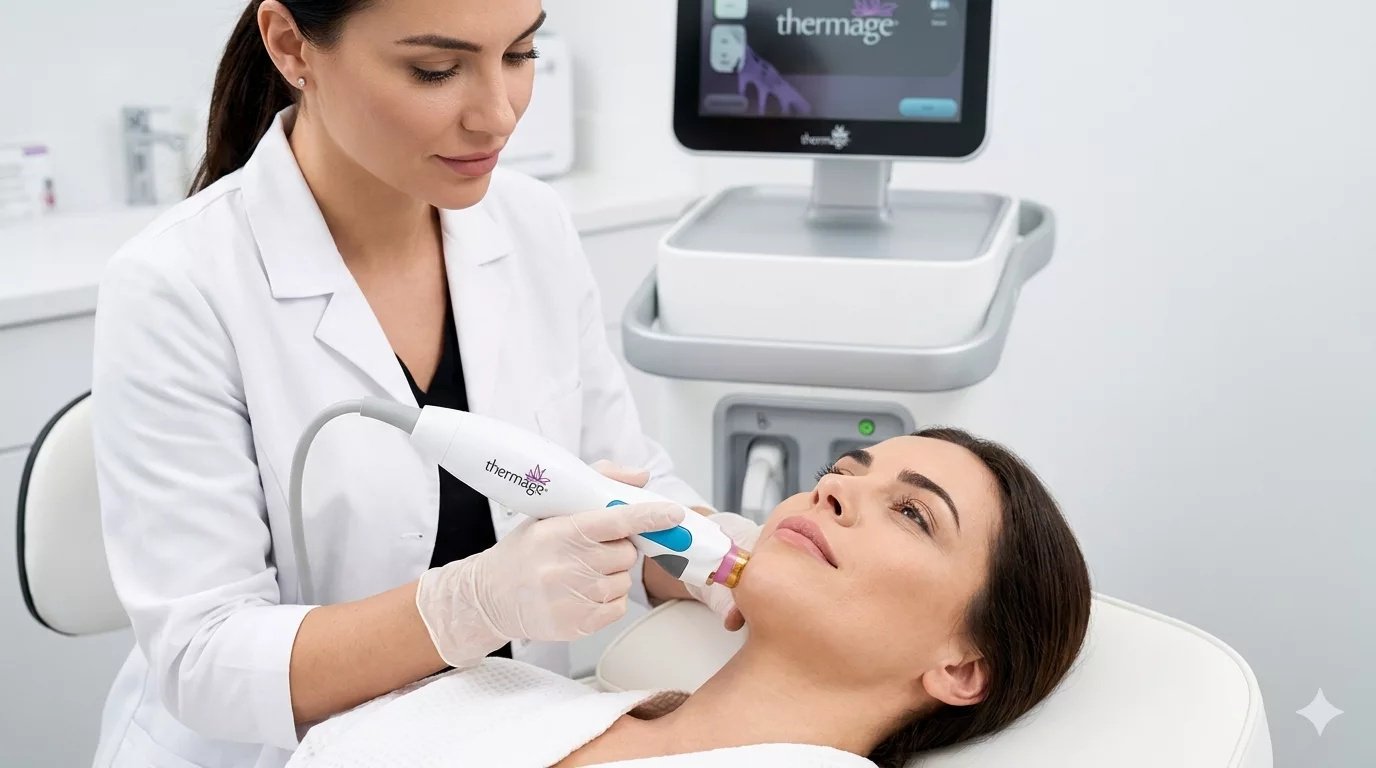
Non Surgical Face Non-surgical facelift refers to the techniques used by your care provider to improve the appearance of your facial skin without performing surgery.
There are many procedures, each with its own mechanism, benefits, and risks. Your healthcare provider will determine the right procedure for you based on your specific situation and goals.
In this article, you will explore the different methods, what they are, how they differ from surgery, and what results you can realistically expect.
What is a Non-Surgical Face Lift?
It refers to a group of non-invasive or minimally invasive cosmetic procedures that your skin care provider will perform to lift, tighten, and rejuvenate your facial skin without surgical incisions.
As we age, there appear to be certain changes to our skin, such as sagging skin, sunken cheeks, fine lines, wrinkles, and loss of facial volume. These procedures target these common changes and aim to make your skin appear younger, firmer, and more attractive.
The procedures are quite advanced as they mostly rely on technologies like ultrasound, radiofrequency, injectables, and laser therapies.
These treatments are best for those people who want a gradual, progressive improvement in their facial skin rather than seeking quick, dramatic changes.
Difference between a Surgical vs Non Surgical Face Lift
If you are aiming to undergo a facelift procedure, it is better to know the difference between surgical and non-surgical techniques that will help you choose which one is right for you.
What is a Surgical Face Lift?
A surgical facelift, also known as rhytidectomy, is a cosmetic surgical procedure that helps reverse the aging signs and make your face look younger. You would be given either general anesthesia, IV sedation (“twilight sleep”), or local anesthesia with oral sedation to make you pain-free for the procedure.
In this procedure, your surgeon will make hidden incisions around the ear and under the chin. He or she will aim to lift the sagging skin, tighten the underlying muscles, reposition the tissues, and remove excess fat, usually in the areas of the mid-face, jawline, and neck.
It is optimum for individuals between 40 and 70 years of age, with visible aging changes, and who are generally in good health condition. The procedure usually takes 2-4 hours.
Generally, a surgical procedure gives long-lasting and dramatic effects, but also with the cost of surgical risk. Also, the recovery time following the surgery is longer compared to the non-surgical techniques. Besides that, the cost of the surgical procedure is also very high.
After the surgery, you will likely have that initial swelling and bruising, and it takes a few weeks to settle. After that, you can expect the final results of the surgery in a few months.
How does a Non Surgical Face Lift differ from a Surgical Face Lift?
Non-surgical facelift is a relatively conservative approach and is a broad term involving various methods to achieve the targeted cosmetic benefits.
In this approach, there is little to no downtime, no general anesthesia, and significantly fewer risks compared to the surgical approach.But also, the results are generally more subtle and typically temporary, which is why they often require maintenance sessions.
The recovery time is short, typically ranging from a few hours to several days. The cost of the procedure is low compared to the surgical approach, but you also need multiple sessions.
Generally, for people with moderate stages of aging, the non-invasive techniques are better suited. Surgical correction is appropriate for those who have an advanced level of sagging.
Types of Non-Invasive Face Lift Procedures
The non-invasive face lifts encompass a variety of procedures that focus on specific layers of the skin or stimulate the body’s natural healing response.
These methods can be categorized based on their primary mechanism, such as energy-based tightening, injectables, mechanical lifting, and skin resurfacing.
1. Energy-Based Skin Tightening Procedures
These procedures use a controlled thermal or mechanical injury in the deeper dermal/subdermal layers. This results in stimulating collagen remodeling and elastin contraction.
a. High-Intensity Focused Ultrasound (HIFU)
In this procedure, your care provider will deliver focused ultrasound energy to the SMAS layer. The SMAS layer is the same layer that surgeons target in the traditional surgical facelift.
The sound energy bypasses the skin surface and heats deep tissue, which stimulates collagen production that results in the gradual tightening of skin.
HIFU is FDA-approved for the purpose of lifting the neck, chin, and brow. It results in a gradual lifting over 2–3 months.
Besides cosmetic skin tightening, this procedure can also be used for diseased tissues (such as tumors or fibroids).
Ultherapy is an example of HIFU treatment.
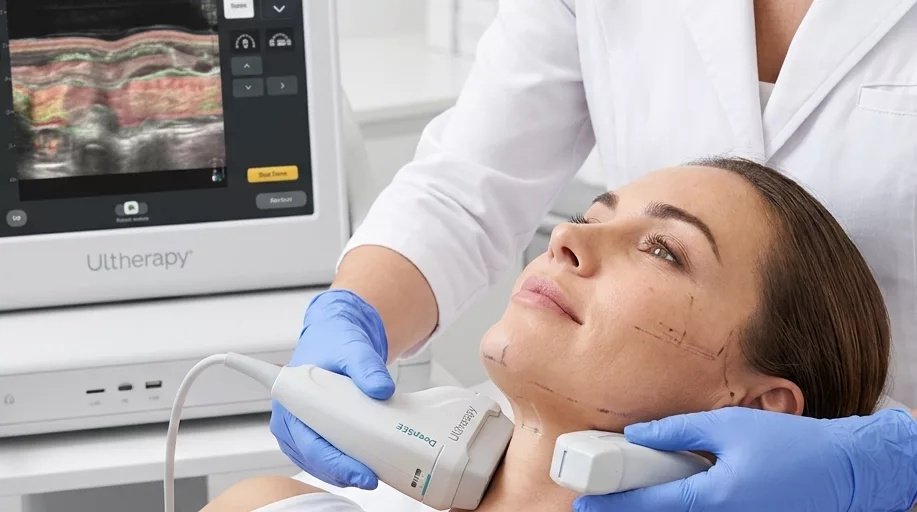
Ultherapy
b. Radiofrequency (RF) Treatments
This is another method that uses electromagnetic waves to heat the dermis (deeper part) of the skin. These treatments can be used to treat mild to moderate skin laxity, wrinkles, oracnescars.
The Radiofrequency treatment causes the existing collagen fibers to contract and stimulates the production of new collagen.
Thermage is an example of pure radiofrequency treatments, while the Morpheus8 combines the traditional microneedling with radiofrequency.
2. Injectable Treatments (Liquid Facelift)
In this approach, your care provider will use some injectables. They include:
a. Dermal Fillers
Dermal fillers are also known assoft tissue fillers, as they aim to restore the lost volume in areas like cheeks, lips, jawline, nasolabial folds, and under the eyes.
Most commonly, hyaluronic acid is used for this purpose to create a lifted appearance. This immediately restores volume and also stimulates collagen production.
The effects of dermal fillers usually last about 6 months to 2 years.
b. Botulinum Toxin (i.e., Botox)
These injections block the release of acetylcholine (a neurotransmitter that is needed for muscle contraction) to relax the tense muscles that cause wrinkles. This temporary muscle paralysis reduces the dynamic wrinkles, such as forehead lines or crow’s feet.
You will likely receive your botulinum toxin injections between your eyebrows, in the corner of the eyes, or on the forehead. Although it is not like a lifting procedure in a traditional sense, Botox gives a more youthful and smoother face.
The results of Botox treatment usually last up to three months.
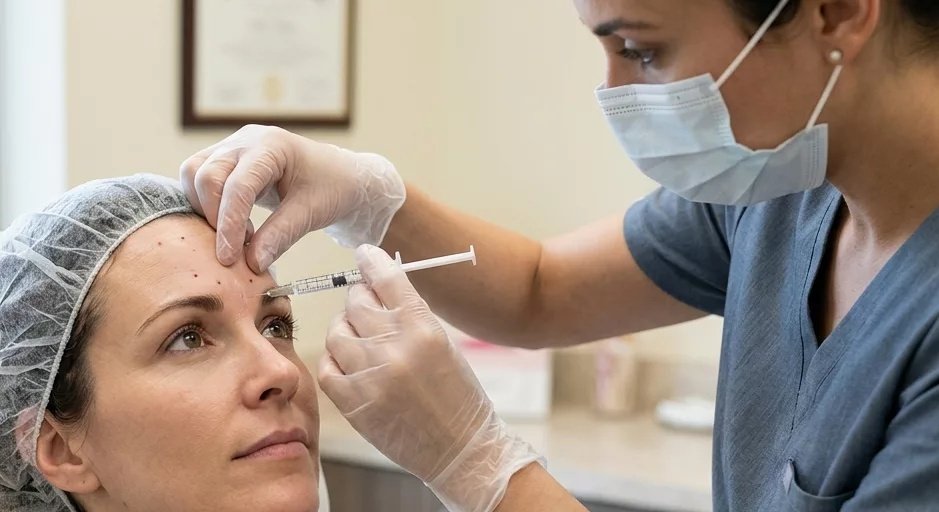
Botulinum Toxininjection
3. Thread Lifts (Minimally Invasive Mechanical Lift)
This procedure is like a bridge between non-invasive and surgical procedures. It is usually done in people with mild to moderate sagging.
In this technique, your provider will insert a temporary, biodegradable suture material under your skin (in subcutaneous tissue). The threads have tiny barbs that “hook” onto the tissue to physically lift it.
As the threads dissolve, usually around 6–12 months, they trigger a “selective inflammatory response” that stimulates collagen production. This way, it provides an immediate lifting as well as effects in the long run due to stimulation of collagen.
The effects last between 12 and 18 months.
4. Skin Resurfacing Procedures
There are various techniques that can be used by your provider to improve your skin texture, tone, and superficial wrinkles. They work by stimulating collagen production and removing the damaged outer layers. These methods include:
a. Chemical Peels
In this approach, your provider will use acids such as glycolic, TCA, or phenol. These acidic solutions help to remove the damaged top skin layers, promote collagen growth, and make your skin appear smooth and rejuvenated.
b. Laser Resurfacing
Your provider can also use a laser to smooth your skin. The laser can be either:
- Ablative (CO₂, Er: YAG): This removes your skin layers, such as epidermis and some portion of dermis, and has a stronger effect.
- Non-ablative: This is a bit of a conservative approach as it only stimulates collagen without removing your skin.
These treatments can help you improve your skin by removing wrinkles, pigmentation, and scars.
c.Microdermabrasion
This is a minimally invasive procedure in which your provider will use a rough pad and mechanically sand away your skin layers. This is best for improving your skin quality; however, it does not have good face-lifting effects.
The results usually last for a few months, so you will require multiple sessions to maintain the effects.
5. Microneedling
It is also known as collagen induction therapy. In this procedure, your provider will use fine needles to create controlled micro-injuries. These injuries will stimulate the fibroblasts, which are cells responsible for the production of collagen and elastin.
This is a good procedure for people with fine lines, large pores, scars, skin laxity, or sun damage. Your provider may combine this procedure with Radiofrequency or PRP (platelet-rich plasma) treatment to give you the best results.
Also, you would need multiple sessions, and the results take a few months to appear.
6. Platelet-Rich Plasma (PRP) Therapy
Platelet-Rich Plasma (PRP) therapy for face lifting, often termed as “Vampire Facelift”, is a non-surgical, minimally invasive procedure to improve your facial skin appearance.
In this procedure, your provider will inject concentrated platelets into your dermis. This helps to stimulate the production of collagen, adds volume, reduces wrinkles, and improves your overall skin texture. It mainly improves skin quality and elasticity rather than true volumetric lifting.
7. Fat injections
It is also known as fat grafting, a procedure in which your provider will harvest fat from your body, such as the abdomen or thighs, via liposuction. After that, he or she will purify it and inject it into the face.
This procedure helps to give volume to the sagging areas of the face, fill the wrinkles, and improve your overall skin tone.
It is true that fat injections are more invasive than dermal fillers, but they also usually last longer than temporary dermal fillers.
What is a Mini Face Lift?
The mini facelift, often called a “weekend lift“, is a less invasive surgical version of a facelift. People often confuse it with non-surgical procedures, but they are different things altogether.
In a mini facelift, your surgeon will make smaller S-shaped incisions, usually around the ear, and the procedure focuses on the lower face and jawline. The surgeon will aim to lift the SMAS (superficial musculoaponeurotic system) layer of the face. Doing this helps to achieve a natural, youthful look.
This procedure gives more noticeable lifting and longer-lasting results, but the recovery time is longer as well, compared to non-invasive methods.
People who seek a middle ground between a full surgery and non-invasive treatments can choose to undergo this procedure.
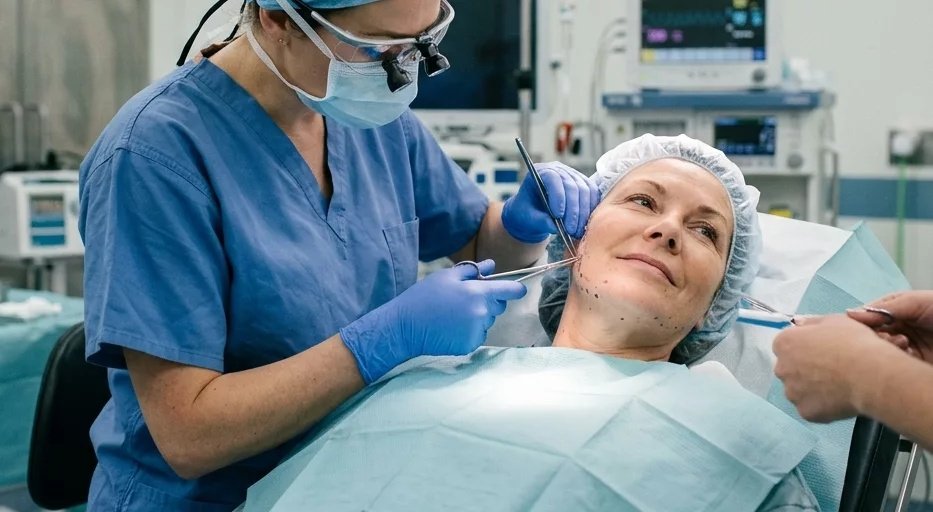
Mini Face Lift
How does skin tightening work in non-surgical face lifting?
To understand this, we need to find out what actually happens to our skin with aging. As we age, the collagen and elastin production declines.
Collagen is the main structural protein that gives your skin firmness and support, while elastin allows the skin to remain flexible and resilient. These changes lead to skin sagging and wrinkles.
That’s why in many interventions, the central goal is often to stimulate collagen production, which really helps in making the skin tight.
Which non-surgical face lift option is right for you?
To find out the appropriate option for you, it depends on your specific factors, such as your age, skin type, degree of aging, and the desired outcomes.
However, to give you an idea, generally:
- For volume loss: Dermal fillers
- For wrinkles: Botox
- For skin laxity: Ultrasound or radiofrequency
- For mild sagging: Thread lifts
- For texture issues: Laser resurfacing
In many cases, your provider may combine some of these to give you the best results. For example, for a person with both volume loss and skin laxity, the dermatologist may combine dermal fillers with RF therapy.
What to expect from a non-surgical facelift procedure?
These procedures usually improve your skin’s appearance significantly. For example;
If you have symptoms such as:
- Visible fine lines and wrinkles
- Mild to moderate skin laxity and unevenskin texture
- Volume lossin the cheeks or under the eyes
Then, after receiving treatment, you can expect:
- Improved facial contours
- Reduced wrinkles and fine lines
- Enhanced skin firmness
Besides that, some procedures, for example, fillers, are quite fast, as you will be able to notice changes immediately. While others may need a few months for you to see the results, such as ultrasound and RF treatments.
What are the advantages of a non-surgical facelift?
Nowadays, people often choose to undergo non-surgical procedures instead of full surgeries due to:
- Minimal downtime: You can usually return to your activities within hours.
- Lower risk: No risk of anesthesia-related complications and reduced risk of getting infections.
- Natural results: The results come gradually, making it more natural-looking.
- Customizable: You can better choose which procedure or any specific combination.
- Cost-effective initially: The upfront cost is lower compared to surgery.
What are the limitations of a non-surgical facelift?
Although these procedures seem very promising, the results are not guaranteed, and you need to know their limitations.
The limitations include:
- The results are temporary and usually require maintenance
- These procedures are less effective if you have severe sagging or excess skin
- The final results vary based on individual factors
Therefore, patient selection is important as people with severe skin changes may not achieve their expected results unless they undergo a full surgery.
What are the risks of a non-surgical facelift?
Generally, these procedures are safe if a trained professional performs them. However, like any medical procedure, these procedures can have risks too.
Besides that, different procedures can have their own specific risks, but generally they carry the following potential risks:
- Mild discomfort during treatment
- Temporary redness or swelling
- Bleeding
- Uneven results
- Muscle Weakness
- Bruising (especially with injectables)
- Itching (pruritus)
- Scars
- Skinburns
- Infection
- Rarely, vascular blockage causes skin necrosis
However, they are very preventable if the provider follows proper techniques and sterile conditions.
Final words
The non-surgical face lift procedures include a diverse range of intervention that aims to reverse the aging changes and make your facial skin more youthful. It offers a low-risk alternative to the risky traditional surgery.
They are highly effective for mild to moderate skin changes with minimal downtime and low cost compared to a full surgery. The upfront cost is also lower than surgery, but for severe cases, these interventions are not that effective. The side effects are usually preventable if the provider follows proper techniques.
References
[1] Farage MA, Miller KW, Elsner P, Maibach HI. Intrinsic and extrinsic factors in skin ageing: a review.Int J Cosmet Sci.2008;30(2):87–95.
[2] Sadick NS, Makino Y. Selective electro-thermolysis in aesthetic medicine.Lasers Surg Med.2004;34(2):91–97.
[3] Rohrich RJ, Pessa JE. The anatomy and clinical implications of the SMAS.Plast Reconstr Surg.2007;120(7):2019–2030.
[4] Jones BM, Grover R. Avoiding complications in facelift surgery.Facial Plast Surg.2004;20(2):121–130.
[5] American Society of Plastic Surgeons. Minimally invasive cosmetic procedures statistics report. 2022.
[6] Alster TS, Tanzi EL. Noninvasive lifting of the skin using radiofrequency and ultrasound.Dermatol Clin.2007;25(4):487–491.
[7] U.S. Food and Drug Administration. Ultherapy system approval for aesthetic use. FDA; 2009.
[8] Sundaram H, Voigts B, Beer K, Meland M. Comparison of the rheological properties of viscosity and elasticity in two categories of soft tissue fillers.Dermatol Surg.2010;36(Suppl 3):1859–1865.
[9] Carruthers A, Carruthers J. Botulinum toxin type A: history and current cosmetic use.Dermatol Surg.2003;29(5):455–464.
[10] Suh DH, Oh YJ, Lee SJ, et al. Thread lift for facial rejuvenation.J Cosmet Dermatol.2015;14(2):121–128.
[11] Fitzpatrick RE, Goldman MP. Advances in laser resurfacing.J Am Acad Dermatol.2000;43(1):1–14.
[12] Aust MC, Fernandes D, Kolokythas P, Kaplan HM, Vogt PM. Percutaneous collagen induction therapy.Plast Reconstr Surg.2008;121(4):1421–1429.