

Arsenic Poisoning Symptoms Arsenic poisoning occurs when the body absorbs excessive amounts of arsenic, a toxic element found in contaminated water, food, air, or soil. Once inside the body, arsenic disrupts normal cellular processes, leading to a wide range of health problems such as digestive upset, skin changes, fatigue, cardiovascular issues, and nervous system disturbances. The severity depends on the dose, chemical form, and duration of exposure.
Arsenic is a natural metalloid that is found in the earth’s crust, oceans, plants, and animals. It enters the human food chain through drinking water (especially groundwater in some regions), rice, fish, and shellfish. What makes arsenic especially dangerous is that it has no distinct taste, color, or smell, earning it the name “the stealth poison”. This sneaky poison can enter your body by ingestion, inhalation, or absorption through your skin. There are two main forms of arsenic:
- Organic arsenic: Generally less harmful, commonly found in seafood.
- Inorganic arsenic: Highly toxic, strongly linked to cancers and chronic diseases.
From skin problems to cancer, heart disease, and pregnancy complications, arsenic poisoning is a hidden health threat in many parts of the world.
Four Stages of Arsenic Poisoning: Arsenic Poisoning Symptoms
Arsenic poisoning may progress through four stages depending on the duration and severity of exposure:
Preclinical Stage:
This is the stage where you don’t have any symptoms of arsenic poisoning. Upon examination, your blood and urine show arsenic compounds, but only until you’re still taking in any source of arsenic (contaminated food or water). As soon as you stop taking it, the arsenic does not show in your body fluids. However, it may remain in your hair and nails for much longer.
Clinical Stage:
You start seeing symptoms during this stage, but they’re often mild. If you get checked by a physician, you’ll find high levels of arsenic in your hair and nails. You’ll experience symptoms slowly over time, usually in between 6 months to 2 years. The most obvious signs of arsenic poisoning during this stage are dry and thick skin patches on your palms and soles (hyperkeratosis), white lines on your nails (Mees’ lines), and skin darkening (hyperpigmentation).
Internal Complications Stage:
With continued exposure, arsenic begins to damage internal organs. Common complications include:
- Progressive liver dysfunction.
- Enlargement of the liver and spleen
- Respiratory issues such as chronic cough and asthma-like symptoms
- Eye irritation and vision problems
- Muscle weakness and neuropathy
Malignancy Stage:
Long-term exposure increases the risk of developing cancers. The strongest associations are with:
- Skin cancer (especially squamous cell carcinoma)
- Bladder cancer
- Lung cancer
- Cancers of the uterus and other organs
This stage reflects the carcinogenic potential of chronic arsenic exposure rather than an inevitable outcome for all patients.
Who is mostly affected by Arsenic Poisoning?
Bangladesh and India are the two countries that are most affected by arsenic exposure due to drinking water. The World Health Organization (WHO) has set an acceptable limit of arsenic in drinking water that is 10 parts per billion (ppb). The groundwater in both countries has far greater than acceptable levels of arsenic in it.
A more concerning fact is that around 27 million people in Bangladesh drink water having more than 50 ppb arsenic in it. Another study shows that skin-related issues due to arsenic occur more commonly in men than in women.
Causes of Arsenic Poisoning
Arsenic poisoning occurs when you’re exposed to various sources of arsenic, the most common one being soil. It is also released into the atmosphere and water through several processes:
- Wind blows soil with bound arsenic into the atmosphere.
- Natural activities like volcanic eruptions release arsenic into the air.
- Microorganisms in soil convert inorganic arsenic into gas, which then becomes part of your environment.
- Activities like mining and smelting cause arsenic to go into the air with dust particles.
- Burning of wood that is treated with arsenic.
- Burning of fossil fuels, most commonly coal.
- The use of arsenic-based herbicides and pesticides (not done anymore).
- Drilling tube-wells, which contaminates drinking water with arsenic.
You are most likely to get arsenic poisoning if you consume contaminated water. Food prepared with this water and crops irrigated with it also lead to poisoning.
A study indicates that about 140 million people across 50 countries are consuming drinking water that is contaminated with inorganic arsenic. This contamination exceeds the limit set by the World Health Organisation (WHO), which is 10 µg/L (or 10 ppb).
If you’re working in a field where arsenic is commonly used, you’re more at risk of developing poisoning. There are several industries making use of arsenic, such as:
- Mining
- Manufacturing (glass, semiconductor)
- Smelting
- Carpentry
- Herbicides and pesticide production
The U.S. Food and Drug Administration (FDA) ensures that there are acceptable levels of arsenic in the food that you’re taking in. This is done with special importance given to food items that are consumed mostly by children, including apple juice and infant rice cereal.
Symptoms of Arsenic Poisoning
Symptoms of Acute Arsenic Poisoning:
Acute arsenic poisoning occurs when you have short-term arsenic exposure. You can see symptoms of arsenic poisoning within half an hour after ingestion. Immediate or acute symptoms of arsenic poisoning include the following:
- Muscle pain
- Abdominal pain
- Nausea and vomiting
- Diarrhea
- Flushing of skin
- Low blood pressure (hypotension)
- Cough
- Chest pain
- Garlic odor in your breath
- Abnormal heartbeats (arrhythmia)
- Shortness of breath (dyspnea)
In case of severe acute exposure, it affects your brain (encephalopathy), destroys red blood cells (hemolysis), and causes failure of multiple organs (kidneys, liver).
Symptoms of Chronic Arsenic Poisoning:
Long-term arsenic exposure results in chronic poisoning. It causes the following symptoms:
- Straight white lines on your nails (mees’ lines)
- Skin pigmentation changes (skin darkens)
- Hair loss (alopecia)
- Skin warts and lesions
- Thickened patches on your palms and soles (hyperkeratosis)
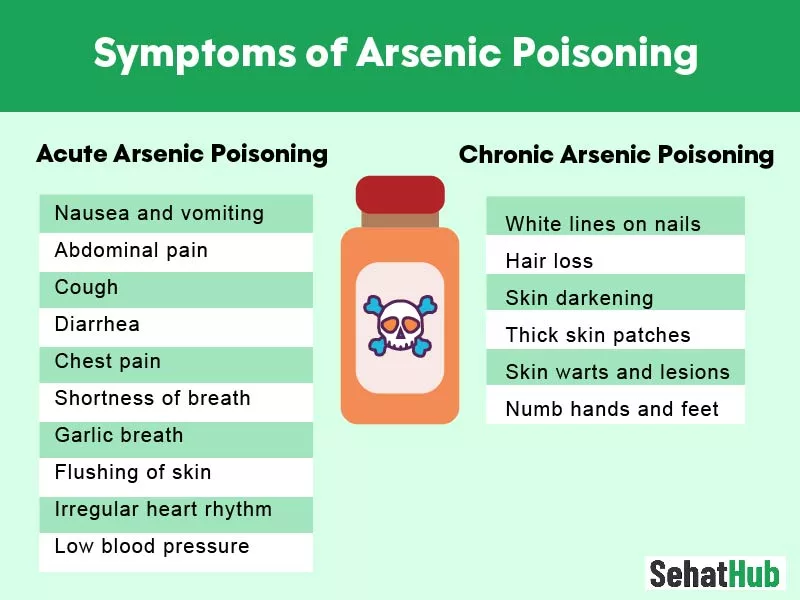
The illustration shows symptoms of acute and chronic arsenic poisoning.
How is Arsenic Poisoning diagnosed?
If you or your doctor suspect arsenic poisoning, several tests can be done. These help your doctor find out if arsenic is in your body and how it is affecting you.
History & Physical Examination:
You will be asked about your symptoms and when they started. Your provider will ask questions about your food, water, workplace, or any possible exposure to arsenic. This helps the doctor understand where the arsenic may have come from.
Your doctor will check your skin, nails, and other parts of your body for changes caused by arsenic. They will also look for signs like weakness, dehydration, or confusion.
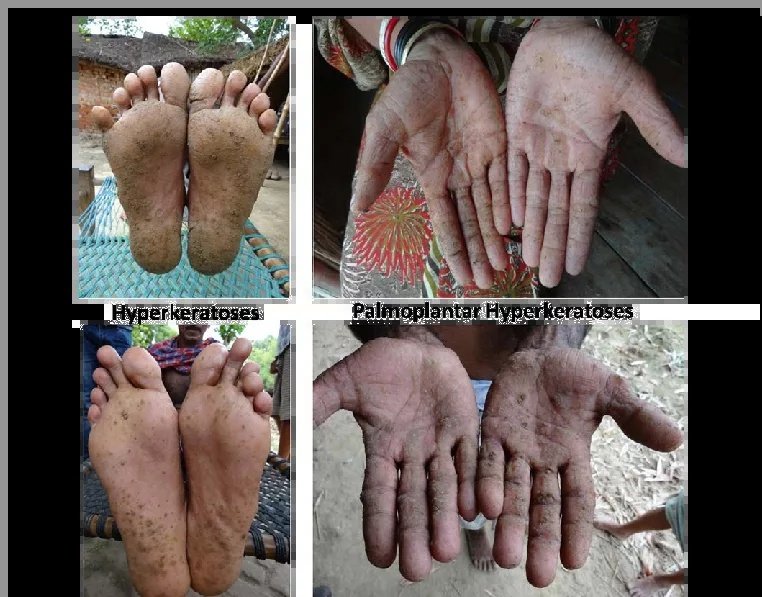
The image shows thickened patches on palms and soles (palmoplantar hyperkeratosis). Image courtesy: Kumar, A. (2015).Symptoms of arsenicosis[Figure].In-GroundWater Arsenic Poisoning in “Tilak Rai Ka Hatta” Village of Buxar District, Bihar, India, Causing Severe Health Hazards and Hormonal Imbalance. available viaResearchGateunder license CC BY 4.0
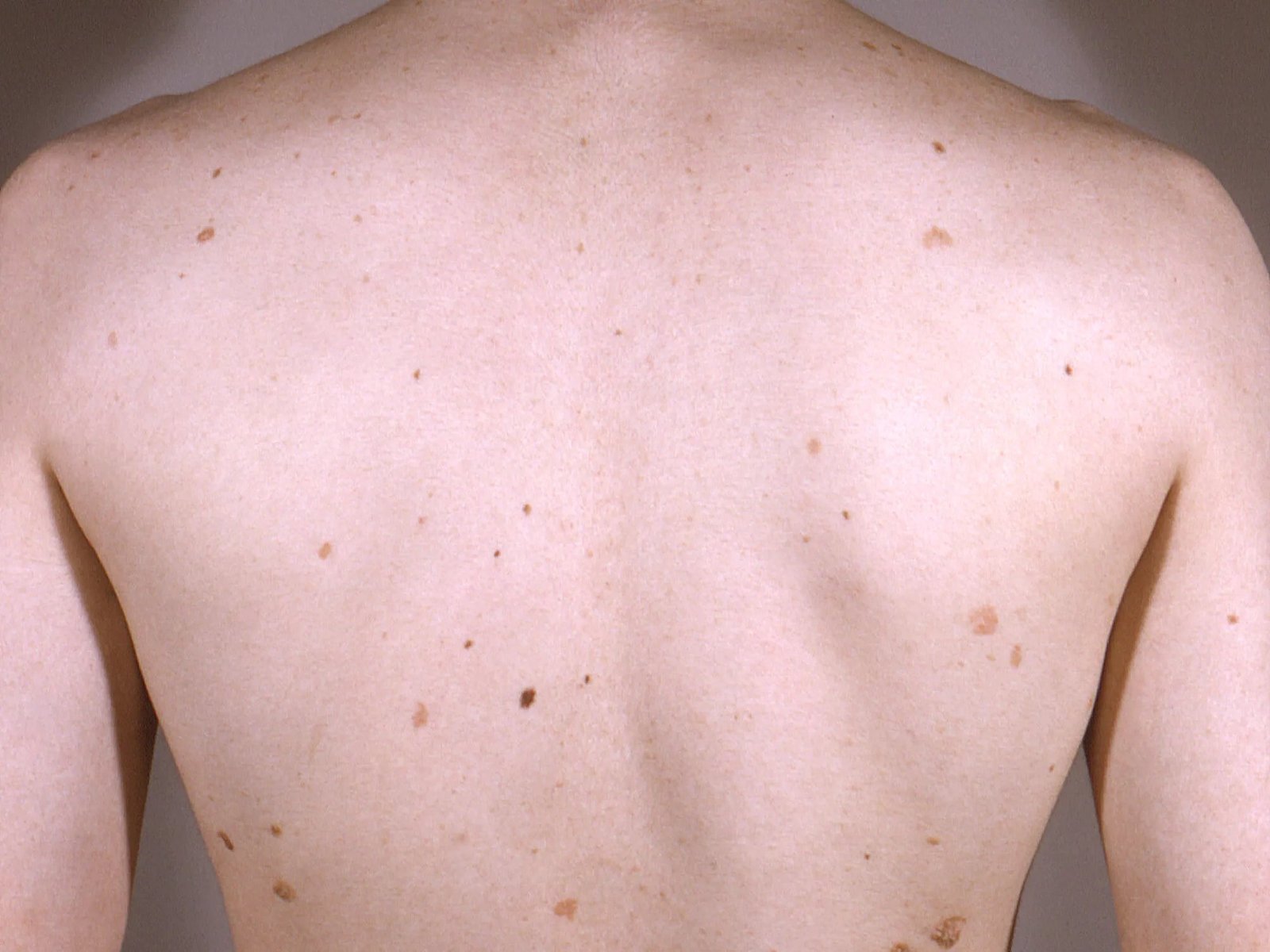
The image shows various skin lesions on the back of a male patient. Image courtesy: Centers for Disease Control and Prevention. (n.d.). Cutaneous arsenical keratoses on the back of a male patient [Photograph]. available viaPublic Health Image Library (PHIL).
Urine Test:
A urine test is often done because arsenic leaves the body through urine. This test can show recent exposure, especially in the past few days.
Blood Test:
Blood tests may be done to check for arsenic levels and to see how your organs, like the liver and kidneys, are working.
Hair & Nail Test:
If the exposure happened weeks or months ago, hair and nail samples may be tested. Arsenic can stay in these parts of the body for a long time.
Imaging Tests:
In some cases, scans or other specialized tests are performed to determine if your organs have been damaged.
How is Arsenic Poisoning typically treated
The choice of treatment depends on whether the exposure is acute (short-term) or chronic (long-term).
Treatment of Acute Arsenic Poisoning:
If you have immediate arsenic exposure, your healthcare provider works quickly to replace lost fluids and stabilize you. Your skin is also washed, and contaminated clothes are removed.
Bowel Irrigation
If the arsenic was just taken, whole bowel irrigation may be performed (with polyethylene glycol solution) to flush arsenic out of the gastrointestinal tract before it is absorbed.
Chelation
Special treatments called “chelating agents” can stop arsenic from causing more harm, but they work best if used within a few hours. If the kidneys start to fail, dialysis might be needed. Make sure to find out where the arsenic came from so you aren’t exposed again. Always follow your doctor’s advice closely in such emergencies.
Some medicines used for chelation include:
- Dimercaprol (British Anti-Lewisite or BAL): Often used first in severe cases.
- Dimercaptosuccinic acid (DMSA): A safer option, sometimes used when symptoms are less severe or for children.
- Dimercaptopropane sulfonate (DMPS): Another medicine that helps remove arsenic effectively.
Treatment of Chronic Arsenic Poisoning:
For long-term arsenic exposure, the first step is to find and remove the source, often contaminated water or your workplace. Recovery takes months and might not be complete, especially if nerve damage (neuropathy) has already set in.
Chelation won’t help with long-term nerve damage and doesn’t reverse it. Supportive care is directed toward managing long-term complications such as skin changes, peripheral neuropathy, and increased cancer risk. In advanced cases of skin lesions or malignancies, dermatological and oncological interventions may be required. Patients with severe gastrointestinal symptoms may need aggressive fluid resuscitation. Those with cardiovascular collapse may require vasopressors.
How can I prevent Arsenic Poisoning?
Prevention is always better than a cure. Although it is not possible to completely remove arsenic from drinking water, it should be within acceptable limits. Other than that, eating a balanced diet with quality water is recommended.
To prevent arsenic poisoning, start by removing yourself from the source, especially if it’s a workplace risk. Workers exposed to arsenic for long periods should get regular medical checkups.
Centers for Disease Control and Prevention (CDC) suggests that nutrition also plays a key role in protection. Eating foods rich in selenium, vitamin E, and folate may help your body remove arsenic more effectively. Here’s what can be done to protect everyone:
Check your Water:
Your drinking water must be tested for arsenic. If it’s unsafe, switch to safer options like treated water, deep wells, or filters made to remove arsenic.
Be careful with Food:
Some crops, like rice, can collect arsenic. Choose food grown in safe soil whenever possible. If you cook rice, rinse it well and cook it in extra water (then drain it) to lower arsenic levels.
Protect yourself at Work:
If you work around arsenic (in industries like smelting, mining, or pesticides), always use protective gear and follow safety training. Ask your employer about workplace testing.
Learn & Spread Awareness:
Talk to your family and neighbors about arsenic. Knowing which water sources are safe can save lives. Follow community guidance on using safe wells and food sources.
Get checked early:
If you live in an at-risk area, get regular health check-ups. Early signs, like changes in skin, weakness, or stomach problems, shouldn’t be ignored. Treatment works better when started early.
Complications of Arsenic Poisoning?
Dr. Joseph Graziano, a renowned and distinguished scientist, states that long-term arsenic exposure causes several harmful effects on your health. The health effects that are proven by foolproof research include skin, lung, liver, and bladder cancers, as well as heart diseases. These can be listed as:
- Skin cancer
- Lung cancer
- Diabetes (type 2)
- Liver cancer
- Bladder cancer
- Heart disease
Other long-term health effects include:
- Liver disease
- Nervous system complications (loss of sensation in your limbs and hearing problems)
- Digestive difficulties
If you’re pregnant, the risks are even higher. Arsenic can pass through the placenta and harm your baby. This increases the chances of miscarriage, low birth weight, birth defects, or even stillbirth. Mothers may also face anemia, diabetes, or high blood pressure. These risks are especially high in areas with contaminated water. That’s why it’s so important to test your water and ensure arsenic levels stay low to protect both mothers and their babies.
Comparing Cyanide vs Arsenic Poisoning
Feature Cyanide poisoning Arsenic poisoning Symptom appearance Very fast (minutes) Slower (hours to days) Main symptoms Headache, confusion, trouble breathing, seizures Stomach pain, vomiting, diarrhea, skin changes Skin Pink or cherry-red Dark or spotted (long-term) Tests Blood tests Urine, blood, hair, nail tests Treatment Fast antidotes (e.g., hydroxocobalamin) Remove source, chelation, supportive care Danger Fatal within minutes if untreated It can be deadly, but usually slower progression
Conclusion
Arsenic exposure can seriously harm your health, depending on how long and how much you’re exposed. It can damage cells, cause stress in your body, and lead to cancer and hormone-related diseases. Short-term exposure may cause vomiting or abdominal pain, while long-term exposure leads to skin problems, heart and lung diseases, and various cancers.
References
[1] Genchi, G., Lauria, G., Catalano, A., Carocci, A., & Sinicropi, M. S. (2021). Arsenic: A Review on a Great Health Issue Worldwide.Applied Sciences,12(12), 6184. https://doi.org/10.3390/app12126184
[2] Balali-Mood, M., Eizadi-Mood, N., Hassanian-Moghaddam, H., Etemad, L., Moshiri, M., Vahabzadeh, M., & Sadeghi, M. (2025). Recent advances in the clinical management of intoxication by five heavy metals: Mercury, lead, chromium, cadmium and arsenic.Heliyon,11(4), e42696.
[3] Mohammed Abdul, K. S., Jayasinghe, S. S., Chandana, E. P. S., Jayasumana, C., & De Silva, P. M. C. S. (2015). Arsenic and human health effects: A review.Environmental Toxicology and Pharmacology,40(3), 828–846. https://doi.org/10.1016/j.etap.2015.09.016
[4] Kuivenhoven, M., & Mason, K. (2025). Arsenic toxicity. InStatPearls. StatPearls Publishing. http://www.ncbi.nlm.nih.gov/books/NBK541125/
[5] Ferrario, D., Gribaldo, L., & Hartung, T. (2016). Arsenic exposure and immunotoxicity: A review including the possible influence of age and sex.Current Environmental Health Reports,3(1), 1–12. https://doi.org/10.1007/s40572-016-0082-3
[6] Chemical Safety and Health Unit (CHE). (2019, October 28).Exposure to Arsenic: a major Public Health Concern. https://www.who.int/publications/i/item/WHO-CED-PHE-EPE-19.4.1
[7] Bashir, L. (2020). Arsenic Poisoning: The Risk, Clinical Features and Treatment.Biomedical Journal of Scientific & Technical Research,31(1). https://doi.org/10.26717/bjstr.2020.31.005042
[8] Arsenic toxicity: How should patients overexposed to arsenic be treated and managed? | environmental medicine | atsdr. (2023, May 25). https://archive.cdc.gov/www_atsdr_cdc_gov/csem/arsenic/patient_exposed.html
[9] Bjørklund, G., Oliinyk, P., Lysiuk, R., Rahaman, Md. S., Antonyak, H., Lozynska, I., Lenchyk, L., & Peana, M. (2020). Arsenic intoxication: General aspects and chelating agents.Archives of Toxicology,94(6), 1879–1897. https://doi.org/10.1007/s00204-020-02739-w
[10] Heath, D. (2014, June 28).How politics derailed EPA science on arsenic, endangering public health. Center for Public Integrity. http://publicintegrity.org/environment/how-politics-derailed-epa-science-on-arsenic-endangering-public-health/
[11] Ortiz-Garcia, N. Y., Cipriano Ramírez, A. I., Juarez, K., Brand Galindo, J., Briceño, G., & Calderon Martinez, E. (n.d.). Maternal exposure to arsenic and its impact on maternal and fetal health: A review.Cureus,15(11), e49177. https://doi.org/10.7759/cureus.49177