

Bloom Syndrome Signs Bloom syndrome is a rare genetic disorder that causes growth delay, marked photosensitivity with skin changes, and a greatly increased risk of cancer It is sometimes also referred to as Bloom–Torre–Machacek syndrome, after the physicians who first described it.
This syndrome is caused by mutations in Bloom syndrome protein(BLM), a protein that in humans is encoded by the BLM gene. Affected individuals are more prone to developing diabetes, recurrent infections, infertility in both males and females, learning difficulties, and chronic lung disease.[1]
Laboratory results show high frequencies of sister chromatid exchanges (SCEs) in BLM, a cytogenetic indicator of DNA instability. Sister chromatid exchange (SCE) is the exchange of genetic material between two identical sister chromatids. In Bloom Syndrome sufferers, there is markedly elevated SCEs (many-fold higher than normal), which is a classic cytogenetic hallmark.[2]
Who is Affected & How Common is It?: Bloom Syndrome Signs
Bloom syndrome is a genetic disorder, so it can be passed down to the next generation. Approximately 300 individuals with this disease in all parts of the globe are currently monitored through the Bloom Syndrome Foundation-sponsored Registry. The registry was developed as a surveillance mechanism to observe the effects of cancer in these patients and help them in management.[3]
It is found to be more common among specific ethnic groups, especially the Ashkenazi Jews. One in 50,000 Ashkenazi Jews has this genetic mutation, which is about one-third of the total affected individuals. Bloom syndrome is inherited in an autosomal recessive manner. This means that there’s:
- 25% chance that the offspring of a couple that both have the gene defect will have the condition.
- 50% chance that the offspring will carry the gene defect but will not show any signs of disease.
- 25% chance that their offspring will not have any signs of the gene mutation.
There is a need to study the pattern of inheritance and make reproductive choices: That is why genetic counseling is critical, especially among high-risk groups.BLM Gene.Cancer Investigation, 18(6), 640–656.” style=”position:relative;color:#309b65;cursor:help;border-bottom:1px dotted #309b65;font-weight:bold”>[4]
Signs & Symptoms of Bloom Syndrome
Growth Failure:
Growth failure is one of the diagnostic features of Bloom syndrome. GF can be diagnosed during pregnancy due to slow fetal growth. But commonly it is diagnosed during the first 1st or 2nd year of life, when parents notice that their child is not growing as quickly as other children of the same age. Usually, these children don’t grow more than 5 ft in height.[5]
Butterfly Rash (Telangiectatic Rash):
Skin-related symptoms often include sensitivity to sunlight and a characteristic butterfly-shaped rash across the cheeks, resembling that seen in lupus. Red, inflamed patches caused by UV exposure may also develop on sun-exposed areas of the body, such as the forearms and the backs of the hands.[6]
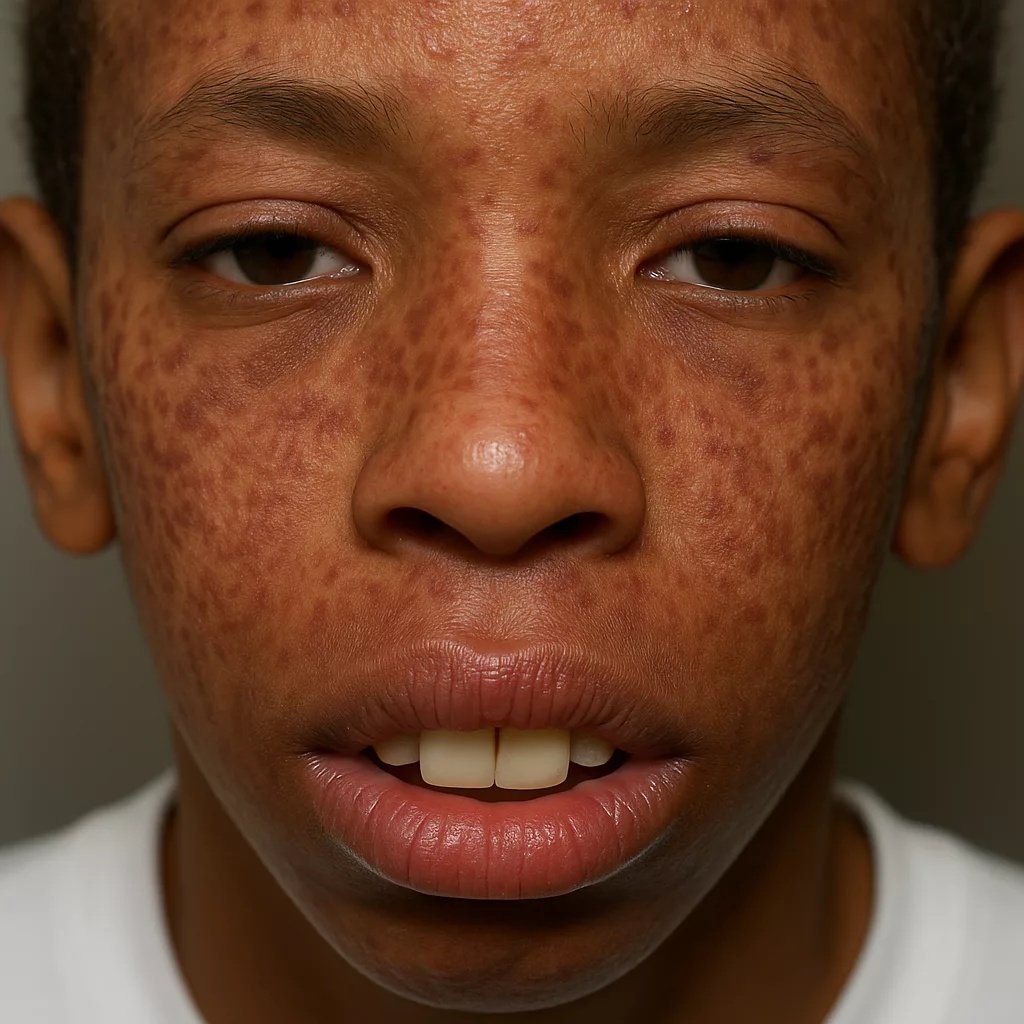
Facial rash in Bloom syndrome: characteristic butterfly-shaped erythema and telangiectatic spots across the cheeks and nose.
Prolonged sun exposure in these patients may lead to the development of small dilated blood vessels in areas of rash (telangiectasias), and areas of mixed pigmentation and texture (poikiloderma) can also be seen. These tiny blood vessels are visible within the rash itself and also in the white part of the eyes (sclera).
Increased Cancer Risk:
Research shows that Bloom Syndrome patients have an increased risk of getting Leukemia,Lymphoma, Osteosarcoma, Squamous cell cancer, GI cancers, Wilms’ tumor, and other cancerous diseases at a younger age compared to other people. This predisposition to cancer is attributed mainly to their cells that have faulty DNA repair.[7]
Reproductive Challenges:
Infertility in both males and females is also common in these individuals. Such patients are interested in genetic counseling and fertility preservation if they want to have children in the future.
Other Features:
- Individuals with Bloom syndrome have a high-pitched voice, distinctive facial features including a long, narrow face, a small lower jaw, and prominent nose and ears.
- Learning disabilities, susceptibility to ear and nose infections, and other serious medical conditions can turn up at a young age.
- They often develop lung diseases and diabetes.
These people should be very keen on their health, and they should treat infections and cancers as early as possible once identified.
Causes & Genetic Mechanism
Bloom syndrome results from mutations in the BLM gene located on chromosome 15q26.1. The BLM gene is responsible for the production of a protein from the RecQ helicase family, also called Bloom Helicase, which helps maintain a healthy cell structure and duplication.[8]
Helicases bind DNA together but can also split double helix strands of DNA in half so they can duplicate and produce other cells. This is a normal process, and it gives access to the DNA to be repaired and then copied.
Now, with a defect in BLM, the DNA can be tangled and break apart, and this can lead to mistakes in cells, which can cause them to die or even to become cancerous. So, in patients with Bloom syndrome, their Bloom helicase doesn’t work properly.[9]
Diagnosis & Genetic Testing
Bloom syndrome can be diagnosed through genetic testing, supported by cytogenetic studies. In some cases, testing can even be performed prenatally.
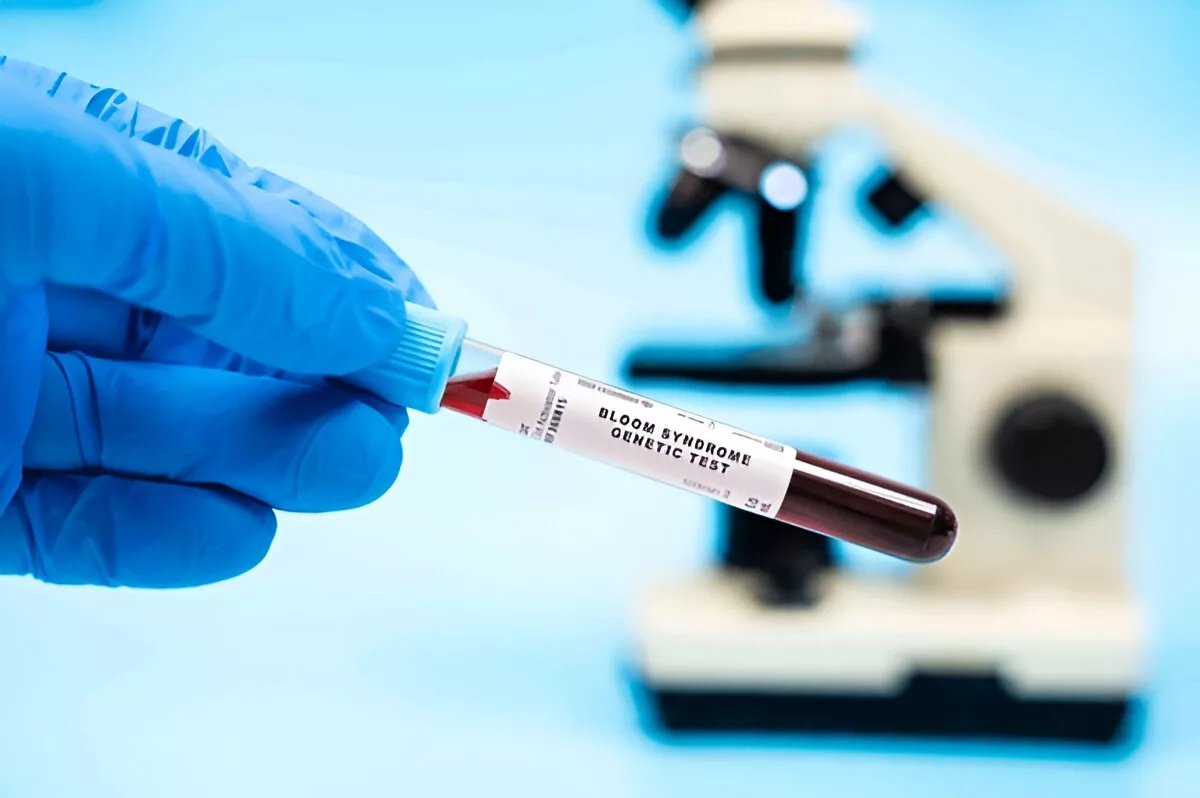
A genetic blood test detects mutations in the BLM gene, causing Bloom syndrome
Blood Tests
Blood tests can detect mutations in the BLM gene, which is responsible for causing Bloom syndrome.
Confirmatory Tests
Sister Chromatid Exchange (SCE) Tests
Sister chromatid exchange (SCE) testing shows a markedly elevated rate of chromatid exchanges in Bloom syndrome cells (often more than 50 per cell compared to 5–10 in normal cells). While highly characteristic, this test is now mainly used for research rather than routine diagnosis.[10]
AmniocentesisAmniocentesis
This procedure is performed to analyze fetal DNA for BLM gene mutations. This helps identify whether the fetus has two defective copies of the gene (affected) or only one copy (carrier).
Carrier Testing
Some direct-to-consumer genetic tests, such as 23andMe, may detect certain BLM mutations. These tests can be useful for healthy individuals to determine whether they are carriers of a mutation that could cause Bloom syndrome in their children.[11]
Treatment & Medical Management
There is currently no cure for Bloom syndrome. Management focuses on prevention, monitoring, and alleviation of symptoms.
Key Management Areas:
- Cancer ScreeningBecause individuals with Bloom syndrome have a high risk of developing cancer, regular screenings are essential. This may include blood tests, skin examinations, colonoscopies, Pap tests, and in some cases, whole-body imaging for early cancer detection.[12] Many cancers have a very poor prognosis, but early diagnosis and treatment can improve the long-term prognosis.
- Infection ControlIndividuals should take more care to avoid infections because this syndrome leads to immunodeficiency. Treatment may include Immunoglobulin (IVIG) supplementation, vaccinations (inactivated vaccinations rather than live ones in case of immunosuppression), and antibiotic prophylaxis.[13]
- Sun ProtectionAvoiding sun exposure and using sunscreens can help prevent some of the cutaneous changes associated with photosensitivity, and efforts to minimize exposure to other known environmental mutagens are also advisable.
- Feeding Issues: Feeding issues may require early nutritional support and referral to specialists to address growth failure, which is common in Bloom syndrome.
Outlook and Prognosis
The mortality rate of people with Bloom Syndrome is usually much earlier compared to the rest of the population; this is because of the high risk of cancers.[14]
- Historically, the average life expectancy was around the late twenties due to early-onset cancers, though outcomes are gradually improving with early detection and better care.
- About ~50% have at least one cancer by age 25
- Additional chronic complications, including lung diseases and chronic infections, also make the prognosis poor.
Psycho-social care is crucial since patients and their families are under a great emotional load.
Prevention and Family Planning
As this is an autosomal recessive disease, reproductive counseling is necessary. There is a strong recommendation for genetic counseling and gene testing of carriers, especially amongst the Ashkenazi Jews and those individuals who have a family history.[15]
- Genetic counseling in families that go through Bloom Syndrome makes people aware of the dangers that accompany the condition, including the possibility of passing it on to future generations.
- Genetic testing and preconception counseling are usually suggested to couples having a family history of this syndrome to assess the risks of giving birth to a child with the condition.[16]
Talk with your general practitioner about getting a referral to a fertility specialist.
Global Initiatives and Living with Bloom Syndrome
Efforts for improving the results of Bloom Syndrome are increasing throughout the world:
- Advocacy and resources are headed by the Bloom Syndrome Association, NORD (National Organization for Rare Disorders), and Cancer Hope Network.[17]
- Bloom Syndrome Association is a nonprofit organization. The mission of the BSA is to educate, advocate, stimulate research, and provide a safe environment for people to talk about syndrome and understand it better.
- Improved diagnosis and investigation.
- Free tests and telemedicine are beginning to appear in the low-income areas
Such partnerships bring about the progress of rare diseases across the board. Preventive, integrated treatment allows people to live healthier lives.
Research and Future Directions
The study to create a new therapy is ongoing on two fronts: gene therapy and DNA repair. Researchers are working on how to correct the BLM gene malfunction or strengthen the mechanisms to repair the mistakes in the body’s DNA, which may lead to more effective treatments in the future.
Cutting-edge Studies:
- CRISPR Gene EditingCRISPR gene editing is a modern technique used in molecular biology to make precise changes to the DNA of living organisms. It works by introducing the Cas9 enzyme along with a specially designed guide RNA (gRNA) into a cell. This combination targets a specific DNA sequence, enabling scientists to cut the DNA at that exact spot. As a result, it becomes possible to delete existing genes or insert new ones directly within the organism.[18]
- Future ToolsSpecific targeted developments are base editors, AAV viral conveyance, and small molecules to reinforce DNA repair or to stabilize leftover BLM protein.[19]
- Biomarker DiscoveryThe possibility of identifying the cancer risk using proteomic/transcriptomic studies leads to personal surveillance.[20]
The treatment of Bloom’s syndrome has a great future ahead, as we are becoming increasingly familiar with chromosomal instability and mechanisms of DNA repair. With the continued research, there is hope that even more effective treatment may be found, and in the future, they may manage to treat and prolong the lives of individuals with the condition.
Conclusion
Although the incidence of Bloom Syndrome is rare, it shows the serious effects of genetic instability. Based on the BLM gene mutation, this causes growth failure, immune challenges, sun-sensitive rash, and a high risk of cancer. Regardless of the limited number of known cases (less than 300), the future is becoming brighter with improvements in early diagnosis, gene therapy, universal registries, and multidisciplinary treatment.
By increasing awareness among clinicians, registry support, and research catalyzing, we enable the affected people to live longer and better lives. Functional cures could eventually be possible by breakthroughs in gene editing and DNA repair. Until then, education, prevention, and sensitive support are the most useful tools we have.
References
[1] German, J. (1993). Bloom syndrome: a mendelian prototype of somatic mutational disease.Medicine (Baltimore), 72(6), 393–406
[2] Ellis, N.A., et al. (1995). The Bloom’s syndrome gene product is homologous to RecQ helicases.Cell, 83(4), 655–666.
[3] Cunniff, C., Bassetti, J.A., Ellis, N.A. (2017). Bloom’s Syndrome: Clinical Spectrum, Molecular Pathogenesis, and Cancer Predisposition.Molecular Syndromology, 8(1), 4–23.
[4] Morrow, B. (2000). DNA Repair and Cancer: Bloom’s Syndrome and the BLM Gene.Cancer Investigation, 18(6), 640–656.
[5] German, J., Sanz, M.M., Ciocci, S., Ye, T.Z., Ellis, N.A. (2007). Syndrome characterized by genetic instability: a lesson from Bloom syndrome.Annals of the New York Academy of Sciences, 1111, 226–235. https://doi.org/10.1196/annals.1407.001
[6] Luo, G., et al. (2000). Cancer predisposition caused by elevated mitotic recombination in Bloom mice.Nature Genetics, 26, 424–429. https://doi.org/10.1038/82547
[7] de Renty, C., Ellis, N.A. (2017). Bloom’s Syndrome: Why not premature aging?Aging, 9(7), 1481–1492.
[8] Rao, V.A., et al. (2005). DNA damage and repair defects in Bloom syndrome.Mutation Research, 569(1–2), 85–100.
[9] Singh, D.K., et al. (2023). Structural basis of BLM helicase function and dysfunction in Bloom syndrome.Nature Genetics, 55, 191–200
[10] Renty, C., et al. (2014). Bloom syndrome diagnostic assay based on SCE analysis using BrdU.Journal of Visualized Experiments, 84, e51015.
[11] Luo, Y., et al. (2020). Diagnostic yield and clinical utility of whole-exome sequencing in Bloom syndrome.Frontiers in Genetics, 11, 646.
[12] Sanz, M.M., et al. (2014). Cancer risk in Bloom syndrome.Cancer Genetics, 207(8–9), 375–381.
[13] van der Lelij, P., et al. (2010). The cellular response to DNA damage in Bloom syndrome cells.Nucleic Acids Research, 38(2), 610–621
[14] Cunniff, C., et al. (2017).Molecular Syndromology, 8(1), 4–23.
[15] Pagon, R.A., et al. (eds.) (2004). Bloom Syndrome. InGeneReviews®[Internet]. University of Washington, Seattle. https://www.ncbi.nlm.nih.gov/books/NBK1398/
[16] Reddy, K.S., et al. (1998). Preimplantation genetic diagnosis for Bloom syndrome.Fertility and Sterility, 69(3), 560–562.
[17] EURORDIS – Rare Diseases Europe. (n.d.). Bloom syndrome profile: https://www.eurordis.org/, National Organization for Rare Disorders (NORD). (2023). Bloom Syndrome. https://rarediseases.org/rare-diseases/bloom-syndrome/
[18] Liu, Y., et al. (2024). CRISPR-mediated correction of BLM deficiency in human stem cells.Cell Reports, 42(2), 112456.
[19] Wang, H., et al. (2023). Base editing in RecQ helicase–deficient cells restores genome stability.Nature Biotechnology, 41, 312–321.
[20] Sahin, M., et al. (2023). Proteomic insights into early tumorigenesis in Bloom syndrome.Frontiers in Oncology, 13, 1124671.