


Each year, tens of thousands of women decide to remove their breast implants. Others are confronted with actual health problems. Some just desire to have their natural bodies restored. Whatever the cause, breast explant surgery is no longer a strange or taboo procedure. It is a medical fact on the rise that warrants an open, frank discussion.
Breast Explant Surgery: What Is It?
Breast explant surgery, sometimes known as breast implant removal or the so-called boob job reversal, is a surgical operation to remove silicone or saline breast implants from the chest. During this surgery, the scar tissue capsule that develops around the implant is also removed in most cases by the surgeons.[1]
The process can be straightforward. Or it can be complex. It all depends on the state of the implants, the duration they have been in existence, and whether the surrounding tissue has become thickened, calcified, or contracted (capsular contracture).
Other women have this procedure along with a breast lift to fix some sagging skin. Some choose to graft fat into the area to achieve a more natural look. Yet most just want the implants removed, and that is all.
How Is It Different from a Breast Reduction?
Breast explant surgery is usually confused with breast reduction. They do not mean the same thing. A breast reduction removes breast glandular tissue, fat, and skin to reduce size. An explant only removes the implant and, in some cases, the capsule enclosing the implant. The native breast tissue is not intentionally removed unless combined procedures are performed.[2]
Why Are So Many Women Choosing Breast Implant Removal?
A survey of plastic surgeons worldwide by the International Society of Aesthetic Plastic Surgery revealed a steep rise between 2020 and 2024, with surgeons undertaking almost two-thirds of the total number of procedures to remove breast implants. It is a huge leap within a rather short time frame.[3]
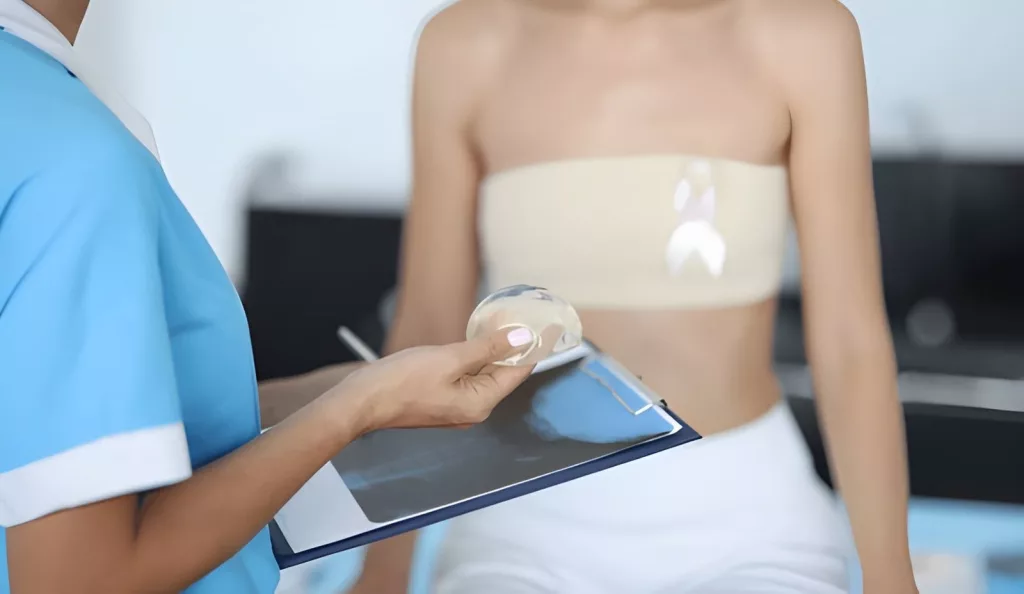
Surgeon explains implant options and removal considerations during breast explant consultation
A report indicates that 47% of women who decide not to replace their implants after removal are showing signs of a fundamental shift in patient attitudes toward breast aesthetics and long-term health. So what is driving this shift? There are a few reasons.
- Health concerns are at the top of many people’s lists. There is a condition called breast implant illness (BII), a poorly understood but widely reported cluster of systemic symptoms associated with breast implants in some patients. As reported in a 2024 systematic review that included more than 39,000 patients, the prevalence of systemic symptoms of BII in women who had implants was 31%. Of them, 72% chose to undergo explantation, and 83.5% had their symptoms partially or fully cured upon removal.
- Aesthetic transformation is also a significant factor. A lot of women who had implants many years ago now want a more natural appearance. Bodies change. Tastes change. What was right at 25 may not necessarily be right at 40.
- Another key driver is physical discomfort. Removing large implants can decrease neck or back pain. If scar tissue has hardened enough to cause capsular contracture, removing the implants can provide nearly instant pain relief.
- Many women have also been driven towards removal due to fear of breast implant–associated anaplastic large cell lymphoma (BIA-ALCL). The FDA has reported over 1,000 confirmed global cases, primarily associated with textured implants.[4]
Types of Breast Explant Procedures
Removal of breast implants is not always done in the same manner. Your surgeon will apply a technique that will depend on your situation. The key strategies include:[5]
Simple Implant Removal
This is the most basic option. The surgeon removes only the implant and leaves the capsule behind. It is typically used when the capsule is thin, non-contracted, and asymptomatic.
Total Capsulectomy
Here, the surgeon removes both the implant and the surrounding capsule, but not necessarily in one intact piece. This is more thorough than a simple removal and is often recommended for women experiencing BII symptoms.
En Bloc Capsulectomy
In en bloc explantation, the plastic surgeon removes the capsule and the implant simultaneously and in one piece, meaning the implant remains inside the capsule wall during removal. This type is indicated when there is a silicone implant rupture with free gel inside the capsule, or if there is any concern for the uncommon case of lymphoma related to the capsule contents.[6]
En bloc is the most expensive, time-consuming, and difficult option for breast implant removal, and may require longer scars to access the entire capsule. Not all implants can be removed this way. In some cases, complete capsule removal may not be possible if it is adherent to the chest wall, as aggressive dissection may risk injury to underlying structures such as the pleura.
Comparing Breast Explant Techniques at a Glance
| Technique | What Is Removed | Best For | Complexity |
|---|---|---|---|
| Simple Removal | Implant only | Healthy capsule, elective removal | Low |
| Total Capsulectomy | Implant + capsule (separate) | BII symptoms, capsular contracture | Moderate |
| En Bloc Capsulectomy | Implant + capsule (intact, in one piece) | Rupture, BIA-ALCL concern | High |
| Explant + Breast Lift | Implant + excess skin tightening | Sagging skin after removal | High |
| Explant + Fat Transfer | Implant + natural volume restore | Women wanting a retained shape | High |
Is Breast Explant Surgery Dangerous?
This is one of the most common questions women ask. The honest answer is that it carries risks, just like any surgery. But for most healthy candidates, those risks are manageable.[7]
General surgical risks include:
- Infection at the incision site
- Bleeding or hematoma (blood pooling)
- Reaction to anesthesia
- Seroma (fluid accumulation in the space left by the implant)
- Scarring
One of the most common concerns following breast implant removal is feeling dissatisfied with the appearance of the breasts. Other possible complications include loose skin, numbness, or changes in nipple sensation.
The psychological element is real, too. Some women feel a sense of relief. Others go through a period of adjustment as their body looks and feels different. Having realistic expectations before surgery matters enormously. That said, severe complications from breast explant surgery are not common. Most women go through the procedure without any major issues.
What Happens to Your Breasts After Implant Removal?
This is what many women worry about most. The honest answer is that results vary widely.[8]

Breast explant surgery involves careful removal of implants under sterile surgical conditions
Your skin stretched to accommodate the implants. Once they come out, that skin needs time to contract and settle. You may initially notice temporary asymmetry, less upper-pole fullness, mild wrinkling, or a flatter shape. Most of these issues will resolve on their own over time.
The final results of breast implant removal can take between 6 and 12 months to fully develop. So do not judge your results in the first few weeks. Your body is still adjusting. Factors that affect how your breasts look afterward include:
- How long the implants were in place
- The size of the implants that were removed
- Your age and skin elasticity
- Whether you choose to combine removal with a breast lift
Younger women with smaller implants tend to see better natural rebound. Women with older implants might have more to gain by incorporating the removal with a breast lift or mastopexy.
Breast Implant Removal Recovery Time: Week by Week
The typical time of recovery is two to six weeks or more, based on the number of implants your surgeon took out, and the type of reconstruction you had at the same time: aesthetic flat closure or flap reconstruction.[9]
The following is a realistic weekly breakdown:
Week 1: This is the toughest period. Swelling, bruising, and mild pain and discomfort are expected, particularly during the first week. These symptoms are typically simple to treat through pain medication, cold compresses, and rest. In case of surgical drains, they are typically left in place between 5 and 7 days to prevent fluid buildup.
Week 2: The majority of women begin to feel much better. Asymmetry starts to resolve, and soreness usually gets better as swelling subsides. Light desk work is often possible. Strenuous activity remains out of the question.
Weeks 3 to 4: Approximately 3 to 4 weeks after breast implant removal, you should be in a position to gradually resume exercise and physical activity. The majority of the bruising will have subsided. Energy levels come back for most women.
Weeks 6 to 8: You will be cleared by your plastic surgeon to resume your normal exercise routine at 6 to 8 weeks after surgery.
Months 6-12: Final shape is still settling. Scars continue to fade. This is when you see the true result of your surgery.
Is Breast Removal Surgery Painful?
Pain levels vary by person and by the type of surgery performed. Most women report that the discomfort is manageable. Pain levels are generally manageable with prescribed medications, and many patients report less discomfort than expected.[10]
The first week involves the most discomfort. The patient will probably experience pain and discomfort in the areas of incision during the first week, which can be addressed using pain medications. Other anticipated side effects that are temporary include itching, swelling, and bruising.
The women who receive en bloc capsulectomy or a combination of the removal and a breast lift experience a slightly longer and more painful recovery than those who receive a simple removal. It is worth considering in your decision and recovery planning.
Benefits of Breast Explant Surgery
To most women, the removal of their implants is one of the best decisions they have ever made. The following are some of the most common benefits reported:[11]
- Relief from physical symptoms. Often, neck pain, back pain, and chest tightness improve significantly.
- Reduction in BII symptoms. As noted earlier, over 83% of women who removed their implants for BII-related symptoms saw partial or full improvement.
- Peace of mind. The implants are removed to avoid the possibility of rupture, BIA-ALCL, and capsular contracture in the future.
- Emotional ease. Many women report feeling more like themselves after removal.
- Freedom from maintenance. Implants are not lifetime devices. Their removal breaks the cycle of possible replacements and revisions.
Breast Explant Surgery Preparation
Proper planning can really change the level of smoothness of your surgery and recovery.
- Select a board-certified plastic surgeon who has special experience in explant procedures. Request to view pre- and post-photos of previous patients.
- Seek a good consultation. Talk about your history of the implants, symptoms, and objectives.
- Adjust current medications or start new ones as directed. Avoid medicines that increase bleeding risks, such as anti-inflammatory drugs or certain herbal supplements.
- Arrange for someone to drive you home and help during the first few days.
- Select your recovery space. Prepare cozy and loose clothes and tops with an opening at the front. Keep cold compresses available.
- Set realistic expectations about what your breasts will look like afterward.
Choosing the Right Surgeon for Breast Implant Removal
Not all plastic surgeons have the same experience with explant surgery. Some surgeons primarily perform augmentations and might not be as experienced with complex removals.[12]
In researching, inquire specifically about:
- Their experience with en bloc capsulectomy, if that is relevant to your situation
- Whether they have managed cases of BIA-ALCL or complex capsular contracture
- Their approach when complications arise
Getting a second opinion is always reasonable for elective or complex procedures.
What is the cost of Breast Explant Surgery?
A primary concern for women is cost, and the price range for removal varies greatly. The average cost of a removal in the US is between $2000 and $8000. Basic removal is towards the lower end, while an en bloc capsulectomy or combined procedure with Mastopexy can incur costs on the higher end. Anesthesia and operating room fees and postoperative care are additional costs. False expectations of insurance coverage exist; it will seldom cover the removal of implants, unless, for instance, you have BIA-ALCL or an implant rupture. Always ask for an itemized estimate at your consultation to avoid surprises.
The Final Word
Breast explant surgery is not a fringe procedure. It is a mainstream medical choice by hundreds of thousands of women all over the world each year. The motives are as personal as they are manifold. Health, comfort, beauty, or even a change of heart, all are acceptable.
Despite some barriers in access, breast implant removal has been on the rise in recent years, though removals still represent a small share of total cosmetic surgeries worldwide compared with augmentations. What matters most is making an informed decision. Be aware of your recovery schedule. Select a surgeon whom you trust. And have your body time to be fully healed.
Women who enter into breast implant removal with clear expectations and with proper support are likely to emerge on the other end feeling truly well.
References
[1] Knoedler S, Alfertshofer M, Rams DJ, et al. Breast implant removal surgery: a data-driven look at growing trends.Plastic and Reconstructive Surgery – Global Open. 2024;12(12):e6402. doi:10.1097/GOX.0000000000006402
[2] Rohrich RJ, Beran SJ, Restifo RJ, Fed JM. Aesthetic management of the breast following explantation: evaluation and mastopexy options.Plastic and Reconstructive Surgery. 1998;101(3):827–837. doi:10.1097/00006534-199803000-00030
[3] Triana L, Palacios Huatuco RM, Campilgio G, Liscano E. Trends in surgical and nonsurgical aesthetic procedures: a 14-year analysis of the International Society of Aesthetic Plastic Surgery (ISAPS).Aesthetic Plastic Surgery. 2024;48(21):4601. doi:10.1007/s00266-024-04355-w
[4] Clemens MW, Jacobsen ED, Horwitz SM. 2019 NCCN consensus guidelines on the diagnosis and treatment of breast implant-associated anaplastic large cell lymphoma (BIA-ALCL).Aesthetic Surgery Journal. 2019;39(Suppl_1):S3–S13. doi:10.1093/asj/sjy331
[5] Akhter MW, Nabi FJ, Saleem S, et al. Breast implant illness: treatment using total capsulectomy and implant removal.Plastic and Reconstructive Surgery – Global Open. 2022;10(5):e4285. doi:10.1097/GOX.0000000000004285
[6] Kim JYS, Mu DL, Wan DC, et al. Complications of aesthetic and reconstructive breast implant capsulectomy: an analysis of 7,486 patients using nationwide outcome data.Aesthetic Surgery Journal. 2024. doi:10.1093/asj/sjaf003
[7] Nahabedian MY, Spear SL, Patel KM. Management of complications following implant-based breast reconstruction: a narrative review.Plastic and Reconstructive Surgery – Global Open. 2024;12(1):e5316. doi:10.1097/GOX.0000000000005316
[8] Papadopoulos S, Colpaert SDM, Goulis DG, et al. Fat grafting and auto-augmentation mastopexy after breast implant removal: technique and evaluation of outcomes using BREAST-Q.Aesthetic Surgery Journal. 2021;41(6):NP388–NP401. doi:10.1093/asj/sjaa347
[9] Scott S, Mureau MAM. The effect of explantation on systemic disease symptoms and quality of life in patients with breast implant illness: a prospective cohort study.Scientific Reports. 2022;12:21311. doi:10.1038/s41598-022-25300-4
[10] Knoedler S, Alfertshofer M, Rams DJ, et al. Breast implant removal surgery: a data-driven look at growing trends.Plastic and Reconstructive Surgery – Global Open. 2024;12(12):e6402. doi:10.1097/GOX.0000000000006402
[11] Ferreira S, Barros AS, Marques M. Breast implant illness: symptoms, outcomes with explantation and potential etiologies — a systematic review and meta-analysis.Aesthetic Plastic Surgery. 2025. doi:10.1007/s00266-025-05142-x
[12] Knoedler S, et al. Breast implant removal surgery: a data-driven look at growing trends.Plastic and Reconstructive Surgery – Global Open. 2024;12(12):e6402. doi:10.1097/GOX.0000000000006402