
 is a life-saving, emergency procedure done to save a person whose heart...)
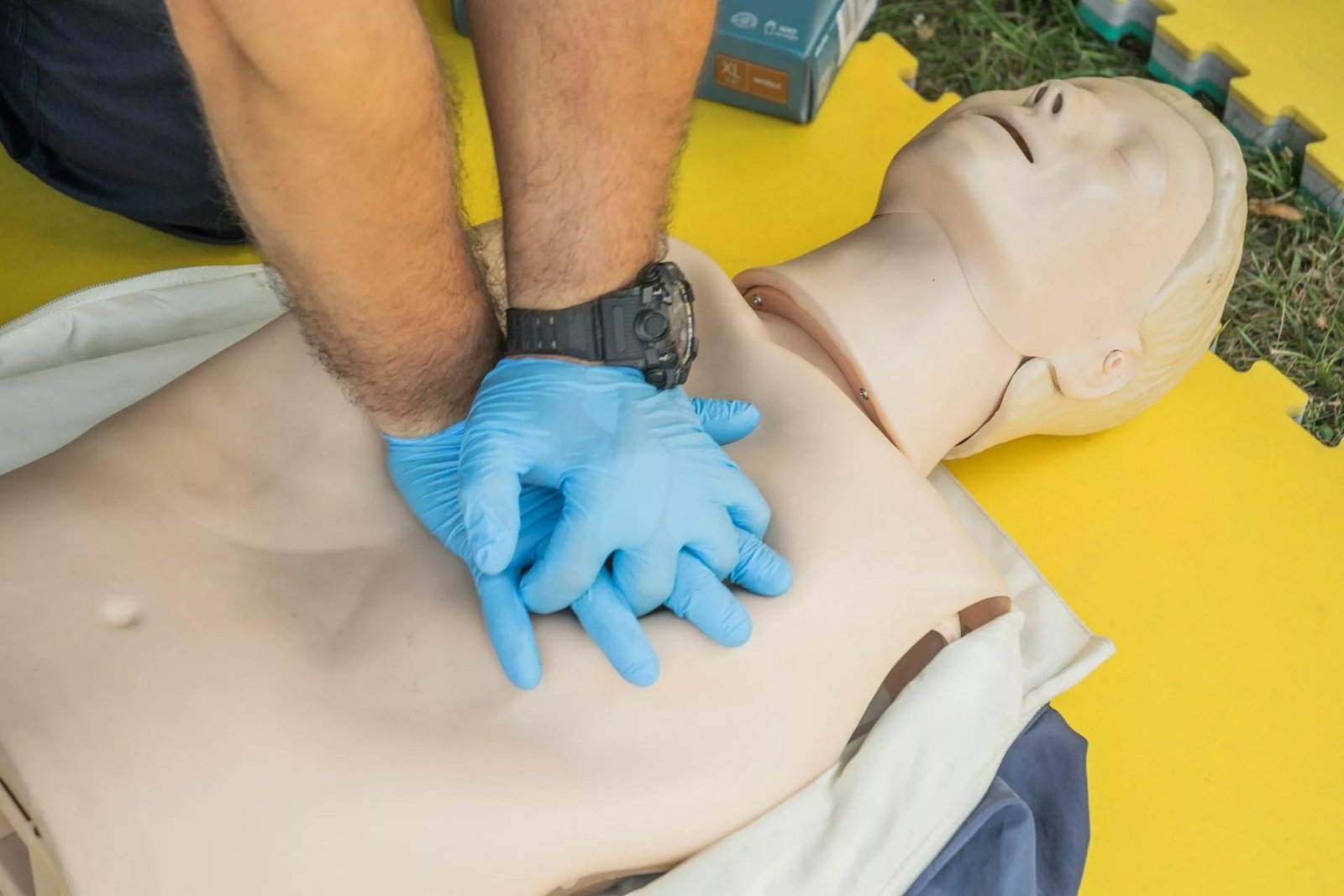
Cardiopulmonary Resuscitation Way Cardiopulmonary resuscitation (CPR) is a life-saving, emergency procedure done to save a person whose heart has stopped beating. Medical incidents like a heart attack or cardiac arrest can stop a person’s breathing or heartbeat, which can quickly lead to death. By performing CPR promptly, you can restore circulation and breathing, potentially saving the person’s life. It requires you to apply pressure (in the form of compressions) to the person’s chest to restart the heart.
Cardiopulmonary resuscitation is a vital aspect of Basic Life Support (BLS) training. Healthcare organizations are now promoting teaching of BLS techniques in educational institutions, and rightfully so. BLS training of schoolchildren can potentially educate generations about how to manage cardiac arrest patients.[1] Studies show that BLS training significantly improves the life-saving skills of the general public.[2]
So, this article discusses the important details of CPR and how you can perform it to save someone’s life!
Types Of Cardiopulmonary Resuscitation: Cardiopulmonary Resuscitation Way
Primarily, there are two types of CPR that you can perform on a collapsed person. These techniques are recommended by the American Heart Association (AHA) for untrained bystanders. If properly done, CPR can significantly improve the survival chances of a patient and minimize the neurological complications associated with a lack of oxygen supply to the brain.
Compression-Only (Hands-Only) CPR
Hands-Only CPR involves performing continuous chest compressions without rescue breaths and is recommended for untrained bystanders during adult cardiac arrest. You need to apply hard and fast pushes on the patient’s chest. It is advised to deliver 100-120 compressions per minute. During outbreaks of COVID-19, there was a negative attitude and behavior towards the conventional bystander cardiopulmonary resuscitation. However, people still expressed positive attitudes towards hands-only CPR.[3]
According to a survey, laymen are willing to provide Hands-only CPR, and most participants are able to correctly recall the steps of the procedure after training.[4]
Conventional CPR With Breaths
Conventional CPR combines chest compressions with rescue breaths, typically at a ratio of 30 compressions to 2 breaths for adults, and is preferred for trained rescuers, children, and infants. While many believe that hands-only and conventional CPR have similar results, some studies show that the latter is associated with better outcomes in out-of-hospital cardiopulmonary arrest situations.[5]
How Does Cardiopulmonary Resuscitation Work?
Conventional cardiopulmonary resuscitation involves two steps, i.e., chest compressions and mouth-to-mouth rescue breaths. Both these steps have different purposes.
Cardiac care organizations have declared chest compressions the cornerstone of resuscitation. By compressing the person’s chest, you increase the pressure inside the chest cavity (intrathoracic pressure). The increased chest pressure compresses the heart, forcing blood to circulate through the body and supply vital organs with oxygen. By repeatedly compressing the chest, you can restore the coronary perfusion pressure (CPP) in the person. CPP is the pressure that pushes blood through the heart’s own arteries (coronary arteries). This helps restore circulation and thus revives the person.[6]
Mouth-to-mouth breathing, or rescue breaths, provides oxygen to the lungs, ensuring oxygenated blood continues to circulate during CPR. By maintaining the circulation of oxygenated blood in the person, you can prevent organ damage and thus avert neurological consequences.
Indications Of CPR: Who Needs Cardiopulmonary Resuscitation?
Cardiopulmonary resuscitation is indicated if the person is:
- Unresponsive
- Not breathing
- Showing abnormal breathing patterns, such as gasping
Prompt identification of these signs is critical, and it has been noted that timely initiation of CPR is linked to better survival rates. Health conditions in which you can perform cardiopulmonary resuscitation include:
- Cardiac arrest (sudden stopping of the beating of the heart)
- Respiratory arrest (sudden cessation of breathing despite having a pulse)
Other conditions that can lead to the stoppage of respiration or heartbeat and require CPR include severe trauma, drug overdose, and drowning. One study concluded that bystander CPR in patients with out-of-hospital cardiac arrest (OHCA) due to drowning was linked to an increased chance of survival (with favorable neurological outcomes).[7]
Contraindications Of Cardiopulmonary Resuscitation
You should not perform CPR in cases where there are clear signs of irreversible death, like rigor mortis (stiffening of muscles post-death). Moreover, you can not perform CPR if the person carries a valid do-not-resuscitate order (DNR). Healthcare workers and first-line responders also consider CPR non-beneficial (and thus, avoid it) in individuals with terminal illness.
What To Do Before Starting Cardiopulmonary Resuscitation?
If you encounter an unconscious person whose heart or breathing has stopped, you need to follow these steps to ensure a maximum chance of the person’s survival:
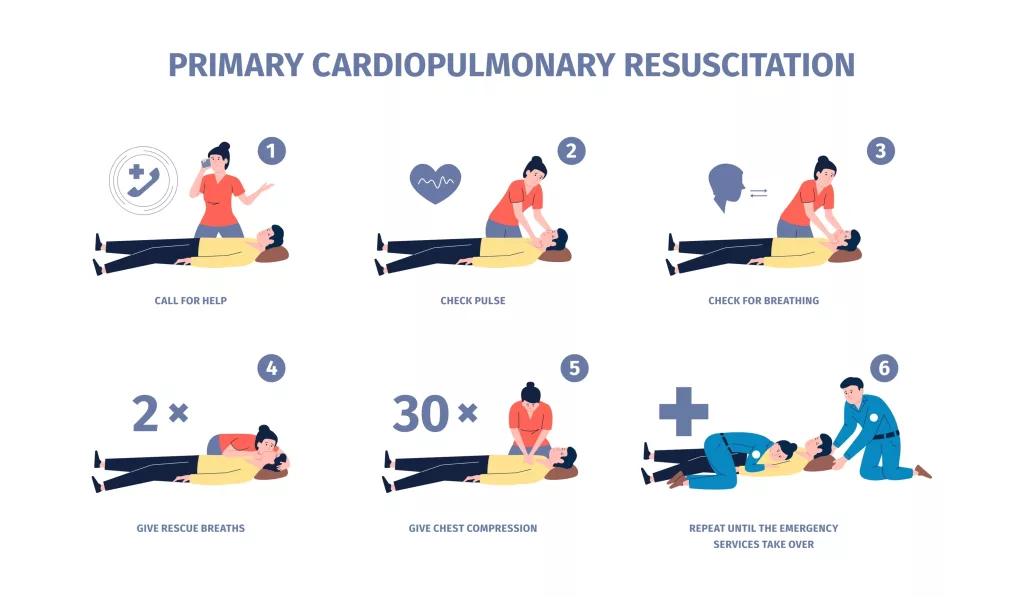
When attending to a collapsed individual, you should follow these steps of emergency management and cardiopulmonary resuscitation.
- Try calling for medical help. Call 1122 or your local emergency service number.
- Ask someone to get an automated external defibrillator. It is a device that gives an electric shock to restore the rhythm of the heart. Advanced countries have AED devices installed in public places like parks and bus stands.
- Make sure that the person needs CPR. You can check this by analyzing ABC:
The above-mentioned technique is to check the radial pulse. You can also check the carotid pulse by placing the fingers (middle and index) on the groove in the neck, below the jaw.
Cardiopulmonary Resuscitation Procedure
The process of giving chest compressions isn’t difficult. However, if you pay attention to detail, you can improve outcomes, minimize complications, and increase the person’s chances of survival. You can follow these cardiopulmonary resuscitation steps:
CPR On Adults
There are slight differences in the methods of child and adult resuscitation. Techniques of adult chest compressions and rescue breaths are discussed below:
Chest Compressions:
We start by discussing how to give chest compressions and then explain the process of giving rescue breaths:
- First, lay the person down on a firm surface (on their back).
- Place the palm of one of your hands (mainly the dominant hand) on the middle of the person’s chest, between the nipples. Put your other hand over it.
- Keep your elbows locked and shoulders directly above your hands so you can deliver maximum force with minimal effort.
- Use your body weight to push down on the middle of the chest at least 2 inches (5 centimeters) but not more than 2.4 inches.
- Deliver compressions at a steady rate of 100–120 per minute.
- After every compression, allow the chest to recoil/respring.
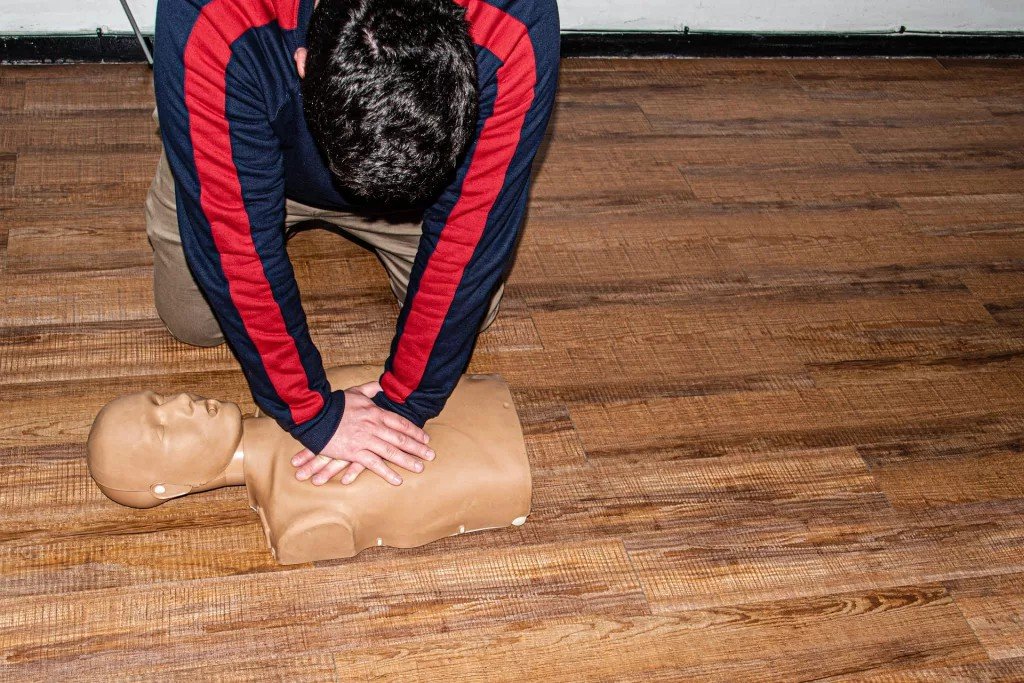
This picture demonstrates the right way to position yourself on a collapsed person while performing cardiopulmonary resuscitation. You can appreciate that the caregiver’s shoulders are directly above his hands, and he is using his body’s weight to push down.
Cardiac experts and the American Heart Association suggest that you follow the beat of songs like “Stayin’ Alive” by the Bee Gees or “Crazy in Love” by Beyoncé and Jay Z. “Stayin’ Alive” has a rhythm of 103 beats per minute; hence, it can be used as a medical mnemonic to give chest compressions.[8] Thus, these beats can help you easily remember the compression rate.
Note: Performing chest compressions is a very hectic activity, and people tend to tire out very quickly. Thus, if you have someone around, switch places so precious time is not lost.
Mouth-To-Mouth Breathing:
If you have a companion to help you, ask them to give mouth-to-mouth while you pay attention to chest compressions.
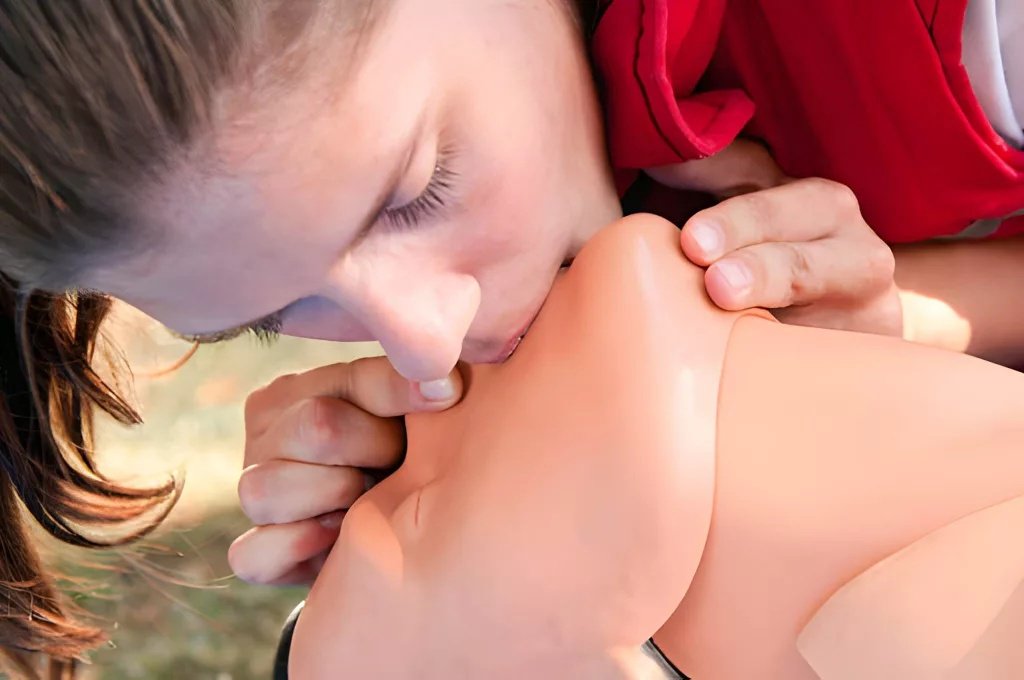
A woman demonstrates how to perform rescue breaths (mouth-to-mouth breathing) during conventional cardiopulmonary resuscitation on a dummy. It is crucial to properly pinch the nostrils and create an air seal with your lips.
If you have formal training in CPR, you can pause in between compressions to give rescue breaths. The rule of thumb is to give two breaths for every thirty compressions. The technique for rescue breathing is:
- Tilt the person’s head back while lifting their chin up and pinch their nostrils (to prevent the escape of air).
- Cover the person’s mouth with yours, making a seal.
- Give two rescue breaths (with the first breath lasting for one second) and note the movement of the chest (it should rise). If the person’s chest doesn’t rise, check to see if something is in their mouth, blocking the airways.
- If the chest doesn’t rise, you can adopt the head-tilt, chin-lift maneuver, or jaw-thrust maneuver to improve airway patency.
- Continue CPR with the 2 breaths every 30 compressions formula to restore blood flow and circulation until there are signs of life/movement or emergency help arrives.
Once an AED is available, use it by following the device’s instructions. AED use is validated in cases where CPR doesn’t work. You can learn more about the right timing of AED usage by clicking here!
You may need to adopt mouth-to-nose breathing if the mouth of patient is severely injured or can’t be opened.
CPR for Children
You will have to modify the technique for children aged one to puberty. ABC (analysis) of the child is similar to an adult. Follow these steps:
Chest Compressions:
- Place the child (on their back) on a firm surface and kneel down next to the child.
- Place two hands (or one hand for small children) on the lower part of the breastbone.
- With the palm of your hand/hands, press down on the chest approximately 2 inches (but not greater than 2.4 inches), delivering 100-120 compressions/minute.
Note: In children, you will need to apply a lesser amount of force than in adults.
Mouth-to-Mouth Breathing:
The steps for rescue breathing are the same for adults and children. The only difference is that you should give 1-2 breaths after every 15 compressions. Plus, you should try using pediatric pads for an AED.
CPR On Infants
In infants, cardiac arrest often results from oxygen deprivation, such as from choking or respiratory failure, rather than primary cardiac causes. Thus, it is a must to check for airway blockage and, consequently, performfirst aid for choking.
Chest Compressions:
You can perform chest compressions only on infants up to 1 year old. DO NOT FOLLOW THIS PROCEDURE ON NEWBORNS AND BABIES UP TO 4 WEEKS OLD! Neonates (0–28 days old) require specialized neonatal CPR techniques.[9]
- Place the baby on its back on a firm and flat surface (a table or floor).
- Make an imaginary line between the baby’s nipples and place two fingers (of one hand) just below this imaginary line on the center of the chest.
- Gently compress, pushing the chest about 1.5 inches.
- In a rapid rhythm, push the chest, delivering 100-120 compressions per minute (just as in adults).
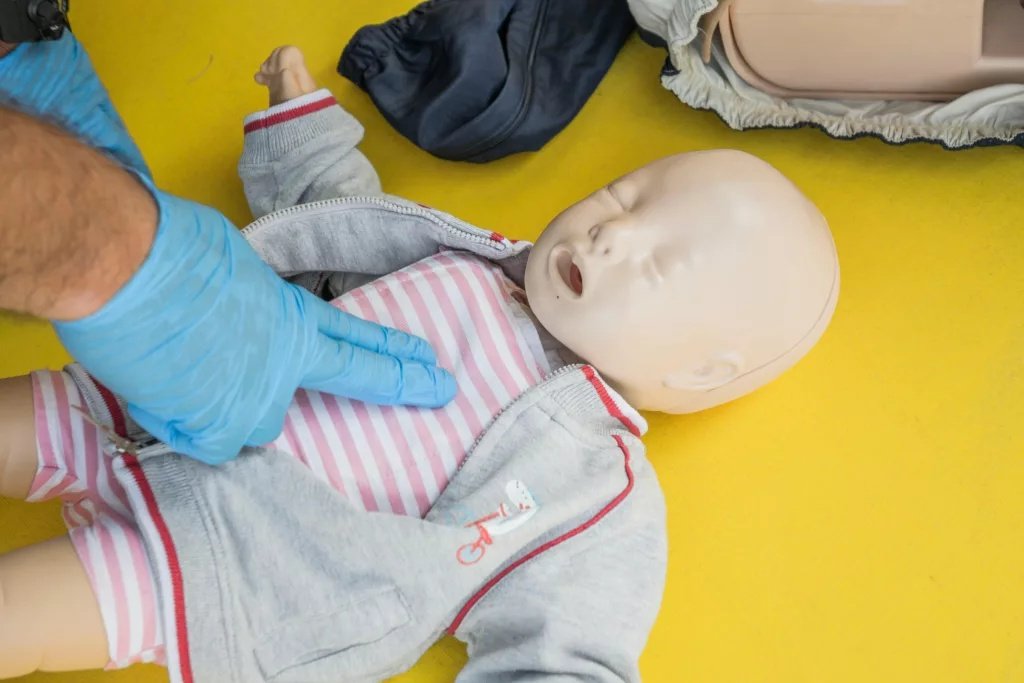
The image shows how to use two fingers of the same hand to perform cardiopulmonary resuscitation on an infant.
Mouth-to-Mouth Breathing:
- Use your mouth to cover the baby’s mouth and nose.
- With the strength of your cheeks, deliver gentle puffs of breath into the baby’s mouth one time. Observe the rising of the chest.
- If the chest rises, give a second breath.
- If the chest doesn’t move, use the head-tilt, chin-lift maneuver and continue with chest compressions.
- Continue compressions and rescue breathing until there are signs of life or help arrives.
For infants, you will need to give 2 breaths after every 30 compressions.
Neonatal CPR
Neonatal CPR is for babies 0–28 days old and differs from infant or child CPR due to their unique physiology. Most neonatal cardiac arrests are caused by a lack of oxygen rather than heart problems, so ventilation is the priority. Chest compressions are only started if the heart rate remains below 60 beats per minute despite effective ventilation. Compressions are delivered using the two-thumb encircling hands technique on the lower third of the sternum, at a ratio of 3 compressions to 1 ventilation, with a depth of about one-third of the chest diameter (approximately 4 cm).[10] Neonatal CPR is typically taught in Neonatal Resuscitation Program (NRP) courses and is usually performed in hospital settings with trained personnel.
Complications Of Cardiopulmonary Resuscitation
Cardiopulmonary resuscitation comes with risks because of the hard blows given in the chest compressions. The most common complication/risk associated with CPR (especially in the elderly) is rib fracture, followed by chestbone (sternum) fracture. However, studies show that even with CPR done by bystanders, complications are not very common.[11]
Extracorporeal Cardiopulmonary Resuscitation (eCPR)
Another advanced method of cardiopulmonary resuscitation used in critically ill patients when conventional defibrillation and standard CPR do not respond, i.e., (refractory cardiac arrest), is the extracorporeal cardiopulmonary resuscitation (eCPR). This type uses an extracorporeal membrane oxygenation (ECMO) pump/machine, which works like a heart-lung machine. It takes blood out of the body, removes carbon dioxide, and adds oxygen before returning it to the body. eCPR is used in hospitals to provide life support to critically ill patients.[12]
Wrapping Up
Cardiopulmonary resuscitation (CPR) is a life-saving procedure that is done to restore heartbeat and breathing in a patient who has collapsed due to cardiac arrest. There are two main types of CPR, i.e., compressions-only and conventional CPR (with breaths). It is indicated in people who are unresponsive, not breathing, or don’t have a pulse. Common conditions that lead to these are cardiac arrest and respiratory arrest.
Before starting CPR, you need to check ABC, i.e., airway, breathing, and circulation of the patient. To perform hands-only CPR, lay the person flat on his back on a firm surface and place your hands (palms) in the middle of his chest and push down hard and rapidly. Give 100-120 compressions per minute. For conventional CPR, pinch the person’s nose and cover his mouth with your mouth. Then give rescue breaths in a ratio of two breaths for every thirty compressions. Continue the steps until you get signs of life or help arrives.
In cases of ventricular fibrillation (abnormal heartbeat rhythm), you might also need to defibrillate the person with an automated external defibrillator. Timely CPR from bystanders can save a life. Thus, it is now taught as Basic Life Support (BLS) in educational institutions.
References
[1] Schroeder, D. C., Semeraro, F., Greif, R., Bray, J., Morley, P., Parr, M., … & International Liaison Committee on Resuscitation. (2023). KIDS SAVE LIVES: basic life support education for schoolchildren: a narrative review and scientific statement from the International Liaison Committee on Resuscitation.Circulation,147(24), 1854-1868.
[2] Sajithkumar, P. (2016).Effectiveness of Basic Life Support Training Through Training of Trainers (TOT) on Life Saving Skills Among Public in Selected Areas of Kerala State(Doctoral dissertation, Rajiv Gandhi University of Health Sciences (India)).
[3] Chong, K. M., Chen, J. W., Lien, W. C., Yang, M. F., Wang, H. C., Liu, S. S. H., … & Ko, P. C. I. (2021). Attitude and behavior toward bystander cardiopulmonary resuscitation during COVID-19 outbreak.PLoS One,16(6), e0252841.
[4] Nofzinger, J. R., Kakish, E., Bahhur, N. O., Ryno, J., Pillai, M., DeBelly, J., & Jones, C. (2019). Effectiveness of hands-only cardiopulmonary resuscitation teaching on lay bystander attitudes toward future resuscitation.Spartan medical research journal,4(1), 8749.
[5] Ogawa, T., Akahane, M., Koike, S., Tanabe, S., Mizoguchi, T., & Imamura, T. (2011). Outcomes of chest compression only CPR versus conventional CPR conducted by lay people in patients with out of hospital cardiopulmonary arrest witnessed by bystanders: nationwide population based observational study.Bmj,342.
[6] Heward, S. J., & Widrich, J. (2023). Coronary perfusion pressure. InStatPearls [Internet]. StatPearls Publishing.
[7] Fukuda, T., Ohashi-Fukuda, N., Hayashida, K., & Kukita, I. (2019). Association of bystander cardiopulmonary resuscitation and neurological outcome after out-of-hospital cardiac arrest due to drowning in Japan, 2013–2016.Resuscitation,141, 111-120.
[8] Zhao, X., Nadkarni, L., Ford, B., & Kessler, D. (2017). Utility of a musical mnemonic to teach CPR compression rate based on musical skills.BMJ Simulation & Technology Enhanced Learning,5(3), 180.
[9] American Heart Association. Neonatal resuscitation: CPR and ECC guidelines. Dallas, TX: American Heart Association; 2020. Available from: https://cpr.heart.org/en/resuscitation-science/cpr-and-ecc-guidelines/neonatal-resuscitation
[10] Wyllie J, Bruinenberg J, Roehr CC, Rüdiger M, Trevisanuto D. European Resuscitation Council Guidelines for Resuscitation 2021: Newborn resuscitation and support of transition of infants at birth.Resuscitation. 2021;161:291–326. doi:10.1016/j.resuscitation.2021.02.006
[11] Deliliga, A., Chatzinikolaou, F., Koutsoukis, D., Chrysovergis, I., & Voultsos, P. (2019). Cardiopulmonary resuscitation (CPR) complications encountered in forensic autopsy cases.BMC emergency medicine,19(1), 23.
[12] Tonna, J. E., & Cho, S. M. (2024). Extracorporeal cardiopulmonary resuscitation.Critical care medicine,52(6), 963-973.