

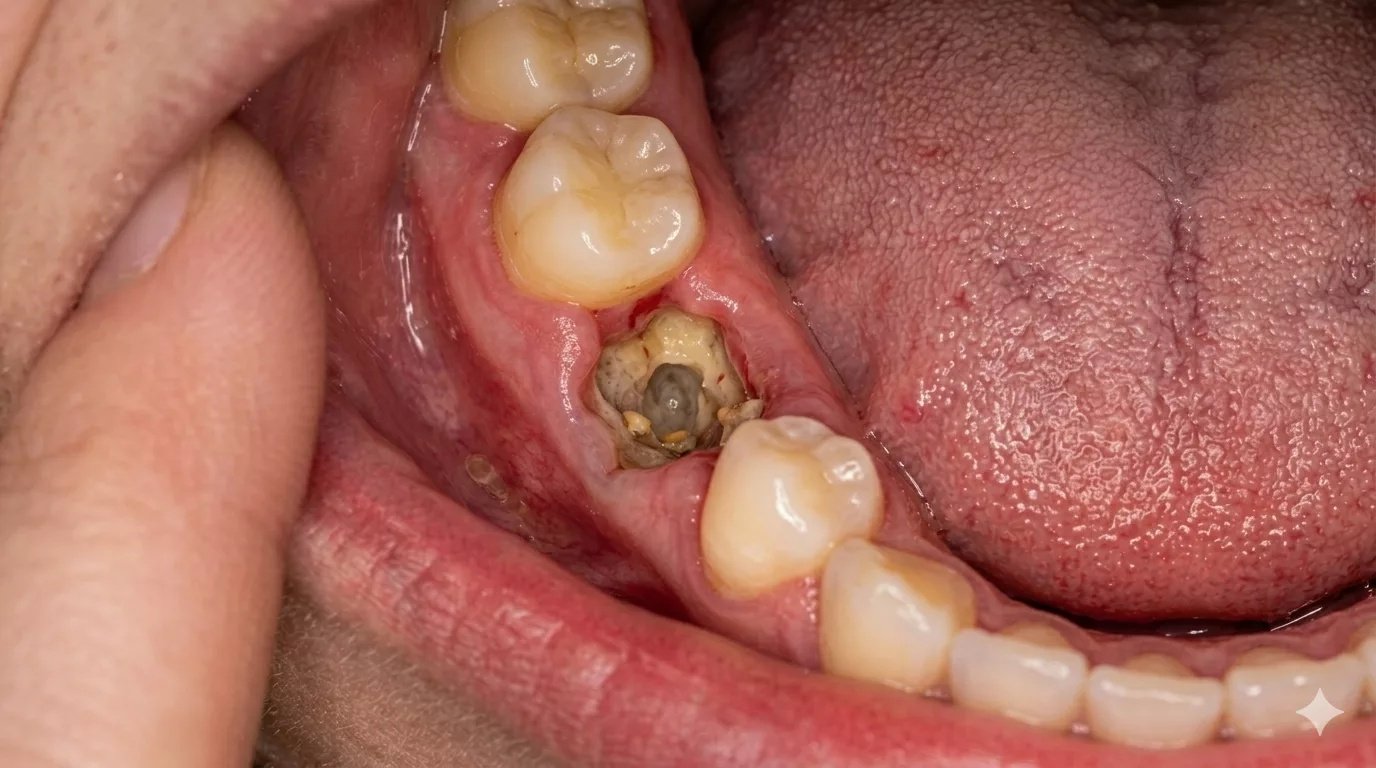
Dry Socket After Dry Socket, also known as alveolar osteitis, alveolalgia, localized osteitis, fibrinolytic osteitis, or alveolitis sicca dolorosa, is a dental condition characterized by pain in the extraction site following tooth removal. A dry socket develops when the blood clot (which normally forms after a tooth extraction) gets removed or dissolved before the wound has healed. This leads to exposure of the underlying bone, resulting in severe pain due to inflammation and nerve irritation. Dry sockets are prevalent in third molar extractions. The overall prevalence ranges from about 1–5% in routine extractions and can increase to 5–30% in third molar extractions, although higher rates have been reported in specific high-risk studies.[1]
In most cases, the condition heals itself, but as it is a very painful disorder, most patients seek dental help. Dentists provide symptomatic relief and manage the condition with conservative measures.
Healthy Socket Vs Dry Socket: Dry Socket After
To understand the development of a dry socket, it is important first to understand what happens normally after an extraction.
After a dentist pulls out your tooth, a blood clot forms in the remaining void/space, known as the socket. This blood clot contains the cells needed for natural healing. The blood clot mainly contains platelets, red blood cells, and white blood cells (to prevent infection). Moreover, there are specialized cells that include:
- Endothelial cells play a role in forming new blood vessels (angiogenesis) to support the growth of new developing tissue.
- Mesenchymal cells induce fibroblast proliferation (an increase in cell number).
- Fibroblasts are cells that produce the protein collagen. This protein is the building block for connective tissue structures that eventually close off the wound. Studies show that fibroblasts play an important role in collagen deposition and wound healing after extraction.[2]
In a dry socket, increased fibrinolytic activity leads to premature breakdown of the blood clot, preventing normal healing.

Presentations of a normal (healing socket) on the top left and a dry socket on the right.
Clinicians note that in some cases, the dark scab gets removed. The area of tooth removal appears white due to exposure of the underlying socket bone. The absence of clot delays the process of healing and leads to the development of symptoms.
Symptoms And Signs Of A Dry Socket
A dry socket can cause a significant amount of discomfort. Patients notice the following symptoms associated with alveolar osteitis:
Pain
The pain intensity associated with a dry socket is high. Some patients suffer from pain in the oral region, while others notice facial pain. Severe pain sets in around 1-5 days after extraction. Most patients report onset of symptoms between 24 (1 day) and 72 hours (3 days) post-extraction.[3] Usually, the pain is felt around the site of extraction, and it increases from its onset on the first day to the third day.
Several patients notice pain radiating from the jaw to the head and neck region. This symptom can make matters worse for the patient. The persistent discomfort makes patients visit a dental clinic multiple times. There have been case reports of alveolar osteitis pain radiating from the left preauricular area (front of the ear) to the orbit (eye) and zygoma (cheek).
Halitosis (Bad Breath)
Another common feature of alveolalgia is foul smell from the mouth. An unpleasant taste often accompanies the bad breath. According to a detailed study, the most common symptoms of the disorder include severe/radiating pain (towards the ear/temporal region), gum inflammation, low-grade fever, halitosis, and grayish discharge.[4]
Experts believe that the bad smell is attributed to the accumulation of food, debris, and bacteria in the open wound. The unhealed socket serves as a breeding ground for the bacteria that ferment on the trapped food particles. This potentially leads to pus discharge and foul smell from the mouth.
Gum Inflammation
You might also notice some gum inflammation along the site of a dry socket. It is believed that the dislodgment of the clot can irritate the neighboring gums and lead to inflammation. The swollen gum can become infected, too.
Clinical Course of Dry Socket
Dry socket does not have formally defined stages, but it typically follows a predictable clinical course. The initial/early stage (24-48 hours after extraction) is characterized by a failure to form a proper/retained blood clot.
2-3 days post-extraction (onset stage), you notice the onset of symptoms, and many patients are perplexed by the worsening pain (that actually should be subsiding by now). Some individuals may also notice swelling in the jaw/facial region.
In the acute phase (3-5 days), you will notice peak severity of pain. At this point, you can notice the socket is empty with white/yellowish bone peeking through the wound. The symptoms of pain and halitosis are caused by exposed bone and nerves.
The healing phase usually begins 7-10 days after extraction and is achieved with professional dental intervention and proper home care of the wound. Final closure of the wound takes place by the end of this phase.
Complications Of Dry Socket
In rare instances, alveolar osteitis can lead to infection of the bone and surrounding tissues. Osteomyelitis (bone infection) of the jaw presents with severe pain and swelling. Patients also report fever and fatigue.
It is important to note that dry socket is primarily an inflammatory condition rather than an infection, although secondary infection can occur in some cases.
How Do You Get A Dry Socket?
Multiple factors can contribute to premature dislodgement/dissolution of the blood clot. The exact mechanism of how it happens is still unknown. However, researchers have identified several risk factors that increase your propensity to develop a dry socket.

Risk Factors
Factors associated with fibronolytic osteitis include:
Trauma:
A potential cause of a dry socket is traumatic tooth extraction (especially mandibular molars). In long surgeries and traumatic extractions, there is prolonged bleeding during the whole procedure, which can result in a lack of blood clot in the socket at the end. Therefore, surgical trauma is identified as a significant risk factor.
A 2024 study concluded that dry socket is a multifactorial condition, greatly influenced by factors like longer procedures and the presence of surgical accidents (due to the surgical complexities of the procedure).[5]
Operator experience and surgical technique can also influence outcomes, as more difficult extractions are associated with a higher risk.[6]
Clot Dislodgement:
Numerous patient activities and factors can increase your chances of getting alveolar osteitis. The most prevalent causes are discussed below:
Smoking:
Plenty of studies have shown a direct link between tobacco smoking and dry socket. As per the latest reports, the overall incidence of dry socket in smokers was found to be 13.2% as compared to the 3.8% in non-smokers.[7]
The more than threefold increase in odds of getting the disease is attributed to different reasons. One factor is that the mechanical act of physical suction (on a cigarette, vape, or pipe) after extraction creates negative pressure in the mouth and pulls the blood clot out of the socket.
A very high risk of the bone condition is observed in diabetes patients who are habitual smokers, as both these conditions negatively affect the healing potential of the body.[8]
Vigorous Rinsing:
Dentists across the globe instruct patients to avoid mouthrinses (for 24 hours) following an instruction. Failure to do so increases your risk of dislodging the blood clot with the excessive pressure created during rinsing. Studies show that higher compliance with a doctor’s instructions evidently reduces the risk of alveolar osteitis.[9] Many dentists advise mouthwash rinses 24 hours after the extraction. Performing these rinses early on and vigorously can land you in trouble.
Using A Straw:
In order to pull liquid via a straw, you need to create a suction force in your mouth. This suction force has the potential to dislodge your blood clot, leading to an open alveolus.
Hot Food/Beverage Consumption:
Consuming hot foods and beverages soon after a tooth extraction can lead to alveolar osteitis. It is believed that heat can disrupt the clotting process, increasing blood flow to the area and potentially leading to clot removal. Therefore, you should avoid hot beverages like soup, tea, and coffee for about 24-48 hours after an extraction.
Poor Oral Hygiene:
A patient’s oral hygiene status doesn’t directly impact post-extraction bone healing. However, researchers have noticed that a significant number of dry socket patients have poor hygiene. Individuals with bad hygiene generally have greater post-extraction complications due to prevalent periodontitis (gum swelling) and infection. Thus, it may be considered an indirect contributing risk factor.[10]
Medications And Therapy:
Certain medications, like estrogen and birth control pills, are known to increase your chances of getting alveoalgia. It is believed that these drugs increase the fibrin degradation (fibronolysis), which can lead to premature dissolution of the clot and consequent exposure of bare bone.
Chemotherapy for malignant cancers delays socket healing but is not directly associated with dry socket occurrence. While extractions can be performed safely in such patients, the performing surgeon should be aware of the healing delays.[11]
Diabetics and anemics have a higher likelihood of falling prey to post-extraction complications like dry socket.[12]
Dry Socket Diagnosis
Your history of symptoms makes the diagnosis of dry socket easier for the dentist. The onset of severe pain a couple of days after extraction most probably indicates alveolar osteitis. After history, the dentist performs a physical examination of the site to observe the bare (white) bone in the socket, which is devoid of a black scab. Sometimes, your dentist will take periapical (dental) X-rays to confirm that there are no remaining fragments of tooth causing the problem.
Dry Socket Treatment
The main aim of treatment is to alleviate the pain and allow the socket to heal normally. Patients can try some home remedies to heal the wound.
Dry Socket Self-Care
You can try some simple home remedies like applying cold/ice packs on the cheek along with OTC pain killers (diclofenac, naproxen, ibuprofen, etc.) to reduce symptoms (of pain and swelling). Gentle warm rinses with water can soothe socket pain. However, supportive care may only help reduce discomfort, and professional dental treatment is essential for proper management.
Management Of A Dry Socket
Dentists adopt different strategies to heal the wound, minimize associated complications, and alleviate symptoms. Several strategies have been used conventionally, but now we see newer strategies being incorporated for better outcomes. The most common and effective treatment therapies for a dry socket include:
Irrigation And Mechanical Curettage:
An important step in the healing of dry socket is irrigation. After analyzing it, your dentist will irrigate the wound with saline (or antibacterial mouthwash). This is followed by curettage, where the dentist scrapes the inside of the socket with a bone file to introduce fresh blood into the socket. The patient is then advised to follow the post-extraction instructions to preserve the blood clot. Re-establishment of the blood clot offers better pain control, enhanced healing, and fewer patient visits to the doctor.[13] Sometimes, doctors put a medicated dressing on the re-established blood clot to enhance outcomes.
Intra-Socket Dressing:
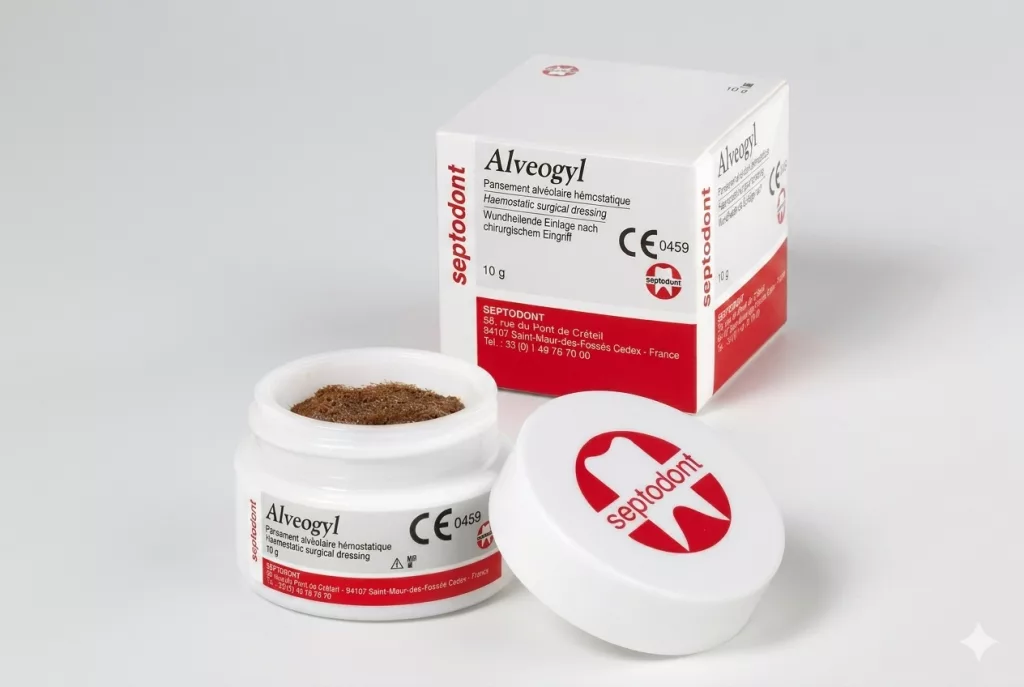
Dental dressings containing eugenol (a derivative of clove oil) are highly effective in treating alveolar osteitis. An efficacious dental preparation for dry sockets is alveogyl. It contains eugenol, iodoform, and butamben. Alveogyl is placed inside the refreshed socket. This resorbable material imparts antiseptic, wound healing, and analgesic properties. Alveogyl does a great job in fixing a dry socket.[14]
Antibiotic Therapy:
Exposed bone has a high risk of infection. Therefore, doctors frequently prescribe antibiotics. Oral antibiotics help manage the infection and symptoms. A 2026 clinical study found that even topical antibiotics are pretty effective in lowering pain and promoting healing. Clindamycin was found to be the best among the commonly prescribed drugs (like amoxicillin, ciprofloxacin, etc.).[15]
Pain Medicines:
Non-steroidal, Over-the-counter painkillers like naproxen, ibuprofen (Advil), and diclofenac are prescribed to manage symptoms of pain and swelling.
Regenerative Medicine:
Platelet-rich plasma (PRP) and platelet-rich fibrin (PRF) are the pillars of regenerative medicine that are being used for different types of wound healing. These materials are rich in growth factors that promote natural healing. PRF acts as an effective biomaterial that expedites healing, mitigates pain, and even lowers the incidence of alveolar osteitis.[16]
Laser Therapy:
Low-level laser therapy (LLT) or photobiomodulation is a type of therapy in which near-infrared light is used to stimulate healing. Photobiomodulation paired with curettage and alveogyl dressing yields the best results.[17]
How Long Does Dry Socket Takes To Heal?
Your dry socket wound can heal within 7 to 10 days, provided that you take proper care and religiously follow your doctor’s instructions.
How To Prevent A Dry Socket?
By following these post-extraction instructions, you can minimize your chances of dry socket:
- Don’t rinse for 24 hours.
- Avoid the use of straw.
- Skip warm/hot beverages for 24 hours.
- Don’t smoke cigarettes or use tobacco for 2 days.
- Stick to a softer diet.
- Strictly follow your dentist’s instructions.
Final Word
Dry socket is a painful condition that arises in the bone socket (alveolus) after the extraction of a tooth. Commonly seen in the mandibular molars, alveolar osteitis arises when a blood clot that forms in the tooth site after extraction gets dislodged/dissolved. This leads to exposure of the bare bones and nerves. Patients experience facial pain, radiating pain, halitosis, and pus discharge (if it gets infected) 1-4 days after extraction.
The exact mechanism of dry socket is unknown, but several risk factors contribute to it. Vigorous rinsing, smoking (tobacco use), consuming hot beverages, and using a straw can increase the likelihood. Prolonged surgeries and surgical trauma also increase the risk. Women taking birth control pills and individuals undergoing chemotherapy for cancer also have a higher chance of osteitis.
Dentists manage it by prescribing antibiotics and painkillers. Most dentists perform curettage of the wound (remove any debris/food particles) and irrigate it with saline. This is usually followed by the placement of an eugenol dressing in the wound. Alveogyl is an effective preparation that gives the best results when paired with mechanical curettage and irrigation. Modern regenerative therapies (PRP, PRF) and laser therapies yield promising results.
References
[1] Tandon, P., Sahoo, S. K., Mohanty, L., Jain, N., Hittalamani, V., Kamble, S. S., & Singh, R. (2024). Dry socket prevalence and risk factors in third molar extractions: a prospective observational study.Cureus,16(3).
[2] Bucur, M., Constantin, C., Neagu, M., Zurac, S., Dinca, O., Vladan, C., … & Ionescu, E. (2019). Alveolar blood clots and platelet-rich fibrin induce in vitro fibroblast proliferation and migration.Experimental and therapeutic medicine,17(2), 982-989.
[3] Singh, P., Vaidya, R., & Mandal, S. (2025). Dry Socket: A Review of Etiology, Diagnosis, and Management.Oral Sphere Journal of Dental and Health Sciences,1, 73-79.
[4] AlHindi, M. (2017). Dry socket following teeth extraction: effect of excessive socket saline irrigation.J Oral Health Dent Sci,1(1), 2-5.
[5] Cardoso, R. B., Soto, V. C., Gonçalves, R. C. G., Pedroso, A. M., de Oliveira Jabur, R., & Bortoluzzi, M. C. (2024). Prevalence and factors associated with dry socket following routine dental extractions.Medicina oral, patologia oral y cirugia bucal,29(3), e408.
[6] Suri, N., Dutta, A., Siddiqui, N., Kaur, K., & Jangra, D. (2021). A literature review on dry socket.dentist,15, 20.
[7] Kuśnierek, W., Brzezińska, K., Nijakowski, K., & Surdacka, A. (2022). Smoking as a risk factor for dry socket: a systematic review.Dentistry journal,10(7), 121.
[8] Ealla, K. K. R., Ramalingam, K., Soorneedi, N., Vanam, R., Veeraraghavan, V. P., & Peddapalegani, P. (2025). Incidence of Dry Socket in Patients Undergoing Tooth Extractions: A Retrospective Study.African Journal of Biomedical Research,28.
[9] Saleem, A., Khaleeq, N., Saleem, T., Khanum, N., Rehman, K., & Kibria, Z. (2025). Patient Compliance to Post-extraction Instructions in Prevention of Alveolar Osteitis (Dry Socket): A Cross-sectional Study.
[10] Rakhshan, V. (2018). Common risk factors of dry socket (alveolitis osteitis) following dental extraction: A brief narrative review.Journal of stomatology, oral and maxillofacial surgery,119(5), 407-411.
[11] Akashi, M., Kishimoto, M., Kusumoto, J., Yakushijin, K., Matsuoka, H., & Komori, T. (2018). Delayed socket healing after dental extraction in patients undergoing myelosuppressive chemotherapy for hematological malignancy: incidence and risk factors.Journal of Oral and Maxillofacial Surgery,76(10), 2057-2065.
[12] Sajjad, B., Abbas, Z., Mehdi, A., Nensey, A., Minallah, S., & Anjum, Z. (2025). Prevalence and risk factors of dry socket among diabetic patients following tooth extraction: a cross-sectional study.Rehman Journal of Health Sciences,7(2), 136-145.
[13] Manzoor, S., Khan, M., Shakeel, S., Ullah, A., & Ahmad, T. (2024). OUTCOME OF RE-ESTABLISHMENT OF BLOOD CLOT AND ZINC OXIDE EUGENOL DRESSING FOR MANAGEMENT OF DRY SOCKET IN TERMS OF PAIN.JOURNAL OF KHYBER COLLEGE OF DENTISTRY,14(02), 7-10.
[14] Maulida, A. I., & Kusumastiwi, R. P. O. (2024). Successful management of dry socket with Alveogyl following posterior mandibular tooth root extraction: A case report.Crown: Journal of Dentistry and Health Research,2(2), 151-160.
[15] Martelli, M., Miranda, M., Stelitano, G., Italia, L., Attanasio, S., D’aurelio, A., … & Rosa, A. (2026). Efficacy of local antibiotics in treating dry socket: systematic review and meta-analysis.Annali di stomatologia,17(1), 40-50.
[16] Laforgia, A., Inchingolo, A. D., Riccaldo, L., Avantario, P., Buongiorno, S., Malcangi, G., … & Dipalma, G. (2024). The use of Platelet-Rich fibrin (PRF) in the management of dry socket: a systematic review.International Journal of Molecular Sciences,25(18), 10069.
[17] ALHarthi, S. S., Ali, D., Alamry, N. Z., Alshehri, M. K., Divakar, D. D., & BinShabaib, M. S. (2023). Photobiomodulation for managing “Dry Socket”: a randomised controlled trial.international dental journal,73(2), 267-273.