

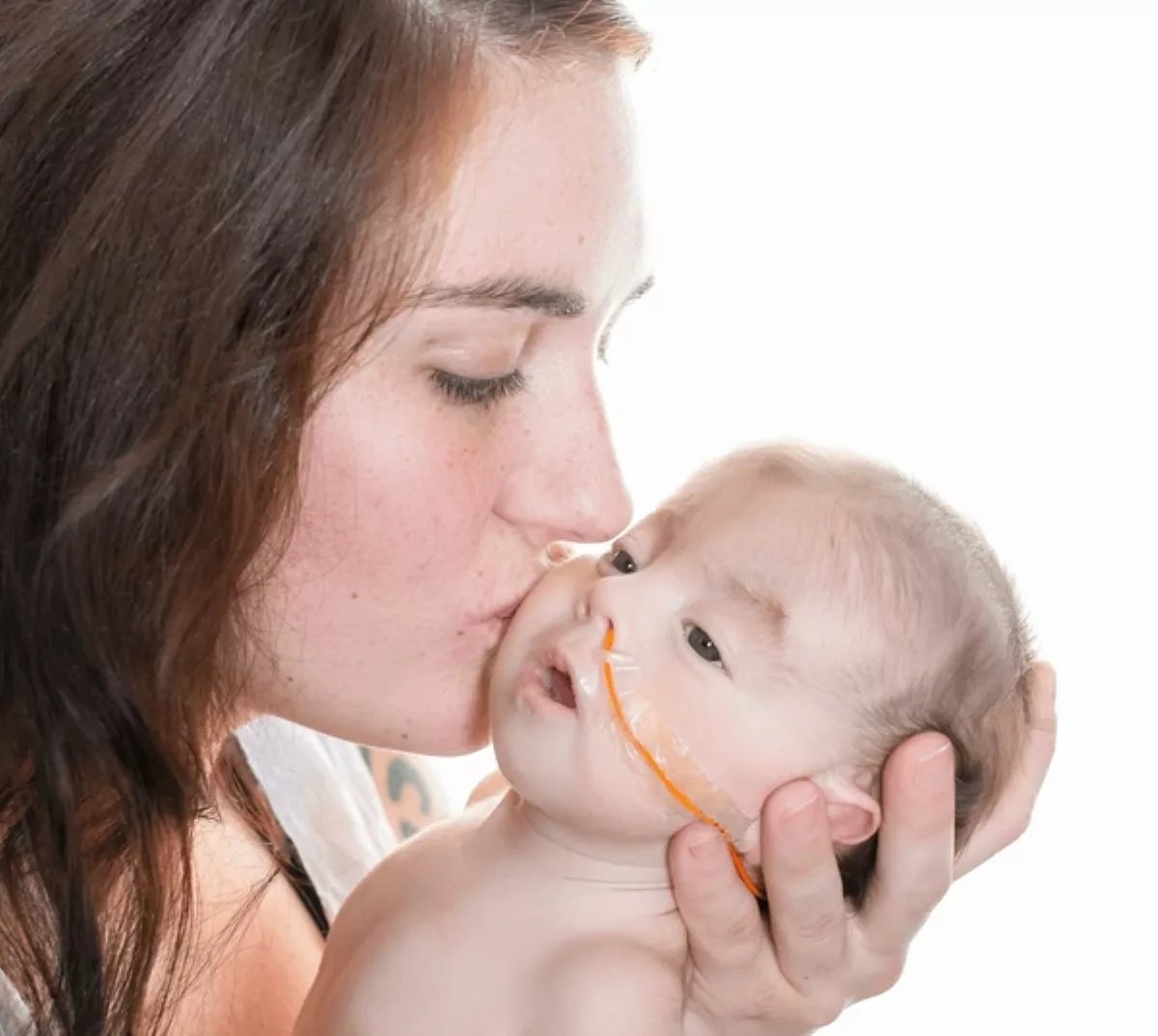
What Is Edwards Syndrome?: Edwards Syndrome Complete
Edwards Syndrome Complete Edwards syndrome is a severe genetic disorder that affects the growth and development of a baby both before and after birth. It is also called trisomy 18 or Edwards’ disease because British geneticist John Hilton Edwards discovered it in 1960 while studying an infant with multiple birth defects and developmental problems. It has been among the most researched and most severe chromosomal disorders.
To be aware of what Edwards syndrome is, you need to have a general idea of how chromosomes work. The human body contains 46 chromosomes in every cell, organized into 23 pairs. These chromosomes carry all the genetic instructions the body needs to develop. In Edwards syndrome, the body has three copies of chromosome 18 instead of the usual two, which is why doctors call it trisomy 18. This additional genetic material interferes with the normal development and causes a tremendous spectrum of physical and intellectual complications.
Edwards syndrome affects about 1 in every 5,000 to 6,000 live births, and it occurs in roughly 1 in 2,500 pregnancies. Most of the affected fetuses, at least 95 percent, are not born to maturity, and the pregnancies frequently result in miscarriage or stillbirths. It is the second most prevalent trisomy among all the chromosomal disorders after Down syndrome (trisomy 21).
Types of Edwards Syndrome
Edwards syndrome is not always the same case. It is of three types: complete trisomy 18, mosaic trisomy 18, and partial trisomy 18.
- Complete trisomy 18 is the most common one, with about 95 percent of all cases of Edwards syndrome represented by complete trisomy 18. In this type, all body cells have three copies of chromosome 18. It is the most severe with respect to symptoms, and the prognosis is the worst.
- In mosaic trisomy 18, only part of the cells possess the extra chromosome, with the other cells having the normal two chromosomes (that is, having two copies). This one is more likely to bring milder symptoms, yet the outcome is quite different among children. Mosaic trisomy 18 affects about 5 percent of cases.
- The rarest form is partial trisomy 18. In this type, one parent’s chromosomal translocation or inversion causes a segment of chromosome 18 to duplicate, resulting in Edwards syndrome in less than 2 percent of cases.
How Is Edwards Syndrome Inherited?
It is the question most common to all parents when they get a diagnosis, and the answer can be reassuring to some extent.
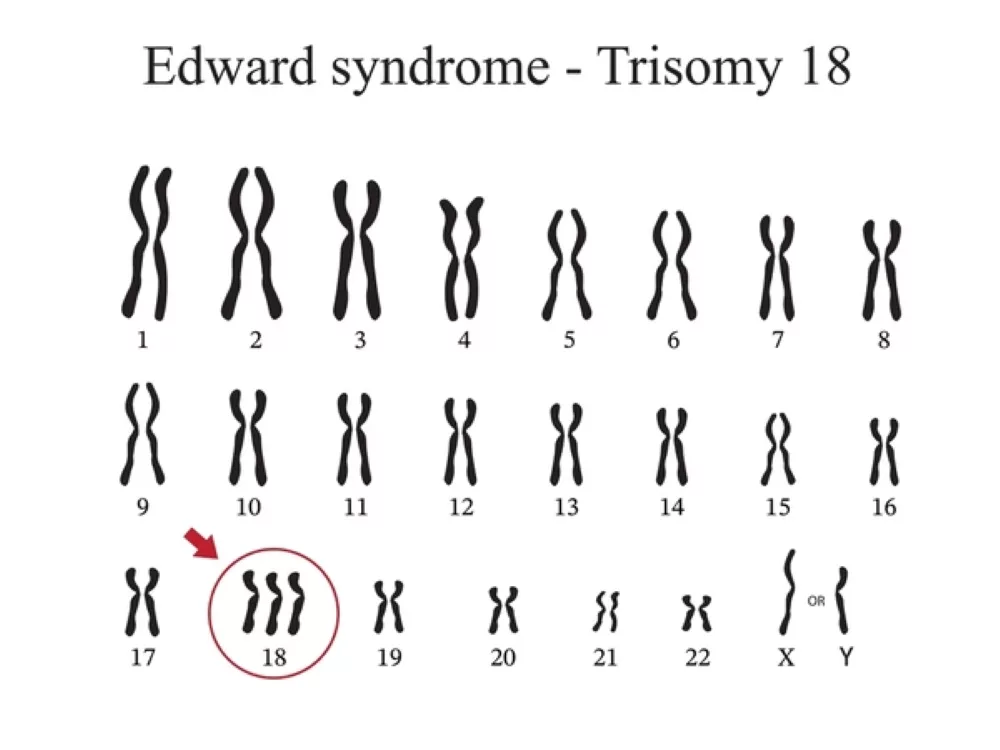
Edwards syndrome occurs when a baby has an extra copy of chromosome 18, a condition known as Trisomy 18.
- Edwards syndrome does not have a correlation with what you did before or during pregnancy. Most cases are not inherited and occur due to random chromosomal errors. The disease is the result of a random error in the development of an egg or sperm cell.l.
- The error occurs when chromosomes do not separate properly during cell division, resulting in an egg or sperm with an extra chromosome. When this combines with a normal cell during fertilization, the baby ends up with three copies of chromosome 18 instead of two.
- In rare cases, especially in partial trisomy 18, one parent may carry a chromosomal change like a translocation that leads to the condition. That’s why doctors often recommend genetic counseling.
- One risk factor is age. Women of all ages may give birth to babies with trisomy 18, but the higher the age of the mother, the higher the risk. The mean age of women giving birth to a child with this disorder is 32.5.
Recurrence
In terms of recurrence risk, the news is generally reassuring. When you have already had a baby with trisomy 18, the chances of having the other one are 0.5-1%. However, in rare cases, the risk can be higher. This happens when one of the parents carries a chromosomal rearrangement called a translocation. In such situations, the chance of recurrence may be as high as 20%. Families with a previous diagnosis should receive genetic counseling.
Signs and Symptoms
Edwards syndrome signs may manifest before birth and become more pronounced after birth. Because the extraneous chromosome interferes with multiple physiological systems, the spectrum of features is broad.
During Pregnancy
Some warning signs can be detected during a routine ultrasound by doctors:
- Fetal growth restriction
- Low levels of fetal movement
- Excess amniotic fluid or polyhydramnios
- A small placenta
- The presence of choroid plexus cysts, which are small fluid pockets in the brain. These are usually benign but may be associated with chromosomal abnormalities.
Physical Features at Birth
The major clinical manifestations of the newborn period are prenatal growth retardation, typical craniofacial appearance, unusual hand position with overlapping fingers, nail hypoplasia, short sternum, and severe malformations, especially in the heart.
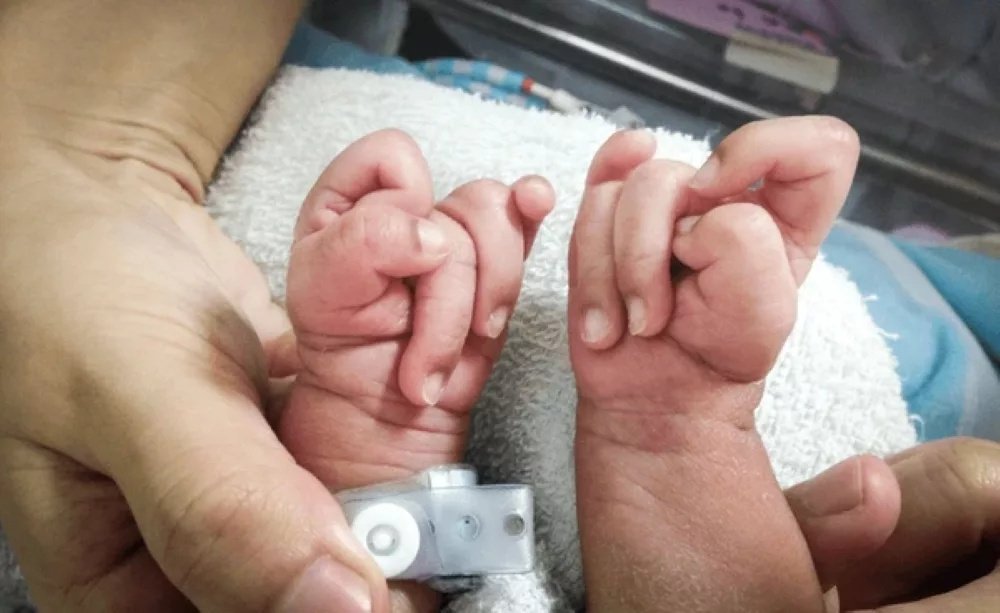
Clenched fists with overlapping fingers are a characteristic physical feature seen in babies with Edwards syndrome.
Babies with Edwards syndrome often show the following physical characteristics:
- A small head (microcephaly) with a prominent back portion
- Low-set or malformed ears
- A small jaw and a small mouth
- Clenched fists and fingers intertwined.
- Deformed feet are called rocker-bottom feet because of their shape.
- Short sternum (breastbone)
- Underdeveloped fingernails
Organ-Related Complications
Edwards syndrome is medically serious due to its internal complications. The major involved organ systems are in a table below:
| Organ System | Common Problems |
|---|---|
| Heart | Ventricular septal defect, atrial septal defect, patent ductus arteriosus, andtetralogy of Fallot. |
| Brain and nervous system | Choroid plexus cysts,Dandy-Walker malformation, severe intellectual disability |
| Kidneys | Malformation, displacement. |
| Digestive system | Esophageal atresia,omphalocele(intestines outside the body) |
| Muscles and joints | Joint contractures, arthrogryposis |
| Hearing and vision | Hearing impairment, eye defects |
The heart issues are experienced in almost all instances of Edwards syndrome. This is among the major causes as to the reason why the condition’s being so life-threatening during the newborn period. Respiratory complications, feeding difficulties, and recurrent infections are also common and contribute significantly to morbidity and mortality.
Diagnosis: Before and After Birth
With the development of prenatal screening, most instances of Edwards syndrome are now diagnosed in pregnancy.
Prenatal Screening
A combined test (that is, a blood test and ultrasound scan) is also provided between 10 and 14 weeks of pregnancy. In case of a missed test, a quadruple blood screening test can be ordered between 14 and 20 weeks.
Blood markers also play a role. Maternal serum screening can indicate decreased levels of alpha-fetoprotein, human chorionic gonadotropin, and unconjugated estriol. These findings, along with increased nuchal translucency on ultrasound, raise suspicion for trisomy 18.
More recently, Non-invasive prenatal testing (NIPT), which analyzes fetal DNA in maternal blood, is widely used. Though useful, it is not diagnostic.
Confirmatory Testing
Confirmatory tests are offered in case of alarming screening tests:
- Amniocentesis: The procedure is performed between the ages of 15 and 20 and entails a sample of the fetal amniotic fluid to study fetal chromosomes.
- Chorionic villus sampling (CVS): This is performed during the first trimester, and it entails the removal of a sample of a small part of the placental tissue to be analyzed chromosomally.
Both tests have a slight risk of miscarriage, and parents will be encouraged to make a prudent choice.
After Birth
Once your child is born, a medical professional will scan the heart of the baby through ultrasound, and as a result, any heart conditions will be diagnosed and addressed. A complete blood karyotype will assist in supporting the diagnosis and identifying the type of trisomy 18.
Edwards Syndrome Life Expectancy
The life expectancy of Edwards syndrome is one of the hardest topics to discuss, and the families and clinicians require correct information.
In the majority of cases, the prognosis of full trisomy 18 is extremely low. Nearly all pregnancies that carry Edwards syndrome are aborted or stillborn.Approximately 50 percent of infants die within the first week of life, and around 90–95 percent do not survive beyond the first year.
An American multistate study (over 1,100) on children with trisomy 18 found 78.1% survival on the first day, 37.2% survival after 28 days, and 12.3% survival after 5 years.
However, it is worth adding that not all types of outcomes are the same. There is an improved prognosis for children who have mosaic or partial trisomy 18. Babies born with the mosaic or partial trisomy 18 might experience fewer health symptoms, and some will mature to be adults. Cases of mosaic trisomy 18 survivors into their teens, twenties, and beyond are documented, but they normally lead lives with serious medical and developmental impairments.
Survival is also dependent on the level of medical intervention. In some, but not all cases, cardiac surgery has been shown to increase survival in cases where it was used appropriately.
Treatment and Care for Edwards’ Syndrome
The treatment will focus on ensuring comfort, quality of life, and management of specific complications as they occur. Each care plan is specific.
Common components of treatment and supportive care include:
- Heart treatment: Surgery and treatment of defects of the heart in several instances.
- Nutritional care: Tube feeding can be suggested in situations when infants have problems with feeding.
- Respiratory care: Necessary respiratory care is given to some babies during the neonatal period.
- Therapy: Physiotherapy, speech therapy, and occupational therapy to assist development among children who survive past infancy.
- Palliative care: Comfort-based care must be the most helpful one to many families as it is done to avoid pain and suffering for the baby.
Parental prenatal counseling on fetal diagnosis must be thorough, such as addressing the different manifestations in the newborn. Management often involves ethical decision-making regarding the extent of medical intervention, with care individualized for each family. Family support groups are beneficial to the parents.
Can Edwards Syndrome Be Prevented?
It is one of the questions that nearly all parents ask. Is Edwards syndrome preventable? The answer is no. Edwards syndrome is a genetic condition and is not preventable. It is usually not inherited and has no known link to parental behavior.
Yet, with certain measures, early detection is possible:
- Prenatal screening: Despite the fact that it will not help avoid unpleasant results, early screening during pregnancy allows families to make critical decisions and predict the kind of medical care their baby will need.
- Genetic counseling: Genetic counseling is a practice that is recommended to families who have had a prior pregnancy involving Edwards syndrome or to families who have had a translocation between their chromosomes to speak with a genetic counselor during or before a subsequent pregnancy.
- NIPT and diagnostic testing: The tools offer the most accurate and clear information to the families during the pregnancy and allow them to talk about further action with their care team.
The most acknowledged risk factor is the age of the mother, because of which older mothers are considered to be at risk, but it needs to be emphasized that young mothers can and do give birth to children with trisomy 18, too. No lifestyle change, supplement, or medical intervention has been demonstrated to reduce the risk.
Emotional Support for Families
When one is diagnosed with Edwards syndrome, it is a devastating experience, either during pregnancy or after birth. Parents tend to speak of grief, shock, confusion, and love simultaneously. It does not matter what way to feel.
The Trisomy 18 Foundation and the Chromosome 18 Registry and Research Society are support organizations that provide resources, community, and advice to families experiencing this experience. It is also a valuable source of support and practical guidance for communicating with other parents who have experienced the same situation.
Medical teams also play a vital role. Parents need to be given the proper survival rates and comorbidity rates by clinicians, and expectant parents ought to be informed of all management options available at the neonatal stage and beyond. The healthcare team must be honest and communicate compassionately at all levels.
Final Words
Edwards syndrome, or trisomy 18, is a chromosomal disorder that results from an extra chromosome (chromosome 18). It causes a broad spectrum of critical physical and developmental problems. Although no treatment is currently available, the prognosis for full trisomy 18 is poor. However, milder forms of the condition have a better prognosis. This is a condition that you cannot avoid. Even at the time, prenatal screening can be used to assist you in making informed decisions through early diagnosis. Above all, the families of this diagnosis deserve to get the right facts, to receive treatment with compassion, and to have significant support on the way.
References
[1] Savva GM, Walker K, Morris JK. The maternal age-specific live birth prevalence of trisomies 13 and 18 compared to trisomy 21 (Down syndrome).Prenatal Diagnosis. 2010;30(1):57–64.
[2] Cereda A, Carey JC. The trisomy 18 syndrome.Orphanet J Rare Dis.2012;7:81
[3] Baty BJ, Blackburn BL, Carey JC. Natural history of trisomy 18 and trisomy 13: I. Growth, physical assessment, medical histories, survival, and recurrence risk.American Journal of Medical Genetics. 1994;49(2):175–188.
[4] Fisher JM, Harvey JF, Morton NE, Jacobs PA. Trisomy 18: studies of the parent and cell division of origin and the effect of aberrant recombination on nondisjunction.American Journal of Human Genetics.1995;56(3):669–675. PMCID: PMC1801177.
[5]
[6] Gardner RJM, Sutherland GR, Shaffer LG. Chromosome Abnormalities and Genetic Counseling. 4th ed. New York: Oxford University Press; 2011.
[7] Embleton ND, Wyllie JP, Wright MJ, Burn J, Hunter S. Natural history of trisomy 18.Archives of Disease in Childhood – Fetal and Neonatal Edition. 1996;75(1):F38–F41.
[8] Pont SJ, Robbins JM, Bird TM, et al. Congenital malformations among liveborn infants with trisomies 18 and 13.American Journal of Medical Genetics Part A. 2006;140(16):1749–1756.
[9] Gil MM, Quezada MS, Revello R, Akolekar R, Nicolaides KH. Analysis of cell-free DNA in maternal blood in screening for fetal aneuploidies: updated meta-analysis.Ultrasound in Obstetrics & Gynecology. 2015;45(3):249–266.
[10] Akolekar R, Beta J, Picciarelli G, Ogilvie C, D’Antonio F. Procedure-related risk of miscarriage following amniocentesis and chorionic villus sampling: a systematic review and meta-analysis.Ultrasound in Obstetrics & Gynecology. 2015;45(1):16–26.
[11] Rasmussen SA, Wong LY, Yang Q, May KM, Friedman JM. Population-based analyses of mortality in trisomy 13 and trisomy 18.Pediatrics. 2003;111(4):777–784.
[12] Bruns DA. Caring for an infant/toddler with trisomy 18 in early intervention: a mother’s perspective.Infants & Young Children. 2015;28(2):143–158.
[13] Morris JK, Mutton DE, Alberman E. Recurrences of free trisomy 21: analysis of data from the National Down Syndrome Cytogenetic Register.Prenatal Diagnosis. 2005;25(12):1120–1128.
[14] Bruns DA, Foerster K. “We’re all in this together”: experiences of parents of children with trisomy 18 and trisomy 13.Intellectual and Developmental Disabilities. 2011;49(2):78–87.