

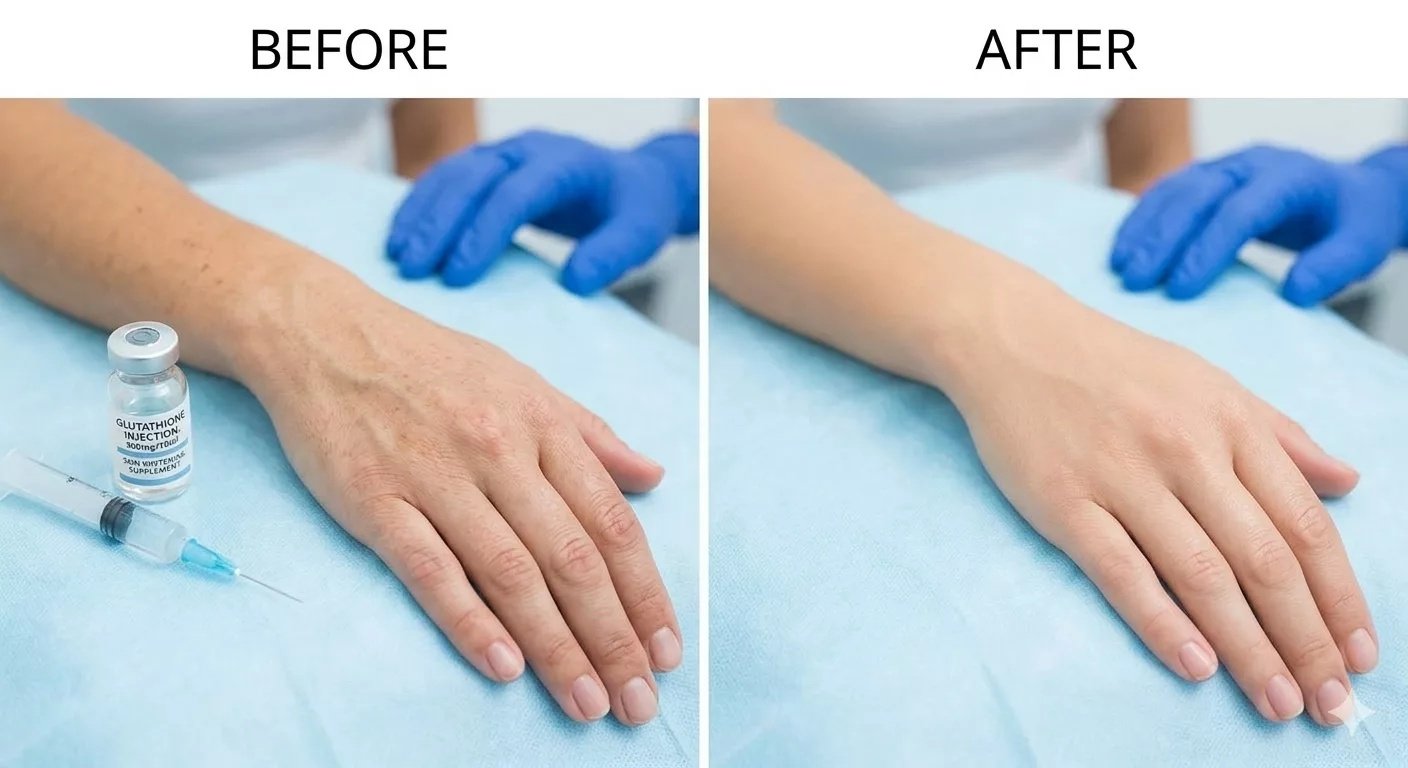
Glutathione Injections Benefits Over the past few years, glutathione injections have become a popular topic in beauty centers and healthcare clinics. Some people are interested in their beauty-related benefits, while others want them due to their anti-aging and detoxification properties. They are also believed to have a role in improving the energy level and immune system function, although strong clinical evidence supporting these effects remains limited.
Glutathione is a potent antioxidant that plays an important role in protecting cells from oxidative damage.[1] Some clinicians prescribe glutathione injections for medical use in certain diseases, while others recommend it for skin lightening. However, experts also show caution in the use of glutathione for cosmetic purposes. This is due to their potential for some serious side effects, such as an allergy, although they occur very rarely.
Now, to understand the whole debate, we need to step back a little and start from the very basics, such as what glutathione is, what it does, and what happens when its levels are changed in the body.
Introduction to glutathione: Glutathione Injections Benefits
Glutathione is a protective chemical that is normally present in almost all of our cells. Before we discuss more about glutathione, we need to understand free radicals and antioxidants.
What are Free radicals?
Free radicals are highly reactive and unstable molecules or atoms with at least one unpaired electron in their outermost shell.[2]
These substances are formed during our normal metabolism. However, they can also accumulate due to pollution, radiation, toxins, smoking, or unhealthy lifestyle habits.
If they accumulate in our tissues, they can cause damage to important cellular components such as:
- DNA
- Proteins
- Cell membranes
This process is known as oxidative stress. Free radicals also contribute to aging and diseases like cancer.[3]
However, free radicals have some good effects as well. For example, certain immune system components, such as neutrophils and macrophages, use it to kill pathogens and protect us from diseases.[4]
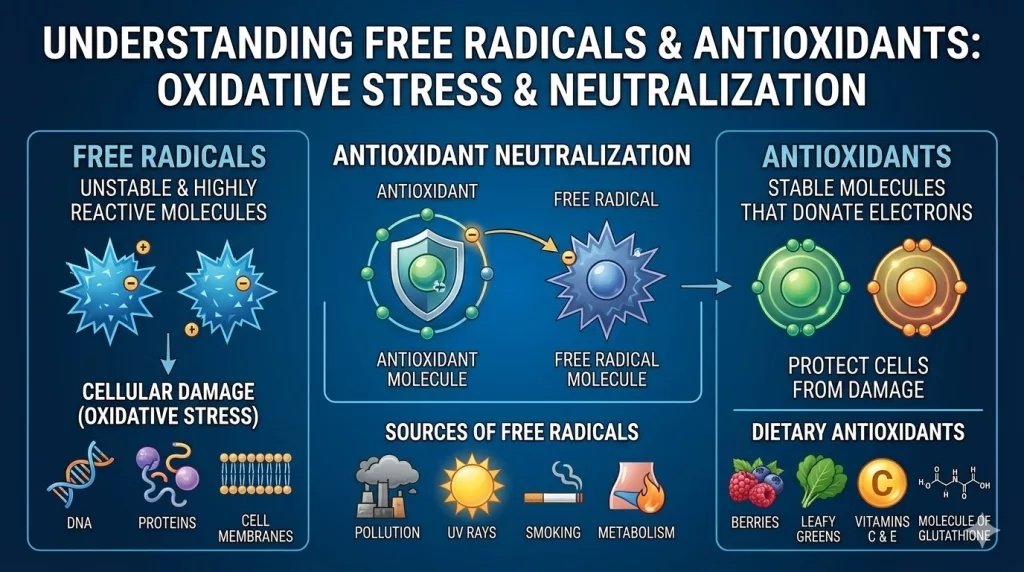
Free Radicals, Antioxidants, and their relation
What are Antioxidants?
Antioxidants are molecules that do the opposite of what free radicals do. They are substances that help neutralize free radicals and protect the cells from damage caused by free radicals.[5]
The Following are some of the important antioxidants that our body uses to fight oxidative stress.
- Glutathione
- Uric Acid
- Lipoic Acid
- Vitamin C and E
- Beta-carotene:
- Selenium
Although our body makes some antioxidants on its own, we must obtain many of them from food.
What is Glutathione?
Glutathione is a powerful and naturally occurring antioxidant. It is constantly used by our body cells to keep them functioning properly and protect them from damage due to free radicals.[6]
How does our body produce glutathione?
Our body makes glutathione from these three amino acids:
- Cysteine
- Glycine
- Glutamate

Structure of Glutathione
Almost all of our body cells make glutathione, but its production is significantly higher in liver cells. This occurs because oxidative stressors and toxic substances constantly affect the liver.[7]
Eating certain foods helps our body make sufficient glutathione. For example, garlic, onions, broccoli, and cabbage.
Forms of Glutathione Administration
When glutathione levels are low, our body may be more vulnerable to oxidative damage. This idea has led researchers to find out different ways that can boost glutathione levels, which include supplements and injections.
When someone takes regular glutathione (in tablet or capsule form), it goes into their digestive system. Most of that supplement is digested before it even reaches your bloodstream.[8] However, another study showed that its absorption is variable and may be limited, but it is not completely ineffective, as some studies suggest modest increases in body glutathione levels.[9]
Another option is liposomal glutathione, in which a layer of fat wraps the actual medicine that protects it from stomach enzymes and significantly improves its effectiveness.
Nowadays, glutathione injections are increasingly popular, and people seek them for skin brightening or rapid detoxification.
What are Glutathione Injections?
Glutathione injections are a form of glutathione administration directly into the body via a needle.
Doctors administer these directly in two ways:
- Intramuscular injection (IM) – injecting the drug into a muscle
- Intravenous infusion (IV) – injecting the drug directly into the bloodstream, which is more common than IM
They deliver the glutathione directly into the blood or muscle, thus avoiding the stomach’s notorious breakdown of drugs. This enables the drug to get quickly into the body without a reduction in the amount of drug.[10]
Also, a trained healthcare professional should administer glutathione injections, just like any other injection. It is important to use proper sterile techniques and dosing to avoid complications.
What are the effects of Glutathione in the Body?
Once injected, it can travel throughout the body and become available to various tissues. However, there is not much data available to precisely explain how glutathione works in our body. Experts propose the following mechanisms by which glutathione works in the various body processes.
1. Antioxidant Protection
The most commonly known function of glutathione is related to its role as an antioxidant. Glutathione neutralizes the free radicals before they can cause damage to our cells and DNA.[11]
2. Anti-Aging effects
Researchers consider oxidative stress an important factor in the aging process. As a person gets older, free radicals accumulate, which can cause changes to a person’s skin’s elasticity, cellular activity, and other tissue changes.
Because glutathione reduces oxidative stress, experts believe it can help a person age more healthily. However, there is still insufficient research to strongly state the anti-aging effects of glutathione.
3. Support for Detoxification
Glutathione plays an important role in the process of detoxification in the liver. When foreign substances such as toxins, pollutants, and drugs enter the body, the liver handles them.
The glutathione binds with these substances and helps the liver transform them into a form that can be safely excreted through urine or bile. For this reason, researchers sometimes refer to glutathione as the “detox molecule.”[12]
4. Possible Effects on Skin Pigmentation
Melanin is a pigment that gives darkness to our skin, hair, and eyes as they heavily depend on the concentration of melanin.
Glutathione is thought to influence pigmentation by:
- Inhibiting tyrosinase activity
- Shifting melanin production from eumelanin to pheomelanin
Because of this, it is used for skin lightening in some settings. Usually, it takes 4-6 weeks before you observe the whitening effects of glutathion injections. However, results vary from person to person, and they are not guaranteed. Additionally, this use is off-label, and current evidence is limited, inconsistent, and not approved by major regulatory authorities such as the U.S. Food and Drug Administration for cosmetic skin whitening.[13]
5. Immune System Support
Glutathione is known to support and regulate our immune system. Sufficient levels of glutathione may help our immune cells function better when an infection occurs.
6. Cellular Repair and Maintenance
When oxidative damage occurs, our body needs glutathione for the repair and maintenance of the cells. This helps us stay healthy against oxidative stress and toxic substances.
Because of all the good things that glutathione might do for our bodies, scientists continue to study it for the potential cure of many diseases.
What are the Benefits of Glutathione Injections?
There are different reasons why people consider getting glutathione injections. Some people seek glutathione for its medical benefits, while others focus on its cosmetic and beauty-related effects.
The following are the common causes of getting glutathione injections.
- Skin Brightening potential
- Antioxidant Protection
- Anti-Aging Effects
- Support the Immune System

Potential benefits of Glutathione injections
Potential Medical Uses of Glutathione Injections
Researchers are studying the potential usefulness of glutathione in various medical conditions that involve oxidative stress.
Some areas of interest include:
Parkinson’s Disease
In Parkinson’s disease, oxidative stress damages nerve cells. Researchers are looking for the potential usefulness of these injections in protecting the brain cells from oxidative damage.[14]
Liver Disorders
The liver detoxifies harmful chemicals into harmless compounds, and it needs glutathione in this process. It is believed that oxidative stress plays an important role in certain liver diseases.
Researchers are interested in seeing if an increase in glutathione levels can help in the management of liver disorders.
Diabetes and Metabolic Conditions
High blood sugar levels also increase oxidative stress in the body.
Similar to Parkinson’s and liver disease, researchers are hopeful of the role of glutathione in reducing this oxidative stress and protecting the blood vessels.
However, these uses are still under research, and no conclusive clinical recommendations exist for routine use.
What are the Risks and Side Effects?
Despite the fact that glutathione is naturally produced by the body, the injections may cause side effects. Most of the side effects of glutathione injections are mild and temporary.
Possible Short-Term Side Effects
Some people may experience the following short-term side effects:
- Headache
- Nausea
- Abdominal discomfort
- Mild allergic reactions
- Skin rash or itching
Side Effects Related to Glutathione Injections
When glutathione is given through the IV or IM route, additional risks may occur, such as:
- Pain or irritation at the site of injection
- Allergic reactions (the most severe side effect)
- Infection (if injections are not done under proper sterile conditions)
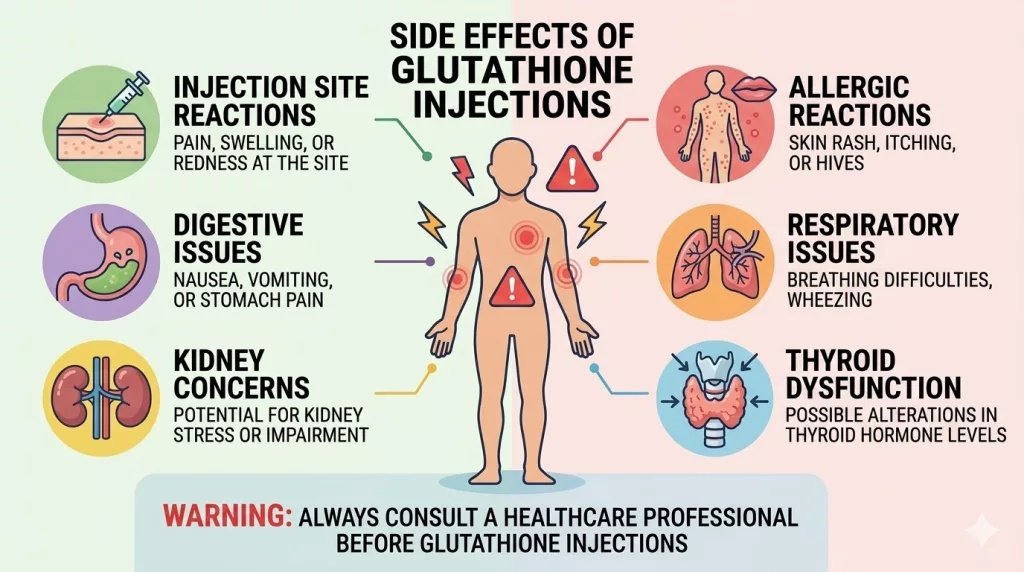
Potential side effects of glutathione injections
Potential Long-Term Concerns
If someone uses glutathione for long-term or in high doses, then there are chances for more significant side effects, such as:
- Kidneys problems
- Thyroid problems
- Bronchospasm (inhaled glutathione can trigger it)
Kidney and thyroid-related effects have been reported in some cases, but a direct causal relationship remains unclear due to limited evidence.
Risks From Unregulated Clinics
One of the main health risks of glutathione injections is receiving them in unregulated clinics. This is due to the improper use of the injections, which can be due to the following reasons.
- Incorrect dosages of the injections
- Improper storage of the injections
- Non-sterile injection techniques
These factors can increase the risk of infections or other complications.
That’s why medical professionals strongly recommend receiving injections only from qualified healthcare providers.
Are Glutathione Injections Safe?
Usually, moderate doses of glutathione injection under medical supervision are safe. It is important to take a complete medical history to determine the safety in individual cases.
- Healthcare professionals should properly monitor patients for severe side effects, such as allergic reactions.
- They should maintain aseptic conditions.
- They should adjust the dose of glutathione according to the patient’s specific condition and their requirements
Who Should Avoid Glutathione Injections?
Glutathione injections are not for everyone, and there are some individuals who should not be given it.
These include:
- Pregnant or breastfeeding women: There isn’t enough safety information available on glutathione injections in these cases; it is not recommended for them.
- People with asthma: There have been reports of glutathione injections triggering respiratory problems in sensitive people.
- Individuals with kidney disease: Since the kidneys filter toxins from the blood, people with kidney problems may be at increased risk of problems.
- Anyone with known allergies to glutathione or similar compounds
If someone is considering starting glutathione injection therapy, they should always consult a healthcare professional before starting it.
Are there Natural Alternatives to Boost Glutathione?
Yes, and for many people, relying on natural ways is actually the safest alternative. Our body already produces glutathione naturally. We just need to adopt certain behaviors to support the process of natural glutathione formation.
Foods that support glutathione production
- Sulfur is an important component of cysteine (one of the three amino acids required for the formation of glutathione). We need to eat foods that are good in sulfur to boost glutathione production. For example, broccoli, garlic, onions, cabbage, and cauliflower.
- Vitamin C is also important for healthy glutathione production. When our body uses glutathione, vitamin C helps to regenerate it. Foods rich in Vitamin C include oranges, strawberries, kiwi, bell peppers, and lemons.
- Selenium is a mineral that acts as a cofactor for glutathione peroxidase[15](the enzyme that actually uses glutathione to neutralize free radicals). Brazil nuts, sunflower seeds, eggs, and brown rice are rich in selenium.
Other factors that influence glutathione
- A regular exercise such as walking, swimming, or strength training activates the antioxidant system of our body and increases glutathione production.
- Taking enough sleep (7-9 hours) enables our body to maintain a good antioxidant balance.
- Alcohol depletes the body’s reserve of glutathione, especially in the liver.
- Stress is linked to reduced glutathione levels. Therefore, stress management is important for healthy antioxidant support.
Adopting these natural, good behaviors is not only risk-free but also supports our overall health and well-being.
Conclusion
Glutathione is one of the body’s major antioxidants that play a very important role in the protection of the body from oxidative stress. It also helps our body in the detoxification of toxins and in the regulation of our immune response.
It is for these reasons that glutathione injections have become part of both medical and aesthetic discussions. However, there is not enough data available to fully rely on it for these benefits. Researchers are still looking for its potential role in the treatment of certain diseases caused by oxidative stress.
Many people are interested in glutathione for its skin whitening effects. However, they should be aware that, like any medical prescription, glutathione injections also have some risks, especially if they are allergic to it.
In the end, all health-related decisions must be based on evidence rather than trends or quick promises. If you are considering glutathione injections, talk to your healthcare provider. He or she will be able to help you weigh the benefits against the risks in your specific case.
References
[1] Averill-Bates DA. The antioxidant glutathione. Vitam Horm. 2023;121:109-141.
[2] Galano A, Alvarez-Idaboy JR. Glutathione: mechanism and kinetics of its non-enzymatic defense action against free radicals.RSC Adv.2011;1:1763-1771.
[3] Sastre J, Pallardó FV, Viña J. Glutathione, oxidative stress and aging.GeroScience.1996;19:129-139.
[4] Devasagayam TP, Boloor KK, Ramsarma T. Free radicals and antioxidants in human health. Indian J Biochem Biophys. 2004;41:255-264.
[5] Halliwell B, Gutteridge JMC. Free radicals in biology and medicine. Oxford University Press. 2015.
[6] Averill-Bates DA. The antioxidant glutathione. Vitam Horm. 2023;121:109-141.
[7] Lu SC. Regulation of glutathione synthesis. Mol Aspects Med. 2009;30(1-2):42-59.
[8] Allen J, Bradley RD. Effects of oral glutathione supplementation. J Altern Complement Med. 2011;17(9):827-833.
[9] Richie JP Jr, et al. Oral glutathione supplementation. Eur J Nutr. 2015;54(2):251–263.
[10] Witschi A, Reddy S, Stofer B, Lauterburg BH. The systemic availability of oral glutathione. Eur J Clin Pharmacol. 1992;43:667-669.
[11] Forman HJ, Zhang H, Rinna A. Glutathione: overview of its protective roles. Mol Aspects Med. 2009;30(1-2):1-12.
[12] Lu SC. Glutathione synthesis and regulation in liver diseases.Mol Aspects Med.2009;30(1-2):42-59.
[13] Sarkar R, Yadav V, Yadav T, Mandal I. Glutathione as a skin-lightening agent and in melasma: a systematic review.Int J Dermatol.2025;64(6):992-1004.
[14] Mischley LK, Allen J, Bradley R. Glutathione deficiency in Parkinson’s disease: a review of the literature.Nutr Neurosci.2012;15(3):119-128.
[15] Brigelius-Flohé R, Maiorino M. Glutathione peroxidases.Biochim Biophys Acta.2013;1830(5):3289-3303.
For more information about Glutathione Injections Benefits, refer to the latest medical literature.