

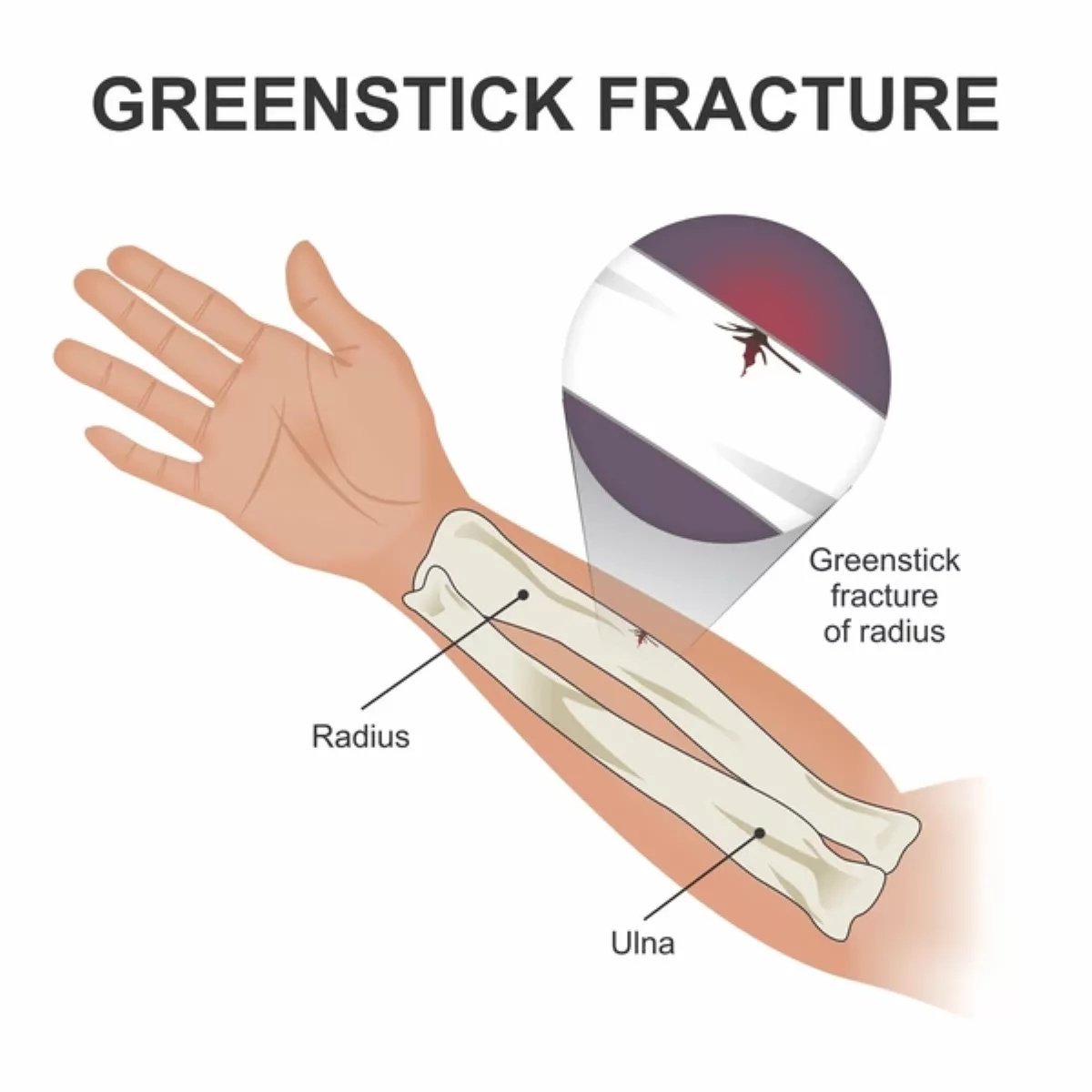
Greenstick Fracture Common A greenstick fracture is a type of bone fracture that typically occurs in children. As children have soft and flexible bones, they bend and break on one side and do not go through to the other side, just like a fresh twig. This pattern reflects the biomechanical properties of growing bone. These incomplete breaks generally heal well with a cast and require careful immobilization and a great deal of patience.
What is a Greenstick Fracture?: Greenstick Fracture Common
A greenstick fracture happens when a bone bends to such an extent that only the cortex and the periosteum are broken on one side of the bone, but they are intact on the other side. This results in an incomplete fracture pattern, which is distinct in the pediatric population.
The skeletal system of children is quite different from that of an adult. Most pediatric bones are less mineralized and contain a higher proportion of woven bone, which is more flexible than fully ossified adult bone. Also, the pediatric periosteum is more active, thick, and strong, and this significantly reduces the likelihood of open fractures and displacement of fractures.
These properties of child bones result in the special fracture patterns experienced by children, such as the greenstick fracture, torus fracture, and plastic deformation (bowing) injuries. These are bending injuries instead of full-thickness cortical ruptures.
Why Do Greenstick Fractures Occur in Children?
The reason why greenstick fractures almost always involve children is due to the following issues regarding bone structure and composition:
Bone Flexibility: The bones of children consist of more collagen matrix with fewer mature cross-links and more immature to mature cross-links. This renders their bones less brittle and more flexible than adult bones.
Periosteal Characteristics: In children, the periosteum is thicker, more active, and stronger. This coating will assist in avoiding total fracture and give stability in the healing process.

Illustration of bone anatomy demonstrating the periosteum and endosteum layers, which play key roles in bone growth, repair, and fracture healing. Credit: OpenStax College, Anatomy & Physiology, Connexions Web site (2013),CCBY 3.0.
Growth Plates: Pediatric long bones have open growth plates (physes) that make the bones flexible and have distinct fracture patterns as observed in children.
Bone Mineralization: The bones of children are less rich in ash (or hydroxyapatite) and tend to absorb and are more susceptible to plastic deformation instead of fracture.
All these factors work together to produce bones able to bend many times before fracture, and thus produce the typical incomplete fracture pattern of greenstick fractures.
Common Locations of Greenstick Fractures
Greenstick fractures may be found in any part of the diaphysis and metaphysis of long bones. The most affected bones are:
- Radius and Ulna (Forearm bones) – The most common location of greenstick fractures
- Humerus (Upper arm bone)
- Fibula (Calf bone)
- Tibia (Shin bone)
- Femur (Thigh bone) – Uncommon but possible in younger children
- Clavicle (Collarbone) – Less commonly affected compared to forearm bones
- Phalanges (Finger and toe bones)
The greenstick fracture of the distal radius is very likely to occur, especially when the fall is on the hand stretched out. Mostly, these fractures are mid-diaphyseal, where the lower leg and forearm are most affected.
Causes of Greenstick Fractures
A greenstick fracture happens when the force applied to the bone causes the bone to bend in a manner that the integrity of the convex surface is broken. The most frequent causes will be:
Falls: A fall is the most frequent cause of the greenstick fracture especially when a child extends their hand to stop a fall. Such a process is called FOOSH (Fall On Outstretched Hand).
Sports Injuries: A Greenstick injury can occur as a result of participating in sports and other recreational activities. These injuries are especially linked to activities that are at risk of falling or direct impact.
Motor Vehicle Collisions: Trauma as a result of car crashes may produce enough force, which leads to greenstick fractures.
Non-Accidental Trauma: Greenstick fractures may also be the result of child abuse, whereby the child is struck using an object.
Nutritional Deficiencies: Conditions such as vitamin D deficiency may increase fracture susceptibility by reducing bone mineral density, rather than directly causing greenstick fractures.
The healthcare provider must be alert when noting signs of non-accidental trauma, such as multiple injuries and bruises at various levels of healing that are not in line with the pattern of age-related injury.
Greenstick Fracture Symptoms
Greenstick fractures usually manifest with pain at the site of injury, which becomes worse during movement or when pressure is exerted on the site of injury. Depending on the extent of angulation and the bone that is affected, the pain can be moderate to severe. In most cases, swelling occurs around the area of the fracture several hours after the trauma, and parents can see that the limb is deformed or abnormally angled at the fracture site.
Common symptoms include:
- Pain that is nearly always found in the area being touched or palpated during inspection.
- There is limited but possible movement, which can be misleading and lead parents to underestimate the severity of the injury, unlike complete fractures, where movement is uncommon.
- Bruising or discoloration of the surrounding area of the injured region occurs because the blood vessels are ruptured in the process of the fracture.
- The impairment of the affected limb, where children tend to rest the affected limb in a protective position to reduce pain.
In forearm fractures, children can experience a problem rotating their wrist or holding onto objects. A snapping or cracking sensation at the time of injury may occur, but is not consistently reported, especially in younger children.
Diagnosis of Greenstick Fracture
Proper diagnosis of a greenstick fracture involves a comprehensive approach that includes history taking, physical examination, and imaging studies.
Clinical Presentation
The greenstick fractures are also characterized by local pain, swelling, and tenderness of the injury site. Children also complain of a recent fall or direct trauma to the injured extremity. As opposed to complete fractures, the limb can maintain some functionality, although movement is painful. There may be some visible deformity or angulation (especially when the fracture is accompanied by a lot of bowing of the bone).
Physical Examination
Diagnosis requires extensive physical examination. The doctor examines the fracture site, looking at point tenderness, swelling, and ecchymosis. Functional limitation is established by the range of motion test. Neurovascular examination is essential in eliminating related nerve or vascular injury.
Greenstick Fracture Radiology
Plain radiographs are still considered the gold standard in the diagnosis of greenstick fractures. The anteroposterior and lateral views of the affected bone are taken normally and include the joints above and below the injury.

Pediatric forearm X-ray demonstrating a greenstick fracture, where the bone bends and partially breaks on one side (indicated by red arrows). Credit: By Hellerhoff – Own work,CCBY-SA 3.0, via Wikimedia Commons.
The typical radiographic appearance shows cortical disruption on one side of the bone with intact but bent cortex on the opposite side. The fracture line does not extend across the full width of the bone.
Advanced Imaging: While not typically required for most greenstick fractures, additional imaging may be helpful in certain situations:
- CT Scan: Can clarify cortical involvement and provide detailed three-dimensional images if needed
- MRI: May reveal bone marrow edema and soft tissue injuries, confirming incomplete fractures and assessing surrounding structures
- Ultrasound: Becoming more frequent as an adjunct diagnostic tool, especially in pediatric emergency departments
Buckle Fracture vs. Greenstick Fracture
Both buckle fractures and greenstick fractures are incomplete fractures, which mostly affect children, as children have a more flexible bone structure, but the two fractures have many differences in their features and clinical manifestations.
| Feature | Greenstick Fracture | Buckle Fracture |
|---|---|---|
| Mechanism | Outcomes of a bending force/angulation force | Findings of axial loading (compression force) |
| Cortical Involvement | A discontinuity is seen on the convex side, with the consequent cortex being intact but curved | The bony cortex is compressed on one side, and the other cortex is intact |
| Radiographic Appearance | On one side visible fracture line with bowing on the other side | This presents itself as a bulging or buckling appearance with no full line of fracture through the bone |
| Stability | Unstable and can continue to displace even two weeks after the initial injury | Stable; does not need follow-up in a variety of situations |
| Location | It may occur in the diaphysis and the metaphysis. | Mostly found in the metaphysis adjacent to the growth plate |
| Treatment Complexity | May should be closed and reduced when angulated severely | Typically, the immobilization is only necessary |
| Healing Time | Approximately 4-6 weeks | Typically 3-4 weeks |
| Risk of Displacement | Higher risk of secondary displacement | Only limited chances of displacement |
Greenstick Fracture Treatment
The goal of treating greenstick fractures is to provide adequate alignment of bones, healing, and prevent complications. Depending on the severity and site of the fracture, the actual form of treatment varies.
Immediate Management
In the case of a greenstick fracture, immediate immobilization is best to prevent recurrent fracture, complete fracture, or displacement. In cases of severe angulation or a visible bend in the affected limb, the medical professional may be required to manually straighten the bone, a process known as closed reduction or setting the bone. This may be very painful, and hence, to make the child comfortable during the procedure, the child may be provided with pain medication (analgesics), sedatives, and sometimes general anesthesia.
Immobilization
Cast:
The majority of greenstick injuries are managed using a cast that performs two significant roles: to hold the bones in position during healing, and to stop the further fracturing of the already broken bone. The nature and length of the cast are determined by the location of the fracture. Short arm casts are used to treat distal fractures, whereas long arm casts are helpful in proximal fractures and may be changed to short arm casts during the middle of the healing in about three weeks. Long-bone greenstick fractures have an average immobilization of six weeks.
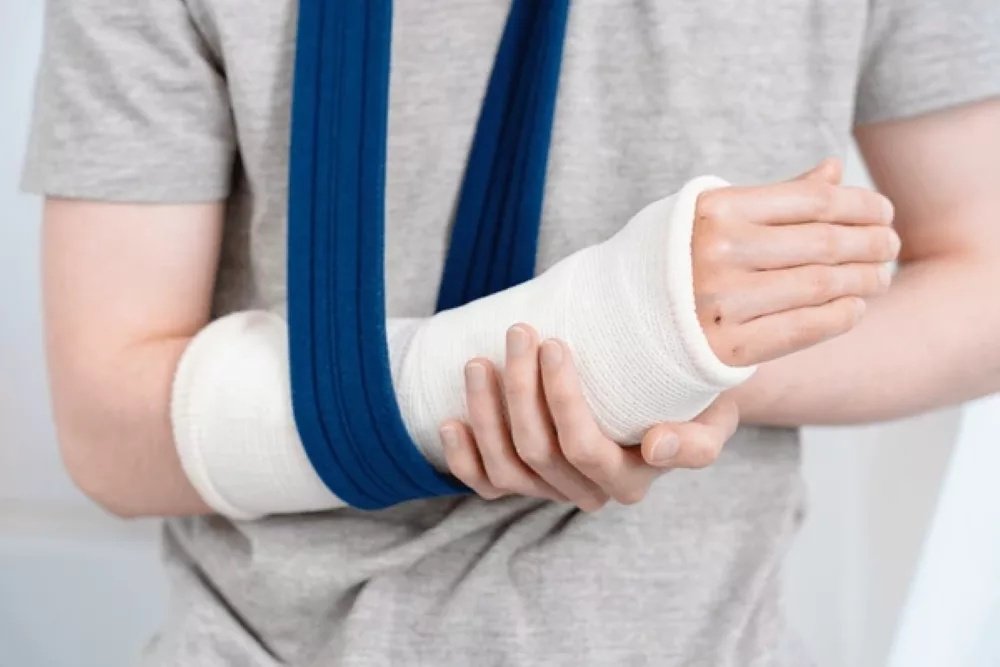
A patient wearing a white arm cast supported by a sling, illustrating immobilization and healing during recovery from a greenstick fracture.
Splinting:
In certain situations, particularly where the swelling is severe, the doctor may initially put in a splint or partial cast to permit the swelling to rest and then later replace it with a regular cast after a few days when the swelling has gone down. You can use a removable splint to treat less severe cases of greenstick fractures. The advantages of this option are that:
- It is more convenient for the child and family as they can remove it to have a bath.
- It is cheaper than the traditional casting, and
- It is easy to have the skin checked.
Nevertheless, the child must wear the splint as prescribed, or the bone will not heal well.
Pain Management and Follow-up
Acetaminophen, ibuprofen, or naproxen (pain killers) can alleviate pain in the healing process.
Care should be taken by parents in administering the doses as directed by the healthcare provider, and they also need to discuss with the healthcare provider the method of managing the pain.
The greenstick fractures do not often require surgery, though it may be necessary in severe instances where there is a lot of displacement or instability.
Follow-up is important, and initial X-rays are necessary within 7-10 days after applying the cast and constant monitoring up to cast removal of 4-6 weeks.
Greenstick Fracture Healing Time
Greenstick fractures have a relatively low healing duration depending upon several factors, though most children will be able to get relatively fast healing compared to complete fractures.
Typical Healing Timeline
Greenstick fractures heal in four to eight weeks, and most of them take four to six weeks to heal completely. A similar type of incomplete fracture, buckle fractures, can heal in three or four weeks. The factors affecting the healing time include:
- Age of the child
- The site and type of fracture.
- The other injuries in the child.
- The nutritional status of the child, and
- Adherence to the treatment guidelines.
Recovery Phases:
This process of recovery takes place in phases.
- Weeks one and two: The first stage of immobilization takes place during weeks one and two, where the swelling and pain start decreasing.
- The second to fourth weeks entail active healing in the bones, and the follow-up X-rays usually reveal the presence of callus in the bones.
- During the fourth, fifth, and sixth weeks, the process of bone consolidation goes on, and most casts are taken off during this time.
The entire recovery period ranges between six and twelve weeks. Return to unrestricted sports may take up to 10–12 weeks, after which your child can resume normal activities and sports.
Bone Remodeling
Remarkable bone remodeling ability is one of the major benefits of greenstick fractures in children. As the children develop, their bones may eventually reform themselves, fix small malalignments due to the fracture, and be able to adjust to changes in stress, which means that most children will not even have long-term functional limitations.
Conclusion
Greenstick fractures are a typical pediatric injury when the flexible bones become bent and broken. They widely occur in young children because their bones are more flexible and their periosteum is thicker. The diagnosis includes clinical testing and X-rays. The patient needs a period of four to six weeks of immobilization in a cast, and recovery is likely to be excellent. This is because of the excellent bone remodeling ability of the child, which corrects any minor deformities that would guarantee full recovery. However, early treatment, compliance with treatment, and preventive strategies such as supervision and safe play are very important. Children can normally resume normal activity with proper care without any complications in the long run.
References
[1] Lin YC, Wang WT. Greenstick fracture of the ulnar shaft following physical therapy in an adult: A case report. Medicine (Baltimore). 2020 Dec 11;99(50):e23730. doi: 10.1097/MD.0000000000023730.
[2] Berteau JP, Gineyts E, Pithioux M, Baron C, Boivin G, Lasaygues P, Chabrand P, Follet H. Ratio between mature and immature enzymatic cross-links correlates with post-yield cortical bone behavior: An insight into greenstick fractures of the child fibula. Bone. 2015 Oct;79:190-5. doi: 10.1016/j.bone.2015.06.002.
[3] Naranje SM, Erali RA, Warner WC Jr, Sawyer JR, Kelly DM. Epidemiology of Pediatric Fractures Presenting to Emergency Departments in the United States. J Pediatr Orthop. 2016 Jun;36(4):e45-8.
[4] Landin LA. Fracture patterns in children. Analysis of 8,682 fractures with special reference to incidence, etiology and secular changes in a Swedish urban population 1950-1979. Acta Orthop Scand Suppl. 1983;202:1-109. PMID: 6574687.
[5] Chasm RM, Swencki SA. Pediatric orthopedic emergencies. Emerg Med Clin North Am. 2010 Nov;28(4):907-26. doi: 10.1016/j.emc.2010.06.003.
[6] Al-Jasser FS, Mandil AM, Al-Nafissi AM, Al-Ghamdi HA, Al-Qattan MM. Epidemiology of pediatric hand fractures presenting to a university hospital in Central Saudi Arabia. Saudi Med J. 2015;36(5):587-592.
[7] Hassan M, Youssef EF, Mohamed AR, El-Dhaba AR, Abd Allah DS. Greenstick fracture: Healing Mechanisms, and Recommendations for Advanced Electrical-Mechanical Treatments Using Finite Element Analysis. ResearchGate. 2025 Apr 1. doi: 10.13140/RG.2.2.12345.67890.
[8] Randsborg PH, Sivertsen EA. Distal radius fractures in children: substantial difference in stability between buckle and greenstick fractures. Acta Orthop. 2009 Oct;80(5):585-9.
[9] Ting BL, Kalish LA, Waters PM, Bae DS, Nimec D, Michalsky M. Reducing cost and radiation exposure during the treatment of pediatric greenstick fractures of the forearm. J Pediatr Orthop. 2013 Apr-May;33(3):231-6.
[10] Plint AC, Perry JJ, Correll R, Gaboury I, Lawton L. A randomized, controlled trial of removable splinting versus casting for wrist buckle fractures in children. Pediatrics. 2006 Mar;117(3):691-7. doi: 10.1542/peds.2005-0801.
[11] Rai S, et al. Possibility of Avoiding Anesthesia in the Reduction of Greenstick and Angulated Forearm and Distal-End Radius Fractures in Children: A Comparative Study. Cureus. 2023 May 12;15(5):e38903.
[12] Korup LR, et al. Management of pediatric forearm fractures: what is the best therapeutic choice? A narrative review of the literature. J Orthop Traumatol. 2021 Nov 13;22(1):47.
For more information about Greenstick Fracture Common, refer to the latest medical literature.