

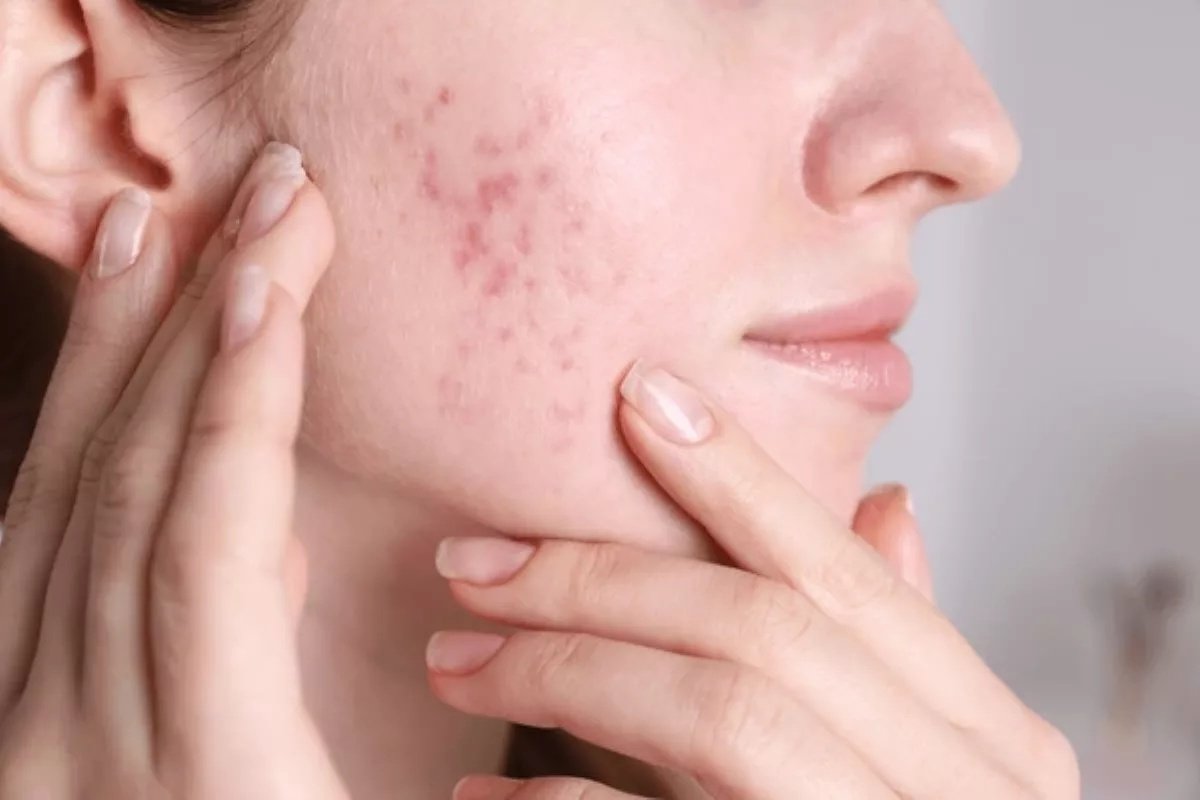
Get Rid Acne Acne is a skin disease that is the most prevalent worldwide, with as many as 85% of teens and a high number of adults having this skin disease. To most, the struggle is not just the breakouts. After pimples clear, they usually leave scars. Painful, obvious, and even deeply rooted, acne scars have been known to persist for years and significantly affect the self-esteem of an individual.[1]
It is good to know that contemporary dermatology has come a long way. Whether you are dealing with pitted skin, raised bumps, or flat dark marks, there are more effective options today than ever before.
Why Do Acne Scars Form?: Get Rid Acne
Not everyone who experiences acne will get permanent scars. Scarring arises when acne inflammation is severe enough to damage the skin and tissue beneath it. In repairing the damage, the body attempts to heal it by synthesizing collagen. If it does not secrete enough collagen, it leaves a depressed or sunken scar. A raised scar is formed when it is produced excessively.[2]
Popping, picking or squeezing pimples greatly exposes an individual to scarring. Individuals whose families have a history of acne scars, who have had severe or persistent acne, and those who did not receive treatment earlier are also at increased risk.
Understanding the Types of Acne Scars
It is also beneficial to know the type of scars you have before deciding which treatment to opt for. Acne scars are broadly classified into atrophic and hypertrophic/keloid scars, while post-inflammatory hyperpigmentation (PIH) (dyschromia) is not a true scar but a pigmentary change. Of these, 75-90% of them are atrophic scars.[3]
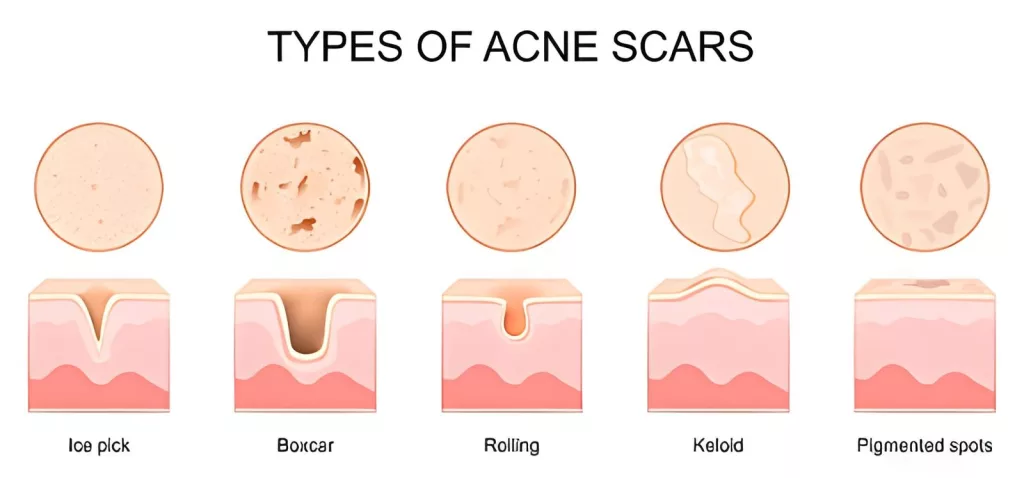
Common types of acne scars and how they affect skin texture
Atrophic Scars (Depressed/Sunken)
These are the most common types. They are located under the skin, and they are the result of loss of tissue. There are three main subtypes:
- The ice pick scars are sharp, deep, and narrow. They are noted as tiny holes or punctures in the skin, mostly so in the cheeks. The ice pick scars usually go deep into the dermis, and hence, they are not easily treated using traditional skin resurfacing.
- Boxcar scars have enlarged edges and are flatter and defined at the bottom. They may be superficial or deep, and they may appear on the lower cheek and jaw.
- Rolling scars are wide and provide the skin with a bumpy but uneven appearance. They are wide (usually >4–5 mm) and are undulated at the edges with sloping borders and a relatively normal skin base. Since they are tethered by fibrous bands under the skin, treatment should be more targeted at releasing these attachments.
Hypertrophic and Keloid Scars (Raised)
These develop when there is excess production of collagen in the healing process and cause a raised scar. In comparison to the keloid scars, hypertrophic ones do not expand beyond the region where the skin was initially damaged. By contrast, keloid scars extend beyond the original lesion and may appear firm, raised, and hyperpigmented. They are both more prevalent on the chest, back, and shoulders.
Dark Spots – Post-Inflammatory Hyperpigmentation
It is not a real scar, but one of the most frequently asked questions that people use the search engine to learn how to get rid of black spots caused by acne. They are dark and flat areas that remain behind once the pimple is healed. They are due to the overproduction of melanin by the skin due to inflammation.[4] These marks are more accurately referred to as post-inflammatory hyperpigmentation (PIH), not acne scars.
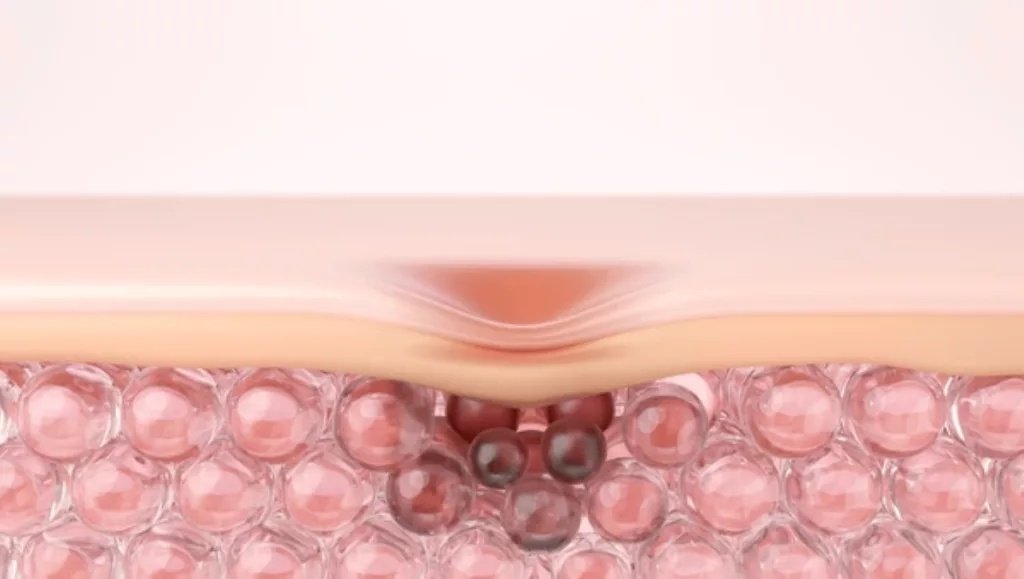
How acne scars form beneath the skin due to inflammation and melanin changes
Although hyperpigmentation is common to every person, individuals with dark skin and those who squeeze and pick their pimples are at the highest risk of having it. The positive fact here is that, when the topical treatment is used correctly through special protection from the sun, then these marks normally clear away on their own with time.
Acne Scars Treatment Options: From Topical Creams to In-Clinic Procedures
No one treatment applies to all the scars of all skin types. The correct procedure is based upon the type of scars, the color of the skin, the depth of scar tissue, and the amount of money and spare time the patient has. Several therapies can be done to treat the acne scars, which are chemical peels, dermabrasion, laser treatments, punched procedures, fat transplantation, tissue-enhancing agents, needling, subcision, and combination therapy.
The following is a list of the most common treatments used to treat acne scars in the present day.
1. Topical Treatments: Tretinoin and Retinoids
Topical treatments are also frequently used as the initial step with people who experience mild to moderate scarring or post-inflammatory dark spots. One of the most popular is Tretinoin.[5]
Therefore, is tretinoin effective in the treatment of acne scars? The answer is yes, but mainly for mild, superficial scars and pigmentation rather than deep scars. Tretinoin is used in the treatment of acne scars because it improves the rate at which the skin cells turn over and promotes the synthesis of collagen. It especially works on superficial atrophic scars as well as post-inflammatory hyperpigmentation. However, it does not significantly improve deep scars such as ice pick or deep boxcar scars. Clinical trials indicate that tretinoin treatment can lead to gradual and modest improvement in skin texture and pigmentation over time, rather than complete scar resolution in most patients.
How Tretinoin Works?
Tretinoin works in two key ways. First, it increases the rate of skin cells shedding and renewal to even out coarse texture and dark spots. Second, it helps the skin to synthesize greater quantities of collagen, which eventually fills shallow lines. Nevertheless, depressed scarring like boxcar, ice pick, and rolling scars cannot be resolved by topical treatment alone, meaning that tretinoin may eventually work, but do not expect overnight wonders.
An optimistic time frame of outcomes is as follows: the dark spots may start to fade after 2 to 4 weeks, a more noticeable enhancement of the skin tones occurs around 6 to 12 weeks, and the hyperpigmentation and scars are usually improved after 3 to 6 months. More significant improvements may take 6 to 12 months of consistent use.
Tretinoin is a prescription drug. It is best to always seek the advice of a dermatologist before initiating it because it may lead to irritation, peeling, and sensitivity to the sun, particularly during the initial weeks.
2. Chemical Peels for Acne Scarring
Chemical peels use acids to exfoliate the top layer of the skin and encourage new skin to grow. The process of chemical peeling promotes epidermal regeneration by inducing controlled exfoliation of the epidermis and a portion of the dermis. New epidermal growth is usually triggered within 24 hours after the procedure and takes between 7 and 10 days to be completed.[6]
Glycolic acid, salicylic acid, and trichloroacetic acid (TCA) are the most widely used peeling agents in the treatment of acne scars. There is no single “best” peeling agent, as the choice depends on skin type, scar depth, and risk of pigmentation.
Acne scarring peels are both superficial and deep. Superficial peels do not have a lot of downtime and are applicable to dark spots and light-texture problems. Medium and deep peels may also act upon more severe scars, but necessitate the inclusion of more time in the recovery process and have to be applied cautiously to patients with a higher likelihood of pigment alteration in people with dark skin.
3. Laser Treatments for Acne Scars
Lasers are highly effective in enhancing the appearance of acne scars, especially the boxcar and rolling scars. Ablative, fractional laser normally tends to perform optimally based on the size, thickness, and age of your scar.[7]
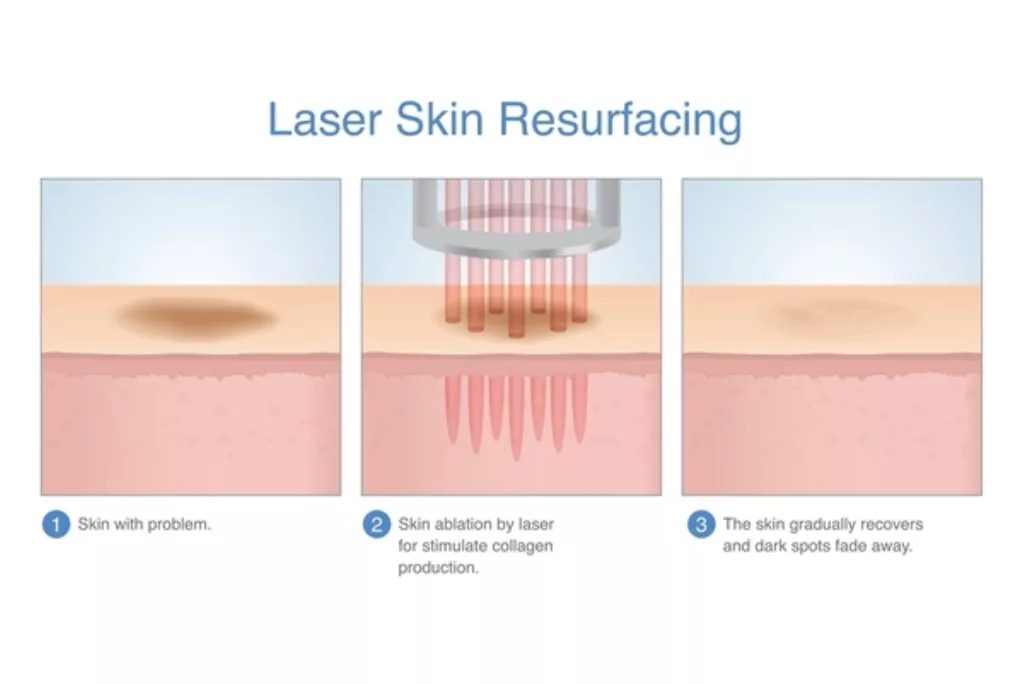
Laser treatment penetrates deep skin layers to fade acne scars, pigmentation, and uneven texture
It can be divided into two major categories:
- Ablative lasers (CO2 and Er: YAG) ablate the epidermal layer of the damaged skin and induce considerable collagen remodeling. They give dramatic effects, and they demand more rest time, usually one to two weeks.
- Non-ablative lasers (such as Fraxel and Nd: YAG) work beneath the surface without removing the top layer of skin. They are milder with reduced downtime, but several sessions are normally required.
Laser treatments and acne scars have become one of the most popular combinations in modern dermatology because the technology is customizable to certain types and depths of scars. Clinical evidence of fractional CO2 lasers, especially, has been good. CO2 laser treatment involves the use of an intense beam of light to ablate scar tissue that initiates a healing process that induces the formation of new collagen and scar remodeling.[8]
It is important to consider one thing: laser treatments are more prone to causing post-inflammatory hyperpigmentation among people with darker skin. Non-ablative and fractional treatments are usually less harmful to such skin types, and it is important to consult a dermatologist before taking any action.
4. Microneedling for Acne Scars
Microneedling, also known as collagen induction therapy, is a minimally invasive procedure that has grown in popularity. A machine containing tiny needles causes the body to react to the controlled micro-injuries of the skin by building new collagen and elastin.[9]
Research has established that microneedling may significantly improve the appearance of atrophic acne scars, although results vary between individuals. The outcome would manifest over time, as the collagen starts being produced by the body, and some form of improvement is noticed in a few weeks, yet the full outcome can usually be observed in several months. The majority of individuals require 3-6 sessions; the intervals should be 4-6 weeks.
Micro-needling is also safe in darker skin, unlike laser therapy, as it does not destroy or peel the outer skin layer. This renders it more desirable to patients who fear the development of pigmentation.
Microneedling with platelet-rich plasma (PRP) is an increasingly popular combination. Several minimally invasive skin microneedling sessions are an effective treatment for post-acne atrophic scars, providing a relatively low-risk, in-office procedure with little recovery time for the patient.[10]
5. Dermal Fillers
In very deep and depressed scars, especially the rolling and boxcar ones, dermal fillers can provide instant effects, that is, bring the skin back to its original position. Hyaluronic acid, poly-L-lactic acid, and calcium hydroxyapatite are commonly used to fill acne scars. The effects are generally short-lived and need regular injections, although certain fillers do induce the production of collagen in the long run.[11]
6. Subcision
Subcision is a minor surgery that involves placing a needle between the skin to rupture fibrous bands holding depressed scars in place to the deeper tissue. The acne scarring is not only present on the skin surface, but also extends to fibrous webbing, which extends to the deep dermis. Subcision is the release of these deeper webs, which results in the smoothing of the skin. It has better results when combined with peeling, laser, or filler treatments.[12]
Comparing Popular Treatments at a Glance
| Treatment | Best Scar Type | Sessions Needed | Downtime | Safe for Dark Skin |
|---|---|---|---|---|
| Tretinoin (topical) | Mild scars, dark spots | Ongoing (months) | None | Yes |
| Chemical peel | Surface scars, dark spots | 3 to 5 | 1 to 14 days | Caution required |
| Laser (ablative) | Boxcar, rolling, ice pick | 1 to 3 | 1 to 2 weeks | Caution required |
| Laser (non-ablative) | Mild to moderate scars | 3 to 6 | Minimal | Generally safer |
| Microneedling | Rolling, boxcar, mild ice pick | 3 to 6 | 1 to 3 days | Yes |
| Dermal fillers | Rolling, boxcar (deep) | 1 to 2 (every 1 to 2 years) | Minimal | Yes |
| Subcision | Rolling scars | 1 to 3 | Minimal | Yes |
Prevention: The Most Ignored Step
Acne scarring would best be treated by preventing acne and treating it at the earliest stage of active acne. The control of breakouts before they get serious will significantly decrease the probability of scarring after a long time. It involves visiting a dermatologist when the over-the-counter products are not effective, not wanting to pick or pop pimples, and using sunscreen every day. The sunlight increases the existing scars and retards the fading of post-inflammatory hyperpigmentation, so you must wear SPF 30 or above every morning, which is a non-negotiable part of any scar management regime.[13]
Early and appropriate treatment of inflammatory acne is the most effective way to reduce the risk of permanent scarring.
What to Expect: Realistic Goals
It is commendable to tell the truth about what any treatment is capable of. The majority of the procedures minimize the appearance of scars to a considerable extent, although they are rarely able to remove deep ice pick scars in a single procedure. Combinations of therapy that incorporate the use of chemical peels, lasers, and dermal fillers are also becoming a standard approach in moderate to severe cases.
Whatever the strategy, patients must be aware of realistic expectations. Treatment is not only to enhance the appearance of acne scars but also to avoid the psychosocial consequences that scarring may lead to.
The Bottom Line
The acne scars are not the ones that you are forced to live with. There is a vast array of solutions to dermatology; affordable topical treatments such as tretinoin, up to cutting-edge laser therapies covering acne scarring, and all on the spectrum, which offer dermatologists a very broad and expanding array of choices. The next step is to know the kind of acne scars you have, simply because the best way to treat them would always be to know what you are dealing with. Be regular, cover your skin in the sunlight, do not pick at the existing breakouts, and collaborate with an expert. Over time, those pimple scars can become far less visible, and your skin can feel like yours again.
References
[1] Ghodsi SZ, Orawa H, Zouboulis CC. Prevalence, severity, and severity risk factors of acne in high school pupils.Dermatology. 2009;218(3):229–233.
[2] Fabbrocini G, Annunziata MC, D’Arco V, et al. Acne scars: pathogenesis, classification and treatment.Dermatology Research and Practice. 2010;2010:893080.
[3] Jacob CI, Dover JS, Kaminer MS. Acne scarring: a classification system and review of treatment options.Journal of the American Academy of Dermatology. 2001;45(1):109–117.
[4] Davis EC, Callender VD. Postinflammatory hyperpigmentation: a review of the epidemiology, clinical features, and treatment options in skin of color.Journal of Clinical and Aesthetic Dermatology. 2010;3(7):20–31. PMID: 20725554
[5] Mukherjee S, Date A, Patravale V, Korting HC, Roeder A, Weindl G. Retinoids in the treatment of skin aging: an overview of clinical efficacy and safety.Clinical Interventions in Aging. 2006;1(4):327–348.
[6] Lee HS, Kim IH. Salicylic acid peels for the treatment of acne vulgaris in Asian patients.Dermatologic Surgery. 2003;29(12):1196–1199.
[7] Alexiades-Armenakas MR, Dover JS, Arndt KA. The spectrum of laser skin resurfacing: nonablative, fractional, and ablative laser resurfacing.Journal of the American Academy of Dermatology. 2008;58(5):719–737.
[8] Walgrave SE, Ortiz AE, MacFalls HT, et al. Evaluation of a novel fractional resurfacing device for treatment of acne scarring.Lasers in Surgery and Medicine. 2009;41(2):122–127.
[9] Fabbrocini G, Fardella N, Monfrecola A, Proietti I, Innocenzi D. Acne scarring treatment using skin needling.Clinical and Experimental Dermatology. 2009;34(8):874–879.
[10] Asif M, Kanodia S, Singh K. Combined autologous platelet-rich plasma with microneedling verses microneedling with distilled water in the treatment of atrophic acne scars.Journal of Cosmetic Dermatology. 2016;15(4):434–443.
[11] Karnik J, Baumann L, Bruce S, et al. A double-blind, randomized, multicenter, controlled trial of suspended polymethylmethacrylate microspheres for the correction of atrophic facial acne scars.Journal of the American Academy of Dermatology. 2014;71(1):77–83.
[12] Alam M, Omura N, Kaminer MS. Subcision for acne scarring: technique and outcomes in 40 patients.Dermatologic Surgery. 2014;40(11):1207–1211.
[13] Lim HW, Collins SAB, Resneck JS Jr, et al. The burden of skin disease in the United States.Journal of the American Academy of Dermatology. 2017;76(5):958–972.