

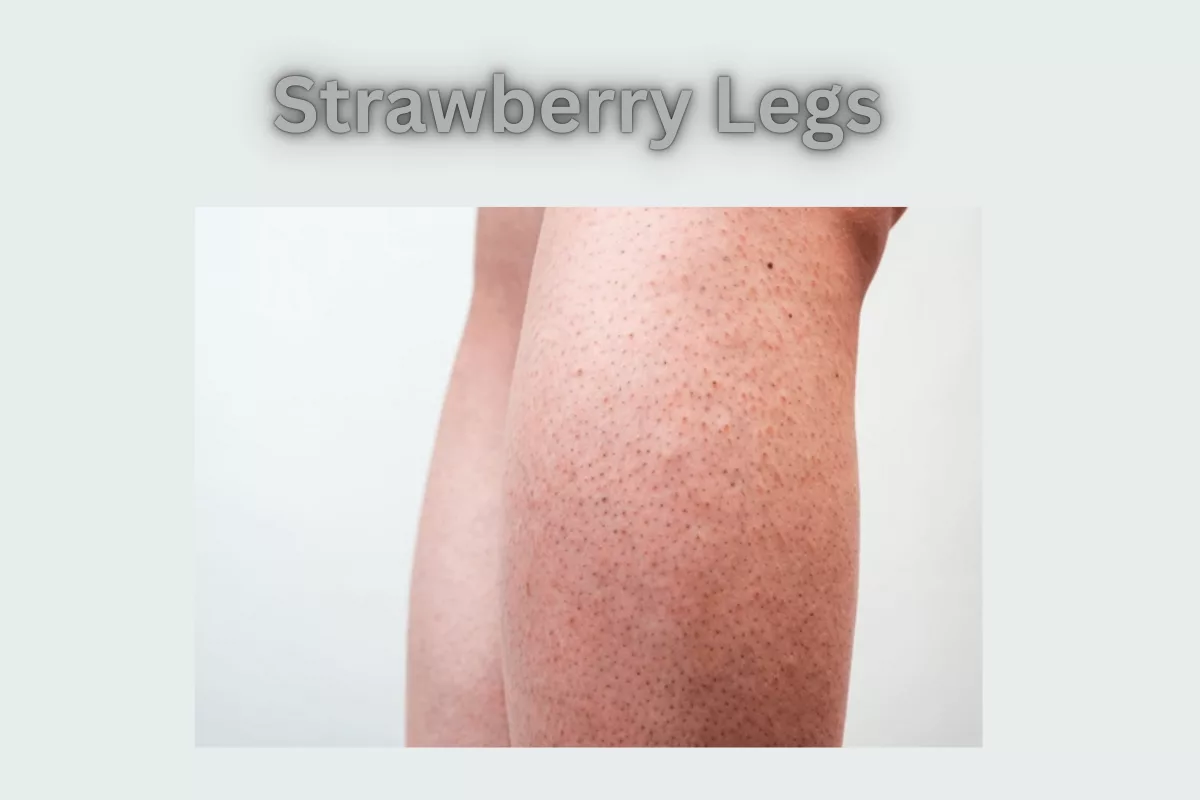
Get Rid Strawberry If you’ve ever noticed small dark spots or dots on your legs that resemble the seeds on a strawberry’s surface, you’re not alone. It is a widespread cosmetic issue that is informally called “strawberry legs” or “strawberry skin” and affects many people worldwide. Although it is not medically dangerous, learning what causes it and how to treat it may enable you to have smoother and clearer-looking skin.
What Are Strawberry Legs?: Get Rid Strawberry
The darkened pores or small bumps on the legs are referred to as strawberry legs. It is named so because of the appearance resembling the seeds of a strawberry scattered over the surface of the fruit. Dermatologists claim that these dark spots are merely hair follicles or pores that have been filled with oil, dead skin cells, bacteria, or dirt.[1]
When sebum and debris trapped inside hair follicles are exposed to air, they may oxidize and turn darker, creating dots that resemble the seeds on a strawberry. The condition is more of a cosmetic one and does not lead to pain or itchiness. However, it can affect your self-esteem when you put on shorts or swimsuits. Individuals with lighter skin complexion see strawberry legs more clearly because of the contrast between the skin and darkened pores.
What Causes Strawberry Legs?
Several factors may cause this condition, and in many cases, a combination of factors may manifest.
Clogged Pores and Hair Follicles
The most common reason is that of the buildup of sebum, dead skin cells, and debris in your pores caused by the environment. As in the case of facial pores that get congested and turn into blackheads, so does the same happens to your legs. These clogged pores are easily visible against the skin surface, thus making them appear as dots that look like strawberry legs.Folliculitis: recognition and management. Am J Clin Dermatol. 2004;5(5):301-10. doi:10.2165/00128071-200405050-00003″ style=”position:relative;color:#309b65;cursor:help;border-bottom:1px dotted #309b65;font-weight:bold”>[2]
Shaving and Hair Removal Practices
Shaving with dull or dirty razors may create a number of problems: it may not cut hair cleanly, leaving dark stubble right under the surface of the skin, and may also produce inflammation in the skin due to irritation. Moreover, shaving against the grain may also result in the hairs growing back misaligned, which may make them grow into the skin.[3]
Folliculitis
This is a widespread skin condition that is typically caused when hair follicles are inflamed, infected, or irritated. The bacteria (usually Staphylococcus aureus), fungi, or even the physical irritation (shaving, tight clothes, etc.) can cause folliculitis. First, the affected follicles can be presented in the form of small red bumps, which may darken with time as part of the strawberry leg appearance. Folliculitis may also be caused by spending time in hot tubs or pools with poor chlorine concentrations.[4]
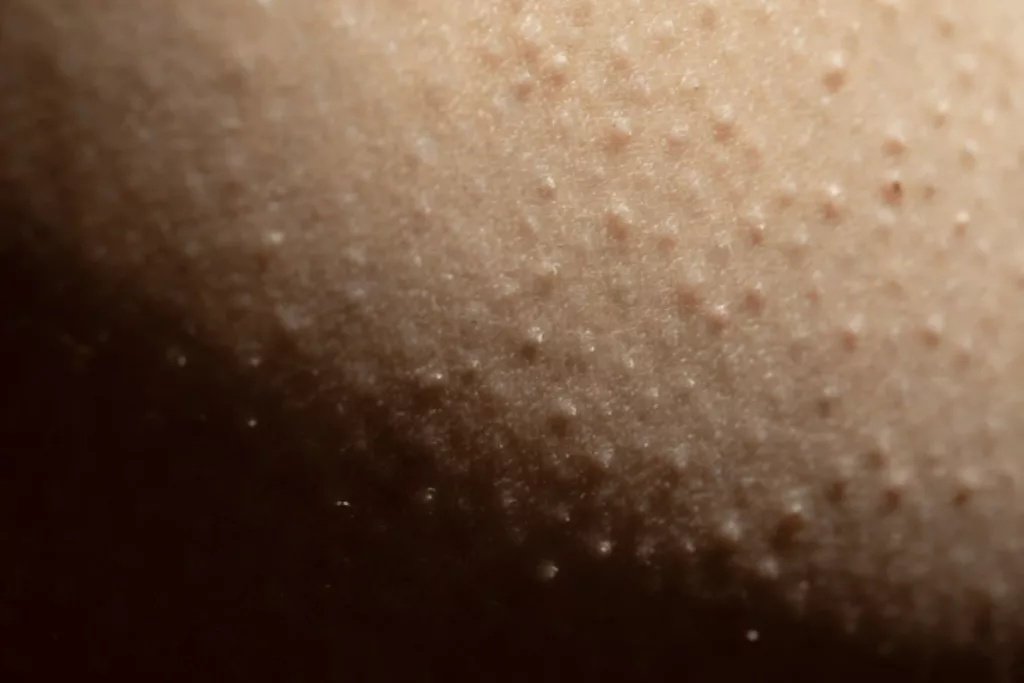
Enlarged pores and keratin buildup can cause the rough, dotted texture seen in strawberry legs.
Keratosis Pilaris
Keratosis pilaris, also known as “chicken skin”, is a genetic disorder in which an excess of keratin, which is a protein comprising hair, skin, and nails, accumulates and obstructs the hair follicle. This forms small rough bumps which are normally flesh colored or red, but may be dark on the legs. Although most of the time keratosis pilaris is found on the upper arms, it may most definitely be found on the thighs and lower legs. The condition would flare up in winter months when the skin is drier and can increase in swimmers because the skin is more affected by chlorine.[5]
Ingrown Hairs
The hair that grows back into the skin instead of appearing out of the follicle in its right place will form ingrown hairs. It is specifically prevalent among individuals who have thick, coarse, or curly hair. The trapped hair might result in inflammation, and the surrounding skin of the follicle might darken depending on the irritation, further contributing to the strawberry leg appearance.[6]
Dry Skin
Dry skin becomes more prone to the development of strawberry legs. Lack of moisture on the skin increases the vulnerability of the skin to irritation during hair removal. Dry skin causes the pores to be more prone to opening and being blocked with dead skin cells and junk as well. That is why strawberry legs tend to deteriorate after hot showers that make the skin completely deprived of natural oils.[7]
How to Get Rid of Strawberry Legs: Treatment Options
The positive thing is that strawberry legs can be treated very well. The majority of cases can respond to in-home care, but chronic or severe ones can potentially be treated with the professional help of dermatologists.
At-Home Strawberry Legs Treatment
To a large number of individuals, regular at-home care may greatly enhance or remove strawberry legs. The dermatologists advise the following:
1. Regular Moisturization
Hydration is fundamental. Use thick creams or ointments, not watery lotions, right after taking of the shower when the skin is dry. This helps lock in moisture. Find products with such ingredients as jojoba oil, glycerin, lanolin, or shea butter, which are very hydrating and keep the barrier functioning of the skin.[8]
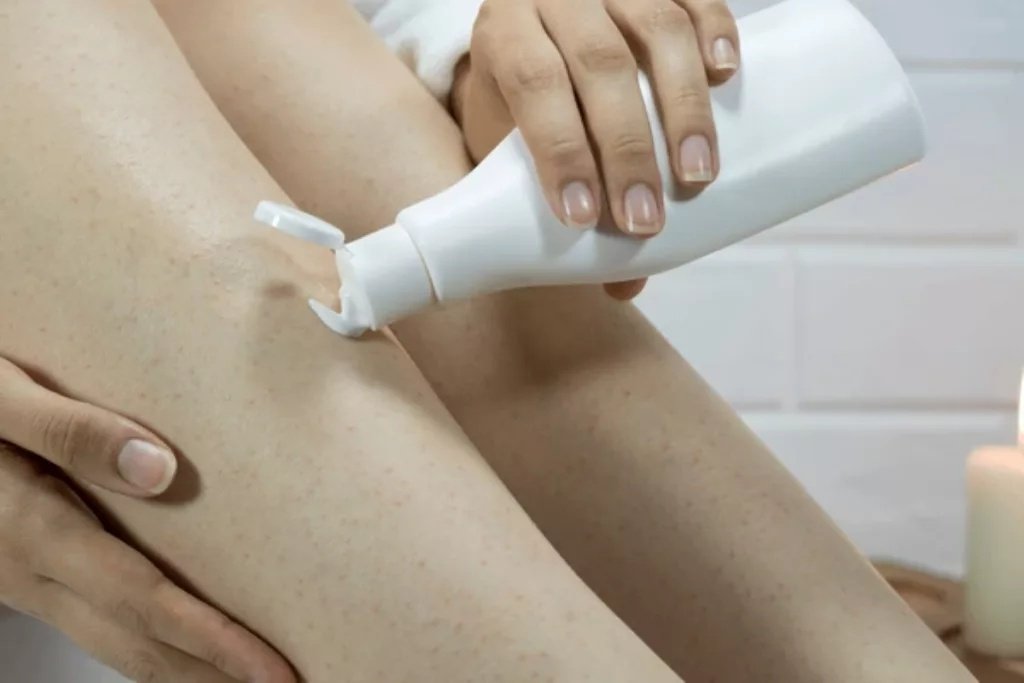
Regular moisturizing can help reduce dryness and improve the appearance of strawberry legs.
2. Gentle Exfoliation
The dead skin cells that may clog pores are regularly removed by exfoliation. Nonetheless, the physical scrubbing using loofahs or rough cloths, in fact, deteriorates the state by creating micro-tears and irritation. Rather, it is better to wash your hands with a gentle washcloth or by using your hands and circling them twice or thrice a week.
3. Chemical Exfoliants
Physical scrubbing can be more irritating than more effective chemical exfoliation. There are a lot of products that dermatologists recommend, including:[9]
- Salicylic Acid: This is a beta-hydroxy acid (BHA) that is oil-soluble so that it can enter the pores and dissolve the sebum and debris that is damaging the pores. Salicylic acid is also anti-inflammatory and can be used to decrease redness and irritation of folliculitis.
- Alpha-Hydroxy Acids (AHAs): These contain glycolic acid and lactic acid, which also break the bonds between dead skin cells and thus they shed more easily.
Note: These products should only be used after a doctor’s consultation.
4. Improved Shaving Techniques
To avoid strawberry legs, even with continuing to shave, it is possible to optimize the technique:
- Always use a sharp, clean razor
- Shave during or after a warm shower when hair is softened
- Apply a lot of shaving gel/ cream.
- Shave in the direction of hair growth (with the grain)
- Wash the razor as often as possible during shaving.
- Pat your skin dry gently after shaving
- Immediately apply moisturizer
5. Antibacterial Cleansers
In the folliculitis cases, dermatologists can prescribe antibacterial soaps or body washes to decrease the number of bacteria on the skin surface. Strawberry legs related to acne may also be treated using products that contain benzoyl peroxide.
6. Glycolic Acid for Strawberry Legs
Glycolic acid is one of the most successful ingredients that should be mentioned in the treatment of strawberry legs. Being the smallest alpha-hydroxy acid molecule, glycolic acid infiltrates the skin at a deeper level, dissolving the intercellular glue that holds dead skin cells together. This exfoliating effect also unclogs pores and dark spots, as well as enhances the texture of the skin on the whole.[10]
A study published in the Journal of Dermatological Treatment revealed that the symptoms of keratosis pilaris were minimized by about 62 percent after eight weeks of constant usage of glycolic acid products. When it comes to the treatment of the strawberry legs, products usually include 6-15 percent glycolic acid.
When using glycolic acid for strawberry legs:
- Start with lower concentrations (around 6-10%) and use 2-3 times weekly
- Apply to clean, dry skin
- Gradually raise frequency slowly, provided that your skin is comfortable with it (up to 4 times per week).
- Always follow with moisturizer
- Use sunscreen during the day, as AHAs increase sun sensitivity
- Do not use right after such skin-abrasive procedures as waxing or microdermabrasion.
AHA lotions that are specifically designed to be used on the body, such as those with 15 percent glycolic acid plus hydrating substances, are highly recommended by many dermatologists. These recipes are exfoliating yet gentle enough to avoid any drying effect that will exacerbate the condition of strawberry legs.
Professional Treatments
Home remedies may not be enough, as dermatologists may be able to provide more sophisticated solutions:
Prescription Medications
Topical or oral antibiotics could be required in case of infection-related folliculitis.[11] Antifungal treatments are required in fungal infections. Prescription-strength retinoids may also be useful in normalizing keratin and clearing up pores, but may be irritating to some people.
Chemical Peels
A professional chemical peel that contains more glycolic acid or other exfoliants at higher concentrations may yield more significant results than those available on the market. These are carried out in-office under the guidance of a professional.
Laser Hair Removal for Strawberry Legs
Hair removal with laser has become one of the most efficient long-term treatments for strawberry legs, especially among people with thick, coarse, or dark hair.
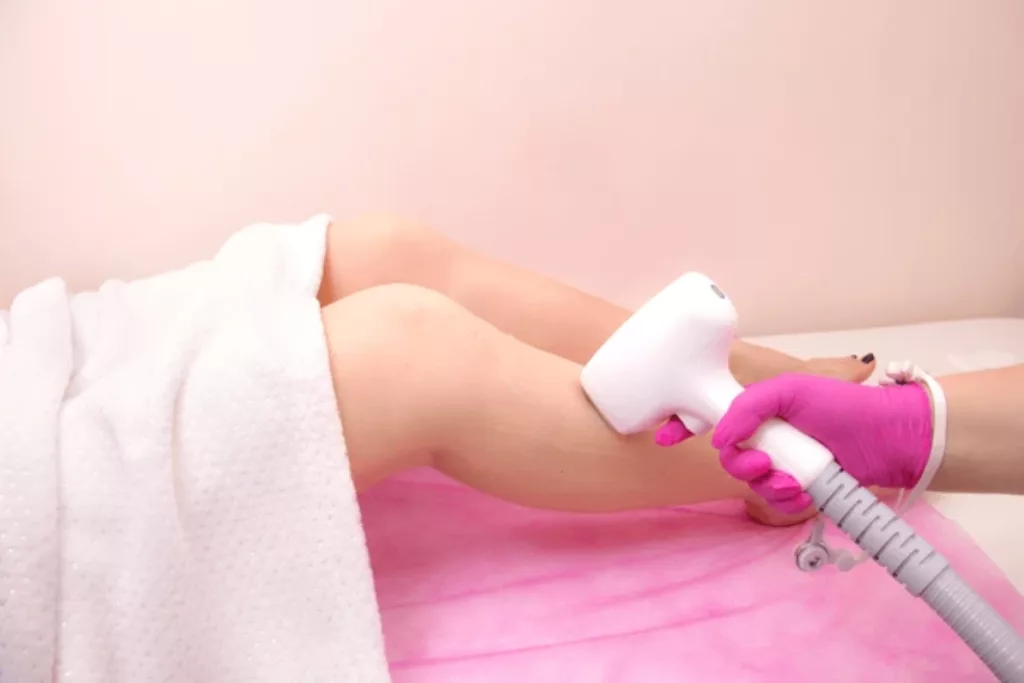
Laser hair removal can help reduce hair growth and prevent clogged follicles associated with strawberry legs.
The mechanism of laser hair removal: Laser produces a highly concentrated light energy, which is directed at the pigment (melanin) of the hair follicles. The hair absorbs the light energy, thereby heating and destroying the follicle to prevent future growth of hair.[12]
The Advantages of Laser Treatment
- Destroys the root: Laser destroys hair, thereby eradicating the dark stubble that causes strawberry legs.
- Lessens ingrowth of hair: The ingrowth of hair is reduced as the hair does not grow back.
- Avoids folliculitis: The fewer the active hair follicles, the fewer chances of bacterial or fungal infection.
- Enhances skin texture: Laser energy has some gentle exfoliating effect on the skin and may be useful in pigmentation.
- Narrow pores: With time, treated follicles can reduce, and thus the pores can become less apparent.
- Long-term effects: Laser has semi-permanent and permanent hair removal compared to shaving or waxing.
The laser therapy requires approximately 6-8 sessions with a few weeks in between to achieve the best results. This therapy suits light to medium skin colour and dark hair.
Notable: Redness, swelling, and increased sensitivity of skin can be temporary effects of laser hair removal. Aso there is a small risk of hyperpigmentation, particularly in the case of a tanned skin. The therapy is a bit uncomfortable, although the majority of patients refer to it as bearable. It is expensive, but most people consider it to be worthwhile in the long run.
Dermatologists suggest using a combination of laser hair removal treatment with glycolic acid treatment and correct moisturization as a comprehensive way of getting rid of strawberry legs, particularly in cases of stubborn cases.
Electrolysis
Electrolysis is another permanent method of hair removal, which can be applied to those unable to have the laser treatment or who want a different method. In this procedure, the human hair follicles are killed using electricity.
Prevention Strategies
To avoid the emergence of strawberry legs, it is necessary to take care of the skin regularly and use the appropriate methods of hair removal.[13]
- Wash frequently with soft scrubs or chemical exfoliants, which have salicylic acid or glycolic acid, to get rid of dead skin cells and avoid blocked pores.
- It is important to use a sharp and clean razor to shave in the hair growth direction and use as much shaving cream or gel as possible, as it reduces irritation.
- See other methods of removing hair, such as waxing or laser hair removal, which might lessen the dark pores with time.
- Apply non-comedogenic lotions on the skin every day to ensure the skin stays moist and intact.
- Do not put on tight garments right after shaving because this irritation can be caused by friction and increase inflammation.
- Persons with Keratosis pilaris need to apply products that have urea or lactic acid that can smooth out coarse spots.
- Protection against the sun is also necessary because UV rays may darken the spots.
In chronic ones, visit a dermatologist who can prescribe some professional interventions, such as chemical peels or topical retinoids, that are prescribed to change the skin texture and tone.
Special Considerations
For Different Skin Types
Strawberry legs are more likely to develop in people with sensitive skin or with such conditions as eczema. These are the people who have to be particularly cautious about exfoliation and use fragrance-free, hypoallergenic products. Individuals with darker skin coloring will be able to observe that the strawberry legs are less noticeable, but can develop more post-inflammatory hyperpigmentation due to irritation.[14]
When to See a Dermatologist?
Strawberry legs are not harmful, but you should see a dermatologist in case:
- Home treatments do not make the situation better within 4-6 weeks
- You experience pain, significant itching, or discomfort
- The bumps become inflamed, infected, or develop pus
- The condition has a great impact on your quality of life and self-esteem
- You suspect an underlying skin condition like severe keratosis pilaris or chronic folliculitis
Conclusion
The clogged pores and hair follicles cause strawberry legs, which look like dark dots resembling strawberry seeds, on the surface of the skin. There are several causes of this condition, such as shaving, dry skin, folliculitis, keratosis pilaris, and ingrown hairs.
Treatment of strawberry legs is generally straightforward; between basic home care, such as frequent moisturization, gentle exfoliation, and better shaving practices, and more expedient treatment methods such as glycolic acid preparations and laser hair removal. It is best to mix several strategies to achieve the best results, as may be seen by many.
The best thing to do is to realize your own particular contributing factors and work on them in a systematic way. Patients with mild cases tend to achieve great outcomes by only improving their skincare routine. The more chronic cases respond to professional therapies, especially laser hair removal, since it manages the underlying cause of the disease by inhibiting hair growth permanently.
Remember that consistency is key. Glycolic acid on the strawberry legs, refining your shaving regimen, or laser treatments all warrant time to work, either 4-8 weeks on average, and then change strategies.
References
[1] Thomas M, Khopkar US. Keratosis pilaris revisited: is it more than just a follicular keratosis? Int J Trichology. 2012;4(4):255-8. doi:10.4103/0974-7753.111215
[2] Luelmo-Aguilar J, Santandreu MS. Folliculitis: recognition and management. Am J Clin Dermatol. 2004;5(5):301-10. doi:10.2165/00128071-200405050-00003
[3] Nussbaum D, Friedman A. Pseudofolliculitis Barbae: A review of current treatment options. J Drugs Dermatol. 2019;18(3):246-50
[4] Jang KA, Kim SH, Choi JH, et al. Viral folliculitis on the face. Br J Dermatol. 2000;142(3):555-9. doi:10.1046/j.1365-2133.2000.03378.x
[5] Gerbig AW. Treating keratosis pilaris. J Am Acad Dermatol. 2002;47(3):457. doi:10.1067/mjd.2002.122733
[6] Ogunbiyi A. Pseudofolliculitis barbae; current treatment options. Clin Cosmet Investig Dermatol. 2019;12:241-247. doi:10.2147/CCID.S149250
[7] Kootiratrakarn T, Chunhasewee C, Kampirapap K, Bernard BA. Epidermal permeability barrier in the treatment of keratosis pilaris. Dermatol Res Pract. 2015;2015:205012. doi:10.1155/2015/205012
[8] Kootiratrakarn T, Chunhasewee C, Kampirapap K, Bernard BA. Epidermal permeability barrier in the treatment of keratosis pilaris. Dermatol Res Pract. 2015;2015:205012. doi:10.1155/2015/205012
[9] Arif T. Salicylic acid as a peeling agent: a comprehensive review. Clin Cosmet Investig Dermatol. 2015;8:455-61. doi:10.2147/CCID.S84765
[10] Tian Y, Li XX, Zhang JJ, et al. Clinical outcomes and 5-year follow-up results of keratosis pilaris treated by a high concentration of glycolic acid. World J Clin Cases. 2021;9(18):4681-4689. doi:10.12998/wjcc.v9.i18.4681
[11] Luelmo-Aguilar J, Santandreu MS. Folliculitis: recognition and management. Am J Clin Dermatol. 2004;5(5):301-10. doi:10.2165/00128071-200405050-00003
[12] Haedersdal M, Wulf HC. Evidence-based review of hair removal using lasers and light sources. J Eur Acad Dermatol Venereol. 2006;20(1):9-20. doi:10.1111/j.1468-3083.2005.01327.x
[13] Dalia Y, Khatib J, Odens H, Patel T. Review of treatments for pseudofolliculitis barbae. Clin Exp Dermatol. 2023;48(6):591-598. doi:10.1093/ced/llad048
[14] Marqueling AL, Gilliam AE, Prendiville J, et al. Keratosis pilaris rubra: a common but underrecognized condition. Arch Dermatol. 2006;142(12):1611-6. doi:10.1001/archderm.142.12.1611
For more information about Get Rid Strawberry, refer to the latest medical literature.