

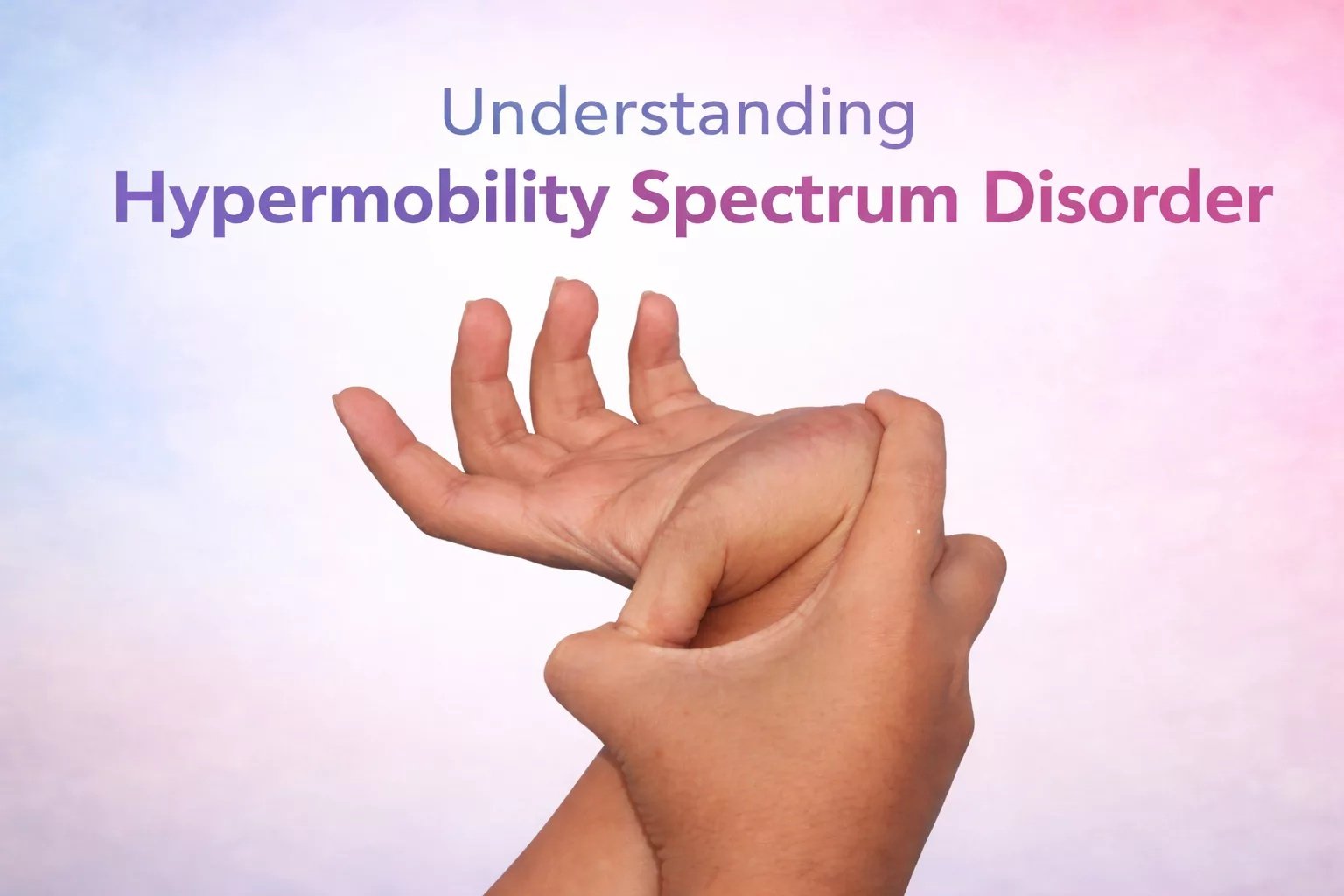
What is Hypermobility Spectrum Disorder (HSD)?
Hypermobility spectrum disorder, previously known as Joint Hypermobility syndrome, is a collection of connective tissue disorders that are characterized by joint hypermobility, leading to joint instability, chronic pain, and functional impairment. Many individuals are born with naturally flexible or “loose” joints and never develop symptoms. But once joint hypermobility is accompanied by chronic pain, recurrent injuries, perpetual fatigue, or other manifestations, it turns into a medical disorder that must be addressed and taken care of.[1]
HSD is thought to result from differences in connective tissue structure or function, particularly involving ligaments that are more elastic or less supportive than usual.
Ligaments are strips that hold the joints together and provide stability to them. When ligaments provide insufficient support, joints may move beyond their normal range, increasing the risk of instability, subluxations, dislocations, and chronic musculoskeletal pain.
Does Everyone With Hypermobility Have HSD?
It is crucial to know that not all people who have flexible joints have hypermobility spectrum disorder. Generalized joint hypermobility without symptoms is common, affecting approximately 10–20% of the general population. These people find it easy to do gymnastics or dance. But in case this flexibility is accompanied by pain, instability in the joints, or any other symptom that interferes with normal physical functioning, it is a disorder that needs medical care.joint hypermobility syndrome: review of the literature.J Rheumatol.2007;34(4):804-809.” style=”position:relative;color:#309b65;cursor:help;border-bottom:1px dotted #309b65;font-weight:bold”>[2]
The term spectrum is used to show that there is a great variation in the nature and extent of the symptoms among different individuals. Two individuals having hypermobility spectrum disorder may have entirely different symptoms. Some individuals may experience extreme joint instability and mild fatigue, but others may report fatigue or involvement of other body systems. The two experiences are equal manifestations of the disorder.
In 2017, the International Consortium on Ehlers-Danlos Syndromes renamed hypermobility spectrum disorder as the replacement of the older term of joint hypermobility syndrome. This update aimed to better categorize individuals with symptomatic joint hypermobility who do not meet the diagnostic criteria for hypermobile Ehlers-Danlos syndrome (hEDS) or other defined connective tissue disorders.[3]
Hypermobility Spectrum Disorder Symptoms
The HSD also has many other symptoms than just joint flexibility. Although joint-related problems are the most common, most people also report that other parts of the body are affected.
Joint and Musculoskeletal Symptoms
The most common symptoms related to joints and muscles include:
- Joint pain: It is long-term pain in one or more joints, which may take months or years.
- Joint instability
- Dislocations or subluxations
- Sprains and soft tissue injuries
- Stiffness in the joints: This specifically happens during the morning or after rest.
- Poor balance and clumsiness: Low joint stability reduces coordination and makes movements more difficult.
- Weakness of the muscles: Decreased muscle tone, which renders it difficult to hold the joints in position.
- Impaired proprioception: Leading to difficulty sensing joint position and coordinating movement
Extra-Articular Symptoms
Hypermobility spectrum disorder is characterized by many symptoms other than joint-related ones. These features are more consistently described in hEDS but may also occur in HSD:
Autonomic Dysfunction:
The Autonomic nervous system (involuntary body functions) might be defective. This can cause:[4]
- Postural orthostatic tachycardia syndrome (POTS), characterized by an increase in heart rate when the patient stands
- Feeling dizzy and fainting, particularly on rising too fast (Orthostatic Hypotension)
- Palpitations
- Low blood pressure symptoms
Gastrointestinal Problems:
The digestive problems are frequent and could include:[5]
- Irritable bowel syndrome, whereby the individual experiences constipation, diarrhea, and bloating.
- Heartburn and acid reflux due to Gastroesophageal reflux disease.
- Gastroparesis: Slow emptying of the stomach to the small intestine.
- Nausea and vomiting
These associations are still under investigation and should be interpreted cautiously.
Causes of Hypermobility Spectrum Disorder
It is not known precisely what causes hypermobility spectrum disorder, but there are some factors that have been discovered to contribute to it.
Genetic Factors
Hypermobility spectrum disorder often runs in families, indicating a strong hereditary component. Unlike some forms of Ehlers-Danlos syndrome, no specific genetic mutation has been identified for HSD.[6]
It is hypothesized that variations affecting collagen or other connective tissue proteins may cause ligaments to fail to stabilize the joints. This causes the joints to exceed their usual range of movements and makes them susceptible to injury.
Connective Tissue Abnormalities
The main problem with hypermobility spectrum disorder is the connective tissues. Connective tissue includes:[7]
- Collagen, which provides tensile strength
- Elasticity is given by Elastin
- Fibrillin aids in the arrangement of connective tissue structure
When these proteins fail to work effectively, the connective tissue thus formed is not normal but weaker and more elastic. This not only impacts joints but may also have an impact on other body systems where connective tissue is significant.
Risk Factors
There are a number of predisposing factors to hypermobility spectrum disorder:
- Family history: Risk is highly increased in case of a parent or sibling with this condition.
- Gender: The prevalence of the disease is estimated to be three times higher in females than in males.[8]
- Ethnicity: Some studies suggest higher rates of joint hypermobility in certain ethnic groups, like Asians and Afro-Caribbean people, though robust epidemiological data for HSD remain limited.[9]
- Age: It manifests itself more in childhood or adolescence, but can be diagnosed later.
Classification of Hypermobility Spectrum Disorder
There are four different subtypes of hypermobility spectrum disorder depending on the pattern and location of joint hypermobility. The awareness of these subtypes can guide health practitioners to come up with the right treatment regimens. However, these categories guide clinical assessment but do not reflect disease severity.[10]

Categories of Hypermobility Spectrum Disorder (HSD), illustrating the clinical spectrum from isolated joint hypermobility to hypermobile Ehlers-Danlos syndrome (hEDS).
Generalized Hypermobility Spectrum Disorder (G-HSD)
This form involves joint hypermobility across multiple body parts. Clinicians diagnose it based on a positive Beighton score and the presence of one or more musculoskeletal complications related to hypermobility. G-HSD patients tend to have extensive joint pains, constant injuries, and other body system-related symptoms.
Peripheral Hypermobility Spectrum Disorder (P-HSD)
In the type, hypermobility is limited to the hands and feet. People can also have pain, instability, or injuries around these peripheral joints in particular. This tendency differentiates P-HSD and a more prevalent G-HSD.
Localized Hypermobility Spectrum Disorder (L-HSD)
L-HSD only attacks a single joint or a certain group of joints within the same anatomical area. An example is that a person may experience hypermobility of the shoulder area or the knee area only. Though the condition is localized, people still report musculoskeletal symptoms of the affected joints.
Historical Hypermobility Spectrum Disorder (H-HSD)
This type applies to individuals who were once hypermobile, but whose joints have stiffened over time due to aging, injury, or surgery. Although these individuals no longer exhibit any contemporary signs of general hypermobility on the check-up, they still have musculoskeletal issues connected with their past hypermobility.
It is worth mentioning that the diagnosis of a person can vary with time because the symptoms change or new aspects appear. The classification assists in treatment direction but does not always demonstrate severity because any of the subtypes may have equally severe symptoms.
Hypermobility Spectrum Disorder Diagnosis
Clinicians diagnose hypermobility spectrum disorder (HSD) through an extensive clinical assessment, as no specific test can confirm the condition. They use this process to distinguish HSD from other hypermobility disorders, including hypermobile Ehlers-Danlos syndrome (hEDS), and to rule out other possible causes of symptoms.
The Beighton Score
The Beighton score is a nine-point test that is used to assess generalized joint hypermobility. It is a screening tool and must be interpreted in the context of symptoms, age, and clinical findings.[11]

Beighton score demonstrates standardized joint movements used to assess generalized joint hypermobility.Credit: Rollcloud,CC0(Hypermobility Beighton Score.png)
Test Maneuvers:
The score is based on five physical maneuvers, each assessing joint mobility. A total of 9 points can be awarded.
- Bending back the little finger past the angle of 90 degrees. (One point per hand)
- Bend your thumb towards the forearm to the extent that it can touch it. (One point per thumb)
- Straighten the elbows more than 10 degrees. (One point elbow)
- Stretching of the knees more than 10 degrees. (One point per knee)
- Bending forward at the waist with straight legs and placing palms flat on the ground. (One point)
Scoring Interpretation:
- Adults: The generalized joint hypermobility will be indicated by a score of ≥5 out of 9
- Children (pre-pubertal): A score of ≥6 out of 9
- Adults greater than 50: The score of ≥4 out of 9
Clinical Assessment
In addition to the assessment of flexibility, physicians perform an in-depth evaluation based on symptoms, such as chronic pain, joint instability, frequent dislocations or subluxations, and exhaustion. The family history is very important because hypermobility disorders are usually familial. Physical testing to be done includes soft and stretchy skin, easy bruising, and clinical evidence of joint instability.
Differential Diagnosis
Other conditions with similar presentations have to be ruled out during the diagnostic process.
- Blood tests can eliminate inflammatory arthritis or autoimmune diseases.
- Genetic testing may help determine certain types of Ehlers-Danlos syndrome, but a genetic marker of HSD or hEDS does not exist yet.
- Structural joint issues may suggest the need to order imaging studies.
Because the symptoms are frequently insidious and different in different people. The diagnosis can require months or even years, and both patients and medical professionals have to be patient.
Hypermobility Spectrum Disorder vs Ehlers-Danlos Syndrome
HSD is basically a symptomatic joint hypermobility, but does not satisfy the complete requirements of hEDS. According to the 2017 International Classification of the Ehlers-Danlos Syndromes, HSD is diagnosed in individuals who have joint hypermobility with associated symptoms but do not fulfill the stricter clinical criteria required for hEDS. HSD is not necessarily milder, and there is a significant overlap between the two conditions.[12]
The distinction between hypermobility spectrum disorder (HSD) and hypermobile Ehlers-Danlos syndrome (hEDS) is based on the 2017 International Classification of the Ehlers-Danlos Syndromes. According to these criteria, hEDS requires generalized joint hypermobility along with additional systemic features and the exclusion of other heritable connective tissue disorders, whereas HSD is diagnosed when symptomatic joint hypermobility is present but the full hEDS criteria are not met.[13]
| Feature | Hypermobility Spectrum Disorder (HSD) | Ehlers-Danlos Syndrome (hEDS) |
|---|---|---|
| Joint hypermobility | Present (Beighton score ≥5 for most) | Present (Beighton score ≥5) |
| Skin involvement | Minimal to absent | Soft, stretchy, fragile skin; atrophic scarring |
| Diagnostic criteria | Diagnosed using the 2017 hEDS clinical criteria | Diagnosed using 2017 hEDS clinical criteria |
| Family history | May or may not be present | Often, more systemic involvement |
| Systemic features | Variable musculoskeletal symptoms | Multiple specific features required (e.g., pectus, arachnodactyly, hernias) |
| Genetic testing | None available | None available (genetic basis unknown) |
| Severity | Generally milder | Often more systemic and multisystem involvement |
| Complications | Joint pain, dislocations, fatigue | Often, more systemic and multisystem involvement |
Treatment of Hypermobility Spectrum Disorder
At present, hypermobility spectrum disorder is not curable, but you can manage the symptoms successfully with the help of a multidisciplinary approach. The goal of treatment is to strengthen the muscles surrounding joints, manage pain, prevent injury, and management of related symptoms.
Physical Therapy and Exercise
The basis of hypermobility spectrum disorder treatment is physical therapy. The primary goals include:[14]
Muscle Strengthening: The strengthening of muscles around hypermobile joints gives more support and stability. Powerful muscles take the place of weak ligaments and prevent dislocations and trauma. Focus areas include:
- Core strengthening for spinal stability
- Muscle groups surrounding affected joints
- Gradual progression to avoid overexertion
Joint Stabilization Exercises: Special exercises are effective to learn how to position the joint properly and enhance joint stability. The exercises are useful in retraining the neuromuscular system to ensure that joints are in safer postures during movement.
Proprioception Training: As most people with hypermobility spectrum disorder have a poor awareness of joint position, proprioceptive training aids the development of body awareness and coordination. This minimizes any chances of injury in the day-to-day activities.
Pain Management
The management of chronic pain needs to be multimodal:[15]
Medications:
- Ibuprofen (NSAIDs) is used in the treatment of acute pain and inflammation.
- Paracetamol (acetaminophen) is used to treat ordinary pain.
- Menthol or capsaicin topical creams on the painful joints.
- In other instances, neuropathic pain medication is used in cases of nerve-related pain.
Non-Pharmacological Approaches:
- Warm baths or heating pads to relax muscles and ease stiffness
- Cold therapy (ice packs) for acute injuries or inflammation
- Massage therapy to reduce muscle tension
- Stretching exercises (gentle, avoiding hyperextension)
- Balance rest periods with appropriate activity
Psychological Support
Physical restrictions and chronic pain may have a profound effect on mental health. Support may include:
- Cognitive behavioral therapy (CBT) is best suited to establish coping skills.
- Anxiety and depression counseling.
- Support groups that brought people together with similar experiences.
- Mindfulness and relaxation techniques
- Stress management strategies
Management of Related Symptoms
For Autonomic Dysfunction:
- Increased fluid and salt intake (under medical supervision)
- To enhance blood flow, compression garments are helpful
- Medications for POTS or dysautonomia when appropriate
- Lifestyle modifications, such as avoiding prolonged standing
Gastrointestinal Issues:
- Food changes to determine and prevent trigger foods.
- Substitute large meals with small, frequent meals.
- Drugs for particular GI symptoms.
- Referral to the gastroenterology specialists when required.
For Chronic Fatigue:
- Timing the exercises and frequent rest intervals.
- Sleep hygiene improvements
- Gradual exercise programs
- Energy conservation techniques
Conclusion
Hypermobility spectrum disorder is a complicated disorder that goes beyond the flexible joints and impacts a variety of systems and everyday life. Awareness of its four forms, such as generalized, peripheral, localized, and historical, enables healthcare providers to diagnose and treat it effectively.
Doctors do a thorough clinical evaluation with the help of the Beighton score, medical history, and physical examination, to make a diagnosis. It is important to distinguish HSD and hypermobile Ehlers-Danlos syndrome and other connective tissue disorders to monitor and treat the conditions well.
The aim of treatment is to manage the symptoms with physical therapy, muscular support of hypermobile joints, pain management, and psychological intervention. To be successful, one must take the initiative, with self-management skills, good support systems, frequent check-ups, and self-advocacy.
Early diagnosis and prompt intervention are important to avoid such long-term complications as early arthritis and chronic pain. When you feel that you have hypermobility spectrum disorder, see a medical expert who can help in understand hypermobility. Proper care will help people to take good care of their joints, reduce symptoms, and live an active and satisfying life.
References
[1] Castori M, Tinkle B, Levy H, et al. A framework for the classification of joint hypermobility and related conditions.Am J Med Genet C Semin Med Genet.2017;175(1):148-157. doi:10.1002/ajmg.c.31539
[2] Remvig L, Jensen DV, Ward RC. Epidemiology of general joint hypermobility and basis for the proposed criteria for benign joint hypermobility syndrome: review of the literature.J Rheumatol.2007;34(4):804-809.
[3] Malfait F, Francomano C, Byers P, et al. The 2017 international classification of the Ehlers-Danlos syndromes.Am J Med Genet C Semin Med Genet.2017;175(1):8-26. doi:10.1002/ajmg.c.31552
[4] Mathias CJ, Low DA, Iodice V, et al. Dysautonomia in the Ehlers-Danlos syndromes and hypermobility spectrum disorders.Am J Med Genet C Semin Med Genet.2021;187(4):572-587. doi:10.1002/ajmg.c.31955
[5] Choudhary A, Fikree A, Aziz Q. Overlap between irritable bowel syndrome and hypermobile Ehlers-Danlos syndrome: An unexplored clinical phenotype?Am J Med Genet C Semin Med Genet.2021;187(4):561-571. doi:10.1002/ajmg.c.31952
[6] Malfait F, Francomano C, Byers P, Belmont J, Berglund B, Black J, et al. The 2017 international classification of the Ehlers–Danlos syndromes.Am J Med Genet C Semin Med Genet.2017;175(1):8–26.
[7] Castori M, Morlino S, Celletti C, et al. Re-writing the natural history of pain and related symptoms in the joint hypermobility syndrome/Ehlers-Danlos syndrome, hypermobility type.Am J Med Genet A.2013;161A(12):2989-3004. doi:10.1002/ajmg.a.36315
[8] Castori M, Hakim AJ. Contemporary approach to joint hypermobility and related disorders.Curr Opin Pediatr.2017;29(6):640–649.
[9] Remvig L, Jensen DV, Ward RC. Epidemiology of general joint hypermobility and basis for the proposed criteria for benign joint hypermobility syndrome: review of the literature.J Rheumatol.2007;34(4):804–809.
[10] McGillis L, Mittal N, Santa Mina D, et al. Utilization of the 2017 diagnostic criteria for hEDS by the Toronto GoodHope Ehlers-Danlos syndrome clinic: a retrospective review.Am J Med Genet A.2020;182(3):484-492. doi:10.1002/ajmg.a.61459
[11] Beighton P, Solomon L, Soskolne CL. Articular mobility in an African population.Ann Rheum Dis.1973;32(5):413-418. doi:10.1136/ard.32.5.413
[12] Ritelli M, Venturini M, Cinquina V, et al. Looking back and beyond the 2017 diagnostic criteria for hypermobile Ehlers-Danlos syndrome: a retrospective cross-sectional study from an Italian reference center.Am J Med Genet A.2023;191(12):2972-2990.
[13] Malfait F, Francomano C, Byers P, Belmont J, Berglund B, Black J, et al. The 2017 international classification of the Ehlers–Danlos syndromes.Am J Med Genet C Semin Med Genet.2017;175(1):8–26.
[14] Russek LN, Wooden MJ, Evanson M, et al. Physical therapy interventions in generalized hypermobility spectrum disorder and hypermobile Ehlers-Danlos syndrome: a scoping review.Disabil Rehabil.2024;46(8):1609-1624. doi:10.1080/09638288.2023.2220090
[15] Rombaut L, Malfait F, De Wandele I, et al. Medication, surgery, and physiotherapy among patients with the hypermobility type of Ehlers-Danlos syndrome.Arch Phys Med Rehabil.2011;92(7):1106-1112. doi:10.1016/j.apmr.2011.01.016