


Hypopituitarism Symptoms Diagnosis Hypopituitarism is a hormonal disorder caused by inadequate secretion of one or more hormones from the pituitary gland. This is a serious disorder which is considered uncommon, with prevalence estimates ranging from approximately 45 per 100,000 people to about 1 in 3,000–4,000 individuals.[1]
The condition may either arise immediately after an injury or surgery, or it may develop gradually over a period of months or even years. Unless you treat hypopituitarism, it may result in severe complications. However, with correct diagnosis and lifelong hormone replacement therapy, the majority of individuals can live good and normal lives.
What happens to the pituitary gland in Hypopituitarism?: Hypopituitarism Symptoms Diagnosis
In hypopituitarism, the hormonal cascade that is normally generated by the pituitary gland is disturbed by the destruction of this gland or the hypothalamus. Hormonal deficiencies often develop progressively, with growth hormone and gonadotropins typically affected earlier than ACTH and TSH. Interestingly, harm must occur in nearly 75 percent of the pituitary gland before hormone levels are significantly affected. When the pituitary is not able to synthesize enough of its hormones, the target glands (your thyroid, adrenal glands, and reproductive organs, etc.) do not get the messages they need to operate. This domino effect results in the different symptoms of the condition.[2]
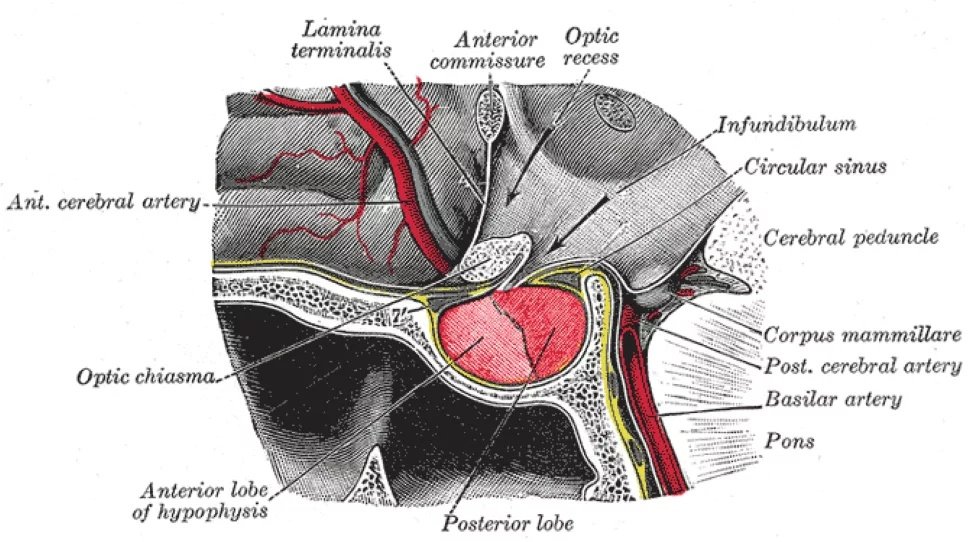
Pituitary gland anatomy from Gray’s Anatomy (Plate 1180), illustrated by Henry Vandyke Carter and authored by Henry Gray (1858).Public domain.
Hypopituitarism Causes
There are two types of hypopituitarism: those that occur at birth (congenital) and those that occur later in life (acquired).
Primary Hypopituitarism (Pituitary Gland Problems)
Pituitary Tumors:
This is the most frequent type, accounting for approximately 61 percent. Even benign tumors cause compression of healthy pituitary tissue, and this may interfere with hormone production.[3]
Traumatic Brain Injury (TBI):
Hypopituitarism develops in about 27-32 percent of individuals who undergo severe brain injury caused by head trauma. Although transient hormonal abnormalities are common, persistent hypopituitarism occurs in a smaller proportion of patients and depends on injury severity and long-term follow-up.
Pituitary Surgery:
Surgery to remove pituitary tumors may destroy adjacent normal tissue, which causes a deficiency of hormones.
Pituitary Apoplexy:
This is a medical emergency in which the acute tissue death occurs due to sudden bleeding or a decrease in blood flow to the pituitary.[4]
Sheehan syndrome:
In severe cases of blood loss during or after birth, the gland of the pituitary may be destroyed, resulting in postpartum hypopituitarism.
Radiation Therapy:
Radiation therapy of the brain or pituitary region may damage the gland over the years.
Infections:
There are some infections, such as bacterial meningitis, tuberculosis, and other infections that may affect the gland.
Infiltrative Diseases:
Diseases such assarcoidosis, histiocytosis, andhemochromatosis may result in abnormal deposition of matter in the pituitary, interfering with the functioning of the pituitary.
Autoimmune Hypophysitis:
This is the attack by the immunological system on the pituitary gland, which leads to inflammation and damage.
Empty Sella Syndrome:
The pituitary gland shrinks or becomes flattened against the sella turcica, often after long-standing inflammation or increased intracranial pressure.[5]
Secondary Hypopituitarism (Hypothalamus Problems)
Hypothalamus can be impaired so that it does not adequately signal the pituitary gland due to damage to the hypothalamus caused by tumors, or by radiation, surgery, or other causes.
Idiopathic Hypopituitarism
The cause is not known even after an in-depth study in certain cases. This is referred to as idiopathic hypopituitarism.
Medication-Induced Hypopituitarism
Some drugs are capable of impairing the activity of the pituitary:
- Glucocorticoids (cause suppression of the hypothalamic–pituitary–adrenal axis rather than permanent pituitary damage)
- Cancer immunotherapy drugs (may induce autoimmune hypophysitis)
- Drugs to treat prostate cancer
Types of Hypopituitarism
Types of hypopituitarism are determined by the amount of affected hormones:
Isolated Pituitary Deficiency: It is the deficiency of one of the pituitary hormones only. Growth Hormone (GH), Follicle Stimulating Hormone (FSH), and Luteinizing Hormone (LH) are the most affected single hormones.
Multiple Pituitary Hormone Deficiency: In this form, two or more pituitary hormones are deficient.
Panhypopituitarism: This is the most serious form of the condition, as all the pituitary hormones are deficient.
Hypopituitarism Symptoms
Hypopituitarism has diverse symptoms, and they depend on the deficient hormones, their number, age, sex, and the speed at which it develops.
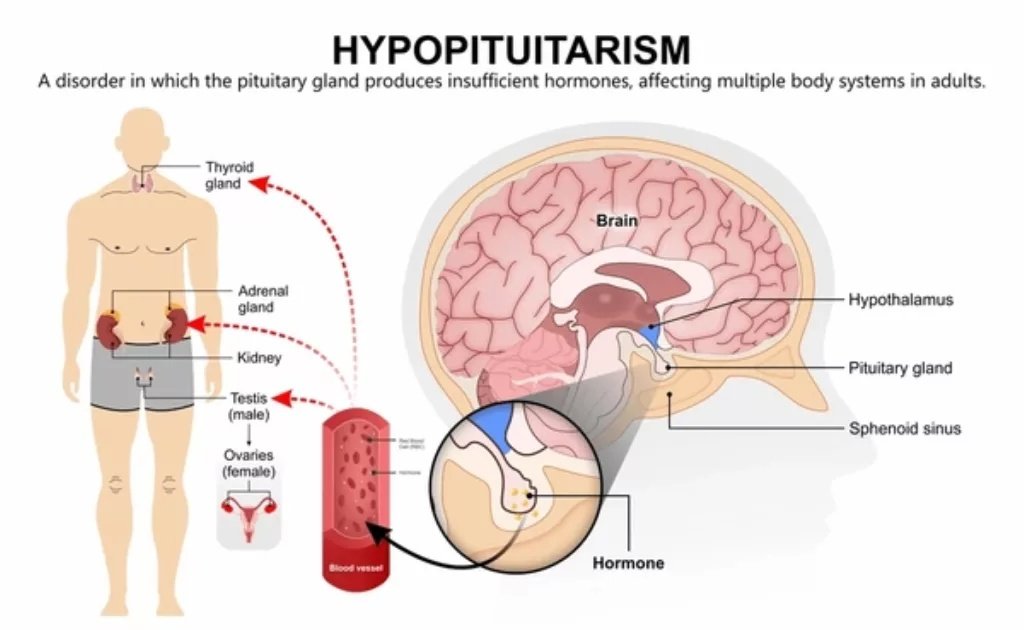
Medical illustration of hypopituitarism highlighting the pituitary gland’s role in regulating thyroid, adrenal, kidney, and reproductive functions.
ACTH Deficiency (Central Adrenal Insufficiency)
The absence of sufficient ACTH production by your pituitary glands will not allow your adrenal glands to produce sufficient cortisol. This leads to:[6]
- Continuous tiredness and lack of muscle strength.
- Unexplained weight loss
- The low blood pressure level, particularly in the standing posture (orthostatic hypotension)
- Dizziness or lightheadedness
- Abdominal pain, vomiting, and nausea
- Loss of appetite
- Hypoglycemia (low blood sugar)
TSH Deficiency (Central Hypothyroidism)
Inappropriately normal or low TSH levels with low free T4 indicate inadequate thyroid stimulation, leading to:[7]
- Very low tolerance to low temperatures
- Weight gain (not associated with increased or decreased appetite)
- Chronic fatigue and sluggishness
- Dry skin and hair
- Constipation
- Depression
- Slower heart rate
- Puffy face
- Loss of memory and inability to concentrate.
LH and FSH Gonadotropin Deficiency
In Women:
- Irregular menstrual periods or complete absence of periods (amenorrhea)
- Infertility
- Vaginal dryness
- Decreased libido
- Loss of armpit and pubic hair
- Hot flashes
- Problem in breastfeeding or the production of breast milk
In Men:
- Erectile dysfunction
- Decreased libido
- Reduced muscle mass and strength
- Increased body fat
- Hair loss on the face, armpits, and pubes.
- Infertility
- Fatigue
- Depression
- Decreased bone density
Children:
- Delayed or absent puberty
- The secondary sexual characteristics are not developed.
Growth Hormone (GH) Deficiency
In Children:
- Significantly slowed growth rate
- Short stature
- Delayed puberty
- Short height, but normal body proportions.
- Baby-faced appearance
- Increased fat around the waist
In Adults:
- Loss of muscle strength and mass
- Excess body fat around the belly
- Weakened bones
- Exercise impairments and fatigue
- Depression or anxiety
- Reduced quality of life
- Aggravated cardiovascular risk factors
Diabetes Insipidus (ADH Deficiency)
Although ADH is synthesized in the hypothalamus rather than the pituitary gland, diabetes insipidus commonly coexists with pituitary disorders due to posterior pituitary involvement.[8]
- Polyuria (excessive urination), at times 3-20 liters per day.
- Extreme thirst (polydipsia)
- Nocturia
- Dehydration
- Dry mouth and skin
- Fatigue
Hypopituitarism Diagnosis
Hypopituitarism diagnosis involves a complex model of clinical examination, laboratory tests, and radiology.[9]
Clinical Evaluation
Hypopituitarism diagnosis starts with a comprehensive clinical examination. Doctors assess their symptoms, which can be a sign of hormone deficiencies, including fatigue, weight loss or gain, poor libido in adults, or developmental abnormalities in children. A detailed medical history can be used to determine possible causes such as past head injury, brain surgery, or radiation therapy. Physical examination can show such signs as reduced muscle mass, pallor, or late puberty.
Hormone Testing
Primary blood testing is done to determine baseline levels of the pituitary hormones and target organ hormones.
- Serum Cortisol and ACTH
- Free Thyroxine (fT4) and TSH
- LH, FSH, and Sex Hormones
- Insulin-like Growth Factor-1 (IGF-1)
- Prolactin
- Serum and Urine Osmolality, Sodium, and Potassium
Dynamic Function Tests
Dynamic testing is done to determine the functional capacity of the pituitary when the baseline results are inconclusive.[10]
- The insulin tolerance test is the gold standard test for assessing the reserves of ACTH and growth hormone, but it should be used with close medical observation.
- Other stimulation tests are the ACTH stimulation test to assess adrenal function and the glucagon stimulation test to determine growth hormone.
Imaging Studies
The magnetic resonance imaging (MRI) of the pituitary gland reveals an abnormality in its structure, including a tumor, cysts, or a previous hemorrhage. MRI aids in the determination of whether the hypopituitarism is a result of damage to the pituitary or the dysfunction of the hypothalamus.
Computed tomography (CT) scanning may be used in a situation where the MRI is contraindicated.
Hypopituitarism Treatment
The management of hypopituitarism is through the use of hormones that are absent in the body to restore physiological functions.
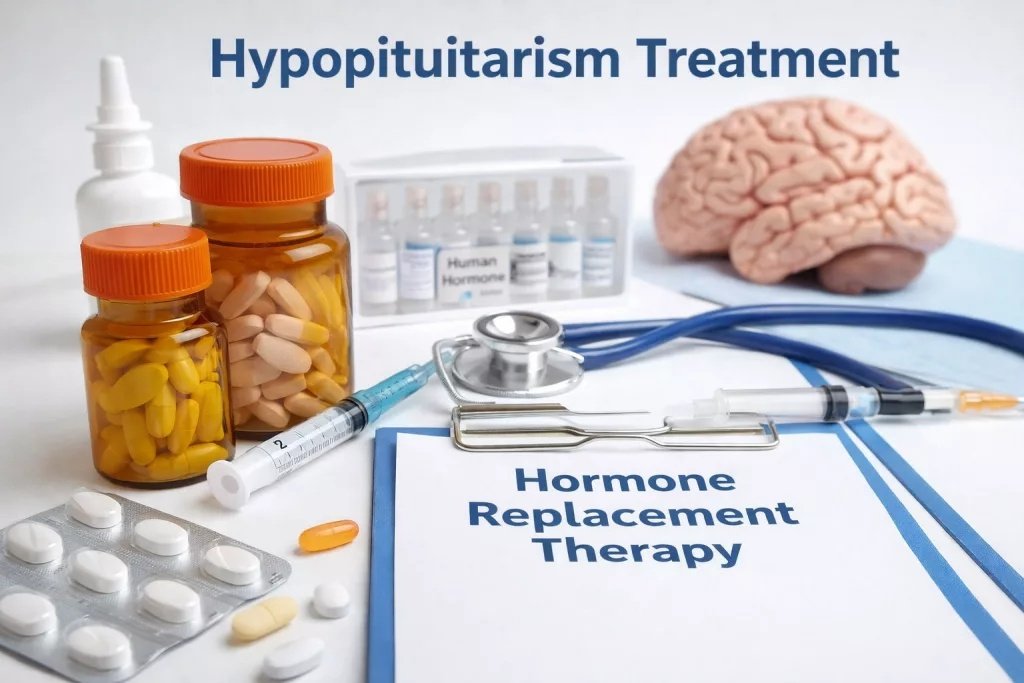
Conceptual image illustrating hypopituitarism treatment, highlighting hormone replacement therapy using medications and injectable hormones to manage pituitary hormone deficiencies.
Treatment of Adrenal Insufficiency
Doctors prescribe hydrocortisone or other corticosteroids such as prednisone to correct the insufficiency of cortisol. Divided doses throughout the day can reestablish the natural cortisol cycle of the body. In case of illness, stress, or surgery, increase the doses in order to prevent adrenal crisis.[11]
Thyroid Hormone Replacement
The secondary form of hypothyroidism that occurs as a result of pituitary malfunction necessitates the use of levothyroxine supplementation. In contrast to primary hypothyroidism, monitoring of treatment is based on the level of free T4, but not TSH, as TSH production is compromised.[12]
Sex Hormone Therapy
Testosterone replacement can restore libido, energy, and muscle mass in men by injections, patches, or gels. Replacement of estrogen and progesterone in women of reproductive age to preserve bone density, prevent symptoms of menopause, and help to conceive a desired pregnancy. Gonadotropin injections may be beneficial for those who want to get pregnant.[13]
Growth Hormone Replacement
Recombinant growth hormone injections in adults with growth hormone deficiency enhance body composition, bone density, and quality of life. Children receive growth hormone therapy to achieve normal growth and development.[14]
Ongoing Monitoring
Frequent visits to an endocrinologist maintain optimal levels of hormones and treatment.
Hypopituitarism Complications
Adrenal Crisis
Adrenal crisis is one of the most serious complications, which is a life-threatening condition caused by extreme deficiency of cortisol. This health crisis may arise in case of physical stress, a disease, a procedure, or when you stop corticosteroid replacement suddenly. It is characterized by weakness, confusion, abdominal pain, vomiting, low blood pressure, and shock. Treatment with intravenous hydrocortisone and fluid resuscitation is necessary to avoid mortal consequences.[15]
Cardiovascular Complications
Hypopituitarism that remains untreated or improperly controlled is a risk factor for cardiovascular diseases. A deficiency in growth hormone and sex hormones leads to a negative lipid profile, fat build-up around the stomach, and decreased ability to exercise. Patients can acquire premature atherosclerosis, high blood pressure, and the risk of heart disease and stroke. The deficiency of thyroid hormone also increases such risks by reducing metabolism and influencing cardiac activity.[16]
Bone Health Problems and Metabolic Problems.
The deficiencies of several hormones disrupt the normal metabolism, resulting in increased weight, insulin resistance, and the risk of diabetes. Growth hormone, sex hormone, and thyroid hormone deficiency result in progressive bone mineral loss, which tremendously contributes to osteoporosis and fracture risk. Women, especially, are susceptible to unprotected rapid bone degradation in the absence of proper estrogen replacement.
Reproductive and Sexual Dysfunction.
Infertility in both men and women occurs due to gonadotropin deficiency. Men suffer from erectile dysfunction, loss of libido, and loss of body muscle. Women experience amenorrhea, vaginal dryness, and menopausal symptoms irrespective of age.
Psychological Impact
The disorder is often accompanied by chronic fatigue, depression, anxiety, and impaired cognitive functions, which have a significant effect on the way in which daily functions and emotional well-being are maintained.
Hypopituitarism Life Expectancy and Prognosis
Hypopituitarism now has a great prognosis due to the current hormone replacement therapy. With the right diagnosis and treatment, a good quality of life can make many patients live relatively normal lives.[17]
Nevertheless, research shows that the life expectancy might remain low in comparison to the general population, especially in multiple deficiencies of hormones or late diagnosis. Studies indicate that mortality risk is mainly increased in patients with untreated or inadequately treated ACTH and growth hormone deficiencies.
Factors Affecting Outcomes
Treatment and adherence to it are important factors in terms of prognosis, as well as the underlying cause and severity of hormone deficiencies. Other complications, other than hormone deficiency, may occur among patients who have tumors, traumatic brain injury, or post-radiation hypopituitarism. The untreated growth hormone deficiency among adults leads to increased cardiovascular mortality.
Significance of Treatment Adherence
Must follow Hormone replacement regimens strictly to achieve optimal prognosis. The patient should also administer drugs regularly and regulate the doses when has any stress or when sick to avoid acute complications such as adrenal crisis. Frequent check-ups by endocrinologists will make sure that hormone levels are within desired limits.
Long-term Outlook
Through appropriate management, most of the patients can remain employed, lead active lifestyles, and live normal lives. Nonetheless, medical follow-up is necessary throughout life to maximise hormone treatment and check the possible complications influencing long-term health outcomes.
Hyperpituitarism vs Hypopituitarism
With the help of the following table, you can differentiate these two pituitary disorders:[18]
| Feature | Hypopituitarism | Hyperpituitarism |
|---|---|---|
| Definition | Reduced secretion of the pituitary hormones. | Increased production of a single or a combination of the pituitary hormones. |
| Prevalence | Uncommon (approximately 1 in 2,000 people) | Rare |
| Main Cause | Pituitary tumors, trauma, surgery, and radiation. | In most cases, pituitary adenomas (non-malignant tumors). |
| The Hormones most commonly affected. | GH, FSH, LH, ACTH | Prolactin, GH, ACTH |
| Growth Effects | In children: short stature, retarded development. | In children:gigantism(undue height); In adults: acromegaly (hands, feet, faces are enlarged) |
| Reproductive Effects | Infertility, loss of libido, menstrual irregularities. | Infertility, galactorrhea (inappropriate milk production), and menstrual problems. |
| Energy/Metabolism | Fatigue, gain or loss of weight (resulting from thyroid deficiency or adrenal deficiency, respectively). | Weakness, loss of weight, and high metabolism. |
| Other Symptoms | Intolerance of cold, hypotension, and dry skin. | Headache, blurred vision, pain in the joints (acromegaly), and Cushing’s disease symptoms. |
| Diagnosis | Reduced hormone levels in the blood tests; MRI reveals tumor, damage, or shrinkage. | High levels of hormones in blood examination; MRI reveals an adenoma. |
| Primary Treatment | Hormone replacement therapy | Operation to excise an adenoma, medication to block hormone secretion, or radiation. |
| Prognosis with Treatment | Adapts well to good hormone replacement but is associated with more mortality. | Treatment-responsive; complications based on affected hormones. |
Conclusion
Hypopituitarism is one of the complex endocrine diseases that need lifelong management, but can be successfully treated with proper care. The secret is to diagnose early, correctly, have the hormone replacement therapy, and frequently visit endocrinologists.
In case of the signs and symptoms indicative of hypopituitarism (including unexplained fatigue, loss of weight, cold intolerance, menstrual problems, or children’s growth issues), be sure to see your healthcare provider at the earliest. Prompt diagnosis and intervention will prevent severe complications and increase the quality of life to a great extent.
Treatment has been getting better as further research advances in longer-acting hormone preparations and improved ways of simulating natural hormone cycles.
References
[1] Schneider HJ, Aimaretti G, Kreitschmann-Andermahr I, Stalla GK, Ghigo E. Hypopituitarism. Lancet. 2007;369(9571):1461-1470.
[2] Melmed S. Mechanisms for pituitary tumorigenesis: the plastic pituitary. J Clin Invest. 2003;112(11):1603-1618.
[3] Fernandez A, Karavitaki N, Wass JAH. Prevalence of pituitary adenomas: a community-based, cross-sectional study in Banbury (Oxfordshire, UK). Clin Endocrinol (Oxf). 2010;72(3):377-382.
[4] Rajasekaran S, Vanderpump M, Baldeweg S, et al. UK guidelines for the management of pituitary apoplexy. Clin Endocrinol (Oxf). 2011;74(1):9-20.
[5] Chiloiro S, Giampietro A, Bianchi A, et al. Primary empty sella: a comprehensive review. Eur J Endocrinol. 2017;177(6):R275-R285.
[6] Arlt W, Allolio B. Adrenal insufficiency. Lancet. 2003;361(9372):1881-1893.
[7] Persani L. Clinical review: Central hypothyroidism: pathogenic, diagnostic, and therapeutic challenges. J Clin Endocrinol Metab. 2012;97(9):3068-3078.
[8] Robertson GL. Diabetes insipidus: differential diagnosis and management. Best Pract Res Clin Endocrinol Metab. 2016;30(2):205-218.
[9] Chanson P, Salenave S. Diagnosis and treatment of pituitary adenomas. Minerva Endocrinol. 2004;29(4):241-275.
[10] Ghigo E, Aimaretti G, Corneli G. Diagnosis of adult GH deficiency. Growth Horm IGF Res. 2008;18(1):1-16.
[11] Husebye ES, Pearce SH, Krone NP, Kämpe O. Adrenal insufficiency. Lancet. 2021;397(10274):613-629.
[12] Jonklaas J, Bianco AC, Bauer AJ, et al. Guidelines for the treatment of hypothyroidism. Thyroid. 2014;24(12):1670-1751.
[13] Santen RJ, Allred DC, Ardoin SP, et al. Postmenopausal hormone therapy: an Endocrine Society scientific statement. J Clin Endocrinol Metab. 2010;95(7 Suppl 1):s1-s66.
[14] Ho KK. Consensus guidelines for the diagnosis and treatment of adults with GH deficiency II: a statement of the GH Research Society. Eur J Endocrinol. 2007;157(6):695-700.
[15] Puar TH, Stikkelbroeck NM, Smans LC, Zelissen PM, Hermus AR. Adrenal crisis: still a deadly event in the 21st century. Am J Med. 2016;129(3):339.e1-339.e9.
[16] Abs R, Feldt-Rasmussen U, Mattsson AF, et al. Determinants of cardiovascular risk in 2589 hypopituitary GH-deficient adults – a KIMS database analysis. Eur J Endocrinol. 2006;155(1):79-90.
[17] Rosen T, Bengtsson BA. Premature mortality due to cardiovascular disease in hypopituitarism. Lancet. 1990;336(8710):285-288.
[18] Katznelson L, Laws ER Jr, Melmed S, et al. Acromegaly: an Endocrine Society clinical practice guideline. J Clin Endocrinol Metab. 2014;99(11):3933-3951.