


Lidocaine Allergy Symptoms Lidocaine allergy is an adverse allergic response to the local anesthetic “lidocaine,” also known as lignocaine. In most cases, there is only a mild-to-moderate response to the administered drug. However, it can turn into a life-threatening condition that requires immediate diagnosis and treatment. The drug lidocaine is frequently used by dentists to numb oral regions before performing dental procedures like root canal treatmentand extractions, etc. It belongs to the category of amide drugs, which generally have a lower incidence of adverse reactions.
In the majority of cases, your body shows an allergic response to other components of the anesthetic (like a vasoconstrictor). Mild allergic reactions usually occur due to histamine release in response to a specific agent. The adverse reactions include itchy rashes, swelling, and nausea etc. According to reports, lidocaine allergy accounts for 32% of all allergic contact dermatitis reactions to local anesthetics.
It is estimated that only 1% of cases depict a true allergic reaction (type 1 hypersensitivity reaction) to the drug. Anaphylactic reactions are possibly life-threatening and mediated by the immunoglobulin E (IgE), whose symptoms usually appear within a few minutes of administration.
Lidocaine Allergy Symptoms
As already mentioned, the majority of patients experience mostly mild symptoms. The allergic response can affect different organs. Lidocaine is used for different purposes. In addition to its use as a dental anesthetic, lidocaine is used topically in airways for flexiblebronchoscopy. Lidocaine is also used as an antiarrhythmic drug. Because of these diverse applications, lidocaine can be administered by injection, topical application, or inhalation. The most common allergic symptoms include:
Mild Skin Symptoms:
Urticaria (rash) is a common manifestation of lignocaine allergy (especially to oral lidocaine). Usually, the rash is itchy and accompanied by redness (erythema). Intradermal tests in 5 subjects with concomitant episodes of urticaria revealed underlying lidocaine allergy. Thus, urticaria is an evident symptom of lidocaine allergy.
Angioedema refers to swelling of tissues under the skin. This is also one of the mild presentations of lidocaine allergy. Swelling of these tissues is mostly accompanied by redness and rash.
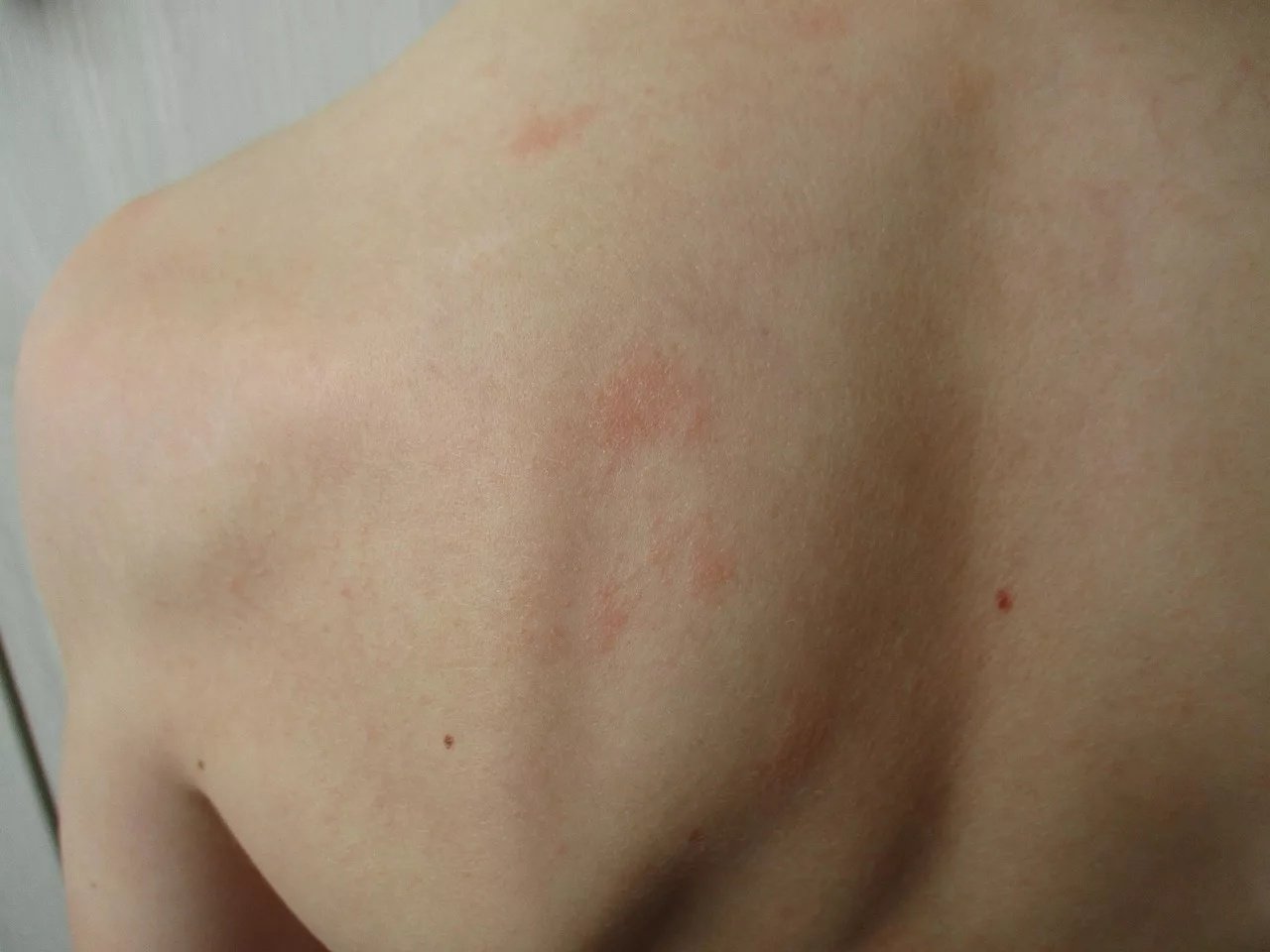
The image shows a red, itchy rash developed due to a lidocaine allergy.
Due to repeated exposure to the drug, dentists are at a high risk of developing lidocaine allergy. A study conducted on dentists found that a significant number of dental professionals experienced skin, GIT, and respiratory symptoms of lidocaine allergy that they were unaware of. However, anaphylactic reactions were seen in only a small percentage of subjects.
Gastrointestinal Tract Symptoms:
Nausea, vomiting, and diarrhea are commonly seen in adverse reactions to most drugs. Lidocaine use in bronchoscopy can potentially cause gastrointestinal symptoms like nausea, vomiting, and evenanorexia(eating disorder).
Severe Symptoms:
The body’s allergic response to the local anesthetic can induce serious, potentially life-threatening effects. Cases of true anaphylactic reactions in response to lignocaine are very rare. However, when present, these responses can take an ugly form. Severe consequences of a true allergic reaction include dyspnea (shortness of breath) and apnea (stoppage of breathing). The majority of respiratory distress cases are seen in patients undergoing bronchoscopy.
Dyspnea:
A 9-year-old boy reported to the ER with dyspnea and collapse of circulation after topical lidocaine application in the airways (for bronchoscopy). There was swelling of the airway mucosa that compromised the patient’s ventilation.
In another case, a 33-year-old man undergoing flexiblebronchoscopy developed acute respiratory distress (characterized by non-cardiogenic pulmonary edema) after topical application of lidocaine in the airways. Patients in respiratory distress present with coughing, dyspnea, and noisy breathing.
Rhinitis:
Many patients report experiencing various nasal symptoms along with breathing difficulties. Common nasal issues include a runny nose and nasal congestion. These symptoms of rhinitis further exacerbate the patient’s condition, thereby justifying immediate medical attention.
Hypotension:
To make matters worse, a true allergic response to lidocaine administration can drop your blood pressure. Hypotension is a serious consequence of lidocaine allergy that may eventually lead to loss of consciousness.
In a clinical case, an 86-year-old woman receiving a local dental anesthetic for retained teeth showed signs of lidocaine allergy. There was itchiness and redness in her scalp and peri-auricular area. Her blood pressure took a serious hit, dropping from 160/70mm Hg to 49/38mm Hg. She was managed well by the dentist and an anesthesiologist. Detailed investigation revealed that she had fainted 30 minutes after dental anesthesia at a clinic 8 years ago, indicating she was already allergic to the drug.
A true allergic response can also trigger potentially life-threatening heart conditions like ventricular tachycardia, arrhythmias, fibrillations, and atrioventricular heart blocks. Therefore, in the vast majority of cases, deaths due to allergic (anaphylactic) responses are attributed to the co-occurrence of hypotension and circulatory failure.
Lidocaine Allergy Causes
Response To Antioxidants & Preservatives:
Very rarely does the drug lidocaine itself induce an allergic reaction. In most instances, antioxidants and preservatives in the lidocaine preparation (injection or gel) are the main culprits. Substances like metabisulfite and parabens can trigger adverse reactions. However, the most common allergic response is to para-aminobenzoic acid (PABA) present in the anesthetic injection. This effect is attributed to cross-reactivity between esters.
Anaphylactic Response:
In rare cases, your body’s immune system identifies lidocaine (or its metabolites) as a potential threat and initiates an IgE-mediated response. The response from IgE is severe as mast cells (and basophils) release chemicals like histamine. There is a cascade of events that has widespread effects on your body. The swelling of the airways, accompanied by heartbeat irregularities and breathing difficulties, can lead to death (in the absence of immediate medical attention).
Lidocaine Allergy Cross Reactivity:
Sometimes, patients allergic to other types of amide drugs, like mepivacaine and ropivacaine, can also show adverse responses on lidocaine administration due to lidocaine allergy cross-reactivity. Allergists identify cross-reactivity as a process in which your body’s immune system recognizes similar structures (in different drugs) as the same. This leads to an adverse reaction.
Risk Groups:
Certain groups are identified to be at a higher risk of developing lidocaine allergy:
- Individuals with a confirmed diagnosis of “caine” allergy (mepivicaine, lidocaine, ropivicaine allergies)
- Patients with 2nd and 3rd degree heart block
- People with severe liver and kidney damage
- Epilepsy patients
Lidocaine Allergy Diagnosis
History & Physical Examination:
Usually, the onset of lidocaine allergy is fast. Thus, most patients are aware of the symptoms developing after lidocaine administration. Important questions in history-taking include symptoms of urticaria, itchiness, redness, and inflammation of the skin.
Healthcare providers take the patient’s medical history and conduct a thorough physical examination. Your doctor will check your vital signs, including blood pressure and heart rate. He will also check for red, itchy patches on the skin.
Skin Tests:
Skin tests have played a crucial role in diagnosing local anesthetic allergies to drugs like lidocaine and mepivacaine, etc. Thus, doctors use different types of skin tests to diagnose lidocaine allergy.

The image shows a patient undergoing a skin prick allergy test for local anesthetic allergy (lidocaine allergy). The allergist looks for a wheal or flare after injecting a small solution of the anesthetic in the skin.
Drug Proactive Challenge Test (DPT)
To minimize the chances of adverse reactions, doctors perform skin tests to determine if a person is allergic to a specific drug. Allergists prefer a provocative challenge test (DPT). It is considered the gold standard for allergic diagnosis of most anesthetic drugs. In this test, a professional softly pricks your skin with a plastic applicator and injects a very small quantity of the LA solution. If sensitive, itchy red patches develop within 15-20 minutes.
Intradermal Test
If the DPT is negative, doctors go for intracutaneous/intradermal tests for lidocaine allergy diagnosis. This involves injecting a small amount of the anesthetic into the epidermis of the forearm and monitoring it (for 20 minutes) for a flare reaction.
Prick Test
In a skin prick test, the health professional gently lifts your skin with a sterile needle and deposits the test solution. The professional then looks for a wheal or a flare reaction.
Patch Test
A patch test is used to diagnose delayed allergic reactions to lidocaine. In this particular test, a patch of lidocaine is placed on the patient’s back for two days (48 hours). After the specified period, the doctor or allergist checks for erythema or blisters at the patch site.
Procaine Vs. Lidocaine Allergy
Lidocaine and procaine belong to different classes of LA drugs. In the case of lidocaine, the allergic response arises to the amide structure of the drug. On the other hand, allergic reactions to procaine are attributed to ester-related para-aminobenzoic acid (PABA). The bodily reactions are similar.
Lidocaine Allergy Treatment
Healthcare professionals, like dentists, must be aware and well-trained to manage patients with lidocaine allergy. Local anesthetic systemic toxicity (LAST) can present with minor symptoms (like urticaria and itchiness) to severe cardiovascular complications. Mild reactions (mostly cutaneous symptoms) can be managed well with oral/intravenous administration of diphenhydramine (20-50mg) for adults. The ideal dose for pediatric patients is 1mg/kg.
Emergency Management:
The first step in the emergency management of lidocaine allergy is airway management and circulatory support. Doctors follow the ABC protocol, i.e., airway, breathing, and circulation. The patient is laid down in a supine position (with face, torso forcing upwards and legs extended). Paramedics administer oxygen (hyperventilation) to resuscitate the patient and minimize the chances of cardiovascular events.
If the patient has seizures, doctors administer drugs like benzodiazepine and diazepam. Epinephrine administration is the most important step in the management of lidocaine-induced anaphylaxis reaction. This life-saver drug helps sustain blood pressure (counters hypotension) and reverses the effects of the circulating mediators. Epinephrine also helps avoid potentially fatal arrhythmias and cardiac arrest. Other drugs that prove to be helpful include antihistamines to counter the impact of histamines released from mast cells.
According to clinical studies, the following methods have proven to be effective in the immediate management of lidocaine allergy:
- Epinephrine (adrenaline) administration
- Fluid resuscitation
- Anti-inflammatory and anti-histamine drug administration
- Oxygen therapy
- Supportive care (symptomatic)
These steps of active treatment can effectively alleviate symptoms within just 20 minutes. Doctors are advised to adopt custom-tailored treatment options for every patient. Generally, doctors give corticosteroids like 60mg of IV methylprednisolone along with 0.3ml of 1:1000 subcutaneous epinephrine.
Lidocaine Alternatives
You must inform your dentist/doctor about your lidocaine allergy so they can use another type of anesthetic drug. Most professionals use ester-type anesthetics like procaine, chloroprocaine, or tetracaine. Other types of amide drugs, like articaine, may also be used but may still cause allergic reactions due to cross-reactivity. 1% diphenhydramine local injection can also help achieve a substantial anesthetic effect in lidocaine allergy patients.
Wrapping Up
Lidocaine allergy is a rare phenomenon that mainly causes mild cutaneous symptoms like redness, skin swelling, and itchiness etc. Most of the time, preservatives and antioxidants (like PABA, metabisulfite, and parabens) in the drug trigger mild-to-moderate allergic responses.
A severe anaphylactic reaction is extremely rare and is attributed to an IgE-mediated response to the drug (or the additives). However, anaphylaxis causes potentially life-threatening symptoms, including airway swelling, circulation collapse, hypotension, and cardiac arrhythmias etc. Doctors manage severe responses with emergency management. Immediate treatment involves basic life support, oxygen therapy, fluid resuscitation, and administration of drugs like epinephrine, corticosteroids, and antihistamines.
References
[1] To, D., Kossintseva, I., & de Gannes, G. (2014). Lidocaine contact allergy is becoming more prevalent.Dermatologic Surgery,40(12), 1367-1372.
[2] Sanan, N., Lee, J., Baxter, C., Jeskey, J., & Hostoffer, R. (2019). Delayed and protracted allergic reaction to oral lidocaine.Annals of Allergy, Asthma & Immunology,123(4), 413-414.
[3] Jenerowicz, D., Polańska, A., Glińska, O., Czarnecka-Operacz, M., & Schwartz, R. A. (2014). Allergy to lidocaine injections: comparison of patient history with skin testing in five patients.Advances in Dermatology and Allergology/Postępy Dermatologii i Alergologii,31(3), 134-138.
[4] Janas-Naze, A., & Osica, P. (2019). The incidence of lidocaine allergy in dentists: an evaluation of 100 general dental practitioners.International journal of occupational medicine and environmental health,32(3).
[5] Bose, A. A., & Colt, H. G. (2008). Lidocaine in bronchoscopy: Practical use and allergic reactions.Journal of Bronchology & Interventional Pulmonology,15(3), 163-166.
[6] Soong, W. J., Lee, Y. S., Soong, Y. H., Tsao, P. C., Yang, C. F., Jeng, M. J., & Peng, Y. Y. (2011). Life‐threatening anaphylactic reaction after the administration of airway topical lidocaine.Pediatric pulmonology,46(5), 505-508.
[7] D’Elia, T., & Ghio, L. (2010). Acute respiratory distress syndrome after airway anesthesia with lidocaine.Journal of Bronchology & Interventional Pulmonology,17(3), 245-247.
[8] Kim, H., Lee, J. M., Seo, K. S., Kwon, S. M., & Row, H. S. (2019). Anaphylactic reaction after local lidocaine infiltration for retraction of retained teeth.Journal of dental anesthesia and pain medicine,19(3), 175-180.
[9] Caliskan, N., Yildirim, G., Bologur, H., Gungor, H., Karaca Sahin, M., Erbay, F., … & Ozceker, D. (2024). Local anesthetics allergy in children: evaluation of diagnostic tests with real‐life data.Pediatric Allergy and Immunology,35(2), e14097.
[10] Mi, J. H., Shen, T. T., & Wang, H. W. (2025). A case report of anaphylactic shock caused by lidocaine.Medicine,104(4), e41325.
[11] eMedicine. (2024, February 21).Local anesthetic toxicity: Treatment & management. Medscape. Retrieved August 30, 2025, from https://emedicine.medscape.com/article/1844551-treatment