

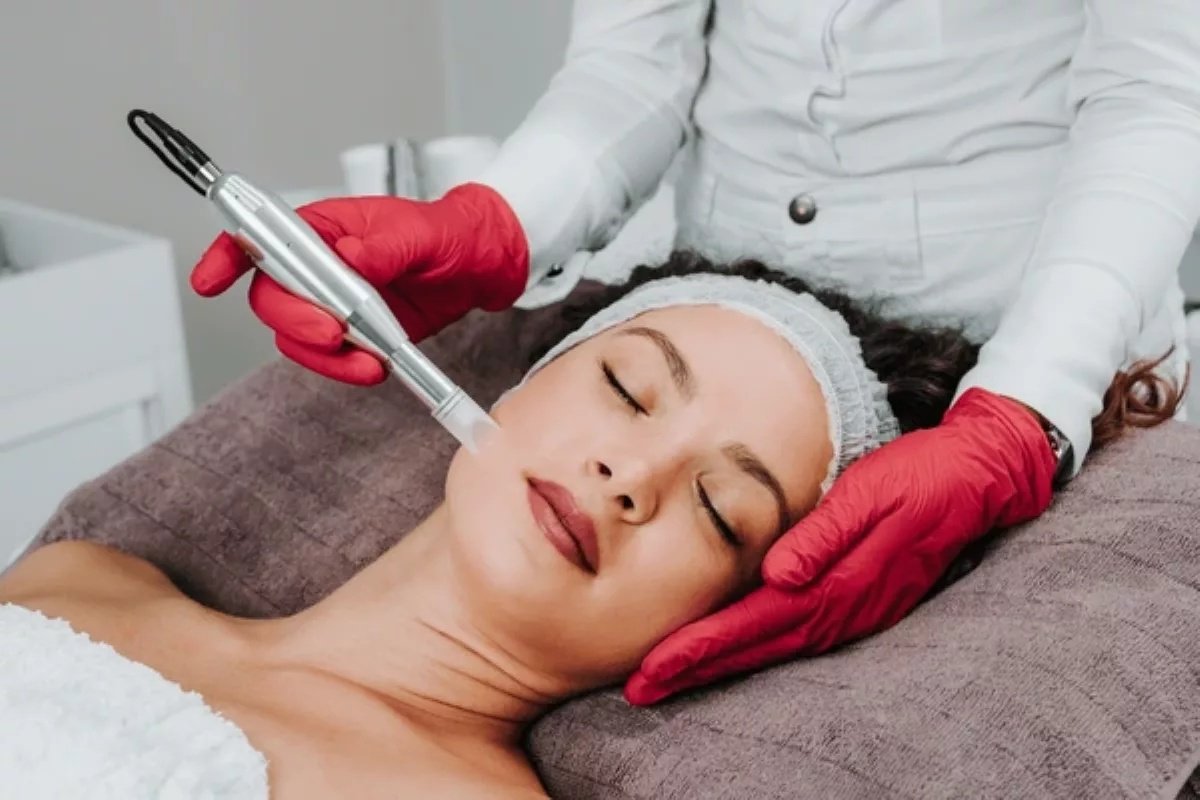
Microneedling PRP Vampire Microneedling with PRP has become a popular non-surgical treatment for improving acne scars, fine lines, and even early hair thinning. It works by stimulating the skin’s natural healing process and enhancing it with platelet-rich plasma derived from your own blood. Microneedling with PRP is sometimes popularly referred to as the “vampire facial” because the procedure uses platelet-rich plasma derived from the patient’s own blood after microneedling.
What Is PRP with Microneedling?: Microneedling PRP Vampire
To see what microneedling with PRP is, it is better to know each part individually.
Microneedling:
Microneedling, also called collagen induction therapy, uses a handheld tool such as a pen-shaped device or derma roller with tiny, sterilized needles to perform a minimally invasive cosmetic treatment on the skin. These needles cause regulated micro-injuries on the skin surface. Do not be alarmed by that phrase. The injuries are microscopic and premeditated. They trigger the skin’s natural healing process, which increases collagen and elastin production. These proteins help the skin become firmer, smoother, and more youthful. The controlled injury also activates fibroblasts and initiates a wound-healing cascade involving cytokine release and remodeling of type I and type III collagen in the dermis.[1]
PRP:
Platelet-Rich Plasma, or PRP, is manufactured out of your own blood. A tiny sample is used, put into a centrifuge machine, and rotated at a high speed as a way of separating the blood components. The outcome is a concentrated golden liquid that is rich in platelets and growth factors. These are the platelet-derived growth factor (PDGF), transforming growth factor-beta (TGF-β), and vascular endothelial growth factor (VEGF), which are potent biological signals that trigger cell regeneration, repair of tissue, and collagen production. Depending on the preparation technique, PRP may be leukocyte-rich or leukocyte-poor, and some aesthetic protocols prefer leukocyte-poor PRP to reduce post-procedure inflammation.[2]
Microneedling creates tiny microchannels in the skin, and PRP is deposited into these channels. This process allows growth factors to penetrate deeply into the dermis, where they work most effectively. Several peer-reviewed dermatological studies show that the combination of microneedling and PRP produces better outcomes than either treatment used alone.[3]
How the Procedure Actually Works: Step by Step
It is not as complex as it sounds. The following is what would occur on a typical session:[4]
- Examination: The first step is the examination of the type of your skin, concerns, and medical history by a dermatologist.
- Collection of Blood: The clinician draws a small vial of your blood (approximately 10–15 mL).
- PRP preparation: The medical team prepares PRP by placing the blood in a centrifuge and rotating it to separate and concentrate the platelet-rich plasma..
- Topical anesthesia: Topical numbing cream (typically lidocaine-based) is put on the part of the body where the treatment is to be performed 30-45 minutes before the actual treatment.
- Microneedling. An instrument such as a Dermapen or derma roller moves around the skin in various directions, creating controlled micro-punctures. Microneedling devices allow adjustable needle depths (typically ranging from 0.5 mm to 2.5 mm depending on the treatment area and indication), ensuring targeted dermal stimulation.
- PRP application: The PRP is then put on the site of treatment and left to absorb into the open microchannels. In some protocols, PRP may also be injected intradermally to enhance delivery.
- Post-care: Soothing serum or balm is used, and post-care is given.
The whole session would last an average of 45 minutes to one hour.
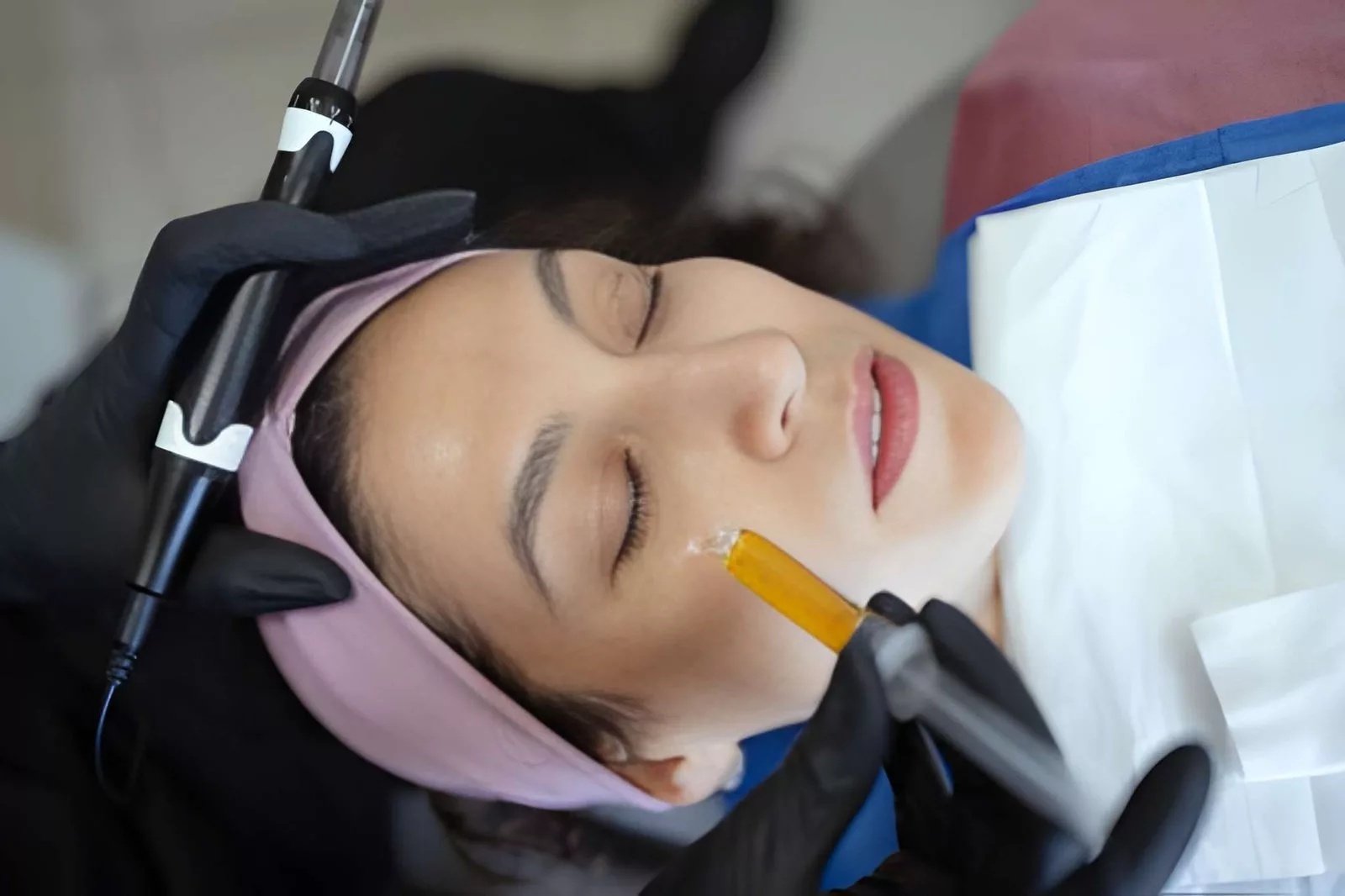
Doctor applying platelet-rich plasma with dermapen for facial rejuvenation
Does Microneedling Hurt?
It is one of the most widespread questions that individuals can ask, and it should be answered honestly. So, does microneedling hurt?
Mildly, but the majority of patients can tolerate it very well. The anesthetic paste used before it numbs much. In the process, most individuals complain about the feeling of a slight prickling or scratching sensation. The insertion of a deeper needle, especially in bones, such as the forehead, can be more painful. PRP addition does not introduce any discomfort to the procedure itself.[5]
It is normal that after the session, there is some redness and slight swelling, like a sunburn. This normally subsides in 24 to 72 hours. Other patients also complain of light peeling of the skin or tightness within the days after treatment. All these are normal indications of the healing process at work. Post-inflammatory hyperpigmentation can rarely occur, particularly in darker skin types, although the risk is lower compared to many laser resurfacing procedures.
Benefits of PRP with Microneedling
PRP with microneedling has a wide range of benefits and is one of the most adaptable procedures in aesthetic dermatology. The following is a brief list of what can be tackled by such a combination:acne scars: A concurrent split-face study.Journal of Cosmetic Dermatology, 15(4), 434–443.” style=”position:relative;color:#309b65;cursor:help;border-bottom:1px dotted #309b65;font-weight:bold”>[6]
- Acne scars: Rolling and boxcar scars in particular that are responsive to collagen remodelling.
- Fine lines and wrinkles: More collagen synthesis makes deep lines appear to be smooth.

Microneedling with PRP can improve skin laxity and reduce fine lines in the neck area by stimulating collagen production.
- Skin texture and tone: Rough skin, large pores, and dull skin are all better through regular treatment.
- Hyperpigmentation and sun damage
- Stretch marks: Results are longer in this case, but improvement is also clinically reported.
- Surgery scars: Newer scars are more responsive compared to the older ones.
- Under-eye area: A randomized controlled trial demonstrated significant periorbital improvement with combined PRP and microneedling.[7]
Microneedling for Hair Loss
Scalp treatment is an area that causes a lot of surprise among many individuals. Microneedling for hair loss, together with PRP, has now become a potentially promising non-surgical intervention in the treatment of androgenetic alopecia, the most prevalent form of thinning in men and women.
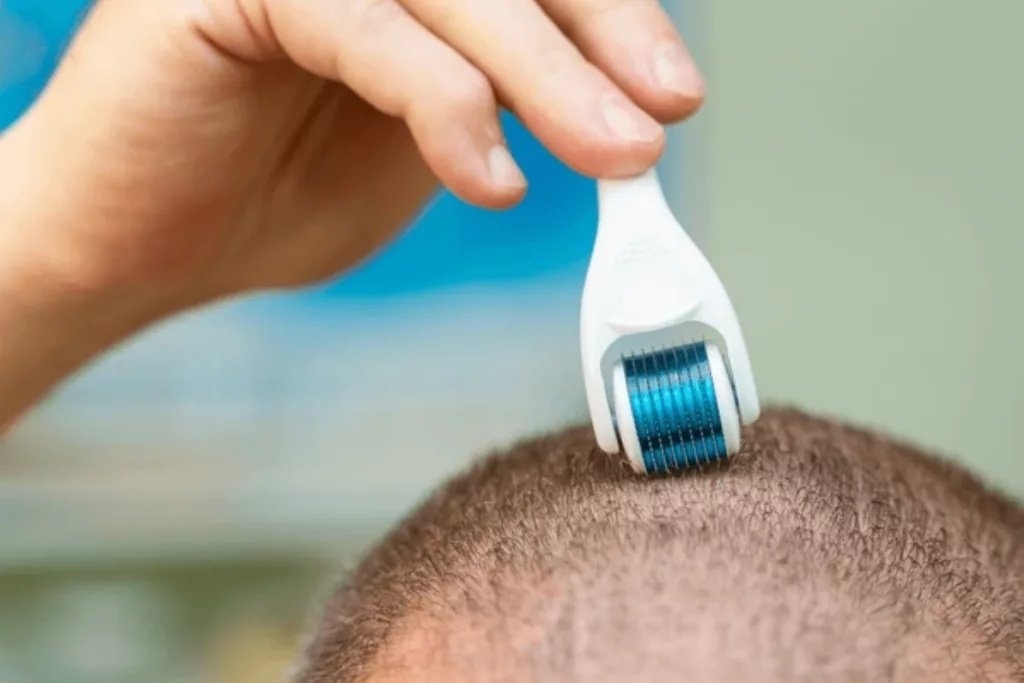
PRP with microneedling with PRP may help stimulate hair follicles and support hair regrowth in early-stage baldness.
Microneedling involves making small punctures on the skin, resulting in controlled minor bleeding. After PRP is applied or injected, there is a penetration of the growth factors in these open channels directly into the hair follicles. This increases follicle activity, enhances the resting phase (telogen) to the growth phase (anagen), and enhances blood flow in the scalp.
A clinical trial reviewed in a study in Dermatology and Therapy established that microneedling alone was more effective in increasing the number of hairs than topical minoxidil monotherapy.[8] In a retrospective study of patients with androgenetic alopecia unresponsive to standard therapies, multiple sessions of PRP combined with microneedling were associated with high patient satisfaction and clinically noticeable improvement.[9]
The majority of the protocols suggest at least four sessions that occur four weeks apart to have an important result, and continuing to follow up maintenance sessions every six to twelve months.
Microneedling for Acne Scars: What Does the Research Say?
Acne scars can significantly affect self-confidence and often persist long after active acne has healed. Because these scars result from collagen damage, treatments that stimulate collagen production are especially helpful. Microneedling combined with platelet-rich plasma (PRP) has shown superior improvement compared to microneedling alone.
In a split-face study conducted at Maulana Azad Medical College in New Delhi, one side of the face was treated with microneedling alone and the other with microneedling plus PRP. Both sides improved, but the PRP-treated side showed significantly better reduction in scar severity. The treatment was particularly effective for rolling and boxcar scars, while deep ice-pick scars responded less.
The improved results are attributed to growth factors in PRP, which enhance collagen formation and tissue remodeling.[10]
Microneedling Before and After
Any cosmetic treatment should be managed in terms of expectations. The following are some realistic pre- and post-results of microneedling:
| Timeframe | What You May Notice |
|---|---|
| Immediately after | Erythema, slight edema, warm skin |
| Days 1–5 | The redness may persist |
| 2–3 weeks post-treatment | A noticeable glow, subtle improvement in texture |
| 4–6 weeks post-treatment | Obvious improvement of pigmentation, skin-smoothing. |
| After a full course (3–6 sessions) | Major decrease in scars, fine lines, and uneven colour. |
The majority of providers suggest between two and three sessions in case of slight changes in texture, and six sessions in case of severe scarring. Treatment usually involves a gap of four weeks between sessions to give the skin time to recuperate and regenerate collagen. Results continue to improve progressively with each session.
Microneedling Serums and Their Role
The microneedling serum applied either before, during, or following the procedure is another component of the process that is frequently neglected but still important. Since microneedling creates microchannels in the skin, it enhances the absorption of products placed on the skin (immediately after the procedure) significantly. That is why PRP is so effective, yet that is why the correct supporting serum can be selected.
The hyaluronic acid serums are usually used during or after microneedling to hydrate and calm the skin. In certain protocols, vitamin C serums can be utilized in order to speed up collagen production and lighten skin.[11]
Strong exfoliants, retinol, or anything with alcohol should not be applied to recently microneedled skin, as the skin is more susceptible to irritation due to increased permeability.
Microneedling with PRP Cost: What Should You Budget?
The cost of microneedling with PRP is one of the first useful questions that people ask. The truth of the matter is that it is different, and not always the same.
In the United States, the average session costs 500-1500 USD. A variety of things determine whether you are on one end of that range or the other:[12]
- Geographic location: Clinics located in major cities, such as New York or Los Angeles, tend to be more expensive than those in more modest cities.
- Provider experience: A board-certified dermatologist or plastic surgeon is probably going to charge more money, yet the experience usually translates to improved results.
- Treatment area: It is more expensive to treat a full face than the under-eye or forehead.
- Sessions: The majority of people need three to six sessions before achieving maximum results.
- Clinic technology: High-quality centrifuges and high-tech needling devices influence the price and quality.
The cost of microneedling with PRP varies depending on geographic location, clinic expertise, and the number of sessions required. Because it is a cosmetic procedure, it is typically considered an out-of-pocket expense and is not covered by most insurance plans. While prices differ, treatment is often less expensive and less invasive than surgical procedures, which generally involve higher costs and longer recovery times.
Microneedling Results: What is their Lasting Effect?
The outcomes of microneedling do not last forever, but rather are long-lasting, especially when they are maintained. The majority of patients experience long-lasting improvement after one course of treatment of up to six to twelve months. Such factors as skin type, lifestyle habits (especially sun protection), age, and scheduled maintenance sessions are among those that affect longevity.[13]
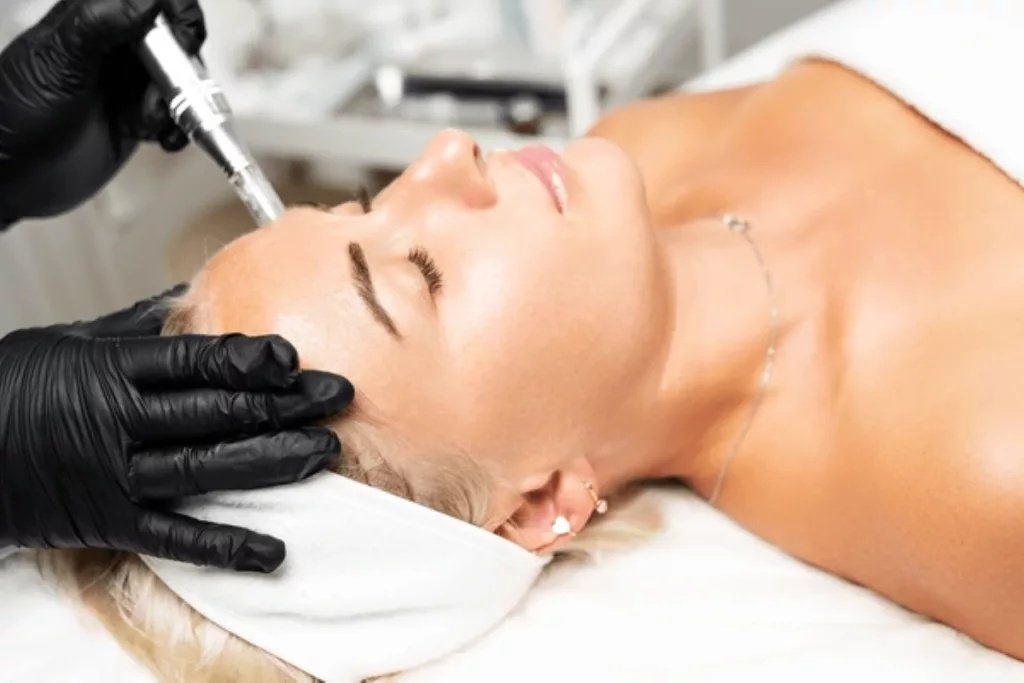
PRP-enhanced microneedling improves skin texture, reduces fine lines, and promotes natural skin rejuvenation.
Most dermatologists recommend the following to maintain the results:
- A maintenance appointment is once every six or twelve months
- Using SPF daily
- Regular use of quality products in skincare
- Quitting smoking is necessary because it destroys collagen
Another aspect that is worth considering is that the skin keeps on improving several weeks after the last session because collagen remodeling is a slow, biological process.
Who Is a Good Candidate?
The PRP microneedling is usually safe across all of the skin types and skin tones, which is one of the significant benefits of this method over laser procedures that may entail risks of hyperpigmentation in individuals with darker complexions. It is generally considered safe for higher Fitzpatrick skin types when performed appropriately.[14]
You should avoid this treatment if you:
- Are you pregnant or breastfeeding
- Possess active lesions of acne, infections of the skin, or open wounds
- Have a history ofkeloid scarring
- Have blood-clotting disorders or are on blood thinners
- Have undergone skin resurfacing procedures in the last year
One should never start aesthetic treatment without first consulting a trained medical practitioner. It is not optional; it is necessary to have a proper consultation.
Side Effects and Safety Issues
Treatment is seen to be well-tolerated, but rare side effects are possible. The side effects reported are:[15]
- Redness and swelling (so very common, and does not last long, can be gone in days)
- Mild bruising
- Skin numbness or dryness.
- Rarely, during infection, the activation of a cold sore (herpes simplex virus), or temporary loss of hair in hair treatments on the scalp.
- Extremely uncommon, mild swelling of lymph nodes.
Since PRP is made using your own blood, the chances of allergy or spreading of a disease are virtually zero. The procedure must, however, be carried out by a licensed medical practitioner in a clean clinical environment. There have been reports of severe complications where PRP procedures were done in non-clinical spa environments, and this is a caution that credentialing really counts. roper sterile technique minimizes infection risk and is essential for patient safety.
Final Thoughts
Microneedling with PRP is a scientifically studied procedure that can improve skin texture, acne scars, and hair density in suitable candidates. While results are gradual and require multiple sessions, many patients experience meaningful improvements with minimal downtime. As with any cosmetic treatment, outcomes vary depending on individual skin type, treatment protocol, and provider expertise. Consultation with a qualified dermatologist is essential to determine whether this procedure aligns with your goals and medical history.
References
[1] Alam, M., et al. (2018). Platelet-rich plasma in dermatology: Boon or a bane?Indian Journal of Dermatology, Venereology and Leprology, 84(1), 31–37.
[2] Hausauer, A. K., & Jones, D. H. (2018). Evaluating the efficacy of different platelet-rich plasma regimens for management of androgenetic alopecia.Dermatologic Surgery, 44(9), 1191–1200.
[3] Zhou Y, Shen X, Chen Y, Zhang C, Chen X. The efficacy and safety of platelet-rich plasma combined with microneedling in acne scar treatment: a systematic review and meta-analysis. Aesthet Plast Surg. 2021;45(5):2171–2182. doi:10.1007/s00266-021-02249-3.
[4] Dhurat, R., & Sukesh, M. S. (2014). Principles and methods of preparation of platelet-rich plasma: A review and author’s perspective.Journal of Cutaneous and Aesthetic Surgery, 7(4), 189–197.
[5] Farinelli, W. A., et al. (2020). Tolerability of microneedling: Patient-reported outcomes and clinician assessments.Journal of Drugs in Dermatology, 19(3), 254–259.
[6] Asif, M., Kanodia, S., & Singh, K. (2016). Combined autologous platelet-rich plasma with microneedling verses microneedling with distilled water in the treatment of atrophic acne scars: A concurrent split-face study.Journal of Cosmetic Dermatology, 15(4), 434–443.
[7] Alkhawam L, Alam M. Platelet-rich plasma and microneedling for periorbital rejuvenation: a randomized split-face study. Dermatol Surg. 2019;45(11):1430–1436. doi:10.1097/DSS.0000000000001967.
[8] Dhurat, R., et al. (2013). A randomized evaluator blinded study of effect of microneedling in androgenetic alopecia: A pilot study.International Journal of Trichology, 5(1), 6–11.
[9] Gentile P, Garcovich S. Platelet-rich plasma in androgenetic alopecia: a review of randomized controlled trials. Stem Cells Transl Med. 2020;9(7):704–716. doi:10.1002/sctm.19-0333.
[10] Asif M, Kanodia S, Singh K. Combined autologous platelet-rich plasma with microneedling versus microneedling alone in the treatment of atrophic acne scars: a comparative study. J Cutan Aesthet Surg. 2016;9(3):144–148. doi:10.4103/0974-2077.191645.
[11] Kim, S. T., et al. (2020). Topical hyaluronic acid for dermal filler augmentation and microneedling recovery.Dermatologic Therapy, 33(1), e13168.
[12] Thervo. How much does PRP microneedling cost? Thervo cost guide [Internet]. 2025 May 30 [cited 2026 Mar 3]. Available from: https://thervo.com/costs/prp-microneedling-cost
[13] El-Domyati, M., et al. (2016). Multiple microneedling sessions for minimally invasive facial rejuvenation: An objective assessment.International Journal of Dermatology, 55(12), 1361–1369.
[14] Alster, T. S., & Graham, P. M. (2018). Microneedling: A review and practical guide.Dermatologic Surgery, 44(3), 397–404.
[15] Singh, A., & Yadav, S. (2016). Microneedling: Advances and widening horizons.Indian Dermatology Online Journal, 7(4), 244–254.