


Mucinous Carcinoma Symptoms Mucinous carcinoma is a rare type of cancer that forms in cells that produce mucin, the primary component of mucus. Mucin is a high–molecular-weight glycoprotein produced by epithelial cells lining mucosal surfaces, where it forms mucus that protects and lubricates tissues. In this form of cancer, the mucin that is secreted by the cells encloses the cancer cells and actually forms part of the tumor.
Mucinous carcinoma can develop in several organs that contain mucin-producing epithelial cells, but most often it occurs in the breast. The given medical condition occurs in about 2 to 7 percent of all breast cancers. It may also grow in the rectum, the colon, lungs, ovaries, pancreas, and other organs.
Under the microscope, the pathologists can see nests or clusters of cancer cells suspended in a large mass of extracellular mucin. This mucus is divided by thin and fibrous walls, with small blood vessels.[1]
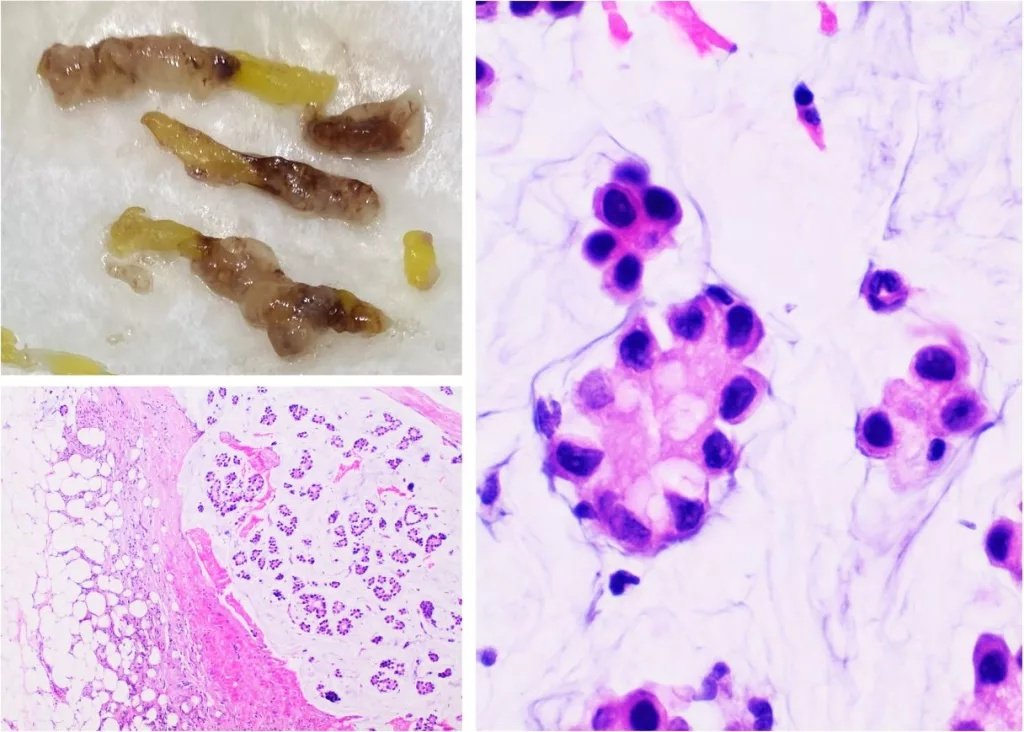
Histopathological appearance of mucinous invasive ductal carcinoma of the breast, characterized by tumor cell nests suspended in extracellular mucin. Image credit: Mikael Häggström, MD (CC0)
Types of Mucinous Carcinoma
The carcinoma can be classified into two broad categories, and it is essential to separate them as each has a different prognosis and might need various treatment methods:[2]
Pure Mucinous Carcinoma: This one is purely composed of mucinous cancer cells, and over 90% of the tumor is made up of mucin-producing cells. Pure mucinous carcinoma has an improved prognosis, a slower rate of growth, and reduced chances of metastasis to lymph nodes.
Mixed Mucinous Carcinoma: This cancer nvolves the presence of mucinous cancer cells, admixed with other invasive cancer components, most commonly invasive ductal carcinoma cells. Mixed mucinous carcinoma tends to be more aggressive and has the same prognosis as other invasive breast cancers.
Mucinous Carcinoma Symptoms
Mucinous carcinoma symptoms may differ with the location in which the cancer grows in the body. This kind of cancer can even remain silent in most cases, particularly at the initial stages. As the tumor develops, though, a number of symptoms can be noticed.
Symptoms of Breast Mucinous Carcinoma
The most common symptom in the breast includes the development of a lump that is palpable during a self-examination or a clinical breast examination. This lump is on average about 3 centimeters, but may be of any size. The other symptoms of mucinous carcinoma of the breast may include:[3]
- Changes in breast size or shape
- Nipple discharge
- Pain in the breast or armpit area
- Alterations in the skin, like dimpling, puckering, and swelling
- Heat in the affected area
- Occasionally, localized warmth or discomfort
Colorectal Mucinous Carcinoma Symptoms
In cases where the cancer is located in the colon or the rectum, symptoms do not manifest until the disease is at an advanced stage. Common symptoms include:[4]
- Abdominal pain or cramping
- Blood in the stool
- Alterations in bowel movement, such as constipation or diarrhea.
- Unexplained weight loss
- Persistent bloating or fullness
Lung Mucinous Carcinoma Symptoms
Mucinous carcinoma of the lungs has the same symptoms as other lung cancers:[5]
- Chronic cough
- Coughing up blood
- Chest pain
- Shortness of breath
- Hoarseness or voice changes
Symptoms of Ovarian Mucinous Carcinoma
In the case of mucinous carcinoma in the ovaries, the patients can have:[6]
- Abdominal pain, especially pelvic pain
- Abdominal swelling or bloating
- Abdominal girth increased because of the accumulation of fluid.
- Nausea or vomiting
- Changes in appetite
What Causes Mucinous Carcinoma
Similar to most forms of cancer, the precise cause is not well understood. Cancer occurs as the normal cellular processes of the body fail, resulting in the survival of old and damaged cells to live, and the creation of new cells where none are required. These diseased cells are then able to make groups into tumors.
The following factors can lead to the formation of this cancer:
Genetic Factors
Specific genetic changes, such as:
- BRCA1 and BRCA2 gene mutations may predispose an individual to breast cancer, although they are not specifically linked to mucinous carcinoma.[7]
- In other cases of mucinous carcinoma, especially lung and ovarian ones, mutations in certain genes, such as KRAS, have been detected.[8]
Individuals whose family members have had a history of cancer are at a high risk of developing mucinous carcinoma. There are also hereditary syndromes like the Lynch syndrome, which is linked to the increased risk of many types of cancer, including mucinous ones.
Age and Gender
This cancer is more likely to develop with old age; the majority of those diagnosed are aged above 60 years. The mucinous breast carcinoma occurs more frequently in postmenopausal women, and the median age of diagnosis is about 70 years.[9]
The gender factor also contributes because some forms of carcinoma are more prevalent in women. Women are the most vulnerable to breast mucinous carcinoma, but in rare instances, men also get the disease.
Lifestyle and Environmental Factors
Different habits and environmental exposures can be the causes of mucinous carcinoma:
- Smoking
- Diet: High processed foods and low intake of fruits and vegetables may lead to a high risk of cancer
- Obesity
- Alcohol consumption
- Radiation exposure
Other Contributing Factors
Other factors that can determine the occurrence are:
- Chronic gastrointestinal conditions and infections, including Helicobacter pylori–associated gastric disease.
- Hormonal problems like early menstruation, late menopause, or hormone replacement therapy.
- Nulliparity, or the birth of the first child after 30 years of age, may put the person at risk.
- Past cancer, or some pre-existing disorder, such as inflammatory bowel disease.
Mucinous Carcinoma Diagnosis
The diagnosis of mucinous carcinoma is a complex procedure that involves both clinical assessment, radiography examinations, and test outcomes.
Clinical Evaluation
Healthcare providers will ask you about symptoms, family history of cancer, and any risk factors. At the physical examination, physicians will also examine the affected area keenly to determine the presence of lumps, swelling, and other abnormalities.
Imaging Studies
Imaging of tumors and determination of their characteristics is done using several imaging techniques:
Mammography: Mammography is the most common imaging test that is done in case of breast mucinous carcinoma. In the mammogram, these tumors can be circumscribed, round, or oval in shape. Nevertheless, some mucinous carcinomas can be hard to diagnose on mammography because of the presence of mucin.[10]

A 50-year-old woman, undergoing routine mammography – A key screening test for early detection of breast mucinous carcinoma.
Ultrasound: Mucinous carcinoma usually presents as a multifaceted mass, which has cystic and solid parts. Pure mucinous carcinomas have a tendency to display an acoustic enhancement at the back, and the tissue behind the mass is brighter as the sound waves reflected through the mucus increase.
Magnetic Resonance Imaging (MRI): MRI gives detailed images of the soft tissues and has specifically been used in the assessment of the breast tissue. Mucinous carcinomas are usually characterized by great signal intensity on some MRI sequences, and can be lobular with a special enhancement pattern.
CT Scans: A Computer tomography scan involves the use of X-ray technology to produce a cross-sectional image of organs and tissues. They are especially useful in the determination of colorectal, lung, and other internal mucinous carcinomas.
Laboratory Tests
Blood tests can be done to identify abnormalities or tumor markers that may support diagnosis or disease monitoring. Specific tests might include:
- Complete blood count
- Tests for specific tumor markers
- Breast cancer hormone receptor analysis
- To determine mutations, genetic testing is required
Biopsy
The definitive way to diagnose mucinous carcinoma is through a biopsy. In the process, a piece of tissue is excised in the area of suspicion and is observed under the microscope by a pathologist. The following ways of biopsy help in diagnosis:[11]
- Core needle biopsy: It involves the use of hollow needles to take small cylinders of tissue.
- Fine needle aspiration: This involves the use of a thin needle to remove the cells from a suspected area.
- Excisional biopsy: In this biopsy, surgeons excise the whole area.
The pathologist analyzes the tissue sample to establish the presence of cancerous cells and whether it is pure or mixed mucinous carcinoma.
Staging
After mucinous carcinoma has been identified, staging is performed to determine the extent of the cancer’s spread. It is usually the TNM staging system, which considers:[12]
- T (Tumor): The size of the primary tumor
- N (Nodes): The expansion of cancer to the close lymph nodes.
- M (Metastasis): The cancer has metastasized to other body organs.
Staging helps the doctors know the severity of the disease and come up with the right management system.
Mucinous Carcinoma Treatment
The treatment of mucinous carcinoma depends on some factors, like which type you have, and extent to which it has spread, also on your well-being. A team of medical practitioners in the form of surgical oncologists, medical oncologists, radiation oncologists, and pathologists collaborates to develop a personalized treatment plan.
Surgical Treatment
The main approach to the mucinous carcinoma is normally surgery, which is meant to remove the tumor and any part of the tissue that is affected.
For Breast Mucinous Carcinoma:
- Lumpectomy: This choice saves the majority of the breast, and surgeons remove only the affected part.
- Mastectomy: This is where all the breast tissues are removed, including the nipple region. This can be prescribed in the case of larger tumors or in cases where the cancer is located in more than one location.[13]
- Sentinel Lymph Node Biopsy: This is done to make sure that the cancer has not metastasized to the lymph nodes beneath the arm. The main lymph nodes are the only lymph nodes that are removed and tested.
- Axillary Lymph Node Dissection: In case the sentinel lymph nodes show cancer, other lymph nodes can be removed.
For Other Locations:
The treatment of colorectal, lung, or ovarian carcinomas includes surgery where the tumor and the affected tissue are removed, and the type of surgery used is based on the location and stage of the cancer.
Chemotherapy
Chemotherapy involves the use of strong drugs to kill cancerous cells in the body. It may be administered:
- Once all the surgery has been done to remove any remaining cancerous cells.
- Preoperative, to reduce the size of tumors to make them removable.
- In case of advanced cancer that has spread to other body parts.
The route for the chemotherapy administration is either oral or intravenous. The drugs and length of treatment are dependent on the type and stage of the mucinous carcinoma. In pure mucinous carcinoma of the breast, especially in early-stage disease, chemotherapy may be used selectively, as this subtype often shows a lower response compared to other invasive breast cancers.
Radiation Therapy
Radiation therapy involves the use of high-power rays to destroy or retard the proliferation of cancerous cells. It is commonly used as follows:[14]
- After a breast-conserving surgery
- Following mastectomy
- Along with other forms of advanced cancer treatment
In mucinous breast carcinoma, radiation therapy decisions are individualized and generally follow standard breast cancer protocols, particularly after breast-conserving surgery.
Hormone Therapy
Most mucinous breast cancers are hormone receptor positive, that is, they utilize hormones such as estrogen to develop. Hormone therapy inhibits or suppresses the impact of these hormones on cancerous cells. Examples of common hormone therapy include:
- Tamoxifen inhibits estrogen receptors.
- Estrogen-producing hormones are inhibited by aromatase inhibitors
- Other drugs influence the level of hormones.
This favorable response is especially seen in pure mucinous carcinoma, which is frequently estrogen- and progesterone-receptor positive.
Targeted Therapy
Specific, also known as targeted therapies, are medications that directly attack specific elements of cancerous cells. These therapies may be more accurate than chemotherapy, and this may decrease side effects. Doctors apply targeted therapy in case the cancer possesses certain features, including:
- HER2-positive status
- If testing shows a mutation that has a corresponding targeted drug
However, HER2 overexpression is uncommon in mucinous breast carcinoma, and targeted therapy is therefore used only in selected cases based on molecular profiling.
Mucinous Carcinoma Prognosis
The prognosis is variable in a number of factors, yet the outlook of this form of cancer is generally positive than other forms of invasive carcinomas. The prognosis depends on:[15]
- The type (pure versus mixed)
- The stage at diagnosis
- The location of the cancer
- Age and general well-being of the patient.
- Response to treatment of the cancer.
Factors Affecting Prognosis
- Pure vs. Mixed Type Pure mucinous carcinoma usually has a better prognosis than the mixed types. Slower growth and reduced aggressive behavior are due to the high level of mucin in pure forms.
- Stage at Diagnosis: The sooner the better. The prognoses of the cancers that are diagnosed during Stage I or II, when they are still localized, are much better compared to those diagnosed during Stage III or IV.
- Lymph Node Invasion: Mucinous carcinoma has a low rate of lymph node metastasis as compared to other invasive cancers.
- Tumor Size: Although tumor size may appear large due to abundant mucin, most of the tumor volume consists of mucin rather than cancer cells, and biological behavior is often more important than size alone in assessing prognosis.
Mucinous Carcinoma Survival Rate
The mucinous carcinoma has a generally positive prognosis, especially with early detection. But the rate of survival differs greatly according to the location and type of cancer.[16]
Survival Rate of Breast Mucinous Carcinoma
One of the best survivals of invasive breast cancer is in mucinous breast carcinoma:
- The five-year survival rate of pure carcinoma is about 96% to almost 100%.
- The survival rate of mixed mucinous carcinoma is 87 percent within a period of five years.
Such high survival rates indicate the benign character of this type of cancer and its positive treatment response.
Survival Rate of Colorectal Mucinous Carcinoma
Mucinous carcinoma of the colon has a low prognosis as compared to that of the breast:
- Survival probability of mucinous colorectal adenocarcinoma 5 years following curative surgery is around 54 percent.
- This compares lower to the 73% survival rate of the non-mucinous colorectal adenocarcinomas in five years.
- This is partly because colorectal carcinomas often have a late diagnosis and hence have a poorer prognosis.
Conclusion
Mucinous carcinoma is a curable and uncommon type of malignancy associated with excessive secretion of mucus. Although it may occur in any organ, it occurs most often in the breast, where it has a positive prognosis. The first step towards treatment is the detection, proper diagnosis, and the right treatment based on the individual patient.
It is important to know the symptoms and to visit the doctor in case of alarming symptoms. Early diagnosis is possible through routine organ-specific cancer screening, particularly for breast and colorectal cancers. Mucinous carcinoma has had a good prognosis, and many patients can live a good life with improvements in the diagnostic modalities and available treatment options.
References
[1] Kosinmed J. Mucinous carcinoma of the breast: distinctive histopathologic and genetic characteristics. Kosin Med J. 2022;37(3):182-194.
[2] Budzik MP, Fudalej MM, Badowska-Kozakiewicz AM. Histopathological analysis of mucinous breast cancer subtypes and comparison with invasive carcinoma of no special type. Sci Rep. 2021;11:5770.
[3] Bae SY, Choi MY, Cho DH, et al. Mucinous carcinoma of the breast in comparison with invasive ductal carcinoma: Clinicopathologic characteristics and prognosis. J Breast Cancer. 2011;14(4):308-313.
[4] Luo C, Cen S, Ding G, Wu W. Mucinous colorectal adenocarcinoma: clinical pathology and treatment options. Cancer Commun (Lond). 2019;39(1):13.
[5] Dacic S. Pros: the present classification of mucinous adenocarcinomas of the lung. Transl Lung Cancer Res. 2017;6(2):230-236.
[6] AlHilli MM, Becker MA, Weroha SJ, et al. Mucinous Cancer of the Ovary: Overview and Current Status. Diagnostics (Basel). 2020;10(1):52.
[7] Weigelt B, Geyer FC, Horlings HM, et al. Mucinous and neuroendocrine breast carcinomas are transcriptionally distinct from invasive ductal carcinomas of no special type. Mod Pathol. 2009;22(11):1401-1414.
[8] Spurdle AB, Couch FJ, Hogervorst FB, et al. Probability of detecting germline BRCA1/2 pathogenic variants in histological subtypes of ovarian carcinoma. Gynecol Oncol. 2022;164(1):27-34.
[9] Nyante SJ, Gammon MD, Kaufman JS, et al. Risk factors for specific histopathological types of postmenopausal breast cancer in the NIH-AARP diet and health study. Am J Epidemiol. 2013;178(3):359-371.
[10] Lacroix-Triki M, Suarez PH, MacKay A, et al. Mucinous carcinoma of the breast is genomically distinct from invasive ductal carcinomas of no special type. J Pathol. 2010;222(3):282-298.
[11] Barkley CR, Ligibel JA, Wong JS, et al. Mucinous breast carcinoma: a large contemporary series. Am J Surg. 2008;196(4):549-551.
[12] American Joint Committee on Cancer. AJCC Cancer Staging Manual. 8th ed. New York, NY: Springer; 2017.
[13] Di Saverio S, Gutierrez J, Avisar E. A retrospective review with long term follow up of 11,400 cases of pure mucinous breast carcinoma. Breast Cancer Res Treat. 2008;111(3):541-547.
[14] Skotnicki P, Sas-Korczynska B, Strzepek L, et al. Pure and mixed mucinous carcinoma of the breast: A comparison of clinical outcomes and treatment results. Breast J. 2016;22(5):529-534.
[15] Park YA, Sohn SK, Seong J, et al. Prognosis and Sensitivity of Adjuvant Chemotherapy in Mucinous Colorectal Adenocarcinoma without Distant Metastasis. Cancers (Basel). 2022;14(5):1297.
[16] Cancer Center. Mucinous Adenocarcinoma: Symptoms, Causes & Survival Rate. Cancer Treatment Centers of America. Updated August 2023.