

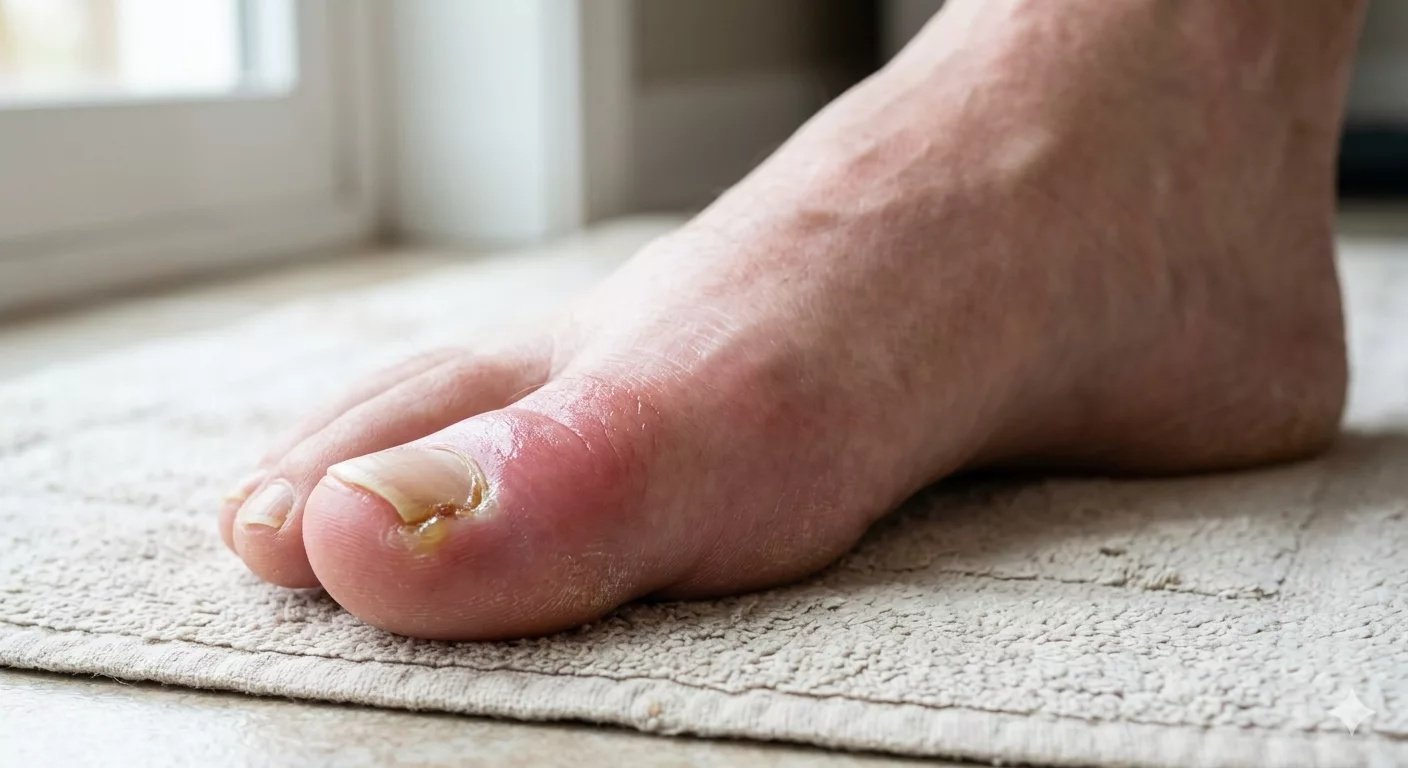
Onychocryptosis Prevent Treat Onychocryptosis, also commonly known as an ingrown toenail, is a common and painful condition. It is usually caused by improper nail trimming and tight footwear.
Onychocryptosis can present with symptoms ranging from mild discomfort to severe pain or possibly with infection.
Doctors treat it conservatively in early stages, but in severe or recurrent cases, surgery is the definitive treatment.[1]
What is Onychocryptosis?: Onychocryptosis Prevent Treat
Onychocryptosis is a frequently occurring condition in which the nail side grows into the surrounding skin and induces a foreign body reaction that leads to inflammation and discomfort. It usually affects the great toe and is rare in fingernails.[2]
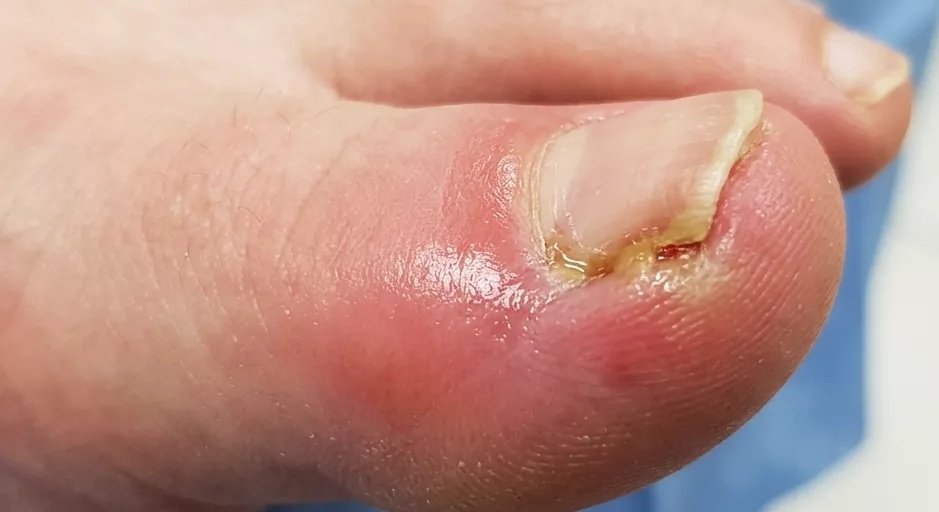
Image showingonychocryptosis
This condition can be seen across all age groups. It may seem like a minor problem, but in fact, it is a significant condition as it can limit your daily activities, and if not managed properly, it can get complicated.
Before diving into more detail, it would be helpful to discuss the normal structure of the nail.
Anatomy of the Nail Unit
Our nails are composed of several important components that include:
- Nail plate: It is the hard part of the nail that you see and is made of keratin.
- Nail bed: It is the soft tissue beneath the nail plate that supports the nail and helps anchor it in place
- Nail matrix: This part is located at the base of the nail and is responsible for nail growth.
- Proximal and lateral nail folds: These are the folds of skin that surround the edges of the nail.
- Hyponychium: This is the area under the free edge of the nail, and it acts as a barrier against pathogens.[3]
In onychocryptosis, the nail plate usually penetrates the lateral nail fold and triggers a local inflammation.
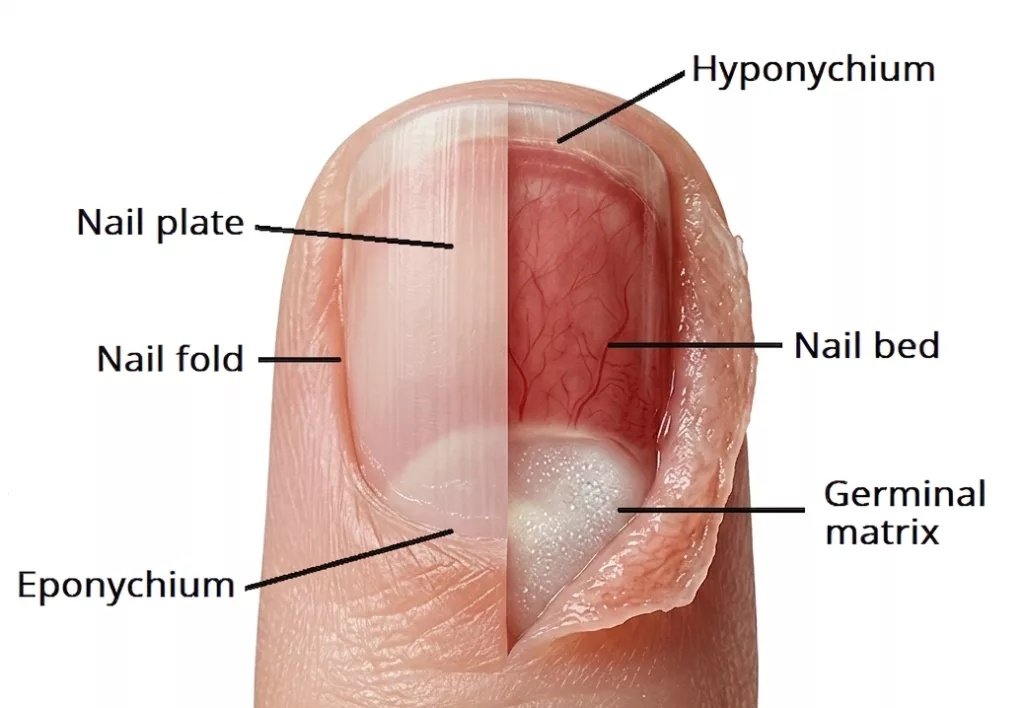
Anatomy of the nail
What are the causes of Onychocryptosis?
Onychocryptosis can be caused by a variety of factors that often act together. They include:
- Improper nail trimming: This is the most common cause overall. If you cut your nails too short or in a way that makes the edges round, it makes it more likely for the nail to grow into the skin.[4]
- Tight footwear: Wearing shoes that are too tight, narrow, or have a pointed toe box applies a constant lateral force on the nail folds into your flesh.
- Trauma: Sometimes injuries such as stubbing a toe or dropping a heavy object on the foot may shift the nail plate into the surrounding soft tissue.
- Hyperhidrosis (excess sweating): Trapping of the sweat in tight footwear may soften the skin. This makes it even more likely for the nail to penetrate the tissue.
- Obesity: More weigh increase the risk of the soft tissue around the nail (the periungual skin) bulging and being penetrated by the nail.
- Poor foot hygiene: This increases the risk of infection, especially after the onset of the inflammation due to injury, and can further complicate the condition.
- Poor Immunity: People with diabetes or weakened immune systems are more vulnerable to infection and complications.
- Nail abnormalities: Naturally curved or pincer-shaped nails may increase the likelihood of developing onychocryptosis.
Knowing these risk factors will help you avoid getting such nail conditions by applying preventive strategies.
What are the stages of onychocryptosis?
Experts classify onychocryptosis based on severity into the following three stages.
Stage 1: Inflammatory Stage
In this stage, the nail plate attempts to irritate the soft tissue surrounding the nail, yet there is no break in the skin barrier.
You will find redness, pain, and swelling along the nail fold. However, there is no pus or infection at this stage.
Stage 2: Abscess Stage (Infectious)
At this stage, the nail has already pierced the skin, which allows the entry of bacteria that result in infection and pus formation.[5]
Common bacteria involved include Staphylococcus aureus and Streptococcus species. There will be even more swelling, redness, and increased pain due to infection.
Stage 3: Hypertrophic Stage (Chronic)
This stage represents the body’s attempt to heal itself after a long irritation and leads to structural changes.
The formation of granulation tissue (friable red tissue) starts to grow over the nail plate due to the proliferation of fibroblasts. The nail fold becomes permanently thickened (also known as hypertrophic).
What are the signs and symptoms?
The clinical manifestation of onychocryptosis depends upon the stage of the condition; however, it generally presents with:
- Localized pain: This is the core symptom, and you will experience it when pressure is applied to your toe, such as during walking or wearing tight-fitting shoes.[6]
- Redness and swelling (around your nail fold)
- Warmth: The area may feel slightly warm to the touch due to the ongoing inflammatory process.
- Discharge of pus: This occurs during the infection stage, during which your immune system will fight the bacteria, resulting in pus formation.
- Formation of granulation tissue: In advanced stages, you may notice this red, bumpy, vascular tissue
- Difficulty in ambulation: In severe cases of infection, you may find it difficult to even walk as the toes become very tender or painful.
However, with early management, you can avoid these complications.
How do doctors diagnose onychocryptosis?
The diagnosis of onychocryptosis is primarily clinical and includes:
- History: Your health provider may ask you about the onset, duration, and pain severity of the condition. They may also assess your footwear habits, nail trimming practices, and previous episodes.
- Physical examination: Your provider will inspect your affected toe for signs of inflammation, infection, and nail penetration.[7]
Both history and clinical examination are invaluable in diagnosing the condition, and additional testing is usually unnecessary.
However, in specific situations, your provider may order some tests. For example, in the advanced stage, recurrent disease, or in patients with diabetes.
What are other conditions that may cause similar symptoms?
Some conditions may mimic the symptoms of onychocryptosis. They include:
1. Paronychia
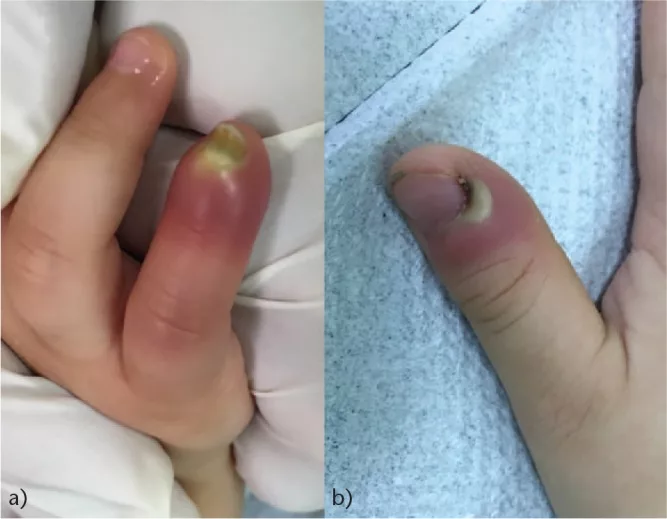
It is an infection of the nail fold and is usually caused by a bacterium or fungus in acute or chronic cases, respectively. It leads to throbbing pain, redness, and pus formation (in bacterial cases).[8]Unlike onychocryptosis, there is no nail penetration.
2. Subungual hematoma
It refers to the collection of blood beneath the nail plate. It usually happens due to a trauma that causes the rupture of nail bed capillaries. You can notice a dark spot that moves as the nail grows.
What are the complications of onychocryptosis?
Certain complications occur when you leave your condition untreated or improperly manage it. They include:
- Cellulitis (bacterial infection): This happens when a local bacterial infection spreads into the deep. In an even more severe scenario, the infection may reach the bone, causing osteomyelitis.[9]
- Abscess (pus) formation: The bacterial infection can cause the accumulation of pus that may ooze out on pressure.
- Chronic inflammation: In patients with weak immunity, the inflammation may become long-lasting, causing more trouble.
- Granulation tissue formation: It is red, fleshy, excess tissue growth that bleeds easily.
- Nail deformity: The persistent inflammation may damage the shape of the nail in the long run.
However, you can avoid these complications if you timely manage your condition by seeking professional help.
What is the treatment of onychocryptosis?
The management of onychocryptosis depends on the stage of the condition and the presence and severity of the symptoms.
Broadly, there are two approaches. One is a conservative approach, and the other is a surgical intervention for advanced disease.
A. Conservative Management
Your provider will likely proceed with this approach if your condition is mild to moderate, such as without significant infection or granulation tissue.
- Warm Soaks: Your doctor will recommend that you soak your foot in warm water (with or without Epsom salts) for about 15-20 minutes, two to three times daily. This helps reduce the inflammation, makes the surrounding tissue soft, and promotes the draining of pus if a mild infection is present.
- Cotton-Wick Elevation: Your provider may help you place a small piece of sterile cotton or dental floss under the corner of the ingrown nail. The purpose of this technique is to lift the ingrown nail away from the skin.
- Gutter Splinting: In this technique, your provider will insert a small plastic tube along the side of your nail to make a barrier between the nail and the inflamed tissue.
- Medications: If there are signs of infection in your toe, you may receive a prescription of antibiotic ointments or, in some cases, mild topical corticosteroids to reduce the inflammation and improve healing. For pain, you might use NSAIDs such as ibuprofen.
These conservative measures help improve the patient’s condition in most cases. However, if the patient’s symptoms do not improve, a surgical intervention may be necessary.
B. Surgical Management
Some of the surgical treatments include:
1. Partial Nail Avulsion (PNA)
Doctors most commonly perform this procedure, in which they remove the affected portion of the nail, under local anaesthesia. This instantly relieves the pressure on the skin and improves the healing of the inflamed tissue.[10]
2. Matrixectomy (Permanent Solution)
This procedure is for preventing the recurrence of onychocryptosis, in which your doctor will aim to destroy the nail matrix (the area from which the nail grows). Doctors often perform matrixectomy along with nail avulsion.
There are several methods to perform matrixectomy, such as:
- Chemical Matrixectomy: After performing avulsion, your surgeon will apply a chemical agent such as 88% phenol to the matrix for 30-60 seconds. This is the most common method. Besides, sodium hydroxide can also be used for this purpose.
- Surgical Matrixectomy: This refers to the physical excision of the matrix.
- Electrocautery/laser Matrixectomy: These ablative procedures can also help your surgeon remove the matrix from your nail.
In very severe cases, your surgeon may consider removing your total nail; this is very uncommon.
Generally, surgical procedures are safe and effective for permanent treatment, with high success rates, if done correctly.
Post-Treatment Care
After getting a treatment, whether conservative or surgical, it is important to keep the affected area clean and dry to improve healing and prevent recurrence.
After receiving a surgical treatment, your toe would be dressed with a sterile bandage. You are advised to:
- Change dressings regularly as instructed by your provider to avoid infections or other complications
- Keep your foot elevated for the first 24–48 hours, as it helps reduce swelling
- Avoid strenuous activities for a few days
- Wear open-toed or loose-fitting footwear to avoid pressure on the soft tissue
It is normal to notice Mild drainage and discomfort in the initial days after surgery. However, if you feel increased pain, redness, or pus, then talk to your provider immediately.
What are the Prevention Strategies?
The prevention of onychocryptosis is usually simpler than treating it. The important preventive measures include:
- Correct nail trimming: You should trim your nails straight across and don’t cut them too short.
- Appropriate footwear: Wear shoes with enough toe space, as it helps avoid the risk of compression on the skin.
- Good foot hygiene: Keep your feet clean and dry, as it helps you prevent getting an infection.
- Manage sweating: Use foot powders or breathable socks as they reduce the moisture and make sure that your toes don’t get soft enough to be penetrated by nail.
- Avoid trauma: Protect your feet during sports and avoid repetitive injury.
If you recurrently get this condition, pause and think where you are wrong and make appropriate adjustments.
When to See a Doctor?
You can manage mild inflammation at home, but you should receive professional help in the following situations:
- If you experience persistent or worsening pain
- If you suspect severe infection with signs such as increasing pus, redness, warmth
- If there is the formation of granulation tissue
- If you have recurrent episodes
- If you have diabetes
Early medical attention will help you avoid getting complications.
Frequently Asked Questions (FAQs)
Is an ingrown toenail serious?
Usually, most of the cases are mild; if not properly treated, they can lead to infection and complications, particularly in high-risk individuals such as those with diabetes.
Is surgery painful?
Your surgeon will perform the surgery under local anesthesia, so pain during surgery is minimal. After the procedure, you may have mild discomfort that is generally tolerable, and you can take a painkiller to help.
Can it come back after treatment?
Yes, recurrence is possible, especially if you do not follow the preventive measures. However, your surgeon will likely perform matrixectomy, which significantly reduces the rate of recurrence.
Final words
Onychocryptosis is a common condition that can be troublesome and can significantly impact quality of life if you take it lightly. The good news is that it is highly manageable, mostly with a conservative approach, and sometimes it may require you to undergo a surgical procedure.
The most important thing is to prevent this condition, which is highly possible with the right strategies, such as proper nail trimming and using appropriate footwear. Besides that, you should practice the correct foot care even after receiving the treatment to make sure you don’t suffer again.
References
[1] Heidelbaugh JJ. Management of the ingrown toenail.Am Fam Physician. 2009;79(4):303–308.
[2] Baran R, Dawber RPR, Haneke E, Tosti A, Bristow I.Baran and Dawber’s Diseases of the Nails and their Management. 4th ed. Oxford: Wiley-Blackwell; 2012.
[3] André J, Achten G. Nail anatomy and physiology.Clin Dermatol. 2013;31(5):509–515.
[4] Scher RK, Daniel CR.Nails: Therapy, Diagnosis, Surgery. 3rd ed. Philadelphia: Elsevier Saunders; 2005.
[5] Haneke E. Controversies in the treatment of ingrown nails.Dermatol Res Pract. 2012;2012:783924.
[6] Heidelbaugh JJ, Lee H. Management of common foot infections.Am Fam Physician. 2013;88(3):177–184.
[7] Zuber TJ. Ingrown toenail removal.Am Fam Physician. 2002;65(12):2547–2552.
[8] Rockwell PG. Acute and chronic paronychia.Am Fam Physician. 2001;63(6):1113–1116.
[9] Eekhof JAH, Van Wijk B, Knuistingh Neven A, Van der Wouden JC. Interventions for ingrowing toenails.Cochrane Database Syst Rev. 2012;(4):CD001541.
[10] Richert B, Di Chiacchio N, Haneke E. Surgical treatment of ingrown toenails.Dermatol Surg. 2012;38(7 Pt 1):1019–1028.