

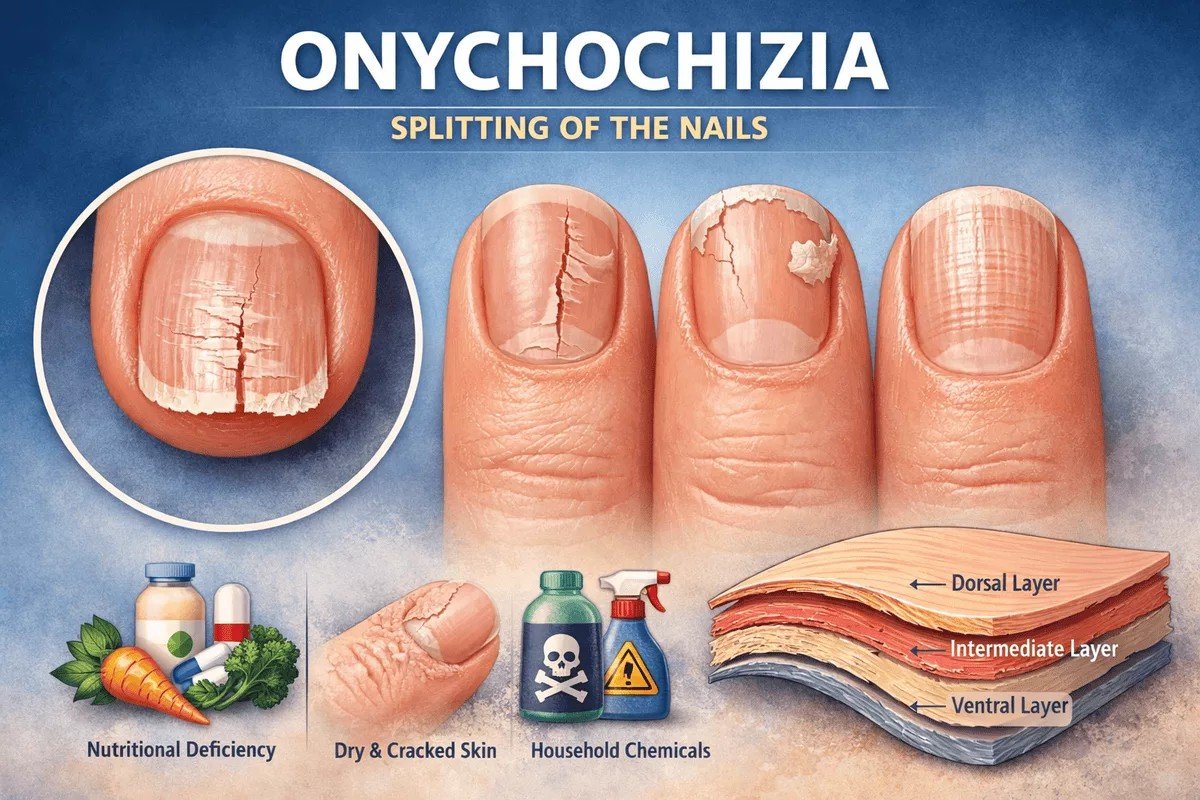
What is Onychoschizia?: Onychoschizia Nail Peeling
Onychoschizia Nail Peeling Onychoschizia, also known as nail splitting and brittle nails, is a splitting of the free-edge tip of the nail.[1]
Onychoschizia is a common nail disorder that involves lamellar splitting of the distal nail plate into horizontal layers.[2] It results in fragile, brittle nails that split easily at the free margin, leading to discomfort and difficulty with daily activities. In most cases, it is a benign condition related to environmental factors, and only rarely reflects an underlying systemic disease.
What causes Onychoschizia?
Onychoschizia is more common in women than in men. It is frequently seen in older adults. The fingernails are affected more often than the toenails. Its prevalence increases with repeated exposure to water, detergents, and chemicals. Onychoschizia has multiple causes, which can be explained as:
1. Exogenous Causes (Most Common):
- Prolonged and repetitive exposure to water.
- Excessive use of detergents and soaps.
- Use of nail polish removers and manicure products.Skin Disorders of Childhood and Adolescence. 5th ed. New York: Elsevier/Saunders; 2011″ style=”position:relative;color:#309b65;cursor:help;border-bottom:1px dotted #309b65;font-weight:bold”>[3]
- Trauma to nails due to the application of artificial nails or nail biting.
- Cold and dry weather.
- Certain drugs (like retinoids) can cause brittle nails. Ibrutinib treatment for chronic lymphocytic leukemia has been rarely associated with nail fragility, including onychoschizia.[4]
2. Endogenous Causes:
- Age-related changes in the structure of nails. Nails become drier and thinner with age.[5]
- Nutritional deficiencies such as iron, biotin, or protein deficiencies.[6]
- Some systemic diseases like Hypothyroidism, Anemia, Peripheral vascular disease, and rarely other hematologic conditions also make nails brittle.[7] also make nails brittle.
- Some skin disorders like Psoriasis, Lichen planus, and Atopic dermatitis also make nails soft and brittle.
Signs and Symptoms of Onychoschizia
The signs and symptoms of onychoschizia include splitting of nails in the horizontal direction, mostly at the free edge. It is usually painless, and the nail surface becomes rough, although the color of the nails remains normal.
How is Onychoschizia Diagnosed?
The diagnosis of onychoschizia can be made primarily by taking an appropriate history of the patient, as well as clinical examination and some lab tests, which are as follows:
History and Physical examination:
A detailed history ruling out any underlying medical condition, as well as any occupational or cosmetic exposure, is necessary to make a diagnosis.
Lab Tests:
Some laboratory tests can be required, like complete blood count, iron studies, thyroid function tests, and nutritional assessment. Fungal studies (KOH, culture) can also be done to diagnose onychomycosis (a fungal infection of nails), if suspected.
Onychoschizia in Toddlers
Onychoschizia in toddlers is the common, harmless splitting or peeling of the nail plate (fingers/toes), often seen in newborns and young children due to their thin nails, trauma, thumb-sucking, or frequent wet-dry cycles, It usually resolves with age and good nail care, like moisturizing and reducing water exposure, but underlying causes like iron deficiency are rare possibilities.
Transient physiological onychoschizia is mainly noted on the big toes and thumbs, with transverse and lamellar splitting at the free edge in early infancy in 28.8% of newborns.[8]
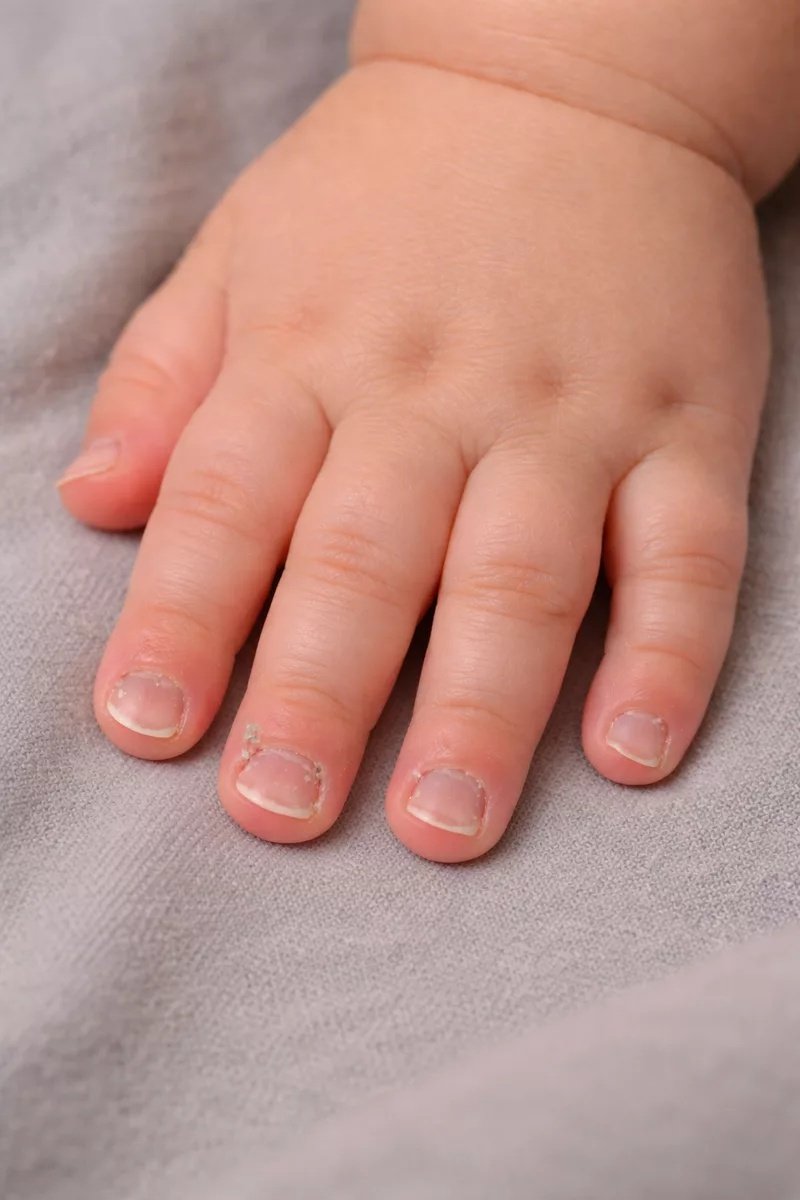
The image shows horizontal splitting of nails in a toddler’s hand due to prolonged exposure to water.
Causes of Thin Nails in Toddlers:
Toddler nails are naturally thinner and more prone to splitting. Other factors like trauma, thumb sucking/nail biting, and any nutritional deficiency can play a role in the breakage of nails. Repeated wetting and drying from baths or water play is also an environmental factor that can cause toddlers’ nails to break.
Management & Treatment
The treatment approach for onychoschizia in toddlers includes proper care and preventive measures as follows:
- Apply moisturizers and lotions to nails and cuticles.
- Reduce the playtime and activities that require water.
- Keep the nails trimmed and filed smoothly.
- Track and try to overcome the habits of thumb sucking and nail biting, if present.
When to see a doctor?
The condition is usually harmless, but if the splitting is severe or painful or if you suspect some underlying condition, such as eczema or infection, any changes in nail color or its thickening, then it is necessary to consult a pediatrician or a dermatologist.
Onychoschizia Management
The management of onychoschizia focuses on eliminating the causative factors and taking protective measures for the nails.
1. General Measures:
- Wear gloves for work requiring water and moisturize hands regularly.
- Avoid excessive use of nail polish, removers, and manicure items.
- Keep nails filed and trimmed gently.
- Avoid nail biting.
- If the condition persists, consult a doctor to check for any internal cause.
2. Topical Treatments:
Use nail moisturizers and emollients that contain urea, lactic acid, and glycerin.
3. Systemic Treatment:
Biotin supplementation (2.5–5 mg/day) may improve nail strength. Correction of iron or other nutritional deficiencies and treatment of the underlying systemic conditions are important to reduce the splitting of nails.
In addition, daily ingestion of bioactive collagen peptides promoted increases in nail growth and reduced the frequency of cracked and/or chipped nails in subjects with brittle nails.[9]
4. Cosmetic and Supportive Therapy:
Use of nail hardeners that are formaldehyde-free and protective nail coatings, such as those with nylon fibers, are important preventive and cosmetic measures to help reduce the occurrence of nail breakage.
How can you prevent Nail Splitting?
General Preventive Measures:
Preventative measures can include wearing gloves whilst performing chores that involve getting the hands wet, avoiding regular application of nail polish, or applying nail polishes that contain nylon fibers that may help strengthen soft nails.[10] Excessive manipulation of the nail should also be avoided, although shaping and filing the nail can help prevent further breakage or splitting.[11]
Role of Biotin:
The vitamin biotin can be used as an oral supplement and has been tested in subjects with onychoschizia.[12] A review of clinical trials showed that an improvement in the firmness, hardness, and thickness of brittle nails was seen in subjects treated with oral biotin.[13] A further trial showed that 91% of subjects had a definite improvement in fingernail hardness after daily biotin treatment for an average of 5.5 months.[14] However, larger clinical trials are needed to determine the efficacy and optimal dosing.
Onychoschizia vs Onychorrhexis
Onychorrhexis is a common nail disorder characterized by longitudinal ridging and splitting of the nail plate, resulting in fragile, brittle nails that crack or fissure along their length. Although it is a benign and age-related condition, onychorrhexis may also reflect underlying systemic, nutritional, or dermatologic disorders.
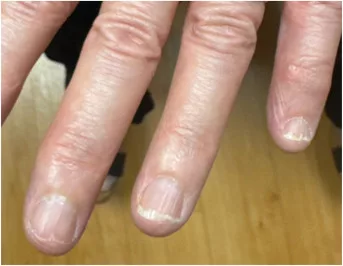
Longitudinal nail plate ridging consistent with onychorrhexis and distal lamellar nail plate splitting consistent with onychoschizia of the left third, fourth, and fifth fingernails. The image is sourced fromScienceDirectand is under a CC BY 4.0 license.
Distinguishing between these two conditions is important, as management strategies may differ. The key differentiating features of Onychoschizia from Onychorrhexis are:
| Feature | Onychoschizia | Onychorrhexis |
|---|---|---|
| Definition | Horizontal splitting or lamellar peeling of the nail plate | Longitudinal ridging and splitting of the nail plate |
| Direction of Split | Horizontal (across the nail) | Vertical (from base to tip) |
| Common Appearance | Thin layers peeling at the free edge | Raised vertical ridges; nail may crack lengthwise |
| Main Causes | Repeated wetting & drying, nail polish removers, trauma, excessive manicure | Aging, nutritional deficiencies (iron), systemic diseases |
| Associated Conditions | Brittle nail syndrome | Anemia, hypothyroidism, lichen planus |
| Most Affected Area | Distal (free) edge of nail | Entire nail length |
| Population Commonly Affected | More common in women | More common in elderly |
| Severity | Usually cosmetic | Treat the underlying cause, nutritional correction |
| Management | Moisturizers, avoid chemicals, biotin | More common in the elderly |
Conclusion
Onychoschizia is a common and benign disorder that involves horizontal splitting of nails. There are multiple causes of this condition that include both environmental and systemic factors. Early diagnosis, taking proper preventive measures, and taking good care of nails help in correcting the condition. Consultation with a dermatologist is necessary if there is suspicion of any underlying condition.
References
[1] Sloan, Brett (2022). “16. Multiple nail: nail splitting”. In Waldman, Reid A.; Grant-Kels, Jane M. (eds.).Dermatology for the Primary Care Provider. Philadelphia: Elsevier. pp. 277–278.
[2] Wallis MS, Bowen WR, Guin JD. Pathogenesis of onychoschizia (lamellar dystrophy).J Am Acad Dermatol. 1991;24(1):44–48. doi: 10.1016/0190-9622(91)70007-OBaran R, Schoon D. Nail fragility syndrome and its treatment.J Cosmet Dermatol. 2004;3(3):131–137.
[3] Paller A, Mancini AJ, Hurwitz S.Hurwitz Clinical Pediatric Dermatology: A Textbook of Skin Disorders of Childhood and Adolescence. 5th ed. New York: Elsevier/Saunders; 2011
[4] Heldt Manica LA, Cohen PR. Ibrutinib-associated nail plate abnormalities: case reports and review.Drug Saf Case Rep. 2017;4(1):15.
[5] Iorizzo M, Pazzaglia M, Piraccini BM, Tullo S, Tosti A. Brittle nails.J Cosmet Dermatol. 2004;3(3):138–144.
[6] Cashman MW, Sloan SB. Nutrition and nail disease.Clin Dermatol. 2010;28(4):420–425.
[7] Keohane C, McMullin MF, Harrison C. The diagnosis and management of erythrocytosis.BMJ. 2013;347:f6667.
[8] Walker J, Baran R, Vélez N, Jellinek N. Koilonychia: an update on pathophysiology, differential diagnosis and clinical relevance. J Eur Acad Dermatol Venereol. 2016;30:1985–1991.
[9] Hexsel D, Zague V, Schunck M, Siega C, Camozzato FO, Oesser S. Oral supplementation with specific bioactive collagen peptides improves nail growth and reduces symptoms of brittle nails.J Cosmet Dermatol. 2017;16(4):520–526.
[10] AOCD. Dermatologic Disease Database: Brittle Splitting Nails. 2018. Paller A, Mancini AJ, Hurwitz S. Hurwitz Clinical Pediatric Dermatology: A Textbook of Skin Disorders of Childhood and Adolescence. 5th ed. New York: Elsevier/Saunders; 2011.
[11] Paller A, Mancini AJ, Hurwitz S.Hurwitz Clinical Pediatric Dermatology: A Textbook of Skin Disorders of Childhood and Adolescence. 5th ed. New York: Elsevier/Saunders; 2011.
[12] Colombo VE, Gerber F, Bronhofer M, Floersheim GL. Treatment of brittle fingernails and onychoschizia with biotin: scanning electron microscopy.J Am Acad Dermatol. 1990;23(6 Pt 1):1127–1132.
[13] Lipner SR, Scher RK. Biotin for the treatment of nail disease: what is the evidence?J Dermatolog Treat. 2018;29(4):411–414.
[14] Floersheim GL. [Treatment of brittle fingernails with biotin].Z Hautkr. 1989;64(1):41–48.