

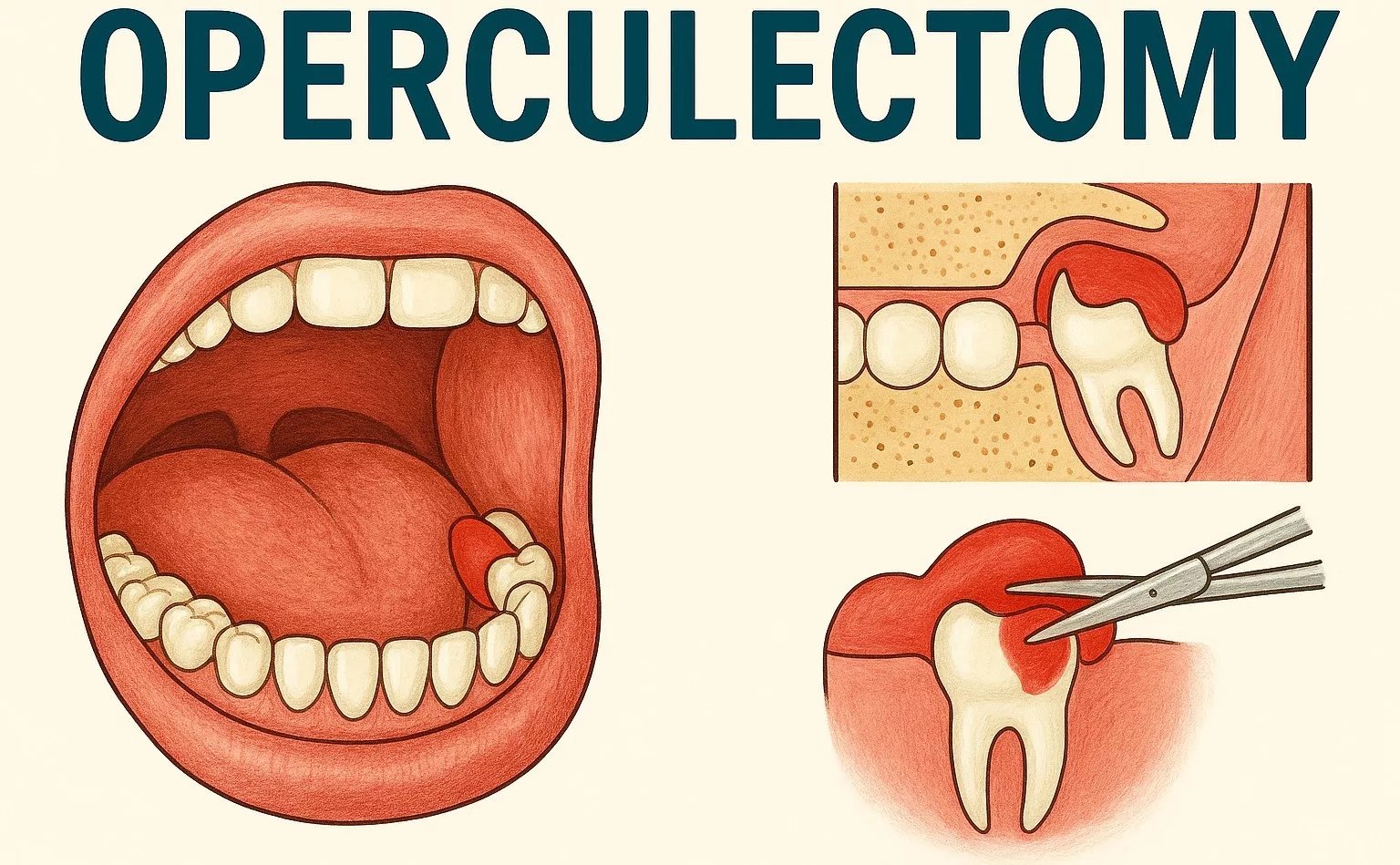
Operculectomy Procedure Cost Operculectomy is a minor oral/dental procedure done to correct a condition called pericoronitis. It is performed under local anesthesia that involves removing the infected or painful gingival flap over your wisdom tooth. The procedure is done to prevent the accumulation of debris and food in the gingival flap, which is known to cause speech and chewing difficulties. In most cases, dentists prefer minimal invasion; however, they may go for wisdom teeth removal in severe cases.
What Is Pericoronitis?: Operculectomy Procedure Cost
An operculum is a flap of gingiva (gum tissue) that covers a partially erupted tooth (most commonly a mandibular wisdom tooth). In the normal eruption, the gum covering your tooth recedes as the tooth comes out into the oral cavity. However, the gum flap fails to recede properly in cases where there is partial eruption of the tooth. The state of partial eruption due to lack of space, incorrect angle, or blockage by another tooth is called animpaction.
According to clinical studies, the incidence of impacted (partially erupted) mandibular third molars ranges from 9.5% to 68% in different populations, with men being more prone to developing molar impactions than women.[1]
Swelling and inflammation of the operculum (covering the wisdom tooth) lead to a condition called pericoronitis. It can occur transiently, i.e., acute pericoronitis, or can last for long periods, i.e., chronic pericoronitis. Accumulation of food debris beneath the operculum triggers pericoronitis, which can also contribute to infection of the gums.[2]
While infection is commonly triggered by food accumulation under the flap, sometimes, pericoronitis can arise from opportunistic infections in patients with compromised immune systems. Therefore, underlying systemic illnesses like acute lymphoblastic leukemia (ALL) should not be overlooked in patients.[3]
Indications For Operculectomy
Your doctor will advise you to get an operculectomy done for the following conditions:
Food Impaction
Accumulation of food under the operculum is known to cause multiple complications. The impacted food not only triggers localized inflammation but also lays the foundation for serious infection. Thus, to prevent further gingival complications, doctors perform gingival excision.
Persistent Trauma
The swollen gum flap unnaturally covers the lower wisdom tooth and gets injured repeatedly due to a bite from the opposing tooth. This persistent trauma causes bleeding, pain, and even limited mouth opening.

The vector shows A) an impacted third molar, B) a neighboring tooth, C) operculum (pericoronitis), D) an overerrupted opposing tooth that causes repeated injury. Recurrent injury is a major indication for operculectomy.
Poor Oral Hygiene
An inability to clean under the gum flap contributes to a wide array of problems. There is food impaction and an increased risk of infection. Trapped food and poor tooth hygiene also cause bad breath (halitosis).
Recurrent Operculitis/Pericoronitis
Most of the time, patients experience recurrent pericoronitis that hinders their chewing and mastication (biting). Swelling, pain, and mouth opening difficulties negatively impact life quality. The condition usually resolves with domestic strategies like warm water gargles. However, pericoronitis tends to recur. Thus, to rid you of chronic, recurrent pericoronitis, doctors go for operculectomy.[4]
Wisdom Tooth Eruption
In some cases, a pericoronitis flap is thick enough to impede the normal eruption of a wisdom tooth. Thus, dentists perform excision of the gingival operculum to facilitate eruption. In a clinical study, the impact of operculectomy was observed in 145 impacted teeth. Spontaneous eruption of the impacted molars was seen in 93.3% cases in the operculectomy group as compared to 10% in the non-treated group. Hence, eruption facilitation is another indication for operculectomy.[5]
Orthodontic Treatment
For robust orthodontic anchorage and improvement in occlusion/smile dynamics, many orthodontists perform an operculectomy prior to starting a comprehensive orthodontic treatment. The ortho-perio interdisciplinary approach is beneficial in cases with multiple retained teeth.[6]
Contraindications For Operculectomy
There are several cases in which you should not go for an operculectomy procedure, as it may not yield the ideal results.
Pathological Wisdom Tooth
Doctors avoid operculectomy and opt for extraction if the third molar is cavitated or carious. Symptoms (like pain) of an apically infected tooth do not resolve with gingival excision maneuvers. Therefore, you will need to get your molar removed. The principle also applies to teeth that have any pathology, like a cyst or tumor attached. Moreover, mobile teeth also fall into the to-be-extracted list.
Severe Recurrent Pericoronitis
An operculectomy doesn’t provide complete relief in cases where there is severe and recurrent infection of the operculum. In uncontrolled infection and inflammation of the gum flaps, removal of the entire tooth offers a more viable and definitive solution.
Improper Angulation Or Insufficient Space
Operculum removal is contraindicated when the available space (in the dental arch) is insufficient or the angle of the tooth impaction is such that spontaneous eruption following an operculectomy is impossible. Performing the procedure in such cases provides temporary relief but no permanent comfort.
Operculectomy Procedure
It is a minor, in-office surgical procedure performed by a general dentist or an oral surgeon. The steps of an operculectomy are:
Anesthesia
Your dentist will administer local anesthesia to numb the area before performing the excision.
Excision Of Pericoronal Gingiva
The next step is the removal of the pericoronal gingiva. Doctors have conventionally used scalpels to cut through the overgrown gingival flap. Studies show that conventional methods of performing operculectomy are efficacious and offer minimal post-op complications.[7]
However, nowadays, medical lasers have made surgical procedures much easier and quicker. Some studies state that healing outcomes of conventional surgical knife (scalpel) surgery are similar to diode laser operculectomy.[8] But the latest research demonstrates that high-power diode lasers significantly reduce clinical time while being safe and effective.[9]
Cleaning
After excising the gum flap, doctors debride the surgical site and clear off any trapped food. Most professionals use sterile saline for this purpose. Oral surgeons do not stitch the area, as the operculum is an excess growth. Your doctor will advise you to use oral antibiotics or an antiseptic mouthwash along with painkillers.
How To Care For The Wound After Operculectomy?
Aftercare for operculectomy involves following these steps:
- Carefully follow your doctor’s instructions.
- Shift to a softer diet (like yogurt, porridge, etc) for the first 24-48 hours after the gum surgery.
- Avoid any strenuous activity and harmful substances like alcohol or cigarettes.
- After 24 hours, gently rinse with warm salt water but avoid spitting forcefully, and make sure that there is no bleeding from the site before rinsing.
- Keep the wound site clean, but don’t use a brush as it may injure the gums.
Complications Of Operculectomy
Operculectomy is a safe procedure and generally doesn’t cause any side effects. However, just like any surgical maneuver, there can be some slight complications. Temporary pain and swelling can be seen, which is managed well with analgesics (pain killers). Some patients may also experience limited mouth opening due to muscle soreness and localized swelling. These complications are transient and can be managed with simple maneuvers. However, serious complications like infection (pus discharge) and scarring need medical attention.
Regrowth of the gum flap is a common complication of the surgery that requires further treatment.[10]
Alternatives To Operculectomy
In some instances, an operculectomy is not the most feasible treatment option. Thus, doctors go for alternatives like the extraction of the tooth.
Operculectomy Vs Wisdom Tooth Extraction
Healthcare professionals extract complete third molars when there is recurrent pericoronitis. Extraction is the ideal treatment modality if the tooth has a pathology or if there is insufficient space for operculectomy.
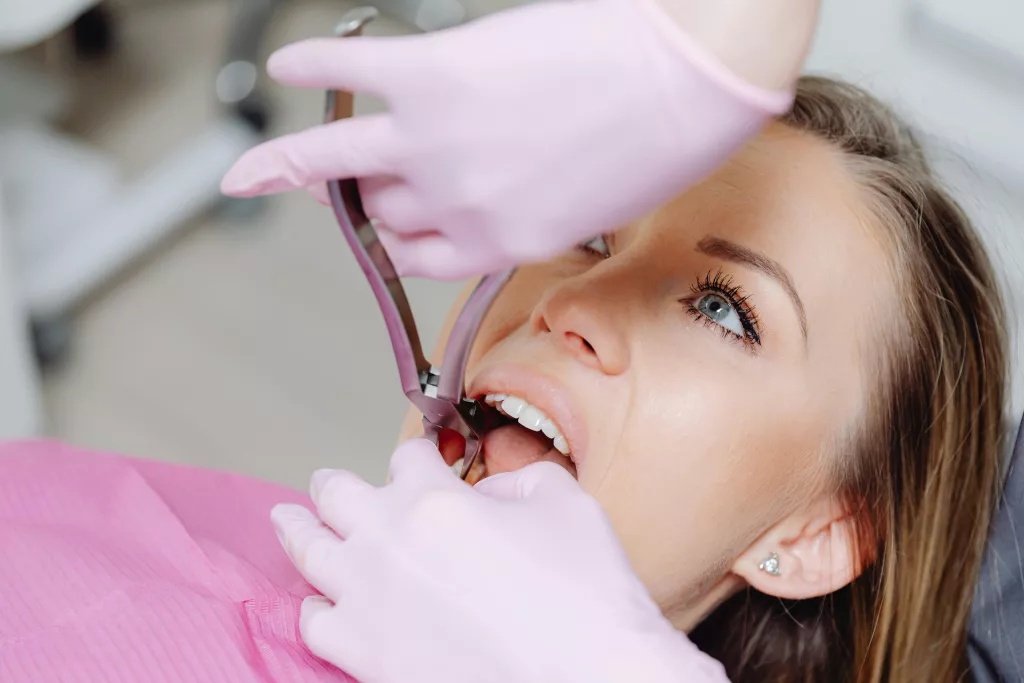
Wisdom tooth extraction is an alternative to operculectomy.
How Can You Prevent Pericoronitis?
You can prevent pericoronitis and consequently operculectomy by adopting some simple steps. Studies show that individuals with mandibular impacted teeth have a high risk of pericoronitis.[11]
Thus, all such individuals need to take precautionary measures like maintaining good oral hygiene. Controlling the levels of dental plaque and improving oral hygiene is linked to effective prevention of third molar pericoronitis.[12]
You should regularly rinse with warm salt water if you feel any gum swelling. Using antimicrobial mouthwashes can lower the levels of bacteria in the gingiva, which directly contributes to the occurrence of pericoronitis. You should schedule frequent dental checkups to timely identify any dental issues.
Frequently Asked Questions
The following are some of the most commonly asked questions by people undergoing an operculectomy.
How Long Does The Procedure Take?
Operculectomy is a quick procedure and usually lasts for 10 minutes to half an hour. However, you can expect to see complete recovery after a few days.
Does Opeculectomy Hurt?
No, an operculectomy doesn’t hurt because it is performed under local anesthesia. Once the anesthesia subsides, you may experience some discomfort that usually lasts for some time.
How Long Does It Take To Recover From An Operculectomy Procedure?
You can return to normal activities within a couple of days (24-48 hours), but complete healing of the gums usually takes a week to 10 days.
Can Your Gum Grow Back After The Surgery?
Gum recurrence after operculectomy is a common complication. Doctors opt for extraction in cases with recurrent, non-resolving pericoronitis.
What Is The Cost Of An Operculectomy?
The exact cost of surgical procedures like operculectomy depends on multiple factors, like location, expertise/experience of the doctor, and the standard of the dental facility. Laser operculectomy generally costs you more than conventional operculectomy. In the United States, operculectomy often costs around $185–$600 USD per tooth, depending on the practice, anesthesia, and complexity of the procedure.[13]
Final Word
Operculectomy is a dental surgery to remove the gum flap over an impacted third molar. Pericoronitis is a condition characterized by swelling of the gingival flap over the wisdom tooth, known as the operculum. Dentists prefer an operculectomy procedure if the patient suffers from poor oral hygiene, foul breath (halitosis), recurrent pericoronitis, gum infection, or food impaction. It is also performed to facilitate the eruption of blocked wisdom teeth into the oral cavity and for better orthodontic anchorage. However, this surgery is contraindicated if the tooth has a pathological condition (cyst, abscess, cavity, etc.). Doctors prefer alternatives like tooth extraction in case of severe recurrent pericoronitis.
It is an in-office dental procedure completed within 10-20 minutes. A dentist performs an operculectomy under local anesthesia. The surgery doesn’t cause any significant pain; however, you can experience mild discomfort, swelling, and limited mouth opening for a few days. Recurrence of gum growth after surgery is a common complication that may necessitate the extraction of the whole tooth (if it occurs repeatedly). You can prevent pericoronitis by performing warm salt water gargles, maintaining good oral hygiene, and visiting your dentist regularly.
References
[1] Muhamad, A. H., Nezar, W., & Azzaldeen, A. (2016). Prevalence of impacted mandibular third molars in population of Arab Israeli: A retrospective study.IOSR J Dent Med Sci,15(1), 80-89.
[2] Wehr, C., Cruz, G., Young, S., & Fakhouri, W. D. (2019). An insight into acute pericoronitis and the need for an evidence-based standard of care.Dentistry journal,7(3), 88.
[3] Aronovich, S., & Connolly, T. W. (2008). Pericoronitis as an initial manifestation of acute lymphoblastic leukemia: a case report.Journal of oral and maxillofacial surgery,66(4), 804-808.
[4] Djohan, F. F. S., Yusma, V. H., & Nasution, R. N. (2022). Management of chronic pericoronitis of lower third molars with periodontal operculectomy surgical approach (Case Report).Jurnal EduHealth,13(01), 28-36.
[5] Abate, A., Cavagnetto, D., Fama, A., Matarese, M., Bellincioni, F., & Assandri, F. (2020). Efficacy of operculectomy in the treatment of 145 cases with unerupted second molars: A retrospective case–control study.Dentistry Journal,8(3), 65.
[6] Astorga, A. C. V., Lara, D. C., Ramírez, D. B., De León, F., Del Campo, M. R. G., López, G., & Casillas, D. R. Ortho-Perio Interdisciplinary Approach In A 14-Year-Old Patient With Multiple Retained Teeth.
[7] Andriani, I., Hidayat, R. S., & Nugraha, N. A. (2025). Management of Operculectomy Using Conventional Method in Chronic Pericoronitis.PROCEEDING IMPROVE QUALITY IN DENTISTRY,2(1).
[8] Kourehpaz, N., Pakdel, F., Katebi, K., Sarbakhsh, P., Baghaei, T., Milani, F., & Hashemi, M. (2024). Comparison of consequences of operculectomy using conventional surgical knife and laser: A systematic review and meta-analysis.Crescent Journal of Medical and Biological Sciences,11(2).
[9] Saleem, S., & Saleem, S. (2023). Operculectomy using 808nm Diode Laser.J Dent Mat,1(1), 11-13.
[10] Parwani, S., Kanteshwari, I. K., Parwani, R., & Chitnis, P. J. (2012). PROGNOSIS OF OPERCULECTOMY PROCEDURE IN VERTICALLY IMPACTED MANDIBULAR THIRD MOLARS-A CLINICAL EVALUATION.International Journal of Clinical Dentistry,5(1).
[11] Nie, T., Chang, B., Tian, L., Cao, S., Wang, J., Qi, H., & Gao, L. (2022). [Retracted] Correlation of Complex Impacted Mandibular Teeth with Pericoronitis and Effect of Minimally Invasive Tooth Extraction on Patients’ Long‐term Outcome of Masticatory Ability.Emergency Medicine International,2022(1), 6389900.
[12] Caymaz, M. G., & Buhara, O. (2021). Association of Oral Hygiene and Periodontal Health with Third Molar Pericoronitis: A Cross‐Sectional Study.BioMed Research International,2021(1), 6664434.
[13] Operculectomy: The Complete Guide[Internet]. Dental 3DU; 2025 [cited 2026 Jan 15]. Available from: https://dental3du.com/operculectomy/