

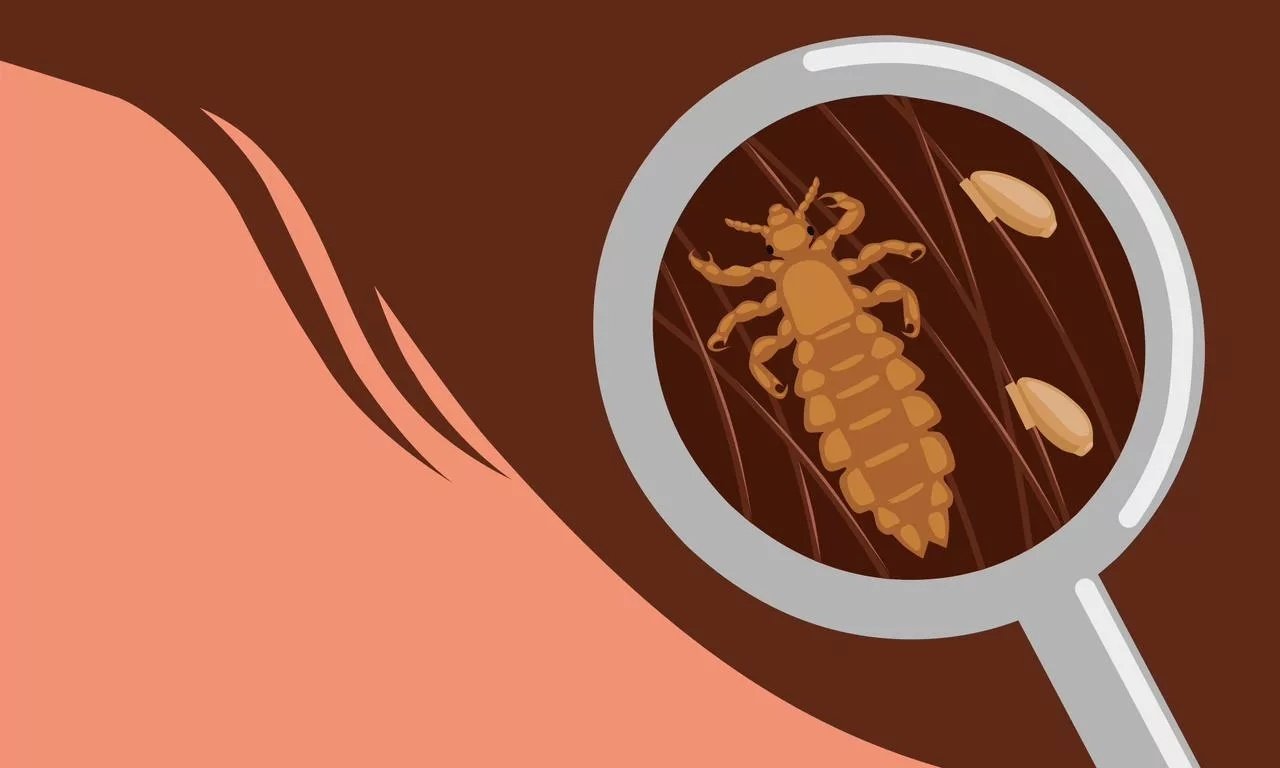
Pediculosis Capitis Signs Pediculosis Capitis is a common condition caused by the infestation of the scalp and hair by Pediculus humanus capitis, the head louse. These tiny, wingless insects feed on human blood and attach their eggs (nits) near the scalp. Transmission occurs primarily through direct head-to-head contact, though sharing personal items such as combs, brushes, and hats can also spread the lice. Head lice affect millions of people worldwide, particularly children, and commonly cause intense scalp itching.
These parasites mainly affect children between the ages of 3 and 12.[1] Outbreaks more commonly affect girls than boys. Head lice are estimated to affect 6 to 12 million people in the United States each year.[2]
However, the exact numbers are not known as it is not a reportable disease. Lice infestations can cause severe social and psychological repercussions.
Biology & Morphology of Pediculus Humans Capitis: Pediculosis Capitis Signs
Head lice are little blood-feeding parasites that are closely related to body and pubic lice. However, head lice have a distinct morphology that differentiates them from other types of lice.
Morphology:
Adult head lice are two to three millimeters long, petite creatures.[3] They have elongated and flattened bodies. Their heads have two huge, complex eyes and antennas. These insects have six legs with claws that enable them to attach themselves to the hair shafts. Head lice are typically light brown or grey in color. They appear darker in color when they have recently ingested blood.
Life Cycle:
There are three phases in the life cycle of the head lice. These are:
- Egg (nit)
- Nymph
- Adult
Eggs
Adult female head lice deposit their eggs close to your scalp. Here, the temperature is appropriate for incubation. Nits are oval and they adhere to hair shafts with a glue-like material generated by the female lice.
Nymphs
After about eight to ten days, the eggs hatch into nymphs. Nymphs are more miniature replicas of the adult head lice. The nymphs undergo three molts over the course of 9 to 12 days before maturing into adults.[4]
Adults
Adult head lice survive on a human host for about 30 days. During this time, they mate and lay new nits.[5]
Etiology
Head louse is an obligate human parasite, meaning it spends its entire life on a human host and feeds exclusively on human blood. They get blood by piercing the skin and injecting an anticoagulant that prevents the blood from clotting. They typically feed once or twice a day for roughly 30 minutes.[6]
Lice do not have wings, so they are unable to jump or fly. Transmission requires close contact, as they can crawl between people. Transmission of head lice can occur:
- Head-to-head contact
- Sharing of headgear
- Direct contact with fomites
Risk factors for infestation can include:
- Female sex
- Sharing clothes, beds, and hair accessories
- A greater number of children in a family
- Overcrowding and close living
Symptoms of Pediculosis Capitis
Symptoms include:
- Itching, one of the most common symptoms (saliva of lice may trigger allergic responses)
- Sores from itching or small bumps
- A feeling of something moving on the scalp or in the hair
- Difficulty in sleeping as lice are more active at night
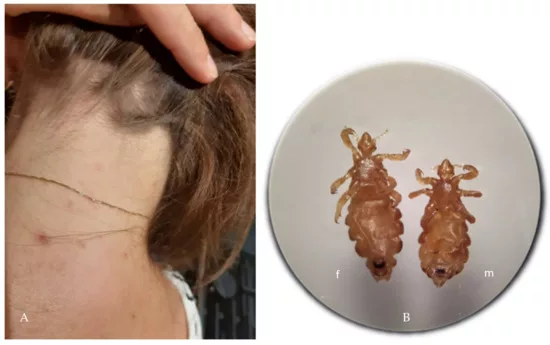
Scalp infestation caused byPediculus humanus capitis,accompanied by allergic reaction (A); Pediculus humanus specimens removed from the patient’s scalp (B); f—female; m—male lice. Image Courtesy: Head Lice Infestation in Schoolchildren, in Poland—Is There a Chance for Change? by Bartosik et al, 2022, doi.org/10.3390/jcm11030783, available via: https://www.mdpi.com/2077-0383/11/3/783, CC BY 4.0.
Diagnosis of Pediculosis Capitis
The diagnostic methods for pediculosis capitis are:
Physical Examination:
Diagnosis begins with a history of pruritus and physical examination. The healthcare provider looks for the presence of nits or live lice on the scalp, especially behind the ears, around the temples, and on the nape of the neck. The diagnosis is confirmed by the visualization of at least one louse on physical examination.
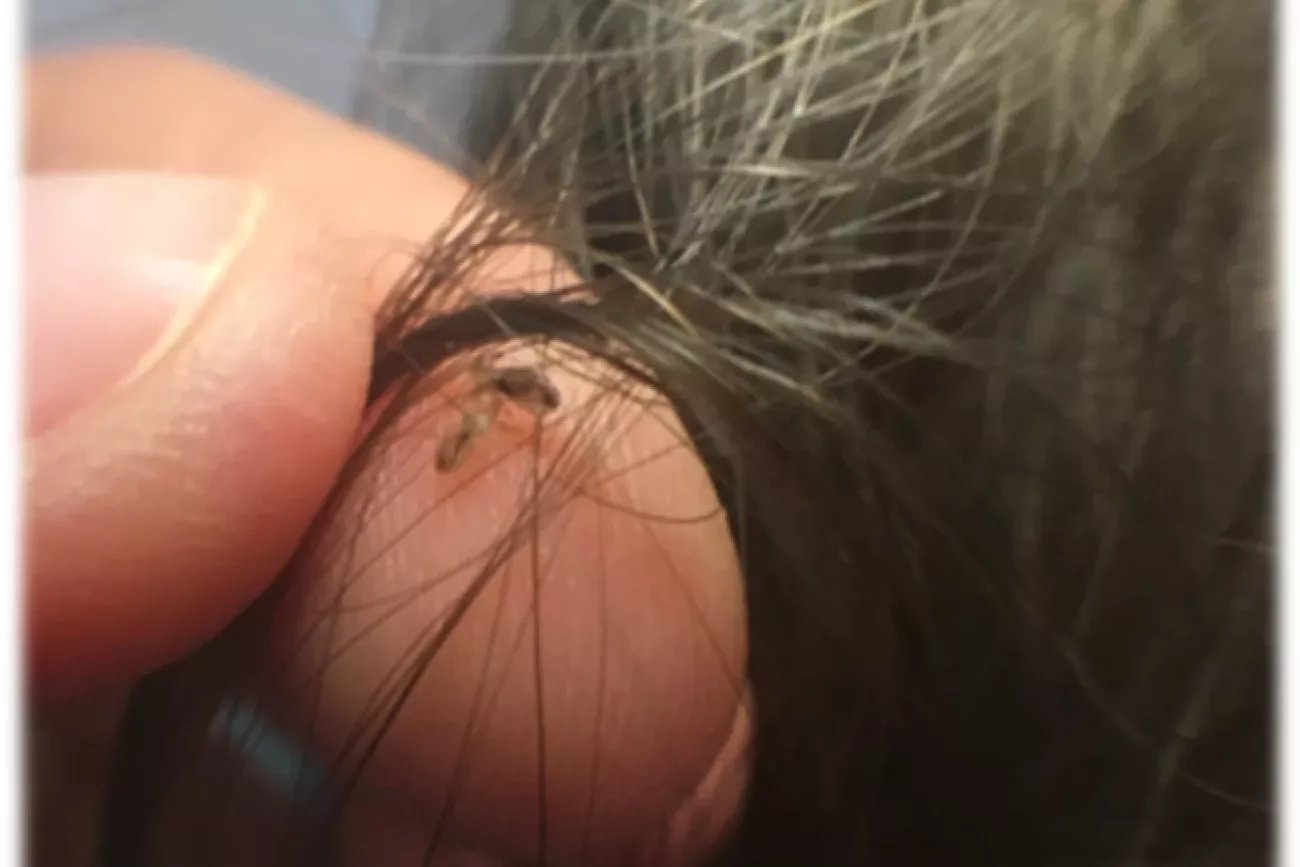
Singe live louse confirms diagnosis. Image Courtesy: Prevalence and Intensity ofPediculus humanus capitisin Kindergarten and Primary School Children in Poland by Padzik et al, 2025,doi.org/10.3390/jcm14113942, available via: https://www.mdpi.com/2077-0383/14/11/3942, CC BY 4.0.
Visual Inspection:
The examiner uses a bright light or a magnifying glass to inspect the hair shafts and scalp visually. At this point, the clinicians need to distinguish the nits from dandruff or debris by their firm attachment to the hair shaft, indicating active infestation. Misdiagnosis is common at the time of visual inspection. The presence of nitson examination cannot confirm a current infestation. The reason is that nits can stay on hair for months after successful treatment.
Combing Techniques:
Wet or dry combing with a fine-toothed nit comb is the most sensitive diagnostic method for pediculosis capitis. Wet combing is the most commonly used method. Combing helps in capturing live lice and nits for the confirmation of diagnosis. The clinicians examine the comb after each turn.
Ancillary Techniques:
The clinicians apply ancillary techniques only in some uncertain cases. These techniques include:
- Application of sticky tape on the scalp to collect lice for microscopic examination.
- Wood lamp examination that causes nits to fluoresce greenish yellow for detection.
- Non-contact magnified visualization or dermoscopy to distinguish lice infestation from other scalp conditions, such as seborrheic dermatitis.
Management & Treatment of Pediculosis Capitis
Generally, people consider manual removal of head lice by hand, shaving affected areas, and a lice comb for the physical removal of the head lice. Wet combing involves moistening and combing hair from the roots to the tips with a lice comb. Pharmacological treatment focuses on two mechanisms:
- Neurotoxicity results in the paralysis of the head louse
- Suffocating them by the application of topical agents.
The available treatment only kills lice but does not reliably destroy eggs, so repeat treatment is often required for complete eradication of lice.
First-Line Treatment:
Multiple topical pediculicides are the first-line treatment for pediculosis capitis. These include Malathion, pyrethroids, benzyl alcohol, and spinosad.
- Malathion 0.5% lotion is an organophosphate cholinesterase inhibitor. It causes respiratory paralysis in arthropods. It has a reasonable margin of safety but possesses an unappealing odor.
- Permethrin 1% (a pyrethroid) is one of the most frequently used treatments for lice among the topical agents. Among pyrethroids, permethrin 1% is a synthetic agent used as a treatment, as it affects sodium transport across neuronal membranes and causes respiratory paralysis in arthropods.[7]
- Benzyl alcohol 5% lotion acts as a topical suffocating treatment that prevents lice from closing their respiratory spiracles. Their efficacy is comparable to pyrethrins.
- Spinosad 0.9% works by provoking hyperexcitation, causing death to lice by paralysis. A single dose is effective in eradicating head lice.
Second-Line Treatment:
The pedicullicides used as second-line treatment include lindane, topical or oral ivermectin, and spiosa.
- Lindane 1%, an organochloride that kills lice via respiratory paralysis. After application, it gets absorbed in the blood and slowly metabolized. This agent has the potential to cause neurotoxicity. Its application in children and repeated application in adults are usually avoided.
- Topical ivermectin 0.5% lotion increases chloride in muscle cells, causing hyperpolarization and paralysis in lice. It is used as a third-line agent due to its limited clinical experience and cost.[8]
- The only currently used oral treatment for pediculosis is ivermectin. It has a risk of neurotoxicity. Oral ivermectin has demonstrated effectiveness in clinical trials but is not FDA-approved for treating pediculosis.[9]
Differential Diagnosis of Pediculosis Capitis
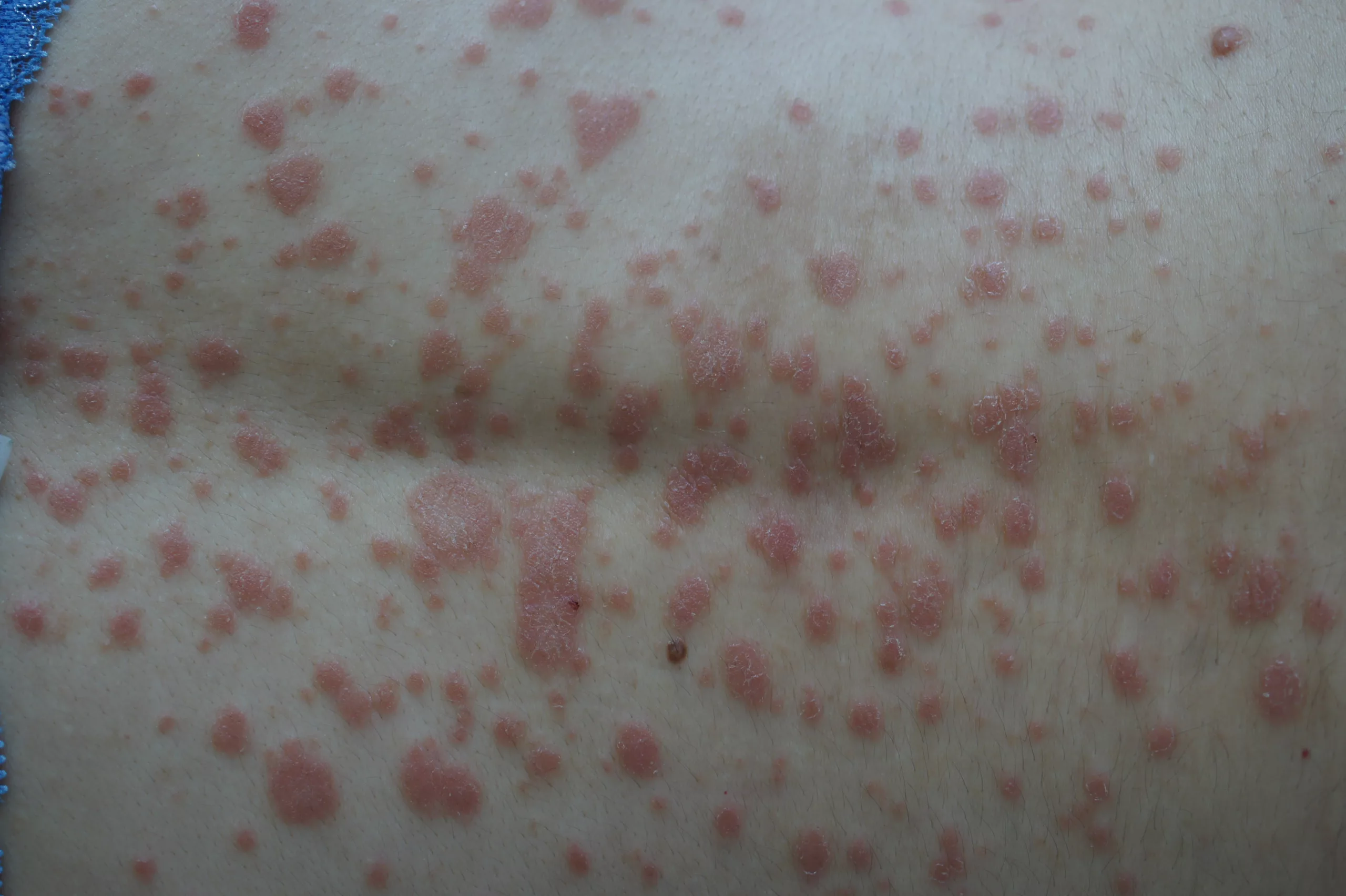
Several scalp and hair conditions can look similar to head lice infestation, which can lead to misdiagnosis. It’s important to carefully examine the scalp to distinguish pediculosis capitis from other causes of itching or debris in the hair. Differential diagnosis for pediculosis includes:
- Dandruff
- Inner root sheath remnants (Small, white fragments of keratin that may adhere to hair shafts)
- White piedra (A fungal infection that forms soft, white nodules around hair shafts)
- Black piedra (Fungal infection that produces hard, black nodules on the hair shaft)
- Psoriasis
- Psocids (Book Lice)
- Seborrheic dermatitis
- Hair spray debris
- Trichodystrophies (Hair shaft abnormalities that may create uneven textures or deposits resembling eggs)
Prognosis of Pediculosis Capitis
The overall prognosis for head lice infestation is excellent when proper treatment is used. Most topical medications and combing methods are highly effective in eliminating both adult lice and nymphs.. However, treatment failure can also occur due to several reasons. These reasons can be an inadequate application of pediculicide, lack of ovicidal activity, failure to remove live nits, drug resistance to pediculicide, and non-compliance with retreatment.
Complications or Impact of Pediculosis Capitis
The complications that can manifest with pediculosis capitis include the following:
Loss of School Days & Academic Performance:
Lice infestations can lead to significant school absences, which negatively affect academic performance. Such children are usually excluded from school activities, which can pose detrimental effects on their mental health. School teachers can also separate their sitting locations to avoid transmission.
Psychological Impact:
Lice infestations can also have significant psychological effects on children and even families. The stigma associated with pediculosis capitis can result in emotions of shame, humiliation, and social isolation. Additionally, the persistent discomfort and itching can cause severe stress.[10]
Disease Transmission:
Lice are capable of transmitting illnesses such as:
- Typhus
- Trench fever
- Relapsing fever
However, the danger of transmitting the disease is minimal.
Prevention of Pediculosis Capitis
Prevention and control of head lice need a complex strategy. The following are some strategies that can be effective in preventing and controlling pediculosis capitis:
Personal Hygiene:
- Promoting personal hygiene practices, such as frequent hair washing, can aid in preventing the condition.
- Avoid sharing personal things like towels, caps, and hair brushes.
Environmental Sanitation:
- Meticulously cleaning the home and home items, such as beds and upholstered furniture, to prevent the spread of head lice.
- Washing clothes, bedding, and other personal items in hot water and drying them on high heat can aid in eliminating nits or lice if they are present.
Education:
- Educating parents, teachers, and children about the dangers of head lice infestations can aid in preventing head lice infestations.
- Teaching them about the use of tools for treatments can also help in preventing and controlling this condition.
Monitoring & Surveillance:
- Regular monitoring and surveillance for head lice infestations can aid in the early detection of head lice and the prevention of their spread.
Pediculosis Capitis versus Pediculosis Corporis
Both are lice infestations of human, and their causing agent belongs to the same species with slight morphological differences. Table 1 presents a detailed comparison of these two conditions.
Table 1: Comparison of Pediculosis Capitis with Pediculosis Corporis
| Features | Found in people regardless of their hygiene, especially in children | Pediculosis Corporis |
|---|---|---|
| Causing agent | Pediculus humanus capitis (Head lice) | Pediculus humanus humanus (body lice) |
| Size | Smaller | Slightly larger |
| Habitat | Lives primarily on scalp hairs | Lives primarily on clothing, especially along seams |
| Mode of transmission | Direct contact | Spread through direct contact or contaminated clothing |
| Feeding behavior | Feed on blood several times a day by piercing the scalp skin | Feeds less frequently but takes larger meals |
| Infestation association | Topical pediculicides and nit combing | Associated with poor hygiene situations |
| Clinical signs | Scalp itching | Pruritus and excoriations on the skin areas in contact with the clothes |
| Treatment approaches | Hygiene practices | Topical pediculicides, and nit combing |
A Quick Review
Pediculosis capitis is a significant public health problem with considerable economic and social ramifications. Effective diagnosis and treatment of lice infestations are essential to prevent their transmission and their psychological impact on individuals. To address this problem and promote the health and well-being of people, a comprehensive approach is required.
References
[1] Çetinkaya, Ü., Sahin, S., & Ulutabanca, R. Ö. (2018). Kayseri Ilinde Scabies ve Pediculosis Epidemiyolojisi/The Epidemiology of Scabies and Pediculosis in Kayseri.Turkish Journal of Parasitology,42(2), 134-138.
[2] Meister, L., & Ochsendorf, F. (2016). Head lice: Epidemiology, biology, diagnosis, and treatment.Deutsches Ärzteblatt International,113(45), 763.
[3] Shakya, M., Jayraw, A. K., & Singh, M. (2018). Pubic lice infestation in man from Mhow, Madhya Pradesh.Journal of Parasitic Diseases,42(3), 402-404.
[4] El Fady, O., Ibrahim, S., Soliman, N., & Abdel Raouf, A. (2023). Pediculus capitis: an overview.Benha Journal of Applied Sciences,8(6), 85-90.
[5] El Fady, O., Ibrahim, S., Soliman, N., & Abdel Raouf, A. (2023). Pediculus capitis: an overview.Benha Journal of Applied Sciences,8(6), 85-90.
[6] El Fady, O., Ibrahim, S., Soliman, N., & Abdel Raouf, A. (2023). Pediculus capitis: an overview.Benha Journal of Applied Sciences,8(6), 85-90.
[7] Nanda, J., Patel, P., & Juergens, A. L. (2024). Permethrin. InStatPearls [Internet]. StatPearls Publishing.
[8] Deeks LS, Naunton M, Currie MJ, Bowden FJ. Topical ivermectin 0.5% lotion for treatment of head lice. Ann Pharmacother. 2013 Sep;47(9):1161-7
[9] Sanchezruiz, W. L., Nuzum, D. S., & Kouzi, S. A. (2018). Oral ivermectin for the treatment of head lice infestation.The Bulletin of the American Society of Hospital Pharmacists,75(13), 937-943.
[10] Campos Nogueira, R., Nonato, F. R., Duchene Veauvy, M. C., Cavin, A. L., Al-Anbaki, M., & Graz, B. (2021). Head lice at school: traditional medicine and community engagement.Health Equity,5(1), 310-315.