

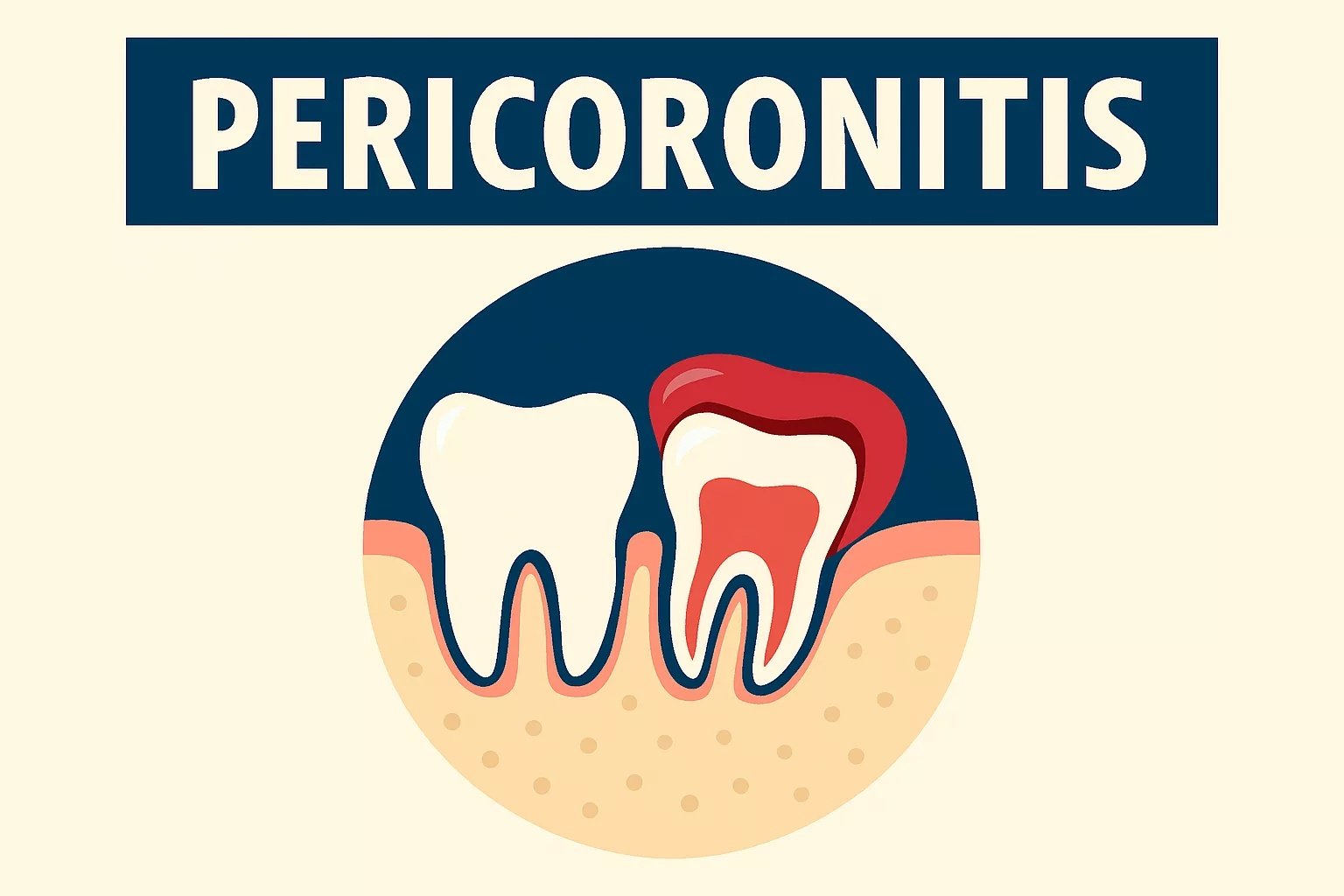
Pericoronitis Symptoms Treatment Pericoronitis is a common dental condition characterized by the swelling/inflammation of the gum tissue covering improperly erupted wisdom teeth. It mostly affects young adults, as this is the age during which wisdom teeth usually erupt. In a study, the prevalence of pericoronitis in 20 to 25-year old individuals was found to be 4.92%.[1] Clinicians find partial eruption of the mandibular wisdom teeth to be the most common cause of the disorder. Symptoms of the disorder can range from mild discomfort to severe pain. Most patients notice pus, swelling, bad breath, and discomfort on mouth opening.
Untreated pericoronitis can persist for long periods and cause significant debilitation. Non-treatment may even lead to serious complications. Therefore, doctors prefer treating it early on.
Symptoms Associated With Pericoronitis: Pericoronitis Symptoms Treatment
The oral disorder is known to cause a wide array of symptoms. Pain and swelling associated with pericoronitis hinder normal mastication (chewing). Hence, it has a direct impact on the patient’s nutrition and consequently on their life.
Pain
The various structures in the oral cavity impart different types of pain sensations. Pericoronitis can exist for a brief period (acute) or be a long-lasting disorder (chronic). Therefore, the presentation of the gum swelling can be different for acute and chronic pericoronitis.
Pericoronitis can be asymptomatic in some patients. However, plenty of patients experiencing acute pericoronitis notice severe, throbbing pain in the back part of the jaw. This pain is known to have adverse implications and limit the quality of life.[2]
In a clinical study, 32% of participants reported little to no pain, while 40% described their pain as moderate. However, only 5% patients expressed their pain to be severe.[3] The pain outcomes directly correlate with different aspects of a person’s life, including daily routine, diet, chewing ability, and talking.[4]
On the other hand, patients experiencing the chronic type are faced with a constant, dull ache (lasting for a couple of days) in the back of the mandible.
Swelling And Redness
Most patients are concerned about the red, overextended flap on their mandibular third molars, even when there are no symptoms. The swelling and redness are attributed to the enhanced blood flow and increased supply of inflammatory markers at the site. In some cases, we see an indentation on the operculum. This indentation is the result of injury from the occluding tooth.
Pus
The swollen gum flap is prone to infection, thanks to the myriad of pathogens residing in your oral cavity. Impaction of food under the hood-like operculum promotes oral infection. An acute bacterial infection of the irritated, inflamed gingiva gives way to the formation of an abscess (a pocket filled with infection-causing and inflammatory cells).
Pericoronitis infection (and pus) can propagate the infection into neighboring anatomical spaces like the submandibular spaces, sublingual space, and buccal space, etc. This is why dentists frequently advise antibiotics to prevent these serious consequences of pericoronitis.[5] Thus, if you see pus even (without pain), consult a dentist!
Bad Breath
Trapped food and debris under the operculum contribute to halitosis (bad breath). Many patients are disgusted by the foul odor emanating from their mouths. The smell persists despite brushing regularly and maintaining oral hygiene. This is because most young individuals are unable to clean the food and debris stuck beneath the operculum due to fear of injury or lack of access. Malodor is mostly seen in the acute type of the disorder.
Repeated Gum Injury
You need proper occlusion of upper and lower teeth to masticate (bite and chew) food. The presence of a gum flap doesn’t prevent the teeth from occluding with one another. Therefore, chewing leads to repeated injury of the operculum. This further aggravates things and causes even more swelling and pain. Moreover, a serious injury to the operculum can cause bleeding from the gum flap.
Limited Opening And Lock Jaw
The growth of a painful and inflamed gingival flap interferes with your mouth’s opening. Therefore, numerous patients across the globe are disturbed by the restricted mouth opening. Some also report having a lockjaw (trismus), where the lower jaw undergoes spasm on opening the mouth. The condition is seen in cases of severe pericoronitis.[6]
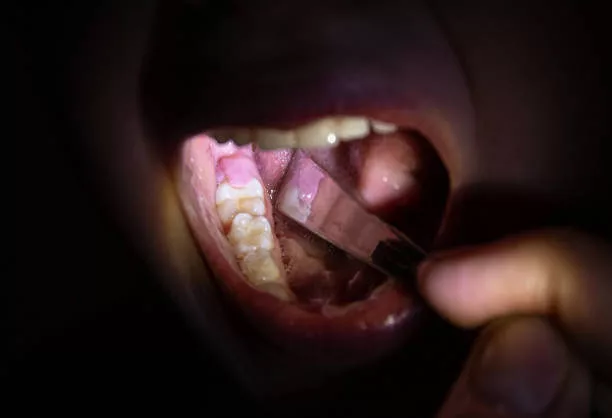
A patient with pericoronitis (gum flap) over a molar tooth.
Swallowing Difficulty
We rarely see dysphagia (swallowing difficulties) arising from pericoronitis. However, severe cases of gingival inflammation can cause extension of the gum flap into the throat, which may interfere with swallowing. Patients may experience aggravation of symptoms due to limited mouth opening as well.
Fever
Patients may also experience a raised body temperature if the gum flap gets infected. Fever is a part of the body’s defense response to fight infection. Hence, you might see serious symptoms like lymphadenopathy (lymph node swelling), swallowing difficulty, fever, and tiredness (malaise) in severely ill individuals.[7]
Lymph Node Swelling
Acute pericoronitis with infection can make your lymph nodes swell. Lymph nodes are part of your immune system and are placed at different locations in the body. Infection and immune response (to the infection) trigger swelling of the lymph nodes, in this case, of the ones present under your jaw, i.e., submandibular lymph nodes. Many people notice the region of the lymph node (mostly beneath the chin) to be tender and painful. In rare instances, we see inflammation of the neck lymph nodes, i.e., cervical lymphadenopathy as well.[8]
What Causes Pericoronitis?
The main cause of pericoronitis is an impacted wisdom tooth. When a tooth erupts in the oral cavity, the gingiva covering the crown part recedes. However, in the case of a partially erupted, impacted molar tooth, the gum does not recede, and some part of it remains. This part becomes inflamed, infected (due to food/debris accumulation), and injured from the opposing tooth, which leads to pericoronitis.
Risk Factors
Researchers and clinicians identify the following risk that can trigger swelling of the operculum.
Age above 20 years:
A high prevalence of pericoronal gum swelling is seen in individuals above 20 years of age because it is the time during which the third molars erupt. Clinical studies note that pericoronitis affects individuals aged 20-29 years, for whom they seek treatment options like operculectomy.[9]
Stress:
Psychological and mental stress can also contribute to inflammation of the gum overlying your wisdom tooth. In a 2024 study investigating risk factors associated with the severity of pericoronitis, Nguyen and colleagues found that demographic and personal factors like stress (work stress, especially) can play a part in the development of pericoronitis.
Poor Oral Hygiene:
Improper brushing and a lack of oral hygiene promote bacterial infection of the gums. Numerous studies have highlighted the direct link between poor dental cleaning habits and generalized gingivitis. Therefore, dentists across the globe promote oral hygiene.[10]
Pregnancy:
Gingivitis (swelling of the gums) is common in pregnant women, and so is pericoronitis. It causes significant discomfort and can potentially lead to further complications like malnutrition (and even anemia in the long term). Expectant mothers report having difficulties in eating, chewing, and opening their mouths. Hormonal changes are believed to cause changes in the periodontium (structures that cover the tooth, including bone, ligaments, and gums), which can contribute to pericoronitis.[11]
How To Diagnose Pericoronitis?
Your dentist will identify the condition by taking a history of your symptoms and physically examining your mouth. Generally, it is easy to diagnose the condition by checking the patient’s mouth. Your dentist might also order dental X-rays to check for any latent pathologies of the wisdom teeth (like cavities) that are hidden by the gum flap.
Pericoronitis Treatment
A few treatment modalities have been effective in managing pericoronitis. Your doctor will select the most suitable treatment based on the severity of your condition. The most commonly adopted strategies include:
Conservative Management
For mild, acute pericoronitis, your dentist will likely recommend some simple at-home treatment options. One of the most commonly adopted steps is to rinse your mouth with warm saltwater four to five times per day. Many believe that the warm salt water soothes the gum irritations, acts as an antimicrobial, and flushes out trapped debris. You can take over-the-counter pain killers (such as diclofenac, acetaminophen, or naproxen, etc) for pain relief. Moreover, you will need to maintain good oral hygiene as it is linked to a reduction in gum infections.
Mouthwash
For mild-to-moderate acute pericoronitis, your dentist will advise you to rinse with a chlorhexidine mouthwash daily. Chlorhexidine gluconate is a topical antiseptic that kills the harmful, disease-causing bacteria. Therefore, its use leads to alleviation of symptoms. Studies show that people who perform chlorhexidine rinses have better bacterial control and desirable oral cleaning. The practice also effectively relieves gingival pain symptoms.[12]
Modern research shows that green tea mouthwashes also do a great job in controlling pain and limited mouth opening associated with acute pericoronitis. The chemical compounds in green tea (catechins) are excellent anti-inflammatory chemicals. Green tea mouthwashes can prove to be as potent as chlorhexidine mouthwashes.[13]
Antibiotic Therapy
If the infection is not controlled with home remedies and oral antiseptics, your doctor will prescribe oral antibiotic medications. Drugs like metronidazole are known to work on gum infections and pericoronitis. Therefore, your dentist may ask you to take metronidazole.[14]
Another drug that has proven to be effective in managing pericoronitis is ornidazole. It mainly targets disease-causing anaerobic bacteria, leading to the resolution of symptoms.[15]
Dental Cleaning
An effective and minimally invasive way to alleviate pericoronitis symptoms is dental cleaning (scaling). Mostly, dentists use ultrasonic scalers to clear the food and debris accumulated under the gum flap. Doctors usually administer local anesthesia before starting the procedure. After clearing the region, your doctor will advise you to use an antimicrobial mouthwash and/or perform warm saltwater gargles.
Photodynamic Therapy
An advanced and modernized way of managing bodily infections is photodynamic therapy. In this therapy, a photosensitizer drug is introduced into the affected area. Then the clinician directs light onto the drug to activate it. The activated drug kills the abnormal growths and imparts a strong antimicrobial effect. Modern studies have shown that the combination of antimicrobial photodynamic therapy and antibiotic therapy allows 100% improvement in pericoronitis-induced pain and lymphadenopathy.[16]
Per another case report, newer formulations using methylene blue in antimicrobial photodynamic therapy provide appreciable relief in pain and trismus (limited mouth opening) caused by pericoronitis.[17]
Operculectomy
Sometimes, doctors surgically remove the flap that is causing problems. As this procedure involves removing the operculum (gingival flap covering the partially erupted third molar), it is called operculectomy. Your dentist will anesthetise the area and remove the flap with a conventional blade or a medical laser.
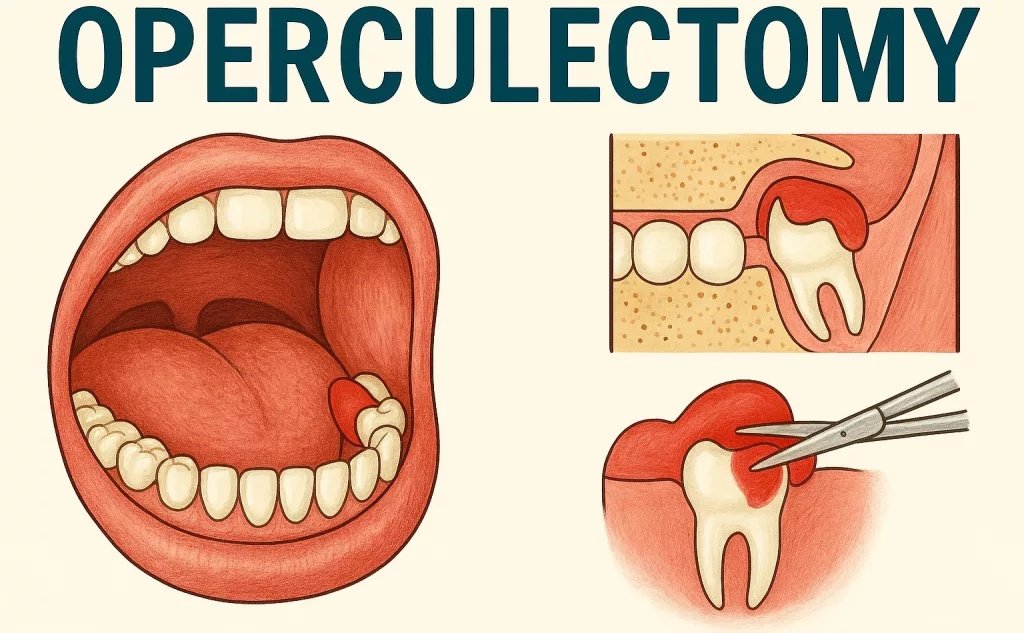
Operculectomy for pericoronitis
Wisdom Tooth Extraction
If the symptoms can not be managed with dental cleaning and operculectomy, your dentist will opt for the extraction of the impacted molar. In most cases, it requires cutting through the bone to expose the impacted tooth. Wisdom tooth extraction offers a permanent solution to the problem, as pericoronitis recurrence is seen in cases with operculectomy.
Complications Of Pericoronitis
If left untreated, pericoronitis can lead to multiple complications. The pain induced by acute pericoronitis promotes changes in your brain activity that reduce the quality of life.[18]
Researchers have also found a link between maternal chronic pericoronitis (and periodontitis) and pre-eclampsia (high blood pressure during pregnancy that can lead to serious complications to the mother and the fetus). One study revealed that women with chronic oral infection are at a higher risk of developing pre-eclampsia.[19]
Moreover, the thick gum flap hinders the tooth from erupting completely into the oral cavity. Thus, we see spontaneous eruption of many teeth after operculectomy. Therefore, you should not ignore your pericoronitis and seek treatment as soon as possible!
Frequently Asked Questions
How Long Does Pericoronitis Last?
It may last for a few days (acute) and resolve with simple home remedies or last for long periods, i.e., several weeks to months (chronic) and require professional intervention for resolution.
How Can I Prevent Pericoronitis?
You can prevent pericoronitis by maintaining good oral hygiene. You should brush two to three times a day, floss between your teeth, and use antimicrobial mouthwash (especially if you have impacted teeth). Regular dental cleanings also prevent the accumulation of food and debris in the operculum.
Is Pericoronitis Contagious?
No, pericoronitis isn’t contagious. It is just a localized swelling (inflammation) of the gum overlying an impacted wisdom tooth.
Final Word
Pericoronitis is a condition of gum swelling present on a partially erupted wisdom tooth. The swollen gum flap causes pain, difficulty in mouth opening, and chewing problems. Patients complain of food and debris accumulation under the gum overgrowth, which leads to bad breath (halitosis) and infection (with pus discharge). Severe pericoronitis can also cause fever and lymph node swelling. Acute pericoronitis lasts for a few days and generally resolves with home care, while the chronic type takes several weeks (to months) to subside, that too, with professional help.
The main cause of the disorder is impacted (partially erupted) mandibular third molars. Stress, poor oral hygiene, and pregnancy are risk factors for pericoronitis. For mild acute pericoronitis, doctors advise warm saltwater gargles, antibiotic mouthwashes, and sometimes, oral antibiotic medications. Dental cleaning removes the accumulated debris and helps alleviate symptoms.
For moderate-to-severe cases, dentists surgically remove the flap in a procedure called operculectomy. However, in severe cases, your healthcare provider will extract the wisdom tooth for permanent relief.
References
[1] Katsarou, T., Kapsalas, A., Souliou, C., Stefaniotis, T., & Kalyvas, D. (2019). Pericoronitis: A clinical and epidemiological study in greek military recruits.Journal of clinical and experimental dentistry,11(2), e133.
[2] MOHAMED, R., ALAYAN, K., & RAHAB, M. (2022). Acute Pericoronitis and its Effect on Health Related Quality of Life: Systemic Review.The Medical Journal of Cairo University,90(3), 601-607.
[3] McNutt, M., Partrick, M., Shugars, D. A., Phillips, C., & White Jr, R. P. (2008). Impact of symptomatic pericoronitis on health-related quality of life.Journal of oral and maxillofacial surgery,66(12), 2482-2487.
[4] Magraw, C. B., Golden, B., Phillips, C., Tang, D. T., Munson, J., Nelson, B. P., & White Jr, R. P. (2015). Pain with pericoronitis affects quality of life.Journal of Oral and Maxillofacial Surgery,73(1), 7-12.
[5] Schmidt, J., Kunderova, M., Pilbauerova, N., & Kapitan, M. (2021). A review of evidence-based recommendations for pericoronitis management and a systematic review of antibiotic prescribing for pericoronitis among dentists: inappropriate pericoronitis treatment is a critical factor of antibiotic overuse in dentistry.International Journal of environmental research and public health,18(13), 6796.
[6] Hayek, G. M., & Ferneini, E. M. (2023). Third molars and Pericoronitis. InDental Science for the Medical Professional: An Evidence-Based Approach(pp. 95-97). Cham: Springer International Publishing.
[7] Schalch, T. O., Martimbianco, A. L. C., Goncalves, M. L. L., Motta, L. J., Santos, E. M., Cecatto, R. B., … & Horliana, A. C. R. T. (2022). Interventions for early-stage pericoronitis: systematic review of randomized clinical trials.Antibiotics,11(1), 71.
[8] Nguyen, B. N. T., Nguyen-Le, C. T., Nguyen, B. L. T., & Le, S. H. (2024). Risk factors associated with the severity of pericoronitis of mandibular third molar.Clinical Oral Investigations,28(6), 307.
[9] Primasari, V. S. (2023). Surgical Operculectomy Procedure In The Treatment Of Pericoronitis.Jurnal Ilmiah Dan Teknologi Kedokteran Gigi (JITEKGI),19(1), 20-25.
[10] Pawlaczyk-Kamieńska, T., Torlińska-Walkowiak, N., & Borysewicz-Lewicka, M. (2018). The relationship between oral hygiene level and gingivitis in children.Adv Clin Exp Med,27(10), 1397-1401.
[11] McArdle, L. W., Andiappan, M., Khan, I., Jones, J., & McDonald, F. (2018). Diseases associated with mandibular third molar teeth.British Dental Journal,224(6), 434-440.
[12] Tang, X., Luo, J., Sun, J., & Shen, S. (2022). Study on Effect of Chlorhexidine Gargle Combined with Oral Care on the Improvement of Pain Symptoms in Oral Anaerobe Infection.Indian Journal of Pharmaceutical Sciences,84.
[13] Shahakbari, R., Eshghpour, M., Rajaei, A., Rezaei, N. M., Golfakhrabadi, P., & Nejat, A. (2014). Effectiveness of green tea mouthwash in comparison to chlorhexidine mouthwash in patients with acute pericoronitis: a randomized clinical trial.International journal of oral and maxillofacial surgery,43(11), 1394-1398.
[14] Maudhah, A. A., Mamdouh, A., Hemadi, A., Alzalab, A., & Jing, M. Role of Metronidazole In Treatment of Pericoronitis: Systematic.
[15] Du, R., Ba, K., Yang, Y., Zhao, Y., & Lin, Y. (2024). Efficacy of ornidazole for pericoronitis: a meta-analysis and systematic review.Archives of Medical Science: AMS,20(1), 189.
[16] Eroglu, C. N., Tunc, S. K., Erten, R., & Usumez, A. (2018). Clinical and histological evaluation of the efficacy of antimicrobial photodynamic therapy used in addition to antibiotic therapy in pericoronitis treatment.Photodiagnosis and Photodynamic Therapy,21, 416-420.
[17] Schalch, T. O., Piatto, É. T., de Sousa Simão, D., Bussadori, S. K., Motta, L. J., Pavani, C., & Horliana, A. C. R. T. (2023). Pericoronitis treatment with antimicrobial photodynamic therapy using a new formula of methylene blue: a case report.Photodiagnosis and Photodynamic Therapy,42, 103331.
[18] Li, X., Qiu, L. Y., Shi, X. J., Zhu, Y. P., He, Y. L., & Kuang, H. M. (2024). Abnormal interhemispheric functional connectivity in acute pericoronitis: A Resting-State MRI study.Journal of Craniofacial Surgery,35(7), 2099-2104.
[19] Aly, L. A., El-Menoufy, H., Elsharkawy, R. T., Zaghloul, M. Z., & Sabry, D. (2015). Maternal chronic oral infection with periodontitis and pericoronitis as a possible risk factor for preeclampsia in Egyptian pregnant women (microbiological and serological study).Future Dental Journal,1(1), 23-32.