

Pernicious Anemia Symptoms Pernicious anemia is an autoimmune condition that causes a vitamin B12 deficiency, leading to low healthy red blood cells in your blood. This produces symptoms such as fatigue, weakness, and other health issues.
What is Pernicious Anemia?
Pernicious anemia is a type of megaloblastic anemia that makes it hard for your body to absorb vitamin B12, which can lead to its deficiency. Vitamin B12 is essential for producing healthy red blood cells that carry oxygen throughout your body. Without enough red blood cells, you feel weak, tired, and out of breath.
This happens because the immune system mistakenly attacks the stomach’s parietal cells, preventing the production of intrinsic factor, which is a protein needed for vitamin B12 absorption. Without an intrinsic factor, even if you eat enough vitamin B12, your body cannot take it in properly, leading to a deficiency.[1]
Vitamin B12 is vital not only for making healthy red blood cells but also for maintaining nerve health and brain function. Low levels can therefore cause both blood-related and neurological symptoms.[2]
Pernicious anemia affects all ages, but it is mostly found in people over 60 years of age. It is a relatively rare condition. In the United Kingdom, it affects about 50-200 people out of every 100,000, while in the United States it affects about 150 out of every 100,000.[3]
What are the Pernicious Anemia Symptoms?
Pernicious anemia usually develops slowly, and it can be hard to notice at first because symptoms like tiredness or weakness are common in many other conditions. That’s why regular check-ups and blood tests are important; they help your doctor detect the problem early and start treatment before it causes serious health issues. Most common symptoms include:[4]
- Tiredness (fatigue)
- Red and swollen tongue (glossitis)
- Loss of appetite
- Lightheadedness (dizziness)
- Pale skin
- Shortness of breath (dyspnea)
- Chest pain

This illustration shows common pernicious anemia symptoms
As the disease progresses, the nervous system may also be affected due to prolonged vitamin B12 deficiency. Neurologic symptoms may include:
- Numbness or tingling (pins and needles feeling) in hands, feet, and legs
- Weakness or loss of muscle strength
- Difficulty concentrating
- Hallucinations
- Memory loss
- Depression
- Confusion
- Loss of balance
- Speech difficulty
- Increased irritability
Causes of Pernicious Anemia
The main cause of pernicious anemia is an autoimmune reaction that destroys stomach cells and prevents intrinsic factor production. Without an intrinsic factor, vitamin B12 cannot be absorbed.
Other contributing factors include:[5].
Autoimmune Gastritis (AIG):
Pernicious anemia can also develop in people who have a condition called autoimmune gastritis (AIG). This condition slowly damages the stomach cells that make intrinsic factor, making it harder for your body to absorb vitamin B12.
Genetic or Family Factors:
In some rare cases, pernicious anemia can run in families. Babies born with this rare inherited form don’t make enough intrinsic factor or can’t absorb vitamin B12 properly.
Other Autoimmune Diseases:
If you have other autoimmune diseases such as type 1 diabetes, thyroid disease, Addison’s disease, vitiligo, or Sjögren’s syndrome, your risk of developing pernicious anemia is higher.
Stomach Surgery or Injury:
Surgeries like gastric bypass or removal of part of your stomach can reduce the number of cells producing intrinsic factor, leading to pernicious anemia.
Vegetarian Diet:
While not a direct cause of pernicious anemia, not eating enough vitamin B12 (found in meat and animal products) can cause B12 deficiency. Pernicious anemia, however, is mainly caused by the inability to absorb vitamin B12, not by dietary lack.
Risk Factors of Pernicious Anemia
You’re more likely to get pernicious anemia if you have one or more of the following risk factors:[6]
| Risk factors | Description |
|---|---|
| Age | People over 60 are more likely to develop pernicious anemia because their stomach produces less acid and intrinsic factor, which are needed to absorb vitamin B12 properly. |
| Family history | If you have relatives with pernicious anemia or other autoimmune diseases, your risk increases. |
| Autoimmune diseases | Diseases that affect your small intestine’s ability to absorb nutrients increase your risk, like:– Crohn’s disease– Celiac diseaseInfections like Helicobacter pylori may raise the risk of pernicious anemia by triggering immune reactions. |
| Stomach surgery | If you’ve had surgery to remove part or all of your stomach (such as for ulcers or weight loss), your risk is higher. |
| Intestinal or digestive disorders | Diseases that affect your small intestine’s ability to absorb nutrients increase your risk like:– Crohn’s disease– Celiac diseaseInfections like Helicobacter pylori may raise the risk of pernicious anemia by triggering immune reactions. |
| Certain medicines | Long-term use of these drugs can interfere with vitamin B12 absorption:– Proton pump inhibitors (for heartburn)– Metformin (for diabetes) |
| Ethnicity | Pernicious anemia is more common in people of Northern European or African descent. |
These risk factors can increase your chance of developing pernicious anemia by affecting vitamin B12 absorption or triggering the autoimmune process that destroys stomach cells. If you have any of these risk factors, regular check-ups and discussions with your doctor can help detect and manage pernicious anemia early.[7]
How is Pernicious Anemia diagnosed?
Doctors use a combination of questions, physical exams, and blood tests to diagnose pernicious anemia. Since this condition can develop slowly and symptoms may be subtle at first, it sometimes takes time to get the right diagnosis. Here are the common steps that your provider will take to diagnose pernicious anemia:[8]
History:
Your doctor will ask about your symptoms, such as feeling tired, weak, numbness or tingling in your hands and feet, or difficulty walking.
They will also ask about your medical history, including any autoimmune diseases, family history of pernicious anemia, dietary habits, or any stomach surgeries you may have had. These questions help your doctor understand your risk and guide them toward the right tests.
Physical Examination:
During a physical exam, your doctor will look for signs of pernicious anemia. They may check your skin for paleness or a yellowish tint, examine your tongue for smoothness or soreness, and test your reflexes and muscle strength.
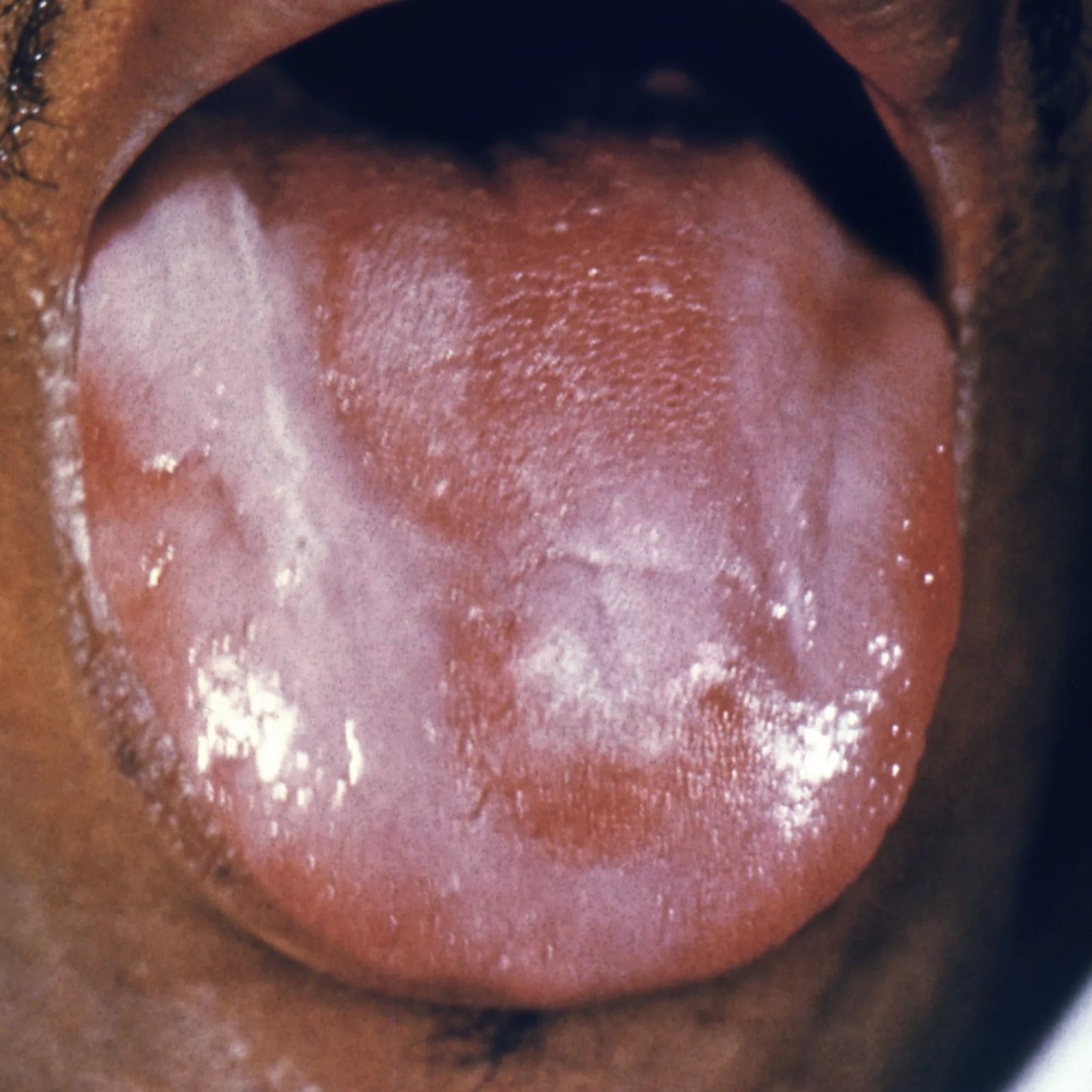
The image shows glossitis due to early pernicious anemia; red, swollen tongue with loss of tongue papillae.Source: CDC PHIL (Image ID 19456)
They may also check your balance and coordination to see if nerve damage has affected your movements.
Blood Tests:
Your healthcare provider checks your red blood cells with a complete blood count (CBC). Pernicious anemia usually causes fewer but larger red blood cells than normal (a condition called megaloblastic anemia).

This image shows an enlarged red blood cell (macrocyte) seen under high magnification—common in vitamin B12 deficiency.Source: CDC PHIL (Image ID 16213)
They measure vitamin B12 levels in your blood to see if you have a deficiency. However, sometimes levels can be misleading, so doctors use additional tests.
Antibody Tests:
Doctors check for “anti-intrinsic factor antibodies” and “parietal (stomach) cell antibodies.” These are signs that your immune system is attacking your stomach cells, causing pernicious anemia. While a positive test helps confirm the diagnosis, a negative test does not completely rule it out.
Methylmalonic Acid (MMA) & Homocysteine Tests:
These tests measure substances in your blood or urine that increase when vitamin B12 levels are low. They help distinguish B12 deficiency from other causes. According to research, relying solely on serum vitamin B12 levels can sometimes fail to detect true deficiencies. Adding complementary tests, such as methylmalonic acid and homocysteine, improves diagnostic accuracy and helps identify patients at risk of long-term neurological or hematological complications.[9]
Gastroscopy with Biopsy:
Sometimes doctors use a thin, flexible tube with a camera (called an endoscope) to look inside your stomach. This procedure is called a gastroscopy. During the exam, they take a tiny piece of stomach tissue (called a biopsy) to check for damage or wasting away (atrophy) of your stomach lining.
British Society of Gastroenterology (2019) suggested that a baseline endoscopy with biopsies should be considered for individuals over 50 years of age who have a vitamin B12 deficiency.[10]
Other Tests:
Sometimes doctors measure stomach acids or use imaging if they suspect stomach damage. A bone marrow biopsy, though rarely needed, may help in complicated cases. In this test, your doctor takes a small sample of bone marrow (the soft tissue inside your bones that makes blood cells) to see if the red blood cells are growing larger than normal.
Treatment for Pernicious Anemia
Although you can’t reverse pernicious anemia, you can eliminate symptoms by taking vitamin B12 supplements regularly. You’ll need to take these supplements for life. The most common treatment is intramuscular injections of vitamin B12 (hydroxocobalamin or cyanocobalamin).[11]
You should never stop your vitamin B12 treatment on your own, even if you feel well, because pernicious anemia requires lifelong management. Doctors regularly monitor your condition with blood tests and check on your symptoms during treatment.
Here’s a table summarizing vitamin B12 supplement dosages and important instructions for treating pernicious anemia (your doctor may adjust your dose or treatment plan based on how you respond):[12]
| Treatment stage | Vitamin B12 type & dose | How often to take | Important notes |
|---|---|---|---|
| Initial treatment (No nerve damage) | Hydroxocobalamin injection, 1000 micrograms (mcg) | Three times a week for 2 weeks | Folate as advised by the doctor |
| Initial treatment (With nerve damage) | Hydroxocobalamin injection, 1000 mcg | Every other day until no further improvement | Nerve symptoms take longer to improve, so treatment is more intense |
| Maintenance treatment | Hydroxocobalamin injection, 1000 mcg | Every 2 to 3 months for life | Lifelong treatment is needed to prevent symptoms from returning |
| Alternative oral treatment | Oral vitamin B12 tablets, 1000 mcg | Daily | Only recommended if no nerve damage and under close medical supervision |
| Folate supplementation | Folate as advised by doctor | As prescribed | Helps prevent neurological complications during B12 treatment |
What is the Prognosis (outcome) if I have Pernicious Anemia?
The outlook is usually good if you receive treatment promptly. After your doctor confirms the diagnosis, you will begin treatment with vitamin B12 supplements. Most people improve within days to weeks of receiving vitamin B12 therapy, and with lifelong treatment, they can live normal, healthy lives. Energy levels and blood counts typically improve first, while neurological symptoms may take several months to recover.
However, if nerve damage has been present for a long time before treatment, some neurological changes (such as numbness or walking difficulties) may not fully reverse. This is why early detection and treatment are essential.
In addition to supplements, you should consider adding foods rich in vitamin B12 to your diet. These include:[13]
- Fish (such as salmon, tuna, catfish)
- Red meat and chicken
- Milk, cheese, and yogurt
- Cereals with added vitamin B12
- Eggs
Complications of Pernicious Anemia
Early diagnosis is important to start treatment quickly and prevent complications like nerve damage, heart problems, and other issues caused by low vitamin B12. If pernicious anemia is left untreated or not diagnosed early, it can lead to serious, long-lasting problems, including:[14]
- Heart problems such as heart failure and irregular heartbeats
- Higher risk of gastric carcinoid tumors due to chronic atrophic gastritis
- Other autoimmune conditions like type 1 diabetes, Hashimoto’s disease, myasthenia gravis, or rheumatoid arthritis
- Permanent nerve damage, affecting your ability to walk properly and feel sensations
- Risk of bone fractures
Can Pernicious Anemia be Prevented?
Pernicious anemia itself cannot be prevented because it is an autoimmune condition that damages the stomach cells needed to absorb vitamin B12. However, the complications of pernicious anemia can be prevented with early diagnosis, regular medical monitoring, and lifelong treatment.
You can also lower your overall risk of vitamin B12 deficiency by:
- Getting regular medical check-ups, especially if you have risk factors like family history or other autoimmune diseases.
- Eating a balanced diet with enough vitamin B12 from foods like meat, fish, eggs, and dairy. According to the National Institutes of Health (NIH), the vitamin B12 your body needs each day depends on your age. Below, you’ll see the recommended daily amounts for each age group, measured in micrograms (mcg):[15]
| Life Stage | Recommended Amount (mcg) |
|---|---|
| Birth to 6 months | 0.4 |
| Infants 7–12 months | 0.5 |
| Children 1–3 years | 0.9 |
| Children 4–8 years | 1.2 |
| Children 9–13 years | 1.8 |
| Teens 14–18 years | 2.4 |
| Adults | 2.4 |
| Pregnant teens and women | 2.6 |
| Breastfeeding teens and women | 2.8 |
- Taking vitamin B12 supplements if your doctor recommends them, especially if you have stomach problems, surgery, or difficulty absorbing vitamin B12.
- Watch for early symptoms like tiredness or numbness and seek medical advice quickly.
- Sticking to your treatment plan if you are diagnosed, as lifelong vitamin B12 therapy is needed to manage the condition.
While you cannot completely prevent pernicious anemia, early detection, healthy eating, and following medical advice can help you stay healthy and avoid serious problems.
Conclusion
Pernicious anemia is a condition where your body cannot absorb enough vitamin B12 because of an autoimmune problem affecting your stomach. Without enough vitamin B12, your body struggles to make healthy red blood cells and keep your nerves working properly. The symptoms often develop slowly and can be mistaken for tiredness or other common health issues. But untreated pernicious anemia can cause serious complications, including nerve damage and increased risk of stomach problems.
The good news is that pernicious anemia can be managed effectively with regular vitamin B12 injections or high-dose supplements, often for life. Early diagnosis and treatment can help you feel better, stop symptoms from getting worse, and prevent permanent damage. If you experience symptoms like fatigue, numbness, or memory changes, talk to your doctor about checking your vitamin B12 levels. With the right care, you can live a healthy, normal life despite the diagnosis.
References
[1] Shmerling, R. H. (2017, December 15). Ask Dr. Rob about vitamin B12 deficiency.Harvard Health. https://www.health.harvard.edu/staying-healthy/ask-dr-rob-about-vitamin-b12-deficiency
[2] Vaqar, S., & Shackelford, K. B. (2023).Pernicious anemia. In StatPearls. StatPearls Publishing. https://www.ncbi.nlm.nih.gov/books/NBK540989/
[3] Mohamed, M., Thio, J., Thomas, R. S., & Phillips, J. (2020). Pernicious anaemia. BMJ, 369, m1319. https://doi.org/10.1136/bmj.m1319
[4] Seage, C. H., Bennett, A., Ward, N., Semedo, L., Plattel, C. H. M., Suijker, K. I. M., Vis, J. Y., & James, D. H. (2024). A systematic review of symptoms of pernicious anemia.Food and Nutrition Bulletin,45(1_suppl), S34–S39. https://doi.org/10.1177/03795721241227016
[5] Vaqar, S., Shackelford, K. B., & Rudolph, S. (2025). Pernicious anemia(Nursing). InStatPearls. StatPearls Publishing. http://www.ncbi.nlm.nih.gov/books/NBK568700/
[6] National Heart, Lung, and Blood Institute. (2022, March 24).Anemia—Vitamin B12–deficiency anemia. U.S. Department of Health and Human Services, National Institutes of Health. https://www.nhlbi.nih.gov/health/anemia/vitamin-b12-deficiency-anemia
[7] Laisk, T., Lepamets, M., Koel, M., Abner, E., Estonian Biobank Research Team, & Mägi, R. (2021). Genome-wide association study identifies five risk loci for pernicious anemia.Nature Communications,12(1), 3761. https://doi.org/10.1038/s41467-021-24051-6
[8] Testing for pernicious anaemia | pernicious anaemia society. (n.d.). Https://Pernicious-Anaemia-Society.Org/. Retrieved August 22, 2025, from https://pernicious-anaemia-society.org/articles/testing-for-pernicious-anaemia/
[9] Stabler, S. P. (2013). Vitamin B12 deficiency.The New England Journal of Medicine, 368(21), 2041–2042. https://doi.org/10.1056/NEJMc1304350
[10] Vaqar, S., & Shackelford, K. B. (2025).Pernicious anemia. InStatPearls. StatPearls Publishing. https://www.ncbi.nlm.nih.gov/books/NBK540989/
[11] Pernicious Anaemia Society. (n.d.).Treatment of pernicious anaemia. Retrieved August 22, 2025, from https://pernicious-anaemia-society.org/treatment/
[12] Ward, N., & Ward, M. H. (2022, July 19). Pernicious anaemia: Recognition, diagnosis and management.The Pharmaceutical Journal. https://pharmaceutical-journal.com/article/ld/pernicious-anaemia-recognition-diagnosis-and-management
[13] National Heart, Lung, and Blood Institute. (2022, March 24).Anemia—Vitamin B12–deficiency anemia. U.S. Department of Health and Human Services, National Institutes of Health. https://www.nhlbi.nih.gov/health/anemia/vitamin-b12-deficiency-anemia
[14] Ankar, A., & Kumar, A. (2025).Vitamin B12 deficiency. InStatPearls. StatPearls Publishing. https://www.ncbi.nlm.nih.gov/books/NBK441923/
[15] Office of Dietary Supplements. (n.d.).Vitamin B12. https://ods.od.nih.gov/factsheets/VitaminB12-Consumer/