
 is an acquired, primarily non-scarring type of hair loss that develops due to chronic pulling or...)
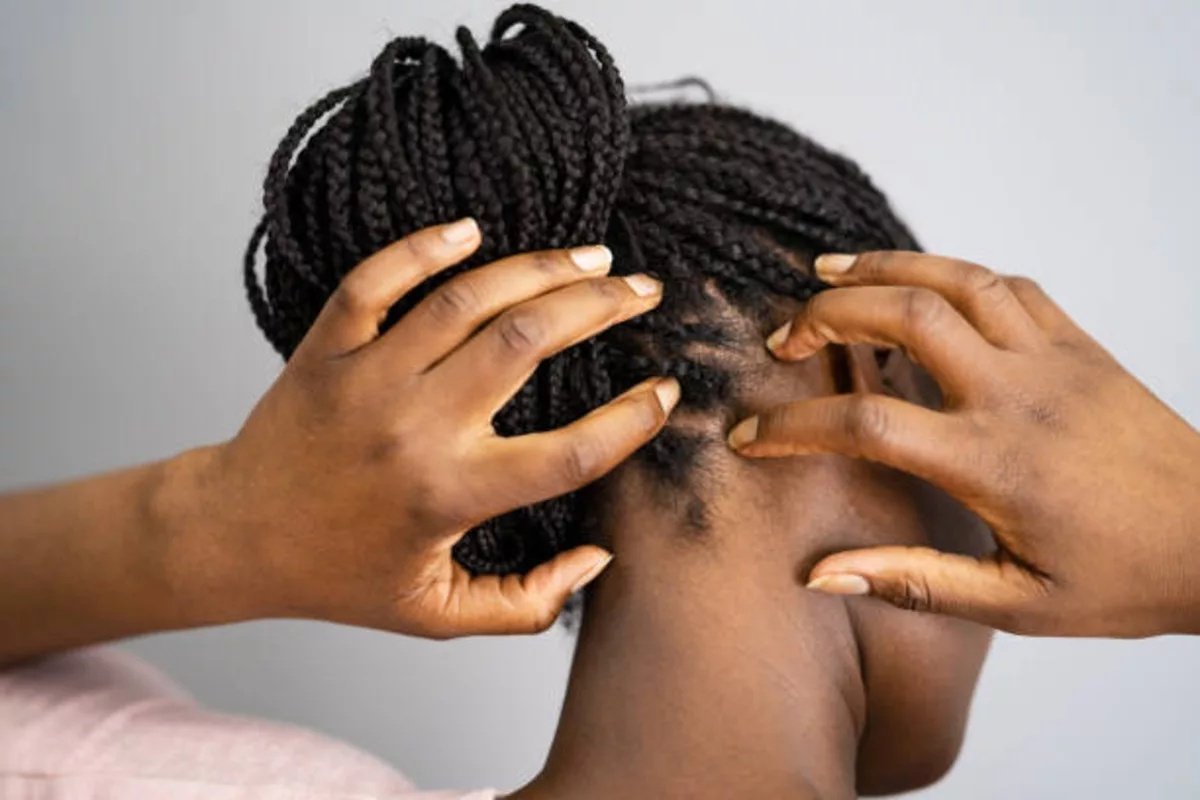
Traction Alopecia Signs Traction alopecia (TA) is an acquired, primarily non-scarring type of hair loss that develops due to chronic pulling or tension on the hair shafts and follicles. The condition is commonly observed in women who frequently wear tight hairstyles, such as ponytails, buns, or braids. The repeated strain (pressure) on the hair follicles weakens them, which eventually causes them to break off, leading to alopecia. This condition can affect men and women, but is more frequently seen in African women. A 2025 study found that every 1 in 4 women in North Sudan suffers from traction alopecia, thus indicating a high prevalence of this alopecia type in the African region.[1]
In its initial stages, traction alopecia is a reversible condition, but it requires quick attention and intervention. The simplest steps involve a stoppage of pulling the hair back. However, if traction continues, TA can evolve into a scarring form of alopecia, resulting in irreversible hair loss.
Traction Alopecia Stages: Traction Alopecia Signs
Early Stage:
It is the beginning stage, which is reversible as there is no significant damage to the hair and scalp. You will find that the hair follicles are affected, but that damage is not permanent. Most patients start noticing thinning of hair, which may be accompanied by hair recession. Some individuals also notice tenderness in the scalp. There are a few broken hairs at this stage, and intervention at this point can halt the disease and effectively reverse the damage.
Mid Stage:
The mid or early-to-mid stage is characterized by significant effects on the scalp and the hair. There is progressive damage to the hair follicle and evident hair loss. Patients notice a recession in the hairline with loss of thick hair, which raises concerns. Despite the loss of the thick terminal hairs, patients still have their vellus (fine) hairs, a feature that can help in diagnosis.
Late or Advanced Stage:
If pressure on the hair is not taken off, alopecia becomes permanent. At this stage, hair loss is irreversible and manifests with hardcore symptoms. Generally, it is a non-scarring type of alopecia. However, repeated stress causes the development of permanent hair loss patches on the scalp. These patches can heal with scarring. A detailed study published in 2021 concluded that untreated traction alopecia (especially in Sub-Saharan women) leads to permanent scarring alopecia.[2] Thus, you may find fibrotic (tracts) scars on the scalp in this alopecia type. [3]
Other symptoms that you may experience during this stage include itchiness, tenderness, and pain on the scalp, along with headaches.
Traction Alopecia Symptoms
Fringe Sign:
A typical presentation of traction alopecia is the fringe sign. Prolonged stress on the hair follicles leads to a unique situation in which there is preservation (retention) of only short hairs on the temporal scalp rim and the frontal region. Histopathological analyses reveal that there is an increase in the vellus-sized hairs and a decrease in the terminal hairs. Moreover, there is a presence of fibrotic tracts and generalized lymphocytic inflammation.[4]
Scalp Erythema:
Long-standing traction of the hair strands is linked to the formation of pustules and perifollicular erythema (redness around the hair follicles). Swelling of the follicles, i.e., folliculitis due to TA, is almost always accompanied by redness.[5] So, if you routinely make tight hairstyles and notice redness on the scalp, you must consider changing them!
Raised Bumps:
Some individuals also notice raised bumps on the scalp in association with TA. Braid bumps develop as a result of inflammation of the follicle, i.e., folliculitis. These bumps can be painful and tender.
Sometimes, people at a high risk of traction alopecia have what is called tenting. This feature is characterized by the raising of perifollicular skin when the hair is pulled tightly. This is a high-risk practice that increases your propensity for traction alopecia and consequent bump formation. In some instances, women notice pimples at the base of their braids, which may also be indicative of the pressure-associated TA. [6]
You may also experience fluid-filled blisters on the scalp. Some complain of having acne-like pimples/lesions due to TA. In rare instances, traction alopecia can present with scalp ulceration. Doctors believe that repeated pressure induces ischemia and necrosis that lead to ulcer formation and consequent hair loss.[7]
Itching:
1Scalp itchiness is a frequent symptom of traction alopecia. The symptom is present across different types of alopecia (androgenic, areata, etc.). Tight braids in children can lead to localized dandruff with itching. Patients also complain of scalp tenderness. This sensation can be attributed to perifollicular erythema in later stages of the disease.
Scaling:
Several patients encountering the hairstyle-induced alopecia often have a scaly scalp. This is commonly seen in patients who have scarring due to traction alopecia. This may also arise due to the co-occurrence of multiple scalp disorders.
When the affected hair follicles become highly damaged and the scalp severely scarred, there is no chance of healing or repair. The body is unable to produce new hair. Thus, it ultimately results in hair loss. However, unlike other types of alopecia, where multiple patches arise all over the scalp, traction alopecia affects only the strands that have been pulled.
Hair Loss:
Research shows that the most common clinical presentations of hair loss include marginal alopecia and non-marginal patchy alopecia.[8]
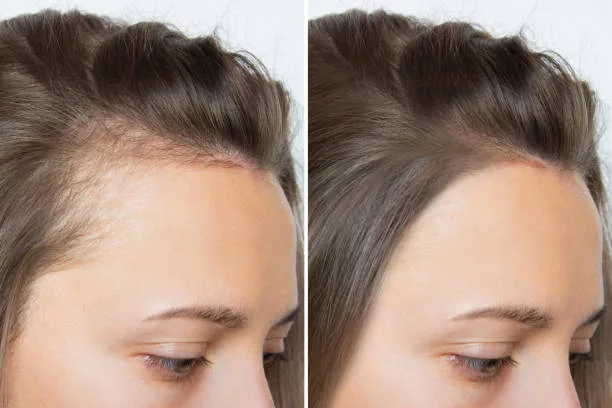
The picture shows the before and after of a woman who received treatment for traction alopecia. The typical marginal hair loss pattern can be seen on the frontal and temporal regions of the head in the before picture (left side).
The repeated stress from continuous pulling of hair (from tight hairstyles) causes hair loss in the frontal region and at the temporal margins of the hairline. This type of hair loss is called marginal hair loss and is a distinct characteristic of TA. However, in non-marginal patchy alopecia, patches are present away from the edges. This type of hair loss is mostly seen inalopecia areata.
Traction Alopecia Causes
As mentioned, traction alopecia develops in response to strong pulling of the hair. The repeatedly high pressure on the hair strands puts them under strain, leading to loosening of the hair shaft within the follicle. You can end up with traction alopecia if you:
- Wear tight braids or use deadlocks. Studies show that tight braids are linked to an increased occurrence of marginal traction alopecia in African girls/women.[9]
- Make a tight ponytail/bun or keep your hair pulled back. Another study noted that girls having straight hair and wearing a tight ponytail can develop marginal traction alopecia. [10]
- Use weaves or hair extensions. Weft hair extensions are known to cause a distinctive type of hair loss pattern (horseshoe pattern) in traction alopecia.[11]
- Follow nocturnal hair traction. Women who tightly roll their hair overnight are at a greater risk of traction alopecia.[12]
Risk Groups:
Certain professions require you to tie your hair. These individuals are at a higher risk of traction alopecia:
- Medical professionals
- Beauty technicians
- Makeup artists
- Ballerinas
- Tattoo artists
- Gymnasts
- Hairstylists
Traction Alopecia Diagnosis
- History and clinical examination: For a TA diagnosis, your doctor will take a history of your symptoms and correlate it with a thorough clinical examination. He might start by asking questions about braids and the tight hair-tying habit. Your healthcare provider will look for characteristic hair loss in the tension-bearing areas. Doctors also look for remnants of dead skin cells called hair casts.
- Dermoscopy: Some doctors use a dermatoscope (a handheld instrument with a light and magnifying lens) to magnify their view. It helps visualize broken hairs, empty follicles, and perifollicular scaling, which are characteristic of TA..
- Biopsy: Your health provider may also remove a small piece of your scalp and send it to the lab for microscopic analysis. In uncertain cases, a biopsy confirms the diagnosis and helps differentiate TA from alopecia areata or other scarring alopecias. Histology shows reduced terminal hairs, increased vellus hairs, perifollicular fibrosis, and minimal inflammation.
Differential Diagnosis:
Traction Alopecia Vs Alopecia Areata
Alopecia areata (AA) is characterized by hair loss, but unlike TA, which is caused by excessive pulling back of hair, it is an autoimmune disorder. Traction alopecia is a reversible condition (by changing hairstyle), but there is no definitive cure for alopecia areata. Moreover, AA can arise on any part of the body; TA is mostly seen only on the scalp due to tight hair pulling.
Traction Alopecia Treatment
Dermatologists diagnose and treat traction alopecia. After a careful examination of the scalp and the hair, your dermatologist will start with minimal intervention.
Hairstyle Changes:
The mainstay of traction alopecia treatment is hairstyle changes. Your doctor will ask you to avoid wearing your hair tightly and remove any tight braids, deadlocks, or cornrows. Tight nocturnal buns are directly linked to TA. So, your dermatologist might focus on loosening the hairstyle while you sleep. As a rule of thumb, you should never pull hair so tightly that it starts to cause pain.
Individuals with very long hair are advised to cut it down to reduce the weight of the hair, which potentially contributes to the disease. Moreover, minimizing chemical and heat exposure of your hair protects it from self-inflicted harm. Animal models reveal that heat treatment of hair increases the incidence of alopecia.[13]
Hair Regrowth Supplements:
To promote hair regrowth, your doctor may prescribe different hair regrowth supplements and medicines. Minoxidil is an over-the-counter medication approved to treat hair loss. It is available in oral and topical (solution) forms. One study found oral minoxidil therapy to be effective and easily accepted by patients.[14] Clinicians believe that treatment of TA with minoxidil can have a positive impact when given before the development of scarring.[15]
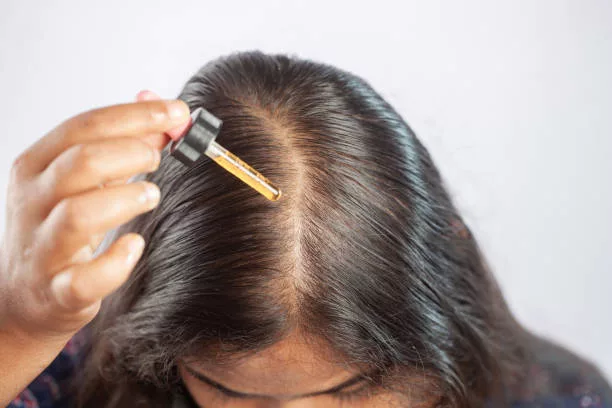
Women applying minoxidil to treat traction alopecia.
Your health provider may also advise you to take biotin supplements. Biotin is a type of vitamin (vitamin B7) that is believed to improve hair strength. A deficiency of biotin causes hair thinning, so its supplementation is believed to promote hair strengthening. According to a clinical study, patients taking biotin supplements showed significant clinical improvements in hair quality and strength.[16]
Topical Steroids:
Most clinicians add a topical steroid to your supplement regimen to curb perifollicular inflammation. Triamcinolone acetonide is the commonly prescribed steroid for alopecia. A study revealed that compounded topical minoxidil with a steroid had better results than over-the-counter minoxidil. It had better adherence, fewer side effects, and showed superior clinical improvement.[17]
A scalp massage can also help in enhancing the blood flow, which in turn amps the healing and regrowth potential of the body.
Hair Transplant:
Hair replacement (transplant) is the only option where there is significant hair loss and weak to no healing potential.
Traction Alopecia Recovery:
When you stop tying your hair tightly, you can expect to see improvements in the condition. Hairstyle changes accompanied by topical/oral minoxidil can help you recover. In mild cases, patients can expect to see hair regrowth (without frequent breakage) within 3 to months. However, you might need to wait longer (up to a year) for things to get better if suffering from severe yet reversible traction alopecia.
Prevention Of Traction Alopecia
The good thing about traction alopecia is that you can prevent it from occurring by following some simple steps:
- Do not use tight braids; instead, go for thicker and looser braids to reduce the pulling force on your hair.
- Take breaks when using hair extensions/weaves and limit usage for short periods only. Try using clip-on (temporary) hair extensions instead of permanent ones.
- Use a satin wig cap when wearing wigs to minimize hair pull.
- Change your hairstyle frequently (every couple of weeks) to avoid persistent stress.
- Try not to use hard rubber bands/hair clips for pulling/tying hair in a ponytail or bun.
- Avoid applying chemicals to your hair as they can damage your strands.
- Don’t sleep in hair rollers. It is better to wrap your hair instead.
- When using a hair dryer, keep the heat setting low to minimize hair damage from heat.
Final Words
Traction alopecia is a type of hair loss that arises due to prolonged pulling of the hair. It is most commonly seen in African women who have tight braids and buns that continuously pull the hair back. Generally, it is a reversible condition that can be reversed by loosening the tight hair bun, braid.
TA presents with loss of terminal hair and an abundance of vellus hair, a typical feature known as the fringe sign. Hair loss occurs in the frontal and temporal regions. Patients may also experience itchy bumps, redness, and scaly skin. Advanced patients may also notice scarring of the scalp.
Doctors advise loosening of hair (especially at night) and minimizing the use of hair extensions, heat, and chemicals. Most dermatologists prescribe steroids and supplements like biotin, minoxidil for inflammation reduction and hair regrowth, respectively. With appropriate changes to your hairstyle, you can expect to see improvements within three months. However, hair replacement is the only option for the advanced, irreversible stage of the disease.
References
[1] Abdallah, S., Hassan, A. A., Alotaibi, M. K., & Adam, I. (2025). Prevalence and Associated Factors of Traction Alopecia in Women in North Sudan: A Community-Based, Cross-Sectional Study.Medicina,61(2), 195.
[2] Sharquie, K. E., Schwartz, R. A., Aljanabi, W. K., & Janniger, C. K. (2021). Traction alopecia: clinical and cultural patterns.Indian Journal of Dermatology,66(4), 445.
[3] Karls, R. (2021). Traction Alopecia. InHair Disorders(pp. 62-67). CRC Press.
[4] Samrao, A., Price, V. H., Zedek, D., & Mirmirani, P. (2011). The “Fringe Sign”-A useful clinical finding in traction alopecia of the marginal hair line.Dermatology Online Journal,17(11).
[5] Akingbola, C. O., & Vyas, J. (2017). Traction alopecia: a neglected entity in 2017.Indian journal of dermatology, venereology and leprology,83, 644.
[6] Afifi, L., Oparaugo, N. C., & Hogeling, M. (2021). Review of traction alopecia in the pediatric patient: Diagnosis, prevention, and management.Pediatric Dermatology,38, 42-48.
[7] Johns, H. R., Wright, T. S., & Pourciau, C. Y. (2021). Acute onset traction‐associated ulceration and alopecia.Pediatric Dermatology,38, 103-105.
[8] Billero, V., & Miteva, M. (2018). Traction alopecia: the root of the problem.Clinical, cosmetic and investigational dermatology, 149-159.
[9] Khumalo, N. P., Jessop, S., Gumedze, F., & Ehrlich, R. (2008). Determinants of marginal traction alopecia in African girls and women.Journal of the American Academy of Dermatology,59(3), 432-438.
[10] Tosti, A., Miteva, M., Torres, F., Vincenzi, C., & Romanelli, P. (2010). Hair casts are a dermoscopic clue for the diagnosis of traction alopecia.British Journal of Dermatology,163(6), 1353-1355.
[11] Ahdout, J., & Mirmirani, P. (2012). Weft hair extensions causing a distinctive horseshoe pattern of traction alopecia.Journal of the American Academy of Dermatology,67(6), e294-e295.
[12] Samrao, A., McMichael, A., & Mirmirani, P. (2021). Nocturnal traction: techniques used for hair style maintenance while sleeping may be a risk factor for traction alopecia.Skin Appendage Disorders,7(3), 220-223.
[13] Wikramanayake, T. C., Alvarez-Connelly, E., Simon, J., Mauro, L. M., Guzman, J., Elgart, G., … & Jimenez, J. J. (2010). Heat treatment increases the incidence of alopecia areata in the C3H/HeJ mouse model.Cell Stress and Chaperones,15(6), 985-991.
[14] Beach, R. A. (2018). Case series of oral minoxidil for androgenetic and traction alopecia: tolerability & the five C’s of oral therapy.Dermatologic therapy,31(6), e12707.
[15] Kim, S. R., & Craiglow, B. G. (2022). Treatment of traction alopecia with oral minoxidil.JAAD Case Reports,23, 112-113.
[16] Patel, D. P., Swink, S. M., & Castelo-Soccio, L. (2017). A review of the use of biotin for hair loss.Skin appendage disorders,3(3), 166-169.
[17] Wyche, J., & Aguh, C. (2025). Enhanced Clinical Outcomes and Treatment Adherence in Patients Using Compounded Topical Minoxidil to Treat Androgenetic and Traction Alopecia.The Journal of Clinical and Aesthetic Dermatology,18(8), 16.