

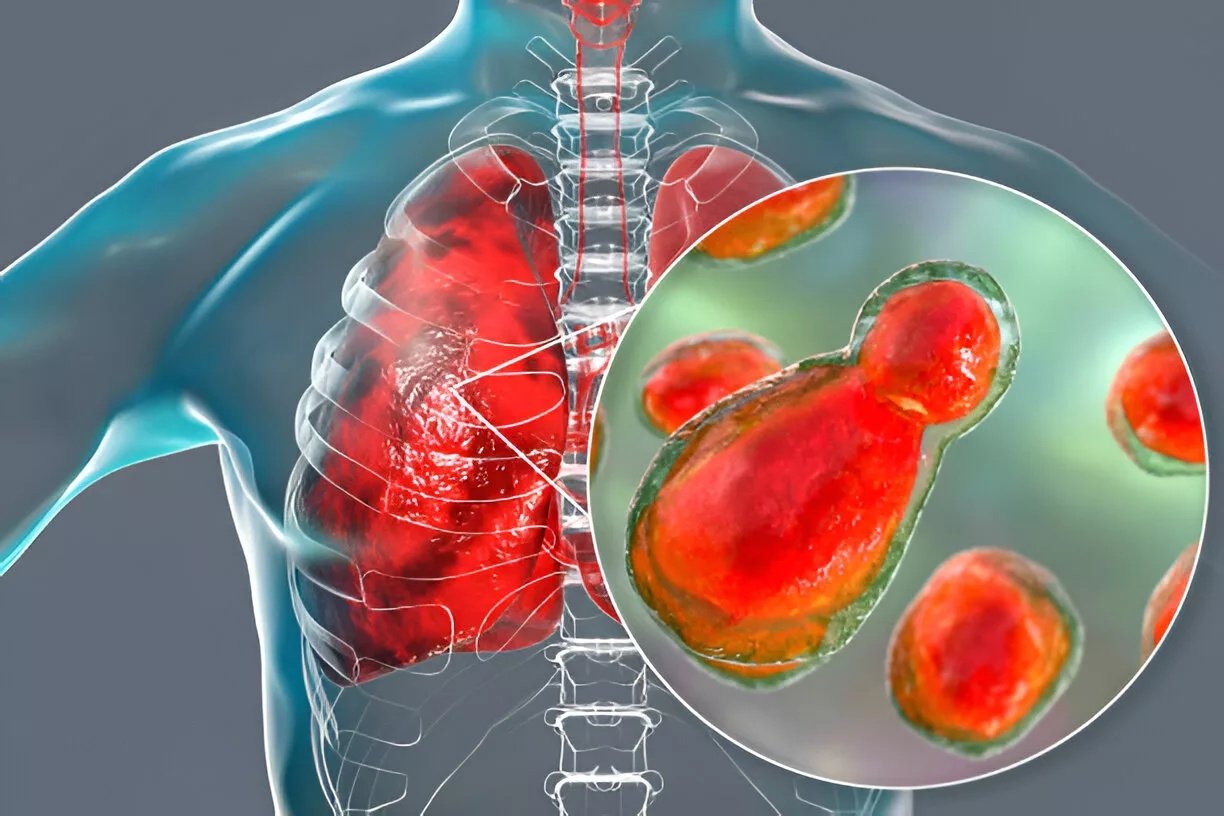
Cryptococcosis Hidden Fungal Cryptococcosis is a serious fungal disease that, in most cases, is not easily noticed until it leads to serious health complications. Thousands of people in the world every year are exposed to this disease, especially those with compromised immune systems.
What Is Cryptococcosis?: Cryptococcosis Hidden Fungal
Cryptococcosis is the infection caused by a fungus known as Cryptococcus. The microscopic organism inhabits the environment, especially in the soil rich in bird droppings, rotting wood, and tree trunks. Cryptococcus neoformans and Cryptococcus gattii are the two predominant disease-causing species that are pathogenic to human beings.[1]
Fungus may establish itself in the lungs when individuals inhale the fungus cells or spores in polluted surroundings. The immune system normally combats the infection, and the infection is asymptomatic or mild in healthy people. But when the person has a weakened immune system, the fungus may spread outside of the lungs to the rest of the body, most perilously to the brain and the spinal cord, and lead to a condition known as cryptococcal meningitis.[2]
The Science of this Hidden Threat
Cryptococcosis is caused by encapsulated yeast species from the Cryptococcus genus, primarily Cryptococcus neoformans and Cryptococcus gattii.[3]
The infection occurs through the inhalation of the microscopic spores into the lungs. The fungus defends itself with the help of the protective capsule, melanin pigment, and special enzymes, which assist it in surviving the attack of the immune system.
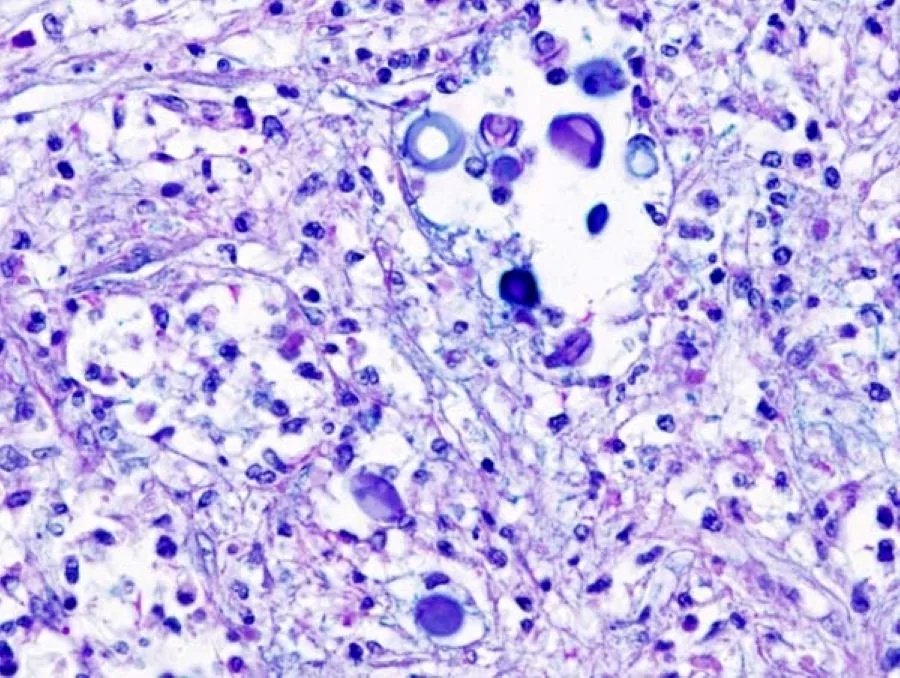
Histopathological image of pulmonary cryptococcosis in an immunocompromised host, stained with Alcian blue-PAS to highlight Cryptococcus organisms in lung tissue.Wikimedia Commons, CC BY-SA 3.0,
Journey to the Brain
The fungus can enter the brain in two major ways after being in the body. It may enter the blood-brain barrier directly through the brain cells, or be carried by immune cells, which carry it into the brain without being aware of it; a process known to scientists as the “Trojan horse” mechanism. The fungus expresses a special enzyme known as Mpr1 that assists the fungus in attaching itself to the cells of blood vessels in the brain and invading the central nervous system.[4]
In case of a weakened immune system, the fungus modifies to become thickened in terms of its protective capsule and develops small cells that assist in the proliferation across the body. These survival tactics are learned by the fungus over millions of years, as it learns to survive in the environment as a simple organism, and this coincidentally allows it to survive within human immune cells. The knowledge of these mechanisms assists the researchers in coming up with improved treatments that can prevent the infection before it becomes life-threatening.
The Global Impact
Cryptococcosis is a worldwide health issue, especially whereHIVis widespread. It has been estimated that cryptococcal meningitis kills about 150,000-200,000 people in the world who are infected with the virus, and most of them are living in sub-Saharan Africa.[5]
The disease is disproportionately prevalent in low and middle-income countries where screening and treatment with antifungal drugs and intensive care are unavailable. International health agencies are trying to enhance the availability of screening, prevention, and treatment in such regions.
Who Is at Risk?
Not all individuals who are exposed to Cryptococcus will get infected. The disease mostly occurs in those whose immunity is unable to successfully combat the fungus. It is most important to comprehend risk factors to prevent and identify them early.[6]
High-risk groups include:
- HIV/AIDS patients who have low cell counts (CD4 cells).
- Patients undergoing organ transplant and using immunosuppressive drugs.
- Patients receiving steroids on a chronic basis.
- Cancer patients are taking chemotherapy.
- Individuals who have autoimmune disorders need immunosuppressive medications.[7]
- Chronic lung disease and diabetes patients.
Interestingly, Cryptococcus gattii can occasionally afflict individuals with healthy immune systems, especially in some geographical locations such as the Pacific Northwest of North America, some parts of Australia, and the tropical/subtropical regions.
Cryptococcosis Transmission
It should be known that cryptococcosis is not contagious; it cannot be spread person to person or animal to human. Human beings become infected by inhaling the microscopic fungal cells in the environment. Common sources include:
- Bird droppings, especially of pigeons.[8]
- Rotting of organic substances in woodlands.
- Bark and hollows of trees, particularly of eucalyptus trees.
- Dust from construction or excavation sites
The fungus inhabits the whole world; however, specific species predominate in certain areas. Cryptococcal neoformans spreads on a worldwide basis, whereas Cryptococcal gattii thrives more in the tropics and subtropics.[9]
Recognizing the Symptoms
Cryptococcosis has different symptoms based on the location of the body affected. Several individuals who contract lung infections might not show any signs at all, and some of them develop severe complications.[10]
Lung Infection (Pulmonary Cryptococcosis)
In case the infection is in the lungs, the patient may have the following symptoms:
- Coughing that takes weeks.
- Breathing difficulty or dyspnea.
- Chest pain or discomfort
- Fever and night sweats
- Coughing up blood – Hemoptysis (in severe cases)
- Lassitude and general weakness
Individuals with a healthy immune system might not show any symptoms at all and only find the infection during the chest X-rays taken on other grounds.
Brain and Spinal Cord Infection (Cryptococcal Meningitis)
When the fungus spreads to the central nervous system, it causes more severe symptoms:
- Severe, persistent headache
- Fever that doesn’t respond to usual treatments
- Neck stiffness
- Sensitivity to light (photophobia)
- Nausea and vomiting
- Confusion or changes in behavior
- Vision problems or blurred vision
- Seizures (in advanced cases)
Cryptococcal meningitis can be considered a medical emergency that needs prompt treatment. If not treated immediately, it may cause death or irreparable brain damage.
Other Body Sites
In uncommon instances, the skin, bones, joints, or other organs may be infected by cryptococcosis with localized effects like skin lesions, pain, or swelling of the bones.
How Doctors Diagnose Cryptococcosis
Cryptococcosis diagnosis demands some laboratory testing to be done, because the symptoms can be confused with other conditions. Medical professionals take the following approaches:
Medical laboratory image showing a blood test used in the diagnosis of cryptococcosis.
Diagnostic tests include:
- Test for antigen of Cryptococci: This is a blood or spinal fluid test that identifies proteins found in the fungus. This is very sensitive and is usually the first test conducted.
- Lumbar puncture (spinal tap): Cerebrospinal fluid is collected to test for the fungus as well as to check the level of pressure in the brain.[11]
- Fungal culture: It involves the growing of the fungus using the samples of blood, spinal fluid, or lung tissue to verify the diagnosis.
- Imaging studies: Chest X-rays or CT scans to identify lung infections, and brain MRI or CT scans to detect meningitis or brain lesions.
- Biopsy: Sometimes, it may be necessary to look under a microscope at some tissue samples of the affected organs.
The early diagnosis is especially valuable in the case of meningitis because prompt treatment is a major factor that decreases the risks of complications and death.
Treatment Options
Cryptococcosis can be treated based on the severity of the infection, the affected part of the body, and the immune status of the patient. Antifungal drugs are used to treat the infection, and it frequently takes several months.[12]
Treatment Phases
| Phase | Duration | Medications | Purpose |
|---|---|---|---|
| Induction | 2 weeks to 2 months | Amphotericin B + Flucytosine | Kill the fungus aggressively |
| Consolidation | 8 weeks | Fluconazole (high dose) | Continue eliminating the fungus |
| Maintenance | 6-12 months or longer | Fluconazole (lower dose) | Prevent recurrence |
Particular Treatment Strategies
In the case of mild lung infections, Individuals who have healthy immune systems and those with mild symptoms might only require fluconazole to take 6-12 months. Observation alone is generally discouraged, as treatment reduces the risk of progression or dissemination.
In case of Severe Infections or Meningitis: The treatment commences with intensive intravenous antifungal treatment, usually amphotericin B and flucytosine, as hospital treatment. Such an aggressive treatment is needed as cryptococcal meningitis is a life-threatening condition.[13]
In People with HIV/AIDS: Once a patient has gone through initial treatment, they may require the use of suppressive therapy using fluconazole to ensure that the infection does not recur, particularly when their immune system is still weak.[14]
Treatment of Complications: Meningitis patients can develop the buildup of pressure in the brain, and it can be treated by repeatedly doing a lumbar puncture to push out the excess fluid and alleviate pressure. It is an important aspect of treatment that may help avoid blindness and other severe complications.[15]
Prevention Strategies
Though it can never be entirely avoided to come in contact with Cryptococcus in the environment, some precautions can be taken to minimize the risk, especially among people who are immunocompromised.[16]
Prevention tips include:
- Avoid areas with high concentrations of bird droppings, particularly pigeon roosts.
- Use masks in working with soil or in dusty places.
- Watch out when in the rotting wood and tree cavities.
- In HIV-positive individuals, routine cryptococcal antigen screening and early pre-emptive treatment in those with very low CD4 counts, along with effective antiretroviral therapy
- Frequent medical check-ups of the high-risk persons.
- Early treatment of all respiratory symptoms among the immunocompromised individuals.
In case of HIV, taking antiretroviral therapy regularly is the best preventive measure to keep the immune system healthy. It has been demonstrated that the risk of cryptococcosis reduces significantly as the immune performance increases.
Prognosis and Long-term Outlook
Treatment of people with cryptococcosis has a very diverse outcome depending on the following factors:[17]
- Early diagnosis and treatment: Early detection and treatment will improve the results of the infection.
- Immunity: If you have a good immune system, then your recovery will be early.
- Place of infection: Infections of the lungs have a higher chance of success compared to brain infections.
- Position of healthcare: The right antifungal drugs at the right time (as soon as possible) are significant.
Through early diagnosis and adequate treatment, a number of individuals heal completely of pulmonary cryptococcosis. Nevertheless, cryptococcal meningitis is severe, with the mortality rates at 10-25 percent despite treatment in the developed world, and significantly higher in resource-constrained environments.[18]
Long-term complications may occur in survivors of cryptococcal meningitis, and they include:
- Hearing loss
- Vision problems
- Cognitive difficulties
- Persistent headaches
- Seizures
Follow-up care is required to check the recurrence and control the long-term effects.
Action Plan for Patients and Caregivers
Knowledge about cryptococcosis will enable patients and their families to take the right measures:
- Know your risk: If you have a weakened immune system, be aware of cryptococcosis and discuss prevention with your doctor.
- Identify red flags: Headaches, fever, and cough are the warning signs in immunocompromised people. These are red flags, so treat them immediately.
- Early care: Do not wait a moment to seek medical attention in case you have symptoms of concern, since early treatment is a life-saving measure.
- Complete therapy: Antifungal treatment is a long process, yet it is necessary to complete the entire treatment to avoid another attack.
- Keep immunity: In individuals with HIV, adherence to antiretroviral therapy is the most appropriate approach in the prevention of cryptococcosis.
Conclusion
Cryptococcosis is a fungal disease that is deadly but curable and is mostly prevalent in individuals with low immunity. Although the disease may be life-threatening, particularly when it infects the brain, early prevention and proper treatment are a great chance to increase success rates. Both the patients and the healthcare providers need to be aware of the risk factors, symptoms, and prevention strategies.
It is being improved by making better use of available drugs, better management of secondary effects such as high brain pressure, and earlier diagnosis. The future research directions involve the development of diagnostic tools and therapies, the mechanism between the fungus and the immune system, and the development of region-specific prevention approaches.
Researchers are looking into new opportunities, such as enhanced drug formulations to enhance brain absorption, rapid molecular diagnostic assays, nanoparticle-based systems of drug delivery, and injectable drugs with long-acting effects. Some of the experimental treatments under investigation include antibodies such as 18B7 and new antifungal agents such as T-2307, VT-1598, and manogepix.[19] Nevertheless, the fundamental changes in the mortality rates might eventually involve the need to use completely new antifungal agents or immunomodulatory treatments.
References
[1] Rajasingham R, Govender NP, Jordan A, et al. The global burden of HIV-associated cryptococcal infection in adults in 2020: a modelling analysis. Lancet Infect Dis. 2022;22(12):1748-1760.
[2] Boulware DR, Rolfes MA, Rajasingham R, et al. Multisite validation of cryptococcal antigen lateral flow assay and quantification by laser thermal contrast. Emerging Infect Dis. 2014;20(1):45-53.
[3] Lin X, Heitman J. The biology of the Cryptococcus neoformans species complex. Annu Rev Microbiol. 2006;60:69-105.
[4] Sorrell TC, Juillard PG, Djordjevic JT, et al. Cryptococcal transmigration across a model brain blood-barrier: evidence of the Trojan horse mechanism and differences between Cryptococcus neoformans var. grubii strain H99 and Cryptococcus gattii strain R265. Microbes Infect. 2016;18(1):57-67.
[5] Desnos-Ollivier M, Patel S, Ramaswamy R, et al. Cryptococcosis—a systematic review to inform the World Health Organization Fungal Priority Pathogens List. Med Mycol. 2024;62(6):myae048.
[6] Hu G, Kronstad JW. Cryptococcus escapes host immunity: What do we know? Front Cell Infect Microbiol. 2022;12:1041036.
[7] Xu J, Wang Y, Zhang M, et al. Cryptococcal infection: host immunity, immune evasion and emerging immunotherapeutic strategies. Front Immunol. 2024;15:1477006.
[8] Emmons CW. Saprophytic sources of Cryptococcus neoformans associated with the pigeon. Am J Hyg. 1955;62(3):227-232.
[9] Li Y, Mao X, Chen Q. The emerging fungal pathogen Cryptococcus gattii: Epidemiology, pathogenesis, immunomodulatory attributes, and drug susceptibility. PLoS Negl Trop Dis. 2024;18(7):e0013245.
[10] Kronstad JW, Attarian R, Cadieux B, et al. Expanding fungal pathogenesis: Cryptococcus breaks out of the opportunistic box. Nat Rev Microbiol. 2011;9(3):193-203.
[11] Wake RM, Britz E, Sriruttan C, et al. Cryptococcal Antigen in Serum and Cerebrospinal Fluid for Detecting Cryptococcal Meningitis in Adults Living With Human Immunodeficiency Virus: Systematic Review and Meta-Analysis of Diagnostic Test Accuracy Studies. Clin Infect Dis. 2021;72(7):1268-1278.
[12] Jarvis JN, Lawrence DS, Meya DB, et al. Single-Dose Liposomal Amphotericin B Treatment for Cryptococcal Meningitis. N Engl J Med. 2022;386(12):1109-1120.
[13] Day JN, Chau TTH, Wolbers M, et al. Combination Antifungal Therapy for Cryptococcal Meningitis. N Engl J Med. 2013;368(14):1291-1302.
[14] Saag MS, Powderly WG, Cloud GA, et al. Comparison of Amphotericin B with Fluconazole in the Treatment of Acute AIDS-Associated Cryptococcal Meningitis. N Engl J Med. 1992;326(2):83-89.
[15] Powderly WG, Saag MS, Cloud GA, et al. A controlled trial of fluconazole or amphotericin B to prevent relapse of cryptococcal meningitis in patients with the acquired immunodeficiency syndrome. N Engl J Med. 1992;326(12):793-798.
[16] Meya DB, Manabe YC, Castelnuovo B, et al. Cost-effectiveness of serum cryptococcal antigen screening to prevent deaths among HIV-infected persons with a CD4+ cell count ≤100 cells/μL who start HIV therapy in resource-limited settings. Clin Infect Dis. 2010;51(4):448-455.
[17] Baddley JW, Chen SCA, Huisingh C, et al. MSG07: an international cohort study comparing epidemiology and outcomes of patients with Cryptococcus neoformans or Cryptococcus gattii infections. Clin Infect Dis. 2021;73(7):1133-1141.
[18] Park BJ, Wannemuehler KA, Marston BJ, et al. Estimation of the current global burden of cryptococcal meningitis among persons living with HIV/AIDS. AIDS. 2009;23(4):525-530.
[19] Larsen RA, Pappas PG, Perfect J, et al. Phase I evaluation of the safety and pharmacokinetics of murine-derived anticryptococcal antibody 18B7 in subjects with treated cryptococcal meningitis. Antimicrob Agents Chemother. 2005 Mar;49(3):952-8. doi: 10.1128/AAC.49.3.952-958.2005.