
 arises as a complication of bacterial pneumonia or intrathoracic surgery (or...)
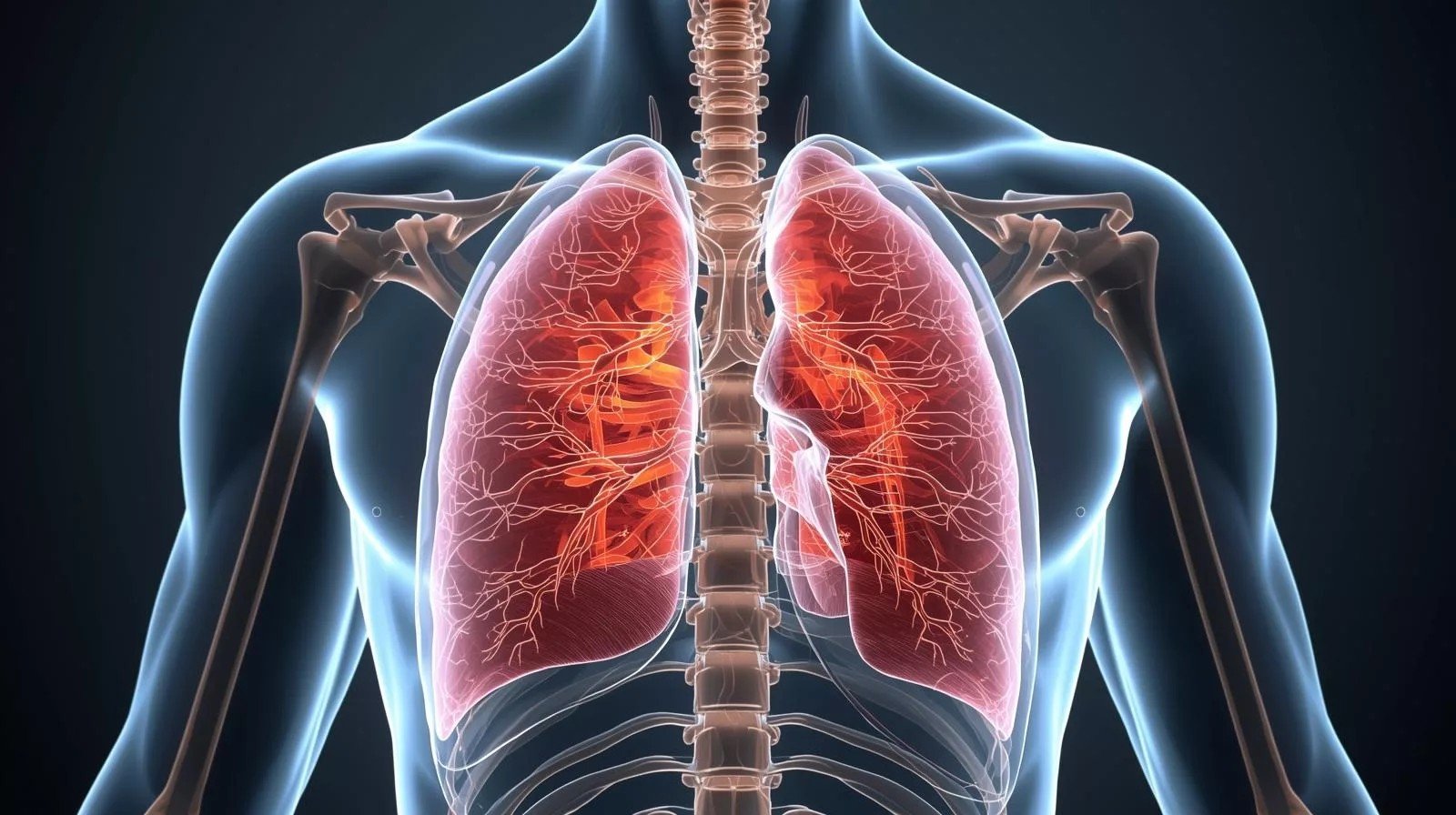
Empyema Serious Complication Empyema (or empyema thoracis) arises as a complication of bacterial pneumonia or intrathoracic surgery (or trauma). It is defined as the accumulation of pus in the pleural space, and can be identified by pus, a positive gram stain culture, or pleural fluid pH < 7.2.[1] It represents the end-stage of the parapneumonic effusion disease spectrum: progressing from a simple exudative effusion to a fibrinopurulent collection and, if untreated, to an organizing stage with a ‘trapped’ lung that impairs expansion.
Patients with empyema present with chest pain, fever, and dyspnea, and require both antimicrobial therapy and effective pleural drainage; delayed or inadequate management increases the need for surgery and is associated with much higher morbidity and mortality. With recent updates, practice guidelines necessitate early imaging (ultrasound/CT), pleural fluid analysis, and a stage-wise approach to drainage. Drainage is through thoracostomy and intrapleural therapy or video-assisted thoracoscopic surgery (VATS).
Epidemiology & Trends: Empyema Serious Complication
If compared with the other complications of pneumonia, empyema is an uncommon one, but its trend does seem to be evolving.
Based on information from several population-based studies, the incidence of empyema is estimated to be somewhere around 3 to 8 cases per 100,000 persons per year in adults, with higher rates among those hospitalized for pneumonia.[2] Incidence in children is lower in absolute numbers but has shown a concerning increase in many high-income regions over recent decades. In fact, it now represents a significant proportion of complicated pneumonias.
In high-income countries, overall pneumonia rates have declined with antibiotic coverage and vaccination. However, empyema cases have not decreased at the same rate; some studies actually show a stable or, in a few studies, even rising incidence, particularly among children after the introduction of pneumococcal conjugate vaccines (might be due to serotype replacement).[3]
Age Distribution:
- Adults: incidence increases with age, especially after 50 years of age
- Children: peaks in preschool and early school-age groups, often following viral respiratory infections complicated by bacterial pneumonia.
- Elderly and immunocompromised patients (e.g., with diabetes, malignancy, or chronic lung disease) have higher rates and worse outcomes.
Sex Distribution:
Research shows a clear male predominance, with male-to-female ratios ranging from 1.5:1 to 3:1.Pleural Fluid Culture Sensitivity by using Blood Culture Bottles and Sterile Syringes in patients having Parapneumonic Effusions and Empyema Thoracis. Pakistan Journal of Chest Medicine, 26(4), 205–209. Retrieved from https://www.pjcm.net/index.php/pjcm/article/view/687″ style=”position:relative;color:#309b65;cursor:help;border-bottom:1px dotted #309b65;font-weight:bold”>[4]
Mortality:
Mortality rates vary by stage and comorbidities. According to the latest studies:
- Adults: 10–20% mortality, higher with delayed drainage or sepsis.[5]
- Children: <5% mortality with prompt treatment.
Causes of Empyema
Empyema most often develops as a complication of bacterial pneumonia. Other important causes include:
- After community or hospital-acquired thoracic infections:
- Following thoracic surgery (likelung resection), esophageal rupture (Boerhaave’s syndrome), or penetrating trauma. These introduce bacteria directly into the pleural space.
- Secondary to other conditions:
Risk Factors for Empyema:
Factors that increase the risk of developing empyema include:
- Extremes of age (e.g., old age or very young children)
- Immunosuppression (e.g., HIV, malignancy, corticosteroid therapy)
- Chronic lung diseases (e.g., COPD, bronchiectasis)
- Diabetes mellitus and chronic alcoholism
Clinical Features
The presentation of empyema depends on its stage, age, and health status. Most patients develop symptoms after or alongside an episode of pneumonia.
Common Symptoms:
Respiratory Symptoms
- Dyspnea (shortness of breath), often progressive and caused by pleural fluid compressing the lung and restricting its expansion.
- Cough, dry or productive; can become purulent, sometimes foul-smelling if a bronchopleural fistula (an abnormal connection between airway and pleural space) develops
- Sharp and pleuriticchest pain (actually worsens with deep breathing or coughing).
Systemic Symptoms
- Fever and chills
- Malaise, loss of appetite, and weight loss
- Night sweats
Presentation in children
Children often present with persistent fever that doesn’t go down with antibiotics, tachypnea, irritability, and reduced activity levels. Also, signs of dehydration are common.
Physical Examination:
Findings on exam typically reflect pleural space involvement and impaired ventilation:
- Inspection: Possible asymmetrical chest expansion; signs of respiratory distress (tachypnea, use of accessory muscles).
- Palpation: Decreased tactile fremitus (vibrations felt on the chest wall).
- Percussion: Dullness over the affected area, in contrast to the normal resonant sound.
- Auscultation:
Stepwise Approach for the Diagnosis of Empyema
Diagnosis requires a high index of suspicion, rapid imaging, and definitive pleural fluid analysis. However, speed is critical; delayed drainage increases the risk of complications and surgery.
Initial Assessment at the time of Presentation:
- The initial assessment includes taking vital signs, oxygen levels, and noting signs of sepsis.
- Complete Blood Count (CBC), metabolic panel, inflammatory markers (CRP, ESR), and blood cultures.
- It’s important to start empiric IV antibiotics immediately if the patient is septic. However, if the patient is clinically stable, it is ideal to perform a pleural tap before antibiotics to maximize culture yield.

(a) Chest X-ray showing left pleural thickening with associated effusion; (b) Admission CT demonstrating an organized pleural effusion and thenpartial collapseof the left lower lobe. (Image Courtesy: Ghisalberti, M., Madioni, C., Ghinassi, G., Maccari, U., Corzani, R., Meniconi, F., Scala, R., & Paladini, P. (2023). A Strange Case of Traumatic Pleural Effusion: Pleural Empyema Due to Actinomyces meyeri, a Case Report. Life, 13(7), 1450. https://doi.org/10.3390/life13071450. Available fromMDPI. Licensed under CC by 4.0)
Imaging Studies:
- Chest X-ray (AP or PA + lateral)
- Point-of-care ultrasound (POCUS):
- Contrast CT Scan

Thoracic CT images of empyema: (A, B) thickened pleura adjacent to effusion; (C, D) classic ‘split pleura sign,’ where both visceral and parietal pleura are thickened and separated by infected fluid. (Image Courtesy: Tsujimoto N, Saraya T, Light RW, Tsukahara Y, Koide T, Kurai D, et al. (2015) A Simple Method for Differentiating Complicated Parapneumonic Effusion/Empyema from Parapneumonic Effusion Using the Split Pleura Sign and the Amount of Pleural Effusion on Thoracic CT. PLoS ONE 10(6): e0130141. https://doi.org/10.1371/journal.pone.0130141. Availablehere. Licensed under CC by 4.0)
Diagnostic Thoracocentesis (Pleural Tap):
- Thoracocentesis is indicated in any new pleural effusion in patients who are showing signs of infection
- When feasible, a pleural tap in empyema should be under ultrasound guidance
- The extracted pleural fluid should then be sent over for analysis.
Pleural Fluid Results Analysis:
- It’s important to keep in mind that the pleural fluid pH must be measured immediately using a heparinized syringe and a blood gas analyzer; otherwise, you risk a falsely high reading.
- One or more of the following findings indicate an immediate chest tube drainage:
- Other supportive findings: very high pleural fluid LDH (markedly above serum limits) and neutrophil predominance support empyema.
| Pleural Fluid Finding | Typical Threshold / Appearance | Clinical Implication |
|---|---|---|
| Gross appearance | Frank pus, turbid, occasionally foul-smelling | Diagnostic of empyema, urges urgent drainage |
| pH | ≤7.20(measured promptly) | Strong indicator of complicated effusion/empyema, chest tube drainage |
| Glucose | <60 mg/dL(often <40 mg/dL) | Consumed by bacteria and neutrophils; supports empyema diagnosis |
| LDH | >1000 IU/Lor very high | Reflects intense inflammation and cell breakdown |
| Cell count | Predominantly neutrophils | Suggests acute bacterial infection |
| Gram stain/culture | Positive for bacteria | Confirms empyema, also guides targeted antibiotics |
| Other markers | Pleural thickening, loculations (seen on ultrasound/CT) | Supports fibrinopurulent/organizing stage |
Microbiology:
- Blood and pleural fluid cultures have the highest yield before antibiotics. Pleural fluid cultures yield is often lower than sputum/blood, and antibiotics reduce positivity.
- Molecular tests (e.g., 16S rRNA PCR) if the cultures are negative
- In aspiration/aspiration-risk cases, anaerobic cultures are requested to rule out polymicrobial infection.
- If tuberculosis is suspected, TB PCR and mycobacterial cultures are sent.
Advanced Diagnostics:
- If tuberculosis or malignancy is suspected, image-guided pleural biopsy or medical thoracoscopy are advised.
- If a chest tube with or without intrapleural therapy is attempted but fails, Video-Assisted Thoracoscopic Surgery (VATS) is both diagnostic and therapeutic.
Classification & Staging of Empyema
Empyema has three pathological stages, as classified by the American Thoracic Society (ATS).[6] The disease progresses through all these stages and this staging system directly correlates with treatment strategy.
Stage I: Exudative Stage:
- Timeline: Early, usually within the first 1–3 days after pneumonia onset.
- Pathophysiology: Underlying lung infection triggers an inflammatory response, releasing cytokines that increase capillary permeability in the pleural membranes. The fluid is sterile with high protein but no bacteria.
- Fluid characteristics: Clear to slightly turbid, thin, low cellularity, pH >7.2, glucose >60 mg/dL.
- Imaging: Free-flowing effusion without loculations.
- Clinical Significance: May resolve with antibiotics alone if recognized early.
Stage II: Fibrinopurulent Stage:
- Timeline: Typically 4–14 days.
- Pathophysiology: Bacteria invade, triggering an influx of neutrophils. Pus forms from the accumulation of bacteria, neutrophils, and cellular debris. Fibrin is deposited on both pleural surfaces, forming adhesions and loculations (pockets) that trap the fluid, making simple drainage ineffective.
- Fluid characteristics: Turbid, purulent; pH ≤7.20; glucose <60 mg/dL; high LDH; neutrophil predominant.
- Imaging: Loculated effusions, pleural thickening, internal echoes on ultrasound, “split pleura sign” on CT.
- Clinical significance: Requires both antibiotics and drainage (chest tube ± intrapleural fibrinolytics).
Stage III: Chronic Empyema:
- Timeline: Late (>2–3 weeks).
- Pathophysiology: Fibroblasts migrate into the exudate, leading to the formation of a thick, inelastic pleural peel (“pleural cortex”) encasing the lung. This prevents lung re-expansion, a condition known as a “trapped lung.”
- Fluid characteristics: Thick pus or organized fibrous material; cultures may be negative if chronic.
- Imaging: Dense pleural rind, trapped lung with volume loss, possible mediastinal shift.
- Clinical significance: Rarely resolves without surgery; VATS decortication or open thoracotomy is usually required.

Progression of Pleural Empyema starting from the onset of Pneumonia, progressing through pus accumulation, eventually a fibrous capsule around the lung
Management of Empyema
Empyema almost always requires a multimodal approach. It’s a combination of antibiotics, drainage, and sometimes surgery that can manage, control infection as well as restore pulmonary function.
Antibiotic Regimen:
Treatment begins with broad-spectrum intravenous antibiotics as soon as empyema is suspected. However, once culture results are in hand, an adjusted regimen can target the specific bacteria.
- Community-acquired empyema: usually treated with a third-generation cephalosporin (such as ceftriaxone) plus metronidazole for anaerobic coverage, or with ampicillin-sulbactam alone.
- Hospital-acquired or post-surgical empyema: requires broader coverage. Options include piperacillin–tazobactam, cefepime, or meropenem, with vancomycin added in case of MRSA.
- The course is 2–4 weeks of IV antibiotics, then oral antibiotics, for a total of 2–6 weeks. The exact duration depends on how well the patient responds and whether complete drainage is achieved.
Drainage of Pleural Fluid:
Antibiotics alone cannot cure empyema, at all costs, the infected fluid must be removed.
- It’s useful for small, free-flowing effusions, but usually not enough once pus or septations form.
- Chest tube drainage (tube thoracostomy) is the standard treatment for most. Small-bore catheters (10–14 Fr) are effective, less painful, and actually preferred over larger tubes.
- Intrapleural therapy (tPA + DNase): In patients with loculated or thick pus, a combination of tissue plasminogen activator (tPA) and DNase can help break down fibrin strands and thin the fluid, thus making the drainage much more effective and often avoiding surgery.[7]
Surgical Option:
Though the first choice is to try pleural fluid drainage, if drainage attempts aren’t successful or the disease has progressed, surgery becomes inevitable.
- Video-Assisted Thoracoscopic Surgery (VATS): A minimally invasive option, in fact often the first surgical step. Surgeons can wash out the infected fluid, break down loculations, and remove the fibrous tissue coating the pleura (called decortication).
- Open thoracotomy with decortication: Reserved for advanced Stage III empyema, when a thick, calcified pleural rind traps the lung. This more invasive procedure removes the rind so the lung can re-expand.

Chest X-rays showing the progression of empyema management: (A) large right pleural effusion on admission; (B) residual loculated effusion after 2 days of chest tube drainage; (C) improvement following intrapleural tPA/DNase therapy; (D) resolution on follow-up one month post-discharge. (Image Courtesy: Carmen Tan, P. S., Badiei, A., Fitzgerald, D. B., Kuok, Y. J., & Gary Lee, Y. C. (2019). Pleural empyema in a patient with a perinephric abscess and diaphragmatic defect. Respirology Case Reports, 7(3), e00400. https://doi.org/10.1002/rcr2.400. Available fromWiley. Licensed under CC by 4.0)
Empyema vs. Pleural Effusion
| Feature | Pleural Effusion | Empyema |
|---|---|---|
| Definition | Fluid in pleural space (transudate/exudate) | Fever, chills, weight loss, night sweats, and systemic toxicity |
| Common Causes | CHF, cirrhosis, nephrotic syndrome, malignancy, pneumonia | Post-pneumonia, surgery, trauma, esophageal rupture |
| Symptoms | Dyspnea, pleuritic pain, cough | Fever, chills, weight loss, night sweats, and also systemic toxicity |
| Pleural Fluid | Transudate: low protein/LDH; Exudate: high protein/LDH | Purulent, pH <7.2, glucose <60 mg/dL, LDH ↑↑, positive cultures |
| Imaging | Free-flowing effusion, meniscus sign | Loculations, lenticular shape, ‘split pleura’ sign, as well as septations |
| Treatment | Cause-specific (diuretics, thoracentesis, pleurodesis) | Antibiotics + pleural drainage ± surgery |
Conclusion
Empyema (empyema thoracis) develops as a serious complication of pneumonia and other chest infections and knowing how to manage it is based on understanding its staging. Management focuses on timely measures starting with antibiotic therapy and escalating to pleural drainage, even surgery, according to need.
With proper management guidelines, outcomes have improved, but still, empyema is a cause of morbidity and mortality. Ultimately, the best strategy in this matter is a proactive one: preventing pneumonia through vaccination and lifestyle changes, and identifying, diagnosing, and intervening early in its process to stop the progression to the advanced stages.
References
[1] Legg J, Allen J, Andrew M, et alBTS Clinical Statement on the prevention and management of community-acquired pneumonia in people with learning disability. Thorax 2023;78:s1-s31.
[2] Higuchi M, Suzuki H. Current status and prospect of medical and surgical management for thoracic empyema. Curr Chall Thorac Surg 2020;2:39.
[3] Kumar, C. K., Gleason, A. C., Parameswaran, G. G., Summan, A., Klein, E., Laxminarayan, R., & Nandi, A. (2024). Routine immunization against Streptococcus pneumoniae and Haemophilus influenzae type B and antibiotic consumption in India: A dynamic modeling analysis. The Lancet Regional Health – Southeast Asia, 31, 100498. https://doi.org/10.1016/j.lansea.2024.100498
[4] Akhtar, M. N., Saqib, M., Javed, M., Mahmud, T., Waheed, K., & Khalid, A. (2020). Comparison of Pleural Fluid Culture Sensitivity by using Blood Culture Bottles and Sterile Syringes in patients having Parapneumonic Effusions and Empyema Thoracis. Pakistan Journal of Chest Medicine, 26(4), 205–209. Retrieved from https://www.pjcm.net/index.php/pjcm/article/view/687
[5] Kanai E, Matsutani N. Management of empyema: a comprehensive review. Curr Chall Thorac Surg 2020;2:38.
[6] Pai V, Pleural effusion. Case study, Radiopaedia.org (Accessed on 03 Oct 2025) https://doi.org/10.53347/rID-27112.
[7] Gaillard F, Silverstone L, Weerakkody Y, et al. Split pleura sign (empyema). Reference article, Radiopaedia.org (Accessed on 03 Oct 2025) https://doi.org/10.53347/rID-8597
[8] Higuchi M, Suzuki H. Current status and prospect of medical and surgical management for thoracic empyema. Curr Chall Thorac Surg 2020;2:39.
[9] Piccolo, F., Popowicz, N., Wong, D., & Gary Lee, Y. C. (2015). Intrapleural tissue plasminogen activator and deoxyribonuclease therapy for pleural infection. Journal of Thoracic Disease, 7(6), 999. https://doi.org/10.3978/j.issn.2072-1439.2015.01.30