
 is a condition characterized by brain dysfunction...)
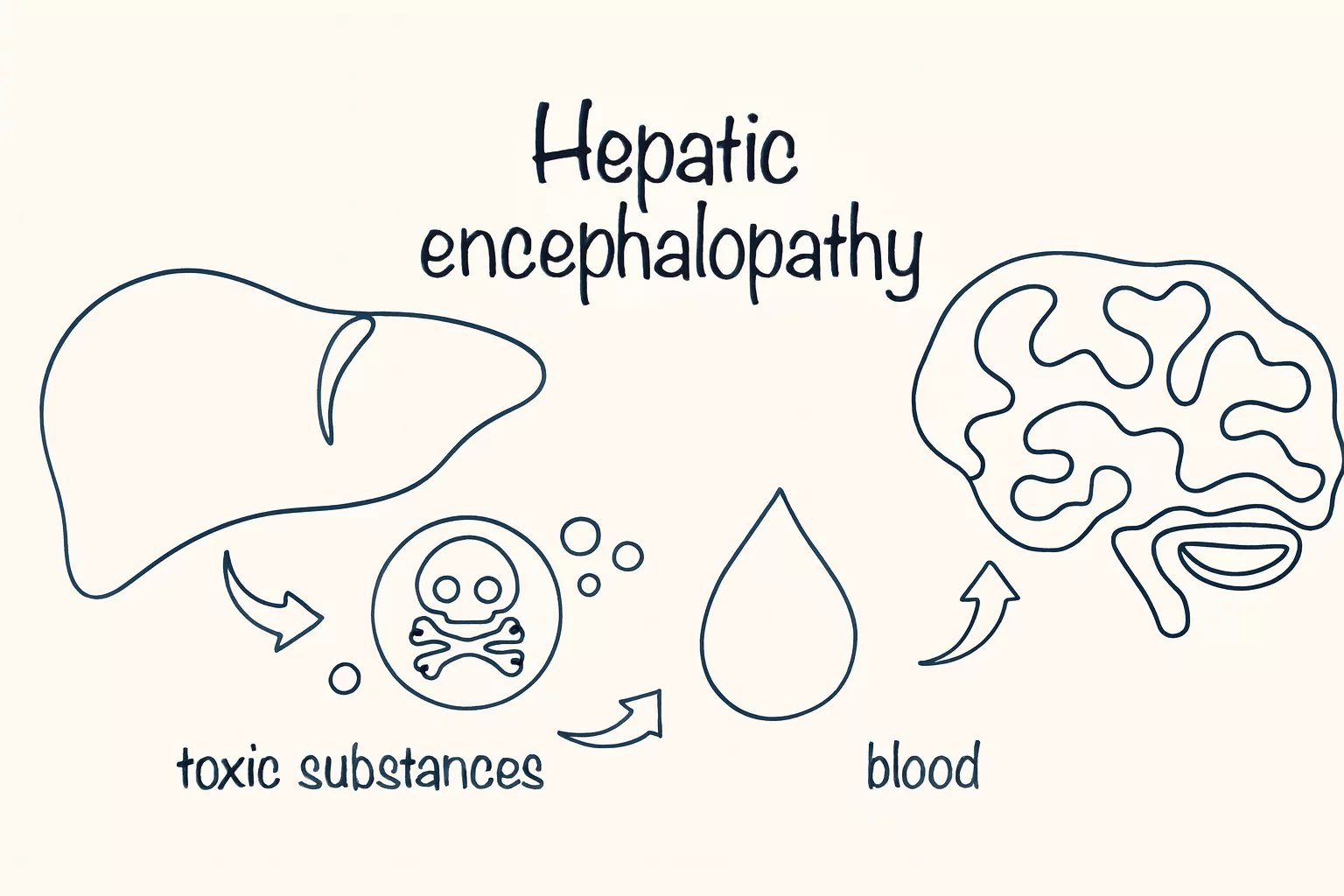
Hepatic Encephalopathy Understand Portosystemic encephalopathy or hepatic encephalopathy (HE) is a condition characterized by brain dysfunction (encephalopathy) induced by liver-related pathologies (hepatic). The disorder arises when the liver loses its ability to filter the body’s toxins. Patients experience a wide range of symptoms, including disorientation, concentration issues, and behavioral/mood issues. There are also associated personality changes. As of 2018, there were approximately 202,000 cases reported in the United States.
The disease is the outcome of accumulated neurotoxins (primarily ammonia and other gut-derived toxins) in the blood due to the liver’s reduced ability to clear them. HE can be a short-term problem (acute) or a long-term disease (chronic). Acute buildup of toxins is attributed to acute fulminant viral hepatitis (severe viral hepatitis), toxic hepatitis (caused by exposure to supplements, alcohol, and drugs), and Reye’s syndrome (a serious condition of liver and brain inflammation in children).
Doctors treat the condition by fixing the underlying hepatic problems by employing different strategies. This consequently alleviates symptoms. Proper patient treatment is crucial as untreated hepatic encephalopathy can take a life-threatening form.
Hepatic Encephalopathy Symptoms: Hepatic Encephalopathy Understand
In medical terms, hepatic encephalopathy is considered a subtype of metabolic encephalopathy, as toxin buildup in the blood affects the brain. The condition can lead to following symptoms:
Mood shifts and personality changes:
Longstanding encephalopathy is known to change your abilities. The changes are accompanied by mood deviations. “Personality change” is an umbrella term that covers different negative modifications in one’s personality. The most common changes include:
- Apathy: It is a state of unresponsiveness. Patients lose interest in activities they once used to enjoy. Neurological effects of the disease can present as apathy and lethargy due to involvement of the cortical ganglia of the brain.
- Irritability: Most individuals are bothered by stuff that they would normally pass if healthy. These increased irritability and impulsiveness are almost always present with disinhibition.
- Disinhibition: A disturbing consequence of the liver-induced encephalopathy is loss of self-control. Individuals with such disorders usually have impulsive behavior, which is deemed socially inappropriate. Oftentimes, patients are highly irritable, apathetic, and show signs of disinhibition.
Confusion:
Encephalopathy (due to whatever cause) is known to cause confusion. You might find rapidly developing delirium in severe cases, which may be attributed to underlying hepatic disorders. According to a study, non-cirrhotic hepatic encephalopathy is a known cause of confusion in patients.

Common symptoms of hepatic encephalopathy
Cognitive Impairments:
Mild hepatic encephalopathy causes mild cognitive impairments by altering the neurological structures. There are difficulties in forming long-term memory, learning, and recognition.
Forgetfulness and poor concentration are salient features of the disease. Cognitive impairments impact the daily life of patients and are known to render a large number of patients unfit for work.
Thinking and Decision-making Changes:
Poor judgment, faulty reasoning, and changes in discernment can seriously affect your overall personality. Neurological problems frequently lead to changes in perception and decision-making. Thus, doctors check the severity of the disease by analyzing several different cognitive aspects, including reasoning, verbal ability, and memory. One clinical study showed that participants reported low scores in these tests. Most patients had a lower score in 8 out of 12 cognitive tests at baseline
Motor Function Problems:
Numerous patients with liver cirrhosis and consequent encephalopathy develop coordination impairments, which significantly reduce the quality of life (and even the life span). Different types of motor coordination problems arise due to encephalopathy, including asterixis (flapping tremor), and gait issues. Patients also experience tremors and muscle weakness, which makes life difficult. Moreover, flappy hand movements are common in patients. There is also a loss of balance, which makes patients dependent on others for basic day-to-day activities.
Depression and Anxiety Disorders:
Other psychiatric complications associated with a severe form of hepatic encephalopathy are anxiety disorders and depression. Studies find a higher rate of mood/anxiety disorders in HE patients.
Slow/slurred Speech:
Advanced-stage HE is known to cause slurring of the speech along with disorientation. Assessments revealed that patients’ speech was slow and slurred. Due to the high prevalence of this particular symptom, slow speech can be used as a diagnostic feature.
Seizures and Fatigue:
Convulsions and seizures are not uncommon in cases of HE. A 42-year-old female reported having seizures along with disorientation and lethargy. Doctors diagnosed the condition to be hepatic encephalopathy.
Sleep Disturbances:
The psychological issues entailed with encephalopathy extend beyond the conscious mind. Many patients across the globe experience sleep pattern disturbances due to encephalopathy. You may have trouble falling asleep and suffer from multiple dyssomnias (sleep disorders characterized by an inability to stay asleep).
Due to the multitude of neuropsychiatric issues, most adults are unable to take care of themselves and thus become dependent on others.
Types Of Hepatic Encephalopathy
Based on the severity of the disease, it is divided into:
Minimal Hepatic Encephalopathy (MHE):
It is the subtle form that is characterized by mild symptoms. This is the earliest and mildest form of the disorder that affects up to 80% of liver cirrhosis patients. Poor judgment, impaired concentration, and psychomotor deficits increase the incidence of accidents. Thus, there is a reduction in quality of life.
Overt Hepatic Encephalopathy (OHE):
This type is seen in around 30-45% of cirrhosis patients and is marked by more severe symptoms. Patients display more serious changes, like personality changes and neuromuscular deficits. Ataxia (poor muscle control) and asterixis (flapping/shaking of the hands) are common findings in this type.
Hepatic Encephalopathy Staging
To determine the severity of the disease and plan the treatment strategies, healthcare providers use a grading system for hepatic encephalopathy. Grades 0 to 4 are used to depict the patient’s condition:
Grade 0
There are subtle changes, and patients complain of having issues concentrating or having altered short-term memory. However, no significant changes are noted.
Grade 1
Patients start experiencing some psychiatric abnormalities. Forgetfulness and mood swings can lead to anxiety. Even in this initial stage, individuals have mild confusion and start observing a drop in fine motor skills. Basic skills like addition/subtraction and writing become difficult. Slight sleep changes are also seen.
Grade 2
This stage is characterized by obvious personality changes. Apathy (unresponsiveness) is common and is often accompanied by lethargy and disorientation. Patients are unable to understand the time (day or year). They may also have slurred speech and deficits in performing mental tasks.
Grade 3
Disorientation and confusion deepen, and patients are often unable to identify where they are. Most people are unaware of their surroundings, and severe confusion (delirium) sets in. Motor deficits become evident as there is involuntary twitching, tremors, and flapping of muscles. Moreover, movements become sluggish, and drowsiness ensues.
Grade 4
This is the most advanced stage in which the patient falls into come which may be with or without response to painful stimuli.
Hepatic Encephalopathy Causes
A healthy liver then filters the blood from byproducts of digestion (ammonia, etc.) and passes it to the body (via systemic circulation). However, when the liver underperforms, these toxins accumulate in the blood, which eventually leads to neurotoxin buildup.
Based on the causes of the disease, hepatic encephalopathy is divided into the following types:
Type A:
This type is caused by acute liver failure. Multiple factors contribute to acute liver injury and, consequently, the sudden onset of symptoms.
Viral infections are known to cause acute fulminant viral hepatitis, which is a severe type of viral hepatitis. Hepatitis A and E can cause this life-threatening infection. Autoimmune hepatitis and drug poisoning (acetaminophen poisoning) can also lead to type A hepatic encephalitis.
Type B:
A portosystemic shunt causes it. In this type, there is an abnormal vascular communication (shunt) that bypasses the liver, and the blood goes directly from the digestive system to the systemic circulation. This shunt can develop as a result of pathway blockage.
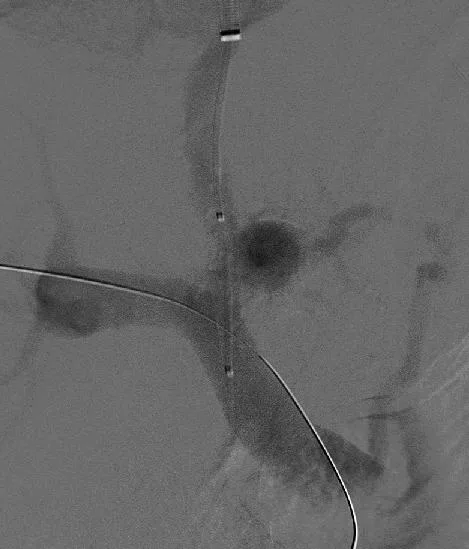
The fluoroscopic image shows a transjugular intrahepatic portosystemic shunt (TIPS) procedure in progress. This is linked to the development of hepatic encephalopathy. Image courtesySamir at en.Wikipedia,CC BY 3.0, via Wikimedia Commons
However, sometimes, healthcare providers create a shunt to manage issues like portal hypertension. Studies show that transjugular intrahepatic portosystemic shunt (TIPS) effectively manages portal hypertension but remains a major contributor to hepatic encephalopathy.
Type C:
This type arises in patients suffering from cirrhosis due to chronic liver failure. Multiple disorders cause chronic degeneration of the largest body organ. Thus, over time, the liver fails to perform its function of filtering/cleaning, which leads to toxin accumulation. Chronic hepatitis (hepatitis C) leads to failure and associated extrahepatic complications like encephalopathy.
Like other chronic disorders of the liver, alcohol abuse causes cirrhosis (scarring of the liver) that leads to jaundice and encephalopathy. Metabolically-dysfunction-associated liver disease (MASLD), characterized by excessive fat in the liver, also causes type C HE.
In some cases, chronic disease-induced excessive scarring of the liver can put pressure on the portal vein, leading to portal hypertension. To compensate for this blockage in the flow, your body creates a portosystemic shunt. However, in this case, the disease will still be classified as type C because the primary cause is cirrhosis.
Hepatic Encephalopathy Triggers
Generally, chronic liver diseases progress slowly. However, clinicians have noted that several events/factors (and secondary diseases) can promote liver degeneration to an extent that it triggers hepatic encephalopathy. Some of the most common triggers are kidney failure (acute), hypoxia, immunosuppressant drugs, acute GIT bleeding, binge alcohol drinking, electrolyte imbalance (potassium loss), medications (tranquilizers and barbiturates), infection, surgery, and even constipation.
Hepatic Encephalopathy Diagnosis
Hepatic encephalopathy is diagnosed by a liver specialist (hepatologist) or a gastroenterologist (gut specialist). Your healthcare provider will start by examining your vital signs and taking a history of your symptoms. The doctor will try to determine whether the condition is acute or chronic. To further investigate, he might order some tests and imaging scans.
Blood Tests
A blood test is carried out to determine the levels of ammonia, urea, and electrolytes (like sodium and potassium). Raised levels indicate impaired liver function. A CBC also reveals RBC and WBC levels that help in identifying hypoxemia, infection, and blood loss.
Liver function test checks the levels of liver enzymes (AST, ALT). These enzymes increase in the case of stress and liver damage.
Imaging Tests
CT and MRI scans provide valuable information about abnormalities in the brain. Moreover, a Doppler ultrasound can also be employed to check the blood flow to your liver.
A brain electroencephalogram (EEG) measures your brain activity. It can be useful in determining the neurocognitive defects.
Differential Diagnosis
Various neurological conditions can have manifestations similar to HE. Thus, diseases that fall under the DD of hepatic encephalopathy include stroke, hemorrhage, and electrolyte imbalance.
Hepatic Encephalopathy Treatment
The main aim of the treatment is to flush out the toxins and manage the neurocognitive defects. It usually involves correcting the underlying problem contributing to the encephalopathy. Moreover, doctors manage any known trigger.
Healthcare workers devise the treatment based on the type (acute or chronic) of the disorder. Thus, the treatment strategies include:
Toxin reduction:
Usually, doctors prescribe antibiotics to reduce the gut bacteria that aid in producing byproducts of digestion. Rifaximin is a commonly prescribed antibiotic that is known to work well in combination with a laxative like lactulose. In metabolic encephalopathy, elevated ammonia levels are a key contributor to neurocognitive dysfunction. Clinicians often use lactulose, a non-absorbable sugar, to reduce ammonia levels in the blood. Lactulose works by acidifying the colon, which converts ammonia into ammonium and promotes its excretion through the stool. This helps decrease neurotoxin accumulation and improves cognitive function.
Moreover, probiotics can promote the growth of healthy gut bacteria, and branched-chain amino acids (BCAAs) like valine and leucine speed up the clearing of ammonia from the blood.
Portosystemic Shunt Management:
If the shunt doesn’t improve with medications, doctors perform minimally invasive radiological techniques like shunt catheterization and embolization.
Liver Transplant:
For most liver failures (acute or chronic), the only permanent solution is a liver transplant.
When the disease stems from a high-protein diet, doctors advise patients to avoid proteinaceous foods like red meat and poultry. Patients developing HE secondary to kidney failure need dialysis to survive.
Hepatic Encephalopathy Complications
Irreversible complications associated with hepatic encephalopathy include brain swelling, brain herniation, and organ failure. These serious complications can put the patient in a coma and eventually lead to death.
Final Word
Hepatic encephalopathy is a neurocognitive disorder in which a patient experiences delirium, mood alterations, memory deficits, personality changes, and motor deficits. It arises due to the liver’s inability to flush out toxins (from the digestive process), which leads to their accumulation in the brain. Liver’s underperformance is attributed to three causes, based on which the disease is divided into types A. Type A arises due to acute liver failure, type B is due to a portosystemic shunt, and type C occurs as a result of chronic liver failure. Doctors advise antibiotics (rifaximin) and laxatives (lactulose) to flush out toxins. Liver transplant is the last resort for advanced patients.
References
[1] Mandiga, P., Kommu, S., & Bollu, P. C. (2024). Hepatic encephalopathy. InStatPearls [Internet]. StatPearls Publishing.
[2] Bajaj, J. S., Gentili, A., Wade, J. B., & Godschalk, M. (2022). Specific challenges in geriatric cirrhosis and hepatic encephalopathy.Clinical Gastroenterology and Hepatology,20(8), S20-S29.
[3] Ferenci, P. (2017). Hepatic encephalopathy. Gastroenterology report, 5(2), 138-147. The behavioral changes are reported by the patient’s relatives.
[4] Amodio, P. (2018). Hepatic encephalopathy: Diagnosis and management.Liver International,38(6), 966-975.
[5] Kalra, A., & Norvell, J. P. (2020). Cause for confusion: noncirrhotic hyperammonemic encephalopathy.Clinical Liver Disease,15(6), 223-227.
[6] Garcia-Garcia, R., Cruz-Gómez, Á. J., Urios, A., Mangas-Losada, A., Forn, C., Escudero-Garcia, D., … & Montoliu, C. (2018). Learning and memory impairments in patients with minimal hepatic encephalopathy are associated with structural and functional connectivity alterations in hippocampus.Scientific reports,8(1), 9664.
[7] Faccioli, J., Nardelli, S., Gioia, S., Riggio, O., & Ridola, L. (2022). Minimal hepatic encephalopathy affects daily life of cirrhotic patients: a viewpoint on clinical consequences and therapeutic opportunities.Journal of Clinical Medicine,11(23), 7246.
[8] Tres, S. A. (2022). Analyzing three different cognitive spheres (memory, reasoning and verbal ability): an online psychometric battery for the assessment of covert hepatic encephalopathy in patients with cirrhosis.
[9] Eftekar, M. (2020). The association between hepatic encephalopathy/minimal hepatic encephalopathy and depressive and anxiety disorders: a systematic review.Australasian Psychiatry,28(1), 61-65.
[10] Bloom, P. P., Robin, J., Xu, M., Arvind, A., Daidone, M., Gupta, A. S., & Chung, R. T. (2021). Hepatic encephalopathy is associated with slow speech on objective assessment.Official journal of the American College of Gastroenterology| ACG,116(9), 1950-1953.
[11] Chowdhury, A. R., & Marcus, E. N. (2019). Seizure disorder exacerbated by hepatic encephalopathy: A case report.Open access Macedonian journal of medical sciences,7(10), 1669.
[12] Liu, C., Zhou, J., Yang, X., Lv, J., Shi, Y., & Zeng, X. (2015). Changes in sleep architecture and quality in minimal hepatic encephalopathy patients and relationship to psychological dysfunction.International Journal of Clinical and Experimental Medicine,8(11), 21541.
[13] Stinton, L. M., & Jayakumar, S. (2013). Minimal hepatic encephalopathy.Canadian Journal of Gastroenterology and Hepatology,27(10), 572-574.
[14] Malik, H., Malik, H., Uderani, M., Berhanu, M., Soto, C. J., & Saleem, F. (2023). Fulminant Hepatitis A and E Co-infection leading to acute liver failure: a case report.Cureus,15(4).
[15] Friis, K. H., Thomsen, K. L., Laleman, W., Montagnese, S., Vilstrup, H., & Lauridsen, M. M. (2023). Post-Transjugular Intrahepatic Portosystemic Shunt (TIPS) hepatic encephalopathy—a review of the past decade’s literature focusing on incidence, risk factors, and prophylaxis.Journal of Clinical Medicine,13(1), 14.
[16] Faccioli, J., Nardelli, S., Gioia, S., Riggio, O., & Ridola, L. (2021). Neurological and psychiatric effects of hepatitis C virus infection.World Journal of Gastroenterology,27(29), 4846.
[17] Buchanan, R., & Sinclair, J. M. (2021). Alcohol use disorder and the liver.Addiction,116(5), 1270-1278.
[18] Moon, A. M., Kim, H. P., Jiang, Y., Lupu, G., Bissram, J. S., Barritt IV, A. S., & Tapper, E. B. (2023). Systematic review and meta-analysis on the effects of lactulose and rifaximin on patient-reported outcomes in hepatic encephalopathy.Official journal of the American College of Gastroenterology| ACG,118(2), 284-293.
[19] Philips, C. A., Rajesh, S., Augustine, P., Padsalgi, G., & Ahamed, R. (2019). Portosystemic shunts and refractory hepatic encephalopathy: patient selection and current options.Hepatic medicine: evidence and research, 23-34.