

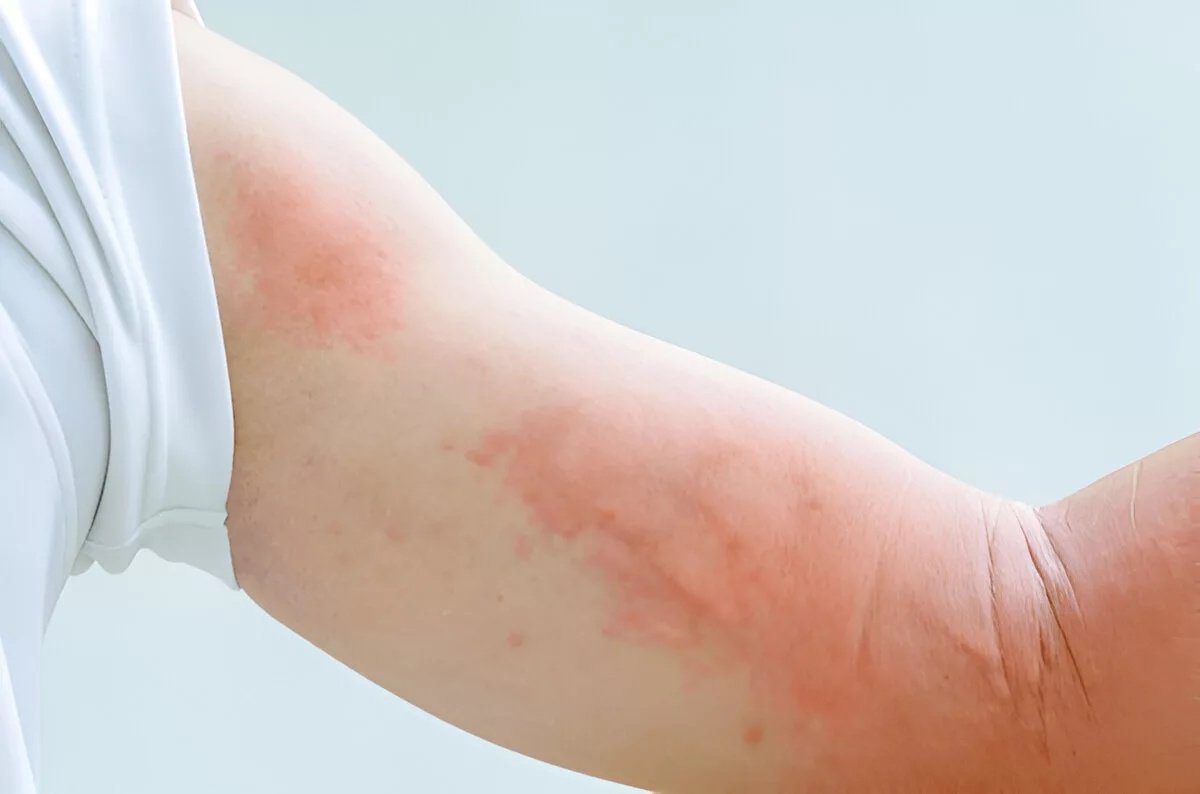
Intertrigo This Skin Intertrigo is an irritating, sometimes painful rash that develops in warm, moist areas of the body where skin rubs against itself. Such areas are underarms, under breasts, between thighs, below the belly folds, and even around the groin or neck of the infants.
The interaction of moisture, heat, and friction in these skin folds causes severe irritation, which breaks down the skin barrier. The skin becomes red, swollen, and raw. At this point, unless adequately treated, intertrigo will invite secondary infections, which in most cases involve yeast (such as Candida), bacteria (such as Staphylococcus or Streptococcus), or fungi (such as Trichophyton).[1]
How common is Intertrigo?: Intertrigo This Skin
Estimates suggest that up to 10–20% of dermatology patients present with intertrigo, though the true prevalence in the general population is likely higher due to underreporting. During routine infant pediatrics checkups, neck-fold or diaper-area irritations are noted.
It can cause men, women, children, and even babies. However, it has more impact on some of the groups based on body type, health conditions, and hygiene practices.
Because mild cases may resolve spontaneously or go unreported, actual prevalence could be significantly higher. Epidemiology shows recurrence is frequent in high‑risk groups, meaning many people experience repeated flare‑ups.[2]
Is Intertrigo a Fungal Infection?
Fungal infections can make it worse, but usually are not the main culprit. The main cause in most cases is inflammation of skin folds due to heat, wetness, maceration, friction, and the absence of air circulation. Common infectious components are Candida albicans-like yeasts, or dermatophytes (fungi like tinea and ringworm).
When such an infection occurs, it may be called candidal intertrigo or fungal intertrigo. Other microbes, such as Staphylococcus aureus, Streptococcus, and Corynebacterium minutissimum (causing erythrasma), among others, may also complicate the rash. Hence, intertrigo is an initially non-infectious condition, but infections often follow once the skin barrier is damaged.[3]

Intertrigo Fungal Rash
If the cause is friction or bacterial, and you’re taking it as fungal, it will delay or prevent effective treatment. So, application of antifungal ointment to intertrigo that is purely inflammatory and uninfected is also irritating.
What parts of the body get Intertrigo?
This condition commonly happens where skin folds come together or bend on one another, at areas liable to friction, warmth, and moisture:[4]
- Under breasts (inframammary folds)
- Under arms (axillae)
- Between the thighs and the groin region
- Under the belly (especially in overweight individuals)
- Behind the knees or in elbow folds (babies or bedridden patients)
- Folds of the neck (especially in infants or obese adults)
- Between toes (toe‑web intertrigo)
Who is Most Affected?
Some of the underlying reasons why a person is susceptible to it include:[5]
- Obesity: The greater the skin folds, the more chances that they will become moist.
- Diabetes: Takes longer to heal, and is susceptible to infection.
- Poor hygiene: If not properly cleaned after a sweat or shower will make the situation even worse.
- Incontinence: There is maceration of the skin due to urinary or faecal moisture.
- Hyperhidrosis: Excessive sweating leads to wetting of crevices always.
- Warm garments or prosthetics don’t allow airflow to the skin, trap heat, and cause pressure where the skin decays.
- Paralysis or immobility: Lack of mobility prevents adequate circulation of air and hygiene of the individual.
It is not only about prevention, since knowing these risk factors also allows one to tailor treatment based on the causes of the problem in any case.
What Causes Intertrigo?
Non-Infectious Causes: Friction & Moisture Buildup
A simple rash that most of you’ve seen is due to skin-on-skin friction combined with moisture in that area. When two skin surfaces rub against each other, especially when they’re moist from sweat or water, it creates irritation. This will lead to rash if you add warmth and a lack of air circulation.
Ever notice that after a day of walking around in tight clothes on a hot day, your inner thighs or underarms feel sore and raw? That’s the rash starting to develop.[6]

Intertrigo Rash
Infectious Causes:
Common causes that make intertigo as a result of infections are:[7]
- Folliculitis: Staph aureus
- Staphylococcus aureus: Boils
- Staphylococcus aureus and Streptococcus pyogenes: Impetigo
- Tinea: T. interdigitale and Trichophyton rubrum
- Erythrasma: Corynebacterium minutissimum
- Candida albicans (commonly causes candidal intertrigo, especially in infants)
Inflammatory Causes:
- Toe-web intertrigo
- Contact allergic dermatitis
- Irritant contact dermatitis
- Atopic dermatitis
- Flexural psoriasis
- Seborrhoeic dermatitis
Signs & Symptoms of Intertrigo
Early-Stage Signs:
Common early signs include:[8]
- Redness or pink discoloration
- Burning sensation or discomfort, especially when sweating
- Mild itching or a “sticky” skin feeling
- Skin tenderness when touched
- Increased moisture in the fold
At this stage, if the area is dried, cleaned, and left open to air, it can sometimes resolve on its own. But if ignored, it tends to worsen.
Moderate to Severe Symptoms:
- Increased redness or darkening of the skin
- Skin peeling, scaling, or cracking
- Oozing or moist, weeping patches
- Strong odor (particularly with bacterial overgrowth)
- Satellite lesions (small red bumps or pustules that appear outside the main rash area)
- Pain or a stinging sensation when touched or when the skin is rubbed
- Yellowish crusting if infection sets in
- Swelling in the affected fold
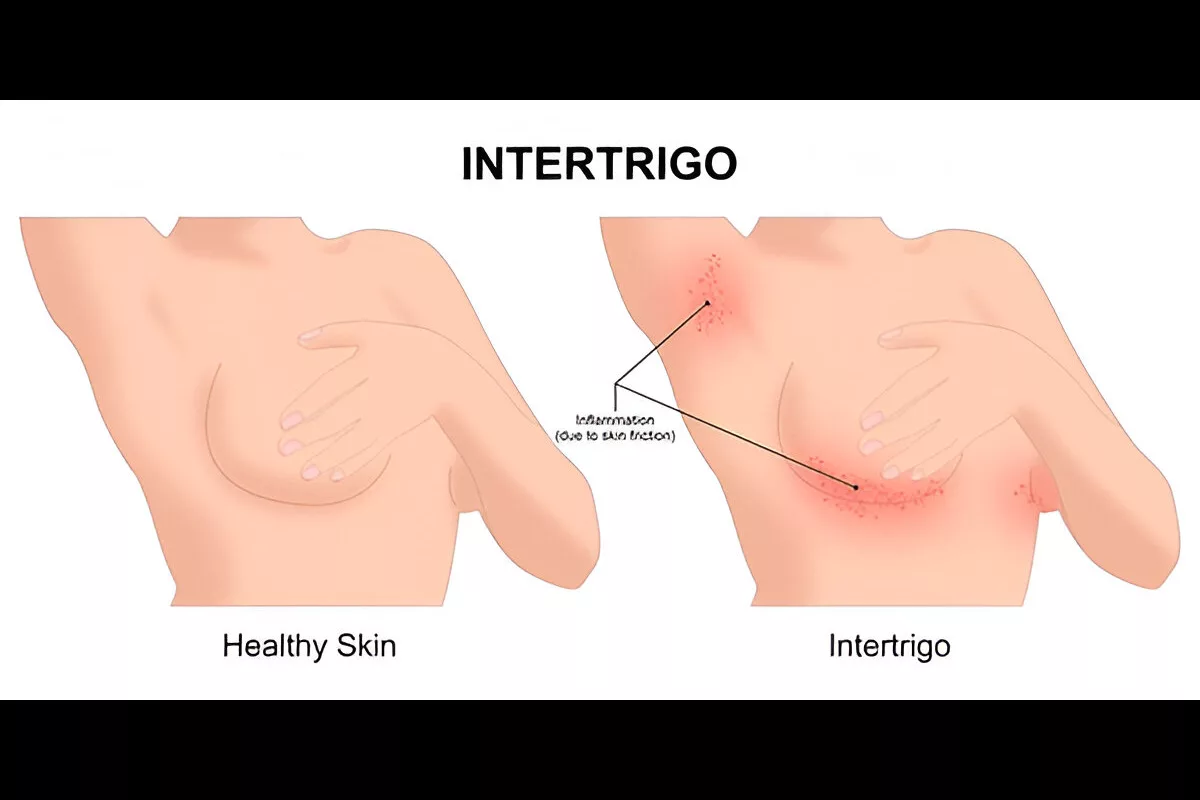
Intertrigo rash under breast
In babies, intertrigo is most commonly seen in the neck folds, diaper area, and armpits. It can make them fussy or uncomfortable during diaper changes or when touched.
Is Intertrigo contagious?
This is one of the most common questions people ask. Here’s the truth: intertrigo itself is not contagious. It’s caused by friction, heat, and trapped moisture; not by a germ that can be passed from one person to another. So, you’re not going to catch it from someone by shaking hands or sharing towels, unless there’s a secondary infection involved.[9]
However, the secondary infections associated with intertrigo can be contagious. For example:
- Fungal infections like Candida or ringworm can be transferred through direct skin contact or contaminated clothing.
- Bacterial infections, especially Staph, can be spread in gyms, locker rooms, or through shared hygiene products.
- Also, generalized skin conditions like inverse psoriasis oreczemaoccasionally appear in folds and can be mistaken for intertrigo.
- Symmetric distribution of a rash within a flexure can indicate systemic disease, but in some cases, there is both intertrigo and psoriasis.
Can Intertrigo spread to other parts of my body?
If you scratch or touch one infected site and then touch another fold or area, you may unintentionally transfer pathogens. Thus, though it starts in one fold, without hygiene and care, it can involve multiple zones or worsen overall skin health.
How is Intertrigo diagnosed?
Intertrigo can be diagnosed by most doctors purely based on its appearance: a red rash affecting one or more intertriginous areas. If the condition does not respond to conventional treatments, then a referral should be made to a dermatologist.
What tests will be done to diagnose?
Common tests include:
- Skin swab (bacterial/fungal culture): This checks for bacteria or fungi like Candida. The swab is gently rubbed over the affected skin and sent to a lab.
- KOH test (potassium hydroxide preparation): A skin scraping is taken and treated with KOH solution to detect fungal elements under a microscope. It’s quick and helps identify yeast infections.
- Wood’s lamp examination: A special ultraviolet light is shone on the skin. Some bacteria and fungi glow under this light, like erythrasma, which fluoresces coral-red.
- Skin biopsy (rare): If your provider suspects another condition like inverse psoriasis or Hailey-Hailey disease, a small piece of skin might be removed and tested.
These tests are painless and quick, and they provide valuable information that helps customize your treatment.
Management & Treatment of Intertrigo
Intertrigo is easily treatable if you control the causative agents, such as friction, moisture, and heat. Therapeutic options differ based on whether the infection is non-infectious or a secondary infection (fungal, bacterial, or mixed).[10]
Basic At-Home Care (Non-Infectious Intertrigo):
If you have a simple rash with no infectious cause so far, then you can relieve this rash at home with the help of the following procedures:
- Make the area dry and clean: Wipe dry with a soft towel after getting wet. Don’t rub these places. A cool-setting hairdryer will be more suitable for drying hard-to-reach places.
- Enhance circulation of air: Allow the air to circulate through these folds as often as possible during the day, at least for five to ten minutes.
- Dress in lightweight clothes: Wear permissible garments, which are lightweight, breathable, and made of cotton or bamboo thread. Synthetic fabrics absorb sweat; thus, it is better to avoid this.
- Barrier creams: Creams like zinc oxide, petroleum jelly, or lanolin-based creams can protect skin against further degradation.
- Use anti-chafing talc: Talcum/antifungal can absorb moisture and prevent chafing.
Such measures are generally effective in resolving mild cases within a few days.

Medical Treatment (Infected or Severe cases):
Medication is considered when the symptoms are worse or there are signs of infection (inflamed, there is a smell, discharge, or spreading rash).
Topical Treatments
- Antifungal creams: When there is a yeast infection, doctors will prescribe clotrimazole, miconazole, and terbinafine.
- Antibacterial creams: In cases where a suspected infection may be bacterial in nature, mupirocin or fusidic acid can be used.
- Corticosteroids: Weak steroidal creams, e.g., hydrocortisone, may also be helpful to ease the inflammation, although you should use them with care and with the advice of healthcare providers. You should never use this treatment if there is already an active fungal infection (steroids irritate the fungi).
- The alternative steroids are calcineurin inhibitors. Tacrolimus or pimecrolimus may be used on chronic areas or sensitive areas (e.g., underarm, groin).
Oral Medications
- Oral antifungals (fluconazole, itraconazole): In case you have a stubborn form of the fungal infection or when the area affected by a simple rash is bigger, doctors will advise you to use oral antifungals.
- Antibiotics: In case your intertigo rash is caused by bacterial contamination or cellulitis, then it is good to use antibiotics.
- Antihistamines: The use of antihistamines is an efficient medication that relieves itching and enhances sleep in case of severe symptoms.
Supportive Therapies
- Weight management: As recurrence is mainly associated with obesity. So weight loss can decrease skin folds and moisture build-up.
- Surgical intervention: In extreme cases, excess skin removal may be considered for obese persons.
What is the Outlook & Recovery Timeline for intertrigo?
In the majority of individuals, symptoms resolve within one to two weeks of taking care of the skin by cleaning it, keeping it dry, and covering it. As soon as friction and moisture are controlled, healing occurs very quickly.
Nonetheless, intertrigo can become recurrent or chronic for some individuals. This is particularly so for those who have:
- Obesity or deep skin folds
- Diabetes or other immune-suppressing conditions
- Poor hygiene or incontinence
- People with sedentary lifestyles or mobility
- Hot and humid living environments
The condition might recur regularly in such situations unless preventive measures are undertaken in the long run. Luckily, such eruptions can still be dealt with through changes in lifestyle and adequate skin care treatment.
Can Intertrigo cause complications?
Common complications include:[11]
- Secondary Infections
- Cellulitis
- Skin breakdown and ulcers
- Scarring or hyperpigmentation
- Psychological impact
Untreated cases in the infants can cause severe diaper rashes, fungal lesions, or superimposed bacterial infections needing antibiotics.
What can I do to prevent Intertrigo?
You can avoid it by keeping the skin clean, dry, and covered. Here is a checklist that you can use:[12]
Daily Hygiene Habits:
- Wash up regularly with a mild soap, taking showers every day.
- Clean all the sensitive areas with a dry towel.
- Dry hard-to-reach places with a hair dryer on the cool setting.
Wardrobe Choices:
- Don’t wear synthetic tight-fitting garments.
- Choose breathable fabrics and moisture-absorbent ones (cotton and bamboo).
- Wear anti-chafing undergarments or bras with enclosed sweat shields.
Skin Protection:
- Apply protective creams (zinc oxide, petroleum jelly) to exposed areas.
- If you are prone to a yeast infection, use antifungal powders.
- Use in the armpit, groin, or breast, moisture-absorbing pads (examples: InterDry).
Lifestyle Adjustments:
- During hot weather, stay cool; use fans/air-conditioning.
- Control your blood sugar in case you have diabetes.
- To reduce these folds, maintain your weight.
- If you are bed-bound, get the caregivers to turn you frequently and wash your folds daily
Conclusion
One of the most common and occasionally recalcitrant skin manifestations is intertrigo, which typically appears in warm and humid regions. It may be chronic and somewhat painful, and the best strategy to manage it is to prevent and treat it early in its development. Good hygiene, breathable clothes/barrier creams, and drying the folds of the skin are some ways to avoid it. Of course, it also requires a lot of care, good hygiene, and even medications. People who are at high risk due to their body size, medical conditions, or the environment should be concerned explicitly with prevention. It also transcends all ages and backgrounds, hence there is no stigma; it’s all a matter of being recognized and taking a proactive approach.
References
[1] Zhang, Y., & Liu, L. (2019). Intertrigo: Etiology, Diagnosis, and Management.Journal of Clinical Dermatology, 25(4), 415-424.
[2] Fitzpatrick, T. B., & Jablonski, M. (2017). Epidemiology and clinical course of intertrigo in pediatric populations.Pediatric Dermatology, 34(6), 767-771.
[3] Wang, J., & Lu, C. (2018). Fungal involvement in intertrigo: A comprehensive review.Journal of Fungal Infections, 33(2), 201-207.
[4] Sharma, S., & Chopra, H. (2017). A review on the common locations of intertrigo and related risks.Journal of Dermatological Research, 42(5), 303-310.
[5] Davis, M., & Thompson, R. (2016). Risk factors for developing intertrigo: A clinical study.International Journal of Dermatology, 55(9), 938-944.
[6] Baldwin, A., & Lewis, R. (2015). Etiological factors in intertrigo: A focus on friction and moisture.Journal of Dermatology & Therapy, 50(2), 142-148.
[7] Blake, R. S., & Gordon, K. (2018). The microbiology of intertrigo: Candida, Staphylococcus, and other pathogens.Journal of Infectious Diseases, 45(4), 425-430.
[8] Michaels, T., & Freeman, S. (2016). Diagnostic signs of intertrigo in early and moderate stages.Dermatology Clinical Reports, 22(3), 142-147.
[9] Singh, S., & Kapoor, R. (2019). Understanding the contagion of secondary infections in intertrigo.Clinical Microbiology Journal, 23(1), 67-72.
[10] Singh, S., & Kapoor, R. (2019). Understanding the contagion of secondary infections in intertrigo.Clinical Microbiology Journal, 23(1), 67-72.
[11] Cameron, R., & Hughes, T. (2019). Strategies for preventing recurrence of intertrigo in high-risk individuals.Preventive Dermatology, 25(3), 182-188.
[12] Jefferson, D., & Wright, S. (2020). Preventive measures for intertrigo: Clothing, hygiene, and skin care.Clinical Dermatology Reviews, 44(7), 353-359.