

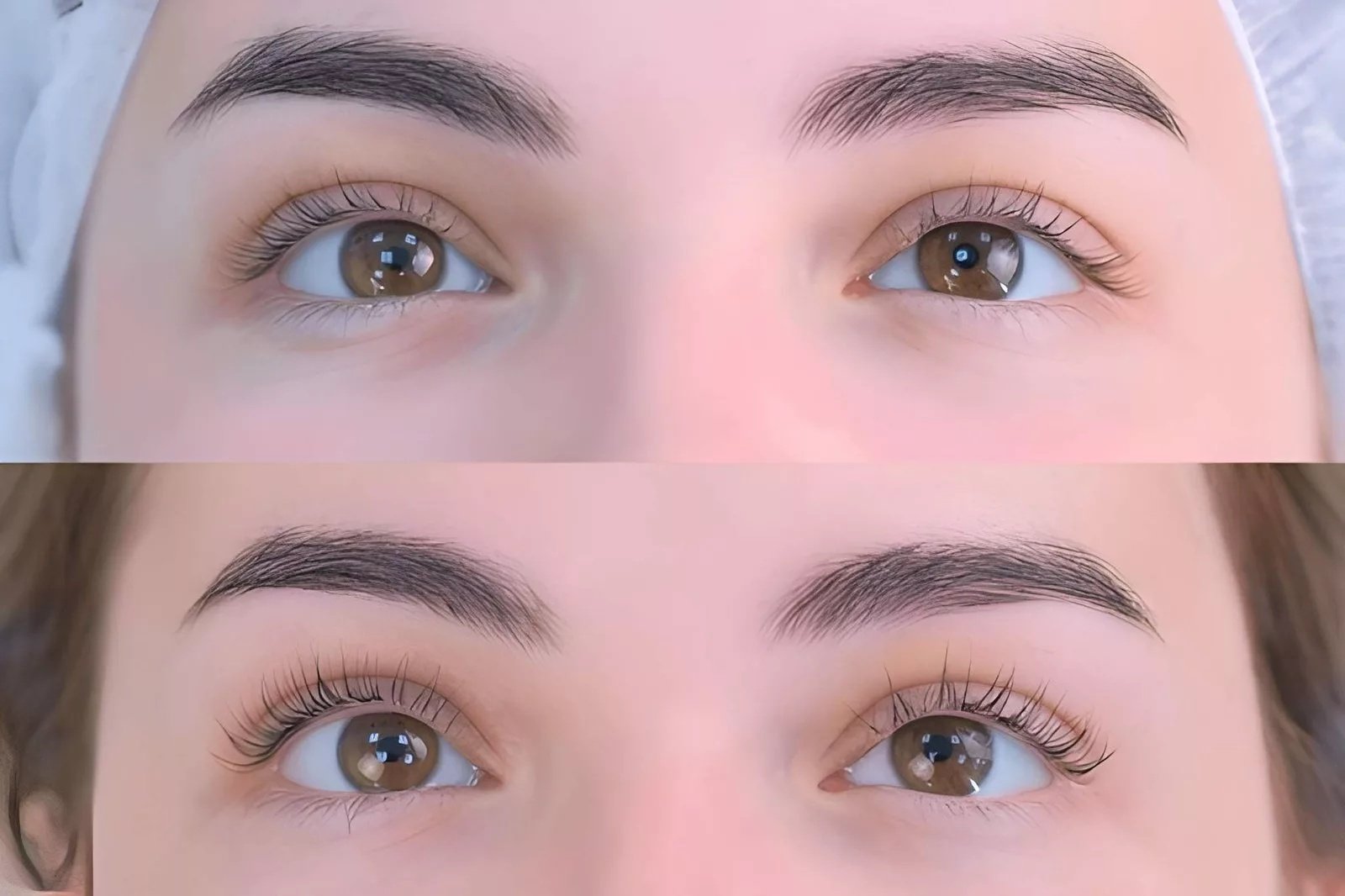
Lash Lift Treatment Nearly one-third of women feel cute with eye makeup. It is pretty easy until the mascara smudges, the curler leaves kinked eyelashes, and the daily chore of simple maintenance deters half the females from a dark eye look altogether. Enter lash lift, a semi-permanent treatment that lifts, curls, and defines your natural lashes from the root to give the impression of wider, more luminous eyes without the glue and false fibres or the mascara.
Of the top five most demanded services that have been requested at the salons since the mid-2010s, the lash lift comes into play. But the chemicals involved are the same class used in hair perming, applied millimeters from the eye surface, and that deserves a clear-eyed look before you book.
What Is a Lash Lift, and How Does Eyelash Lifting Work?: Lash Lift Treatment
A lash lift (also sometimes branded as an eyelash lift or lash lamination) is a chemical technique that semi-permanently alters the shape of the natural lash hair for the duration of its growth cycle by breaking and reforming the protein bonds of each hair. The procedure can last from 45 to 75 minutes. A qualified technician adheres your natural lashes to a silicone rod or shield against the eyelid, fans them out, lifts them, and then applies the lifting solution. After leaving the solution on for a specific period, the technician applies a neutralising (fixing) solution to set the new curl in place.
The Chemistry of Bond Breaking and Reforming
The chemistry mirrors a classic hair perm. Healthy eyelash hair sits at a natural pH of around 5.5. Lifting solutions raise that pH to approximately 7.5 and 9.5 (depending on formulation), alkaline enough to open the cuticle layer and break the disulfide bonds in the cortex, which are the covalent protein links that give each hair its shape. Once those bonds are broken, the lash is moldable around the rod. Fixation brings about the reoxidising of those bonds to their new bent shape, and pushes the cuticle back down again.
The two main active ingredients used to break those bonds are:
- Ammonium thioglycolate (TGA): The traditional formulation is recognised for being quicker acting and being able to work on coarse and stubborn eyelashes, but is considerably more dehydrating and more likely to irritate the periorbital skin.
- Cysteamine hydrochloride: A more recent, milder amino acid derivative that operates at a mildly alkaline to near-neutral pH, depending on formulation, and is less likely to overprocess and cause irritation, making it more suitable for delicate and/or previously treated lashes.
A lash tint is usually applied with the eyelash extensions after the lifting step (if chosen); this involves using a semipermanent dye to tint the natural lashes, giving a mascara-like appearance. Two chemicals are introduced to the area at the same time.
The Lash Growth Cycle and Its Impact on Longevity
Most lash lifts last from six to eight weeks. That timeframe is governed not by the strength of the chemicals but by the natural lash growth cycle. Each eyelash follicle cycles through an active growth phase (anagen), a transitional phase (catagen), and a resting/shedding phase (telogen). They take roughly two to three months to go through all phases. As the lifted lashes shed and grow straight, the effect slowly diminishes. Clients with quicker lash turnover may find their curl diminishing closer to four weeks, clients with a slower turn may hold onto the curl for ten weeks.
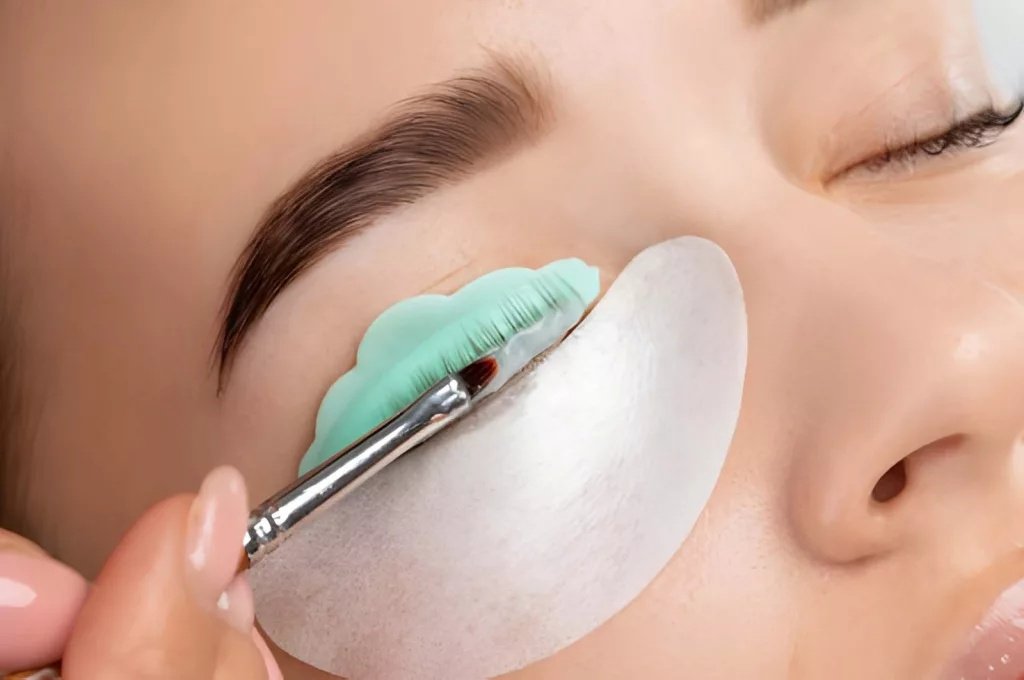
Application of the lifting solution during a professional lash lift treatment
Several other variables shape how long the result holds:
- Rod/shield size: Using a small shield makes a more defined, strong curl, whereas using a larger shield creates more natural, loose waves.
- Processing time: For fine or treated previously: 5–7 minutes of lifting solution. Coarse virgin lashes take 8–12 minutes, depending on product strength.
- Aftercare compliance: Steam exposure, oil-based products, and water in the first 48 hours can weaken the newly formed bonds before they stabilise.
- Product quality: Formulations with nourishing additives, such as keratin peptides, biotin, or hyaluronic acid, have a conditioning effect on the lash during processing. This may influence the quality of the result and the health of the lash itself.
| Factor | Shorter Result | Longer Result |
|---|---|---|
| Lash growth rate | Fast cycle | Slow cycle |
| Shield size | Small (tight curl) | Large (soft wave) |
| Aftercare | Poor (wet within 24 h) | Good (dry 48 h) |
| Lash texture | Fine / previously processed | Coarse / virgin |
| Formula type | Standard TGA | Cysteamine-based |
Lash Lift Complications and the Risks You Need to Know
Do Lash Lifts Damage Your Eyelashes?
Brief answer: Yes, they can, and it usually occurs as a result of mishandling or overprocessing. Virtually every lash-lifting solution, regardless of who markets it and its price, works by chemically breaking down the disulfide bonds in the lash’s cortex. If the solution is not applied for the correct duration, or if its pH is too high, it can cause cuticle damage (“blowouts”), where the cuticle scales lift permanently instead of settling back down. This leads to a porous cuticle, giving a lack of elasticity and dryness, which ultimately results in breakage. They can appear kinked or frizzy and can snap midlash, as they are broken rather than naturally cut.
Repeated treatments received more frequently than a full lash cycle will perpetuate the problem. The NHS advises that all cosmetic treatments using chemicals around the eye area carry a risk, and it suggests seeking out trained and qualified practitioners.
Lash Lift Allergic Reaction
Lash lift allergic reactions are: either contact irritant dermatitis, which occurs within minutes of being exposed to the chemicals and settles with removal of the irritant, or allergic contact dermatitis, which is a delayed immune response that can recur 24- 72 hours post-treatment and becomes more severe on reexposure.
The results of studies highlight the high prevalence of chemical sensitivities around the periorbital areas. This is partly due to the nonstandardisation of chemical concentrations within lash products and the fact that many agents are not disclosed to the client. The glue used for adherence of the lashes to the silicone held in place was most often responsible for a sensitivity, with the addition of a lash tint adding additional risk, as some lash dyes contain Paraphenylenediamine(PPD). This is a very potent allergen and can give eyelid dermatitis from very small doses. Any client known to react or who has reactions to hair dye should be treated as having a contraindication to lash tinting.
Other reported complications include:
- Redness, swelling, and itching around the eye
- Watery or dry, scratchy eyes from chemical proximity to the conjunctiva
- Corneal abrasion if the solution migrates onto the eye surface
- Infection (if the tools are not sterile) orblepharitis, if the tools are contaminated.
- Temporary lash loss from traction on the follicle or chemical over-processing
At-home lash lift kits pose a significantly increased risk profile than that performed in a salon setting due to the lack of eye protection measures by the consumer, as well as the absence of an immediate irrigation response if the product does come in contact with the eye.
Lash Lift Aftercare
Good aftercare is a must. It has a direct impact on how long your curl will last and whether or not your lashes will be in pristine condition for your next appointment.
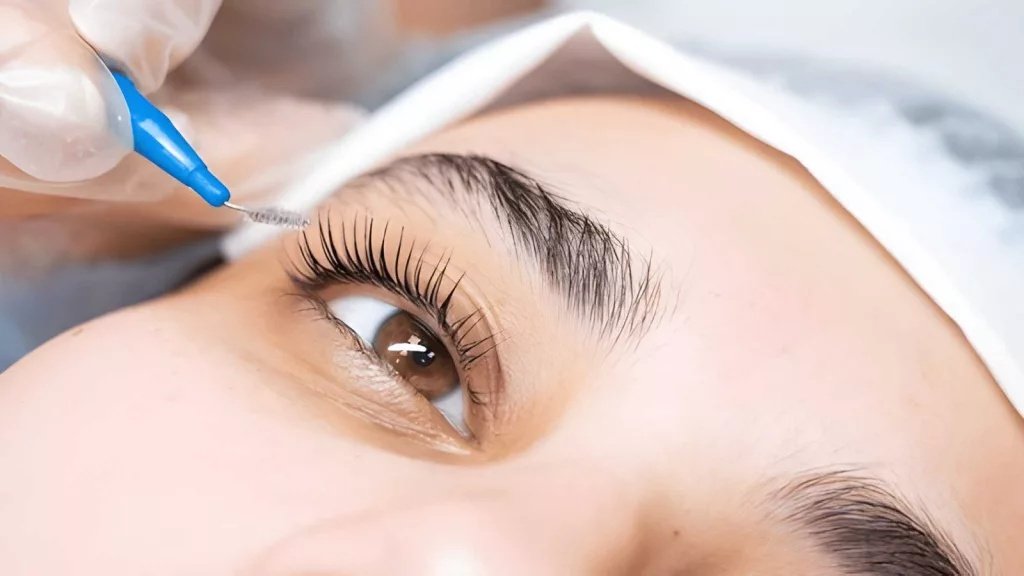
Planning and shaping lashes to create a long-lasting lifted effect
The Critical First 48 Hours
The disulfide bridges that were reformed by the fixing solution are not stabilised straight away. During the first two days:
- Have lashes thoroughly dry. Avoiding showers, which spray water on the face, swimming, steam rooms, and crying, when possible.
- Do not wear mascara or any eye makeup.
- Hands off! Do not rub or touch the lash area; mechanical friction can disrupt the curl at this stage
- Lenses should be removed from the eye prior to the procedure, and should not be replaced until all the products have washed out.
Ongoing Care Between Treatments
- Use oil-free makeup removers. Oil-based substances will sink inside the hair shaft and could potentially help to loosen the bonds at their start, resulting in a shorter duration of the lift.
- Clean your brush. Do this daily by running the brush through an unused spoolie or comb to even out the lashes and prevent clumping.
- Use a conditioning serum or lash oil every night after your 48 hours are up. Only use ingredients that will help with the health of your lashes, like castor oil and biotin, between chemical applications.
- Wait for a full lash growth cycle (six to eight weeks minimum) before repeating the treatment. Stacking treatments sooner than this increases cumulative chemical stress on the hair shaft
- Clients with very fine, short, or previously damaged lashes should consult their technician honestly about whether lashes are ready for retreatment. A patch of brittle lashes is not a suitable candidate
The American Academy of Ophthalmology suggests that anyone having lash treatments require a 48-hour patch test on all products to be used, not only the tint, as the lifting glue is also a known allergen.
Lash Lift vs Lash Extensions
These are vastly different. Lash Lift is based on your natural lashes; lash extensions can be defined as the addition of individual strands of (synthetic) fibre to the natural lash with the use of cyanoacrylate glue.
Lash extensions instantly give length and glamour that can last three to four weeks without a fill appointment. The adhesive product may be allergic in itself, particularly when you are already allergic to formaldehyde-releasing chemicals. Also, lash extensions are heavy, and if applied incorrectly, can cause traction alopecia and damage over time to the follicle from constant pulling.
Since a lash lift keeps the lashes totally natural, it does not add weight or require any subsequent care between appointments other than the basic after care. It is a good alternative for those who suffer from sensitivity to cyanoacrylate glues. The bad thing is that this method is completely reliant on your own natural lash length; if it is any shorter than around 4mm, then the hair on your lashes cannot hook onto a rod, and the treatment is impossible.
It all depends on what is wanted, lash health, lifestyle, and cost. Extensions are higher maintenance and recurring in cost; a lift is a single appointment every six to eight weeks at a lower total expenditure.
How to Choose a Qualified Lash Technician?
Not all lash technicians are equally trained, and licensing requirements vary depending on where you live. Before you get booked, ask the technician which governing body the training was provided through. Good courses will have their accreditation through VTCT, CIBTAC, or a nationally recognised body of cosmetology. Certifications should be current and visibly displayed in the salon.
Request to have a look at a portfolio of healed results rather than just a recently finished work. Healed pictures indicate whether the lashes remained healthy and were uniformly curled days after the treatment, which tells you much more than a picture taken immediately after the treatment.
Check that the salon uses single-use silicone shields and disposable applicators. Direct transmission risk is reusing instruments, and nothing can be done to compensate.
Furthermore, it is relevant to discover what brand they use to lift and if any cysteamine formulas are available if your skin is sensitive. The operators who do not know what is smearing on your eyes are not taking a good look when they are working on your eyebrows.
Something to keep an eye on: A good tech should inquire about your health history, skin care regimen, and previous responses before beginning. If that consultation is skipped and you are simply presented with a consent form to sign, that’s a red flag.
Conclusion
The lash lift, in truth, can make life a lot easier in the morning and achieve the dramatic effects of up to eight weeks, but it does so by permanently changing the protein structure of your lashes using alkaline chemicals a millimetre or so away from your eye surface. That is not a reason to avoid it. It is a reason to go in informed. Choose a licensed, experienced technician. Insist on a patch test for every product used, including the adhesive. Follow aftercare instructions precisely during the first 48 hours. Allow a full growth cycle between treatments of your lashes. And know the difference between mild post-procedure irritation and a reaction that warrants a doctor’s visit. Treated with the same respect you would give any chemical procedure near the eye, a lash lift is a low-maintenance beauty option that holds up well against the alternatives.
References
[1] Dhariwala, M.Y., & Ravikumar, P. (2019). Eyelid cosmetic enhancements and their associated ocular adverse effects.Medical Hypothesis, Discovery and Innovation in Ophthalmology, 8(2), 96–103. PMC6592309.
[2] Manuszak, M.A., Borish, E.T., & Wickett, R.R. (1996). Reduction of human hair by cysteamine and ammonium thioglycolate: A correlation of amino acid analysis and single-fiber tensile kinetic data.Journal of the Society of Cosmetic Chemists, 47(4), 213–227.
[3] Thibaut, S., De Becker, E., Caisey, L., Baras, D., Karatas, S., Jammayrac, O., Pisella, P.J., & Bernard, B.A. (2010). Human eyelash characterization.British Journal of Dermatology, 162(2), 304–310. https://doi.org/10.1111/j.1365-2133.2009.09487.x
[4] Breakspear, S. (2024). Chemical bonds and hair behaviour—A review.International Journal of Cosmetic Science. https://doi.org/10.1111/ics.12967
[5] Teixeira, M., Goossens, A., & Gonçalo, M. (2006). Contact allergy to para-phenylenediamine in a permanent eyelash dye.Contact Dermatitis, 55(2), 92–93. https://doi.org/10.1111/j.0105-1873.2006.00883.x
[6] Thibaut, S., De Becker, E., Caisey, L., Baras, D., Karatas, S., Jammayrac, O., Pisella, P.J., & Bernard, B.A. (2010). Human eyelash characterization.British Journal of Dermatology, 162(2), 304–310. https://doi.org/10.1111/j.1365-2133.2009.09487.x
[7] Taylor, R.J. (spokesperson) & American Academy of Ophthalmology. (2018).Eyelash extension facts and safety. American Academy of Ophthalmology. https://www.aao.org/eye-health/tips-prevention/eyelash-extension-facts-safety
[8] Yalcinkaya, E., et al. (2024). Perioperative exposure keratopathy and corneal abrasion in an individual with eyelash extensions.PMC11578649.