

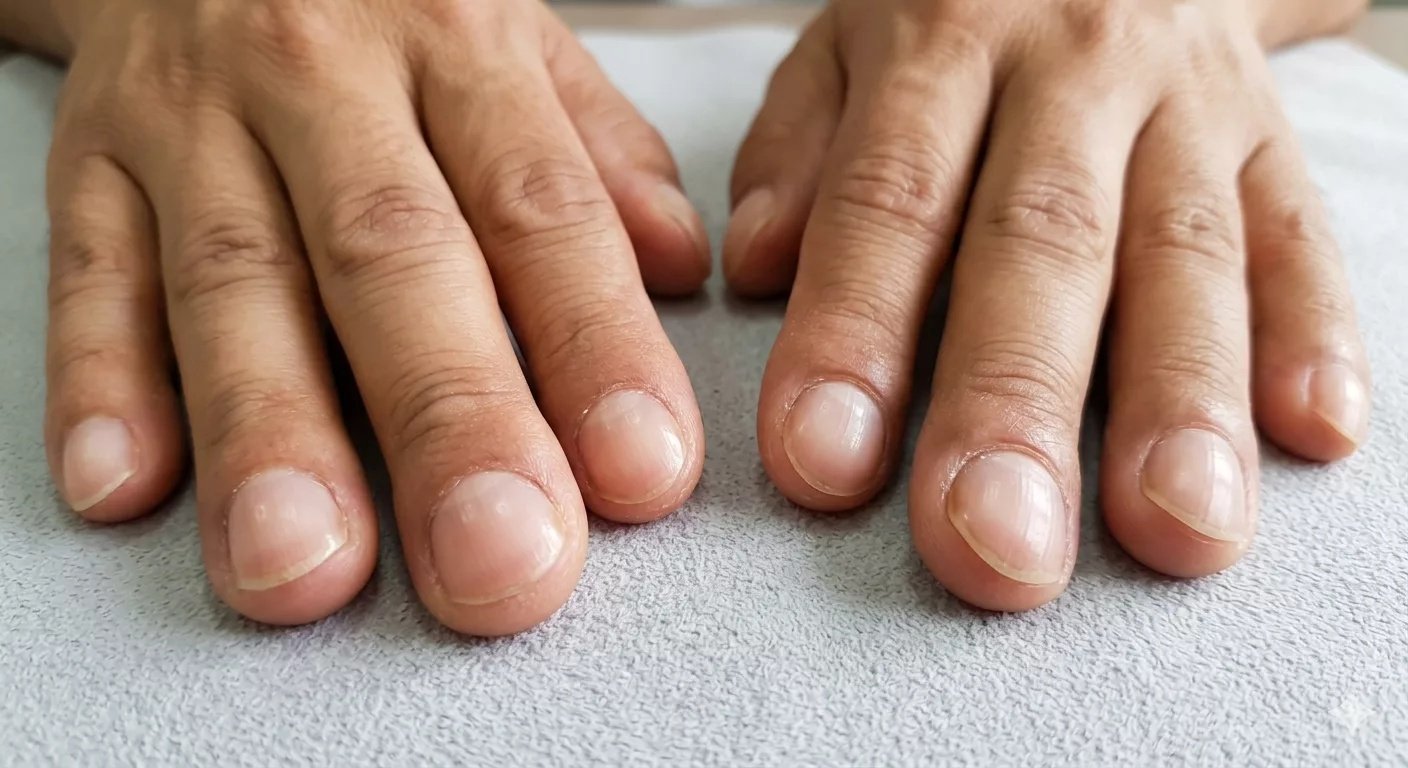
Nail Clubbing Small Nail clubbing may look like a minor change in your fingertips, but it can sometimes be the first visible sign of a serious internal disease, especially involving the lungs or heart.[1]
In nail clubbing, the fingertips or toes become swollen and widened, and the nails curve around them. They appear bulbous and convex rather than spoon-shaped, curving over the enlarged fingertips.[2]
You can prevent nail clubbing by preventing the underlying disease from developing. Similarly, the treatment of clubbed nails also focuses on the disease causing it rather than the clubbed nails themselves.
What is Nail Clubbing?: Nail Clubbing Small
Nail clubbing, also called digital clubbing, is a change in the appearance of the fingertips or toes. The following are the features of clubbed nails.
- The fingertips or toes become swollen, bulbous, or widened.
- Increased curvature of the nails (both from top-to-bottom and side-to-side), thus wrapping around the fingertips, giving a convex, dome-shaped appearance.[3]
- There is a normal angle of 160° between the nail and nail bed; in clubbed nails, the angle increases beyond 180°.[4]
- The nails may feel warm, soft, and spongy, but are usually painless.
- Nail clubbing can affect some or all fingers and sometimes toes as well.
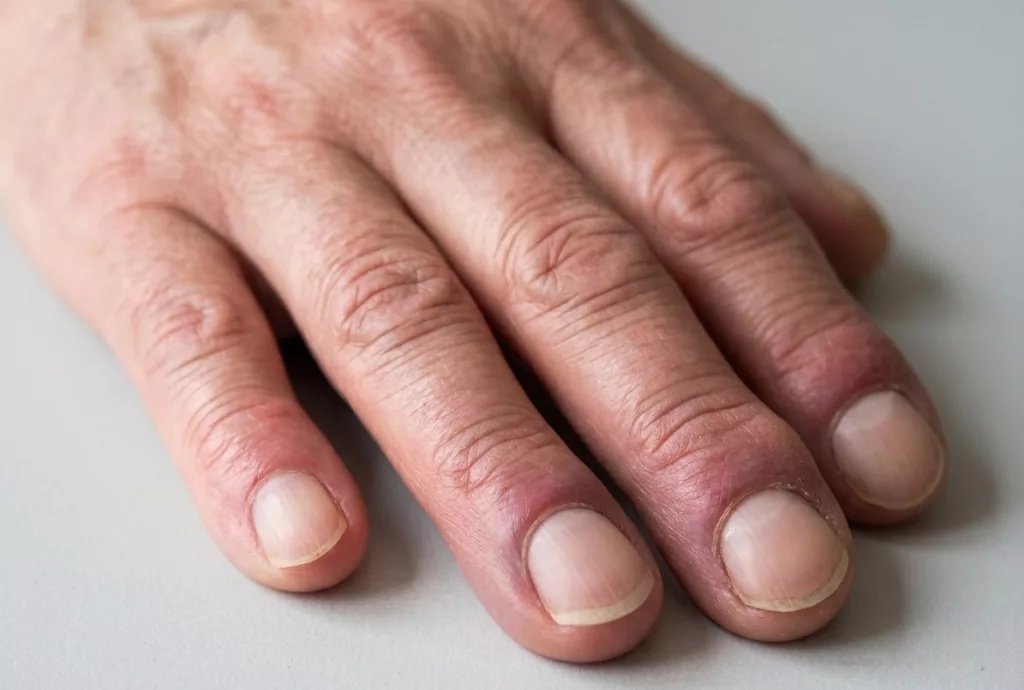
An illustration, showing clubbing of nails. The swelling of the fingertips can be seen.
The important thing to remember is that clubbed nails by themselves seem a minor cosmetic change, but in reality, they might be signaling an underlying systemic disease.
How do the nails become clubbed?
Nail clubbing results from multiple factors, and the exact mechanism is still not fully clear. However, disturbance in the normal circulation and tissue growth at the fingertips is likely responsible for these nail changes.
One of the commonly accepted theories suggests that the presence of megakaryocytes and platelets bypasses the normal filtration in the lungs (especially in lung or heart diseases), causing them to get lodged in the small vessels of the fingers.[5]
These cells release some growth factors such as vascular endothelial growth factor (VEGF) and platelet-derived growth factor (PDGF).
These substances cause the blood vessels under the nail bed to dilate and soft tissue to grow, which ultimately results in the characteristic clubbed nail deformity.[6] This process is often associated with impaired pulmonary filtration, right-to-left shunting, or chronic hypoxia, which allows these cells to reach the distal circulation.
Causes of Nail Clubbing
Nail clubbing is not just a cosmetic concern but is usually a clinical sign of a severe systemic disease that needs attention. The following are some of the major diseases that are associated with clubbed nails.
1. Lung diseases
They are the most common source and the leading cause of the development of clubbed nails in adults.[7]
They include:
- Lung cancer(the most common malignancy associated with nail clubbing, although it does not account for the majority of all cases)
- Interstitial lung disease
- Cystic fibrosis
- Lung abscess
- Bronchiectasis
- Pulmonary fibrosis
- Empyema
- Chronic infections such astuberculosis may also be associated with nail clubbing, especially in long-standing disease.
These conditions impair the normal pulmonary filtration of megakaryocytes and promote the release of growth factors, ultimately resulting in nail clubbing.
2. Heart diseases
Certain heart diseases, especially those that are present since birth, usually cause nail clubbing. In these conditions, the oxygen-poor blood bypasses the lungs without being oxygenated.[8]
They include:
- Cyanotic congenital heart disease, such as tetralogy of Fallot
- Long-standing infective endocarditis
- Atrial myxoma in rare cases
3. Gastrointestinal and Liver Diseases
Some problems of the gut and liver may lead to the development of nail clubbing, which include:
- Inflammatory Bowel Disease (IBD), such as Crohn’s disease and ulcerative colitis
- Cirrhosis of the Liver
- Celiac disease[9]
4. Graves’ disease (thyroid acropachy):
Graves’ disease is an autoimmune condition in which there is too much thyroid hormone (thyroxin) in the blood, commonly referred to as hyperthyroidism.
In rare cases, patients may develop thyroid acropachy, which is a triad of symptoms.
The triad includes:
- Nail clubbing
- Swelling of the soft tissue in the hands and feet
- Periosteal new bone formation[10] (most commonly in the long bones).
This condition is uncommon and occurs in patients who have other symptoms of Graves’ disease, such as ophthalmopathy in the eyes and dermopathy in the skin.
5. Hypertrophic osteoarthropathy
Hypertrophic osteoarthropathy is a clinical syndrome in which there are:
- Nail clubbing
- Joint pain (arthralgia)
- Periosteal new bone formation (commonly on the radius and tibia)
It has two types.
- Primary hypertrophic osteoarthropathy: A rare genetic condition in which nail clubbing can occur without an underlying disease.
- Secondary hypertrophic osteoarthropathy: This is more common and is usually associated with an underlying disease, especially lung cancer.[11]
It is important to note that hypertrophic osteoarthropathy includes additional features such as joint symptoms and periostitis, and is not limited to nail clubbing alone. We already discussed lung cancer earlier; however, it is important to mention that nail clubbing can also occur in association with a genetic disease, as in the case of primary hypertrophic osteoarthropathy.
These were some of the commonly encountered diseases linked with nail clubbing. However, the actual list might be quite long.
If you or someone you know has such nail changes, it’s always a good idea to consult your physician for a complete health checkup.
Is nail clubbing always a sign of serious disease?
Not always. Sometimes nail clubbing may occur even without a systemic disease, and may not be harmful to your health.
However, such cases are very rare, and therefore it is recommended to see your healthcare provider if you find such changes to your nails.[12]
What are the common symptoms in patients with clubbed nails?
Most patients with clubbed nails are already facing an internal disease. Therefore, it’s more likely for such patients to experience the symptoms of their particular condition.
For example, a patient of:
- Lung Cancer may present with shortness of breath, cough, and weight loss.
- Heart disease may have symptoms of cyanosis (bluish discoloration of skin, lips, or mucous membranes), chest pain, or palpitations.
- GI or liver disease may complain of diarrhea, weight loss, or blood in stool.
- Hypertrophic osteoarthropathy may have symptoms of joint pain and stiffness.
Therefore, a proper management plan is necessary to address these symptoms.
What are the other nail changes similar to clubbing?
It is a good idea to have a clue about other nail changes as well, so as to differentiate nail clubbing from them. They include:
1. Koilonychia (Spoon-Shaped Nails)
- The nails become thin, concave, and like a spoon (can even hold a drop of water),
- They are opposite to the clubbed nails, which are convex and look like an upside-down spoon.
- Koilonychia is commonly caused by iron deficiency anemia[13]., malnutrition, or chronic illness, and is seen more in children.
2. Terry’s nails
- It is a characteristic nail pattern in which most of the nail appears white or pale (as the nail bed loses its normal pink color) with only a narrow pink/brown band at the tip of the nail.
- Unlike clubbing, there is no enlargement of fingertips in Terry’s nails.
- Terry’s nails are commonly present in people with liver diseases (especially cirrhosis) and sometimes in heart or diabetic patients.[14]
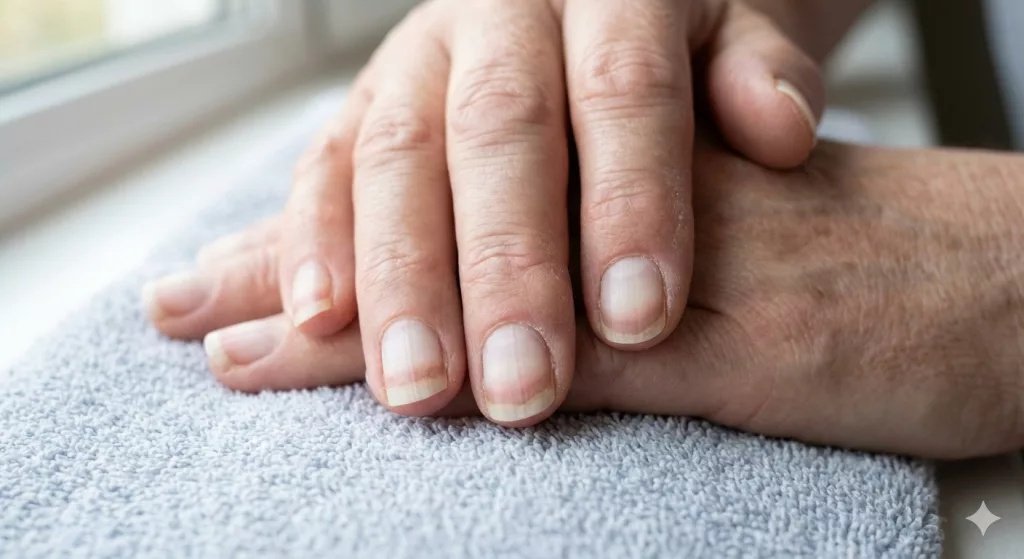
An image of the Terry’s nails
3. Ridges on the nails
- They are raised lines on the surface of the nails and can be horizontal or vertical in appearance.
- Vertical ridges are usually harmless and related to normal aging.
- Horizontal ridges, which are also known as Beau’s lines, may indicate an underlying illness, stress, or nail growth interruption.
- However, unlike clubbing, there is no change to the nail angle or shape of the fingertips.
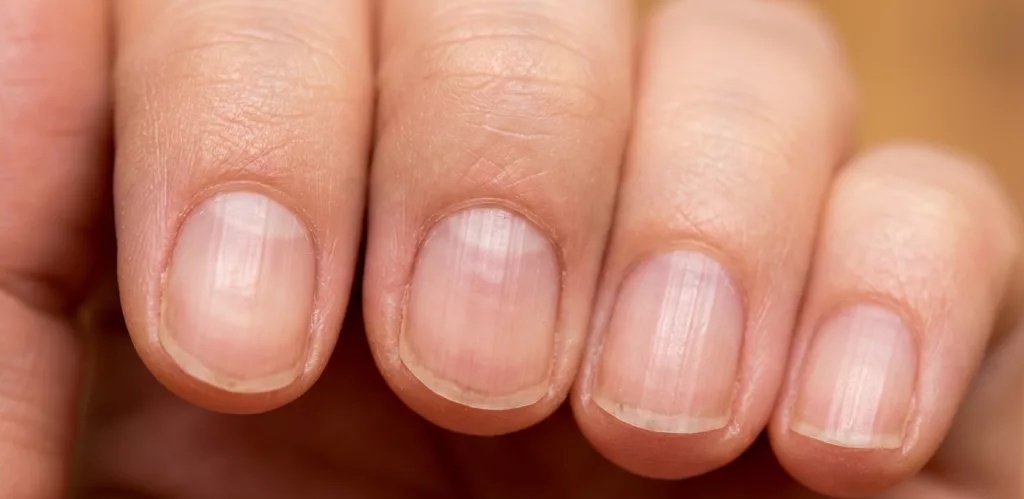
An illustration of the nails showing the vertical ridges
4. Yellow nail syndrome
- In this case, the nails are thickened, their curvature changes, and they become yellowish and slow-growing.
- Clinicians usually observe yellow nails in patients with respiratory diseases (like bronchiectasis) and lymphedema.[15]
- They may sometimes resemble clubbing, but the yellow color and systemic features may help clinicians differentiate between the two.
How Do Doctors Diagnose Nail Clubbing?
A physical examination of the fingertips and nails is sufficient for a healthcare provider to diagnose a patient with nail clubbing. During the examination, the clinician will look for:
- Nail curvature
- Finger shape
- Nail bed softness
- Loss of the normal nail angle
Clinicians may also assess the progression in stages, starting from nail bed softening to bulbous enlargement of the fingertips.
Schamroth’s window test
Clinicians often perform a simple, bedside test in these patients known as Schamroth’s window test. This is a non-invasive test that helps identify clubbed nails clinically.
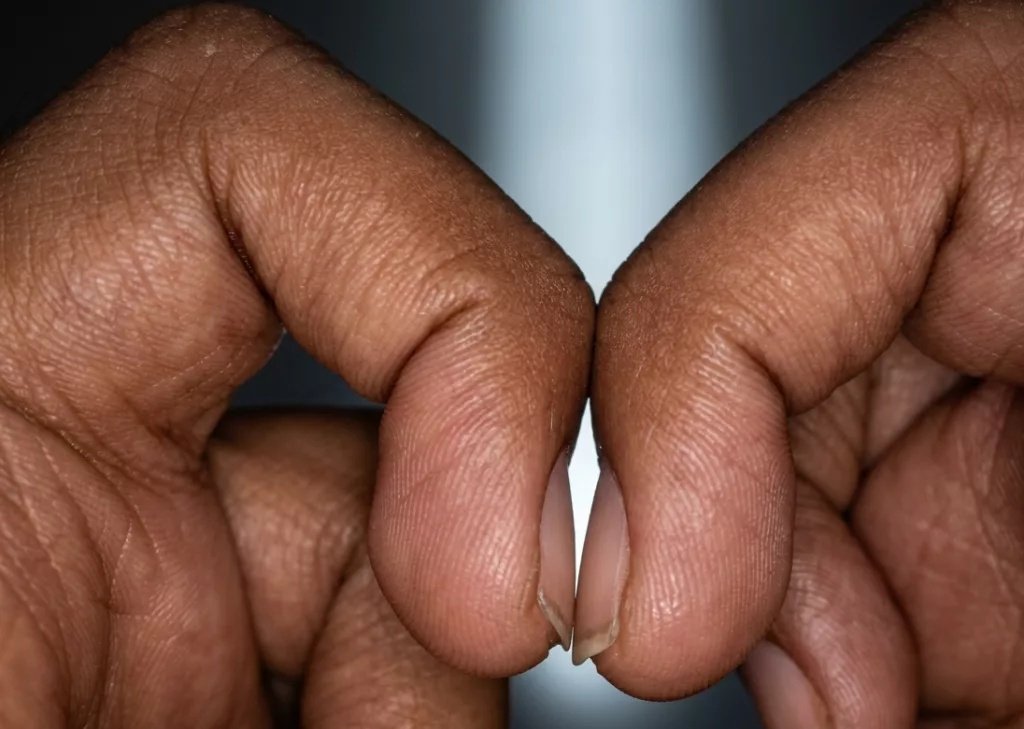
Image of anormalperson tested usingSchamroth’s window test
In this test, the clinicians ask the patient to hold the corresponding fingers together. The clinicians will look for a small diamond-shaped gap between the nail beds. Normally, this gap is present, but it is lost in nail clubbing, helping clinicians diagnose clubbed nails.[16]
Systemic tests
The clinician may order further tests such as:
- Chest imaging (like X-rays or CT scans)
- Blood tests, including Liver function tests
- Heart evaluation (ECG or echocardiography)
- Gastrointestinal tests, such as a colonoscopy
These investigations will help your healthcare provider reach a diagnosis for your specific condition.
Clubbed Nails Treatment
There is no direct treatment for clubbed nails themselves, and the treatment always focuses on the underlying disease instead.
Once the underlying condition is properly treated, early-stage nail clubbing may show some improvement, although complete reversal is not always guaranteed.
The treatment of such patients varies significantly depending on the underlying disease. For example:
- Lung cancer can be treated with surgery to remove the tumor, chemotherapy, radiation therapy, immunotherapy, or targeted therapy. Besides this, patients should be counseled to quit smoking if they are still smoking.
- Other lung diseases may be treated with antibiotics, anti-fibrotics, or other specific treatments.
- Heart diseases can be treated using corrective surgery for Tetralogy of Fallot, antibiotics for Infective endocarditis, or tumor removal for Atrial myxoma.
- Gastrointestinal diseases such as IBD may require anti-inflammatory or immunosuppressive therapy.
- Graves’ disease may be treated with antithyroid drugs, radio-iodine, or other options.
- Liver cirrhosis and other diseases need their specialized treatment options.
This was a brief overview of the treatment options, and the purpose of treatment varies depending on the type and severity of the disease. For example, some diseases are treated for curative purposes, while others may be just to alleviate symptoms and improve the quality of your life.
Can you reverse early nail clubbing?
Yes, it is possible to reverse the early nail clubbing with adequate treatment of the underlying disease.[17]
However, if these nail changes are present for a long time, then it may not be easy to reverse, because by then the structural changes in the nail become permanent.
Therefore, doctors recommend early treatment of the underlying condition in patients with these nail changes.
When should you see a doctor?
Nails are like a window to your internal health, and not only clubbed nails but also other nail changes may also hint at a hidden health issue inside your body.
You should always consult a healthcare provider if you suspect or observe changes to your nails. For example, if:
- Your nails become curved and soft
- Your nails change their shape or lose their normal angle
- Your fingertips enlarge or swell
- You start to experience symptoms besides nail changes, such as shortness of breath, chronic cough, chest pain, weight loss, and digestive issues.
Even if you feel otherwise normal, you should never avoid such nail changes.
Frequently asked questions (FAQs)
1. Does nail clubbing affect only one hand or a few fingers?
Usually, it affects all fingers symmetrically; however, in rare cases, it is also possible to affect a few digits instead.
2. Is nail clubbing painful or uncomfortable?
Nail clubbing itself is usually painless. Although conditions like hypertrophic osteoarthropathy may cause joint pain and swelling, the clubbed nail itself is not painful.
3. How long does it take for nail clubbing to develop?
Nail clubbing typically develops gradually over months or years, depending on the progression of the internal disease. Sudden development of nail clubbing is very rare.
Conclusion
Nail clubbing may seem like a minor cosmetic change, but it may be indicating a significant internal problem. Lung cancer is the most common condition associated with it, but it can also occur with other diseases as well. In rare cases, nail clubbing may be an idiopathic condition.
Whenever a clinician recognizes nail clubbing while examining hands, the immediate step he or she takes is to investigate for the possible underlying disease. The sooner the treatment, the better the outcome of that condition.
For healthcare professionals, nail clubbing is proof of the importance of a careful physical examination. And for general readers, it reminds them how external changes to the body can indicate an internal problem.
References
[1] Spicknall KE, Zirwas MJ, English JC. Clubbing: an update on diagnosis, differential diagnosis, pathophysiology, and clinical relevance. J Am Acad Dermatol. 2005;52(6):1020–8.
[2] Cleveland Clinic. Nail Clubbing: What It Is, Causes & Treatment. Cleveland (OH): Cleveland Clinic; 2023.
[3] Baran R, Dawber RPR. Diseases of the Nails and their Management. 3rd ed. Oxford: Blackwell Science; 2001.
[4] Habif TP. Clinical Dermatology: A Color Guide to Diagnosis and Therapy. 6th ed. Elsevier; 2015.
[5] Dickinson CJ. The aetiology of clubbing and hypertrophic osteoarthropathy. Eur J Clin Invest. 1993;23(6):330–8.
[6] Atkinson S, Fox SB. Vascular endothelial growth factor (VEGF) and platelet-derived growth factor (PDGF) in clubbing. Lancet. 2004;363(9418):1002–4.
[7] DeRemee RA. The causes of clubbing. Chest. 1981;79(6):601–2.
[8] Perloff JK. Clinical Recognition of Congenital Heart Disease. 6th ed. Elsevier; 2012.
[9] Feldman M, Friedman LS, Brandt LJ. Sleisenger and Fordtran’s Gastrointestinal and Liver Disease. 10th ed. Elsevier; 2016.
[10] Bahn RS. Graves’ disease. N Engl J Med. 2010;362(8):726–38.
[11] Martinez-Lavin M. Hypertrophic osteoarthropathy. Curr Opin Rheumatol. 1997;9(1):83–6.
[12] Schamroth L. Personal experience with digital clubbing. S Afr Med J. 1976;50(8):297–300.
[13] Andrews NC. Disorders of iron metabolism. N Engl J Med. 1999;341(26):1986–95
[14] Terry R. White nails in hepatic cirrhosis. Lancet. 1954;266(6808):757–9.
[15] Samman PD, White WF. The yellow nail syndrome. Br J Dermatol. 1964;76:153–7.
[16] Schamroth L. The finger clubbing test. Lancet. 1976;1:109.
[17] Myers KA, Farquhar DR. Does this patient have clubbing? JAMA. 2001;286(3):341–7.