

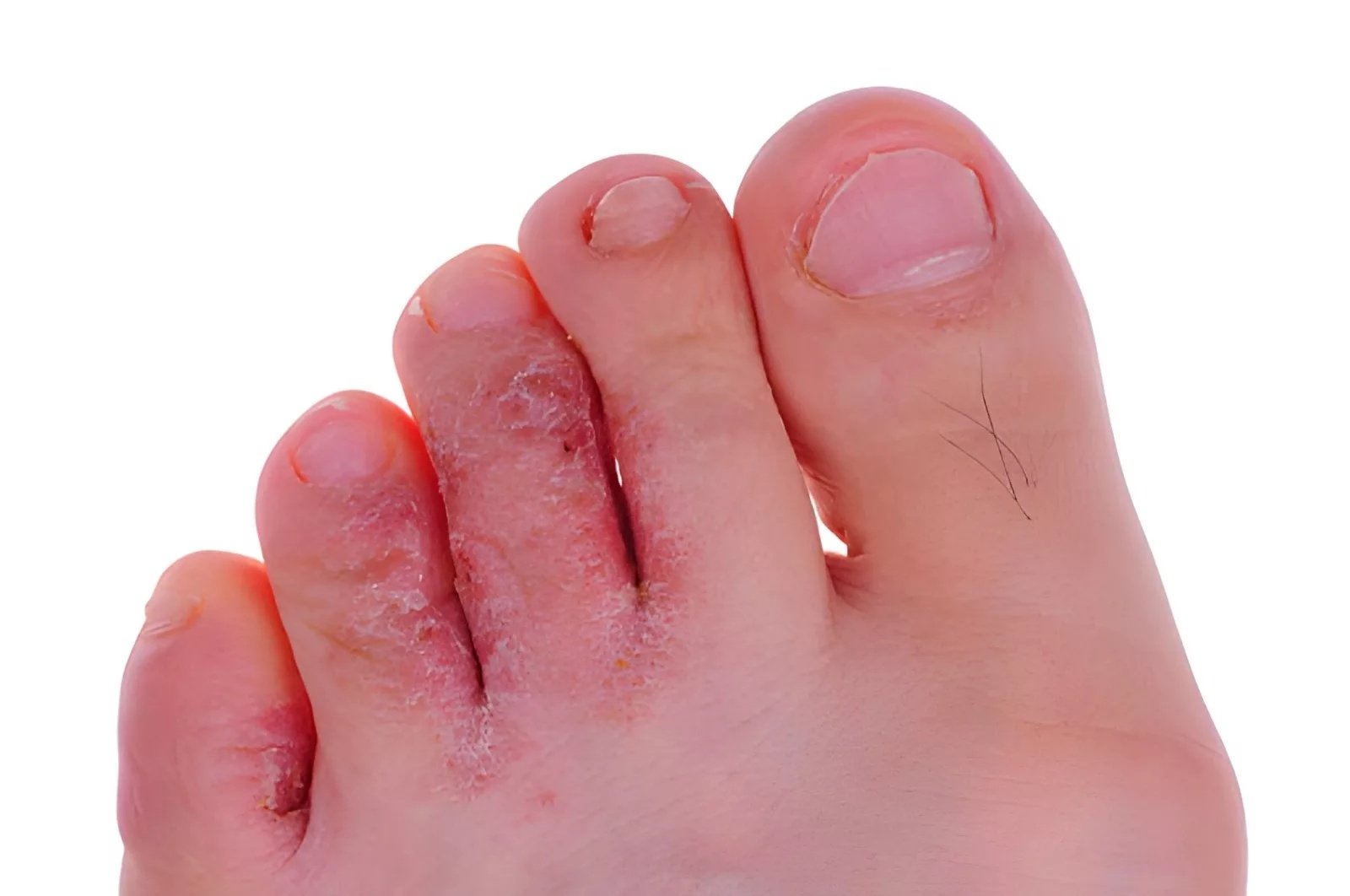
Tinea Pedis treatment Athlete’s Foot or Tinea Pedis is a common fungal infection of the foot that affects areas such as between the toes, the soles, sides, and heels. Tinea means ringworm (fungus), and pedis means foot, which indicates that it is caused by a dermatophyte (ringworm) infection. The disease causes itching, burning, and peeling of the skin and can impact one foot or both feet. Studies suggest that the prevalence of tinea pedis varies across regions, with estimates ranging from about 3% to 15% of the population at a given time.
The fungus grows best in the presence of moisture and warm temperatures; thus, it is frequently seen in people who wear socks for long periods. Thus, a high frequency of tinea pedis is found in military personnel, with a global prevalence of 17%. Doctors effectively treat the infection with anti-fungal medications.
Tinea Pedis Symptoms
The disease appears in the form of skin lesions on multiple areas of the foot, including:
- Between the toes
- Top of your feet (Dorsum)
- Bottom of your feet (Soles)
- Edges of your feet
- Heels
Clinicians most commonly note the following symptoms in tinea pedis patients:
Peeling of Skin:
For most patients, the most common symptom is peeling of the skin. Cracks appear on the skin between the toes. Several patients are concerned about the peeling and flaking of their podal skin. The skin appears as white, grayish scales on the skin. The cracking and peeling of skin can prove to be an embarrassing problem for adult patients.
Itching & Burning:
Numerous patients across the globe report having pain in the affected sites. Burning sensations are known to accompany pain. There may also be moderate itching associated with the disease. However, in some cases, the itching can become severe, which makes walking difficult and, hence, interferes with day-to-day activities. Persistent itching and consequent scratching further worsen the condition. Studies show that the fungal infection causes skin discoloration, softening (and breaking), and itching. Many individuals limit movement due to soreness in their feet.
Rash:
Tinea pedis is the most common superficial skin infection caused by a fungus. Patients can develop skin irritations that can appear red, purple, or gray/white in color. Sometimes, you can also find a skin rash in athletes’ foot patients.
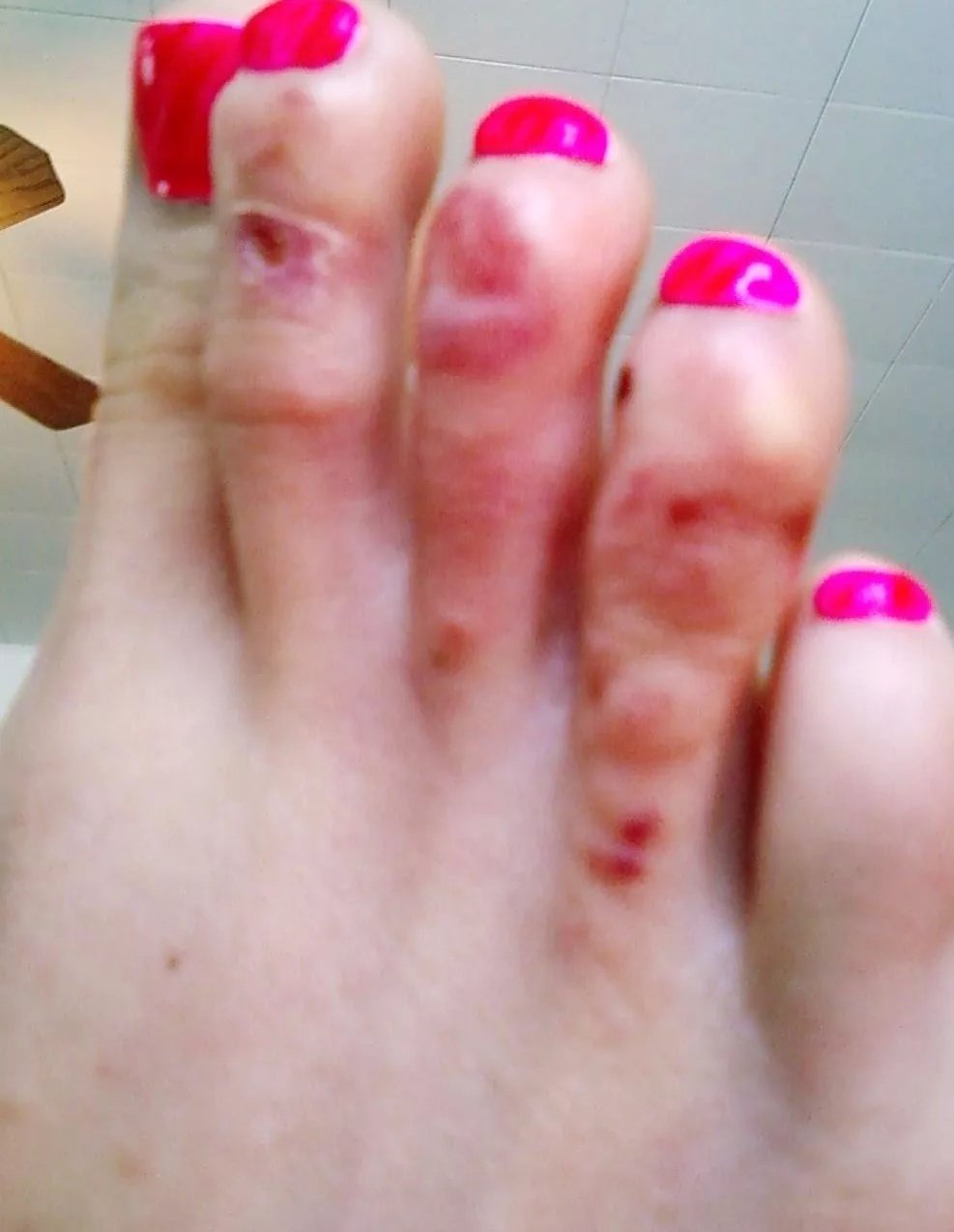
Erythematous lesions (rash) on the digits can be seen in this tinea pedis patient.
Malodor:
An embarrassing feature of tinea pedis is foul-smelling foot skin, i.e., malodor. The fungal infection can cause the production of a foul smell that resembles cheese or yeast. This is attributed to the production of volatile organic compounds (VOCs) by the fungus. Clinical research shows that a slight odor may be present along with sensations of pain, itching, and burning.
Tinea Pedis Types
Based on the differences in symptoms, tinea pedis is divided into the following types:
Toe Web Type:
The most common type of athlete’s foot is the toe-web type. It is characterized by the development of skin lesions between the fourth and fifth toes. Generally, there is discoloration of the skin. Patients also notice cracking and peeling of interdigital skin due to infection. Studies show that the main location of skin lesions lies between the 4th and 5th toes.
Moccasin-Type:
This type affects the bottom regions of the foot. Affected regions include the heels and edges of your feet. Generally, there is thickening of the foot skin, which is followed by cracking. Several patients also report erythematous (red) papules and patches on both feet.
Vesicular-Type:
As the name indicates, this type is characterized by the formation of vesicles (fluid-filled blisters) at the bottom of the feet. The vesicular lesions can appear on any region of your feet, but the preferred site is the base of the foot. Clinical findings suggest that vesicular tinea pedis mostly appears during hot weather (spring and summer) and is mostly unilateral (develops only on one foot). There is the formation of multiple blisters/vesicles on the foot. These blisters appear red and are usually itchy. The purulent blisters can rupture, leading to discharge of fluid.
Ulcerative Type:
The rarest and the most severe form of athlete’s foot is ulcerative tinea pedis. Patients notice the formation of ulcers or open sores in the skin between their toes. The interdigital sores are painful and accompanied by swelling and redness. Many patients also complain of vesiculopapular lesions. Severe sloughing of the skin is seen in most cases.
Tinea Pedis Causes
The fungus causing the infection grows on your skin in the presence of moisture and warmth. Tight shoes and socks for long periods provide an ideal environment for the growth of the pathogens. As athletes have to train for long periods and consequently wear socks/shoes, tinea pedis is more common in them. Thus, the disease is named athlete’s foot.
Fungi:
A dermatophyte infection causes this skin disease. Dermatophytes are a group of fungi responsible for infesting regions containing keratin. Thus, their main targets include the superficial layer of skin, hair, and nails. As per pathologists, tinea pedis is most commonly caused by the following fungi:
Trichophyton rubrum: This is the culprit in most cases of athlete’s foot. Microbial analyses reveal a link between tinea pedis and Trichophyton rubrum, which may present with moccasin-type infection. Once, it was endemic in parts of Australia and Africa.
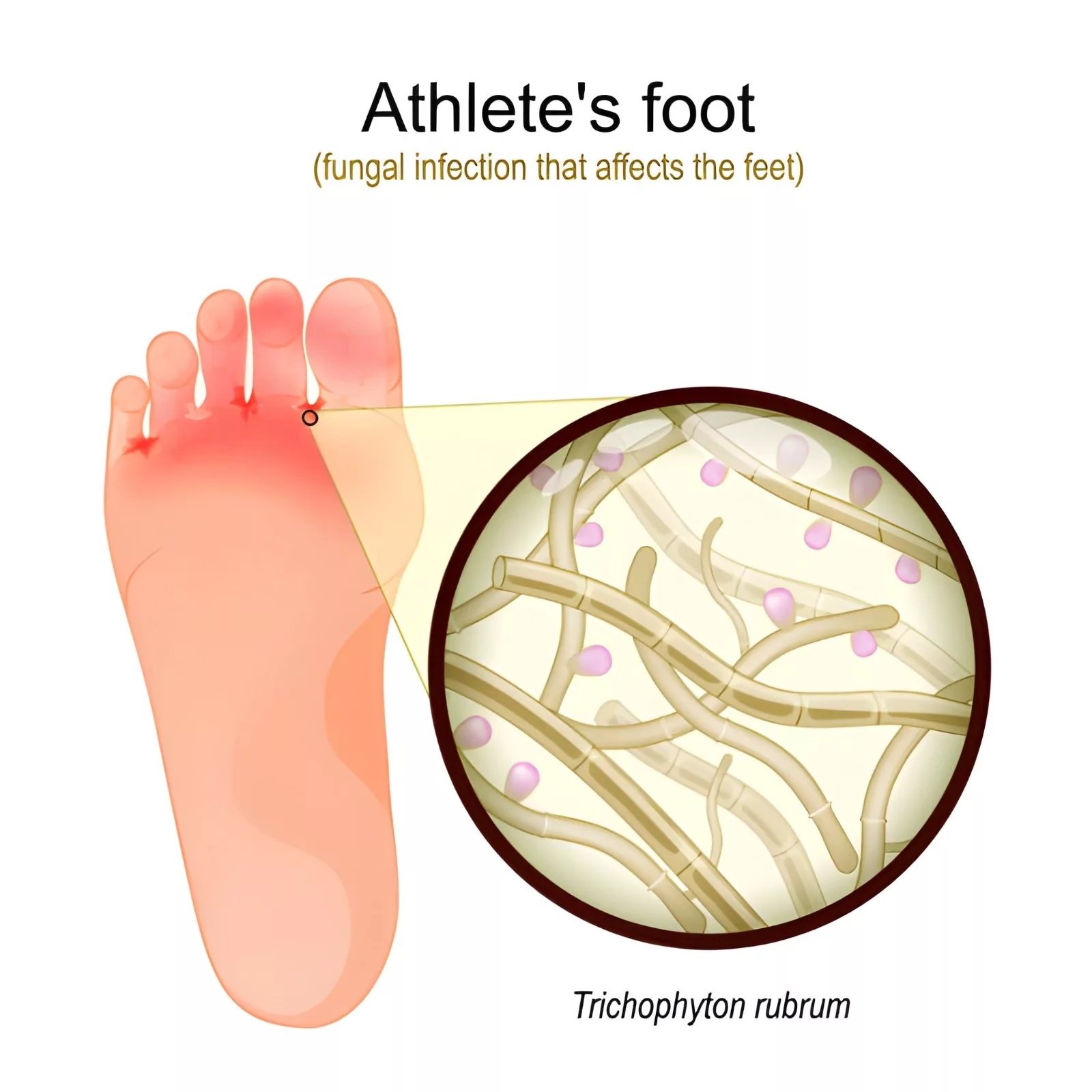
Tinea pedis (athlete’s foot) is most commonly caused by Trichophyton rubrum (a ringworm).
Trichophyton mentagrophytes: Another causative agent for this skin disease is the T. mentagrophytes. A variant of this fungus, i.e., T. interdigitale, is known to cause athlete’s foot. The study conducted by Dinongue and colleagues found Trichophyton interdigitale, Candida albicans, and Fusarium solani to be the most common pathogens in interdigital tinea pedis.
Epidermophyton floccosum: Though the global prevalence of this fungus has decreased in recent times, it is still a notable causative agent for tinea pedis. It usually causes disease in individuals with comorbidities like diabetes.
In rare instances, yeasts and fungi like Candida albicans can also cause the foot disease.
Risk Factors:
Smoking and diabetes are recognized as risk factors for the dermatophytic infection. Researchers have found an association between these factors and toe-web tinea infection.
Diabetic foot ulcers also increase the chances of infection by fungi. Therefore, doctors advise diabetes patients to pay special attention to their foot cleaning/washing habits. Obesity is also identified as a risk factor for athlete’s foot. Hyperhidrosis (excessive sweating) and wearing occlusive footwear also increase susceptibility.
Is Tinea pedis Contagious?
Yes, athlete’s foot is a contagious condition that usually transfers through skin-to-skin contact. You can acquire the infection by touching an infected person. Infection can spread if you share personal items like towels, socks, and shoes etc. You can also become infected if you come into contact with the loose or peeling skin of an infected individual. Chances are that you may get it in a swimming pool or a sauna, etc.
Tinea Pedis Diagnosis
Your healthcare provider will diagnose the condition by physically examining the foot lesions. A history of prolonged sock/shoe wearing helps in diagnosis. Tinea pedis is a common disorder, so diagnosis is generally easy and quick.
Diagnostic Tests:
If confirmation is needed, a potassium hydroxide (KOH) preparation test can be performed. In this procedure, the doctor removes a small scraping of the affected skin to identify fungal elements. In the laboratory, a technician adds several drops of potassium hydroxide solution to the skin sample. This solution dissolves the skin cells, leaving behind only fungal cells, which can be observed under a microscope. This allows confirmatory diagnosis of tinea pedis. A fungal culture test can also be done to determine the types of pathogens involved. Biopsy is rarely required and is only considered when the presentation is atypical or unresponsive to treatment.
Differential Diagnosis:
Tinea Pedis Vs Onychomycosis
Both tenia pedis and onychomycosis are fungal infections that affect the feet. However, tinea pedis impacts the skin and causes itching, burning, and sloughing off of the skin (of soles, digits, and heels). On the other hand, onychomycosis affects the nails, leading to discoloration, thickening, and eventually, brittleness of the toenails. However, untreated athlete’s foot can progress to onychomycosis.
Tinea Pedis Treatment
Topical Medicine:
Doctors prescribe antifungal medications to alleviate symptoms of tinea pedis. The most common antifungal medications that are available in cream, gel, ointment, and spray forms include clotrimazole, miconazole, ketoconazole, and terbinafine. You can get prescription or over-the-counter anti-fungal creams for your skin lesions. A comparative study revealed that both ketoconazole and miconazole preparations are effective in providing clinical improvement. However, ketoconazole shows faster and more sustained results than miconazole.
Terbinafine is shown to be effective in managing foot fungal infections, like onychomycosis and tinea pedis. Moreover, terbinafine preparations, including creams and emulsions, have a high safety profile. Topical terbinafine is considered one of the most effective first-line agents and often clears infection faster than azole creams.
Oral Medicines:
Your dermatologist may advise you to take anti-fungal pills for better management of tinea pedis. Commonly prescribed oral anti-fungals include terbinafine, itraconazole, fluconazole, etc. Amphotericin B is not used for tinea pedis and should be excluded from oral options.
Oral therapy is typically reserved for severe or resistant cases or when nail involvement (onychomycosis) is present.
Recent Advances:
Due to the high prevalence of the disease, we have seen a lot of research and development in its management. Nanocarrier-based antifungal formulations, like sprays, can prove to be effective treatment options for athlete’s foot.
Scientists have developed cloth fibers treated with topical/systemic antifungals. These fibers have been made into socks and tested as anti-fungal socks. Astonishingly, these interdigital-type hygiene socks have not only shown antifungal properties but have also demonstrated appreciable therapeutic effects against interdigital tinea pedis infections. Thus, we can expect to see widespread use of these socks in the near future!
Recovery:
Tinea pedis management requires proper follow-up of doctor-prescribed medications. With a full course of medicine, you can expect to see the skin heal within one to eight weeks (provided that you don’t skip medicines). Many patients notice the resolution of symptoms before completion of the medicine course and stop the medicine. This can cause the development of resistance in the fungi, which may lead to the recurrence of the infection and the formation of a fungal strain that is harder to treat. Thus, you must complete your medicine course even if you don’t have symptoms anymore!
Tinea Pedis Complications
Untreated tenia pedis can lead to the spread of infection to different structures of the foot, such as nails, i.e., onychomycosis. Frequent scratching of foot lesions with your hands or using the same towel for hands and feet can lead to the spread of the fungal infection to your hands as well. Untreated tinea pedis can even spread to your groin, leading to the problem of jock itch.
Tinea Pedis Prevention
Athlete’s foot is a fungal infection that can be avoided by following foot hygiene protocols. If you are an athlete or your job requires you to wear socks/shoes for long periods, you must adopt the following steps to minimize the chances of infection:
- Be extra cautious about your foot hygiene when visiting ringworm-prone areas like saunas, swimming pools, communal locker rooms, etc.
- Dry your feet after prolonged exposure to water, especially after swimming or even bathing.
- Always thoroughly wash the skin between your toes and the bottom of your foot with an antibacterial soap.
- Try wearing open footwear such as sandals and avoid shoes made of rubber/synthetic rubber if you are prone to tinea pedis.
- Keep a disinfectant spray with you at all times and spray on the inside of your shoes whenever you remove and wear them. Shoe hygiene with antimicrobial agents has proven to be effective in discouraging microbial growth.
- You should also dry your shoes before putting them back on to reduce fungal growth.
- Wear socks that absorb moisture. You can go for cotton socks for this purpose.
- Applying antifungal powders and talcum powder can remove moisture from your feet and keep you safe.
Final Word
Tinea pedis or athlete’s foot is a fungal (dematophyte) infection, caused by ringworms (Trichophyton species), that affects the skin of your feet. The fungus thrives in moist and warm environments; therefore, it is abundantly found in sportspersons, athletes, and individuals who wear socks/shoes for long periods. Different types of tinea pedis have been identified by clinicians that affect different foot regions, including between the toes (especially between the 4th and 5th toes), at the bottom of the feet, on the digits, and even on the sides of the foot.
The infection presents with peeling/cracking of the skin, which is accompanied by symptoms like pain, itching, and burning etc. Some patients develop a rash in response to the fungal infestation, while others notice fluid-filled blisters that rupture. Doctors treat the condition with topical and oral antifungal medications. You can prevent tinea pedis by drying your feet when wearing socks/shoes and paying attention to foot hygiene.
References
[1] Crawford, F. (2009). Athlete’s foot.Clinical Evidence,2009.
[2] Sepahvand, A., Behzadifar, M., Raiesi, O., & Yarahmadi, M. (2025). Prevalence of Tinea pedis in military personnel: a systematic review and meta-analysis.BMC Public Health,25(1), 3116.
[3] García-Lira, J. R., Toledo-Bahena, M. E., Valencia-Herrera, A. M., Pérez-Cosgaya, R. A., Pardo-Estrada, E. M., Duarte-Abdala, M. R., … & Bonifaz-Trujillo, A. (2024). Tinea pedis in adolescents: a comprehensive review.Current Fungal Infection Reports,18(2), 112-117.
[4] Nowicka, D., & Nawrot, U. (2021). Tinea pedis—An embarrassing problem for health and beauty—A narrative review.Mycoses,64(10), 1140-1150.
[5] Ilkit, M., & Durdu, M. (2015). Tinea pedis: the etiology and global epidemiology of a common fungal infection.Critical reviews in microbiology,41(3), 374-388.
[6] Julien, G. A., Adiyaga, W. C., Saaka, R. A. E., Sunyazi, S. S., Batuiamu, A. T., Abugri, D., & Abugri, J. (2021). Dermatophytic diseases: a review of Tinea pedis.medRxiv, 2021-06.
[7] Porche, D. J. (2006). Tinea pedis: a common male foot problem.The journal for nurse practitioners,2(3), 152-153.
[8] Diongue, K., Ndiaye, M., Diallo, M. A., Seck, M. C., Badiane, A. S., Diop, A., … & Ndiaye, D. (2016). Fungal interdigital tinea pedis in Dakar (Senegal).Journal de mycologie medicale,26(4), 312-316.
[9] Wilden, A., Stoecker, W. V., & Bran, A. (2021). Diagnosis and treatment of moccasin-type/hyperkeratotic tinea pedis.American journal of hospital medicine, volume 5, issue 4 (2021 October-December).
[10] Ugalde-Trejo, N. X., Delgado Moreno, K. P., Alfaro-Sánchez, A., Tirado-Sánchez, A., & Bonifaz Trujillo, J. A. (2022). Two feet-one hand syndrome: tinea pedis and tinea manuum.Current Fungal Infection Reports,16(4), 117-125.
[11] Xie, F., & Lehman, J. S. (2022, July). Bullous tinea pedis. InMayo Clinic Proceedings(Vol. 97, No. 7, pp. 1396-1397). Elsevier.
[12] Liu, X., Tan, J., Yang, H., Gao, Z., Cai, Q., Meng, L., & Yang, L. (2019). Characterization of skin microbiome in tinea pedis.Indian Journal of Microbiology,59(4), 422-427.
[13] Besrour, R., Mtibaa, L., Rabhi, F., Baccouchi, N., Dhaoui, A., & Jemli, B. (2025). Epidermophyton floccosum, an etiological agent of tinea pedis and tinea unguium: about two cases.The Pan African Medical Journal,50, 102.
[14] Solomon, M., Greenbaum, H., Shemer, A., Barzilai, A., & Baum, S. (2021). Toe web infection: epidemiology and risk factors in a large cohort study.Dermatology,237(6), 902-906.
[15] Gupta, A. K., Shemer, A., Economopoulos, V., & Talukder, M. (2024). Diabetic foot and fungal infections: etiology and management from a dermatologic perspective.Journal of Fungi,10(8), 577.
[16] Tan, Y., Shao, Y., Li, T., Hu, X., Wang, X., Wan, Z., … & Wang, R. (2025). The Effect of Topical Ketoconazole and Topical Miconazole Nitrate in Modulating the Skin Microbiome and Mycobiome of Patients With Tinea Pedis.Mycoses,68(9), e70116.
[17] Ptak, A., & Szyc, M. (2024). Athlete’s Foot: A Common Fungal Infection in Athletes and Beyond. The Use of Terbinafine in Treating Tinea Pedis and Onychomycosis.Quality in Sport,34, 56195-56195.
[18] Doğan, B., Akpolat, N. D., & Kutlubay, Z. (2023). Current approaches in the treatment of superficial fungal infections.Journal of the Turkish Academy of Dermatology.
[19] Kota, S. S. N., Bandhakavi, S., & Anjali, C. (2022). Athlete’s foot disease: A comparative study on marketed products.Journal of Drug Delivery & Therapeutics,12(3).
[20] Du, L., Liu, L., Zou, S., Kou, E., Wang, B., Zhao, H., … & Zhu, Y. (2024). Interdigital-type antifungal socks for prevention and treatment of tinea pedis.Journal of Infection and Public Health,17(7), 102455.
[21] Messina, G., Burgassi, S., Russo, C., Ceriale, E., Quercioli, C., & Meniconi, C. (2015). Is it possible to sanitize athletes’ shoes?.Journal of Athletic Training,50(2), 126-132.