

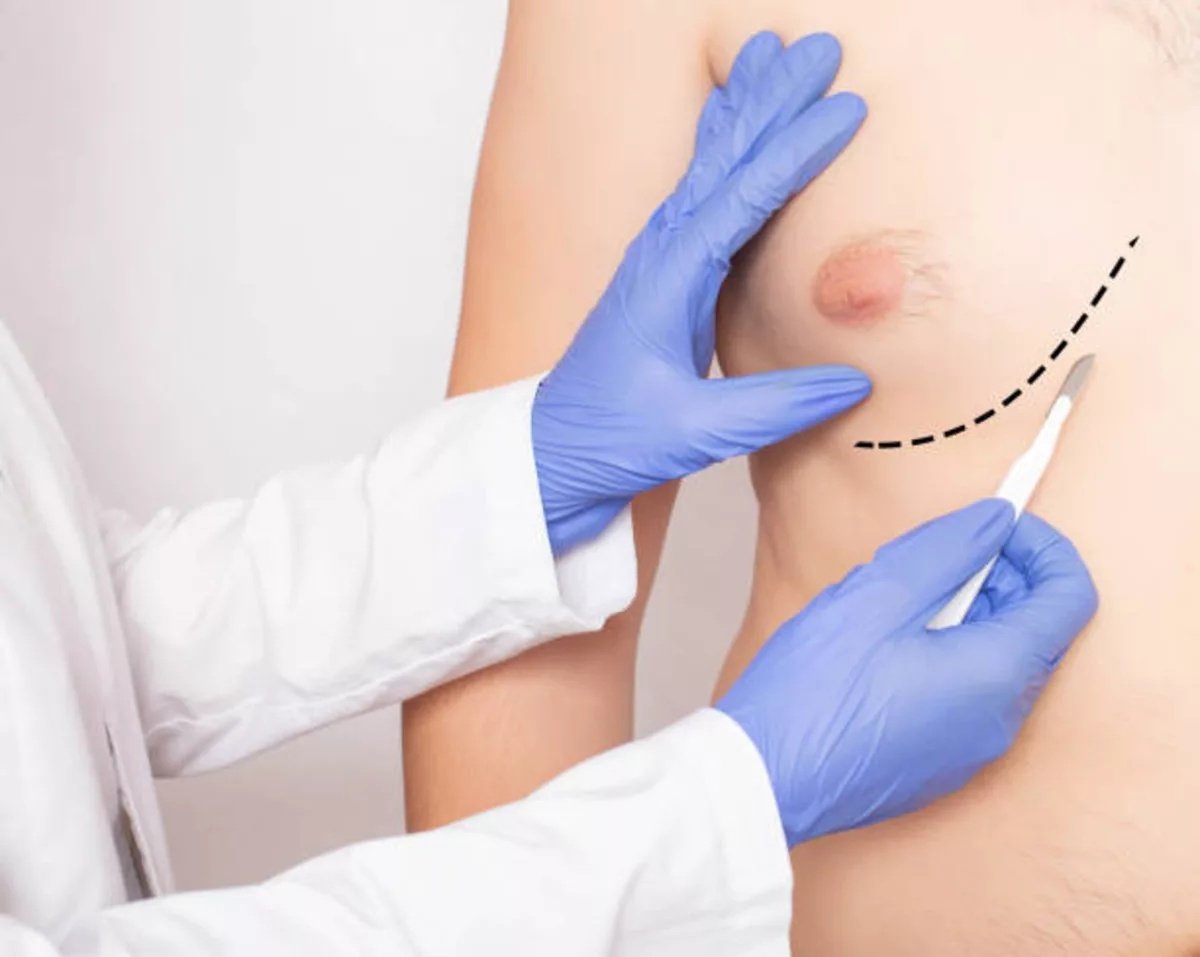
Gynecomastia Surgery Procedure Gynecomastia is a condition in which males develop enlargement of breast tissue, often leading to physical discomfort and psychological distress. It can occur at different stages of life, from newborns to adolescents and older adults, and is usually linked to hormonal changes or certain medical conditions and medications. While it is often benign and self-limiting, understanding its causes, evaluation, and treatment options is important for proper management and reassurance.
What is Gynecomastia?: Gynecomastia Surgery Procedure
There are multiple definitions of Gynecomastia:
- Gynecomastia is a condition characterized by enlargement of the male breast secondary to glandular (and sometimes stromal) or fatty tissue.
- Gynecomastia is defined clinically as generalized enlargement of male breast tissue, with the presence of a rubbery or firm mass extending concentrically and symmetrically from the nipple, accompanied by histopathologically benign proliferation of glandular male breast tissue.

Normal breast tissue in males vs. Breast tissue in Gynecomastia
Gynecomastia vs Pseudogynecomastia
Gynecomastia is different from “pseudogynecomastia“, which is defined as an excess of adipose tissue in the male breasts without the growth of true glandular breast tissue; this is commonly associated with obesity and can be ruled out by physical exam.
What is Gynecomastia Surgery?
Gynecomastia Surgery is a type of breast reduction surgery to reduce enlarged breast tissue in males. It is an elective procedure that has certain types which can be used independently or in combination, depending upon the severity of the disease.
Who Needs Gynecomastia Surgery?
The condition usually resolves within months, but if it prolongs (more than 12 months), and causes the patient physical and psychological discomfort, or if medications are not affecting it, then surgery may be considered.
Age Distribution of Gynecomastia
Physiologic gynecomastia has a trimodal age distribution.
- The first peak is in the neonatal period, when an estimated 60%–90% of men develop transient palpable breast tissue secondary to transplacental passage of estrogen.
- The next age distribution is during puberty (ages 10–17 years) which occurs in as many as 69% of individuals.
- The final peak is in older men (between 50 and 80 years), with the most frequent causes in this age group being hypogonadism and pharmaceutical drug use.
Gynecomastia Causes
The major cause of gynecomastia is thought to be an altered imbalance between estrogen and androgen effects, which may result from increased estrogen production, decreased androgen production, or increased peripheral conversion of androgens to estrogens.
Medical Conditions Associated with Gynecomastia
Other causes include liver cirrhosis, male hypogonadism, malnutrition, hyperthyroidism, renal failure and dialysis, ectopic hCG production, type 1 diabetes, and some syndromes such as androgen insensitivity syndromes, Kennedy’s syndrome, and aromatase excess syndrome.
Drug-Induced Gynecomastia
Various drugs can lead to gynecomastia. Some of them are oral contraceptives, digitoxin, spironolactone, cimetidine, verapamil, isoniazid, and anti-depressants, as well as anabolic steroids, finasteride, ketoconazole, and anti-androgens (e.g., flutamide).
Evaluation and Diagnosis
A detailed history, physical examination, and some lab tests (liver, kidney, and thyroid function tests and hormone levels),, imaging studies (mammography, breast ultrasonography) and tissue biopsy are important in making the diagnosis and evaluating the condition.
Treatment of Gynecomastia
Because gynecomastia usually regresses spontaneously, if the appropriate workup does not reveal any significant underlying pathology, reassurance and periodic follow-up at 6-month intervals are recommended.
Although no medical treatments cause the complete regression of gynecomastia, they may provide partial regression or symptomatic relief. Some of them include androgen therapy,anti-estrogens, and aromatase inhibitors
Surgery is usually the last resort in patients with considerable discomfort, psychological stress, cosmetic problems, long-standing gynecomastia (>12 months), and suspected malignancy. It is not recommended in adolescents until the testis has reached adult size, because if surgery is performed before puberty is complete, breast tissue may regrow.
Severity Grading of Gynecomastia
The following is the grading system to check the severity of the condition:
The spectrum of gynecomastia severity has been categorized into a grading system:
- Grade I: Minor enlargement, no skin excess
- Grade II: Moderate enlargement, no skin excess
- Grade III: Moderate enlargement, skin excess
- Grade IV: Marked enlargement, skin excess
Types of Gynecomastia Surgery
The two types of gynecomastia surgery that can be used independently or in combination are:
- Liposuction
- Excision
- Combination Techniques
Liposuction:
Liposuction is a cosmetic procedure that removes excess fat from areas of the body where it is hard to lose. A suction hose is inserted through several small cuts (incisions), which removes the excess fat and is most effective for fatty components rather than glandular tissue. The stitches after surgery will resolve on their own.
Excision:
This technique involves the use of larger incisions to remove excess fat, skin, and tissue. This procedure also includes the repositioning of nipples and areola (the darker part surrounding nipples). The pattern of incisions and their length depend on the desired outcome.
Liposuction and excision can be done in combination, depending upon the severity of the condition and what will be best for the patient, according to the surgeon.
Preoperative Assessment and Preparation
Before the procedure, the doctor will take a complete medical history, perform some lab tests, and advise the patient how to prepare for the surgery.
History and Physical Examination:
The doctor will take the medical and social history, ask about a person’s daily habits and diet, as well as examine the patient and palpate the breast to check for any lumps to rule out any cancerous condition.
Lab Tests:
Some lab tests, such as complete blood count, hormone levels, chest ultrasonography, mammography, and biopsy, are important. The patients suffering from some underlying condition are advised to undergo the lab tests accordingly.
Pre-operative instructions to the patient:
The doctor will advise the patient to take the following measures before surgery:
- Quit smoking and alcohol consumption at least 2-3 weeks before surgery.
- Improve hydration and follow a clean diet that is higher in protein.
- Exercise regularly.
- If gynecomastia is due to the use of a specific substance, avoid using that substance.
- Stop taking the medications that impair wound healing and cause blood thinning, such as blood thinners ( warfarin, heparin, clopidogrel), herbal supplements (garlic, ginger), vitamin E, and anti-depressants (fluoxetine, sertraline).
- Wear loose-fitting clothes when you arrive at the hospital for surgery.
How is Gynecomastia Surgery Performed?
The procedure of surgery involves the following steps:
Anesthesia
Before starting the procedure, the anesthetist will evaluate the patient’s history, any allergy to the anesthesia used, monitor vital signs(blood pressure, heart rate), and determine the most appropriate type of anesthesia (general anesthesia or local anesthesia with sedation) based on patient and procedural factors. Then, he will administer anesthesia while monitoring the vital signs carefully.
Surgical Steps
The Gynecomastia Surgery involves various techniques:
- Incision Placement: The surgeon makes incisions in inconspicuous areas to minimize visible scarring.
- Tissue Removal: Excess glandular tissue is removed, and liposuction may be used to remove excess fat.
- Skin Tightening: If necessary, the surgeon may also tighten and reposition the skin for a more sculpted appearance.
- Drain Placement: Drains may be inserted to help remove excess fluid and reduce the risk of complications.
- Closure: The incisions are carefully closed using sutures, and dressings or compression garments may be applied

Steps of Gynecomastia Surgery
Recovery After Gynecomastia Surgery
After ensuring the patient is stable, postoperative instructions and a follow-up appointment are provided.
- Wound Care: Keep the surgical site clean and dry. Change the dressing according to the surgeon’s instructions. Wear the compression garment to prevent swelling.
- Pain management: Take the prescribed medication on time. Wear loose-fitting clothes, particularly those in which arms there is no need to raise arms while wearing them.
- Exercise and Activity: Avoid strenuous exercise and prioritize taking plenty of rest and sleep for at least 2 weeks post-operatively. Gradually increase the activity level.
- Clean Diet: Eat a balanced diet and stay hydrated to improve healing. Take vitamins and avoid smoking and alcohol to ensure proper healing.
- Recovery and Follow-ups: Patients mostly come back to work after 1–2 weeks, with full recovery over several weeks. Follow the appointments regularly.
Benefits of Gynecomastia Surgery
The patient feels more confident and comfortable while wearing clothes. The psychological distress becomes less, and the patient feels easy to do activities such as exercise.
Risks and Complications
Before undergoing the surgery, it is important to keep its side effects and complications in mind. These complications can be general as well as specific.
General Complications:
- Bleeding from the incision site soon after surgery.
- Wound infection can occur due to improper sterilization of surgical instruments.
- An allergic reaction to some medications and equipment.
- Deep venous thrombosis (a blood clot in the legs) can occur in some cases.
Procedure–Specific Complications:
- The sensation from the nipples can be lost for some time.
- Thick and obvious scar formation after healing of wounds, which is permanent but can fade during 6-12 months.
- Accumulation of fluid occurs under the skin at the incision site, which is known as a seroma.
- Accumulation of blood under the skin, which is known as a hematoma, can occur.
- Abscess formation, which is the collection of pus at the surgical site, can also occur.
- Nerve supply can be damaged after the surgical procedure.
- Shoulders can become stiff, and it is difficult and painful to move them.
- Lumps and swellings can recur, and the patient should notice any of these signs carefully.
Wrap Up
Gynecomastia surgery is a safe and effective cosmetic procedure to ensure the correction of excess fat or glandular tissue in male breasts. There are multiple ways to carry out the surgery, which is done after taking proper medical history, physical examination, and lab tests. The surgeon decides the best possible procedure for the patient according to these tests.
It not only improves the confidence and self-esteem of the patients but also enables them to carry out physical activities( sports, exercise, wearing desired clothes) more easily. Although the procedure is safe, some complications can arise that can be treated if noticed in time. In short, the procedure restores a flatter, firmer, and more masculine chest contour.
References
[1] Brown RH, Chang DK, Siy R, et al. Trends in the surgical correction of gynecomastia. Semin Plast Surg. 2015;29:122–130.
[2] Braunstein GD. Clinical Practise. Gynecomastia. N Engl J Med. 2007;20(357):1229–37. doi: 10.1056/NEJMcp070677.
[3] Johnson RE, Murad MH. Gynecomastia: pathophysiology, evaluation, and management. Mayo Clin Proc. 2009;84:1010–5. doi: 10.1016/S0025-6196(11)60671-X.
[4] Niewoehner, CB; Schorer, AE (March 2008). “Gynaecomastia and breast cancer in men”.British Medical Journal. 336 (7646): 709–713.
[5] Braunstein, Glenn D. (20 September 2007). “Gynecomastia”.New England Journal of Medicine. 357 (12): 1229–1237.
[6] Gikas P, Mokbel K. Management of gynaecomastia: an update. Int J Clin Pract. 2007;61:1209–15. doi: 10.1111/j.1742-1241.2006.01095.x.
[7] Lemaine V, Cayci C, Simmons PS, et al. Gynecomastia in adolescent males. Semin Plast Surg. 2013;27:56–61.
[8] Lemaine V, Cayci C, Simmons PS, et al. Gynecomastia in adolescent males. Semin Plast Surg. 2013;27:56–61.
[9] Biro FM, Lucky AW, Huster GA, Morrison JA. Hormonal studies and physical maturation in adolescent gynecomastia.J Pediatr.1990;116(3):450-455.
[10] Costanzo PR, Pacenza NA, Aszpis SM, et al. Clinical and etiological aspects of gynecomastia in adult males: a multicenter study. Biomed Res Int. 2018;2018:8364824.
[11] Bhasin S. Testicular Disorders. In: Kronenberg HM, Melmed S, Polonsky KS, Larsen PR, editors. Williams Textbook of Endocrinology. 11th ed. Philadelphia: Saunders Elsevier; 2008. pp. 669–74.
[12] Gikas P, Mokbel K. Management of gynaecomastia: an update. Int J Clin Pract. 2007;61:1209–15. doi: 10.1111/j.1742-1241.2006.01095.x.
[13] Deepinder F, Braunstein GD. Drug-induced gynecomastia: An evidence-based review. Expert Opin Drug Saf. 2012;11:779–95. doi: 10.1517/14740338.2012.712109.
[14] Daniels IR, Layer GT. Gynaecomastia. Eur J Surg. 2001;167:885–92. doi: 10.1080/110241501753361550.
[15] Johnson RE, Kermott CA, Murad MH. Gynecomastia-evaluation and current treatment options. Ther Clin Risk Manag. 2011;7:145–8. doi: 10.2147/TCRM.S10181.
[16] Handschin AE, Bietry D, Hüsler R, Banic A, Constantinescu M. Surgical management of Gynecomastia- a 10 year analysis. World J Surg. 2008;32:38–44. doi: 10.1007/s00268-007-9280-3.
[17] Barros AC, Sampaio Mde C. Gynecomastia: Physiopathology, evaluation and treatment. Sao Paulo Med J. 2012;130:187–97. doi: 10.1590/S1516-31802012000300009.
[18] Johnson RE, Murad MH. Gynecomastia: pathophysiology, evaluation, and management. Mayo Clin Proc. 2009;84:1010–5. doi: 10.1016/S0025-6196(11)60671-X.
[19] Bhasin S. Testicular Disorders. In: Kronenberg HM, Melmed S, Polonsky KS, Larsen PR, editors. Williams Textbook of Endocrinology. 11th ed. Philadelphia: Saunders Elsevier; 2008. pp. 669–74.
[20] Wollina, Uwe; Goldman, Alberto (June 2011). “Minimally invasive esthetic procedures of the male breast: Male breast”.Journal of Cosmetic Dermatology. 10 (2): 150–155.