

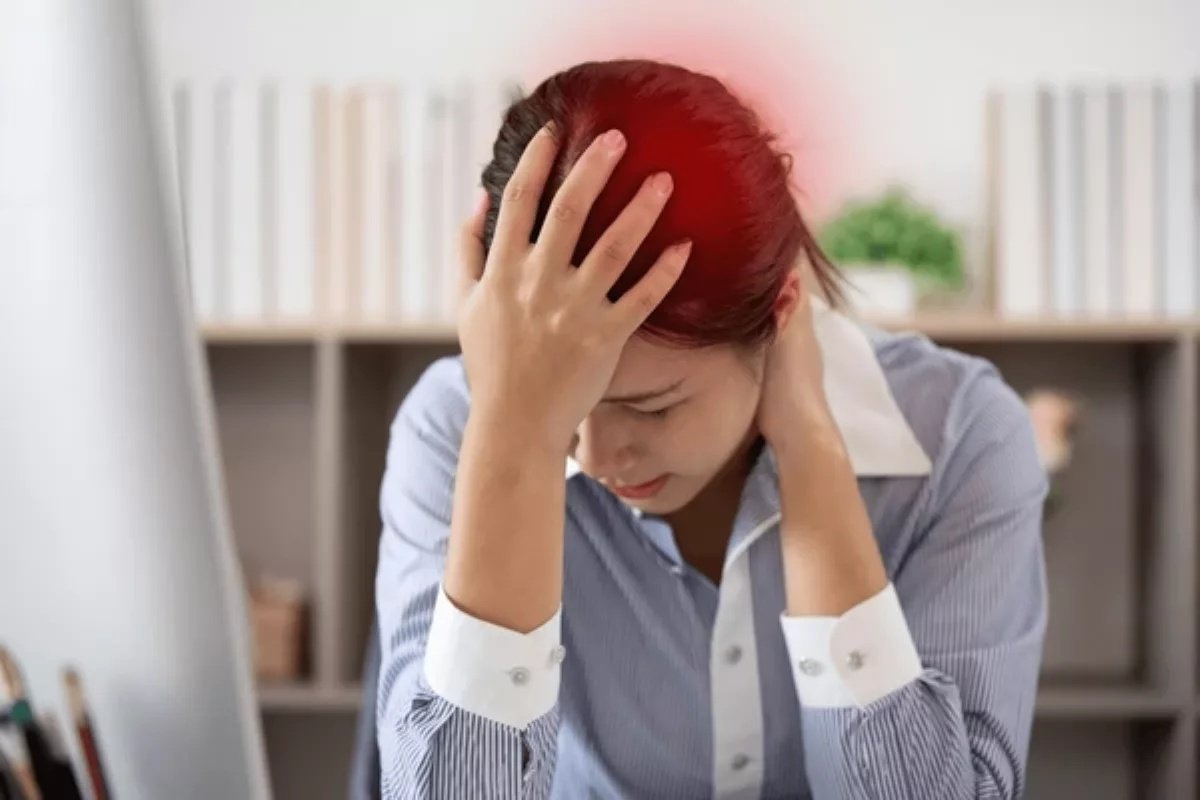
Relieve Tension Headache If you have experienced a dull, squeezing ache that wraps around your forehead like a headband that is too tight, then you already have the idea of what a tension headache can be like. It is the most prevalent form of headache worldwide, affecting a large proportion of adults, with lifetime prevalence estimates ranging from about 30% to nearly 80% depending on the population studied. Nonetheless, regardless of its popularity, most people will still find pain relievers without knowing what is actually causing the pain and how to prevent it in the future.
What Is a Tension-Type Headache?: Relieve Tension Headache
A tension-type headache (TTH) is a primary headache disorder, or in other words, it is not caused by a disease. It can also be known as a tension headache, muscle contraction headache, or stress headache. And all these names hint at something of what is going on in your body.
The pain is usually constant pressure or tightness, not pounding or throbbing. Tension-type headache has two categories that are clinically different:
- Episodic tension headache – less than 15 days a month. These are the most prevalent and can most frequently be treated with over-the-counter medications, as well as with lifestyle modifications.
- Chronic tension headache – lasts 15 or more days a month and for at least three months. They demand a more organized treatment strategy and closer doctor care.
Tension Headache Areas: Where Does It Hurt?
Being aware of where you get tension headaches is one of the primary measures towards proper management. Unlike any other headache, a tension headache rarely settles in only one location.
It is likely to be felt on both sides of the head at the same time. It has been said by people to be a tightening of the skull like a hatband pushing in on the forehead, temples, and at once on the back of the head. The scalp, neck, and shoulder muscles are often tough, painful, and knotty, along with the head itself. Pericranial muscle tenderness is a common clinical finding in patients with tension-type headache. The extensive involvement of the muscles is a characteristic of the condition.
Concisely, when the pain is bilateral (pain is on both sides), dull, and is more of a pressure than a pulse, the problem is most likely a tension headache as opposed to others.
What Causes a Tension Headache?
What causes a tension headache is still a question to which scientists do not have a single and definite answer yet; however, research indicates that a combination of muscle tension and pain processing in the brain is at play. Head pain may be triggered or exacerbated by the tightening of the muscles of the scalp and neck, and jaw, which may happen as a result of stress, bad posture, or tiredness. In others, the brain itself is made more receptive to pain signals with time, a process known as central sensitization, which is more strongly associated with chronic tension-type headache.
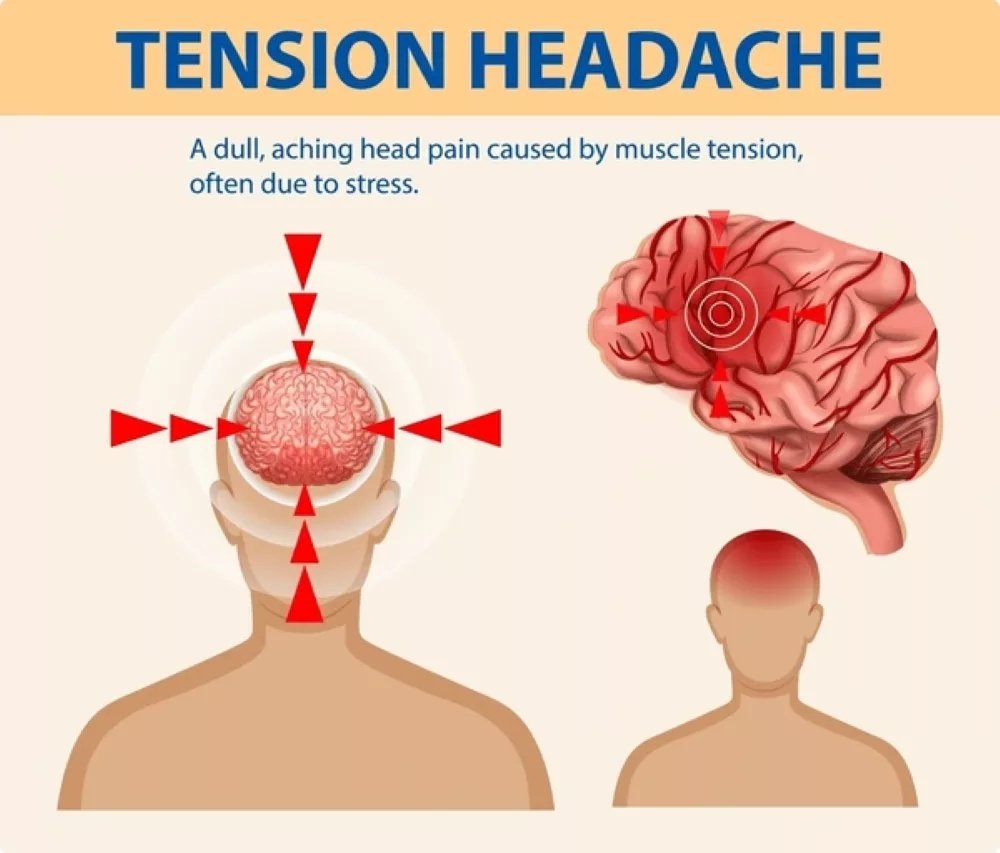
Tension headaches cause a dull, band-like pressure around the head, often triggered by stress and muscle tension.
Common triggers include:
- The most common one is stress and anxiety. The jaw, neck, and scalp muscles physically contract because of the emotional, mental, and physical stress.
- Bad posture – Bending over a desk, straining your neck to look at a screen, and keeping your head in one position all day long puts a strain on the upper body muscles.
- Eye strain– extended time before the screen or vision defects.
- Dehydration – even mild dehydration is a documented trigger of headache.
- Lacking food intake, a blood sugar drop will trigger a headache surprisingly fast.
- Poor or interrupted sleep – lack of enough sleep and irregular sleep patterns are associated with an increase in the frequency of headaches.
- Caffeine and alcohol – excessive use of either, or abrupt withdrawal of caffeine, may cause a stress headache.
- Jaw clenching and teeth grinding (bruxism) – commonly occurs at nighttime without the awareness of the person.
- Depression – chronic tension headaches and depression often occur in combination and complement each other.
Tension Headache vs. Migraine: Know the Difference
Tension headaches and migrainesare usually confused since both are associated with pain around the head. Nevertheless, knowing the tension headache vs. migraine difference is vital as the treatment of both differs.
| Feature | Tension Headache | Migraine |
|---|---|---|
| Pain quality | Dull, pressing, tightening | Throbbing, pulsating |
| Location | Both sides of the head: forehead, temples, back of the head | Usually, one side of the head |
| Intensity | Mild to moderate | Moderate to severe |
| Nausea/vomiting | Rare or absent | Common |
| Light/sound sensitivity | Mild, if any | Often significant |
| Aura (visual disturbances) | Not present | Present in ~20% of cases |
| Physical activity effect | Does not worsen pain | Activity typically worsens pain |
| Duration | 30 minutes to 7 days | 4 to 72 hours |
| Triggers | Stress, posture, fatigue | Stress, hormones, certain foods, and bright lights |
The clearest distinction? A tension headache does not mean that you cannot continue to work- you feel bad, yet still you can work or move. A migraine, on the other hand, often forces you to lie down in a dark, quiet room. When you have a headache that is accompanied by nausea, flashing lights, or deep throbbing on one side of your head, then it would be worth talking to your doctor to see whether you are experiencing migraine and not a tension-type headache.
How to Relieve a Tension Headache: At-Home Care
The positive side is that self-care is effective in most instances in the treatment of episodic tension headaches.
1. Apply Heat or Cold
Tense muscles cause and maintain tension headaches, and therefore, placing a heating pad, warm towel, or hot shower on your neck and shoulders helps loosen those knotty muscles. Conversely, a cool washcloth or ice pack on your forehead may help you to cool down the feeling of pressure and relieve the pain in the short run.
2. Massage Your Neck, Shoulders, and Head
Massaging your temples, scalp, the bottom of your skull, as well as your shoulder muscles, can relieve muscle tension that is contributing to the pain. A few minutes of self-massage with your fingertips in slow and circular motions will make a difference. Deep tissue massage or structured massage is also helpful to individuals with recurrent headaches.
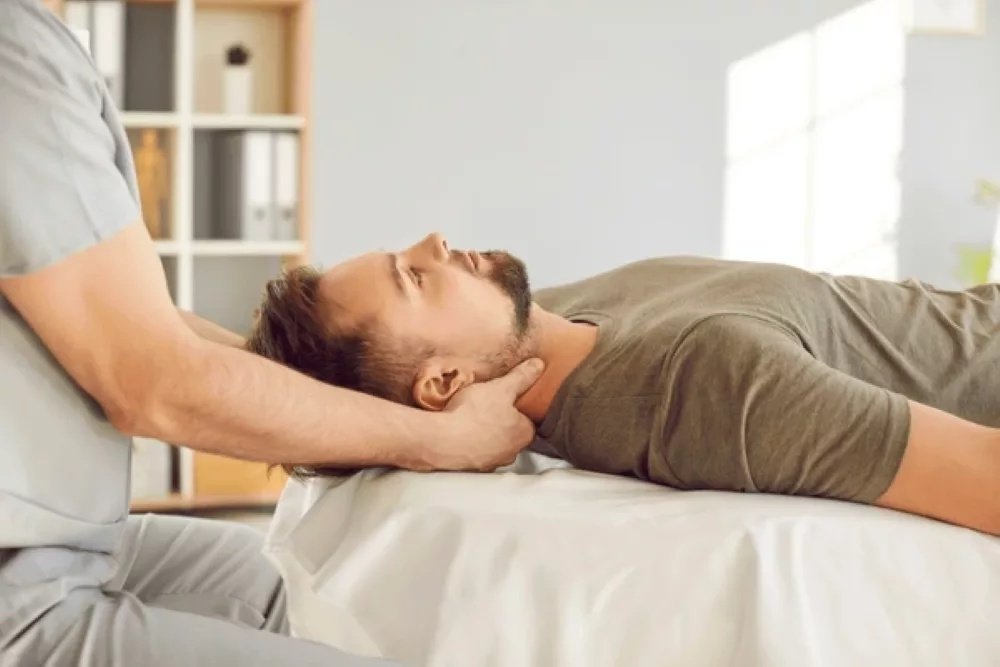
Manual therapy and head-neck massage can reduce muscle tension, ease headache pain, and promote relaxation.
3. Drink Water
Dehydration is a relatively frequent and easily resolved cause of tension headache. Consume a lot of water when the headache begins. Dehydration headaches can be prevented before they occur by eating foods with a lot of water in them, such as fruits and vegetables, and having a bottle of water nearby all day.
4. Rest in a Quiet, Dim Environment
Any headache can be complicated by excessive stimulation from noise and bright light. Even just 20 minutes of lying in a dark room and closing your eyes will help diminish the pain significantly. This does not mean that you must be dark like a migraine patient would be; it is merely a lightening of the load on an already-strained system.
5. Gentle Neck Stretching
Rotating your head slowly side to side, tilting your ear towards your shoulder, and rotating your neck gently will relieve the stiffness and tightness of the muscles that are often underlying a tension headache. Move slowly, without force. A headache may be prevented even by stretching the neck for five minutes in the middle of a long working day.
6. Deep Breathing and Relaxation
Get yourself lying or seated in a comfortable position, make sure you close your eyes and breathe in four counts, hold two, then breathe out six. Slow, deliberate breathing for 10 minutes engages the parasympathetic nervous system in the body and relaxes the stress response and loosens the muscles. It is one of the easiest and most convenient methods of managing this type of tension headache and does not require any equipment.
7. Over-the-Counter Pain Medication
Over-the-counter drugs are frequently used as the initial option of treatment for mild to moderate pain. Options include:
- Acetaminophen (Tylenol)
- Ibuprofen (Advil, Motrin)
- Naproxen sodium (Aleve)
- Aspirin
An important warning: a regular consumption of more than two or three times per week of pain relievers can result in rebound headaches (also known as medication overuse headaches) – headaches that do not go away precisely because one is taking the medication that is supposed to help. When you are starting to reach out to pain medication regularly, you should discuss it with a physician.
Tension Headache Relief Through Pressure Points
Acupressure, or the application of firm pressure to certain body parts, is also a centuries-old part of traditional Chinese medicine and may provide supportive relief for some individuals, although evidence remains limited, and it should be considered a complementary approach.
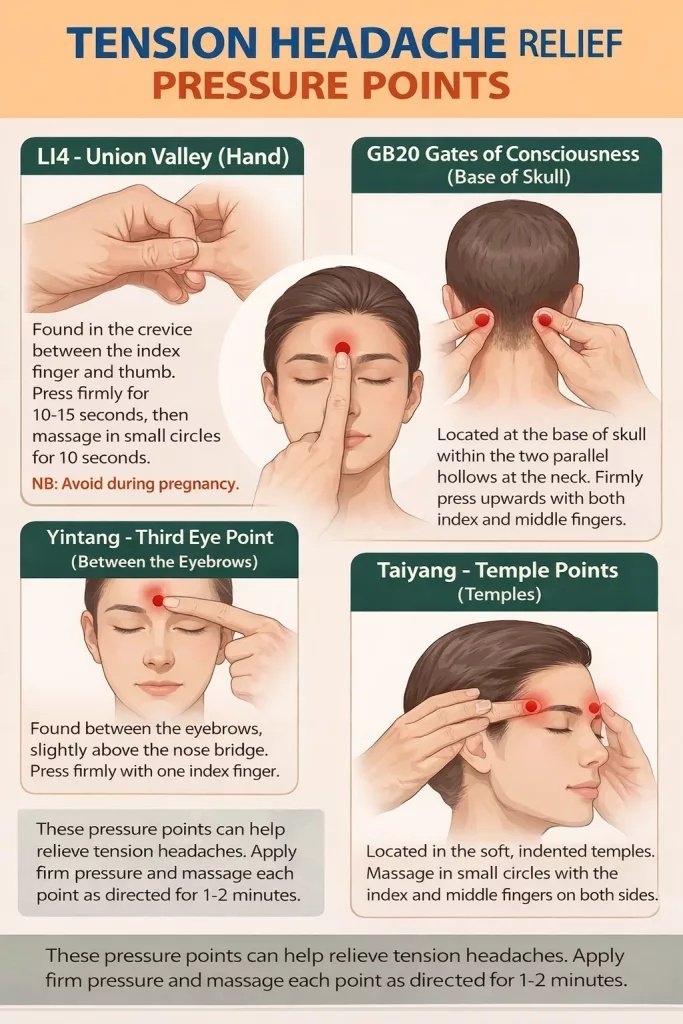
Key pressure points may help ease tension headaches when applied correctly.
Tension headache relief pressure points:
LI4 -Union Valley (Hand) is found in the crevice between your index finger and thumb. Firmly press this point with the opposite thumb and index finger for 10-15 seconds, followed by little circles for another 10 seconds. Switch hands and repeat. This is considered to be the most effective pressure point for relieving general headache pain. NB: This point should not be applied by pregnant women because it can cause contractions.
GB20 Gates of Consciousness (Base of Skull): This is located at the end of the skull, within the two parallel hollows on either side of the large neck muscles. On these points, put your index and middle fingers, press hard upwards, and then release, and do the same again. GB20 is especially effective for tension headaches that develop as a result of neck tightness.
Yintang -Third Eye Point (Between the Eyebrows): It is in the mid forehead between the bridge of the nose and the brow line. Use one index finger to press hard with gentleness for about one minute. This aspect is also known to relax the mind, reduce tension on the forehead, and relieve stress-based headaches.
Taiyang – Temple Points are located in the soft, slightly indented space at every temple. Simultaneously, use your index or middle fingers, pressing them on both sides and massaging in small circles for 30 seconds. Taiyang points are particularly useful in headaches of a temporal and eye strain.
These are non-hazardous methods that do not require any fee and can be conducted anywhere. They are most effective as a supplementary method to be used together with other therapies, in contrast to being an independent solution.
Medical and Long-Term Treatments
In case your frequent or severe tension headaches are not responding to self-care, then your physician has various viable solutions.
In case of chronic tension headache, doctors can prescribe:
- Tricyclic antidepressants (including amitriptyline) are not only good at changing the mood, but also at decreasing the number of chronic headaches by changing the pain pathways.
- Antiseizure drugs (e.g., gabapentin or topiramate) – applied in a few instances to decrease the frequency of headaches.
- Muscle relaxants – to deal with underlying muscle tension.
- Biofeedback therapy – this method involves the application of electrically sensitive sensors on the skin to monitor muscle tension. Patients are taught to consciously relax those muscles before the development of a headache. It is especially good with individuals whose stress triggers their headaches.
- Cognitive Behavioral Therapy (CBT) – assists in the recognition of stress stimuli and in altering the thoughts and behaviors that exacerbate them.
- Physical therapy- this is particularly helpful when other factors, that include poor posture, neck problem or sleep apnea, are involved.
Some patients with chronic tension-type headaches can also be relieved using trigger point injections (local anesthetic injected into knotted areas in the neck or shoulders).
How to Prevent a Tension Headache?
It is always better to prevent than cure. With time, the frequency and severity of tension headaches can be minimized with the following lifestyle changes.
- Manage stress actively. Exercise, meditation, yoga, and mindfulness training all reduce the normal stress level, which results in muscle tension. It is not the technique that counts but consistency.
- Sleep on a regular schedule. Having a bedtime and morning wakeup time (weekends included) brings stability to the body rhythms and decreases the frequency of headaches.
- Eat regular, balanced meals. Do not skip breakfast. Eat fruits, vegetables, and whole grains in large quantities and take at least several glasses of water daily, even when you are not feeling thirsty.
- Exercise regularly. Aerobic activity also releases the natural chemicals in the brain that block pain. The best alternatives are walking, swimming, and cycling.
- Correct your posture. At the computer, you should sit straight, your back against the chair, and have a quick standing or stretching break after every 30- 45 minutes.
- Limit caffeine and alcohol. A moderate amount of caffeine is safe (below 400mg/day, about four cups of coffee); however, excessive daily consumption can lead to a headache, and abrupt withdrawal can be equally hazardous.
Final Thoughts
A tension headache is the warning of the body that something is wrong, and it could be stress in the long term, improper posture, dehydration, or a disturbance in sleep. The positive fact is that the majority of the population can experience significant relief by applying a set of rather simple self-care principles, pressure point methods, and (as needed) medical advice. Being aware of the causes of tension headache, the difference between tension headaches and migraines, and the tension headache pressure points that are appropriate to your body are all effective ways to reduce, prevent, and shorten headaches. Little, daily measures, like drinking water more, stretching your neck at your work station, breathing deeply in the evening, etc., are cumulative.
References
[1] Rasmussen BK. Epidemiology of headache. Cephalalgia. 2001;21(7):774-777. doi: 10.1046/j.1468-2982.2001.00254.x
[2] Ashina S, Mitsikostas DD, Lee MJ, et al. Tension-type headache. Nat Rev Dis Primers. 2021;7(1):24. doi: 10.1038/s41572-021-00257-2
[3] Stovner LJ, Nichols E, Steiner TJ, et al. Global, regional, and national burden of headache disorders, 1990-2016: findings from the Global Burden of Disease Study 2016. Lancet Neurol. 2018;17(11):954-976. doi: 10.1016/S1474-4422(18)30322-3
[4] Chen Y. Advances in the pathophysiology of tension-type headache: From stress to central sensitization. Curr Pain Headache Rep. 2009;13(6):484-494. doi: 10.1007/s11916-009-0078-x
[5] Probyn K, Bowers H, Caldwell F, et al. Prognostic factors for chronic headache: A systematic review. Neurology. 2017;89(3):291-301. doi: 10.1212/WNL.0000000000004112
[6] Kaniecki RG. Migraine and tension-type headache: an assessment of challenges in diagnosis. Neurology. 2002;58(9 Suppl 6):S15-20. doi: 10.1212/wnl.58.9_suppl_6.s15
[7] Castien RF, van der Windt DA, Grooten A, Dekker J. Effectiveness of manual therapy for chronic tension-type headache: a pragmatic, randomised, clinical trial. Cephalalgia. 2011;31(2):133-143. doi: 10.1177/0333102410377362
[8] Ashina S, Terwindt GM, Steiner TJ, Lee MJ, Porceca F, Tassorelli C, et al. Medication overuse headache. Nat Rev Dis Primers. 2023;9(1):5. doi: 10.1038/s41572-022-00415-0
[9] Chen HM, Chen CH, Lin KC, Wu JR, Chang PC. Effect of acupressure and trigger points in treating headache: a randomized controlled trial. Am J Chin Med. 2010;38(1):1-14. doi: 10.1142/S0192415X10007634
[10] Wie C, Dunn T, Sperry J, et al. Cognitive Behavioral Therapy and Biofeedback. Curr Pain Headache Rep. 2025;29(1):23. doi: 10.1007/s11916-024-01348-x
[11] Martin PR, Forsyth MR, Reece J. Cognitive-behavioral therapy versus temporal pulse amplitude biofeedback training for recurrent headache. Behav Ther. 2007;38(4):350-363. doi: 10.1016/j.beth.2006.10.004